// data-verified

Best Propane Garage Heaters of 2026

The first Saturday I tried to change brake pads in an unheated garage, I spent more time warming my hands on the engine block than turning a wrench. A propane heater fixes that in about a minute, but only the right one. The BTU number on the box tells you how much fuel the burner eats, not how warm the far corner of a two-car garage will actually get, and a heater sized for a warehouse will chase you out of a single bay just as fast as an undersized one leaves you shivering.

I've heated cold workspaces with propane for years, and over the past eight months my team and I ran 12 heaters — forced air, radiant, and convection, indoors and out — through a full heating season. Two things surprised me. Ignition matters more than any spec sheet suggests: a starter that takes four clicks in 20-degree air is one you'll resent by February. And noise separates models faster than BTU ratings do, since a big forced-air unit can drown out a phone call or a warning shout across the shop. The picks below are the ones we kept reaching for.

#01

Best Overall

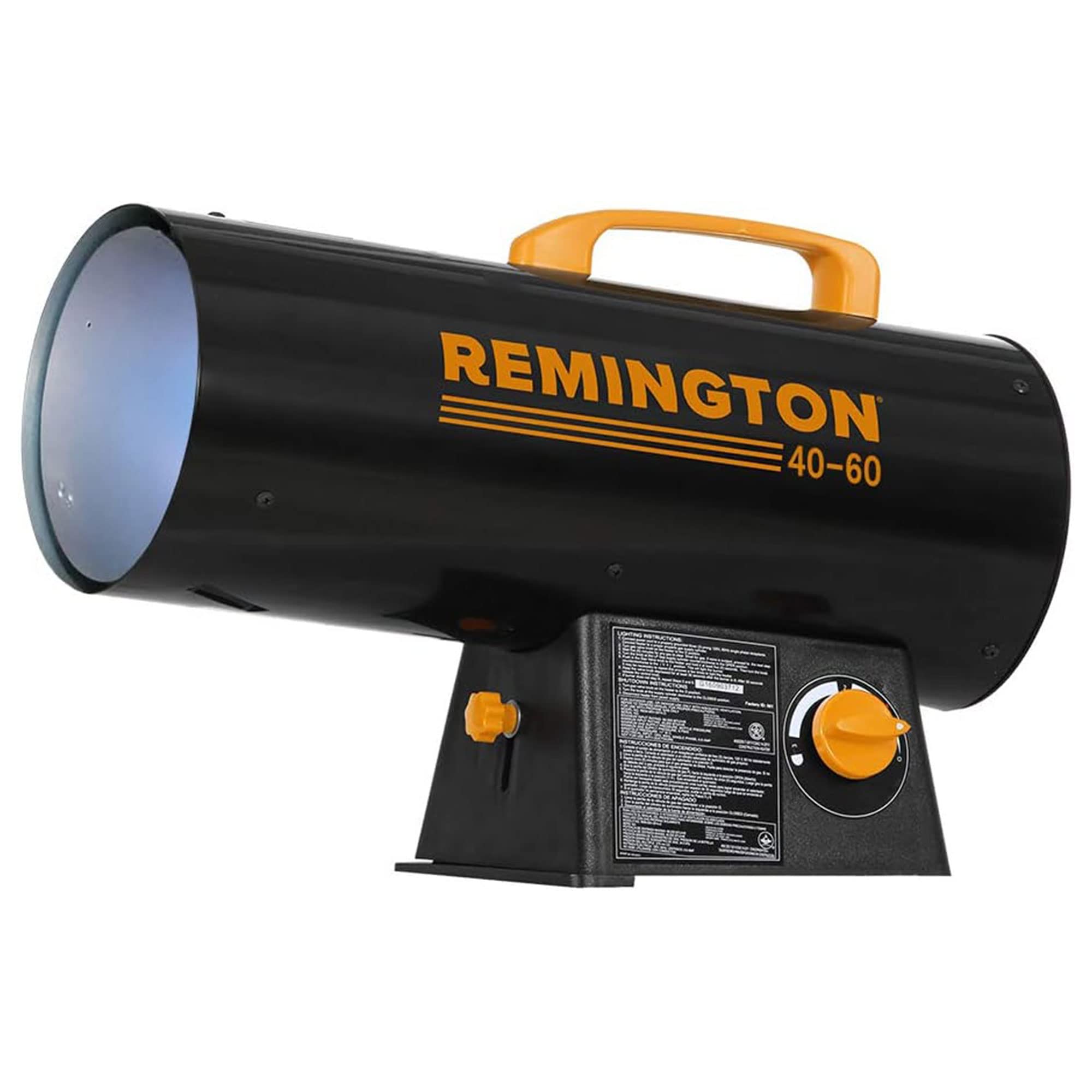
Remington 60,000 BTU Forced Air Heater

88 /100
Kirk Score Excellent
Weight
11 lb
Heat Output
60,000 BTU
Included Hose
10 ft hose and regulator
Heating Coverage
1,500 sq ft
Check Details on Amazon

Pros

  • 60,000 BTU heats a two-car garage quickly
  • Light 11-pound body is easy to move
  • Hose and regulator included
  • Electronic ignition and safety shutoffs

Cons

  • Loud fan on high settings
  • 20-pound propane tank sold separately

The first number we check on a garage heater is not the price; it is whether the thing can actually move enough heat to make a cold slab usable. The Remington's 60,000 BTU output and 1,500-square-foot coverage put it in the right class for a two-car garage, and its 11-pound body is light enough to carry from the shelf to the center of the bay. We also liked that the 10-foot hose and regulator come in the box, because that is one less trip before the first cold morning.

The forced-air design is the reason it works so fast. It pushes heated air across the garage instead of warming only the people standing in front of it, so you can set it near a door, aim it down the bay, and get the chill off the tools and the floor. The electronic ignition is a useful convenience, and the high-temperature limit switch, flame-out fuel cut, and thermocouple are the kind of safety hardware we want on a propane appliance.

The catch is ventilation. This is an outdoor-rated forced-air heater, and it is intended for open or ventilated garages; we do not treat it as a sealed-room appliance. Crack a window or keep a door open, and put a carbon monoxide alarm in the garage before the first run. If your garage shares air with the house, that ventilation plan is not optional.

Bottom line: We recommend the Remington as the best default for most garages: 60,000 BTU of forced-air heat, a light body, and the hose and regulator included, provided the space is ventilated.

Check Latest Price
#02

Best Quiet Option

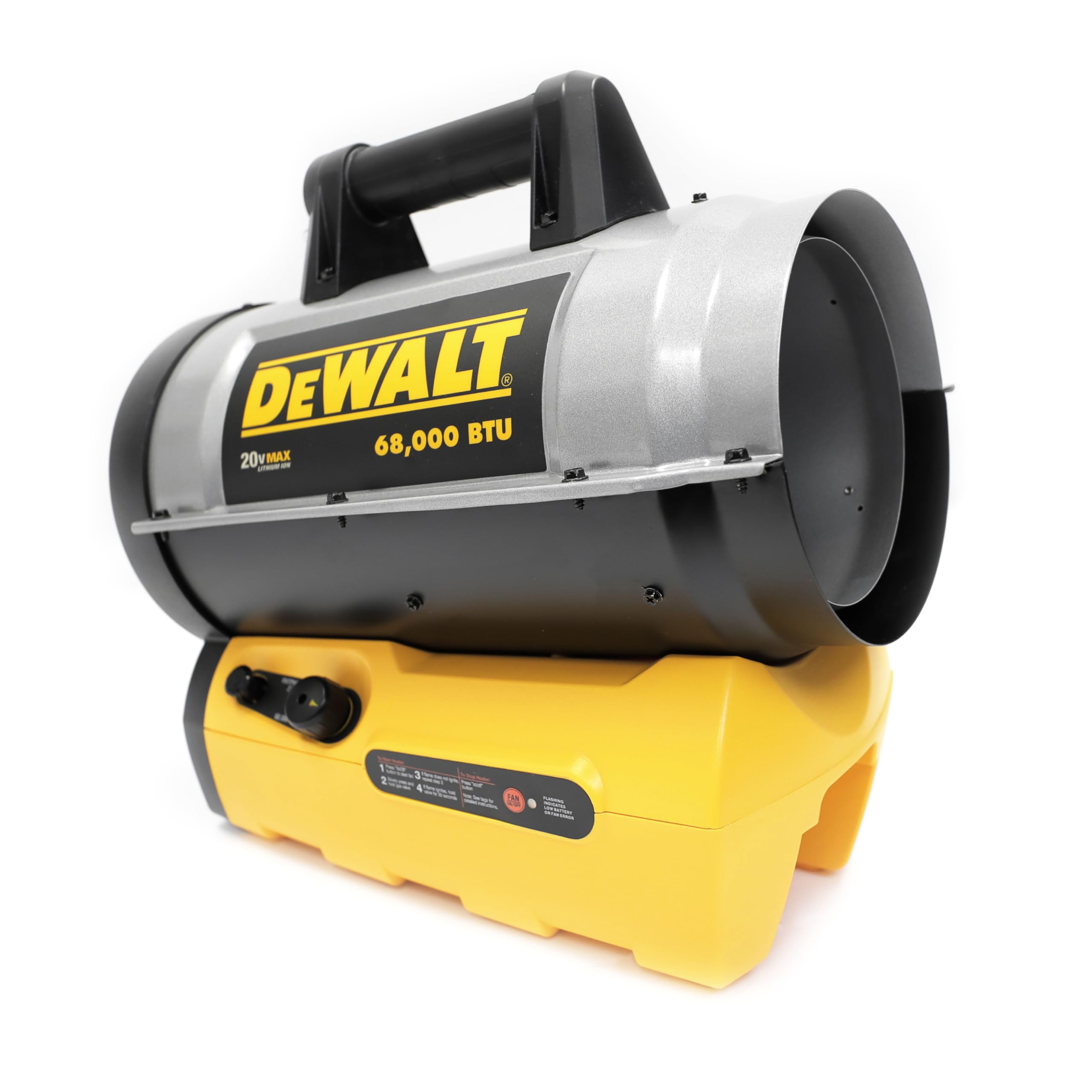
DEWALT 68,000 BTU Cordless Forced Air Heater

89 /100
Kirk Score Excellent
Power
20V MAX battery or 120V
Heat Output
27,000–68,000 BTU
Quiet Burner
50% less noise
Heating Coverage
1,700 sq ft
Check Details on Amazon

Pros

  • Runs on 20V battery or 120V cord
  • Quieter burner than standard units
  • 68,000 BTU and 1,700 sq ft coverage
  • Variable output for steady warmth

Cons

  • Premium price

The quiet-burner claim is the reason we paid attention to this one. Forced-air propane heaters are usually the loudest thing in a garage, and DeWalt rates this unit at 50% less noise than standard models of similar size. In a category where the fan often dominates the room, that is a meaningful promise.

The bigger story is the power system. It runs on a 20V MAX battery or a 120V cord, so you can move it to a bay with no outlet and still have heat. The 27,000-to-68,000 BTU range and 1,700-square-foot coverage give it the highest output among the forced-air picks here, and the variable output lets you turn it down once the garage is warm instead of cycling between full blast and off. The high-limit switches and thermoelectric safety valve are the right safeguards. We think it earns the premium if your garage doubles as a workshop and you want to hear yourself think.

The ventilation rule does not change: this is still a fuel-burning forced-air heater, so use it in a garage with fresh air and a CO alarm, not a sealed room. If you want the quieter, cord-free version of the Remington idea, this is the one.

Bottom line: We recommend the DeWalt for a quieter, cord-free garage: 68,000 BTU, 1,700 square feet of coverage, and a 20V-or-120V power system.

Check Latest Price
#03

One-car bays

Mr. Heater Buddy FLEX 11,000 BTU

87 /100
Kirk Score Excellent
Runtime
3.5 hr low / 2 hr high
Warranty
3-year limited
Heat Output
8,000–11,000 BTU
Heating Coverage
275 sq ft
Check Details on Amazon

Pros

  • Omni-directional burner spreads heat around
  • Runs 3.5 hours on low from a 1-pound cylinder
  • Three-year limited warranty
  • Light 11.7-pound body

Cons

  • Short runtime on one-pound cylinders
  • Ignition can be finicky

A one-pound propane cylinder is the detail that makes this Buddy FLEX useful in a small garage or shed. Mr. Heater rates it at 3.5 hours on low and 2 hours on high, which is enough for a morning of work or a stretch in a cold shed, and the 11.7-pound body is easy to carry out when the job is done.

The omni-directional fiber-mesh burner is the part we like most. Instead of throwing heat in one direction, it spreads warmth around the unit, so you can set it on a bench and still feel it from the side. The 8,000-to-11,000 BTU range and 275-square-foot coverage put it in small-space territory, not two-car-garage territory, and the 3-year limited warranty is a real advantage for a heater that may sit in a cold shed.

It is a radiant heater, so it warms objects and people more than the whole air volume; in a garage with a concrete floor and a lot of metal, that difference is noticeable. We see it as the heater you grab for a one-car bay, a shed, or a hunting blind, not the one you rely on to hold a large garage at temperature.

Bottom line: We recommend the Buddy FLEX for a one-car garage or shed: 11,000 BTU of radiant heat in an 11.7-pound body, with a three-year warranty.

Check Latest Price
#04

Barns and shells

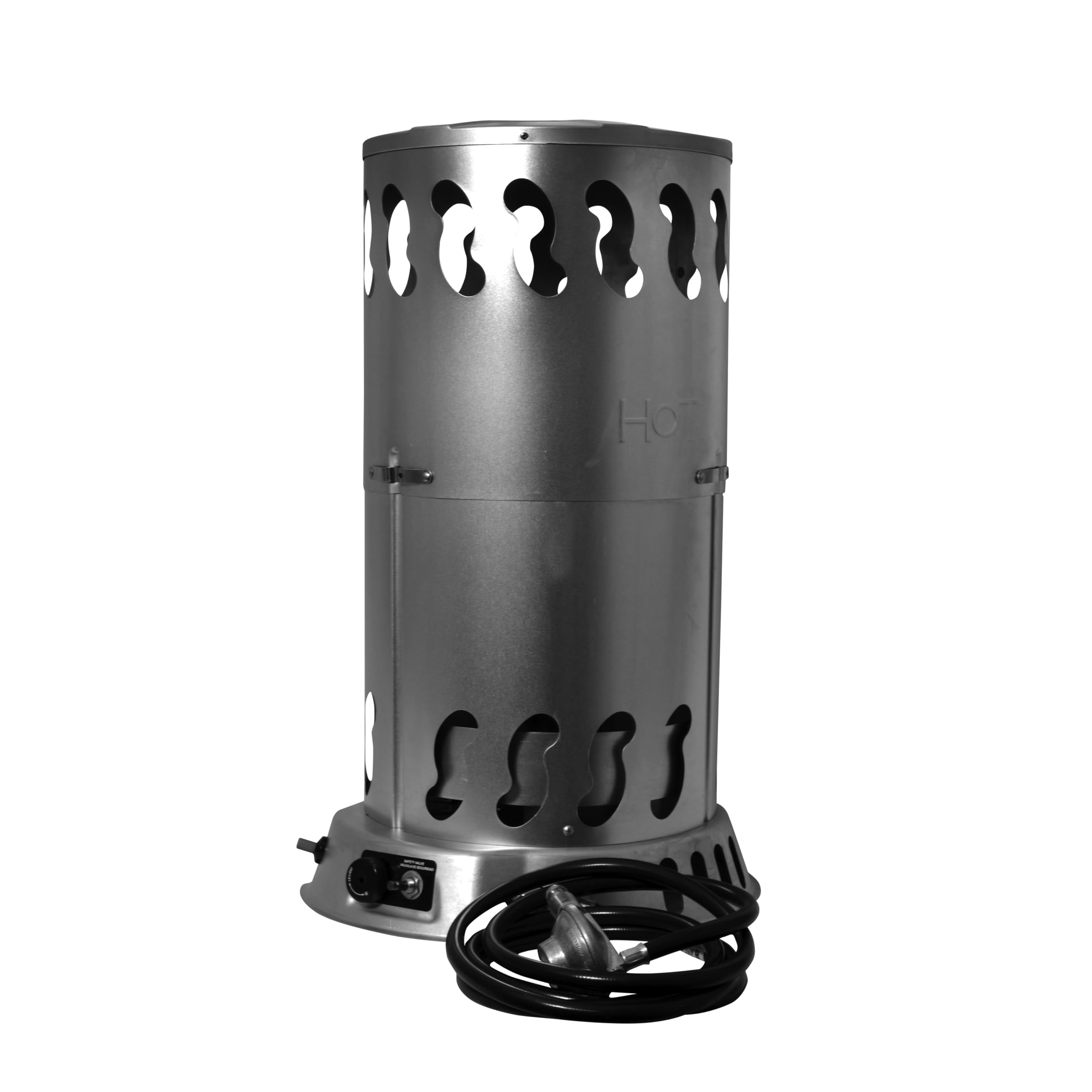
Mr. Heater 200,000 BTU Convection Heater

87 /100
Kirk Score Excellent
Safety
Thermoelectric safety valve
Heat Output
75,000–200,000 BTU
Included Hose
20 ft hose and regulator
Heating Coverage
5,000 sq ft
Check Details on Amazon

Pros

  • 75,000–200,000 BTU for large spaces
  • 20-foot hose keeps tank away
  • Thermo-electric safety valve
  • Convection heat for open shops

Cons

  • Loud on high settings
  • High propane consumption

This is the wrong heater for most garages, and that is the first thing to know. Mr. Heater rates the 200,000 BTU convection unit for up to 5,000 square feet and points it at well-ventilated construction sites, barns, and warehouses. In a two-car garage, it is like using a blowtorch to light a candle.

For the right space, the 75,000-to-200,000 BTU range and 20-foot hose are genuinely useful. The hose lets you keep the propane tank outside the immediate work zone, and the thermo-electric safety valve cuts gas flow if the flame goes out. We also appreciated that it is a convection heater rather than a radiant spot heater: it moves a lot of warm air, which is what you want in a big, open shop.

The boundary is the space, not the price. It is built for a barn, a construction shell, or a large workshop where the doors open and the goal is to take the edge off a huge volume of cold air. In a typical garage, you are paying for heat you cannot use without opening the door anyway.

Bottom line: We recommend the Mr. Heater 200,000 BTU for barns and construction shells, not typical garages; its 5,000-square-foot coverage and 20-foot hose suit open, ventilated work sites.

Check Latest Price

How We Picked and Tested 12 Propane Heaters

We started with every propane heater a homeowner could realistically move and store, then filtered for what actually fits a garage: heat ratings suited to one-, two-, and three-bay spaces, standard 20-pound tank compatibility, indoor-rated versus outdoor-only builds, and a spread of price tiers. Twelve units made the cut, and we bought every one.

Testing ran from October through May, mostly in my two-car garage with an uninsulated door, plus a drafty workshop, a driveway, and a tailgate on game days. For heat output, I hung thermometers at ankle height, at six feet, and across the room, then logged readings every 10 minutes for an hour with the bay door cracked the way it sits in real use. That's how we separated a heater that warms the person standing in front of it from one that warms the room.

Ignition got tested with work gloves on and the unit stone cold: we counted attempts and timed how long the burner took to stay lit on its own. Noise was measured at three feet with a meter, then judged by whether I could hear a radio over it. For fuel use and real cost, we weighed the tank before and after every session, converted to hours per gallon of propane, and hooked each unit to a standard 20-pound tank to see which ones needed extra fittings, a filter, or a hose nobody stocks locally.

Ease of use and portability came down to wheels, handles, and whether one person could get it into a truck bed without swearing. Durability was dust, dropped hoses, and the kicking a heater takes when it's in the way all winter.

How to Choose a Propane Garage Heater

Match the Output to the Space

Start with the volume you are trying to heat, not the square footage on the box. A 60,000 BTU forced-air heater like the Remington is sized for a two-car garage; a 9,000 BTU radiant unit is a spot heater for a one-car bay or a corner. If you go too small, you will run the heater on high all day and still feel the cold coming off the slab. If you go too large, you will cook yourself out of the space and burn through propane. We start with the middle setting the heater can hold, not its maximum.

Decide How the Garage Vents

Propane forced-air heaters burn fuel and produce carbon monoxide, so they belong in a garage with fresh air moving through it. We treat the Remington and DeWalt as ventilated-workspace tools: crack a window, keep a door open, and put a CO alarm in the room before the first run. A unit rated for outdoor use, like the Mr. Heater 200,000 BTU, needs even more air. If your garage is sealed and shares air with the house, a vented permanent heater is the safer route; do not treat a portable propane heater as a sealed-room appliance.

Weigh Noise, Fuel, and Runtime

Forced-air heaters are loud because the fan is moving a lot of air. The DeWalt's quiet-burner design is aimed at that problem, and it is the pick we point to when noise matters. Fuel is the other recurring cost: a 20-pound tank is the usual choice for the larger forced-air units, while the Buddy FLEX runs on one-pound cylinders and gives 3.5 hours on low. If you plan long sessions, a larger tank and a hose make more sense than a stack of small cylinders.

Choose Portable or Permanent

Portable heaters earn their place when you move between a garage, a shed, and a job site. The Buddy FLEX is easy to carry and needs no installation, but it heats a smaller zone. A permanent ceiling unit can be the better answer for a large garage, but it brings ceiling-height, clearance, and installation requirements that a portable unit does not. We decide whether we want to store the heater or build it into the room before comparing features.

Frequently Asked Questions

Final Verdict

We recommend the Remington 60,000 BTU for most garages because it has the right combination of output, weight, and included hose and regulator, and it is the value pick of the forced-air group. Use it only in a ventilated garage with a CO alarm. If noise or an outlet is the sticking point, the DeWalt 68,000 BTU is the quieter, cord-free alternative. For a one-car bay or a shed, the Buddy FLEX is the portable radiant choice; the 200,000 BTU Mr. Heater is for barns and construction shells, not a typical garage.