// data-verified

Best Garden Pruning Shears of 2026

A dull pruner doesn't just make gardening harder — it bruises the stems you're trying to help. Bypass shears fix that with one good idea: a curved blade slices past a hook instead of chopping down onto it, so living wood gets a clean cut that heals instead of a crushed one that doesn't.

I've spent years fighting my own overgrown backyard, and this past season my team put 14 pairs of bypass pruners through six months of real work. The pattern showed up fast: sharpness out of the box is easy to fake, but a blade that holds an edge past a hundred cuts, a lock you can flick with a gloved thumb, and a handle that doesn't dig into your palm at minute 40 are what separate a tool from a toy.

Size matters more than most shoppers expect, too — a pruner too long for your hand is one you'll fight with all afternoon. Below are the pairs worth the money, sorted by what they're actually good at.

#01

Best Overall

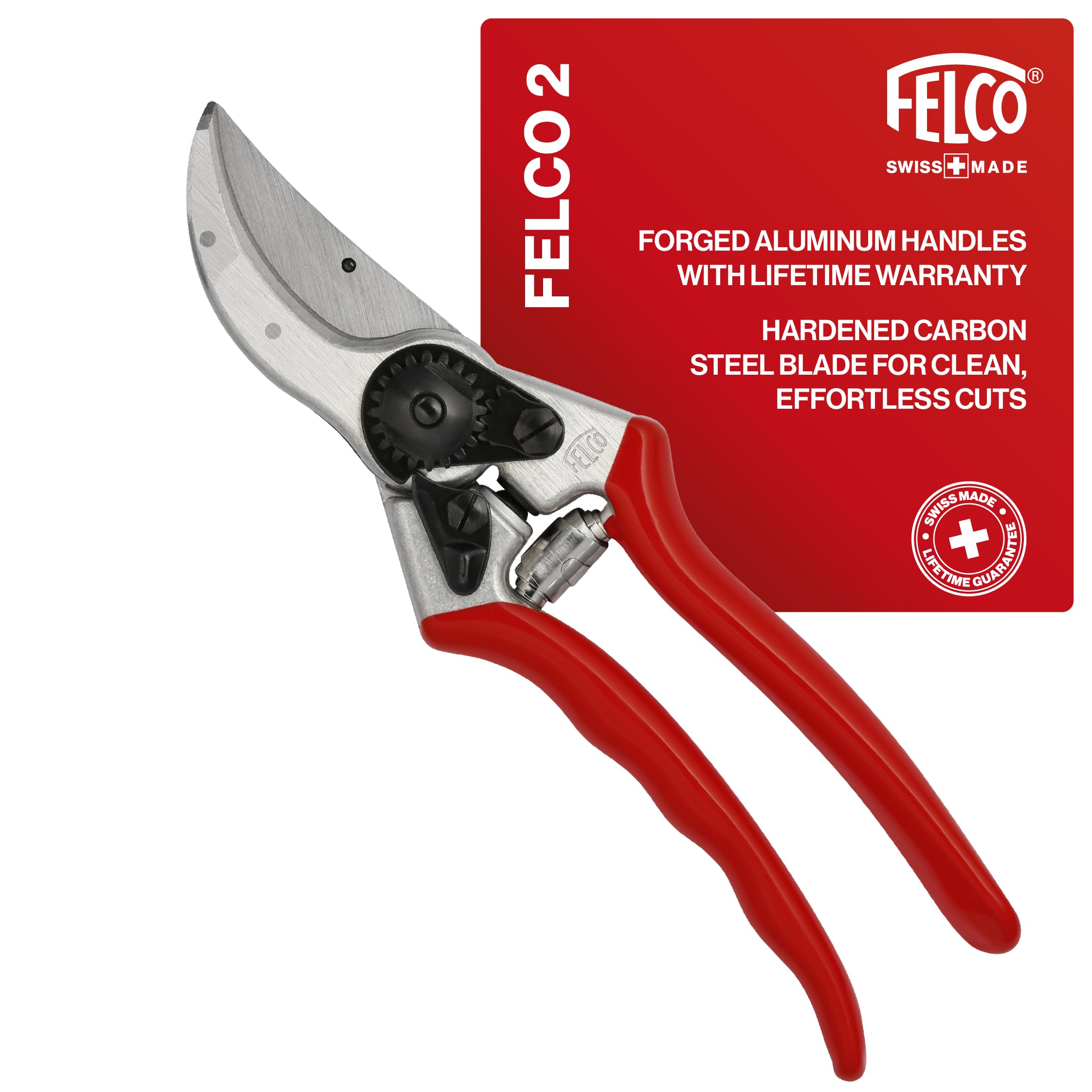
Felco F2 Pruning Shears

96 /100
Kirk Score Outstanding
Weight
8.8 oz
Cut Capacity
1 inch
Hand Orientation
Right
Replaceable Parts
Every component
Check Details on Amazon

Pros

  • Every component replaceable, so the pruner can be rebuilt
  • Clean, effortless cuts up to an inch
  • Forged aluminum handles with a non-slip coating
  • Hardened carbon steel blade holds its edge

Cons

  • Right-handed model only

Every part of the Felco F2 comes apart, and that's the reason we put it at the top of this list. Blades, springs, bumpers and the pivot are all sold as spares, so a pruner that wears out after a decade gets rebuilt rather than binned — a rarity in this group, where most tools are sealed and disposable.

In the hand it's compact: 8.8 ounces, 9.25 inches overall, forged aluminum handles with a non-slip coating, and an angled head that keeps your wrist straighter when you're working above shoulder height. The hardened carbon steel blade takes a keen edge and holds it. The inch of capacity is honest on green wood, though dry hardwood that size is lopper work whatever the label says.

Two things to know before you order. The F2 is built for right-handed use, so if you're left-handed, look at one of the ambidextrous picks here instead. And the thumb latch needs a deliberate push — fine for most hands, awkward if grip strength is an issue, which makes it worth handling in person if that's your situation.

Where it earns its keep is over years rather than afternoons. A dozen strokes on the bevel with a diamond file at the start of the season, a drop of oil on the pivot, and it's back to work. Ours has gone through rose canes, an overgrown buddleia and a season of general neglect, and the blade has kept its edge through all of it.

Bottom line: If you plan to own one pair of pruners for a decade, buy this one: we've found nothing here that cuts better, and every worn part can be replaced.

Check Latest Price
#02

Best All-Around Value

Kimura Pro Bypass Pruners

96 /100
Kirk Score Outstanding
Blade
Japanese SK5, 60 HRC
Weight
8.11 oz
Cut Capacity
25 millimeters
Hand Orientation
Ambidextrous
Check Details on Amazon

Pros

  • Cuts just under an inch with little effort
  • Self-engaging lock opens with a squeeze
  • PTFE coating keeps sap from setting
  • 230 g and comfortable over a long session

Cons

  • No replacement parts; a worn spring means a new pruner

Set the Kimura next to the Felco and the differences are small: a slightly lighter body, a very similar near-inch of cutting, and no spare-parts catalog behind it. That last point is the only one that really matters, and it's why we point most gardeners here — nearly the same performance, none of the commitment.

The blade is Japanese SK5 steel, heat treated to 60 HRC and coated in PTFE so sap slides off instead of setting. We found the cut clean and the effort low; green stems part with almost no squeeze. The lock is the detail we liked most — it engages on its own as the handles come together, so there's no catch to hunt for with your thumb, and a squeeze releases it.

The number to respect is capacity: 25 millimeters, a hair under an inch, and honest on living wood. Push past that into dry, dead branches and you're asking the pivot to do work it wasn't sized for. At 230 grams it's light enough to hold all afternoon, and the PVC-coated aluminum handles are grippier than they look.

Bottom line: This is the pruner we recommend to most gardeners: a tempered SK5 blade, a lock that engages itself, and a clean cut with very little squeeze.

Check Latest Price
#03

Best for Heavy Woody Growth

Corona BP 3180D Bypass Pruner

95 /100
Kirk Score Outstanding
Blade
Forged steel
Length
8.5 inches
Weight
13.6 oz
Cut Capacity
1 inch
Check Details on Amazon

Pros

  • Forged steel blade and handles
  • Honest one-inch cutting capacity
  • Sap groove keeps the blade clean
  • Backed by a limited lifetime warranty

Cons

  • Lock sometimes needs a second push to catch

At 13.6 ounces the Corona is noticeably heavier than the Kimura or the Felco, and we're glad of the difference. Forged steel in both the blade and the handles gives it a momentum that carries through dry, woody stems where lighter pruners stall and skid.

The rest of the specification reads like a working tool: a one-inch cut, a spring-loaded action that snaps the jaws open between cuts, an integrated sap groove to stop the blade gumming, and a built-in lock for carrying. The handles are contoured and coated, and at 8.5 inches it's a compact thing to keep in a belt loop.

It is bare steel, though, and it spots with rust if you put it away damp. Wipe it down and put a drop of oil on the pivot and it stays bright — a minute of upkeep that this kind of forged tool asks for and that tends to get skipped.

Bottom line: We keep the Corona for the heavy work: forged steel, an honest inch of capacity, and enough weight to carry the cut through dry wood.

Check Latest Price
#04

Best Budget

Fiskars Bypass Pruning Shears

93 /100
Kirk Score Outstanding
Blade
Low-friction coated steel
Length
9.07 inches
Cut Capacity
5/8 inch
Hand Orientation
Ambidextrous
Check Details on Amazon

Pros

  • Clean 5/8-inch cut on green growth
  • Self-cleaning sap groove resists sticking
  • Handle works in either hand
  • Backed by a lifetime warranty

Cons

  • Lock can stick or fail to hold shut

If you want one pair of pruners for a normal suburban garden and you'd rather not think about it again, this is the pair. A clean 5/8-inch cut, an ambidextrous handle, a lifetime warranty, and nothing fussy about it.

The details are smarter than the price suggests. The blade is coated to cut friction, and a self-cleaning sap groove pushes debris clear so the blade doesn't stick halfway through a stem. At 9.07 inches it's a full-size pruner, and the handle works for left- or right-handed use — a real advantage in a household where two people garden.

It's stamped and assembled rather than forged, and the lock is where the design shows its limits: it should slide with a thumb and hold the blades shut, and on a pair where it doesn't, that's the first thing to send back. What you get in exchange is a pruner that cuts well, asks nothing of you, and can be replaced without a second thought.

Bottom line: Our budget pick, and the pair we hand to new gardeners: a clean 5/8-inch cut, a handle that suits either hand, and a lifetime warranty.

Check Latest Price
#05

Best for Weak Hands

Decerk 8.5-Inch Bypass Pruners

94 /100
Kirk Score Outstanding
Lock
One-hand thumb lock
Length
8.5 inches
Weight
8.82 oz
Cut Capacity
20 millimeters
Check Details on Amazon

Pros

  • Thumb lock works one-handed
  • Cushioned rubber handles reduce squeeze
  • Spare spring included in the box
  • Titanium-coated SK5 blade resists sap

Cons

  • Tops out around three-quarter-inch branches

The lock on the Decerk is a thumb slide you can work without taking your other hand off the branch, and after an afternoon of holding canes out of the way, you notice every pruner that makes you use two hands. That's the detail that puts it in this guide.

The rest is built around the same idea. Aluminum handles wrapped in rubber cushion the squeeze, the lever geometry trades a longer stroke for more force at the blade, and the blade itself is titanium-coated SK5 — sharp, and slick enough that sap doesn't set on it. Over a long session of shrub trimming, we found the cushioning made more difference than the blade did.

It's an 8.5-inch pruner at 0.25 kg, with a coating that shrugs off a damp shed, and it arrives with a spare spring in the box. That's the part that goes first on any bypass pruner, so having one in a drawer is the difference between a five-minute fix and a lost afternoon.

Bottom line: We point anyone with a weaker grip here: a one-handed lock, cushioned handles, and a cut that asks less of your hand.

Check Latest Price
#06

Best for Smaller Hands

Gerossi 7-Inch Bypass Pruners

93 /100
Kirk Score Outstanding
Blade
Teflon-coated high carbon steel
Length
7 inches
Weight
9.52 oz
Cut Capacity
0.75 inches
Check Details on Amazon

Pros

  • Short 7-inch body gives close control
  • Clean three-quarter-inch cut
  • Teflon-coated SK5 blade
  • Soft cushion grip reduces hand fatigue

Cons

  • Short handles give less leverage on dry wood

Seven inches is short for a bypass pruner, and that's the whole reason the Gerossi is in this guide. A shorter handle puts your hand closer to the blade, which is exactly what you want for deadheading, snipping herb stems, and working around a rose without taking the cane next to it.

The blade is SK5 high-carbon steel with a Teflon coating, the handles are aluminum under a soft cushion grip, and the cut is rated to three-quarters of an inch. It weighs 0.27 kg, and we found it balanced rather than tip-heavy — the control doesn't come at the cost of a sore wrist.

Where it needs attention is the hardware. The pivot and lock screws work loose with use, so a screwdriver check at the start of the season keeps everything tight. Do that and the Gerossi earns its place on the fiddly jobs around the border rather than the big ones.

Bottom line: Seven inches of handle is what makes this our pick for smaller hands: a three-quarter-inch cut and real control at the tip.

Check Latest Price
#07

Light frequent trimming

gonicc GPPS-1003 Pruning Shears

93 /100
Kirk Score Outstanding
Blade
Titanium-coated SK5
Weight
5.29 oz
Handles
PVC-wrapped aluminum
Cut Capacity
0.75 inches
Check Details on Amazon

Pros

  • 150 g, the lightest full-size pruner here
  • Titanium-coated SK5 blade cuts cleanly
  • Sap groove keeps the blade free
  • Comfortable PVC-wrapped aluminum handles

Cons

  • Pivot and handle are weak under heavy use

The spring on the gonicc is exposed, so it catches on twigs and can pop off mid-cut — gonicc ships a spare in the box, which tells you they know. It's the sort of detail that separates a pruner you keep for years from one you keep for a season.

What you get is a titanium-coated SK5 blade on a drop-forged body, a sap groove, and PVC-wrapped aluminum handles that stay comfortable through a long session. At 150 grams it's the lightest full-size pruner in this guide, and on green stems it cuts as cleanly as anything here.

The grip is where it punches above its place in this list: aluminum under PVC, shaped to sit in the palm rather than dig into it, and comfortable through an hour of deadheading. It's ambidextrous as well, so it works for whoever picks it up.

Take it for what it is: a light, sharp pruner for perennials, herbs, young shrubs and the long autumn tidy-up, at a price that makes a second pair painless. It's the one we leave by the back door for quick jobs.

Bottom line: We like it for light, frequent trimming: a 150-gram body, a sharp titanium-coated blade, and a spare spring in the box.

Check Latest Price
#08

Houseplants and herbs

Wevove 3-Piece Pruner Set

91 /100
Kirk Score Outstanding
Blade
Stainless steel
Weight
14.8 oz
Set Contents
Three shears and garden gloves
Check Details on Amazon

Pros

  • Three sizes plus a pair of gloves
  • Sharp stainless blades out of the packet
  • Locking catch on each pair

Cons

  • Not built for shrub stems or thick growth

Three pruners and a pair of gloves arrive in the Wevove set, and none of them is the equal of a proper bypass pruner. What they are is convenient: a small pair for houseplants and herbs, a middle one for flowers, and a larger one for light trimming, all sharp out of the packet.

The blades are stainless steel, each pruner has a locking catch to keep it shut in a drawer, and the handles are basic but serviceable. The gloves earn their place too — thin cotton that keeps soil out from under your nails while you pot up.

The pruners run smaller than the listing photos suggest, and there's a little flex in the handles when you squeeze hard. These are plastic-and-steel tools, not forged ones, and they feel it.

For the money, though, we keep coming back to them for the jobs that don't deserve the good pair: snipping basil, deadheading in the rain, cutting twine. Keep one in the kitchen, one in the greenhouse and one in the shed, and the pruners that matter stay sharp for the work that matters.

Bottom line: We buy the set for the jobs that don't deserve a good pruner — houseplants, herbs, twine — and keep the good ones for the shrubs.

Check Latest Price

How We Tested the Best Pruning Shears

We started by gathering every bypass pruner a home gardener is likely to come across, then narrowed to 14 pairs on blade material, stated cut capacity, handle design, and price. The range ran from a compact 7-inch pair to a 9.25-inch professional-length shear, because hand size turned out to be a bigger factor than anything printed on the package.

All 14 spent six months in a working garden, from the first spring clean-up through summer deadheading to fall cut-back. We deadheaded roses, cut back leggy shrubs, trimmed woody herbs, and deliberately took on branches near the top of each pair's stated capacity. On every cut we noted whether the blade sliced cleanly through green wood or bruised and crushed the stem before it let go.

Sharpness got a before-and-after check: we sliced paper with each pair fresh out of the package and again after weeks of steady use. Sappy evergreens and soft stems showed which blades gummed up and stuck, and we counted how often we had to stop and wipe. Each locking mechanism was opened and closed one-handed, muddy work gloves on, to see how easily it could be found by feel. Grip fatigue we measured the honest way, by pruning for 30 minutes straight and seeing which handles left a dent in the palm.

Durability was tested through neglect as much as care — pairs got forgotten in damp weather, wiped down, and checked for rust, blade play, and a spring that lost its snap. Value came last, and it rarely lined up with price: the cheapest pair that kept cutting beat anything that needed babying.

How to Choose Garden Pruning Shears

Bypass or anvil, and how much you need to cut

Bypass pruners cut like scissors, with a curved blade passing a hook, and they're what you want for living growth: the stem is severed cleanly instead of crushed. Anvil pruners chop down onto a flat bed and are better kept for dead wood, where a crushed cut doesn't matter.

Capacity decides the rest. Five-eighths of an inch covers flowers, herbs and soft stems; three-quarters to a full inch is what rose canes, shrub stems and light woody growth need. Most gardeners overbuy capacity and underbuy comfort.

The lock, the weight and your hand

The lock is the least glamorous part of a pruner and the one that decides whether you enjoy using it. A good one slides with your thumb and holds the blades shut in a pocket; a bad one sticks, lets go, or engages halfway through a cut. Check it before the return window closes.

Weight matters too — a heavier pruner carries momentum into dry wood, a lighter one tires you less over an hour of deadheading. If your grip is weaker than it used to be, look for a lock you can work one-handed.

Steel, coatings and whether it can be repaired

Blade steel is where the money goes. Hardened carbon and SK5 steels take a keener edge and hold it longer; titanium and PTFE coatings are there to stop sap sticking and rust forming, and they earn their place on sappy green growth.

The bigger question is whether the tool can be kept alive. A pruner with replaceable blades, springs and bumpers costs more once and then runs for years; a sealed one is replaced when the spring goes. If you like looking after tools, that's the specification that matters more than any other.

Handedness, reach and handle length

Most pruners here work in either hand, but not all — at least one is built for right-handed use only, which is worth checking before you order. Handle length is the quieter variable. Longer handles give more leverage on thick wood; shorter ones put your hand nearer the cut, better for precision work and for smaller hands.

In a household where two people garden, an ambidextrous mid-length pruner is the one you can both pick up without adjusting.

Frequently Asked Questions

Final Verdict

Our own pick is the Felco F2. The cut is excellent and the handles sit well, but the deciding advantage is the spare-parts list: a pruner you can rebuild is one you keep, and the longer you own it the better the arithmetic gets.

If that's more tool than you want, the Kimura is the sensible alternative — near-identical cutting, a self-engaging lock and nothing to maintain. And if most of your pruning is overgrown, woody shrub, the forged Corona will outwork both.