// data-verified

Best Leaf Vacuums with Bags of 2026

A leaf vacuum with a bag sounds like the perfect autumn shortcut—suck up the pile, skip the rake, and dump the shreds in one go. The catch is that a weak one turns into a heavy, clogged tube that quits halfway through a wet layer of oak leaves, and a badly designed bag makes every empty a small wrestling match. Over the past six months, I put 12 corded electric blower-vac-mulchers through the same fall cleanup routine, and the differences came down to more than suction on paper.

The best ones pulled damp leaves from lawn edges without jamming, kept dust down, and still felt manageable after an hour of hauling them around the yard. I also learned to look past the biggest CFM number on the box—bag design and mulch ratio often decide whether you finish the job or spend the afternoon unclogging. Some models packed the bag so solid that emptying became a chore; others held up after repeated fills and still had useful suction. The picks below are the ones that earned a spot in the garage.

#01

Best Overall

Toro Ultra 51609

89 /100
Kirk Score Excellent
Air Flow
390 CFM
Air Speed
235 MPH
Item Weight
10 lb
Speed Control
Infinite variable
Check Details on Amazon

Pros

  • Infinite variable speed, from gentle to full power
  • Metal impeller swallows twigs and acorns
  • Shreds leaves fine enough to fit more per bag
  • Cord-lock keeps the extension cord seated

Cons

  • Ten pounds, the heaviest unit here
  • Canvas bag and strap wear before the motor does

Infinite variable speed is the feature that settled this one for us. Most corded blower-vacs give you two settings and both of them are flat out, so the beds get stripped along with the leaves. The Toro's dial walks from a soft puff up to its full 235 MPH, which means the same machine lifts oak leaves off a flower bed and then shifts a matted pile at the curb.

Behind that dial is a serrated metal impeller, and that's the second reason it's our top pick. Twigs, acorns, and the occasional pine cone go through it instead of jamming the fan, and it shreds finely enough that a bag holds far more than the loose leaves would. Its numbers aren't the biggest here — the SENIX and the BLACK+DECKER both list more airflow — but 390 CFM and 235 MPH sit in the useful middle, and a fan that keeps turning matters more once the debris stops being just leaves.

Weight is the honest trade-off. At 10 pounds it's the heaviest machine in this group, and the bag gains a little with every pass, so the balance tips forward as you work. On a driveway or a short border run it never registered; an hour along a fence line had us switching arms. The shoulder strap helps, and if your cleanup comes in twenty-minute chunks you'll never think about it.

The parts that show wear first are the canvas bag and the strap, not the impeller, and the two-year warranty covers the motor if that's what goes. One small detail we came to appreciate: the cord-lock holds the extension-cord joint together, so a tug on the cord doesn't unplug you halfway through a pass.

Bottom line: We reach for the Toro first because the infinite speed dial and metal impeller handle a delicate bed and a wet, twiggy pile with the same machine — the best all-rounder here if 10 pounds is fine.

Check Latest Price
#02

Best for Long Sessions

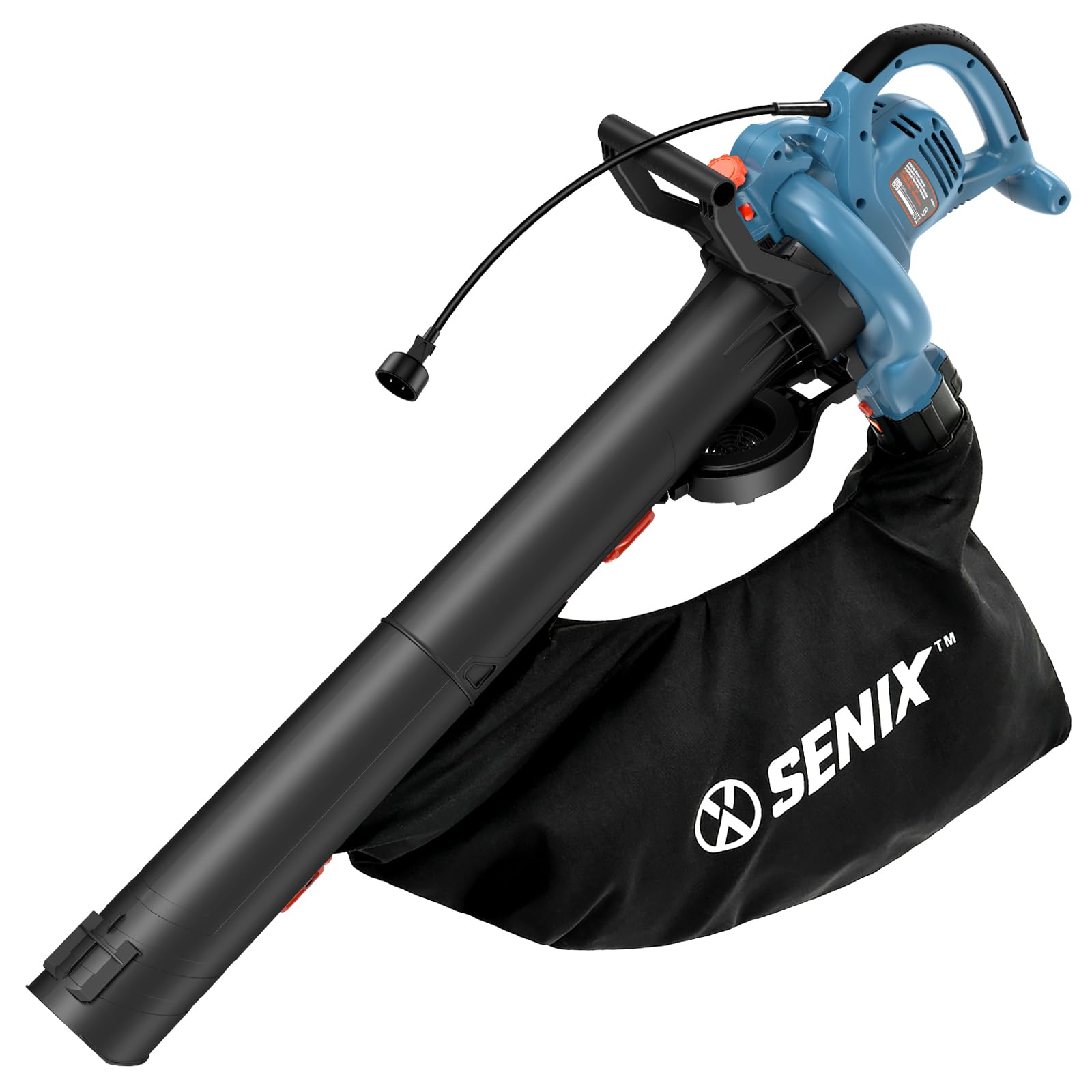
SENIX AC-AE 3-in-1

88 /100
Kirk Score Excellent
Air Flow
420 CFM
Air Speed
179 MPH
Item Weight
7 lb
Bag Capacity
1.24 bushels
Check Details on Amazon

Pros

  • Lightest body in this group at 7 pounds
  • 420 CFM, the highest airflow here
  • Six-position speed dial plus concentrator nozzle
  • Three-year limited warranty

Cons

  • Lowest top speed here, so wet leaves need a second pass

Seven pounds empty is why we kept reaching for the SENIX. Vacuuming is the mode that punishes weight, because you're steering a tube along the ground while the bag fills and the whole machine pulls forward, and this is the lightest body in the group by a couple of pounds. Across a full afternoon that's the difference between finishing the side yard and deciding it can wait until spring.

Airflow is the surprise. At 420 CFM it moves more air than anything else we recommend, and the concentrator nozzle focuses that volume into a stream that pushes small rocks across a patio. The six-position dial covers beds to driveway without the jump from barely-there to hurricane that the two-speed machines give you.

The catch is speed. A 179 MPH top speed is the lowest of the four here, and speed is what breaks the surface tension on leaves that have been through a rain. Dry oak and maple disappear up the tube; soaked sycamore takes a second pass and some patience. If your leaf drop is dry and you clean up weekly, you'll never notice. If you wait until the last weekend in November, you will.

The bag is a 1.24-bushel reusable sack, the cord retainer is built in, and the warranty runs three years — the longest of anything here. What it lacks is the decades of corded blower-vac history that Toro and BLACK+DECKER bring, which is worth weighing if you keep a tool until it dies.

Bottom line: Buy the SENIX if your arms are doing the deciding: it's the lightest machine here and moves the most air, as long as your leaves come down dry.

Check Latest Price
#03

Easiest to Empty

BLACK+DECKER BV6000

86 /100
Kirk Score Excellent
Air Flow
400 CFM
Air Speed
250 MPH
Item Weight
8.1 lb
Noise Level
68 dB
Check Details on Amazon

Pros

  • Disposable tie-and-toss bags plus a reusable bag
  • 250 MPH air speed, the highest here
  • 68 dB, the quietest unit in this group
  • 8.1 pounds with a detachable shoulder strap

Cons

  • Two speeds only, with no fine dial between them

The tie-and-toss bag is the reason to buy this one. Two disposable bags come in the box along with a reusable assembly, so you can seal a wet, gritty load and put it at the curb instead of pulling leaf pulp out of a cloth sack by hand. Anyone who has emptied a canvas bag in a cold drizzle will understand why we rate that so highly.

The rest of the machine is competitive rather than clever. 400 CFM and 250 MPH — the highest air speed here — plus a high-impact metal fan that grinds through the sort of twiggy debris that clogs a plastic impeller, and a 16:1 mulch ratio that's second only to the WORX. A full bag goes further than its capacity suggests.

Sixty-eight decibels is the other number we care about: it's the quietest of the four by a wide margin, which is not a small thing with the neighbor's windows open. At 8.1 pounds it's easy to carry, though the shoulder-strap bag means you're hauling the load rather than wearing it. Two speeds instead of a dial is the compromise — the low setting is genuinely gentle on beds, and you give up the fine control the Toro offers in between.

One thing to plan for: the exhaust throws grit and dust back at your legs, especially as the bag fills. Glasses and long trousers make it a non-issue, and it's the same story on every vacuum of this shape.

Bottom line: The BV6000 is the one to buy if you hate emptying bags: tie-and-toss disposable bags mean you never scrape wet leaves out of cloth, and it's the quietest machine here too.

Check Latest Price
#04

Maximum mulch compaction

WORX Trivac WG509

86 /100
Kirk Score Excellent
Air Flow
350 CFM
Air Speed
210 MPH
Item Weight
9.3 lb
Mulch Ratio
18:1
Check Details on Amazon

Pros

  • 18:1 mulch ratio, the best compaction here
  • Variable-speed control with a wide range
  • Quick change between blower and vacuum tubes

Cons

  • Suction falls off on damp, clinging leaves
  • 9.3 pounds in a bulky barrel shape

Eighteen to one is the number the Trivac hangs its hat on, and it's the highest mulch ratio in this guide. That means eighteen bags of loose leaves become one bag of shreds, which matters if your town charges by the bag or your compost bin is already full of tomato vines.

Pickup is more uneven than the ratio suggests. Dry leaves vanish up the tube exactly as promised and the bag takes a satisfying volume of them before it needs emptying. Damp leaves are a different afternoon — they cling, they ball up, and we went back over patches that the Toro and the SENIX cleared in a single pass. Autumn rain is not on your side here.

At 9.3 pounds it sits between the Toro and the BLACK+DECKER on paper, and the barrel-heavy housing feels like more than the number when you hold it out in front of you. The variable-speed control covers a genuinely wide range, which is more than the two-speed machines manage, and changing between blower and vacuum is quick enough to do mid-job.

What deserves watching is heat. A twig caught in the fan stops the airflow, and the motor doesn't carry much margin when that happens, so cut the power and clear the tube rather than pushing through. Do that and you have a lot of shredding capability for the outlay.

Bottom line: The Trivac's 18:1 mulch ratio packs more leaves into a bag than anything else here, which makes it worth a look if disposal is your bottleneck — just expect to work harder on damp leaves.

Check Latest Price

How We Tested Leaf Vacuums With Bags

We started by gathering corded electric blower-vac-mulchers that came with a reusable collection bag, then compared stated airflow, mulch ratio, bag capacity, and weight against owner feedback about clogs, emptying, and long-term wear. From that shortlist, we brought in 12 models and ran them for six months across fall cleanups: dry maple leaves on a lawn, damp oak leaves along a driveway edge, and light debris in garden beds. Each unit went through several full bag cycles, including emptying and refitting the bag while wearing gloves.

On dry leaves, we noted how quickly the nozzle pulled a scattered pile into the tube and whether leaves shot through or stalled at the intake. On damp leaves, we watched for clogging at the impeller and checked whether the bag sealed tightly enough to keep dust from blowing back at us. We weighed each unit before and after a full bag, carried it one-handed to a dump spot, and emptied it to see whether the mulch dropped cleanly or had to be shaken loose. We also timed the switch from blower to vacuum mode and the bag refit.

After six months, we checked seams, zippers, straps, and impeller wear; loose fittings and cracked bags lost points. We judged value by how much useful work each unit did per fill and whether the bag and connections still felt solid after repeated empties. The models that kept pulling leaves without constant unclogging and stayed manageable to carry are the ones that rose to the top.

How to Choose a Leaf Vacuum with a Bag

Air speed, air flow, and what your leaves actually need

CFM is how much air moves past the tube; MPH is how fast it moves. Volume clears a wide driveway of dry leaves in sweeping passes, while speed is what breaks the surface tension on a wet, matted layer. Buy for the leaves you actually get, not the ones in the photo.

If your cleanup is dry and regular, the widest airflow earns its keep — the SENIX's 420 CFM is the largest volume here. If you're vacuuming a week after a rain, top speed matters more: the BLACK+DECKER's 250 MPH and the Toro's 235 MPH do more for you than another 20 CFM. We'd rather have speed than volume in a wet autumn — and most autumns are wet.

The bag decides how the afternoon goes

Three arrangements show up in this category: a collection bag slung off the handle, a backpack harness, and a disposable bag you seal and throw away. Bigger capacity isn't automatically better, because a full bag is weight you're carrying — emptying ease stops you more often than a small sack does.

Look hard at the opening. A cloth bag needs a wide mouth and a slick lining or you'll be pulling leaf pulp out by hand in the cold; the BV6000 sidesteps that entirely with two disposable bags in the box. A backpack keeps the load off one shoulder, but the hose joins are the part that wears, so check how they attach before you commit.

Weight, balance, and the bag that gets heavier

Seven pounds sounds trivial and 10 sounds fine, until you're holding either out in front of you for an hour. Vacuuming is the punishing mode, not blowing: the tube is on the ground, the bag is filling, and the mass creeps forward as you work.

Everything here sits between 7 and 10 pounds empty, so a couple of pounds is a real difference across a full afternoon, and a barrel-shaped housing feels heavier than the scale suggests. The SENIX is the one for long sessions; the Toro's extra mass buys a metal impeller that survives twigs.

Metal impeller or plastic, and what a mulch ratio means

The impeller is the fan that both blows and shreds. Metal ones shrug off twigs, acorns, and the odd pine cone; plastic ones are lighter and cheaper until something hard goes through them. The mulch ratio — 18:1 on the WORX, 16:1 on the BLACK+DECKER — is how far the machine shrinks leaves before they hit the bag, so a higher number means fewer empties and fewer bags at the curb.

Neither figure tells you how well a machine picks up. That's air speed and airflow. Treat the ratio as a disposal measurement, not a performance one, and don't pay extra for a big number if your leaves go into a loose compost pile anyway.

Living with a cord

Blower-vacs of this size draw around 12 amps, which makes the extension cord part of the tool. A thin 16-gauge run will sag and heat up; use the shortest heavy-gauge outdoor cord that reaches, on a GFCI-protected outdoor outlet, and keep it behind you rather than looping it around the work area.

A cord retainer keeps the two cords joined while you drag, and the Toro, SENIX, and BLACK+DECKER all have one — a loose overhand knot in the connection does the same job on a machine without it. Plan the reach before you start: the machine's cord plus your extension sets how far from the outlet you can work.

Frequently Asked Questions

Final Verdict

The Toro Ultra is the one we'd put in most garages. The infinite speed dial and serrated metal impeller handle a delicate flower bed and a wet, twiggy pile with the same machine, and it carries the strongest performance record of the four here. Two pounds less and it would be perfect.

That gap is exactly what the SENIX fills for long afternoons — lightest body, most airflow, and a top speed that asks for patience on soaked leaves. If the chore you dread is emptying the bag rather than carrying the machine, the BLACK+DECKER BV6000's tie-and-toss bags settle it.