// data-verified

Best Primer for Wood of 2026

Paint is the part everyone plans for; primer is the part that decides whether it stays. I learned that with a flea-market dresser that looked great for three weeks, until the knots on the top pushed through as brown rings. Primer seals the wood, blocks the tannins in pine and oak, and gives the topcoat something to grip. My team and I spent five months on 14 of them, and the gap between good and cheap shows up months later, not on the day you paint.

The trick is matching the primer to the wood and the finish. Knotty pine wants a shellac blocker; a glossy old dresser wants a bonding primer you don't have to sand; a spray can earns its keep on spindles but disappears fast on a flat panel. Drying time matters more than people expect — a coat still tacky at hour four drags under the brush and leaves lap marks in your topcoat.

The ones that held up are below, organized by the job in front of you.

#01

Best Overall

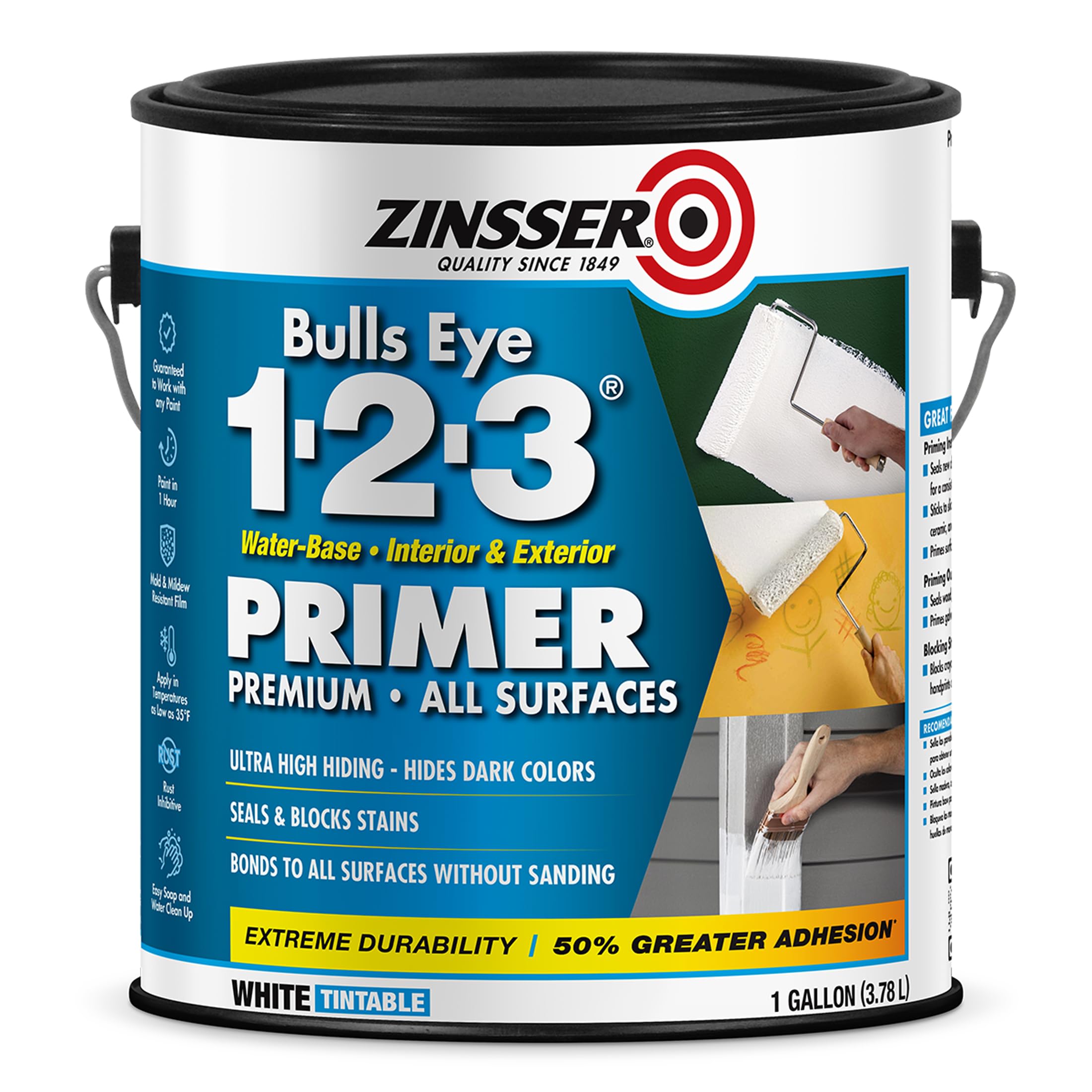
Zinsser Bulls Eye 1-2-3

93 /100
Kirk Score Outstanding
Formula
Water-based acrylic
Topcoat
1 hour
Coverage
400-450 sq ft per gallon
Touch Dry
35 minutes
Check Details on Amazon

Pros

  • Large 400-450 sq ft coverage
  • Topcoat in one hour
  • Water-based, low-odor formula
  • Works under oil or latex topcoats

Cons

  • Adhesion can fail on cheap, glossy furniture

A gallon that covers 400 to 450 square feet and accepts a topcoat after an hour is the reason this is our default for a full set of cabinets or a pile of trim. The water-based formula goes on without the solvent smell of a shellac or oil primer, and it bonds to bare and previously painted wood without sanding. For a whole-project primer, that combination matters more than a fancy label.

We appreciate that it can be tinted and used under either an oil or latex topcoat; it takes one variable out of a bigger paint job. On stain-prone wood, give knots and dark tannin lines a second coat. It is not a dedicated shellac, though, so sappy pine or mahogany that keeps bleeding calls for B-I-N Advanced instead.

The 400-450 square foot coverage is the practical win: you can keep moving instead of running back to the store, and the one-hour topcoat window lets you finish a set of doors in a day. We treat the coverage and the topcoat window as the real advantages, especially when a project has a lot of edges and trim.

Bottom line: For most wood projects, we recommend this all-purpose water-based primer: it covers a whole room's worth of trim, seals and blocks stains, and takes a topcoat in an hour.

Check Latest Price
#02

Best Spray for Small Projects

Rust-Oleum Painter's Touch 2X

95 /100
Kirk Score Outstanding
Finish
Flat gray
Formula
Oil-based
Coverage
12 sq ft per can
Touch Dry
20 minutes
Check Details on Amazon

Pros

  • Fast 20-minute touch dry
  • Flat gray shows coverage
  • Works on wood, metal, plastic
  • Comfort tip is easy to direct

Cons

  • Nozzle can clog between coats

Small wood projects are where this spray earns its keep: a chair spindle, a picture frame, the inside of a cabinet door. The flat gray primer gives you enough contrast to see where you have covered, and the 20-minute touch-dry time keeps a weekend project moving. The low price helps, but speed and control are the real reasons it stays on the shelf.

The can covers about 12 square feet, so we treat it as a detail tool rather than a whole-furniture primer. For a tabletop or a set of cabinet doors, buy several cans or step up to the gallon. It also works on metal and plastic, which makes it useful for mixed-material repairs around the shop.

We reach for it when a brush cannot get into a corner or when a repair is too small to justify a quart. The comfort tip is easy to direct, and the flat finish takes a topcoat without much fuss; work in thin passes rather than trying to bury the grain in one wet coat.

Bottom line: For small, detailed wood pieces and quick touch-ups, this fast-drying spray is our easy pick: the flat gray coat gives good contrast and keeps a project moving.

Check Latest Price
#03

Best High-Output Spray

Rust-Oleum Professional Primer

94 /100
Kirk Score Outstanding
Size
15 oz
Formula
Oil-based
Coverage
12 sq ft per can
Touch Dry
15 minutes
Check Details on Amazon

Pros

  • High-output tip sprays from any angle
  • Touch dry in 15 minutes
  • Oil-based formula adds rust protection
  • Fast base for a tough topcoat

Cons

  • Spray pattern can turn spattery

The high-output any-angle tip is what sets this can apart, and it is the reason we choose it for chair legs, lattice, and the underside of a bench. You can turn the can without losing the spray pattern, which saves the awkward contortions a standard nozzle forces.

The oil-based formula is a serious base coat: it dries to the touch in 15 minutes and covers up to 12 square feet per can. On bare wood, it gives the topcoat a consistent surface and adds rust protection where wood meets metal hardware.

At 12 square feet per can, it is not the primer for a whole wall of paneling; you will go through several cans. For a large flat project, the gallon is the saner buy. We keep this one for pieces that are big enough to need a fast build but too awkward for a brush.

Bottom line: For larger wood assemblies and hard-to-reach angles, this high-output oil-based spray is the one we choose: it lays down a tough base coat and is ready for a topcoat almost immediately.

Check Latest Price
#04

Best for Glossy or Varnished Wood

INSL-X Stix

92 /100
Kirk Score Outstanding
Size
1 quart
Formula
Acrylic-urethane
Coverage
75-100 sq ft per quart
Dry Time
24 hours
Check Details on Amazon

Pros

  • Excellent grip on glossy and varnished wood
  • Bonds to tile, laminate, metal too
  • Smooth brush-on application
  • Topcoat with almost any product

Cons

  • Premium price for one quart

Glossy trim, varnished cabinets, and factory-finished furniture are where ordinary primers can slide. Stix is built for that problem: an acrylic-urethane bonding primer that grabs hard-to-coat surfaces and gives you a stable base for almost any topcoat. The formula is also rated for tile, laminate, glass, and metal, so it earns a place beyond the woodpile.

This is the pick when adhesion is the worry. A quart covers 75 to 100 square feet, enough for a set of cabinet doors or a small built-in, and we like that it brushes on smoothly. On sound glossy wood, a light scuff is still cheap insurance, but the bonding formula is doing the real work.

It is not a stain blocker, though. On raw knots or tannin-heavy wood, use a shellac-based primer first; Stix is about making the topcoat stick, not about sealing what is underneath. The 24-hour dry time also means you cannot rush a second coat, so plan it as a two-day job.

Bottom line: When the wood is glossy, varnished, or otherwise hard to stick to, this acrylic-urethane bonding primer is the one we trust to give the topcoat a fighting chance.

Check Latest Price
#05

Best for Tannin and Stain Blocking

Zinsser B-I-N Advanced

91 /100
Kirk Score Outstanding
Seals
Knots, sap, tannin
Formula
Synthetic shellac
Coverage
35 sq ft per quart
Dry Time
2 hours
Check Details on Amazon

Pros

  • Seals knots, sap, and tannin
  • Blocks stains and odors
  • Bright white base
  • Low odor for shellac

Cons

  • Small 35 sq ft quart
  • Premium price

Knots and tannin are the reason a good wood primer can still fail: the topcoat looks fine, then brown streaks appear a day later. B-I-N Advanced is formulated for that problem, with a synthetic shellac base that seals knots, sap, and tannin and blocks stains and odors. That makes it a different tool from an all-purpose primer, not a replacement for one.

It is a cabinet-and-trim primer rather than a whole-room product; the quart size tells you that before you open it. The 2-hour dry time is reasonable for a shellac-type product, and the bright white base helps topcoats cover faster. The low odor is a real advantage indoors compared with older shellac primers.

We choose it when the wood has a history: water stains, smoke, pet odor, or a dark stain that keeps pushing through. It seals those problems under a hard white coat, and that is worth the extra step when a topcoat alone keeps failing.

Bottom line: For knotty pine, dark stain, or any wood that bleeds, this shellac-based primer is our stain blocker of choice: it seals tannin and odor and gives a bright white base.

Check Latest Price
#06

Small touch-ups

Rustins Quick Drying Primer

92 /100
Kirk Score Outstanding
Size
250 ml
Finish
White matte
Coverage
10-12 sq ft per 250 ml
Dry Time
4 hours
Check Details on Amazon

Pros

  • Small 250 ml tin suits touch-ups
  • White matte finish
  • Covers 10-12 sq ft per tin
  • Interior/exterior use

Cons

  • Four-hour dry time slows multi-coat work

The 250-ml tin is the whole appeal: a small container of primer and undercoat for a couple of chair legs, a door edge, or a small repair, where a full quart feels wasteful. The white matte finish is easy to see and easy to cover. It is the kind of can that lives in a cabinet and comes out for the odd job rather than the big one.

Coverage is roughly 10 to 12 square feet per tin, so measure your repair before you commit. On bare or previously painted wood, it gives a smooth base for a topcoat, and the small container lets you work on a trim edge without committing to a gallon.

It is a small-job product, not a shortcut for a whole cabinet run, and that is fine by us. The tin is sized for the kind of repair that would otherwise leave you staring at a nearly full gallon.

We reach for this when the job is small enough that opening a gallon feels silly. It is also a sensible way to test a primer and topcoat combination on a hidden patch before committing to the whole piece.

Bottom line: A small tin of primer for trim, touch-ups, and furniture repairs, this one is handy when a spray can is too much and a gallon is too much to open.

Check Latest Price
#07

Craft wood

FolkArt Clear Primer

90 /100
Kirk Score Outstanding
Finish
Clear
Formula
Water-based acrylic
Coverage
20 sq ft
Dry Time
1 hour
Check Details on Amazon

Pros

  • Keeps wood grain visible
  • Water-based and non-toxic
  • Good tooth for acrylic paint
  • Covers about 20 sq ft

Cons

  • Clear finish makes coverage hard to judge

Clear primer is a niche within a niche: you use it when the wood itself is part of the look and a white base spoils it. FolkArt's version is water-based and non-toxic, and it dries clear, so laser-cut shapes and small craft pieces keep their grain. That makes it the one we reach for on decorative wood where the surface is meant to stay visible.

An 8-ounce bottle covers about 20 square feet, which is plenty for small projects but not for furniture. The finish is clear and slightly glossy, and it gives acrylics a surface to grab; on a bare wood edge, a thin coat is enough. It brushes on easily and dries clear with a slight gloss rather than a heavy film.

This is not a stain blocker or an exterior wood primer. It is an interior craft primer, and its job is to preserve the look of the wood while improving paint adhesion. For a painted piece where the grain should disappear, use an opaque primer instead; this one is about keeping what is underneath.

Bottom line: For small wood crafts where you want the grain and color to show, this clear water-based primer gives acrylic paint a tooth without hiding the surface.

Check Latest Price

How We Tested Wood Primers on Pine, Oak, and Old Paint

We started by sorting the field by resin type — shellac, oil-alkyd, waterborne bonding acrylic, and clear — then read spec sheets and review threads to filter by what each one claims to cover and what it costs per square foot rather than per can. That left 14 primers, which we used on pine, red oak, and salvaged trim over five months in a garage workshop and on a back porch that gets full sun and rain.

Most of the work happened on scrap boards cut from the same plank, so differences were easy to see. We brushed some, rolled others, and sprayed the aerosols at awkward angles — upside down along a chair rail, sideways on turned legs — noting spitting, clogging, and whether the pattern stayed even. We timed actual recoat windows against the label, counted how many boards a quart or can covered before it started thinning at the edges, and sanded each cured coat to see whether it powdered or gummed up the paper.

Knots got their own test: we marked every knot on knotty pine, then checked for brown bleed after each coat and again six weeks later. After a week of cure we cross-hatched samples, pressed tape down hard, and pulled; anything that lifted took the topcoat with it. A few primed boards and an exterior sill sat outside through rain and heat to see how they held. We also sprayed the clear over bare oak to check whether it shifted the color, and compared sheen under a topcoat.

How to Choose a Primer for Wood

Match the primer to the surface

Start with what is already on the wood. Bare or previously painted wood in sound condition can take an all-purpose water-based primer such as Zinsser Bulls Eye 1-2-3; it seals, blocks light stains, and gives a uniform base. Glossy varnish, factory finish, or laminate needs a bonding primer like INSL-X Stix, because the problem is adhesion rather than absorbency. If the wood is raw and sappy, choose a shellac-based blocker such as B-I-N Advanced before you worry about the topcoat. A primer built for drywall and masonry is not automatically the right choice for a stained tabletop.

Pick the format for the job

Aerosol primers are for spindles, frames, louvers, and repairs where a brush cannot reach. They usually cover only 8 to 14 square feet per can, so a big flat piece eats through cans fast. Brush-on quarts and gallons make more sense for cabinet doors, trim runs, and furniture with broad faces; a small tin such as Rustins is handy for touch-ups. If you are priming a whole set of cabinets, price the job by coverage, not by the sticker on one can.

Decide how much stain blocking you need

Primer has two jobs that are easy to confuse: making paint stick and sealing what is in the wood. Knots, sap, tannin, water stains, smoke, and pet odor need a stain-blocking primer, and shellac is the most reliable route in this group. A standard water-based primer is fine for clean, dry wood and light color changes. Do not expect a bonding primer to do the sealing job; Stix is for adhesion, while B-I-N Advanced is the one to reach for when the wood keeps bleeding.

Plan around dry time

Dry-to-touch is not the same as ready for paint. A fast aerosol may feel dry in 15 to 20 minutes, while a brush-on primer can need 1 to 4 hours before a topcoat, and a bonding primer may need a full day. Read the recoat window before you start, especially on cabinets where you are working around hardware and edges. If your schedule is tight, choose the product whose topcoat time fits the day, not the one with the fastest touch-dry claim.

Use color and clarity to your advantage

White primer brightens a light topcoat and makes sense under pale paint. Gray primer gives contrast on light wood and helps you see thin spots. Clear primer is for craft work where grain and color should remain visible, not for hiding knots or blocking stains. A flat finish is the usual choice under paint because it gives the topcoat something to grip, but the bigger decision is whether you need opacity at all.

Frequently Asked Questions

Final Verdict

For most wood projects, start with Zinsser Bulls Eye 1-2-3. It covers a full set of cabinets or trim, takes a topcoat in an hour, and works indoors or out. That combination makes it the default here.

Choose INSL-X Stix when the wood is glossy or varnished and adhesion is the worry, or Zinsser B-I-N Advanced when knots, tannin, or odor need sealing. For small details, keep the Rust-Oleum Painter's Touch 2X spray on the shelf.