// data-verified

Best Grout Removal Tools of 2026

Grout removal has a cruel kind of math to it: the faster a tool cuts, the more likely it is to jump the joint and gouge the tile beside it. I learned that the hard way on a bathroom floor where one slipped blade chipped a tile I couldn't replace. What separates these tools isn't power — it's the shape of the cutting edge, carbide versus diamond grit, whether the kerf matches the width of the grout line, and for oscillating blades, whether the mount even fits the multitool you already own.

Over the past four months, my team and I worked through 16 grout removal tools — hand saws, carbide scrapers, and oscillating blades — on real jobs: a cracking shower stall, a kitchen backsplash, and that same floor. A handful cut a clean line in seconds and were still biting at the end of the job; others dulled out before the first square foot was done. The picks below are the ones I'd hand someone without a caveat.

#01

Best Overall

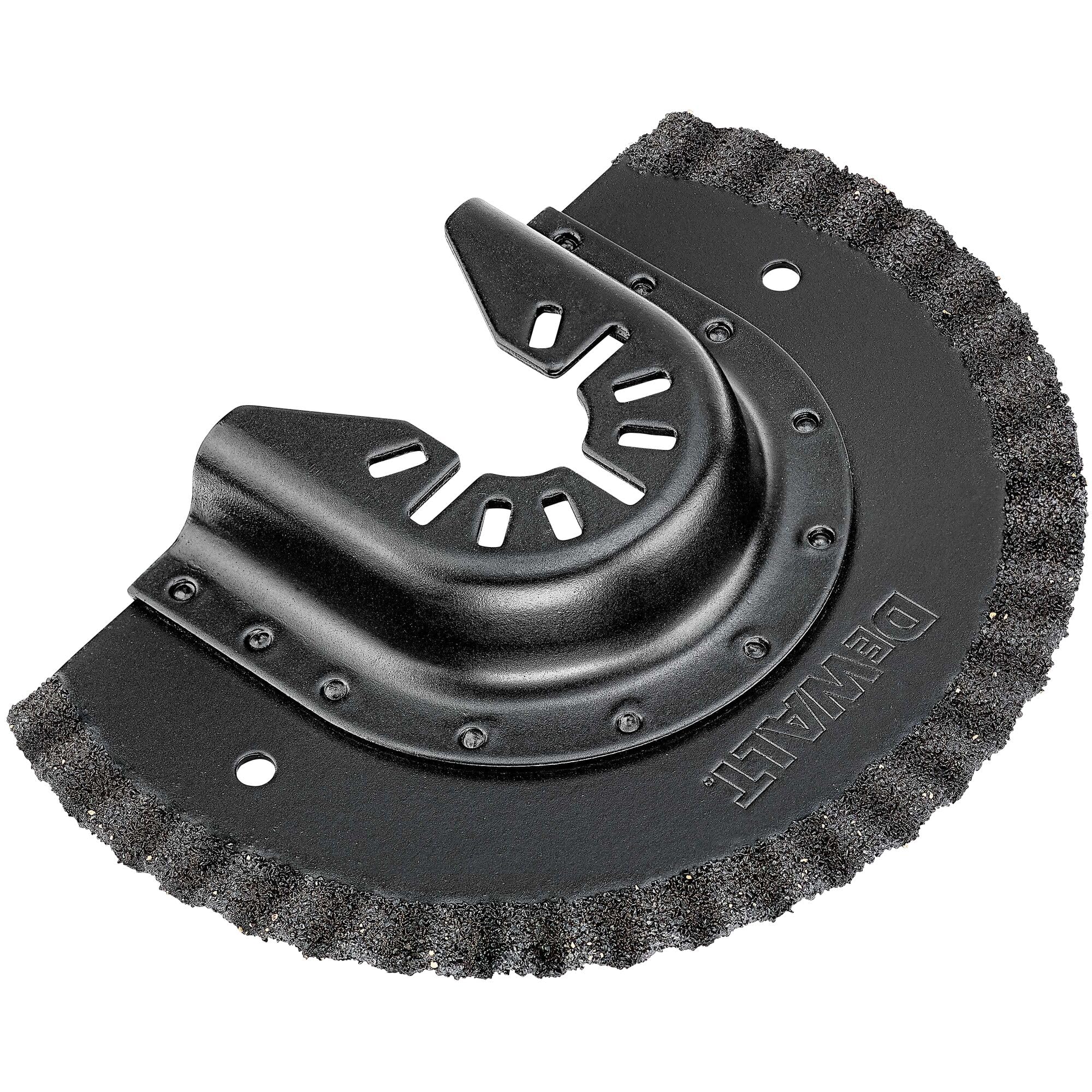
DEWALT DWA4220 Grout Blade

92 /100
Kirk Score Outstanding
Tool Fit
All major brands, no adapter
Cutting Edge
Carbide edging
Blades Included
1
Check Details on Amazon

Pros

  • Bites into old grout immediately
  • Universal fit with no adapter
  • Fast enough for a whole floor

Cons

  • Blade can work loose in some clamps
  • One blade per pack; a floor needs a spare

The first joint tells you what a grout blade is worth. A dull one skates across the surface and polishes the grout instead of cutting it; this DEWALT bites on contact and leaves a clean channel behind it. That's the carbide edging doing the work, and it's what makes the blade worth fitting before you've finished the first tile.

If you already own an oscillating multi-tool, this is the blade to buy. It fits every major brand without an adapter, so there's no spacer to lose, and it cuts old floor grout fast enough that a bathroom stops feeling like a punishment. It costs more per blade than the import multi-packs and earns the difference back on the first tile.

Where it gives trouble is the mount, not the grit. The carbide edging holds up well; the slotted end that makes the blade fit everything can also let it work loose in a clamp that doesn't close all the way. Seat it flat, check it after the first few passes, and don't overtighten the tool.

Buy a spare with the first blade. Old sanded grout is abrasive by design, and a blade that quits halfway through a floor costs more in lost time than a spare does in money. For a repair behind a sink, one is plenty; for a whole floor, keep a second in the drawer.

Bottom line: Our default grout blade: it fits any oscillating tool without an adapter, bites into old floor grout immediately, and asks only that you buy a spare.

Check Latest Price
#02

Best for Narrow Grout Lines

Dremel MM501 Grout Blade

91 /100
Kirk Score Outstanding
Kerf
1/16 in.
Tool Fit
Universal Quick-Fit
Max Speed
21,000 OPM
Cutting Edge
Carbide
Check Details on Amazon

Pros

  • 1/16-inch kerf fits tight joints
  • Rated for full tool speed
  • Fits nearly every oscillating tool

Cons

  • Sits loose in some tool clamps
  • Costs more per blade than import sets

One-sixteenth of an inch is the whole argument for this blade. At that thickness it drops into narrow grout lines that a wider blade rides over, and it takes out the joint without widening it into something new grout can't fill. If your tile was set tight, this is the shape to buy.

It's rated to run at the top of a multi-tool's speed range — 21,000 oscillations per minute — and the carbide edge is happiest when you let it. Low speed with heavy pressure is how these blades die; light passes at full speed cut cleaner and keep the edge longer. The universal quick-fit interface covers Dremel, Bosch, Makita, Milwaukee and Rockwell, though a clamp on some tools grips it less firmly than a brand-matched blade does.

For thin joints, this is the blade we pick over the DEWALT. It costs more per blade than the import sets, and what you get for that is a 1/16-inch kerf matched here only by the EZARC three-pack, plus an edge that keeps working past the first wall. On a job this tedious, that's worth more than the difference. Fit it to a tool whose clamp is snug and it's the least frustrating way to open a tight grout line.

Bottom line: For thin grout lines, this is the blade we buy: a 1/16-inch kerf that follows tight joints without widening them, and an edge that outlasts the bargain blades here.

Check Latest Price
#03

Best for Whole-Room Jobs

XXGO XG8020S 20-Pack

88 /100
Kirk Score Excellent
Grout Width
1/8 in.
Cutting Edge
Diamond grit
Blade Thickness
2.3 mm
Blades Included
20
Check Details on Amazon

Pros

  • Twenty blades keep a whole floor moving
  • 2.3 mm width suits 1/8-inch joints
  • Also clears thinset, mortar and plaster

Cons

  • Grit dulls fast, so count on swapping
  • Won't fit some Bosch and Dremel models

Twenty blades in one box is a strategy, not a gimmick. At about 2.3 mm these are sized for 1/8-inch joints, and the idea is that you swap a dulled blade for a fresh one instead of leaning on a tired edge and burning the tile faces with it. If your grout lines are wide, that math works.

We reach for the twenty-pack on whole floors. One diamond blade won't clear a room — the grit on the leading edge goes before the rest of the blade does — and having nineteen more in the box turns that from a problem into a rhythm: cut, swap, cut. A blade you're happy to throw away beats a blade you're afraid to use up.

Two things to check before ordering. These are specified for 1/8-inch grout, not the 1/16-inch lines the thin blades cover, so they won't drop into a tight joint. And the fit list excludes several Bosch and Dremel models unless the included adapter is used, so match the blade to your tool first. Off the grout line, they're also useful for thinset, mortar and plaster cleanup — worth knowing if you're fixing a botched tile job rather than re-grouting one.

Bottom line: We reach for the twenty-pack on whole floors of 1/8-inch joints, where having a fresh cutting edge within arm's reach matters more than any single blade.

Check Latest Price
#04

Best Budget

Coitak Grout Saw

87 /100
Kirk Score Excellent
Length
8 in.
Blade Type
Diamond-style toothed
Spare Blades
3
Check Details on Amazon

Pros

  • Angled head reaches corners and edges
  • Three spare blades in the pack
  • 8-inch handle keeps hands clear

Cons

  • Toothed blade stalls in sound, hard grout
  • Can mark polished tile if it slips out

We keep this saw for the places a powered blade can't go: the last inch against a wall, the inside corner behind a toilet, the joint under a cabinet toe kick. The angled head drops into a grout line at an angle a multi-tool can't hold, and the 8-inch handle keeps your knuckles off the tile instead of scraping them along it.

Two screws hold each blade, so a swap is a screwdriver job rather than a trip to the store, and the pack arrives with three spares — enough that you finish the job on the original tool. The toothed steel blade shaves and scrapes rather than grinding, which is why it suits grout that's already failing.

It's the wrong tool for sound, hard grout, where the teeth skate and you end up leaning on the handle with nothing to show for it. On polished tile, keep the blade inside the joint — the tooth line will mark a glaze if you let it wander across the face. Short strokes, blade in the groove, and let the teeth do the cutting.

Bottom line: We keep this saw for the edges and corners a multi-tool can't reach: cheap, controllable, and supplied with three spare blades.

Check Latest Price
#05

Best for Deep Joints

REETREE Grout Removal Tool

88 /100
Kirk Score Excellent
Length
13 in.
Tip Sizes
Fine, medium, large
Tip Material
Tungsten steel
Scraping Edges
8
Check Details on Amazon

Pros

  • Three tip sizes match different joints
  • 13-inch shaft reaches deep corners
  • Eight scraping edges per head

Cons

  • Hard grout needs real hand pressure
  • Point can snap if levered sideways

Three tip widths on one scraper sounds like a marketing line until you hit a room where the grout line changes width between the floor and the wall. The fine, medium and large points let you match the joint instead of forcing one tip into all of it, and the head carries eight scraping edges, so there's another one ready when the first dulls.

At 13 inches, the shaft reaches the back of a shower or under a lip where a short scraper gives out, and the soft grip is shaped for pushing rather than squeezing. What it asks in return is effort. This is a hand tool, and hard grout comes out at the speed of your arm — anyone with grip trouble should look at the powered blades first.

Tungsten steel is hard, hard enough that a slip across a glazed tile leaves a mark, and brittle enough that levering sideways can snap the point. Scrape along the joint instead of prying with it and it becomes the tool that opens lines too narrow or too deep for a blade. On the awkward joints where the multi-tool has run out of reach, this is what we pick up next.

Bottom line: Joints too deep or too awkward for a blade are where this tungsten scraper earns its keep: three tip widths, 13 inches of reach, and a point that needs a steady hand.

Check Latest Price
#06

Best for Detail Work

Goldblatt Carbide Grout Tool

86 /100
Kirk Score Excellent
Tip
Triangular carbide
Length
9.65 in.
Spare Tip
1 included
Check Details on Amazon

Pros

  • Triangular tip turns grout out of corners
  • Fine groove keeps the point in the joint
  • Spare carbide tip included

Cons

  • Hard tip can mark soft or glazed tile

A triangular carbide tip does something a flat blade can't: it gets into the corner where two grout lines meet and turns the grout out instead of pushing it further down the joint. That's the reason to own one, and the reason it earns drawer space even when the multi-tool is already out.

The flat edge and sharp corner are backed by a fine groove ground into the tip, which keeps the point tracking in the joint rather than skating across the glaze. The rod is carbon steel, the handle is a soft-grip shape under five inches long, and the whole tool measures 9.65 inches — long enough to reach across a floor tile, short enough to control in a corner.

A spare tip comes in the box, and the tip is the part that wears. Replace it rather than the tool and the scraper keeps going long after the first point rounds over, which separates it from the one-piece scrapers that are finished when the point is.

Where it earns its keep is detail work: thinset specks in a joint you're about to re-grout, old silicone at the tub edge, mortar smeared on a tile face, the corner of a shower niche. It isn't a whole-floor tool and it doesn't try to be — but as the finishing pass after a powered blade has run the length of the room, it beats loading another blade.

Bottom line: For corners, caulk lines and the last of the thinset, this carbide scraper is the detail tool we keep coming back to — just keep the point inside the joint.

Check Latest Price
#07

Caulk and putty

ALLWAY GCR Removal Tool

87 /100
Kirk Score Excellent
Handle
Soft grip
Length
8.5 in.
Material
Carbon steel, polypropylene
Check Details on Amazon

Pros

  • Pulls caulk and crumbling grout out
  • No power tool or dust
  • Steel point can be resharpened

Cons

  • Won't cut sound, hard grout
  • Point dulls on a long run

The least expensive tool here is also the one that handles a job the blades can't: hooked steel teeth that pull loose caulk, putty and crumbling grout out of a joint with no power tool and no cloud of dust. If the grout you're removing is already failing rather than solid, this is the tool we suggest first.

It's carbon steel in a polypropylene handle with a soft, nonslip grip, 8.5 inches overall, and the tooth sits at an angle that lets you pull toward yourself rather than push away. The point isn't delicate. If it rounds over, a few passes on a grinding wheel bring it back, which is not something you can do with a grit-edged blade.

It won't touch sound grout, and that's the limit worth knowing before you buy: on hard, intact joints you'll work harder for less. For a tub surround's worth of old caulk, a few cracked joints, or putty around a window, it does the job and leaves nothing to clean up but a sweep.

Bottom line: For crumbling grout and old caulk, this is the first tool we hand over: hooked steel teeth, a soft grip, and no dust to clean up.

Check Latest Price
#08

Thin flush cuts

EZARC Diamond Blade 3-Pack

87 /100
Kirk Score Excellent
Kerf
1/16 in. (1.6 mm)
Adapters
2 included
Cutting Edge
Diamond grit
Blades Included
3
Check Details on Amazon

Pros

  • 1/16-inch kerf fits narrow joints
  • Two adapters included
  • Three blades per pack

Cons

  • Grit wears off the front edge
  • Blade-to-blade life varies

Two blades from the same pack can behave like different tools. One walks through a grout line in smooth rocking passes; the next stalls, bounces, and leaves you pressing harder for the same cut. The variable is the diamond grit on the leading edge and how much of it is still there.

The kerf is the reason to buy them: about 1/16 inch, thin enough to drop into a tight joint and to make a flush cut against a wall or a cabinet edge. Two adapters come in the pack for tools that need them, and the blades seat without wobble in the common quick-release mounts.

Longevity is where they're uneven. The grit is a thin layer on the front edge, and once it's gone the blade is a smooth piece of steel. One blade clears a whole joint and the next quits early — the same story at a different point on the curve. That's an argument for the three-pack, not against it: treat them as consumables and the math works.

We like these for the narrow kerf and the flush cut, and we like the three-pack because it assumes the blades will die. What we don't like is not knowing which of the three is going to be the good one. For a small repair in a tight joint that's a fair trade; on a floor, the inconsistency turns into a rhythm of swapping blades, which is exactly what a bigger pack is for.

Bottom line: These thin diamond blades are what we fit when a joint is tight and the cut has to finish flush against a wall; buy the three-pack knowing one may die early.

Check Latest Price

How We Tested Grout Removal Tools, From Hand Saws to Oscillating Blades

Every tool here started in a spreadsheet, not a shopping cart. We pulled together the hand saws, carbide scrapers, and oscillating blades that sit at the top of the category, then cut anything that couldn't handle a vertical joint, anything whose mount was proprietary to a single power tool, and anything with a kerf too wide or narrow for the 1/16- and 1/8-inch joints most bathrooms and backsplashes actually have. That left 16 tools, and we bought them all.

Testing ran four months across three jobs: a shower stall with crumbling grout, a kitchen backsplash, and a bathroom floor with those narrow 1/8-inch lines. For each tool we timed how long it took to clear a three-foot run, noted whether it tracked the joint or wandered out and nicked the tile edge, and checked whether the body left enough room for knuckles against a wall or in a corner. Handles were judged at the end of the job, not the start — which ones still felt fine in a wet hand after forty minutes.

For sharpness and durability we counted feet, not impressions: how much grout came out before the tool needed real downward pressure, and whether it finished a full joint looking the way it started. Diamond rims got inspected for bare patches where grit had shed; carbide teeth got checked for rounding at the tips. Fit had its own pass, with every oscillating blade mounted on a corded tool and two cordless ones to see how much slop the interface allowed before the cut went crooked.

How to Choose a Grout Removal Tool

Match the Blade to the Joint, Not the Other Way Around

Powered grout blades come in fixed widths, and the two that matter here are 1/16 inch and roughly 1/8 inch. A blade narrower than the joint grinds a groove down the middle and leaves the sides standing; a blade wider than the joint rides on the tile faces, bounces, and puts the edges at risk. Neither one will widen a joint to fit itself.

Measure across several joints, because grout lines are rarely the same width everywhere in a room. If you land between sizes, buy the narrow blade and take two passes. It's slower than a wide blade and far less likely to catch a tile edge.

Carbide Grit, Diamond Grit, or a Solid Tip

Grit blades grind; solid tips scrape. Carbide grit is aggressive and inexpensive, and it goes dull on old sanded grout faster than the packaging suggests. Diamond grit holds up longer in hard material, but it's a thin layer on the edge, and once it strips the blade is a smooth piece of steel. A solid carbide or tungsten point doesn't wear out in the same way, but it removes grout at the speed of your arm.

The practical consequence is that blades are consumables. For a repair behind a sink, one good blade is plenty. For a floor, buy a multi-blade pack — a blade that quits halfway through costs more in lost time than the spares do in money.

When a Hand Tool Beats the Power Tool

A blade can't reach the last inch against a wall, the inside corner behind a toilet, or the joint under a toe kick, and a multi-tool in a bathroom throws fine dust over the whole room. A hand saw or scraper reaches those places and leaves debris you can sweep rather than dust you breathe.

Keep both. Run the powered blade down the open runs of joint and switch to an 8-inch saw or a carbide scraper for corners, edges, and any grout that's already crumbling. On a small repair — a few cracked joints around a tub — the hand tool alone is often quicker than setting up a multi-tool.

Check Your Tool's Blade Mount Before You Order

Oscillating blades attach through a hole pattern and a clamp, and "universal" on the package doesn't guarantee a snug fit on your tool. A blade with an oversized center hole will fit the pins and still work loose mid-cut, which is the most common way a good blade gets ruined. Starlock tools need Starlock blades; everything else uses a pin-and-clamp interface, sometimes with an adapter in the box.

Look at the blade mount on your own tool before you buy, and if a listing names your model as a poor fit, believe it. Rotary-tool owners take a different route entirely — Dremel's 568-01 guide with a 569 bit — and that's a separate setup with its own consumable to keep buying.

Frequently Asked Questions

Final Verdict

The DEWALT DWA4220 is the tool we point most people to. It fits the oscillating multi-tool they already own, needs no adapter, and cuts old floor grout fast enough that the job stops being a weekend. Buy a spare blade with it.

If your joints are 1/16 inch, the Dremel MM501 is the better blade, full stop — a narrower kerf that leaves a joint you can actually re-grout. And if the grout is crumbling rather than solid, start with the Coitak saw and skip the dust entirely.