// data-verified

Best Basement Floor Coatings of 2026

A basement floor is the last thing anyone notices and the first thing to fail when the job goes sideways. Paint that lifts in sheets, epoxy that clouds white where the slab held a little moisture, a sealer that beads water for one season and then quits — I've watched all three happen in my own basement, and none of them were entirely the coating's fault. The slab underneath decides more than the can does, which is why the glossy five-gallon bucket your neighbor swears by can turn into a weekend you'd rather forget.

We spent eight months putting 12 coatings on basement floors — poured slabs, patched ones, painted concrete that had to be stripped, and one sad patch of old vinyl tile. Drying and recoat times got a stopwatch, because anything that stayed tacky past its window usually had cold, damp air to blame. The low- and zero-VOC products still smell like a workshop for the first evening, and a basement with one small window holds that longer than a garage would.

Value is easy to misjudge here, too — the coatings that shrugged off a season of dragged storage bins and a dehumidifier running day and night were never the ones in the biggest bucket. The picks below are sorted by what your slab is actually doing down there.

#01

Best Overall

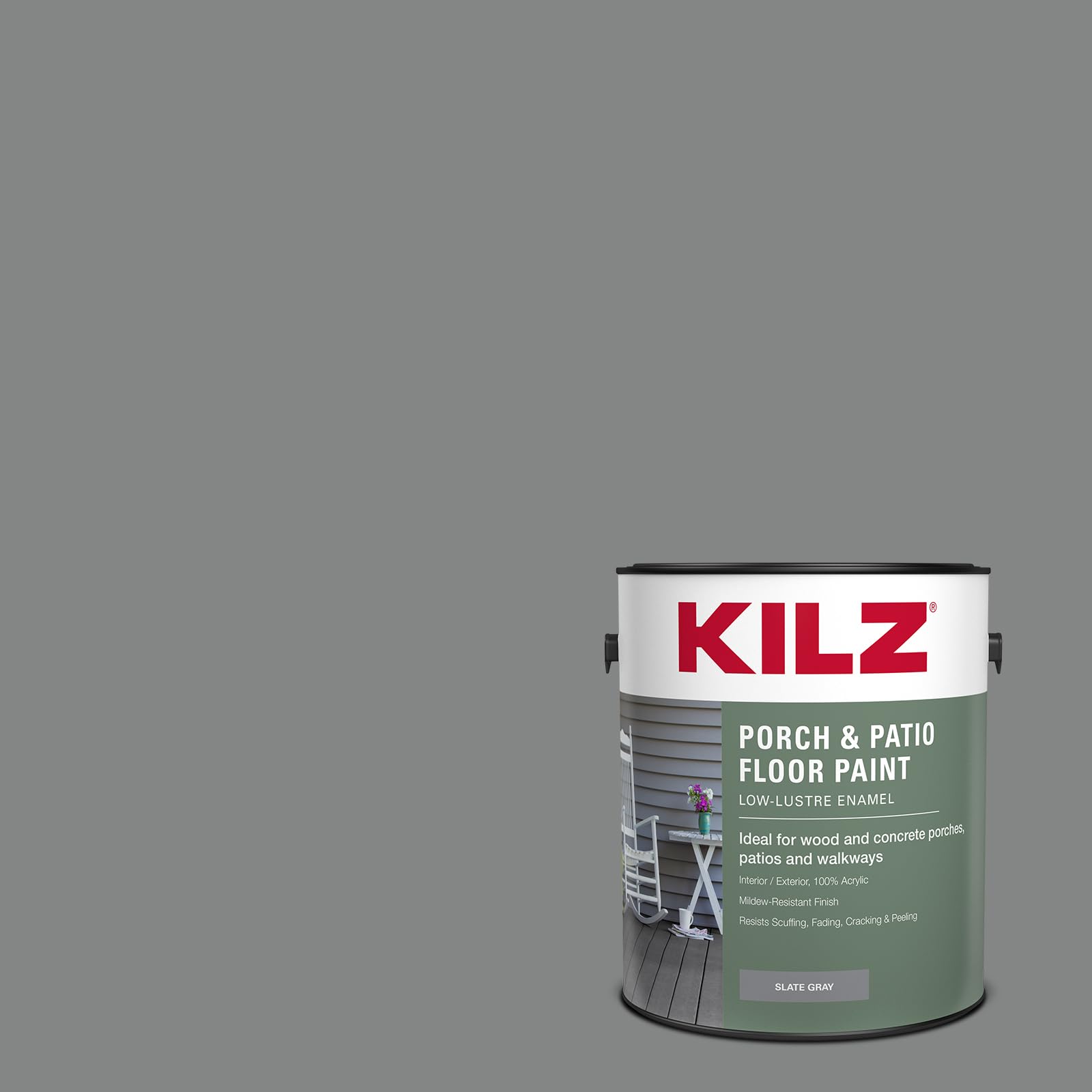
KILZ Porch & Patio Floor Paint

92 /100
Kirk Score Outstanding
Finish
Satin, Slate Gray
Coverage
200-400 sq ft per gallon
Dry Time
1 hour
Full Cure
6 hours
Check Details on Amazon

Pros

  • One-part acrylic
  • Recoat in about an hour, 6-hour full cure
  • 200-400 sq ft per gallon depending on surface
  • Mild indoors and cleans up with soap and water

Cons

  • Needs a dry slab

An enclosed basement is a bad place for a fume-heavy coating, which is most of why this one is our default. It's a 100% acrylic latex you can roll with the door open and a box fan running, there's nothing to mix and no pot life ticking down while you're still taping the baseboard, and the smell clears as it dries instead of hanging in the stairwell. A gallon covers 200 to 400 square feet depending on how rough the slab is, the recoat window is about an hour, and the full cure is six.

On a swept and etched slab it goes down like a heavy-bodied paint and levels to a low-lustre satin. The Slate Gray reads lighter on the floor than it does on the lid, which helps in a basement with two small windows — it brightens the room without turning it into a hospital corridor. Cleanup is soap and water while it's wet, and the second coat goes on the same afternoon.

What you're buying is a paint film, not a build coat. Under foot traffic and a mop it holds up; drag a loaded shelf across it or run a bike over it and you'll see scuffs, and a rough or chalky slab wears through at the high spots first. That's the trade for the mild odor and the price, and it's a fair one in a room where the floor is background. The consolation is touch-up: same can, small roller, mark gone — try that on a flake-epoxy floor.

Where it stops being the right answer is a hard-worked floor. If the basement is a workshop, a gym with dropped weights, or somewhere a jack rolls under a project, go to a 100% solids epoxy and accept the prep and the mixing. For a rec room, a laundry, a hallway, or a rental you're turning over on a budget, this is the coat we put down.

Bottom line: For a dry basement slab you want to finish this weekend, this is the paint we hand people: one part, mild indoors, recoat in an hour, and cheap enough to do two coats.

Check Latest Price
#02

Best for Damp Slabs

Armor SX5000 WB Sealer

91 /100
Kirk Score Outstanding
Size
5 gallons
Coverage
175-225 sq ft per gallon
Appearance
Clear, no color change
Application
Pump sprayer or roller
Check Details on Amazon

Pros

  • No film to peel, scuff, or lift
  • Water beads and runs off treated concrete
  • 175-225 sq ft per gallon
  • Ready to use

Cons

  • Leaves bare concrete
  • Won't fill cracks or hide stains

Nothing about your floor changes if you use this, and in a lot of basements that's the entire appeal. It's a water-based silane-siloxane that soaks into the concrete and reacts below the surface instead of sitting on top of it, so there's no sheen to scuff, no film to lift at the edges, and no color to get wrong. The concrete keeps looking like concrete.

What sold us is how little there is to get wrong. It's ready to use out of the pail, it goes down with a pump sprayer and a roller to even out the wet patches, and a few days later water beads on the surface and runs off instead of soaking in. Because it doesn't build a film, it also leaves the slab able to breathe, so it doesn't trap vapor the way a coating can — which is why this is our pick for a floor you're not sure about.

A gallon covers 175 to 225 square feet, so the five-gallon pail handles a typical basement slab with room to spare, and the maker's line is seven to ten years of protection — longer than we can vouch for. Our use for it is the basement that isn't trying to be a room: storage, a workshop corner, the space under a porch, anywhere the concrete itself is fine and you just want it to stop dusting and stop drinking water.

Bottom line: If your basement slab is bare concrete and you want to keep it that way, this is the sealer: it soaks in, shuts down dust and water absorption, and leaves no film to peel.

Check Latest Price
#03

Best for Small Floors and Stairs

Rust-Oleum Home Floor Coating

85 /100
Kirk Score Excellent
Finish
Matte, Charcoal Gray
Coverage
Up to 100 sq ft per kit
Foot Traffic
24 hours
Kit Contents
Base and top coat, 2 quarts
Check Details on Amazon

Pros

  • Goes over tile, vinyl, laminate, and wood
  • No stripping, sanding, or priming
  • Low-odor water-based base and top coat

Cons

  • Charcoal matte can read cool or blue indoors
  • Top coat takes care to lay off evenly

The differentiator is what's already on the floor. Most coatings here want bare, etched concrete; this one is built to go over ceramic and porcelain tile, sheet vinyl, laminate, and wood without stripping, sanding, or priming — which in a basement usually means covering something ugly rather than removing it. One kit covers up to 100 square feet, so a laundry room, a bath, or a staircase is realistic and a full rec room is four or five kits.

It's a two-part system, base coat then top coat after about six hours, and it's water-based and low-odor, which matters when the only ventilation is a stairwell. Light foot traffic after 24 hours. The matte finish is a genuinely different look from the gloss epoxies on this page: flat, modern, closer to a painted floor than a coated garage.

We file this as a small-project product, and that's how it earns its place — the prep is a scrub and a rinse, not a grinder. The thing to watch is color. Charcoal gray in a matte finish pulls cool under LED light, and in a room with no daylight it can read bluer than the chip suggests, so coat a scrap of board first and look at it in the actual room before you commit the whole floor.

Bottom line: For a laundry room, a basement bath, or a flight of stairs, one kit does the job — and it goes over old tile or vinyl without stripping, sanding, or priming.

Check Latest Price
#04

Best Heavy-Duty Finish

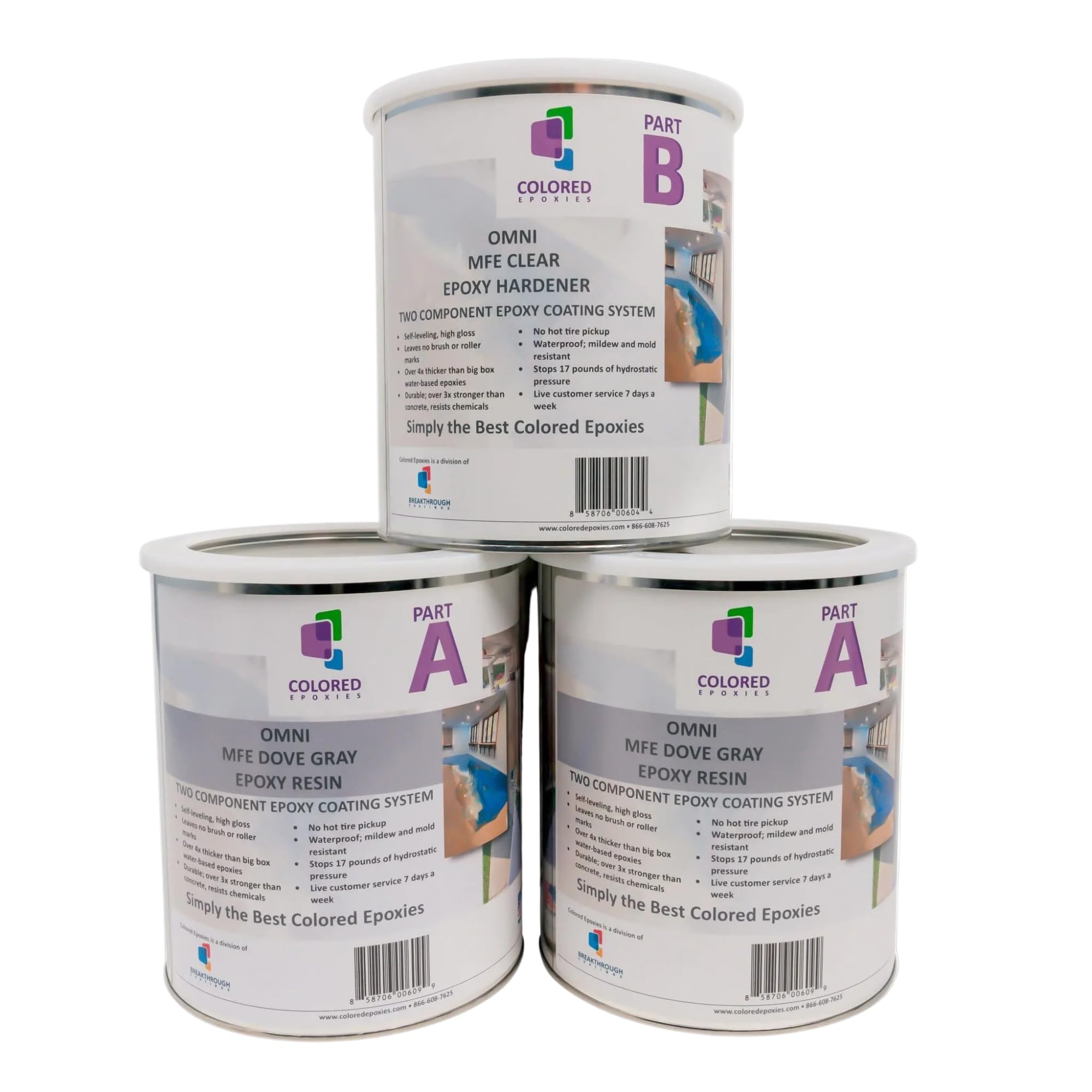
Colored Epoxies 3-Gallon Kit

86 /100
Kirk Score Excellent
Size
3 gallons
Finish
Self-leveling high gloss
Solids
100% solids, zero VOC
Working Time
30-minute pot life, up to 2.5 hours open
Check Details on Amazon

Pros

  • 100% solids, zero-VOC epoxy
  • Self-leveling, seamless high-gloss finish
  • 30-minute pot life, up to 2.5 hours open

Cons

  • No published coverage figure to plan from
  • A cool basement slab will slow the cure

Three gallons of 100% solids epoxy is a different animal from a gallon of floor paint. There's no water or solvent to evaporate off, so what you pour is essentially what stays on the slab, and it self-levels into a seamless high-gloss sheet rather than a thin colored film. That's why it looks like a poured floor and not a painted one.

We reach for it when the floor has to take real work: dropped tools, spilled oil, a jack under a project car, a surface that gets swept and hosed. Zero VOC matters more in a basement than in a garage, because whatever comes off that floor ends up upstairs — there's no solvent smell to chase out of the house. And a 30-minute pot life with up to two and a half hours of open time is unusually forgiving for a product this thick.

100% solids is unforgiving about what's underneath. The slab needs to be clean, ground or etched, and genuinely dry; a smooth troweled or previously sealed floor sends you to a grinder, and an oil spot telegraphs straight through. It also doesn't publish a square-footage figure, so confirm coverage for your slab with the seller before you order, because a second kit arriving mid-pour ruins a Saturday. Mix the full kit and scrape the sides — this coating is opaque enough that a half-mixed pail shows.

Bottom line: If your basement is a shop, this is the floor: 100% solids epoxy, zero VOC, self-leveling, and the hardest, most chemical-resistant surface in this group.

Check Latest Price
#05

Best Flake-Finished Kit

Rust-Oleum EpoxyShield Kit

84 /100
Kirk Score Excellent
Base
Two-part water-based epoxy
Included
Decorative chips and concrete etch
Foot Traffic
12-16 hours
Vehicle Traffic
3 days
Check Details on Amazon

Pros

  • Kit includes roller, etch, and color chips
  • Flecks hide stains, patches, and dust
  • Foot traffic in 12-16 hours

Cons

  • Coverage can fall short on porous concrete

Where the Colored Epoxies kit is a professional product that assumes you already know how to prep a slab, this one is packaged for a Saturday: a burst pouch you knead and pour, a roller, a bag of color chips, and an etch packet in the carton. That difference in packaging is most of the difference in what you pay, and it counts for a lot if you've never poured epoxy before.

It's a two-part water-based epoxy that finishes to a gloss dark gray with flecks scattered through it. Light foot traffic after 12 to 16 hours, normal use in a day or two, vehicles after three days — in a basement only the first number matters, and it decides whether you're walking on the floor Sunday morning.

Don't dismiss the chips as decoration. On a slab that's pitted, patched, or stained, a flecked floor breaks up the surface in a way solid gloss can't, and it hides dust and footprints better than a plain coat, which matters in a room where the light comes from one bare bulb. Scatter them while the epoxy is wet and they sit down into the film.

Where this one lives or dies is the cure. A water-based epoxy wants a warm, dry slab, and a cool basement in a wet month is the opposite of that; this is the kind of product that stays soft or lifts where the concrete never dried out. Run a dehumidifier for a few days, pick a warm weekend, and save it for a floor you're sure about. Do that and it's the most finished-looking result on this page for the money — and whether it lasts comes down to prep, since the same kit that holds on an etched slab will lift on one that wasn't.

Bottom line: A two-part epoxy with color chips in the box — the practical route to a hard, finished floor when the slab is stained or patched and you want the floor to hide it.

Check Latest Price
#06

Large, rough floors

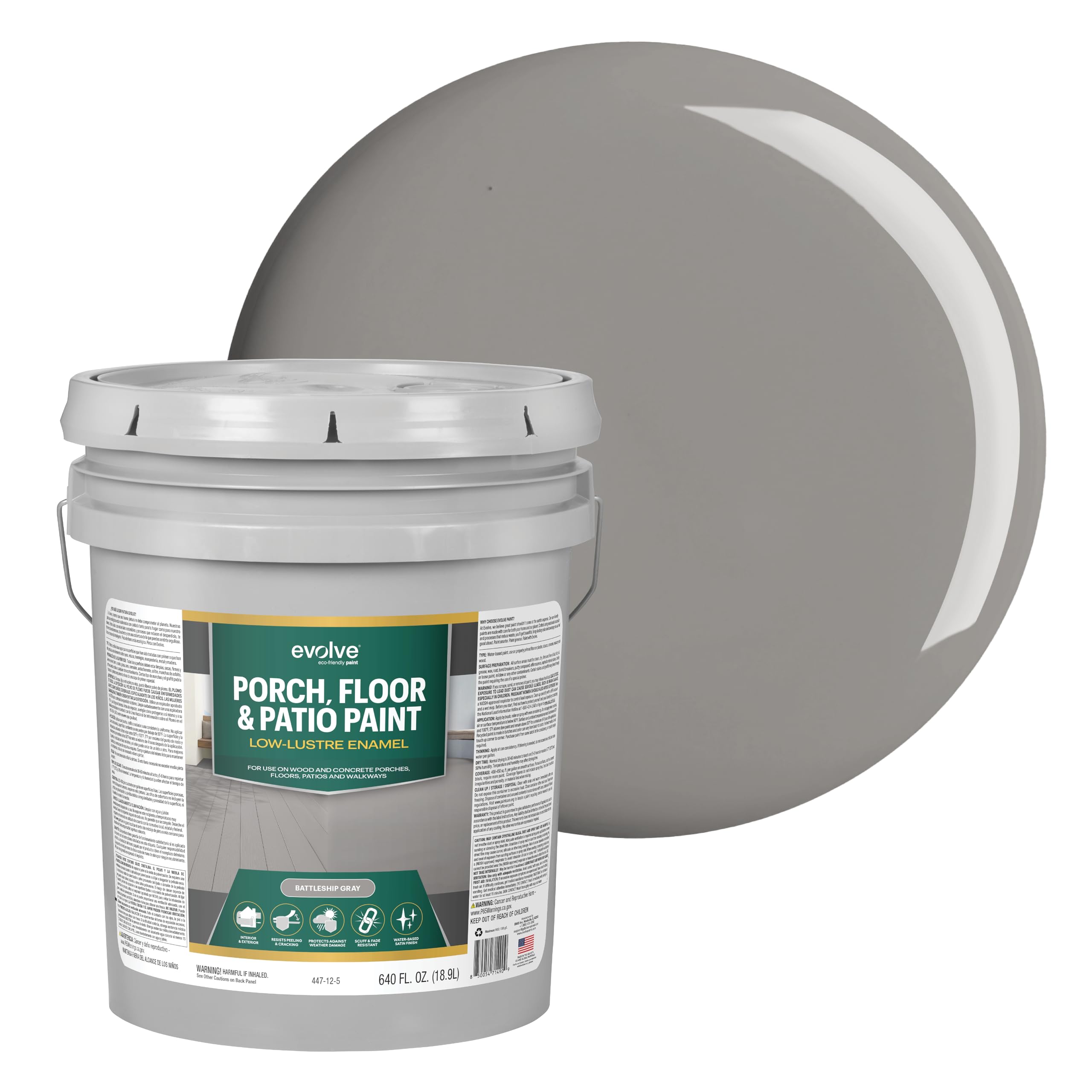
EVOLVE Porch & Floor Paint

83 /100
Kirk Score Excellent
Base
Acrylic latex
Size
5 gallons
Finish
Semi-gloss, Battleship Gray
Dry Time
1 hour
Check Details on Amazon

Pros

  • Five gallons in a single pail
  • One-coat coverage on rough concrete
  • Rolls or brushes on, dries in about an hour

Cons

  • Wears at traffic lanes and needs recoating
  • Color runs lighter or cooler than the swatch

Five gallons is the whole reason this one is here. A big, pitted basement slab drinks paint, and one pail beats stacking four cans and hoping the color matches. It's an acrylic latex that rolls or brushes on and dries in about an hour, it wipes down without the glare of a garage epoxy, and coverage is its strength — on a rough old floor the first coat covered more than we expected.

The gray is the weak spot. It can land lighter or cooler than the name suggests, and mixing pails from two different orders is how you end up with a two-tone floor, so buy the whole job at once and box them together in a clean bucket before you start. Plan the cure around the weather too: thin coats over a dry, warm slab harden in an hour, but a heavy coat in a damp basement can stay tacky well past that. Two thin coats beat one thick one every time.

Bottom line: Five gallons in one pail is the practical answer for a big, rough basement floor — one coat hides a lot, and you're not driving back for another can mid-job.

Check Latest Price
#07

Lower-cost epoxy builds

SIMIRON 3-Gallon Epoxy Kit

81 /100
Kirk Score Excellent
Finish
Self-leveling, Light Gray
Solids
100% solids, solvent-free
Coverage
200-350 sq ft per kit
Full Cure
24 hours
Check Details on Amazon

Pros

  • 100% solids, solvent-free formula
  • Resists water spotting and amine blush
  • Self-leveling light gray gloss

Cons

  • Needs two or three kits to do a full basement

If you want the hard, seamless look without paying the highest kit price on this page, this is the one to work out. It's a 100% solids, solvent-free epoxy that pours and self-levels to a light gray gloss, and the stated coverage of 200 to 350 square feet per three-gallon kit tells you what to expect: a smooth, dense slab lands near the top of that range, and a porous, pitted basement floor eats it and lands you near 200.

The chemistry is aimed at what goes wrong with epoxy in a damp space. It's cycloaliphatic, which is why the maker claims resistance to water spotting and amine blush — the white haze that can bloom across an epoxy floor in humid air. Full cure is listed at 24 hours, and the base is rated for concrete, ceramic, porcelain, and marble if you're coating more than a floor.

The realistic caution is technique. A 100% solids pour is a fast, hot, physical job: mix small batches, pour and spread immediately, and back-roll with a spiked roller to pull trapped air out before it sets. Get a warm, dry slab and do the prep properly and it's a credible route to a hard floor for less than the premium kit. Skip either and the bubbles and soft spots are yours.

Bottom line: A solvent-free, self-leveling epoxy for a hard floor without the top kit price — just plan the square footage carefully, because 3 gallons doesn't stretch far on a rough slab.

Check Latest Price

How We Tested Basement Floor Coatings

We started with roughly 40 products and narrowed by chemistry first. Two-part epoxy, penetrating sealer, and brush-and-roll floor paint solve different problems, so we kept contenders in each camp rather than scoring them against each other. From there we filtered on coverage per gallon, solids content, VOC rating, and whether the kit included what you need to prep a slab. Twelve made the cut and went onto real basement floors over eight months — laundry rooms, storage rooms, a corner gym, and one playroom with a lot of dropped toys.

Before anything went down, we taped a plastic sheet to each slab for 24 hours and checked underneath for condensation, since trapped moisture is what turns a good coating into a peeling one. We patched cracks and noted how well each product covered the patches. Adhesion got tested the blunt way: a coin scrape, a crosshatch cut with a utility knife, and a strip of tape pressed down and yanked off after cure. Ease of application we logged in the doing — how far a pour spread before it needed help, whether overlaps lapped cleanly, and how hard the roller had to work.

We timed walk-on and recoat windows with a stopwatch while logging the room's temperature and humidity. Smell was graded at one hour, one day, and three days with the door shut. Appearance was judged after the second coat, specifically on whether the finish hid trowel marks and patch lines or emphasized them, and how evenly the color sat in raking light from a bare bulb. Then we lived on them: dragged loaded storage bins across, dropped a wrench, spilled detergent and oil and left it overnight, and mopped the way anyone actually mops.

How to Choose a Basement Floor Coating

Test the slab before you buy anything

Tape a two-foot square of clear plastic to the concrete, seal all four edges, and leave it overnight. Condensation on the underside, or a noticeably darker patch of concrete beneath it, means moisture is moving up through the slab — and that changes your whole shopping list. A film coating over a wet slab will blister and peel no matter how carefully you prep it.

White, powdery bloom on the floor, efflorescence, is the same message in slower motion. Deal with the water first, choose a penetrating sealer that lets the slab breathe, or pick a different room for the project.

Prep decides whether it lasts

Peeling almost always comes back to one of three things: oil that wasn't degreased, concrete that wasn't etched, or grit left behind after the rinse. Scrub with a degreaser first, then etch bare concrete with muriatic acid or a citric etch — gloves, eye protection, open window — and rinse until water stops beading on the surface.

Then let it dry for a couple of days and vacuum rather than sweep. A slab that looks dry to the eye can still be holding enough moisture to ruin a two-part coating, and no amount of careful rolling makes up for starting two days early.

Penetrating sealer or a film coating

These solve different problems. A penetrating sealer soaks in and reacts below the surface, so the concrete still looks like concrete, nothing can peel, and vapor isn't trapped. We choose it for utility basements, slabs under a porch, and any floor where moisture is an open question.

A film coating — floor paint or epoxy — gives you a colored, mop-able surface that hides patches and stains, which is what a rec room or a shop wants. The common mistake is buying a film coating for a slab that was asking for a sealer.

Match the chemistry to the room

In a finished basement, odor and cleanup count as much as hardness. A water-based acrylic floor paint is mild, cleans up with soap and water, and takes a recoat in about an hour; it's also the least expensive route to a uniform floor. Two-part epoxy is harder and more chemical-resistant, but it wants a warm, dry slab and an even hand, and a water-based epoxy that never cures is the classic failure in this category.

One hundred percent solids epoxy is a further step up in hardness, prep, and price — and the right call only if the basement is genuinely a work space.

Do the coverage math before you order

Measure the floor, then divide by the coverage on the label and assume the low end on rough or porous concrete. Two coats is normal for paint, and a kit that covers 100 square feet means a 400-square-foot basement needs four kits, not one.

Check the traffic schedule as well: light foot traffic in 12 to 24 hours is typical, but furniture and full use wait days. Buy the whole job in one order and box the containers together so the color matches from wall to wall.

Frequently Asked Questions

Final Verdict

The floor we put in most basements is a can of KILZ Porch & Patio. It's mild enough to use in a closed-up room, it goes on with a roller in an afternoon, and a scuff is a five-minute touch-up rather than a repair. The one thing it needs is a dry slab, and that's the check worth doing before you spend anything.

If the plastic-sheet test shows moisture, or you want the concrete to keep its own look, the Armor SX5000 is the better buy. If the basement is a shop, go harder: the Colored Epoxies kit is the most durable surface here, and it takes abuse that would chew straight through a paint film.