// data-verified

Best Spray Paint for Metal of 2026

Rust doesn't ask permission. It shows up on the mailbox post, the patio chair weld, the spot where the gate paint chipped. A good metal spray paint hides the damage, sticks to what's left, and keeps moisture out long enough that you're not back with a wire brush next spring. That's the fix.

I've painted enough wrought iron to know quality lives in the can, not the color card. We tested 16 cans in gloss black and gloss white over four months, on patio furniture, a bike frame, a shed door, and old railings. I check every nozzle on cardboard first—if it spits or clogs, the whole job suffers. We noted how many coats it took to cover a patch, whether the gloss leveled or stayed streaky, and how the color read in daylight.

Durability is the real test: pieces stayed outside through rain and sun, and I checked edges for chips and rust bleed. Value came down to coverage per can—whether one can finished a chair. The best sprayed cleanly and still looked intact months later.

#01

Best Overall

Rust-Oleum Professional Enamel

95 /100
Kirk Score Outstanding
Coverage
Up to 14 sq ft per can
Surfaces
Ferrous and non-ferrous metal
Dry And Recoat
Touch dry 15 min, recoat in 1 hour
Rust Protection
Oil-based corrosion-resistant enamel
Check Details on Amazon

Pros

  • Oil-based enamel formulated for ferrous and non-ferrous metal
  • Any-angle high-output tip reaches brackets and undersides
  • Touch dry in 15 minutes, recoat within the hour
  • Rust-protective film that holds colour outdoors

Cons

  • Sold only as a six-pack
  • 14 sq ft per can is modest for railings

Bare steel, a rusted gate, the underside of a patio chair: this is the can we reach for when the metal itself is the job rather than one line on a surface list. Rust-Oleum builds the Professional line as an oil-based enamel for ferrous and non-ferrous metal, with wood and masonry along for the ride, and the film is meant to hold its colour against weather instead of sitting on top of it.

Two details put it at the top of this list. The high-output tip sprays at any angle, which is the difference between coating the inside of a railing bracket and giving up on it, and the 15-minute touch dry with a one-hour recoat window means the second coat goes on before you have lost the afternoon. The gloss black lays down evenly and holds its shine, which is most of what an outdoor railing asks for.

The cans themselves are the thing to plan around. Individual cans turn up that will not spray at all, or that push out paste instead of paint, so shake each one hard and test it on a scrap panel before you commit it to a finished surface — and buy where returning a pack is easy. When a can is good the fan is even and the coat covers as promised; the failures are per can, not per formula.

What keeps us coming back is how little it asks of you: two coats in an afternoon and a finish that looks sprayed because it was. This is the can we hand people who are painting metal to keep it, not to decorate it.

Bottom line: Our default for metal that lives outdoors: an oil-based enamel built for ferrous and non-ferrous steel, with any-angle spraying and a one-hour recoat.

Check Latest Price
#02

Best for Mixed Materials

Rust-Oleum Painter's Touch 2X

95 /100
Kirk Score Outstanding
Coverage
12 sq ft per can
Dry Time
Touch dry in 20 minutes
Surfaces
Wood, plastic, metal and more
Pack Size
12 oz cans, six-pack
Check Details on Amazon

Pros

  • Covers metal, wood, plastic and ceramic from one can
  • Cheapest per can of the picks here
  • Any-angle comfort tip eases finger fatigue
  • Gloss black builds evenly in two coats

Cons

  • Least coverage per can of the four picks
  • Full cure runs to 48 hours

Six cans at a time changes the kind of job this suits. This is a pack for a whole set of chairs, a shelf unit and the brackets that hold them rather than for one repair, and per can it is the cheapest paint on this page. The gloss black is deep and even across a flat panel, with the kind of shine that makes tired furniture look refinished rather than repainted.

The surface list is what we like most. Wood, plastic, metal, ceramic and furniture all take the same can, so a project that mixes a steel frame with plastic feet and a wooden top does not need three products and leave you with three half-empty cans. The wide comfort tip is easier on a finger over a long session than a bare button, and it sprays at any angle for the awkward underside work.

Durability is where this one is thinnest. The film chips where metal flexes or where the surface was not scuffed properly, and a can in the pack can turn up with a nozzle that clogs or shatters halfway through. On indoor furniture, plant stands and shelving that is fine; on a step tread or a gate hinge that takes a knock every day, an enamel is the better bet.

Where it earns its place is the second project: the half-can left from the chairs does the plant stand, the bracket and the plastic planter without another trip to the store, which is the whole argument for buying six.

Bottom line: The pack to buy when a project mixes metal with wood or plastic — one can covers all of them, and it is the cheapest per can here.

Check Latest Price
#03

Best Single Can

Krylon Fusion All-In-One

93 /100
Kirk Score Outstanding
Can Size
12 oz
Coverage
Up to 25 sq ft
Surfaces
Nine surfaces, metal first
Rust Protection
Rust-resistant formula
Check Details on Amazon

Pros

  • Nine-surface list with metal named first
  • Up to 25 sq ft of coverage per can
  • Rust-resistant formula for exterior use
  • Single can, no six-pack commitment

Cons

  • Water-resistant finish, not waterproof
  • No warranty on the coating

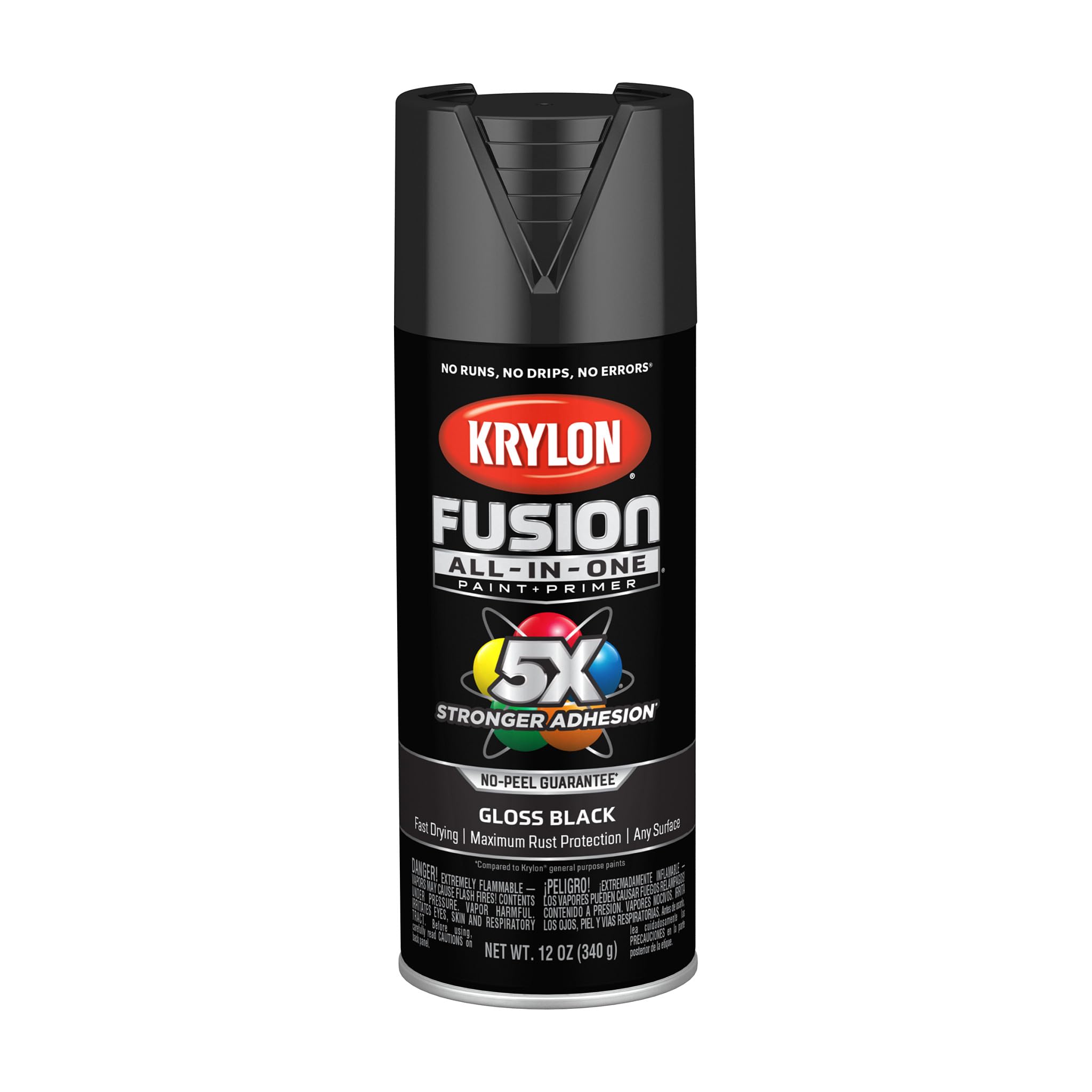
One can, and the widest surface list on this page: metal first, then wood, plastic, laminate, masonry, concrete, wicker, glass and plaster. We think that is the honest description of what Krylon's all-in-one is for — the bracket, lamp base or bike rack that shares a project with everything else, rather than a gate that has to survive a decade of weather on its own.

Coverage runs to a listed 25 square feet, well up on the Rust-Oleum enamels, and the formula carries a rust-resistant label. Krylon's own figures are less reassuring than the headline: a 20-minute full cure quoted next to a two-hour dry time does not add up, so treat the label's optimism as marketing and give anything handled daily a full day before it goes back into service.

For small jobs it is the sensible buy. A mailbox post, a set of shelf brackets, the frame of a folding chair — you get a full 12 ounces to work with, a black that sits comfortably next to factory hardware, and a can you can finish before it skins over in the garage.

Bottom line: For one can rather than a case, start here: metal leads its nine-surface list, and a can covers up to 25 square feet.

Check Latest Price
#04

White metal

Krylon ColorMaxx

93 /100
Kirk Score Outstanding
Finish
Gloss white
Coverage
25 sq ft
Surfaces
Nine surfaces including metal
Rust Protection
Rust-resistant formula
Check Details on Amazon

Pros

  • Only gloss white in this set
  • Covers up to 25 sq ft per can
  • Rust-resistant acrylic that also takes glass and ceramic

Cons

  • Coverage goes on unevenly on some surfaces
  • Chips and flakes where the surface takes knocks

White is the reason this one is here. Every other pick on this page is black or metallic, and if the metal you are painting sits next to white trim, a white appliance or a white-painted chair, this is the only can in the group that answers the question.

It is an acrylic rather than the oil-based enamels the Rust-Oleum cans use, and that shows in the numbers: touch dry in a little over an hour, a 48-hour cure, and a surface list that runs from metal to glass, ceramic, fabric and paper. We think that breadth is genuinely useful when a white project spans a steel frame and a ceramic pot, though it also tells you this is not an industrial coating.

The shade is what to be careful with. A screen swatch is a poor guide to a white, and the gap between a warm white and a cool one shows up immediately against existing trim — so judge it against a physical colour chip if the piece sits beside anything already painted.

Bottom line: The white gloss to buy when the metal has to match light trim; it is the only white here, and it handles glass and ceramic too.

Check Latest Price

How We Tested Metal Spray Paint

We started by pulling every metal-rated spray paint from hardware stores and online listings, then narrowed the shortlist to cans that promised direct-to-metal adhesion, rust protection, and a gloss finish—the things that matter when you're painting a railing rather than a craft project. We ended up with 16 cans in gloss black and gloss white, the two colors most metal touch-ups call for.

Testing ran for four months, and the work happened where paint actually lives: a scuffed patio set, a bike frame, a shed door, and a set of rusted railings. I sprayed each can on a clean metal test panel first, then on the real piece. I noted whether the nozzle spit, clogged, or kept an even fan; how many passes it took to hide a dark patch; and whether the finish leveled to a smooth gloss or stayed pebbled. Color got checked in daylight against the can's cap, not under garage fluorescents.

After curing, the pieces stayed outside through rain and sun for the rest of the test. Every few weeks I checked edges and welds for chips, scratches, and rust bleeding through—the durability question that decides whether a can was a bargain or a false economy. Value came down to coverage per can: whether one can finished a chair or barely started it. The cans that made the list did what the label promised: sprayed cleanly, covered in fewer coats, and still looked intact months later.

How to Choose Spray Paint for Metal

Start With the Formula

The rust protection comes from the resin, not the name on the lid. Oil-based enamels — the Rust-Oleum Professional can here is the clearest example — leave a harder, more weather-resistant film and are the right call for anything that stays outside year-round. Acrylic all-surface paints like the two Krylon cans dry faster and grip a wider spread of materials, which matters when the metal is bolted to plastic or glass, but they are the lighter-duty option.

If the piece is bare, pitted or going back outdoors, pay for the enamel. If it is a bracket, a lamp base or a shelf frame that lives indoors, the all-surface can does the job and saves you buying a second product for the plastic fitting next to it.

Prep Is Most of the Job

Grease, chalky oxidation and loose rust are what make spray paint flake a season later. Wipe the metal down with a degreaser, scuff bare shiny steel and old gloss with a medium abrasive, wire-brush rust back to sound metal and dust it off before you spray.

Thin coats beat one wet pass every time: heavy coats trap solvent, sag at the edges and stay soft for days. Recoat inside the window printed on the can — once an enamel has cured hard, the next coat needs sanding to key to it.

Count Cans Before You Start

Listed coverage in this group runs from 12 square feet a can to 25, and those figures assume a flat, non-porous panel sprayed in one pass. Slats, scrollwork, expanded mesh and tubular frames carry far more surface than their footprint suggests, and overspray is most of the loss.

One can covers a repair. A set of chairs or a railing is a pack job, and buying the pack costs less per can than coming back for a second single halfway through.

Nozzles and Tips Decide the Finish

An any-angle or high-output tip is not a gimmick — it lets you spray the underside of a rail or the inside of a bracket without turning the can upside down and hoping. A wide comfort pad saves your finger on a long session, and it is the difference between an even fan and a pass that stops and starts.

The failure to watch for is a can that spits, splutters or quits partway through. Test every can on a scrap panel before it touches a finished surface, and buy where returning a dud is easy.

Gloss, Colour and What a Screen Won't Tell You

Gloss shows every ding, weld and sanding scratch in the metal. On pitted or imperfect steel a satin or matte hides more and keeps looking cleaner longer, which is worth more than the extra shine on a surface you will look at from three feet away.

Colour is the other trap. A screen swatch is a poor guide to white or to any metallic, and the shift shows up the moment the piece sits beside existing trim. Judge it against a physical colour chip, or buy one can and spray a test panel first.

Frequently Asked Questions

Final Verdict

Buying spray paint for metal comes down to one question: is the metal the whole job, or part of a bigger one?

If it is the whole job — a gate, a railing, a set of outdoor chairs — the Rust-Oleum Professional High Performance Enamel is the can we hand people. The oil-based film is built to hold colour outdoors, the any-angle tip reaches the parts a straight nozzle cannot, and the one-hour recoat keeps a two-coat job inside an afternoon. Test each can on scrap first; that is the one habit this paint rewards.

When the metal is one material among several, the Painter's Touch six-pack covers wood, plastic and steel from the same can and leaves enough for the next project.