Best Overall

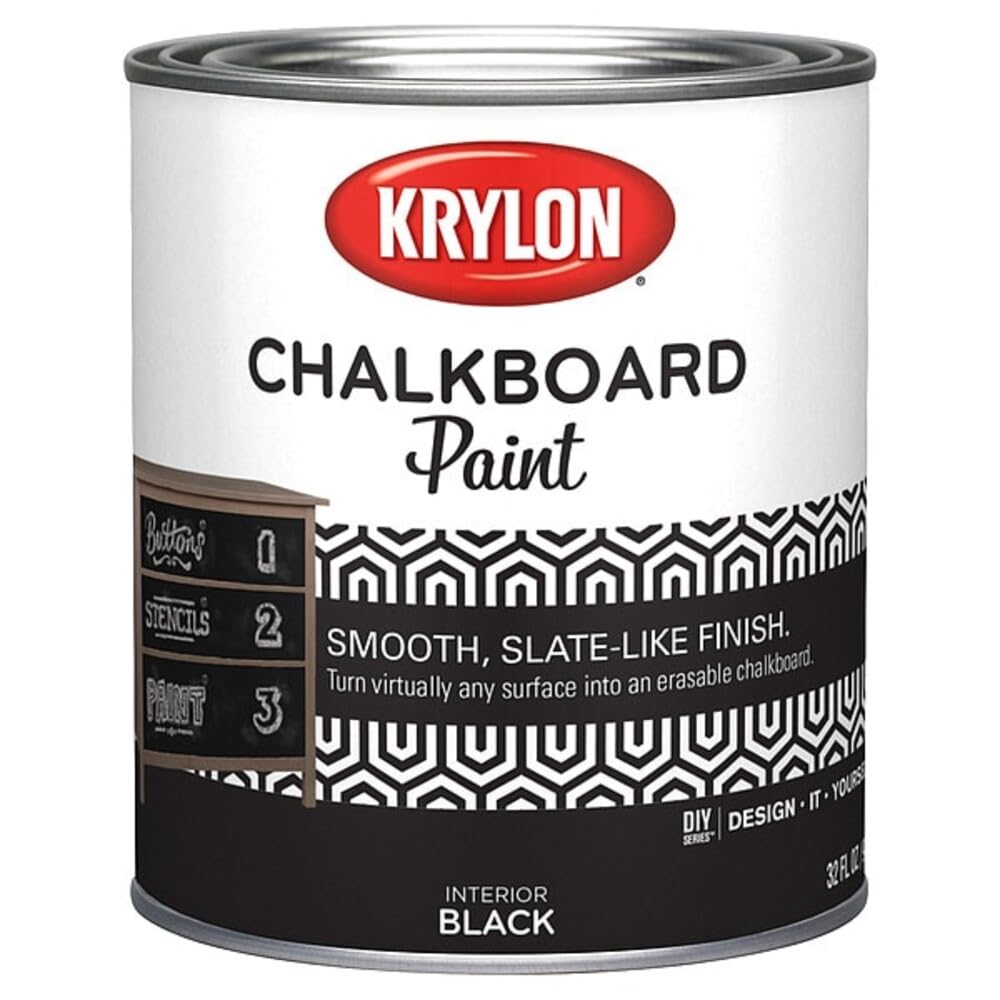
Rust-Oleum Black Chalkboard Paint
- Formula
- Oil-based
- Coverage
- 120 sq ft
- Container
- 30 fl oz
- Dry To Touch
- 30 minutes
Pros
- One can covers up to 120 square feet
- Takes drywall, wood, metal, glass, and masonry
- Cures to a hard matte black that erases with a dry cloth
Cons
- Bare or porous surfaces can need three or four coats
- Chalk markers can leave a tint that won't lift
Thirty ounces goes a long way: the can is rated for up to 120 square feet, and the surface list runs from drywall, plaster, and wood to metal, masonry, glass, and concrete. That range is why it's the one we point at when someone has a wall to do and no idea what's underneath the old paint. The formula is oil-based, and it cures to a hard, flat black rather than the softer film some of the acrylics here leave.
What earns it the top spot is how it behaves once cured. Chalk goes down evenly, a dry cloth takes it back off, and the board reads like a real chalkboard instead of black paint pretending. Give it the full 24 hours before anyone writes, then rub the side of a chalk over the entire surface and erase it — that conditioning pass is what keeps early scribbles from ghosting into the finish.
The oil base is the trade you make for that hardness: ventilation while it dries, mineral spirits for the brushes, and a longer wait before the surface is usable. A wall that has to survive three kids and a stick of chalk is exactly the job where that trade pays off.
Bottom line: For walls, doors, tabletops, and even glass, this is the brush-on we recommend: up to 120 square feet of coverage that cures to a hard, erasable matte.
Check Latest Price