// data-verified

Best Metal Primer of 2026

Bare metal is a hard surface to love: slick, quick to oxidize, and quick to shed a coating that never bonded. A primer is what stands between a paint job and another afternoon with the sander, and the gap between a good one and a bad one shows up a season later — one railing still smooth, the other bubbling at a weld.

The part first-time buyers miss is that this is really two products. Self-etching primers use a mild acid to bite into shiny steel and aluminum so a topcoat has something to grab; rust converters are for metal already pitted past sanding, turning the corrosion itself into a paintable surface. We've spent four months with 14 of them on scrap panels, a rusted fire pit, patio chairs, and a trailer frame, and the gap between good and bad isn't subtle.

Spray cans and quarts both earn their place: a rattle can for awkward shapes, a quart for flat panels and heavy rust. What follows survived the fire pit, the chairs, and one very patient trailer frame.

#01

Best Overall

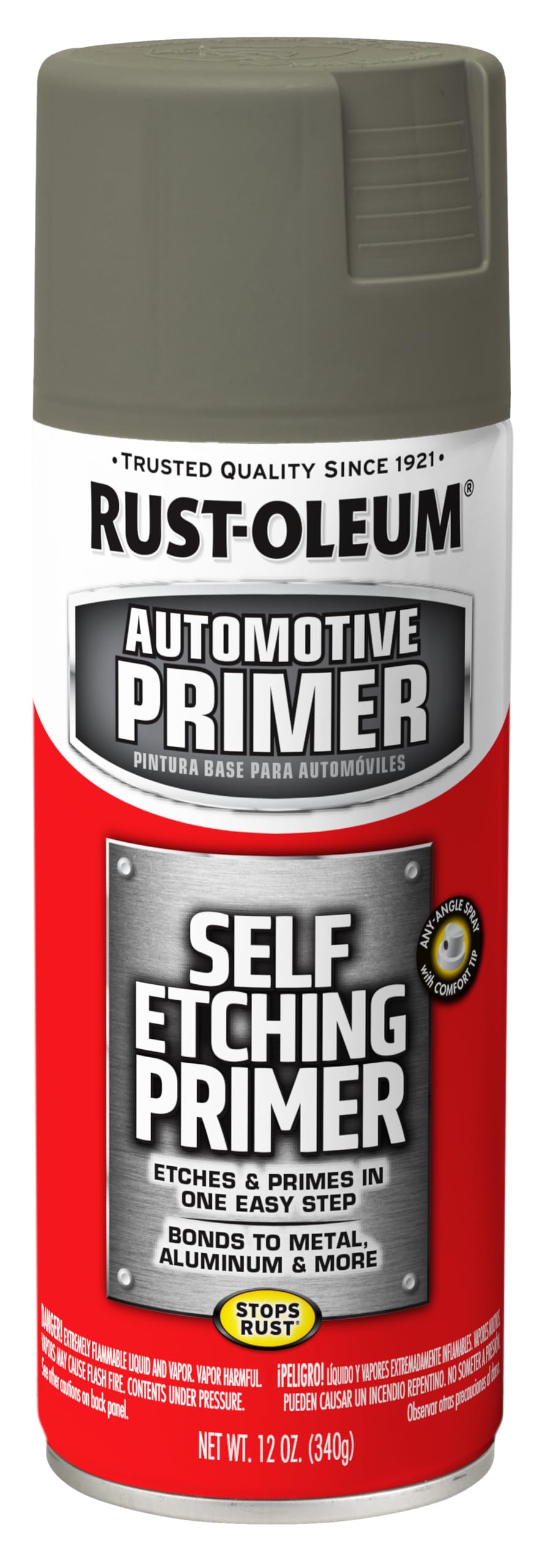
Rust-Oleum Self Etching Primer

93 /100
Kirk Score Outstanding
Size
12 oz
Surface
Bare metal, aluminum, fiberglass
Coverage
Up to 12 sq ft
Dry Time
10 min touch; 30 min topcoat
Check Details on Amazon

Pros

  • Self-etching formula improves adhesion on bare metal
  • Topcoat in 30 minutes
  • Strong spray performance
  • Works on aluminum and fiberglass

Cons

  • Not for heavy rust or painted metal

Bare steel and aluminum are slick surfaces, and a primer that only sits on top is asking for a topcoat to fail. Self-etching primer is the version that creates a chemical tooth, and Rust-Oleum Self Etching Primer is the one we recommend first for that job. The dark green flat finish gives you a visible guide coat—if the metal is green, you have covered it—and the can is set up for small parts, brackets, and patch panels rather than a whole gate.

The formula is oil-based and built for bare metal, aluminum, and fiberglass. The can is rated for up to 12 square feet, with a 10-minute touch dry and a 30-minute topcoat window. That short window is the practical advantage: you can prime a batch of parts, flip them, and keep moving without losing the afternoon. The flat finish also gives the topcoat something to bite into instead of a glossy surface that shows every sanding scratch.

We paid close attention to spray performance because a self-etching primer is only useful if it comes out of the can consistently. This one is strong on that front, and the 12-ounce can is easy to control on small pieces. The coverage is the trade-off you live with: 12 square feet is a small-project number, so a larger railing or set of wheels takes more than one can. Buy two for anything beyond a handful of parts.

The can is built for clean bare metal, and that focus is why it earns the top spot. It does one metal job very well, and it does it without a long recoat wait. The 30-minute topcoat window is the detail that changes a weekend project: you can prime in the morning and paint after lunch.

Bottom line: For bare steel, aluminum, and fiberglass, this is the metal primer we recommend first: it etches for adhesion, topcoats in 30 minutes, and sprays evenly.

Check Latest Price
#02

Best Water-Based for Painted Metal

Zinsser Bulls Eye 1-2-3

93 /100
Kirk Score Outstanding
Base
Water-based
Size
1 quart
Coverage
100 sq ft
Dry Time
1 hour
Check Details on Amazon

Pros

  • Bonds to glossy surfaces without sanding
  • Water-based cleanup and lower odor
  • Covers up to 100 sq ft per quart
  • Rust-inhibitive on ferrous metal

Cons

  • Not for active rust or heavy buildup

A painted steel railing or a metal cabinet is a different job from bare steel. You are not trying to etch raw metal; you are giving a topcoat a stable surface without turning the garage into a solvent cloud. Zinsser Bulls Eye 1-2-3 is the water-based option we kept in the mix for that job, especially when the metal is already painted and sound.

The label calls it a primer-sealer, and that is the right way to think about it. It bonds to glossy surfaces without scuff sanding, covers up to 100 square feet per quart, dries in about an hour, and can be applied at temperatures down to 35°F. We like that it is rust-inhibitive and may be used on ferrous metal. For a front-door project in cool weather, the low application temperature and water cleanup are the details that make it easy to live with.

The mixed-material advantage is real: the same can works on wood, masonry, and drywall as well as metal, so you are not switching primers halfway through a repair. It is a better fit for a painted metal door than a body-shop aerosol, and the flat white base makes a topcoat color easier to read. If you are priming sound metal and want one can that does not smell like a solvent primer, this is the one we point to.

Bottom line: For sound painted metal and mixed surfaces, Zinsser Bulls Eye 1-2-3 is the water-based primer we choose: it bonds without sanding, covers 100 square feet, and cleans up easily.

Check Latest Price
#03

Best for Heavy Rust

Corroseal Rust Converter Primer

92 /100
Kirk Score Outstanding
Base
Water-based
Size
1 quart
Coverage
200-250 sq ft/gal
Dry Time
2 hours
Check Details on Amazon

Pros

  • Converts rust and primes in one step
  • Water-based with soap-and-water cleanup
  • Covers 200-250 sq ft per gallon
  • Turns rust black so treated areas are visible

Cons

  • Won't fill pitting or level rough metal

Heavy rust is a different problem from bare metal. You cannot just paint over it and expect a primer to hold; the rust keeps working underneath. Corroseal is a water-based rust converter that changes the rust itself into a black, paintable surface, and we like it for the ugly, pitted stuff where sanding back to bright metal is not realistic.

It is a paint, prime, and convert product in one step. Brush, roll, or spray it at 8 to 10 mils wet for 200 to 250 square feet per gallon, and it dries in about two hours. The color change is useful: treated rust turns dark as it converts, so you can see what you have covered and what you missed. The water-based formula is non-flammable and cleans up with soap and water, which makes it easier to use in a garage than a solvent aerosol.

The finish is a satin black, so you can leave it as a protective coating or topcoat it for color. The per-gallon coverage is the number to watch; a quart treats a much smaller area, so measure the job before you buy. We think of it as the first step for rust, not the finish. For a rusted railing or a set of outdoor brackets, that first step is the one that decides whether the repair lasts.

Bottom line: When rust is heavy and pitted, Corroseal is the converter we reach for: it turns rust into a paintable black surface and cleans up with water.

Check Latest Price
#04

Best for Glossy or Hard-to-Bond Metal

INSL-X Stix Bonding Primer

92 /100
Kirk Score Outstanding
Base
Acrylic-urethane
Size
1 quart
Coverage
75-100 sq ft
Cure Temp
Down to 35°F
Check Details on Amazon

Pros

  • Bonds to glossy tile, PVC, glass, and metal
  • Acrylic-urethane formula for hard-to-coat surfaces
  • Cures down to 35°F
  • Covers 75-100 sq ft per quart

Cons

  • Not a rust converter or filler

Some metal is not rusty at all. It is powder-coated, painted, galvanized, or mixed with plastic and glass, and ordinary primer slides off. That is where a bonding primer earns its keep, and INSL-X Stix is the one we point to when the surface is glossy and the usual scuff-and-hope approach feels shaky.

Stix is an acrylic-urethane primer-sealer with a long list of hard-to-coat surfaces: glossy tile, PVC, vinyl, plastic, glass, glazed block, metal, and more. Coverage is 75 to 100 square feet per quart, it cures down to 35°F, and it can be topcoated with almost any product. The water-based formula cleans up easily and keeps the odor lower than a solvent primer, which matters for interior doors and trim.

What we like most is the versatility. A quart covers a door and its frame, and the same can handles a galvanized fitting or a piece of mixed-material trim without a different primer for each surface. On bare steel, a self-etching primer is the better start. For sound, glossy metal that just needs a topcoat to stick, this is the most useful can here.

Bottom line: For glossy painted metal, galvanized fittings, and mixed-material projects, INSL-X Stix is the bonding primer we trust to make the topcoat stick.

Check Latest Price
#05

Best for Weld-Through Auto Body Work

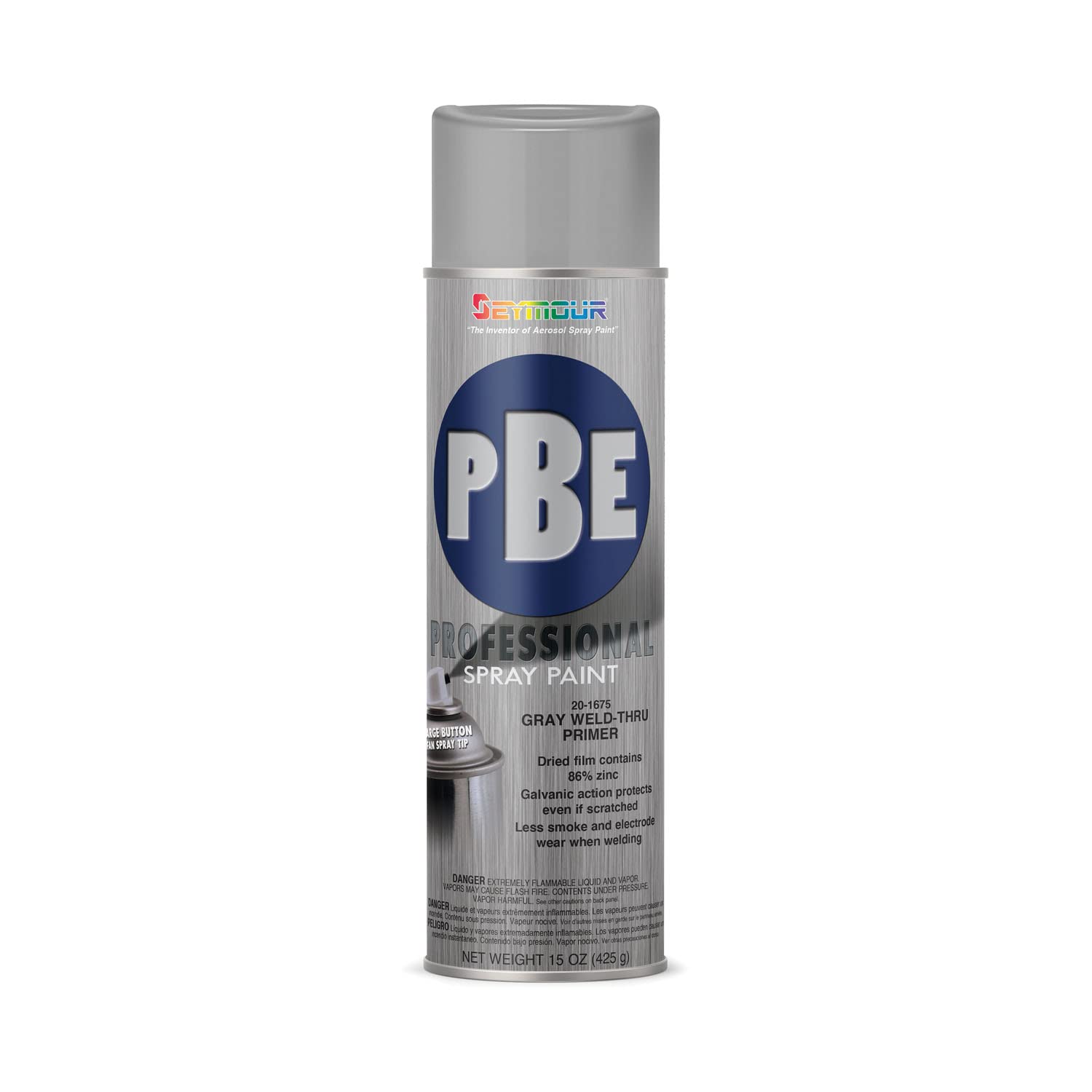
Seymour PBE Self Etching Primer

91 /100
Kirk Score Outstanding
Size
15 oz
Surface
Bare steel, aluminum
Coverage
12 sq ft
Heat Resistance
Up to 250°F
Check Details on Amazon

Pros

  • Weld-through formula for auto body work
  • Zinc-enhanced corrosion protection
  • Heat resistant to 250°F
  • 30-minute full cure

Cons

  • Not for painted or heavily rusted metal

If you are welding patch panels or frame stiffeners, the primer has to do something most metal primers cannot: stay conductive enough to weld through and still fight corrosion. Seymour PBE is built for that job, with a self-etching, zinc-enhanced coating for bare steel and aluminum.

We like that the zinc-enhanced formula keeps guarding the metal even if the coating gets nicked, and that the 86-percent pigment dry film is designed to produce less smoke and electrode wear than a 100-percent zinc-rich primer. It withstands up to 250°F, covers 12 square feet per 15-ounce can, and reaches a full cure in 30 minutes. The fan spray lays down smooth, which matters when you are working around plug welds and seams.

The limits are built in. This is a weld-through primer, not a general-purpose panel primer. For a weekend patch panel, one can is enough; for a full floorpan, buy several and keep them warm before spraying.

Bottom line: For weld-through auto body work, Seymour PBE is the specialist pick: it etches bare steel, adds zinc protection, and stands up to 250°F.

Check Latest Price
#06

Rusted metal

Rust-Oleum Rusty Metal Primer

93 /100
Kirk Score Outstanding
Base
Oil-based
Surface
Heavily rusted metal
Coverage
10-12 sq ft
Dry Time
15-30 min
Check Details on Amazon

Pros

  • Oil-based formula for heavily rusted metal
  • Dries to touch in 15-30 minutes
  • Strong rust protection for heavy-use surfaces
  • Gives topcoats a surface to adhere to

Cons

  • Small 12-oz can covers 10-12 sq ft

The label on this one is unusually honest: use it on exterior or interior heavily rusted metal surfaces only. That is not a limitation to hide; it is the reason to buy it. Rust-Oleum Rusty Metal Primer is for a rusted gate, trailer, or railing where you want an oil-based primer with serious rust protection but do not need a converter.

It is an oil-based Stops Rust formula in a flat finish. It dries to the touch in 15 to 30 minutes. The rust resistance is the strong part: it is built for heavy-use environments and gives topcoats a surface to adhere to.

What we think makes it useful is the narrow focus. It is not for clean bare metal or previously painted surfaces; on bare steel, the self-etching primer is the better start, and on active rust that needs converting, Corroseal is the better first step. This one is for rust you have wire-brushed but not taken back to bright metal. The 15-to-30-minute touch-dry window is the detail that makes it workable outdoors: you can prime a railing section and come back before the weather turns.

Bottom line: For heavily rusted metal that has been wire-brushed but not taken back to bright steel, Rust-Oleum Rusty Metal Primer is the oil-based base coat we keep on hand.

Check Latest Price

How We Tested the Best Metal Primers

We started by collecting every primer that claimed to work on metal — self-etching aerosols, rusty-metal formulas, water-based bonding primers, rust converters — and cut anything that only promised to grip over an existing topcoat. That left 14, a deliberate mix of spray cans and quarts covering bare steel, galvanized sheet, aluminum, and iron that had already rusted through.

Each one went on the same surfaces: scrap steel scuffed with 80-grit, a rusted fire pit, six wrought iron patio chairs, and a trailer frame with flaking rust. Saturdays in the garage, mostly, with panels laid out on sawhorses and a box fan running. Spray cans were judged on pattern — whether the fan stayed even, whether the nozzle spit or clogged between coats — and the brush-on quarts on how they leveled out and whether they sagged at a weld. We timed recoat and topcoat windows with a stopwatch, first at 55°F in the garage and again in direct afternoon sun.

Coverage got measured by how far a single can or cup actually stretched before the surface started skipping, and whether a second coat was needed to hide sanding scratches. Once everything cured, we cut a crosshatch through each coating and pulled tape across it — the ones that failed lifted in flakes — then left the panels, chairs, and fire pit outside through rain and two frosts to see which surfaces stayed sound and which crept rust at the edges. The converters were watched closely to see whether the blackened layer held or washed off in the first storm. Value settled last, as cost per square foot covered rather than cost per can.

How to Choose a Metal Primer

Start with the metal's condition

Bare steel and aluminum need a primer that etches or bites into the surface; a self-etching aerosol like Rust-Oleum Self Etching Primer is the direct route. Heavy, pitted rust needs conversion first, which is where Corroseal does a different job. Sound painted metal is a bonding problem rather than a rust problem, so a water-based primer-sealer like Zinsser or a hard-to-coat bonding primer like INSL-X Stix makes more sense than an oil-based rusty-metal primer. Match the product to the condition, not to the word metal on the label.

Choose spray for parts, brush-and-roll for panels

Spray cans are the right format for brackets, railings, wheels, and anything with curves or edges; they reach places a brush misses. A quart is better for flat panels, doors, and large gates where you want a consistent film and less overspray. The trade-off is control: aerosol primers can spit or clog, so buy fresh cans and keep the nozzle clean. Brush-and-roll primers like Zinsser and Corroseal let you work at a slower pace and cover broad areas without clouds of solvent.

Read coverage and dry time as a schedule

Coverage numbers are not interchangeable. A 12-ounce aerosol may cover 10 to 12 square feet, while a quart of primer-sealer can cover 75 to 100 square feet, and a gallon of rust converter is rated at 200 to 250 square feet. Dry times matter just as much: a 10-minute touch dry and 30-minute topcoat window keep a small project moving, while a one- or two-hour primer suits a larger panel. Buy for the whole job, not one can at a time.

Know when you need conversion or weld-through

A rust converter is not the same as a rusty-metal primer. Corroseal changes existing rust into a black, paintable surface; Rust-Oleum Rusty Metal Primer is an oil-based base coat for rust you have wire-brushed but not removed. Weld-through primer is a third job: Seymour PBE is zinc-enhanced and heat resistant to 250°F so you can prime bare steel and weld through it. If you are not welding, you do not need that specialty; choose conversion or a rust-resistant primer instead.

Frequently Asked Questions

Final Verdict

For most bare-metal jobs, we recommend Rust-Oleum Self Etching Primer. It gives steel and aluminum a chemical tooth, topcoats in 30 minutes, and sprays evenly enough for small parts and patch panels.

Change the surface and the pick changes: Zinsser Bulls Eye 1-2-3 for sound painted metal, Corroseal for heavy rust, and Seymour PBE for weld-through auto body work. The right primer is the one that matches what is under it, not the one with the biggest can.