// data-verified

Best Grease of 2026

Grease is the purchase you make once a decade and then need to get right on the first try. The tube that quiets a door hinge isn't the one you want on a brake caliper pin or a battery terminal — the wrong pick either slings off once things heat up or creeps into the connector it was meant to protect. I've kept old cars, bikes, and a stubborn back gate running on the stuff for years, and a bad tube announces itself within a week.

The decision comes down to three things the labels bury: consistency, tackiness, and whether the formula is meant to touch electricity. We put 16 tubes through four months of real work — bearings, brake pins, hinge pins, and one corroded battery terminal — and the gap between staying put and migrating shows up fast.

Value works differently here: a tube you reapply every month costs more than one that stays tacky through a season. The picks below are sorted by job, since the best grease for a trailer hub is rarely the best for a spark plug boot.

#01

Best Overall

Super Lube Synthetic Grease

96 /100
Kirk Score Outstanding
Base
Synthetic with Syncolon
Size
3 oz tube
Food-grade
NSF H1 registered
Temperature Rating
450 °F
Check Details on Amazon

Pros

  • NSF H1 food-grade registration
  • 450 °F ceiling for hot-running parts
  • Resists water, salt water, and corrosion
  • Stays put without running or separating

Cons

  • Three ounces won't pack a set of wheel bearings

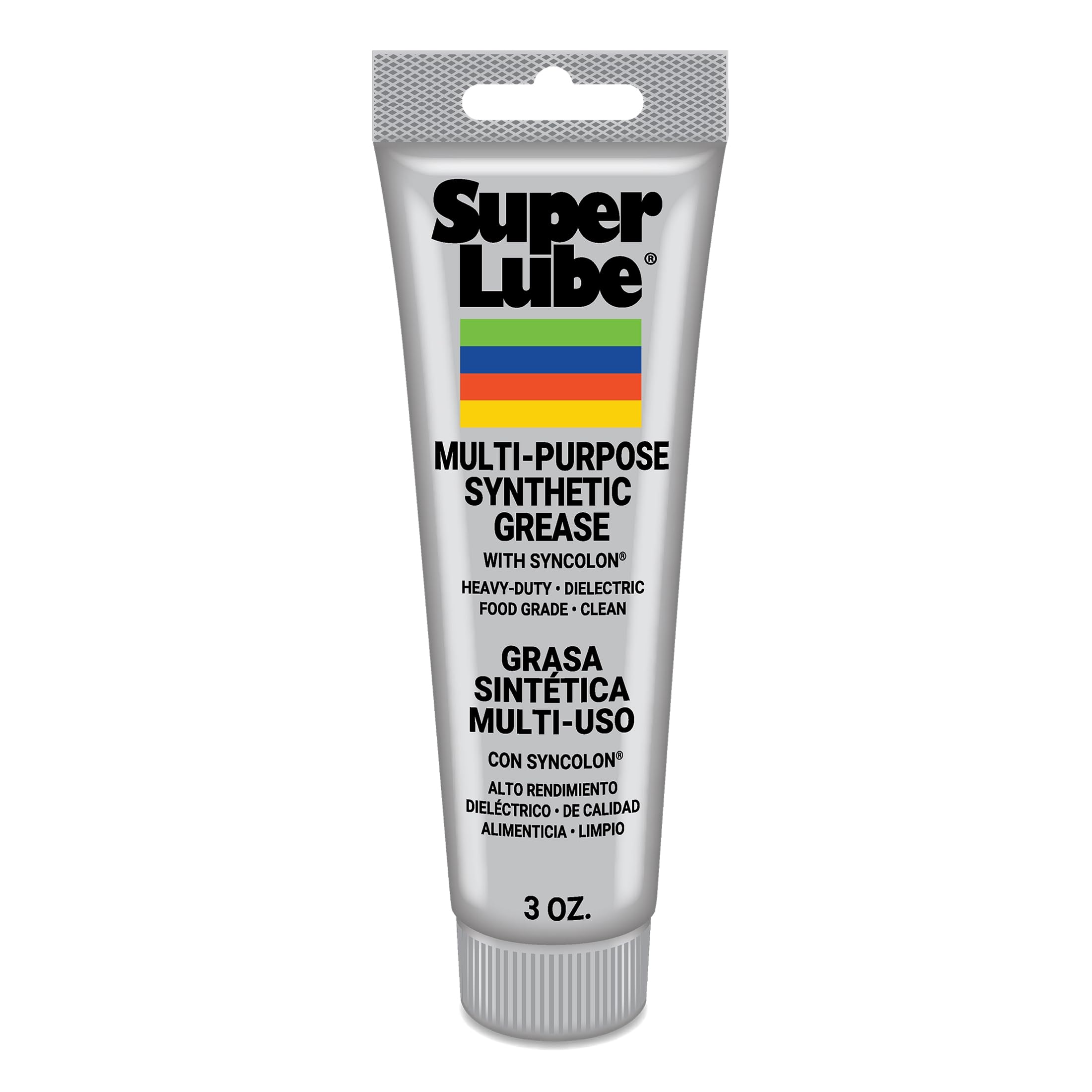
Two lines on this tube do most of the persuading: an NSF H1 food-grade registration and a 450 °F temperature ceiling. The registration is the unusual one — it means the grease is cleared for equipment where a smear could end up near food, like the gears of a stand mixer, a grinder's drive, or the slides on a vacuum sealer. That isn't what makes it our pick, but it removes a whole category of doubt.

What makes it our pick is how little it asks of you. The synthetic base with Syncolon is translucent white, spreads without stringing, and holds its consistency instead of hardening into a waxy crust. We used it on door hinges, a bench vise screw, drawer slides, and the folding legs of a work table, and the thing we kept noticing was that it stayed put — no drip line down the door frame, no puddle under the vise.

Water and salt are the other half of the story. It's rated to resist water, salt water, dirt, and corrosion, and the non-melting formula is built not to run, drip, separate, or leave gummy deposits, which is why the same tube works on a trailer hitch ball, a trolling motor pivot, or a garage door roller. The 450 °F ceiling also puts engine-bay hardware and a hot bench tool inside its range.

Where it stops is at the specialties. Caliper hardware wants a grease built for rubber seals and high heat, an electrical boot wants a dielectric that stays non-conductive, and this one is neither. What it is, is the tube that handles everything else in the house and the shop.

Bottom line: Our default for household and shop jobs: food-grade, rated to 450 °F, and it stays where it's put instead of running off a hinge.

Check Latest Price
#02

Best for Household Squeaks

Lucas White Lithium Grease

96 /100
Kirk Score Outstanding
Base
White lithium
Size
8 oz squeeze tube, 2 pack
NLGI Grade
Grade 2
Check Details on Amazon

Pros

  • Quiets garage doors, hinges, and latches
  • Squeeze tube reaches brackets without a brush
  • Grade 2 stays put on vertical tracks
  • Second tube for the shed or shop

Cons

  • Squeeze tubes can't feed a grease gun

A garage door that groans on the way up is usually a lubrication problem, not a hardware problem, and this is the tube we hand people for it. It's labeled for the household jobs — garage door tracks, rollers, openers, springs, hinges, and latches — and the squeeze tube puts a bead exactly where you want it instead of spraying half the door frame.

White lithium at NLGI grade 2 sits in the useful middle: firm enough not to run off a vertical track, soft enough to work into a hinge pin with a finger. The squeeze tube is the real advantage over a tub, since you can reach a roller bracket or a latch striker without a brush, and the tube doesn't drip between uses. Two tubes arrive together, which is why one ends up in the garage and the other in the shed.

For a homeowner, that combination is hard to beat: it quiets doors, seat tracks, and gate hinges, and the second tube means you don't ration it. We keep ours with the door hardware, which is exactly where the next squeak will start.

Bottom line: If the complaint is a squealing garage door, this two-pack is the fix — squeeze tubes that reach the roller brackets and stay on the track.

Check Latest Price
#03

Best Heavy-Duty Cartridge

Lucas Heavy Duty Grease

96 /100
Kirk Score Outstanding
Color
Green
Container
14.5 oz cartridge
Water Resistance
Virtually waterproof
Check Details on Amazon

Pros

  • Virtually waterproof on wet fittings
  • Loads into a standard grease gun
  • Stable across temperatures outdoors
  • Green color makes fresh grease easy to spot

Cons

  • Needs a grease gun to dispense

Fourteen and a half ounces in a cartridge, and Lucas aims it squarely at the fittings that take punishment: wheel bearings, chassis points, mower spindles, tractor pins. The two properties we care most about on anything that lives outdoors are both on the label — virtually waterproof, and stable across temperatures — and it loads and pumps without fuss once it's in the gun.

What we appreciate is the way it clings. Grease that slings off a spinning bearing or washes out of a trailer hub is doing nothing at all, and this one has the tack to stay on a cable or a fitting even when things get wet. The green dye turns out to be more than decoration: under a trailer or inside a mower deck, a fresh green bead shows exactly where the new grease went.

It's a working grease rather than a household one, and that's the trade. It won't help with a squeaky cabinet hinge — it's more lubricant than that job needs, in a package that's awkward to hold — but on a trailer hub or a mower spindle it does the job without drama.

Bottom line: Buy this if you own a grease gun and a trailer, mower, or tractor: waterproof, tacky, and it loads straight into the gun.

Check Latest Price
#04

Best for Brakes

Permatex Ceramic Brake Lubricant

96 /100
Kirk Score Outstanding
Base
Synthetic with ceramic solids
Size
8 oz jar
Temperature Rating
3000 °F
Check Details on Amazon

Pros

  • 3000 °F rating for hard-working brakes
  • Brush in the lid for a thin film
  • Stays where painted instead of migrating
  • 8 oz jar covers many pad changes

Cons

  • Formulated for brake hardware, not bearings

Three thousand degrees Fahrenheit is the number on the jar, and it's a fair shorthand for why brake work is its own lubrication category. Nothing on a street car's caliper gets near that, but the figure stands in for the property that matters: a grease that won't cook off, wash out, or turn to gum between pad changes.

The formula is synthetic with ceramic solids, and it's meant for the parts that slide rather than the parts that stop — caliper hardware, pistons, bushings, rubber sleeves, and seals. That distinction is the whole job. A dry slide pin drags a pad, a dragging pad overheats, and the noise and uneven wear that follow usually get blamed on the pads.

Application is where the jar earns its keep. Eight ounces covers a long run of brake jobs, the brush built into the lid lets you paint a thin, even film on a pin or a pad ear, and the grease stays where it's painted instead of creeping onto the rotor face. Thin and even is the goal; a heavy coat just collects grit.

We rate it the pick for anyone doing their own brakes, with one habit worth adopting: wipe the old grease off the hardware and apply fresh at every pad change. A coat that stiffens in place is the one condition that can turn a caliper slide sticky, and cleaning it takes a minute.

Bottom line: For a DIY brake job, this jar earns its place — it silences slides and pins, stays where it's painted, and covers many pad changes.

Check Latest Price
#05

Best for Electrical

Permatex Dielectric Grease

96 /100
Kirk Score Outstanding
Use
Terminals, spark plugs, bulb sockets
Size
3 oz tube
Type
Dielectric, non-conductive
Check Details on Amazon

Pros

  • Seals terminals, boots, and sockets
  • Genuinely non-conductive, as labeled
  • Slicks plug boots so they slide off
  • 3 oz covers a whole vehicle's connections

Cons

  • Can't restore a corroded terminal on its own

The word dielectric is doing real work here, and it's the part most people get backwards: this grease does not conduct electricity. It's an insulator, which is why it goes on the boot, the socket, and the terminal housing to seal out salt and water rather than between two contact faces to improve the connection.

We value it precisely because it's honest about that job. Three ounces covers every bulb socket, spark plug boot, and trailer connector on a couple of vehicles, it slicks a plug boot enough that it slides on and off without a fight, and it hangs on through road salt. On a trailer harness or a lawn tractor's headlight plug, that's the difference between a connection that survives winter and one that greens up.

The tube is small enough to live in a glovebox or with a bag of connectors, and that's the point — the grease only helps if it's within reach when a plug starts acting up. A thin film inside the boot is plenty; more than that just squeezes out when the halves mate.

Bottom line: For trailer plugs and spark plug boots, this is the tube to keep: it seals connections against salt and water and slicks boots so they let go.

Check Latest Price
#06

Best for Bike Bearings

Park Tool Polylube 1000

96 /100
Kirk Score Outstanding
Base
Polyurea
Size
4 oz tube
Water Resistance
Repels moisture
Check Details on Amazon

Pros

  • High shear strength for loaded bearings
  • Stays put in pivots and headsets
  • Repels moisture on wet rides
  • Compatible with conventional greases

Cons

  • Too thick for chains and cables

Where our overall pick is a generalist, this one is a specialist with a narrow, well-defined job: bicycle bearings, threads, and pivots. Park Tool developed the polyurea formula for bike work and gives it an extremely high shear strength, which is the property that matters when a bottom bracket takes a few hundred watts of pedaling through a small package.

The consistency is what sells it. It holds together in a bearing under load, stays put in a pivot instead of being pushed out sideways, and repels moisture, which is why the tube lives in a bike tool roll rather than on a shelf. Park also states compatibility with conventional greases, so repacking a bearing that had something else in it doesn't mean a shelf of solvents.

Four ounces is several seasons of bearing repacks for one bike — a little goes a long way once it's worked into a cage — and the tube is small enough to keep in the toolbox permanently. It's bike-specific in the way that counts: built for small, loaded, moisture-exposed parts, and it does that one thing well.

Bottom line: The bike grease worth keeping in the tool roll: thick enough to stay in a loaded bearing, and resistant to the water that finds it.

Check Latest Price
#07

Rubber and seals

Super Lube Silicone Grease

96 /100
Kirk Score Outstanding
Base
Silicone with PTFE
Size
3 oz tube
Food-grade
NSF H1 registered
Temperature Rating
500 °F
Check Details on Amazon

Pros

  • Safe on rubber, plastic, and metal
  • 500 °F rating, higher than our top pick
  • NSF H1 food-grade registered
  • Waterproof barrier against rust

Cons

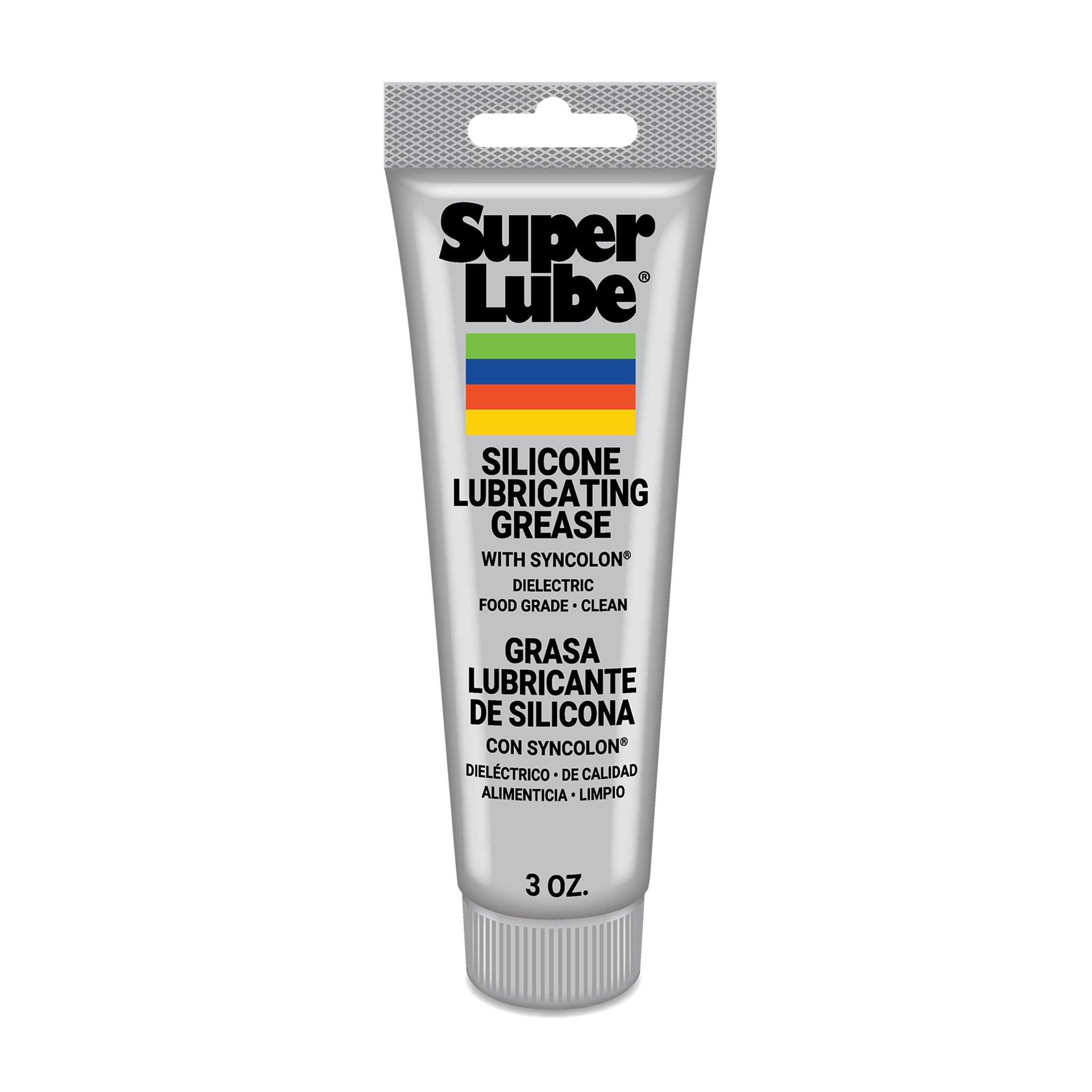
Petroleum grease and rubber don't always get along; some soap-thickened formulas will soften or swell the wrong seal over time. That's the gap this one fills. Super Lube's silicone formula with PTFE is listed as compatible with rubber, metal, and plastic, which makes it the tube for O-rings, gaskets, valve seals, and anything with a soft part in the assembly.

It's rated to 500 °F — higher than our top pick — and carries the same NSF H1 food-grade registration, so it can move from a pool valve to a kitchen appliance seal without a second thought. It also acts as a moisture barrier and resists water washout, which is what you want on a fitting that sits outdoors or under a sink.

We reach for it when the part in front of us has rubber or plastic in it and we don't want to think about compatibility. What we don't reach for it for is general shop lubrication: it brings nothing extra to a steel hinge that the multi-purpose tube doesn't already handle. It's a specialist, and it earns its place by being the right answer to one recurring question.

Bottom line: Reach for this one when a seal, O-ring, or plastic part is in the assembly, because it lubricates without swelling the rubber.

Check Latest Price
#08

Marine electrical

BTAS Dielectric Grease

96 /100
Kirk Score Outstanding
Size
8 oz bottle
Type
Dielectric silicone
NLGI Grade
Grade 1
Temperature Range
-40 °F to 428 °F
Check Details on Amazon

Pros

  • 8 oz covers a fleet's worth of connections
  • Stable from -40 °F to 428 °F
  • Non-conductive, odorless, food-grade formula
  • Soft grade 1 works into boots and housings

Cons

  • Made for connections and seals, not bearings

Eight ounces is the first thing to notice, because the other dielectric grease on this list arrives in a three-ounce tube. If the work runs to a boat's worth of connections, a trailer harness, a pool pump, and a handful of outdoor sockets, the bigger bottle means fewer reorders and less rationing.

The ratings are aimed at wet work: stable from -40 °F to 428 °F, NLGI grade 1, non-conductive, and described as odorless and colorless with a food-grade formula. Grade 1 is softer than the grade 2 white lithium here, which makes it easy to work into a boot or a connector housing with a fingertip, and a thin film is all you need.

Where it earns its keep is bulk corrosion protection — battery terminals, a seven-pin trailer plug, outdoor light sockets, and the rubber gaskets and O-rings on water equipment. Sealing a connection is a five-second job that saves an hour of diagnosis later, and having enough grease on hand decides whether you actually do it.

We treat it as the volume option rather than the pocket one. The smaller tube is easier to keep in a glovebox; this bottle is what we want on a bench where a truck, a trailer, and a boat all get serviced. Buy it for the bench, not the road.

Bottom line: A bench-size dielectric for anyone with several vehicles, a boat, or a trailer: eight ounces of non-conductive protection at hand.

Check Latest Price

How We Tested the Best Greases

We started with spec sheets rather than labels: thickener type, base oil, temperature range, and whether a formula was built for electrical connections or for load-bearing metal. From there we cut anything sold only in tubs or cartridges, since most people want a tube that lives in a toolbox drawer, and we made sure the shortlist covered the jobs people actually buy grease for — bearings and hinges, brake hardware, and terminals — along with whether a single tube could plausibly handle more than one of them.

Sixteen tubes went into service over four months, in a garage, on a commuter bike, and on a gate hinge that takes weather year-round. We packed wheel bearings, slid caliper pins, coated battery terminals and spark plug boots, and greased every hinge pin and latch we could find.

At each step we watched behavior instead of reading the claims. Squeezing each tube onto scrap cardboard showed consistency — stiff paste, soft ribbon, or something that strung out — and dabbing each onto a vertical bolt head showed tackiness, since the ones that crept downward were the same ones that later slung off moving parts. A greased bolt left overnight in a jar of water either rusted or stayed clean, and terminals sprayed with salt water got checked weekly for the white fuzz of corrosion. We counted how many hinge applications a single tube covered and rechecked the gate and bike after rain, which is where longevity and value sorted themselves out. A cheap tube that needs reapplying every month ends up costing more than one that stays tacky through a season.

How to Choose the Right Grease

Match the Grease to What It Touches

Grease is oil held in place by a thickener, and the thickener decides what the grease is safe against. Lithium and synthetic formulas are the shop default for steel hinges, pins, and fittings. Silicone is the one for assemblies with rubber, plastic, or a seal in them, because it won't swell the material the way some petroleum greases can. Polyurea, like Park Tool's Polylube, is built around bicycle bearings.

The trap is layering a new grease over an unknown old one. If you can't identify what's already on the part, wipe it out and start clean rather than betting two bases get along.

Read Temperature and Water Resistance for the Worst Case

A temperature figure tells you where a grease stops working, not how well it works on a door hinge. A general-purpose tube rated to 450 °F or 500 °F covers hinges, tools, and engine-bay hardware comfortably. Brake caliper hardware wants its own high-temperature grease, and the Permatex ceramic is rated far beyond anything a street car produces.

Water resistance matters just as much on trailers, mowers, and dock hardware, where grease that washes out leaves the fitting dry. Choose for the hottest, wettest part the tube will serve, not the biggest number on the shelf.

Buy the Container That Fits the Job

Three formats cover almost everything. A squeeze tube suits hinges, latches, seat tracks, and garage door rollers, because you can lay a bead exactly where it's needed without a brush. A cartridge belongs in a grease gun, for fittings, bearings, and tie rods that need pressure behind the grease — without a gun, a cartridge is the wrong purchase. A jar with an applicator suits brake hardware, where a thin painted film beats a blob.

How much to buy follows the same logic. Three ounces goes a long way on household jobs; a cartridge or an eight-ounce jar is bench stock for repeat work.

Treat Electrical Connections Differently

Dielectric grease is an insulator. It protects a connection by sealing the boot, socket, or terminal housing against moisture and salt, not by conducting current between two faces — so it goes around and over the joint, and the metal underneath still has to be clean and tight. The trap is expecting it to rescue a corroded terminal: clean the metal, dry it, then seal it.

For a couple of vehicles, a three-ounce tube covers every bulb socket and plug. An eight-ounce bottle makes more sense for a boat, a trailer, and a pool pump.

Frequently Asked Questions

Final Verdict

For one tube that covers a house and a garage, we take the Super Lube multi-purpose synthetic. It's food-grade, rated to 450 °F, and it resists water and salt while staying where it's put — hinges, tools, fittings, drawer slides, and anything else that isn't a specialty job.

Change the pick when the job changes. A house full of squeaks with no fittings to grease calls for the Lucas white lithium two-pack, because squeeze tubes reach roller brackets and striker plates. The moment the work is brake hardware, go to the Permatex ceramic jar instead.