// data-verified

Best Caulk of 2026

The caulk around my bathtub had turned from white to a fuzzy grey-black, and the last tube I bought cracked within a year. That's the thing about caulk: the tube costs less than lunch, but if it fails, you're back on your knees with a scraper. A good one seals a joint and stays flexible through the shifting and swelling that happens with temperature and water.

The wrong one skins over too fast, won't stick to a damp edge, or turns brittle and peels away in strips — and when it's time to redo the job, some come off in one clean pull while others fight you. We've spent the past four months installing 16 tubes of caulk — acrylic latex, silicone, hybrid polymer — in bathrooms, kitchens, and around windows. What surprised me most is how much difference the format makes: a squeeze tube can be easier to control than a heavy caulk gun for small jobs. The picks below are the ones that cured cleanly, held tight, and didn't make a mess.

#01

Best Overall

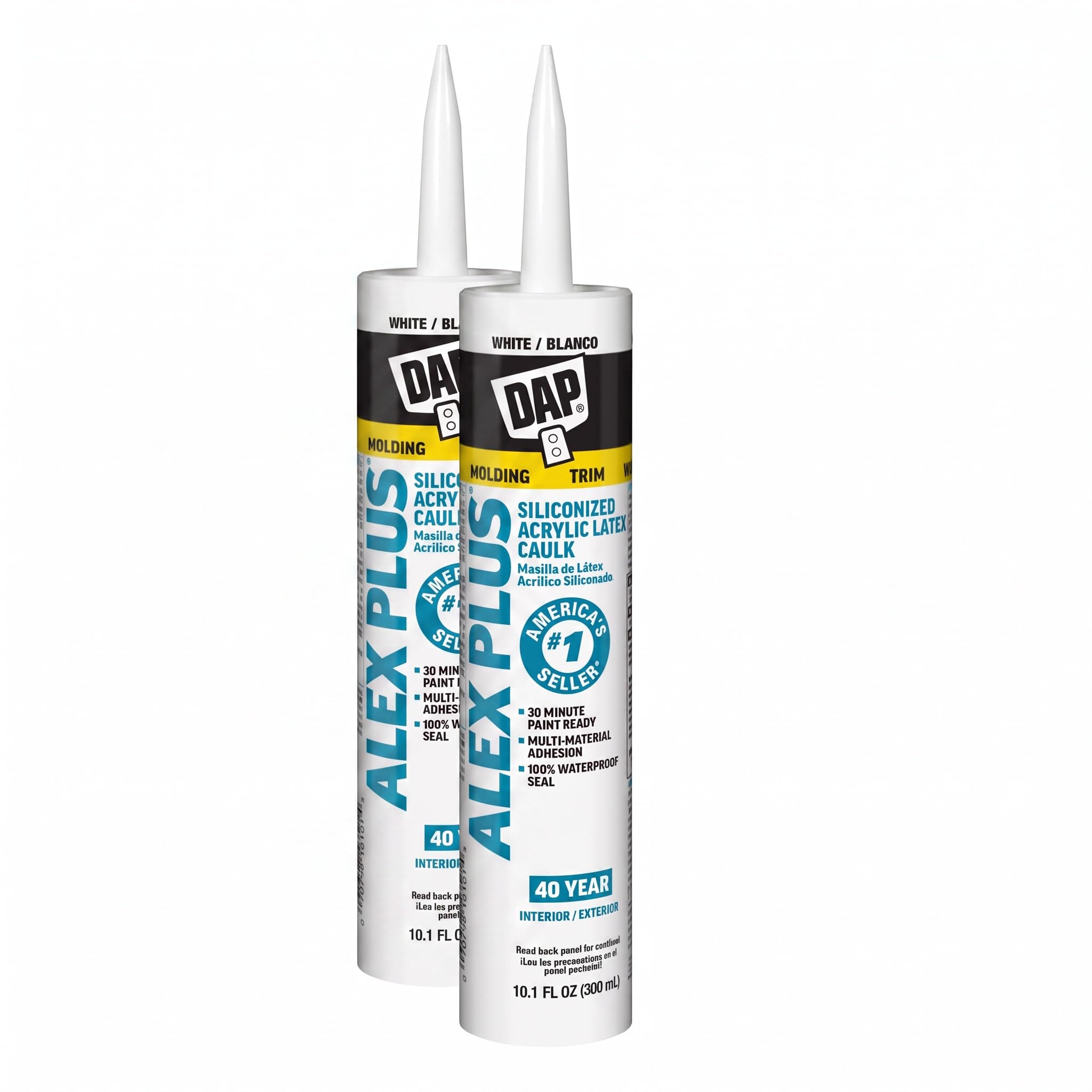
DAP Alex Plus Acrylic Latex

93 /100
Kirk Score Outstanding
Size
Two 10.1 oz tubes
Material
Siliconized acrylic
Full Cure
24 hours
Paint-ready
30 minutes
Check Details on Amazon

Pros

  • Paint-ready in 30 minutes
  • Water cleanup before it skins
  • Two tubes for trim and baseboards
  • Low odor for occupied rooms

Cons

  • Can crack in wide, moving joints

Thirty minutes is the number that makes DAP Alex Plus our top pick. It is a siliconized acrylic caulk that goes on white, tools with a damp finger, and is ready for paint in half an hour, so a baseboard or window-casing job can be finished in one afternoon instead of two. We also like that cleanup is water, not solvent: a wet rag takes the excess off the trim and your hands before the bead skins.

The two 10.1-ounce tubes are the other practical part. One tube handles a room's worth of baseboard and door casing, and the second stays on the shelf for the next gap. The bead stays flexible enough for normal interior movement, and the low odor matters when you are working in a finished room with the windows closed. On a painted surface, it takes a finish coat without flashing or pulling away.

Where it stops: this is not the tube for a shower surround, a tub edge that stays wet, or an exterior seam that bakes in the sun. For those, a 100% silicone or a flexible exterior grade is the better call. In ordinary interior trim, though, we keep reaching for this one because it is forgiving to tool and easy to clean up.

Bottom line: For most interior trim, window, and door gaps, this is the caulk we reach for first: it paints in 30 minutes, cleans up with water, and comes as two tubes.

Check Latest Price
#02

Best for Kitchens and Baths

GE Supreme Silicone Kitchen & Bath

92 /100
Kirk Score Outstanding
Size
10 fl oz cartridge
Gap Fill
0.38 in.
Material
100% silicone
Water-ready
30 minutes
Check Details on Amazon

Pros

  • Water-ready in 30 minutes
  • 10-ounce cartridge covers a tub surround
  • Stays flexible in wet joints
  • Low-odor neutral cure

Cons

  • Not paintable
  • Clear bead can look milky on white

A tub edge is a bad place to baby a bead, which is why the 30-minute water-ready cure on GE Supreme matters. We like this 10-ounce cartridge for the sink surround, the tub seam, and the shower curb because it is 100% silicone, stays flexible, and can take a splash long before a traditional caulk would. The clear formula is the usual choice for a sink or tub surround.

What we appreciate most is the combination of a full-size cartridge and a low-odor neutral-cure formula. It needs a caulk gun, but one tube covers a full tub surround without stopping to reload. The maximum gap fill is 0.38 inch, so keep it for the thin seams around a sink, tub, or shower pan; for a wide gap, build the joint closer first or choose a flexible exterior caulk.

This is a wet-area specialist, not a universal tube. It stays flexible in a shower and handles the movement around a tub, and the clear bead does not call attention to itself on most tile. For a joint that stays dry and will be painted, an acrylic is the easier finish. For the wet seams it is meant for, this is the silicone we trust.

Bottom line: For sink surrounds, tub edges, and shower seams, this is the silicone we choose: it is water-ready in 30 minutes and stays flexible in wet joints.

Check Latest Price
#03

Best All-Purpose Silicone

Gorilla 100% Silicone All-Purpose

91 /100
Kirk Score Outstanding
Size
10 oz cartridge
Gap Fill
0.5 in.
Material
100% silicone
Water-ready
30 minutes
Check Details on Amazon

Pros

  • Water-ready in 30 minutes
  • Mildew resistant for damp areas
  • Handles gaps up to 0.5 inch
  • Works indoors and outdoors

Cons

  • Not paintable

A half-inch gap is more than most silicone will bridge, and that is where Gorilla's 10-ounce cartridge earns its place. We like it for a mixed list of jobs: a gutter seam, a window frame, the edge of a utility sink, a bath joint that sees splashes. It is 100% silicone, water-ready in 30 minutes, and labeled mildew resistant for damp areas. The white bead is a true white, which is not always the case with silicone.

The tube is also rated to ASTM C-920, Class 35, and the listed gap fill is 0.5 inch. That is useful when a joint is slightly wider than a hairline but not a full exterior gap. We found the cartridge stiff to squeeze, and if you force it, the bottom can give way; a smooth caulk gun and steady pressure matter more here than with a softer acrylic. That is a handling issue, not a reason to avoid the product for the right joint.

Indoors, it is a good choice for a bathroom or a kitchen backsplash where the bead stays exposed. Outdoors, it handles weather and temperature swings without shrinking away. The white color limits it to white fixtures and trim, and this is not the tube for a stained-wood seam. For a waterproof bead that can take a beating, though, it is a solid tube to have.

Bottom line: This is the silicone we keep for mixed indoor and outdoor jobs: it seals wet or dry areas, handles a half-inch gap, and resists mildew.

Check Latest Price
#04

Best for Exterior and Large Gaps

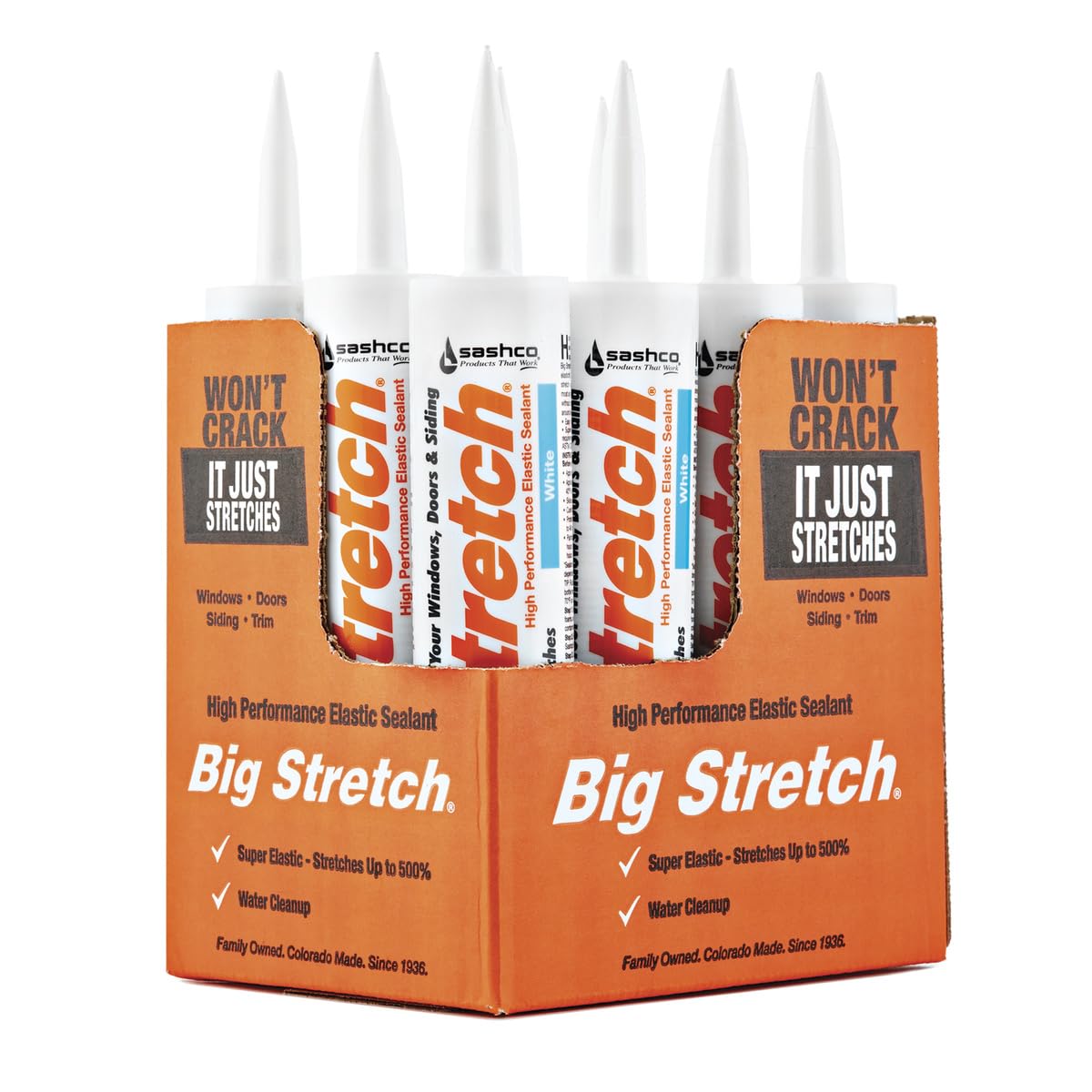
Sashco Big Stretch

93 /100
Kirk Score Outstanding
Size
Twelve 10.5 oz tubes
Gap Fill
Up to 2 in.
Material
100% acrylic latex
Paint-ready
4 hours
Check Details on Amazon

Pros

  • Stretches up to 500 percent
  • Fills gaps up to 2 inches
  • Exterior latex paint in 4 hours
  • Stays flexible through temperature swings

Cons

  • Full cure takes five days

Two inches is a lot of gap for a caulk, and 500 percent stretch is a lot of movement. Sashco Big Stretch is the tube we choose when a joint is wide, exterior, and likely to move: siding seams, window frames, soffits, and the kind of gap that opens and closes with the seasons. It is a 100% acrylic latex, so it tools with water and takes exterior latex paint in about four hours.

The 12-tube case is the catch. For a single window, it is far more caulk than a single repair needs; for a siding repair or a whole-house exterior pass, the case makes sense and keeps you from running out mid-ladder. We also like that it stays flexible rather than curing to a hard, crack-prone bead. The service range of negative 30 to 250 degrees Fahrenheit is the kind of detail that matters on a south-facing wall.

This is not a bathroom tube. It is water-resistant, not a 100% silicone seal for a tub or shower. Use it where the joint is exterior, paintable, and expected to move; use a silicone where the joint stays wet. For the right exterior gap, it is the most forgiving tube here.

Bottom line: For siding, window frames, and gaps that move, Big Stretch is the one: it stretches up to 500 percent and spans up to 2 inches.

Check Latest Price
#05

No-gun repairs

Flex Caulk Hybrid Polymer

86 /100
Kirk Score Excellent
Size
9 fl oz tube
Material
Hybrid polymer
Paintable
Yes
Application
Trigger nozzle
Check Details on Amazon

Pros

  • No caulk gun required
  • Trigger nozzle controls the bead
  • Paintable hybrid polymer
  • Snap cap saves partial tubes

Cons

  • 9-ounce tube is small for long seams

No caulk gun, no frame, no loaded cartridge: Flex Caulk puts the bead behind a trigger-flow nozzle and a snap cap. We like that for a small DIY job where the gun is the annoying part, especially a window reveal or a quick kitchen backsplash seam. The hybrid polymer is paintable, which is the big advantage over a pure silicone, and it is formulated to seal wet or dry surfaces.

The trigger takes a little getting used to: start with light pressure and let the bead build, because squeezing hard can deliver more than you want. We also noticed the snap cap is genuinely useful if you need to stop and come back, and the paintable finish means you can blend the bead into trim instead of leaving a shiny line. The hybrid formula is more forgiving than silicone if you are working around a slightly damp surface.

At the premium end of the price range, this is a convenience buy more than a value buy. If you already own a caulk gun, a standard cartridge gives you more volume for less. If you do not, or if you want a paintable bead without buying a gun for one small repair, this is the tube that makes the job easier.

Bottom line: If you do not own a caulk gun, this is the tube to try: the trigger nozzle lays a controlled bead and the hybrid polymer is paintable.

Check Latest Price
#06

Small touch-ups

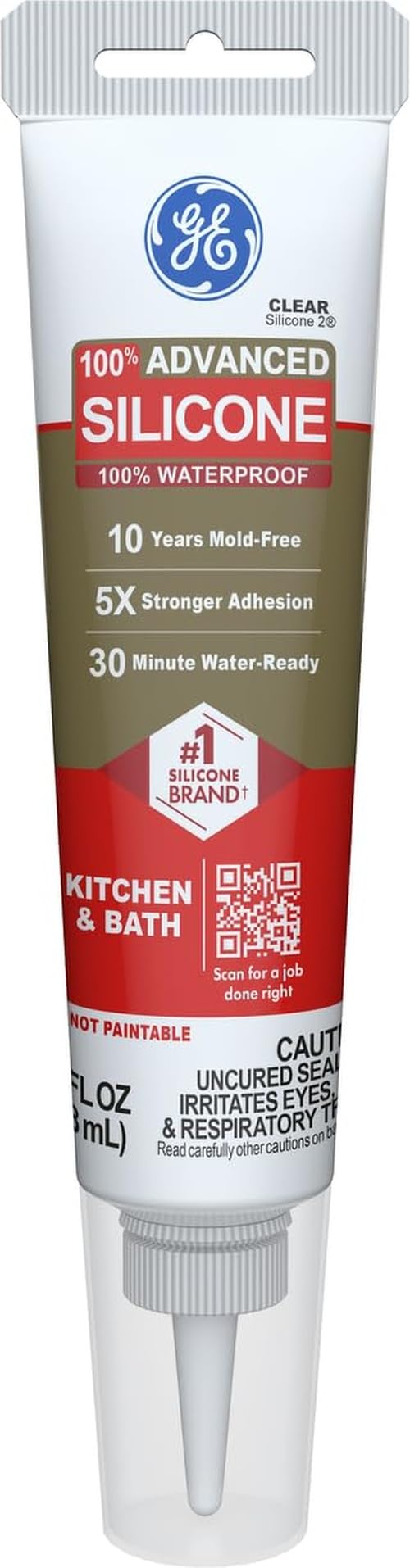
GE Advanced Silicone Kitchen & Bath

91 /100
Kirk Score Outstanding
Size
2.8 fl oz tube
Gap Fill
1 in.
Material
100% silicone
Water-ready
30 minutes
Check Details on Amazon

Pros

  • No caulk gun needed
  • Water-ready in 30 minutes
  • Fills gaps up to 1 inch
  • Compact enough for a drawer

Cons

  • Clear can look milky on white
  • Not paintable

A 2.8-ounce tube is not a mistake. GE Advanced is the one we keep for a single sink edge, a quick tub touch-up, or a small gap that does not justify loading a full cartridge. It is 100% silicone, water-ready in 30 minutes, and listed to fill gaps up to 1 inch, which is more than many small tubes manage. The squeeze tube means no gun and no cleanup of a gun afterward.

We like the clear formula for a vanity backsplash or a white tub because it disappears against most surfaces. The small size means you get one short bead, not a whole bathroom; buy a cartridge if you are doing a surround. The tube is also easy to keep in a drawer without taking up the space of a full cartridge.

The 1-inch gap fill is the surprise here. It gives this little tube more range than its size suggests, so it can handle a slightly opened seam rather than only a hairline crack. For a quick repair where a full cartridge would be overkill, that combination of no gun and real silicone performance is what makes it worth a spot in the drawer.

Bottom line: For a single sink edge or a quick tub touch-up, this small squeeze tube is the easy choice: no gun, water-ready in 30 minutes, and real silicone performance.

Check Latest Price
#07

Painted bath seams

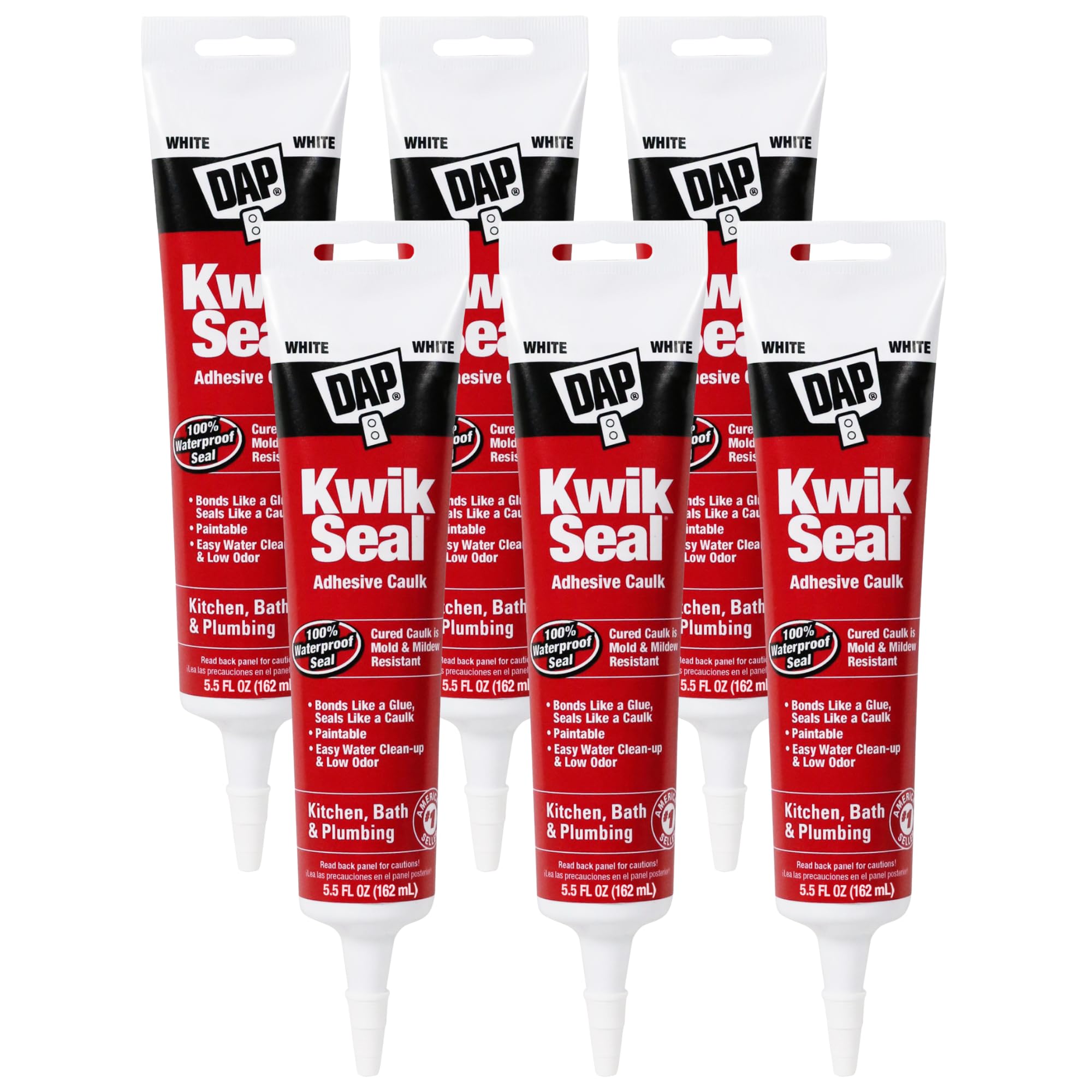
DAP Kwik Seal Kitchen & Bath

90 /100
Kirk Score Outstanding
Size
Six 5.5 oz tubes
Material
Acrylic latex
Paintable
Yes
Shower-ready
48 hours
Check Details on Amazon

Pros

  • Paintable with latex or oil paint
  • Bonds to tile, glass, and porcelain
  • Water cleanup while wet
  • Six small tubes for touch-ups

Cons

  • Dries off-white rather than bright white

Paint over silicone and you get a peeling mess, which is why Kwik Seal has a place in a kitchen or bath where the bead will be painted. It is an acrylic latex adhesive caulk that bonds to ceramic tile, glass, porcelain, fiberglass, wood, metal, plaster, and drywall, and it takes latex or oil-based paint. The acrylic formula is a practical choice for touch-ups around a sink, a backsplash, or a painted vanity edge.

The trade-off is water exposure. This is shower-ready in 48 hours, not a 30-minute silicone, and it is not the tube for a joint that stays submerged or takes direct spray all day. We like it for the painted seam where the caulk has to disappear under the same finish as the wall, and water cleanup while wet makes the tooling forgiving. On a slick tile edge, clean and dry the surface first; adhesion is only as good as the prep.

The six 5.5-ounce tubes also let you keep one in the bathroom and one in the kitchen without opening a full cartridge. That is a small thing, but it matters when the repair is a single loose edge rather than a whole surround. The bead tools down to a thin line, so it does not build up under a coat of paint.

If the joint stays wet and exposed, choose a 100% silicone; if it will be painted, this is the more sensible tube. That paintability is the reason we keep it around.

Bottom line: When a kitchen or bath seam has to be painted, Kwik Seal is the one we pick: it bonds like an adhesive and takes paint over a water-cleanup bead.

Check Latest Price

How We Tested Caulk Where It Actually Lives

We started by sorting the category into its main families — acrylic latex, 100% silicone, and hybrid polymer — and reading spec sheets for cure time, joint movement, and wet-area ratings. We filtered out anything that required a special primer or came only in commercial sizes. Then we bought 16 tubes across a range of prices and formats, including cartridges, squeeze tubes, and a bulk pack, and put them to work over four months.

Testing happened where caulk actually lives: a tub surround, a kitchen sink, two window frames, and an exterior door threshold. I noted how each one dispensed (trigger flow versus gun), how it tooled with a finger or a smoothing tool, and how long it stayed workable before skinning over. I timed cure by touching the bead at intervals, then checked adhesion by pressing the edges after 24 hours and again after a week. I also pooled water against a cured bead on a horizontal joint to see if any seeped through.

After a month, I checked each joint for shrinkage, cracking, and mildew. To test flexibility, I ran a bead on wax paper, let it cure, and tried to stretch and bend it; some snapped, some stretched like a rubber band. Removability got its own test: I laid a bead on a glass strip, cured it, and tried to peel it off in one piece. I also calculated cost per ounce and how many linear feet each tube covered. The ones that scored best were not always the most expensive; they were the ones that stuck, stayed flexible, and cleaned up without a fight.

How to Choose a Caulk for the Job

Start with moisture, then finish

The first split is whether the joint stays wet. For a tub edge, shower seam, or sink surround, choose a 100% silicone like GE Supreme or Gorilla; these stay flexible and handle splashes. For interior trim, baseboards, and window casing that will be painted, an acrylic latex like DAP Alex Plus is easier to tool, cleans up with water, and takes paint. A hybrid like Flex sits between the two: paintable and flexible, with no caulk gun required.

Decide whether the bead will be painted

Paintability is the choice that surprises people. Silicone is the better waterproof seal, but paint will not stick to it, so a silicone bead has to stay exposed or be color-matched to the fixture. Acrylic latex and hybrid polymers take paint, which makes them the right call for a seam that has to disappear under trim or wall paint. We put paintability ahead of waterproofing when the bead will be painted. If you are caulking a painted baseboard, do not reach for a silicone just because it is waterproof.

Check the gap and how much it moves

A hairline crack and a siding gap are different problems. Most wet-area silicones are best on narrow joints; GE Supreme lists a maximum gap fill of 0.38 inch, while Gorilla goes to 0.5 inch. For a gap wider than that, or a joint that opens and closes with the seasons, use a flexible acrylic like Sashco Big Stretch, which lists up to 2 inches of gap fill and 500 percent stretch. For a deep gap, a backer rod gives the caulk a surface to bond to and keeps the bead from sinking.

Plan around cure time and application format

Water-ready and fully cured are not the same thing. A 30-minute water-ready silicone can take a splash, but it still needs time to cure; a paintable acrylic may be ready for paint in 30 minutes and still need a day before you scrub it. Match the format to the job, too: a cartridge and gun make sense for a full tub surround, while a squeeze tube like GE Advanced is easier for one short bead. If you do not own a gun, a trigger-flow tube like Flex is the convenience option.

Frequently Asked Questions

Final Verdict

Most homes need one tube that can handle trim, windows, and doors without a fight, and that is the DAP Alex Plus. It paints in 30 minutes, cleans up with water, and comes as two tubes, so it earns the drawer space. Keep a 100% silicone like GE Supreme for sink surrounds, tub edges, and shower seams that stay wet; for exterior siding and wide moving gaps, Big Stretch is the better tool. Buy for the joint in front of you, not for a single do-everything tube.