// data-verified

Best Penetrating Oils of 2026

The bolt that taught me to keep a penetrant on the shelf was a caliper bolt on a 12-year-old truck: twenty minutes of leverage, a rounded head, and a lot of swearing. A good one creeps into the gap between threads, breaks the rust bond, and leaves a film that keeps the parts moving. A bad one just sits on top.

Here's what most people get wrong: the general-purpose spray in most garages is a water displacer, not a penetrant. Real penetrants are thin, low-surface-tension solvents built to wick into clearances measured in thousandths of an inch. Format matters too—an aerosol with a straw puts oil exactly on a hinge pin, while a drip can floods a fitting without spraying your paint. And some of them will clear a garage faster than they'll clear a bolt.

We spent four months working through 16 of them on exhaust bolts, gate hinges, battery terminals, and a bike chain that wintered outdoors. The ones worth keeping got in fast, freed the part, and left enough lubrication behind that it didn't seize again.

#01

Best Overall

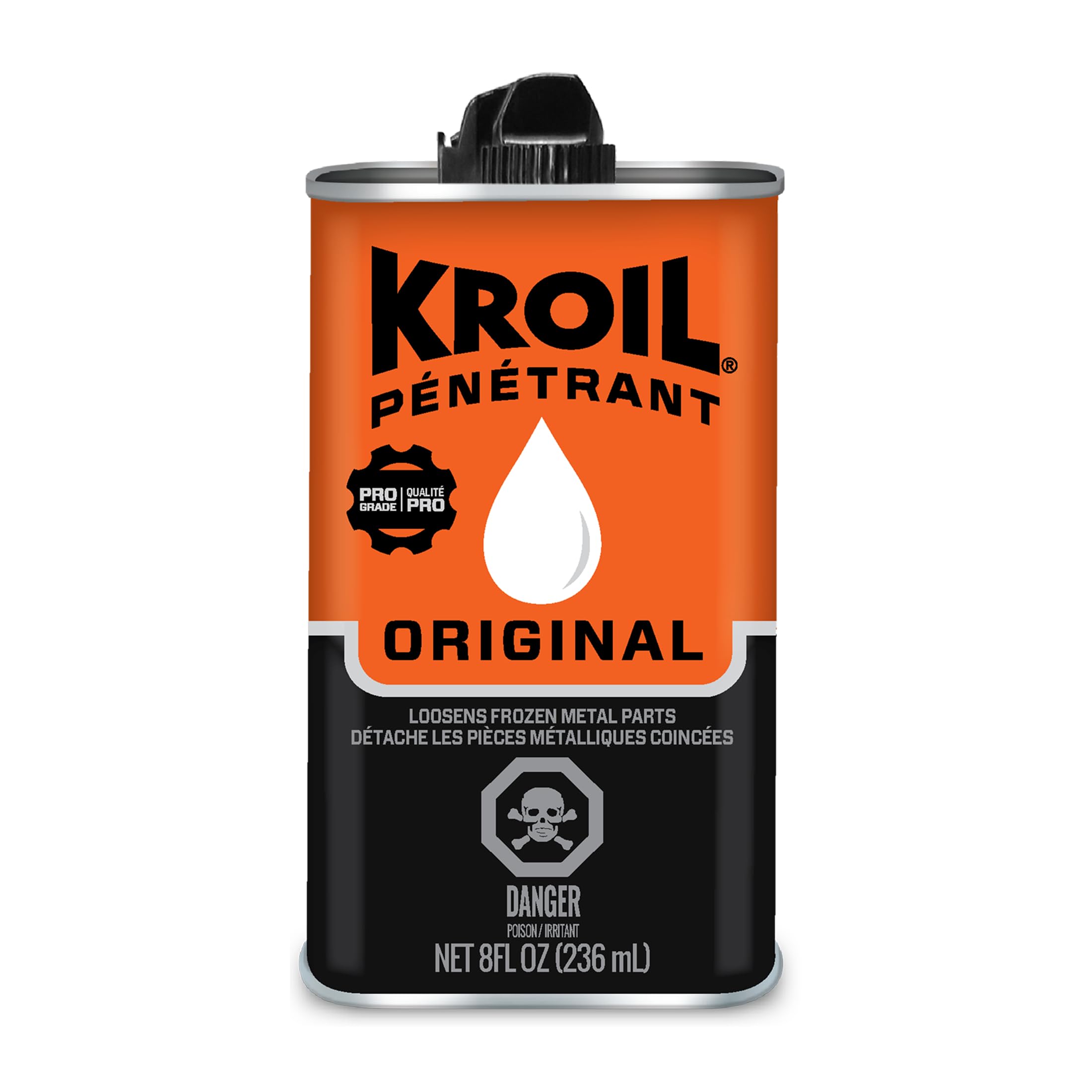
Kroil Original Penetrant

96 /100
Kirk Score Outstanding
Volume
8 fluid ounces
Safe On
Metal
Container
Drip can
Check Details on Amazon

Pros

  • Thin fluid creeps into tight threads
  • Drip spout lands oil on the fastener
  • Leaves a lubricating, corrosion-inhibiting film
  • Eight ounces lasts because you use drops

Cons

  • Premium price for a single eight-ounce can

A drip can is the whole idea here. Kroil comes in an eight-ounce can with a small spout, so you tip it and a thin film of oil runs down the side of a nut and into the gap between the threads, with no mist across the fender and no half-can wasted on the bracket around it. That control, plus the thinnest fluid in this group, is why it is our top pick: a penetrant only works on the surface it actually reaches.

Creeping into tight threads and letting two corroded parts separate is the job that matters, and it is the one this can does best of everything here. We reach for it first on exhaust studs, caliper bolts, and old pipe fittings, the places where a snapped fastener turns a twenty-minute job into a lost afternoon. It keeps working after the part is free, too, lubricating the threads and leaving a film that holds off fresh corrosion.

Because you apply it in drops rather than wet coats, an eight-ounce can goes much further than the size suggests; ours has outlasted several aerosols that sat on the same shelf.

The drip format is the one thing to plan around. Overhead work is awkward, since you cannot spray upward at a rusted undercarriage bolt, and tipping a can while lying under a car is nobody's idea of fun. On a bench, though, a spout is no slower than a spray and a good deal tidier, with a wire brush doing the rest.

Bottom line: For a fastener that has been rusted in place for years, this is the can we hand you: the thin fluid reaches threads an aerosol mists past, and a bottle lasts for years of odd jobs.

Check Latest Price
#02

Best on Paint and Plastic

Free All Rust Eater

93 /100
Kirk Score Outstanding
Volume
11 fluid ounces
Safe On
Paint and plastic
Container
Aerosol can
Pack Size
2 cans
Check Details on Amazon

Pros

  • Silicone-free and sold as safe on paint
  • Pinpoint nozzle keeps spray on target
  • Strong on rusted hinges and brackets
  • Two cans cover bench and truck

Cons

  • Aerosol only, so no drop-by-drop control

Silicone-free is the phrase that earns this can a place, and it is why a body shop can keep it on the bench. Most penetrants are fine near paint until a drift of overspray lands on a fresh panel and you are chasing fisheyes out of the finish. Free All is sold as safe on paint and plastic, and the precision nozzle keeps the spray on the fastener instead of the sheet metal around it.

We found the core work holds up: it goes after rusted hinges, brackets, and door hardware, and the corrosion gives way rather than just getting wet. For anything within reach of a painted jamb or plastic trim, that combination of a controlled nozzle and a formula sold as finish-safe is what makes it the pick here.

It arrives as two eleven-ounce cans, which is more than a weekend job needs and about right for a shop keeping one on the bench and one in the truck. The spray is pinpoint rather than wide, so a long row of bolts takes a little longer than it would with a fan pattern.

What it will not do is magic a fastener that rust has welded into place. The worst ones still want heat, patience, and a second application the next morning, which is true of every can on this page.

Bottom line: If the rusted part sits next to paint or plastic, this is the one we reach for: a controlled spray from a silicone-free formula that will not wreck the finish.

Check Latest Price
#03

Best Aerosol for Tight Spaces

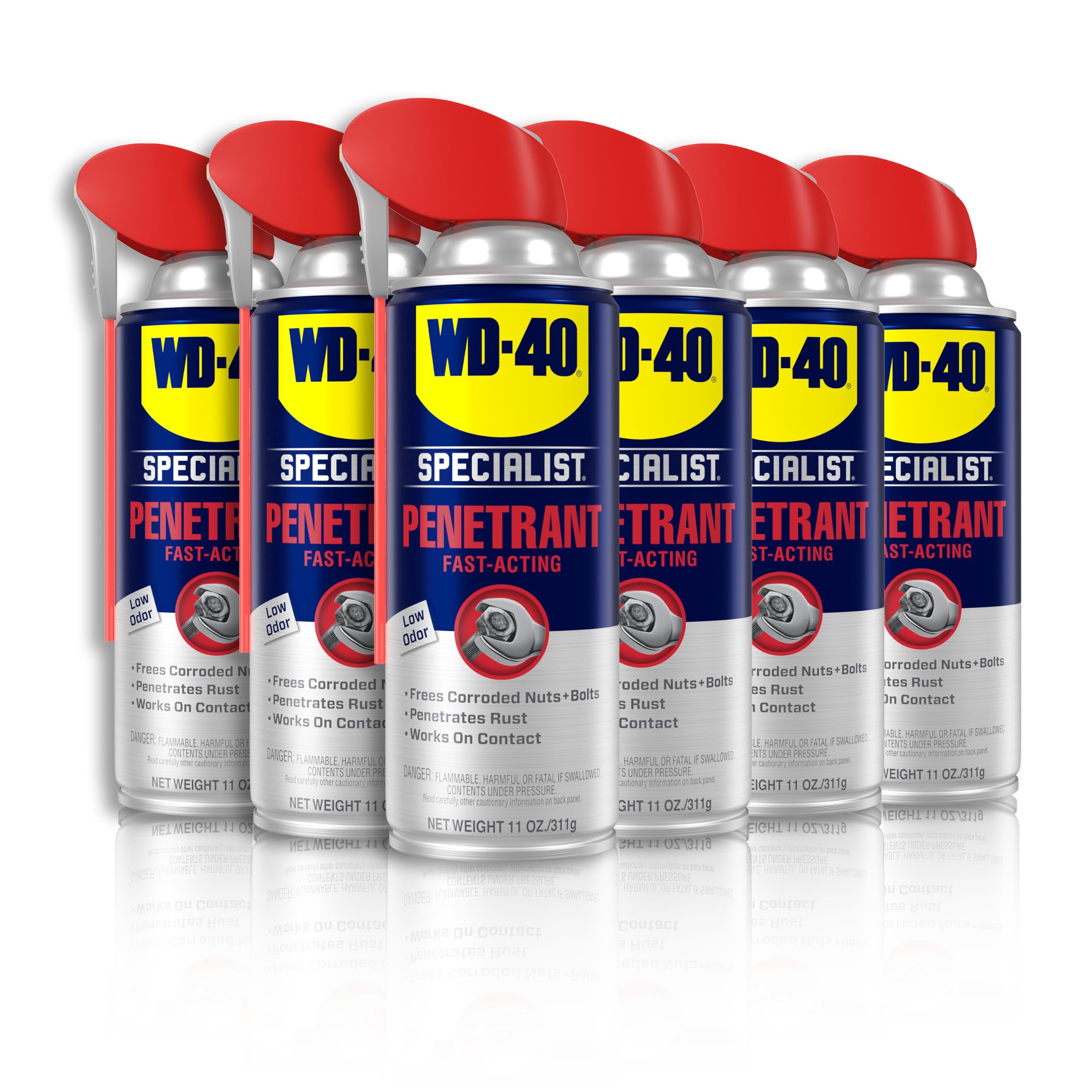
WD-40 Specialist Penetrant

96 /100
Kirk Score Outstanding
Volume
11 fluid ounces
Safe On
Metal, Plastic, Rubber
Container
Aerosol can
Pack Size
6 cans
Check Details on Amazon

Pros

  • Two-way straw reaches tight threads
  • Low-odor formula for indoor-adjacent work
  • Also frees hinges, locks, and squeaks
  • Leaves a protective anti-corrosion layer

Cons

  • Cans can lose spray pressure before they empty

Flip the straw up and you get a needle-thin jet that goes into the gap between a nut and a washer; flip it down and you get a fan for a whole bracket. That two-way nozzle is why this is the aerosol we keep on the shelf. On a rusted latch, a brake-line fitting, or the hinge pin behind a door, the narrow setting puts fluid exactly where a plain can would have coated everything around it.

On light and moderate corrosion it earns its keep: painted-over screws, shrieking hinges, fittings that have seized after a few winters outdoors. The fastener that has been rusted solid for a decade is a different problem, and there a thin drip oil or some heat will do more. The formula is also sold as low-odor, which counts for something when the work is in a garage with the door down.

It leaves a protective layer behind, so the bolt you just freed does not seize again by spring, and the two-way tip means you stop buying separate straws that vanish into an engine bay. The six-can case is worth splitting with a neighbor if you do not go through penetrant quickly.

Bottom line: The aerosol we reach for when a fitting is awkward to get at: the two-way straw gets fluid into the gap, and the low-odor formula is mild enough for a closed garage.

Check Latest Price
#04

Best Multipack for the Garage

PB Blaster Penetrating Oil

94 /100
Kirk Score Outstanding
Nozzle
ProStraw flow control
Volume
11 fluid ounces
Container
Aerosol can
Pack Size
6 cans
Check Details on Amazon

Pros

  • Built for rusted automotive hardware
  • ProStraw adjusts spray width and volume
  • Clings to vertical surfaces
  • Six cans cover bench, truck, and shed

Cons

  • Strong fumes rule out indoor use

Six eleven-ounce cans arrive in one box, which sounds excessive until the third one disappears into a friend's garage. This is the penetrant that ends up everywhere: one in the truck, one in the shed, one in the toolbox, and nobody has to go looking for it when a bolt lets go at the worst moment.

The ProStraw tip adjusts from a narrow jet to a wider spray and controls how much comes out, so you can wet a row of lug nuts or put a single shot into a bleeder screw. It also goes on wet and stays put longer than the thin oils here, which matters on a vertical flange where a watery fluid would be on the floor before it did anything.

Rusted exhaust hardware, caliper brackets, the bolts underneath a truck that sees road salt all winter: that is the work it is built for, and it leaves a protective film once the part is free.

The reason we point people to the case rather than a single can is simple. This is the one you want within reach in three places at once, and the case is how you get there. Having a can on every shelf beats rationing one precious bottle you are saving for a special occasion.

Bottom line: The case we suggest for anyone setting up a first garage: six cans of a clinging, fast-acting penetrant that lives within reach of every bench and truck.

Check Latest Price
#05

Best Budget Pick

3-IN-ONE Penetrant Drip Oil

94 /100
Kirk Score Outstanding
Volume
4 fluid ounces
Safe On
Plastics, rubber, metal
Container
Squeeze bottle
Check Details on Amazon

Pros

  • Drop-by-drop control from a squeeze bottle
  • Safe on plastics, rubber, and metal
  • Works on locks, hinges, and faucets
  • Budget entry into the category

Cons

  • Four-ounce bottle will not last in a shop

At four ounces and the budget end of this group, this is the smallest and least expensive way into the category, and for a lot of household jobs that is all you need. Squeeze the bottle and a drop lands on a hinge pin or a lock cylinder; twist the spout and you can aim it. No aerosol, no mist, no cloud of solvent in a hallway, which is why ours lives in the kitchen drawer rather than the garage.

The formula is sold as safe on plastics, rubber, and metal, and that widens the list: door hinges, a stiff pull-up faucet, the rollers on a sliding closet door, noisy exercise equipment. On small hardware it works quickly, and only a drop or two is needed because the oil soaks in rather than sitting on top of the part.

One thing to plan for: the twist cap works loose in a toolbox, and a bottle that has been rolling around in one leaves an oily patch on everything under it. Stand it upright in a bag or a tray and it behaves itself.

Bottom line: The one we keep in the house: a squeeze bottle that puts a single drop on a hinge or a lock, with no aerosol mist filling a small room.

Check Latest Price
#06

Best for a Working Shop

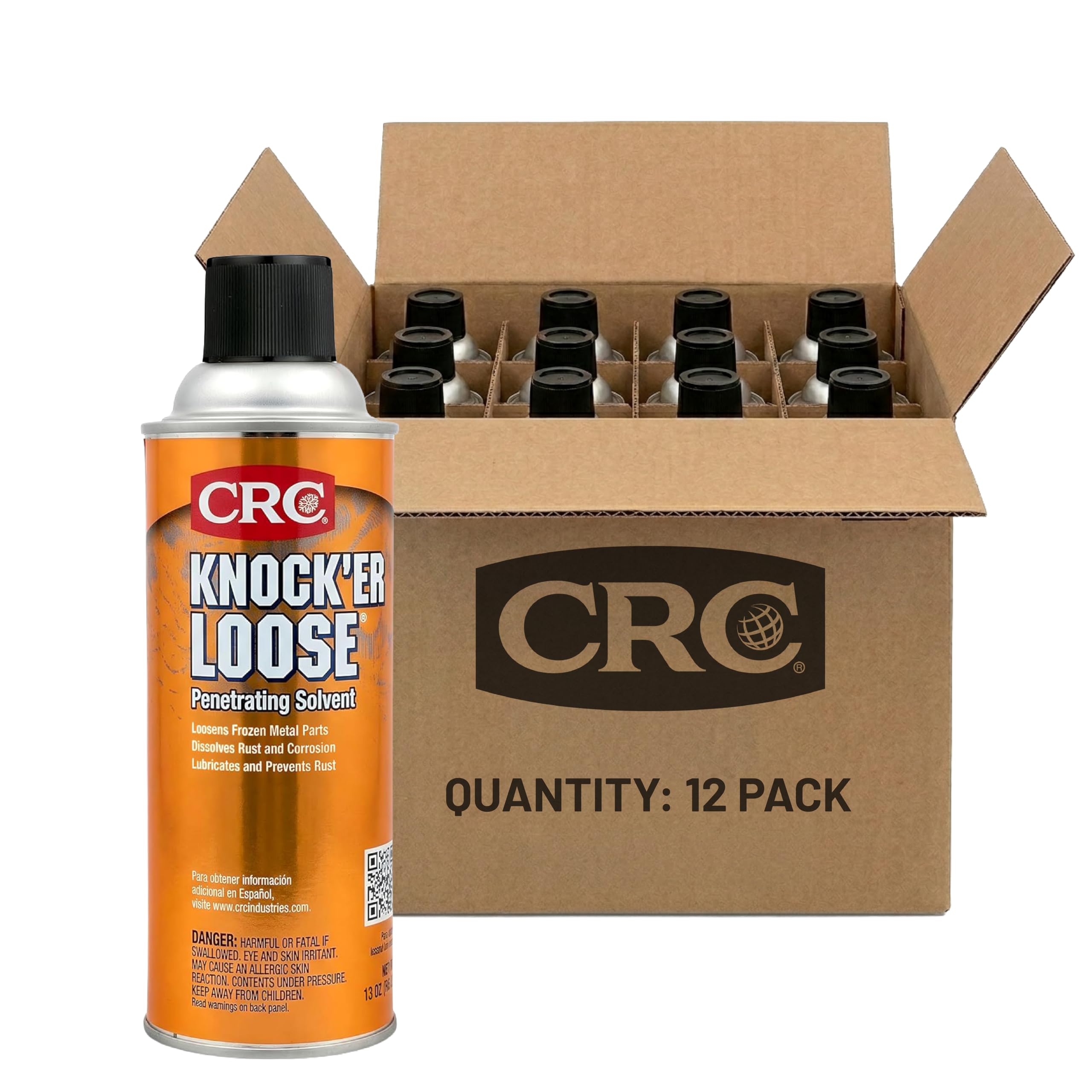
CRC Knock'er Loose

93 /100
Kirk Score Outstanding
Volume
13 fluid ounces
Container
Aerosol can
Pack Size
12 cans
Viscosity
Low
Check Details on Amazon

Pros

  • Fast, low-viscosity solvent action
  • Covers the shop application list
  • Twelve cans keep a shop stocked

Cons

  • Twelve-can case is far more than a home garage needs

Fleet shops and plant maintenance buy penetrant by the case because it disappears by the case, and that is the buyer this twelve-pack is aimed at: thirteen ounces a can, low viscosity, a solvent that goes after corrosion instead of sitting on top of it.

The application list is the shop list, covering couplings, fittings, locks, hinges, bushings, washers, and sliding mechanisms. The low-viscosity formula is the part that matters, because a thin fluid is what gets between a corroded nut and its stud, and the 50-state-compliant formula keeps the cans usable where volatile rules are strict. Every can in the box is the same fluid, which is more than you can say for a shelf of half-used odd bottles.

For a home garage the arithmetic changes, and that is where we part company with the case. Twelve cans is a decade of odd jobs for most households. Where it makes sense is anyone turning wrenches five days a week: one case covers the bench, the service truck, and the drawer by the press, and nobody has to ration it.

Bottom line: Buy it by the case if penetrant is a line item in your working week; for occasional home repairs the same money buys one better can and a spare.

Check Latest Price
#07

Household repairs

Liquid Wrench L106

87 /100
Kirk Score Excellent
VOC
0%
Volume
5.5 fluid ounces
Safe On
Painted surfaces, plastic, PVC
Container
Bottle
Check Details on Amazon

Pros

  • Sold as safe on paint, plastic, and PVC
  • No mist in a room
  • Frees household hardware

Cons

  • Bottle only, so overhead work is awkward

Set this next to the aerosols and the difference is immediate: a five-and-a-half-ounce bottle, no propellant, no mist. That is the point. It goes where a spray can cannot, into a lock cylinder, along a hinge pin on a cabinet door, or onto a fitting you are working at eye level, without solvent settling on everything else in the room.

It is sold for exactly the household list: nuts, bolts, hinges, clamps, pipe fittings, locks, latches, and frozen mechanisms. A drop worked into a thread handles small hardware, and there is no overspray to wipe off a door frame afterward.

What stands out most to us is the stated safe list. This is the one here sold as safe on painted surfaces, plastic, and PVC, with a low-odor, zero-VOC formula, and that is why it earns the spot for a painted door, a PVC fitting, or a bike frame where a stray spray would cost you a repaint. On a fastener that is rusted solid, a bigger can will do more; this bottle is for the small, careful jobs.

Bottom line: The bottle we hand someone with a squeaky hinge on a painted door: finish-safe, low-odor, and small enough to keep in the house.

Check Latest Price
#08

Clean and lubricate

Superzilla Aerosol

91 /100
Kirk Score Outstanding
Volume
10.14 fluid ounces
Formula
Plant-based
Container
Aerosol can
Check Details on Amazon

Pros

  • Plant-based and biodegradable
  • Cleans grease, rust, and scuff marks
  • Lubricates hinges, locks, and chains

Cons

  • Can leave a badly seized fastener unmoved

It would be easy to buy this expecting a dedicated penetrant and be disappointed. Superzilla is a plant-based cleaner-lubricant first: it strips grease, oil, carbon, and marker, and it lubricates hinges, locks, chains, and valves. Read the can as a workshop multi-tasker rather than a rust specialist and it starts to make sense.

Where it is genuinely handy is the mixed list of small jobs, from a squealing hinge and a stiff lock to a bike chain, a scuff on a stainless appliance, or a lightly rusted bolt that needs only a little persuasion. One can covering cleaning and lubrication is the reason it survives on a crowded shelf.

The line is a fastener that is truly seized. It will free light corrosion, but on something that has been rusted in place for years it can stall, and once a bolt has already rounded you do not want to spend an evening experimenting.

For a household that wants a single can for hinges, locks, chains, and cleanup, this earns its place, as long as a dedicated penetrant sits beside it for the bolt that will not move.

Bottom line: A plant-based cleaner and light lubricant that earns its shelf space for hinges, locks, and cleanup, but not for the bolt that is rusted solid.

Check Latest Price

How We Tested 16 Penetrating Oils on Real Rust

We started with roughly 40 formulas pulled from hardware store shelves, auto parts counters, and industrial suppliers, then cut the list to 16 based on format (aerosol versus drip can), price per ounce, availability, and how clearly each maker described the surfaces it was safe on. Several arrived as multi-packs, which turned out to be the practical way to buy once a can earned a spot in the garage.

Everything was used the way it gets used at home: on a high-mileage truck that had spent years in road salt, a yard gate with seized hinges, a padlock that sat out all winter, corroded battery terminals, a mower blade bolt, and a bike chain. We applied each product per its label, timed how long we waited before putting a breaker bar to the fastener, and gave the stubborn ones a second application at the 24-hour mark before calling them stuck for good.

Along the way we wrote down how the cans actually behaved—whether the spray came out as a narrow stream or a mist, whether the straw clogged or stayed locked in the nozzle, whether the can worked at an angle or upside down, and how much shaking each needed because the oil had separated between uses. We watched where the liquid went: wicking into the threads or pooling on the bracket. We noted the smell in a closed garage and the residue left behind, dry or tacky. A week later we checked whether the freed part still moved, and we kept a scrap panel of painted steel and plastic trim to spritz so we'd catch any damage. Price per ounce told us what a full soak actually costs.

How to Choose a Penetrating Oil

Spray Can, Drip Bottle, or Two-Way Straw

Where the fluid has to go decides the container. An aerosol with a straw reaches an overhead fitting or a bracket tucked behind a fender, and it covers area quickly. A drip or squeeze bottle puts one drop on a hinge pin, a lock cylinder, or a bench-sized part without misting solvent across everything nearby.

If your rusted parts live under a car, buy an aerosol. If they are in a door frame, a cabinet, or on a workbench, a bottle wastes less and lands more accurately. A two-way tip, like the Smart Straw on the WD-40 Specialist can, tries to cover both jobs in one container.

Check the Pack Size Before You Compare

Several picks here ship as cases rather than single cans, and that changes what you are actually buying. Six or twelve cans is right for a shop that empties them and years of clutter for a household that frees two bolts a year, so read the pack count before anything else.

Volume per can matters just as much, because four ounces of drip oil and eleven ounces of aerosol do not go the same distance. One is measured in drops aimed at a thread, the other in wet coats over a bracket.

What Else the Fluid Has to Do

A penetrant is rarely only a penetrant. Most of these also lubricate, displace moisture, and leave a film that slows new corrosion, which is worth having on a gate hinge or a shed door that seizes every winter.

Others lean toward cleaning, which is where an all-purpose can like Superzilla fits. Decide whether you are buying a specialist for one seized fastener or a can that handles hinges, locks, and cleanup, and do not expect one formula to be best at both.

Fumes, Ventilation, and Heat

These are solvent products, and the flash points on the cans sit between roughly 120 and 150 °F, well below the temperature of a manifold that has been running. Let exhaust and engine parts cool before you spray, and keep the work out of a closed room.

The stronger-smelling aerosols here are garage and outdoor tools. For an indoor job, a drip bottle applied sparingly puts far less solvent into the air than a spray, and an open window is still worth the trouble.

Clean the Thread Before You Soak It

Oil cannot creep through scale. A minute with a wire brush on the exposed thread, plus a rag to lift the loose rust, gives the fluid a path instead of a crust to sit on.

Position the part so gravity helps: apply from above where you can, and let the oil pool at the joint rather than run off the bottom. On a horizontal bolt buried in a rusted bracket, a few repeats beat one heavy soaking.

Frequently Asked Questions

Final Verdict

Kroil is our answer to the job this search is really about: a fastener that has been rusted in place for years. The drip can puts a thin fluid where an aerosol only mists, and because you apply it in drops, one bottle covers a lot of stubborn hardware.

If the rusted part sits beside paint or plastic, take the Free All aerosol instead. For hinges, locks, and faucets around the house, the four-ounce 3-IN-ONE bottle is the one that stays in a drawer and gets used.