Best Overall
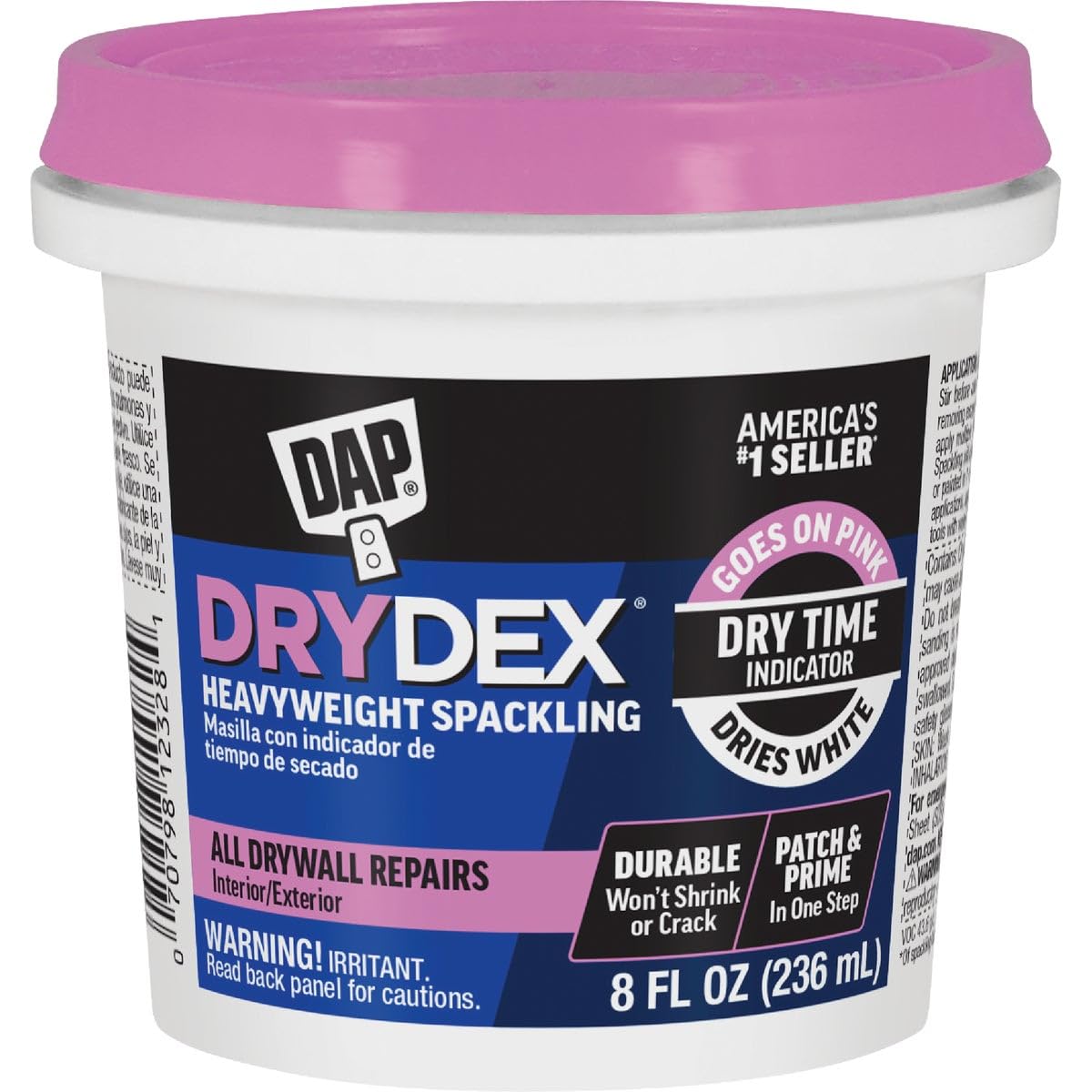
DAP DryDex Spackling
- Use
- Interior and exterior
- Container
- 1/2-pint tub
- Dry Indicator
- Pink to white
Pros
- Color change tells you when to sand
- Tub loads faster than a squeeze tube
- Sands easily and touches up cleanly
- Handles cracks in baseboards and trim
Cons
- Half-pint opening is tight for a wide knife
Pink out of the tub and white when it is dry is the whole pitch, and it holds up: you can look at the wall and know whether it is time to sand instead of testing with a fingernail and leaving a dent. That matters most on the repairs people actually make, the nail hole, the anchor hole, the crack over a door frame, where sanding a minute early costs you a crater and a minute late costs you a ridge. We use the color as the cue and sand as soon as the pink has gone.
The tub is the other practical win. We dip a small knife, scrape the rim, and load again, which is faster and tidier than squeezing paste out of a tube and fighting the last third of it. The half-pint opening is tight, though, and a 3-inch blade barely fits, so a 1- or 2-inch knife is the better tool here. Seat the lid flat when you are done, because this one skins over at the rim quickly.
Its ceiling is about three-quarters of an inch. Anything you can see daylight through needs a patch or a backing before spackle goes near it, and a deep cavity should be built up in two passes with drying between. For the boring case, twenty small holes before a move-out, it is the one we reach for without thinking about it.
Bottom line: The color change does the thinking for you: this is the tub we keep on the shelf for nail holes and hairline cracks, and the safest bet here for a first patch job.
Check Latest Price