// data-verified

Best Spray Foam Insulation of 2026

A bedroom over the garage that never quite warms up usually isn't a furnace problem — it's an air problem. Fiberglass batts slow heat down; spray foam goes hunting for the leak. It expands into the cavity, grips whatever it lands on, and cures into a solid plug that stops moving air and dulls sound at the same time. What you're really buying is fewer drafts, quieter rooms, and a heating bill that stops climbing for no reason.

The catch is that two very different products hide under the same name. A 12-ounce can with a straw is for the gap around a pipe; a two-part kit with a gun and a hose is for a whole rim joist, and buying the wrong one costs you either money or a Saturday. We spent eight months working through 11 of them — cans, kits, fire-rated formulas — weighing each one before and after to see how far it actually went against the board footage on the label, and watching whether it stuck to old dusty lumber or slid right off.

Some cured hard and stayed put. A few pulled away from the studs within weeks, and more than one gun clogged before the second bay was done. The picks below are the ones that behaved, ordered by the job you're actually doing — a handful of cracks, or a whole wall.

#01

Best Overall

BEEST FullStop 24-Pack

85 /100
Kirk Score Excellent
Cans
24 × 26.8 oz
Coverage
Up to 480 board ft
Foam Type
Moisture-cured polyurethane
Fire Rating
Class A, FSI 0, SDI 120
Check Details on Amazon

Pros

  • 480 board ft across a 24-can case
  • Class A rated with published ASTM E84 indices
  • Bonds to wood, metal, drywall, concrete and brick
  • Straightforward application for first-timers

Cons

  • Coverage often lands under the 480 board ft claim

Coverage is the number shoppers check first, and it's where this case makes its argument. The FullStop kit holds 24 cans at 26.8 ounces each and claims 480 board feet — about 480 square feet at an inch thick, or 240 square feet at the two-inch depth a closed-cell job usually wants. That's enough for a rim joist, a band board, and a stairwell header on a single purchase, which is why we put it at the top of this list instead of leaving it as the value alternative.

What separates it from the other can-based kits here is paperwork as much as chemistry. BEEST had the foam tested to ASTM E84 and lists a flame spread index of 0 with a smoke developed index of 120, the Class A surface-burning result an inspector wants to see in a concealed space. The moisture-cured polyurethane bonds to wood, metal, drywall, concrete, and brick, and we paid close attention to the metal claim — foam that lets go of a steel stud is worse than no foam at all.

Expansion is the thing to manage. Laid on too thick in one pass, these cans skin over and stay under-expanded, so build the foam up in passes and let each one finish before you add the next; that habit also keeps you from fighting gravity across a ceiling bay. What we noticed in use is how little drama there is — the cans spray evenly, the passes build predictably, and the case holds enough that you aren't rationing the last one. That's the difference between a kit you finish and a kit that sits in the garage.

Bottom line: We think this is the kit most people should buy: 480 board feet, a Class A rating, and enough material to finish the job.

Check Latest Price
#02

Best Professional-Grade Kit

Froth Pak 630 Kit

83 /100
Kirk Score Excellent
R-value
R-6.2 per inch; R-12.2 at 2 inches
Coverage
Up to 630 board ft
Fire Rating
Class A up to 2 inches
Kit Contents
Two tanks, 15 ft hose, gun, nozzles
Check Details on Amazon

Pros

  • 630 board ft from one two-part kit
  • R-12.2 at two inches, Class A rated
  • Cures in about 30 seconds
  • Hoses, applicator and nozzles included

Cons

  • Highest cost per board foot in this group

Nobody buys a Froth Pak by accident. Two pressurized tanks, a 15-foot hose, an InstaFlow applicator and a set of fan and cone nozzles arrive in one box, and the moment you crack the valves the chemistry is running — this is a kit you finish in a session, not one you dip into across a month of weekends. Know your square footage before you order, because the second tank doesn't keep.

What you get for that commitment is the only true two-component closed-cell system here. The foam rates R-6.2 per inch, or R-12.2 at two inches, carries a Class A rating up to two inches thick, and yields up to 630 board feet. It cures in about 30 seconds and allows re-entry in an hour with proper ventilation, so a crawl space that used to eat a week of evenings can be sprayed and left behind the same afternoon.

We recommend it for the project that has to be done in one go: a crawl space, a garage ceiling, a band joist run across a whole foundation. Two things come out of actually using it. The foam is unforgiving on vertical surfaces, where a heavy coat slides before it sets, so keep the passes thin and work in short arcs instead of long curtains. And the ventilation is not a suggestion — two-part foam off-gasses hard enough that you want the space opened up and a respirator on before you start.

Bottom line: We recommend the Froth Pak 630 for anyone insulating a crawl space or an attic in one push, provided you measure the job before you open it.

Check Latest Price
#03

Best High R-Value Can Kit

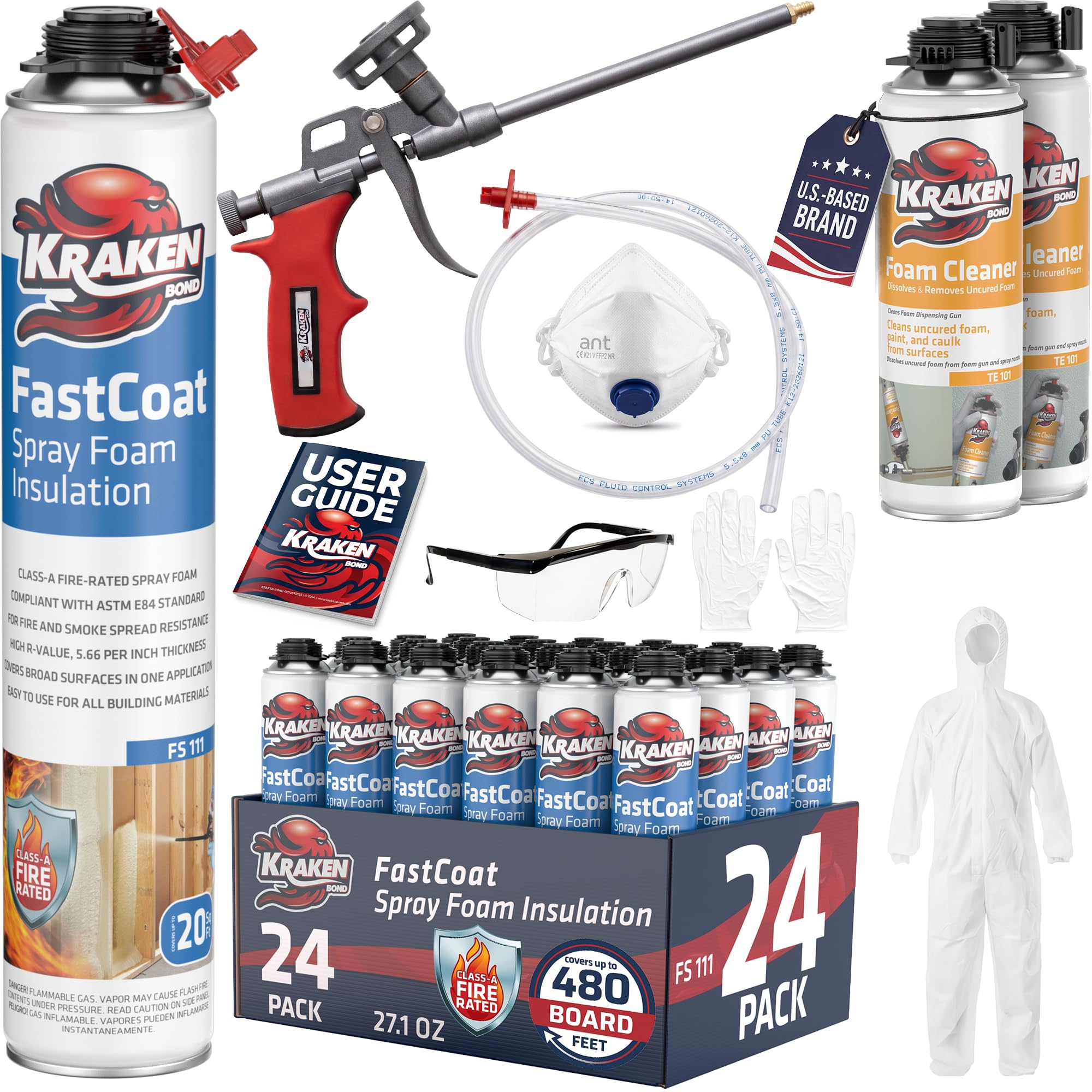
Kraken Bond Fastcoat 24-Pack

79 /100
Kirk Score Very Good
Cans
24 × 27.1 oz
R-value
R-11.32 at 2 inches
Fire Rating
Class A, ASTM E84
Kit Contents
Gun, 2 cleaners, safety gear
Check Details on Amazon

Pros

  • R-11.32 at two inches with a Class A rating
  • Gun, two cleaners and safety gear included
  • Dual nozzles for walls and ceilings

Cons

  • Board-foot claim runs optimistic on real jobs

Open the Kraken Bond case and there's nothing else to buy: 24 cans at 27.1 ounces, an ergonomic applicator gun, two cans of cleaner, and safety gear, plus a dual-nozzle setup that splits wall work from ceiling work. The nozzle split matters more than the marketing suggests. A fan pattern for overhead work turns a glob that drops off the ceiling into a coat that stays where you put it.

At R-11.32 for two inches with a Class A ASTM E84 rating, this is the strongest thermal and fire combination in a can-based kit here, and the trigger feathers the flow well enough to keep a tidy bead along a rim joist. We reach for it when a job needs a high R-value and a fire rating without a separate gun purchase. That combination is why it's the first case we name when someone asks for maximum R-value out of cans.

Two things to know before you order. A share of these cases turn up with cans that have lost their propellant, and a can that wheezes for two seconds and quits is a can you can't swap mid-project — test each one on a scrap of cardboard before you commit to a ladder. The first can also comes with a learning curve: the dual nozzle rewards short bursts and punishes long, heavy passes, so spend can one on a piece of scrap plywood.

Bottom line: We reach for the Kraken Bond case when a job needs high R-value and a fire rating without buying a separate gun.

Check Latest Price
#04

Best for Mid-Size Projects

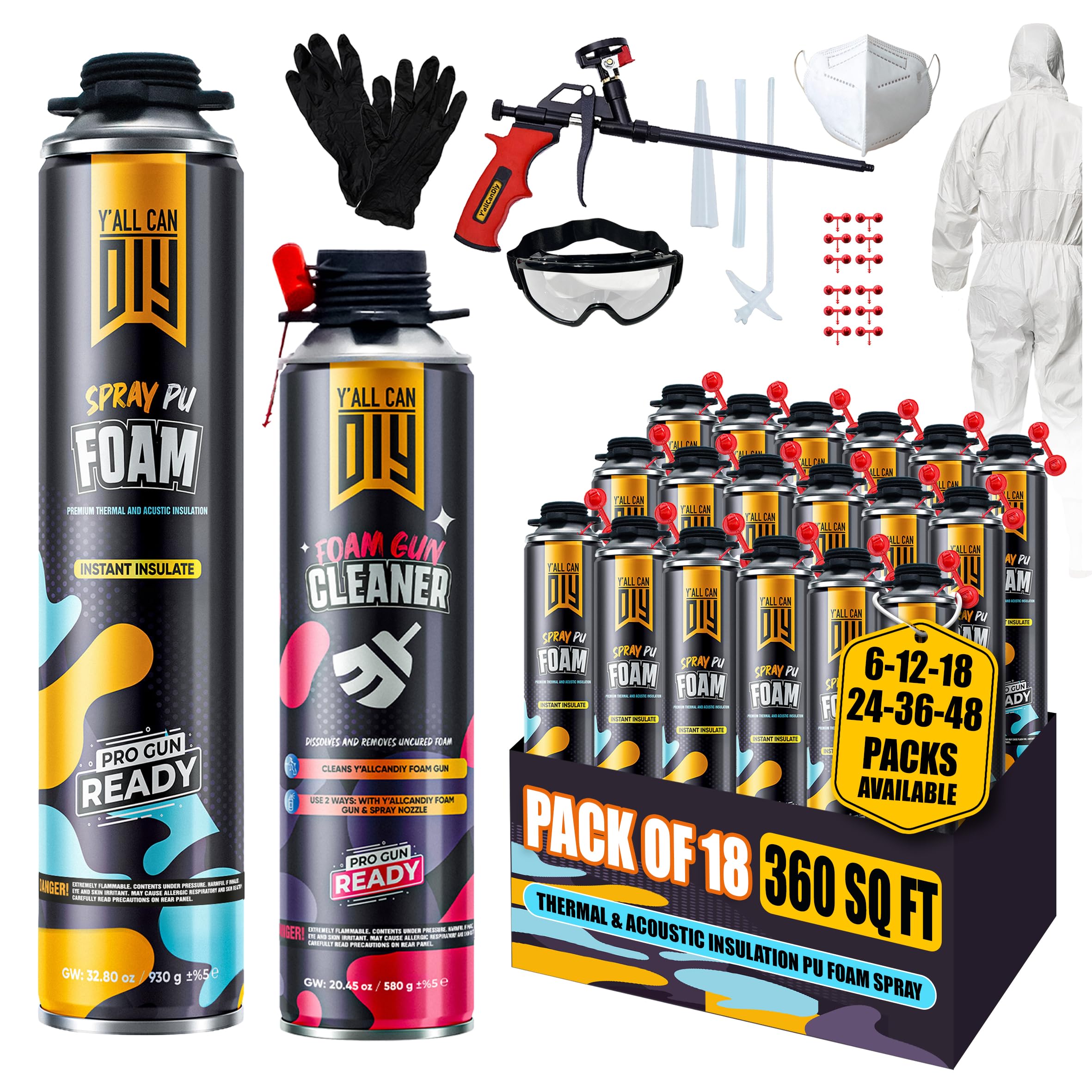
Y'allCanDiy 18-Pack

83 /100
Kirk Score Excellent
Cans
18 × 25.3 fl oz
R-value
Up to R-8 at 2 inches
Coverage
Up to 360 board ft
Kit Contents
Gun, cleaner, safety gear
Check Details on Amazon

Pros

  • 360 board ft across 18 cans
  • R-8 at two inches for cavity work
  • Gun, cleaner and safety gear included

Cons

  • Coverage often lands under the 360 board ft claim

The number that matters on this case is R-8 at two inches, and it tells you exactly what kind of job it's for. Foam insulates by depth, so a mid-range R-value per inch means building up more passes to hit a target — fine in an open attic or over a rim joist, slower going in a shallow cavity. For a garage wall, a shed, or one attic section, 18 cans at 25.3 ounces each and 360 claimed board feet is a sensible match, which is why we rank it as the mid-size kit to beat.

The case arrives with a gun, cleaner and safety gear, and the cans seat and spray without much fuss once you're past the first one. That first can is the honest learning curve: the trigger is sensitive, the foam keeps expanding after it lands, and a heavy hand on the opening pass costs you a trim job later. Spend it on a sheet of scrap plywood and the rest of the case goes quickly.

Where the case earns its keep is on defined projects. Eighteen cans is light enough to carry up a ladder and generous enough to finish a real job, and having the gun and cleaner in the same box saves a second trip. If your plan is a whole house, look at the 24-can kits; if it's one room-sized air seal, this is the right amount to finish before the leftovers sit in the garage.

Bottom line: Buy the Y'allCanDiy case if your project is a garage, a shed, or one attic section and you want the gun and cleaner in the same box.

Check Latest Price
#05

Best for Sealing and Fireblocking

Great Stuff PRO 24 oz 12-Pack

89 /100
Kirk Score Excellent
Pack
12 × 24 oz
Gap Size
Up to 3 inches
Trim Time
Trimmable in 60 minutes
Fire Rating
Fireblock rated
Check Details on Amazon

Pros

  • Fireblock rated, in inspection orange
  • 24 oz cans outlast straw-type cans
  • Tack-free in 3-10 minutes, trimmable in an hour

Cons

  • Runs down vertical surfaces if over-applied

The orange colour isn't a style choice. This is a fireblock-rated foam, and the colour exists so an inspector can look into a concealed space and see that a penetration was sealed with the right product. If your project involves running cable or pipe through a top plate and closing the wall behind it, that's the detail that decides the purchase.

A 24-ounce can goes roughly twice as far as the straw cans most people picture when they hear spray foam, and the three-inch gap rating covers the messy openings around framing, sill plates, and vent penetrations where batts and caulk give up. We also like the schedule: tack-free in three to ten minutes and trimmable in an hour, so a whole top plate can be sealed before lunch and trimmed after.

These are gun-grade cans and the case is cans only, so a PRO-style applicator and a bottle of cleaner are part of the budget — easy to justify across a whole-house sealing job, harder for a single door frame. The foam is aggressively sticky, and the cans want to be kept upright and warm. A can that gushes from the top instead of the nozzle will cost you an hour and a shirt.

Bottom line: We keep coming back to the PRO cans for anything that has to pass a fireblock inspection, and the 24-ounce size means fewer trips up a ladder.

Check Latest Price
#06

Best Single Can for Large Gaps

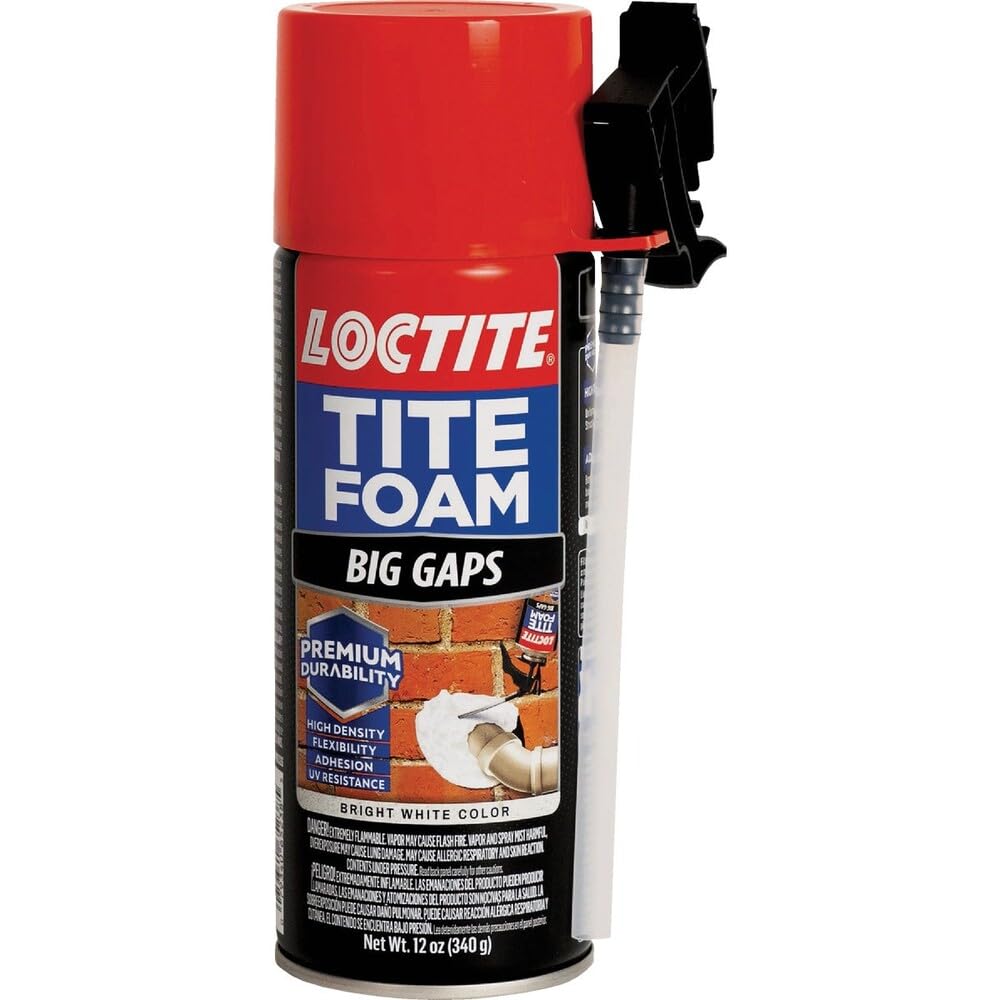
Loctite Tite Foam Big Gaps

89 /100
Kirk Score Excellent
Finish
White, trimmable, paintable
Can Size
12 fl oz
Gap Size
Up to 3 inches
Weather Resistance
Moisture and UV resistant
Check Details on Amazon

Pros

  • Fills gaps up to three inches without sagging
  • UV and moisture resistant for exterior use
  • Cures white, trims and takes paint

Cons

  • One can handles a repair, not a room

A three-inch gap is an awkward size: too wide for caulk, too small to frame out, and exactly what you find where an old sill meets a foundation or where somebody gave up on a pipe penetration years ago. Loctite rates this can for gaps up to three inches without sagging, slumping, or pulling away from the edges, and that's the whole reason to keep one on the shelf.

What makes it more useful than a generic gap filler is where it can go. The cured foam resists moisture and UV, so it holds up outdoors instead of crumbling away in a season, and it dries to a bright white that trims, sands, and takes paint — an exterior penetration can be finished rather than hidden behind a board. It bonds to concrete, masonry, wood, metal, PVC, and drywall, and it stays slightly flexible so it moves with the structure instead of cracking off it.

Where the can earns its place is the awkward repair: the gap around a hose bib, the hole where an old oil line came through, the seam under a sill plate. It's a one-component foam, so it isn't the tool for filling a wall cavity, and it isn't trying to be. The value is in finishing the small job properly instead of stuffing it with something that won't last the winter.

Bottom line: If the gap is wider than caulk can handle and you don't want to buy a gun and a case of cans for it, this is the can we hand people.

Check Latest Price
#07

First-time DIY kits

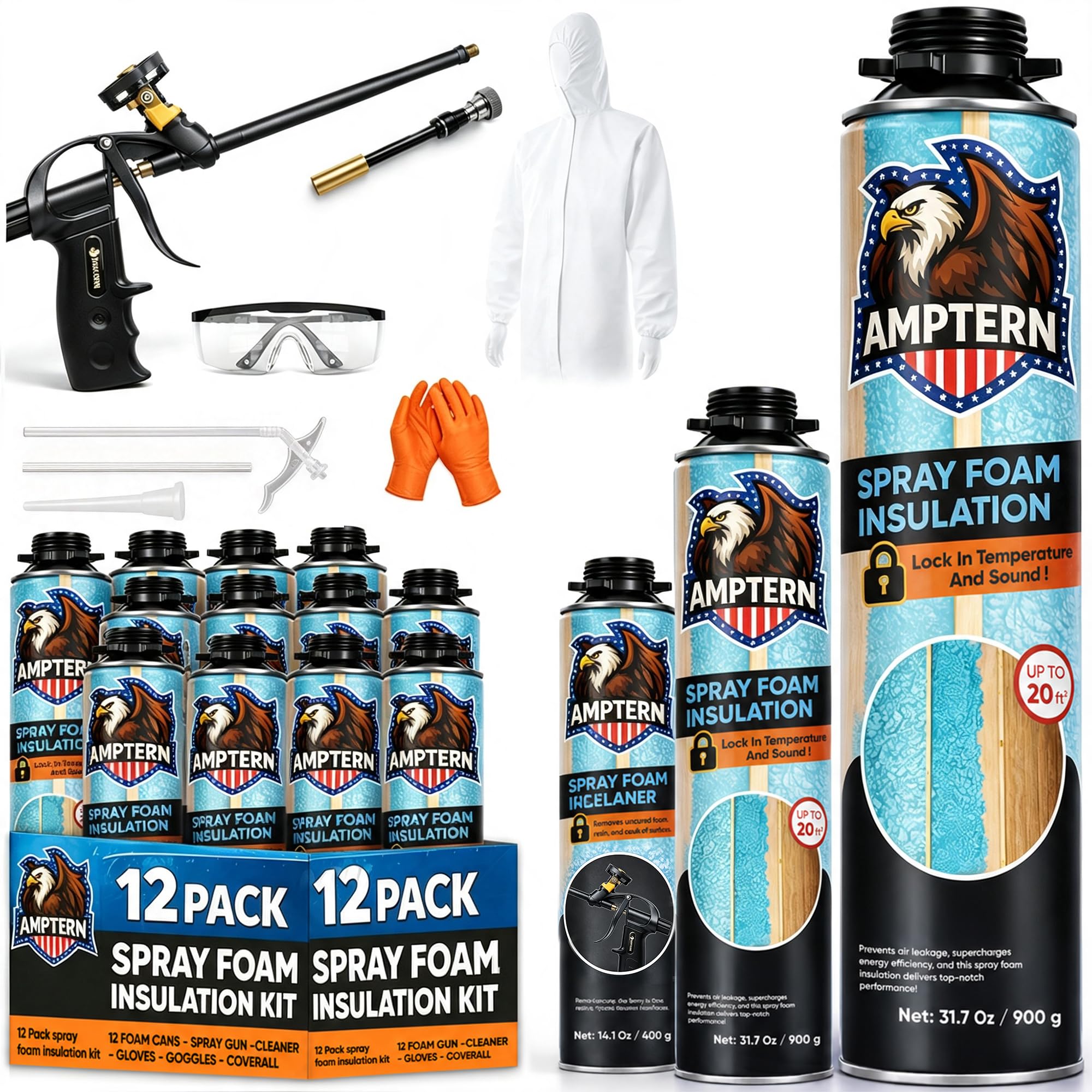
amptern 12-Pack Kit

79 /100
Kirk Score Very Good
Cans
12
Coverage
Up to 240 board ft
Kit Contents
Gun, cleaner, straws, gloves, glasses
Working Temperature
41°F to 86°F
Check Details on Amazon

Pros

  • Complete kit with gun, cleaner, straws and PPE
  • 240 board ft sized for small jobs
  • Wide 41°F to 86°F working range

Cons

  • Smallest case here at 240 board ft

Twelve cans at 240 board feet is a deliberate size: enough for a rim joist run, a set of window and door rough openings, and a few plumbing penetrations, without half a case going stale in the garage. It also states its working range plainly — 41°F to 86°F, with the can brought to about 68°F before you spray — which matters if you're sealing a garage in October or a crawl space in July. We think it's the right first kit for a homeowner who hasn't sprayed foam before: buy small, learn on the garage, order bigger once you know your pace.

The kit is unusually complete for its size: gun, adjustable nozzle, cleaner, disposable straws, gloves, and safety glasses, with closed-cell foam rated to bond to wood, concrete, brick, stone, metal, PVC, glass, and MDF. That covers every surface you'll meet on a remodel, and the straws let you reach a penetration the gun body won't fit into.

Cold is the trap. A can that's been sitting in an unheated garage sprays sluggishly and expands less than it should, so bring the case indoors the night before and keep the cans you aren't using warm. And because the foam skins as it cures, thick fills go better in passes than in one heavy shot — especially overhead, where gravity is not on your side.

Bottom line: We point first-time foam users at this 12-can case: a complete kit, a wide temperature window, and not much stock left over in a half-used box.

Check Latest Price
#08

Indoor crack sealing

Great Stuff Smart Dispenser

91 /100
Kirk Score Outstanding
Can Size
12 oz
Reusable
Up to 30 days
Foam Color
Cream
Check Details on Amazon

Pros

  • Reseals for up to 30 days
  • Foam stops where you stop
  • Precise control for small indoor gaps

Cons

  • Dispenser head can fail, ending the 30-day reuse

The dispenser is the entire pitch: the foam stops where you stop, nothing drips down the side of the can, and the whole thing reseals for up to 30 days. If you've ever thrown away a half-used straw can because the tube glued itself shut, that's the problem this solves.

Twelve ounces of cream-coloured foam is a crack-and-gap tool, not a cavity filler — window frames, baseboard gaps, the hole where the cable comes in, the joint between a rim joist and a sill. We recommend it for indoor work next to finished surfaces, because control is the whole point: you can lay a bead exactly where you want it, stop halfway across a frame, and pick it up again next weekend. That's a genuinely different experience from a straw can, where the second session usually means a new can.

Where it falls down is on your hands. The foam is aggressively sticky and stays that way for days, so gloves are not optional, and a can left lying on its side will glue itself to whatever it's touching. Set it on a scrap of cardboard, keep a rag within reach, and plan the bead before you pull the trigger — the dispenser rewards a steady hand and punishes a rushed one.

Bottom line: We recommend it for indoor crack and frame work where you want a bead you can stop and restart, not for filling a cavity.

Check Latest Price

How We Tested 11 Spray Foam Kits and Cans

We started by pulling every spray foam product a homeowner can realistically buy — single cans, two-part kits with a gun and hose, fire-rated and standard formulas — then narrowed to 11 based on what they claimed to cover, the price per board foot, and whether the label spelled out cure time and fire rating instead of leaving it to the product photo. Testing ran eight months, in the places this stuff actually gets used: rim joists and sill plates in a basement, top plates and a knee wall in an attic, rough openings around new windows and doors, and every plumbing and wiring penetration we could find.

Ease of use and installation got a stopwatch and a scale. We weighed each can and kit before and after, counted the stud bays it genuinely filled against the board footage printed on the label, and timed how long we could keep spraying before the gun spit or clogged — then cleaned it with whatever the kit supplied and noted whether it survived to the next session. Each kit was also set up solo, since that's how most of these get installed.

Effectiveness came down to stick and spray. We foamed dusty rim joists and slightly damp sheathing to see whether the foam clung or ran, watched it expand inside a closed cavity to catch any bulge in the drywall or pressure against a window frame, and checked tack-free time by touch and full cure by poking. Durability got revisited months later, when we cut back into a few bays to see whether the foam had shrunk away from the wood. Fire-rated products were judged on whether the rating was clearly printed and actually matched the penetration we were sealing.

How to Choose Spray Foam Insulation

Do the Board-Foot Math First

Board feet are easy once you see the trick: one board foot is one square foot at one inch thick. Measure the area you're sealing, multiply by the depth you intend to fill, and you have your number — a 100-square-foot rim joist taken to two inches is 200 board feet. Then add a margin, because temperature, uneven framing, and trimming all eat into a printed yield. A 480-board-foot case is a whole-attic purchase; a 240-board-foot case is a weekend of rim joists and window openings.

Match R-Value to the Cavity You're Filling

Closed-cell foam insulates by depth, so the R-value you end up with depends on how thick you can spray. The Froth Pak 630 states R-6.2 per inch and R-12.2 at two inches; Kraken Bond claims R-11.32 at two inches; Y'allCanDiy lists R-8 at two. Where space is tight — a 2x4 wall, a steel building's purlins — the higher R per inch is worth paying for. Where you have open depth, a lower-rated foam built up thicker gets you to the same place for less money.

Two-Part Kits vs. Cans

A two-part kit mixes its chemistry at the gun, cures in about 30 seconds, and puts out more foam in an afternoon than a case of cans will in a week. It also starts setting the moment you open the valves, which makes it a one-session purchase: you finish the job or you waste the kit. Gun-applied cans are slower and fussier but storable, resumable, and considerably cheaper per board foot. If your project spans more than one weekend, cans are the only practical answer.

Check What's Actually in the Case

An applicator gun, a bottle of cleaner, spare nozzles, and safety gear add real money to a case that looked cheap. Most kits here bundle all of it; the Great Stuff PRO case sells the cans alone, which is fine if you already own a PRO-style applicator. Cleaner matters more than shoppers expect — a gun left dirty between cans is the usual reason a case ends up half-used. Any kit that skips gloves and eye protection is quietly telling you to buy them separately.

Temperature, Prep, and Ventilation

Foam is temperature-sensitive. These kits want the can around 68°F and a working range running roughly from 41°F to 86°F; below that, the foam comes out sluggish and expands less than you paid for. Warm the cans indoors overnight, spray onto a clean, dry, dust-free surface, and mist the substrate where the instructions call for it. Ventilation isn't optional — two-part foams off-gas hard — so plan the job for a day you can open the space up.

Frequently Asked Questions

Final Verdict

Buy the BEEST FullStop case if you want one purchase that air-seals a house: 480 board feet, a Class A rating, and enough margin to finish the job. If the work is a crawl space or a whole attic that has to be done in one push, the Froth Pak 630 is the better tool, and R-12.2 at two inches is the reason to pay for it.

And if the job is really a handful of gaps, skip the cases entirely. The Loctite Tite Foam can handles a three-inch gap without sagging, takes paint, and lives in a toolbox drawer until you need it.