// data-verified

Best Wallpaper Paste of 2026

Wallpaper rarely fails because the paper is ugly; it fails because the paste gives up first. I’ve watched a simple accent wall bubble at the seams, and I’ve watched a well-matched adhesive turn a fiddly job into a calm afternoon. The right paste buys working time, grips without soaking through, and wipes off trim before it dries into a ghost. We spent eight months hanging 13 pastes across standard paper, heavy textured rolls, and a border or two, and the differences showed up fast.

The tricky part is that “wallpaper paste” is not one product. Powder sachets, ready-mixed gallons, and non-woven formulas behave differently, and a paste that’s perfect for lightweight paper can slide off a heavy embossed one. I paid attention to adhesion and hold, drying time, coverage and value, thickness on the brush, and mess; I noted which ones wiped clean from tools and trim and which promised a clean strip later. A cheap tub that hangs half the rolls promised isn’t a bargain, and a paste that grabs too fast is expensive. The picks below earned a second wall.

#01

Best Overall

Roman PRO-880 Ultra Clear

93 /100
Kirk Score Outstanding
Formula
Ready-mixed, zero VOC
Removal
Strippable with fabric-backed vinyl
Coverage
About 330 sq ft per gallon
Paper Types
Vinyl, non-woven, heavyweight
Check Details on Amazon

Pros

  • Long slip lets you reposition and match repeats
  • Covers paste-the-wall, vinyl, non-woven and heavyweight
  • Dries clear and cleans up with water
  • Zero VOC for bedrooms and nurseries

Cons

  • A gallon is more than one wall needs

The figure we care about most on this pail isn't the square footage. It's how long the paste stays workable. PRO-880 is built with extra slip, which means a strip still slides after you've smoothed it down, long enough to walk a seam back into line or nudge a pattern repeat into match without peeling the whole drop off the wall again. On a long run of paper, that's the difference between a tidy join and a fight with a bucket.

That forgiving open time is why this is our pick for a whole room. It also covers more ground than anything else here: paste-the-wall and paste-the-paper papers, vinyl and solid vinyl, non-woven and heavyweight commercial wallcovering all sit inside its range, so a change of paper mid-project doesn't mean buying a second tub. A gallon is listed at about 330 square feet, or five double rolls, and because it's ready-mixed there's no batch-to-batch drift between the first strip and the last.

The clear, corn-starch formula wipes off tools and hands with water, and it's zero VOC, which matters if the room you're papering is the one you sleep in that week. Strippability is the other draw, with a caveat worth reading properly: the easy-removal claim assumes fabric-backed vinyl over primed or bare drywall, and it wants the full cure before you test it.

What you're committing to is volume. A gallon is generous for an accent wall or a run of border, and the pail takes up more shelf space than a sachet does. For a room-sized job, though, one paste with nothing to mix and no second trip for supplies earns that shelf space back.

Bottom line: Our default for a room-sized job: it handles paste-the-wall, vinyl, non-woven and heavyweight papers, gives you time to reposition, and strips when you redecorate.

Check Latest Price
#02

Best for a Single Room

Solvite All-Purpose Adhesive

93 /100
Kirk Score Outstanding
Yield
Up to 5 rolls
Format
92 g powder sachet
Mix Time
Ready in under 2 minutes
Paper Types
Paste-the-wall, vinyl, embossed
Check Details on Amazon

Pros

  • Mixes and is ready in under two minutes
  • Fungicide protects the paste as it dries
  • Handles vinyl, embossed and paste-the-wall papers

Cons

  • Five-roll batches mean several mixes for a house

A paper sachet roughly the size of a spice packet turns into paste for five rolls, and that ratio is the whole argument for keeping one in the cupboard. We like it for the job most people actually have: one wall, one afternoon, nothing half-used to store afterwards. Twenty seconds of stirring gets it going and it's ready to hang in under two minutes.

Five rolls is the point and also the ceiling. A chimney breast, a small bedroom or a run of lining paper fits comfortably; anything larger means a second sachet, a second mix and a fresh bucket, and you spend more of the day at the tap than at the wall. Within its range nothing is compromised, though. It's formulated for paste-the-wall papers, lining, washable, vinyl, textured, blown vinyl, embossed and heavy embossed, which is a wider spread than a sachet this small has any right to cover.

There's fungicide in the powder to protect the paste while it dries, the sort of detail that shows up in a cool room where a newly hung wall stays damp for a day or two. Full cure is listed at two hours. The honest trade against a ready-mixed pail is the mixing itself, and on a big job mixing is the tedious part. On five rolls it's two minutes you forget about.

Bottom line: The one we keep for a single room: five rolls' worth of paste from a sachet, mixed in under two minutes, with nothing left over to store.

Check Latest Price
#03

Best for Non-Woven Paper

Metylan Non-Woven Paste

91 /100
Kirk Score Outstanding
Size
1.59 lb
Removal
Dry-peelable
Mix Time
Ready in 3 to 5 minutes
Paper Types
Non-woven, smooth or textured back
Check Details on Amazon

Pros

  • High initial grab on non-woven backs
  • Mixes lump-free in three to five minutes
  • Dry-peelable for easier redecorating

Cons

  • Only suits non-woven wallcoverings

Non-woven paper, the paste-the-wall rolls that make up most of what's sold now, is the one job this paste is built for, and it doesn't pretend to do anything else. That narrowness is why it works: a formula aimed at smooth and textured non-woven backs, with high initial grab so a strip stays where you put it and a mix that comes up dust- and lump-free in three to five minutes.

The grab is what we appreciate most. Non-woven doesn't want a paste that soaks into the back; it wants one that holds without swelling the paper, and Metylan's methyl cellulose base does that while drying transparent. It's also dry-peelable, which changes the end of the story rather than the beginning: when you redecorate, the paper comes away without a steamer, a scorer and an afternoon of soaking.

Mind the boundary. Smooth or textured non-woven back only. Vinyl, lining paper and heavyweight embossed goods want one of the universal pastes here, and choosing this one for them wastes a good formula. The 720 g box is also sized for a flat rather than a feature wall, so a one-wall job leaves you storing most of it. Buy it when the paper is non-woven and the job is a room or more; we keep it for exactly that.

Bottom line: Worth the outlay if your paper is non-woven: fast grab, a clean mix and a dry peel when the room gets redecorated.

Check Latest Price
#04

Best for Large Jobs

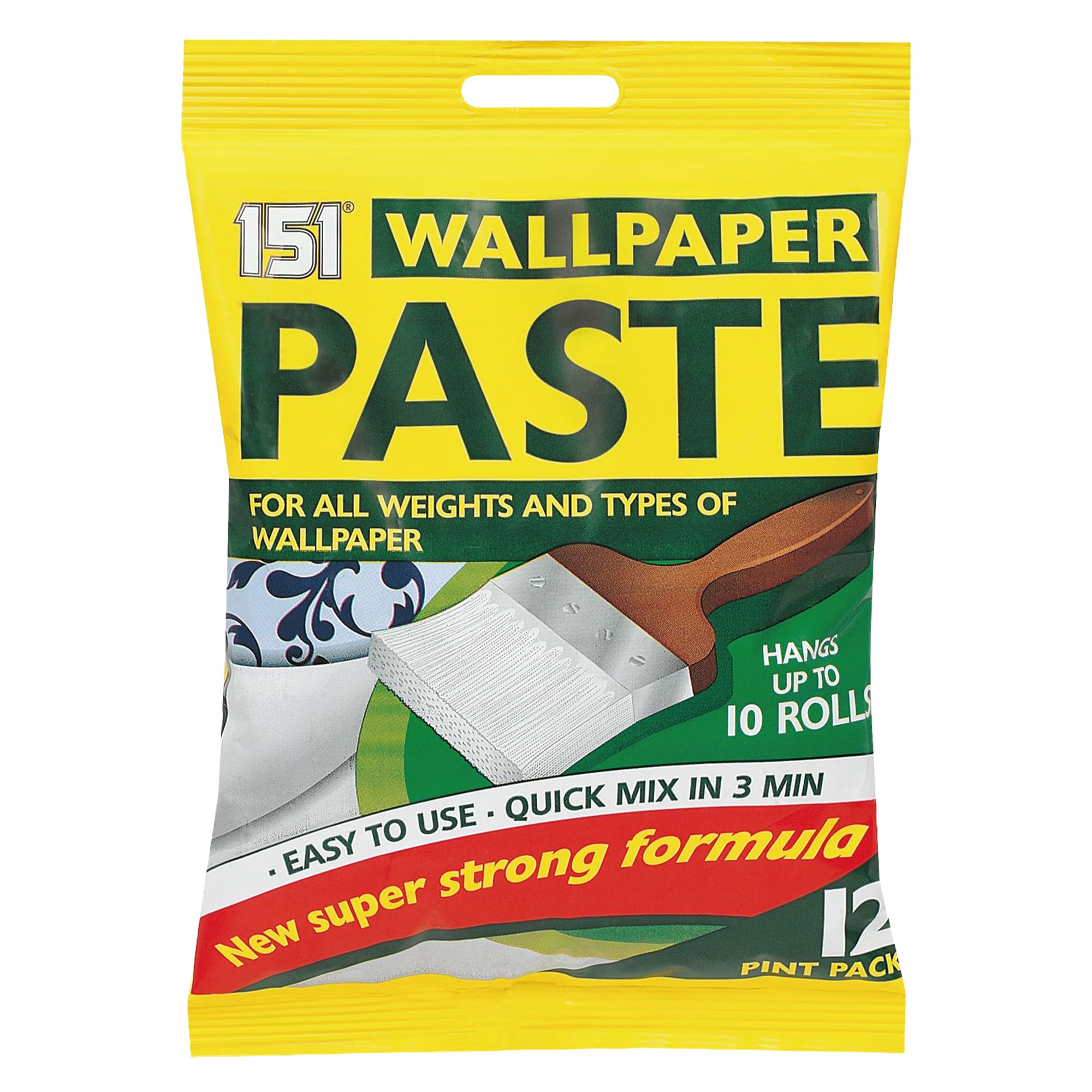
151 Wallpaper Paste

92 /100
Kirk Score Outstanding
Yield
Up to 10 rolls
Formula
PVA paste
Mix Time
Ready in 3 minutes
Paper Types
Lining, vinyl, heavy embossed
Check Details on Amazon

Pros

  • One mix covers up to ten rolls
  • Mixes smooth in about three minutes
  • Suits lining, vinyl and heavy embossed papers

Cons

  • Batch size is overkill for a single wall

Ten rolls from one mix is the headline, and it's a useful one: a through-lounge, a stairwell and a landing can come out of a single batch, at a consistency that doesn't shift between the first strip and the last. Mixing takes about three minutes and the paste comes up smooth, which is as much as anyone wants from a powder.

The formula is PVA-based and mixed on the thick side, and that's a deliberate trade. It gives firm hold on heavy embossed and blown vinyl, the papers that pull away from a watery paste, at the cost of some of the slide you get from the Roman tubs. If you like to shuffle a drop into position three times before committing, you'll notice the difference; if your walls are straight and your drops are short, you won't.

The batch size is what sells it to us rather than the strength. One mix for a whole floor of a house means no second bucket and no re-mixed paste behaving slightly differently from the first lot, and no pause mid-wall while powder swells. For a first-time hanger on a large job, that removes the mistake most likely to show.

Where it doesn't fit is a single accent wall. You're making up ten rolls' worth to use one, and what's left is a bucket of paste you can't keep. It's the paste for a project, not for a patch.

Bottom line: Our pick once the job runs past one wall: a single three-minute mix covers up to ten rolls at one steady consistency.

Check Latest Price
#05

Borders, light papers

Roman PRO-543 Universal

91 /100
Kirk Score Outstanding
Formula
Ready-mixed, mildew resistant
Coverage
About 250 sq ft per gallon
Paper Types
Borders, light to medium weights
Surface Limits
Not poor-quality latex paint
Check Details on Amazon

Pros

  • Thin paste lets borders slide into line
  • Mold and mildew resistant
  • Handles non-woven, vinyl and paste-the-wall papers

Cons

  • Covers less wall than the other gallon tubs

Borders are their own small craft: narrow strips, thin paper, and a butt join at each end that shows every bit of impatience. PRO-543 is the paste here formulated for exactly that, borders and lightweight to medium wallcoverings, and the reason is consistency. It's thinner than the heavy-duty tubs, so a strip slides into position and a repeat lands where you want it instead of grabbing on contact. For a border, that slide matters more than grip, and it's what we look for.

It isn't border-only, which is the quietly useful part. The same gallon handles non-woven, vinyl, paste-the-wall and paste-the-paper papers in light to medium weights, so a room where you're hanging a patterned paper and then running a border at the ceiling comes out of one tub. Coverage is listed at about 250 square feet, or four double rolls, and the formula carries mold and mildew resistance, a genuine plus in a bathroom or kitchen where a border is often the whole point.

Check the wall before the paste. It's specified for all smooth surfaces except poor-quality latex paint, and a soft, chalky emulsion is precisely where a strip lifts and takes the paint with it. If a painted wall feels powdery under your hand, seal it first and spare yourself the repair.

Bottom line: The border and light-paper pick: a thinner paste with real slip, mildew resistance for kitchens and baths, and enough body for medium-weight rolls.

Check Latest Price
#06

Small repairs

Zinsser SureGrip Heavy Duty

88 /100
Kirk Score Excellent
Size
1 quart (32 fl oz)
Formula
Ready-mixed, dries clear
Removal
Strippable from drywall
Paper Types
Light to heavyweight, pre-pasted
Check Details on Amazon

Pros

  • Strong wet tack with slip for positioning
  • Dries clear and cleans up with water
  • Strippable from primed or bare drywall

Cons

  • Hold can falter on heavy textured papers

The quart is the smallest container here, and the coverage is the number to read twice. A quart doesn't stretch to a full double roll in practice, so treat it as repair-and-panel size rather than wall size. Where it earns its place is exactly that: a strip beside a door frame, a patch after a radiator comes off, a single panel where opening a pail would be absurd.

We rate the formula itself. Strong wet tack with enough slip to position a strip, a cream that dries clear, and water cleanup on tools and hands. It's specified for light to heavy standard wallcoverings, including non-pasted and pre-pasted paper and heavyweight commercial goods, and it's strippable from primed or bare drywall with fabric-backed vinyl once properly cured.

Hold is the uneven part. On heavy textured paper it can let go along an edge where a thicker paste keeps its grip, and the low viscosity means it wants a generous coat rather than a thin skim. For a repair or a lightweight paper that's a fair trade. For a wall of heavyweight vinyl, buy a gallon.

Bottom line: A quart for repairs and small panels: it dries clear and holds its tack, as long as you're not asking it to carry heavyweight paper across a wall.

Check Latest Price

How We Tested Wallpaper Paste

I started by building a shortlist from manufacturer specs, pack sizes, and price per claimed roll, filtering out pastes that couldn’t handle the paper weights we planned to hang. That left 13 pastes—powders, ready-mixed tubs, and non-woven formulas—which we tested over eight months. We used them in a hallway with standard paper, a bedroom accent wall with heavier textured paper, a stairwell border, and a small powder room.

Each paste was mixed to its own instructions; I timed how long it took to become lump-free, noted how thick it felt on the brush, and watched whether it stayed smooth or set up before I finished a strip. I brushed it onto the wall, pressed the paper into place, and worked out bubbles with a smoother, watching for soak-through, curling edges, and drips running onto the floor. After 24 hours, one week, and one month, I checked seams for lifting, corners for peeling, and light-colored paper for discoloration or dried residue. Cleanup got the same attention: I wiped excess off trim and tools with a damp sponge and noted whether it came away easily or left a tacky film.

Compatibility was the first filter, not an afterthought. I matched each paste to the paper types and weights it was labeled for, then compared claimed coverage with the rolls we actually hung; powder sachets got weighed against their stated yield, and ready-mixed gallons got checked for how far they stretched. On a scrap panel, I tested how cleanly a dried paste released when I pulled a strip, since removal matters as much as hanging. Drying time and hold were judged in the same rooms, not a lab bench, because a paste that grabs fast is great for a border and a nuisance when you’re adjusting a full drop on a tall wall.

How to Choose Wallpaper Paste

Match the Paste to the Paper's Backing

The backing decides the formula, so read the roll label before you pick up a tub. Non-woven and other paste-the-wall papers want a paste that holds the back without soaking into it, which is exactly what Metylan is built for. Paper-backed vinyl and heavyweight embossed goods want more body and a longer open time, and that's the job the heavy-duty gallons do.

Treat all-purpose as a claim to check against your specific roll rather than a guarantee. The tubs that genuinely span paste-the-wall and paste-the-paper papers, vinyl, non-woven and heavyweight commercial goods are the ones to buy when you haven't settled on a paper yet.

Buy the Quantity the Job Needs

Coverage is quoted in square feet on the gallons and in rolls on the sachets, so convert both before you compare. In this group a gallon works out to roughly four or five double rolls, which is a decent-sized room, while a five-roll sachet does five rolls and stops there.

Measure wall height times the number of drops, then add a margin for pattern matching and trimming. If your total lands within a roll or two of the container's limit, go up a size. Running out halfway through a drop is the worst afternoon this job offers.

Weigh Slip Against Grip

The forgiving pastes have slip: the strip keeps sliding for a while after contact, long enough to walk a seam straight or nudge a pattern repeat into line. Heavy-duty and fast-grabbing formulas trade that away for grip, which is fine for a confident hanger and miserable for a first-timer working a long drop alone.

There's a format decision folded in here. Powder needs water, a clean bucket and a few minutes of stirring; a ready-mixed pail opens and goes straight onto the wall at the same consistency from the first strip to the last.

Plan for Removal and the Room

Strippability comes with conditions. The easy-removal promises on these tubs generally assume fabric-backed vinyl over primed or bare drywall, cured properly, and one of them asks for six weeks. Hang a heavyweight paper onto unprimed plaster and you'll be steaming it off instead.

If the room is a bedroom or a nursery, look for a zero-VOC formula and keep a window open while the walls dry. Paste is releasing moisture into that room for a day or two regardless of what the label says about emissions.

Frequently Asked Questions

Final Verdict

Roman PRO-880 is the one we point people to first. A single pail covers vinyl, non-woven, paste-the-wall and heavyweight papers, the slip gives you a second chance at a crooked seam, and it strips cleanly when the room changes.

If the job is five rolls or fewer, the Solvite sachet does the same work with nothing left to store. And if the paper is non-woven, Metylan's dedicated mix grabs faster and peels off dry.