// data-verified

Best Caulking Guns of 2026

A caulk gun makes a simple promise: pull the trigger, lay a bead, smooth it with your finger. My first attempt at recaulking a tub fell apart about eight inches in — I let off the trigger and the tube kept oozing, leaving a blob on the tile that took longer to clean than the bead took to run. The squeeze was never the hard part. What separates a good gun from a cheap one is what happens the second you stop, and whether it still moves smoothly when you point it uphill at thick adhesive.

I've spent the past six months with 14 of them — skeleton frames, cradles, composite bodies, a cordless — resealing window trim, running construction adhesive, and redoing the silicone in two bathrooms. A couple of things no spec sheet tells you: a high thrust ratio gets stiff adhesive moving but makes a run of latex harder to control, and dripless is a mechanism, not a promise. Price didn't sort them the way I expected — the picks below are the ones I kept reaching for.

#01

Best Overall

JES M26S Caulk Gun

92 /100
Kirk Score Outstanding
Barrel
360-degree rotating cradle
Weight
10 oz
Thrust Ratio
26:1
Cartridge Size
10 oz
Check Details on Amazon

Pros

  • 26:1 ratio pushes stiff adhesive with little effort
  • All-metal barrel, rod, plate, and handle
  • Rotating cradle keeps the bead angle around corners
  • Built-in puncture pin and ladder hook

Cons

  • No tip cutter, so bring a utility knife

A tube of polyurethane that has spent the night in a cold garage is the honest test of a caulk gun: you squeeze, the tube bulges, and nothing comes out of the nozzle. Twenty-six to one is the answer, and it is why this JES is our top pick. That ratio gives it as much leverage as anything on this list, so stiff sealant and construction adhesive move at a steady pace instead of in one reluctant lurch. The trade is speed — a 26:1 gun advances the rod less with each squeeze, so a long bead of thin painter's caulk takes more strokes here than it does on a low-ratio gun. If your work is nearly all latex, the WORKPRO's low gear is quicker; if it is silicone, urethane, and adhesive, this one is easier on your hand all afternoon.

The build backs it up. Barrel, rod, plate, and handle are metal, the cradle spins a full 360 degrees, and there is a puncture pin on the frame plus a hook for hanging the gun off a ladder rung. Spinning the tube instead of your wrist is the detail we came to appreciate most: on a window frame you change direction four times a side, and the bead keeps its width around the corner when the cradle turns with you.

At 10 ounces it is light for a metal-bodied gun, which matters once you are reaching over your head along a ceiling line. The trigger has a wide, flat face that spreads pressure across two fingers rather than digging into one, and the release is a firm thumb push rather than a scrape. JES covers it with a one-year warranty — shorter than the pro-grade guns here, which is about right for the money.

Bottom line: This is the manual gun we hand people first: 26:1 leverage for silicone, construction adhesive, and cold weather, in a metal body that stays light in the hand.

Check Latest Price
#02

Best Adjustable Thrust

WORKPRO Adjustable Caulk Gun

92 /100
Kirk Score Outstanding
Barrel
Rotating
Weight
10 oz
Thrust Ratio
9:1 and 18:1, adjustable
Cartridge Size
10 oz
Check Details on Amazon

Pros

  • Switches between 9:1 and 18:1 on the trigger
  • Drip-control button releases pressure between beads
  • Rotating barrel for tight corners
  • Cushioned trigger and smooth round rod

Cons

  • No built-in tip cutter

The selector is a plate behind the trigger: pull the handle down against it and the gun drops from 18:1 into 9:1. That reads like a spec-sheet gimmick until you spend a morning moving between painter's caulk and a stiff exterior sealant. The low gear lays a long, fast bead of the thin material, the high gear keeps your forearm from burning on the thick one, and switching mid-tube takes a thumb and a second.

As an all-rounder it is the most flexible gun here, and it costs less than most of the metal-bodied options. The drip-control button on the front of the frame is the part we used most: press it and the pressure on the tube lets go, which stops a half-used tube from weeping into your toolbox between sessions. It is not a guarantee — thin sealant can still creep out of the nozzle for a beat after you press it — so keep a rag in your back pocket and set the gun down nose-up.

Two things worth knowing. The smooth round rod and its spring-loaded thumb release run quieter and more smoothly than the ratchet guns here, and the 360-degree barrel gets the tube into a corner without you contorting your wrist. But the spot welds that hold the spring tensioner, and the rivet at the trigger pivot, are where this gun fails when it fails — so run a tube through it while returning it is still easy.

Bottom line: We pick this one when a job mixes thin acrylic and stiff exterior sealant, because the trigger switches gears instead of making you buy two guns.

Check Latest Price
#03

Best Budget

Newborn 930-GTD Caulk Gun

93 /100
Kirk Score Outstanding
Weight
1.5 lb
Thrust Ratio
10:1
Cartridge Size
1/10 gallon
Included Tools
Scraper, poker, and tip cutter
Check Details on Amazon

Pros

  • Cheapest gun here we are glad to recommend
  • Smooth hex rod is easy to push
  • Scraper, poker, and tip cutter on board
  • Soft grip that suits arthritic hands

Cons

  • Caulk can weep from the back of the cradle

Ten to one is a modest ratio, and that is the point. This is the gun for the homeowner who seals two windows and a tub surround a year and does not want to think about the tool again — the cheapest one here we are comfortable recommending. It still comes with a smooth hex rod, a soft grip, and a scraper and poker on the frame, and for latex and silicone, the two materials most of us actually run, it does what the expensive guns do.

The 10:1 ratio is the honest limit. Feed it cold urethane or construction adhesive and you will squeeze hard enough to bow the cartridge; the pressure has to go somewhere, and on a low-ratio gun it goes into your forearm and the tube. Thin and medium materials are a different story: the rod runs smooth, the trigger has a wide, soft face, and a bead of silicone around a tub goes down in one pass.

The frame is plastic over a steel half-cradle, and it feels like a tool that belongs in a kitchen drawer rather than a job-site bucket — which is exactly how we have treated ours. A welded plate at the back holds the tube seated, and at a pound and a half a full tube does not wear out your wrist. It is the gun we hand someone who has never caulked before.

Bottom line: If you are sealing windows and tubs with latex or silicone and want to spend as little as possible, this is the gun we point you to.

Check Latest Price
#04

Best Cordless

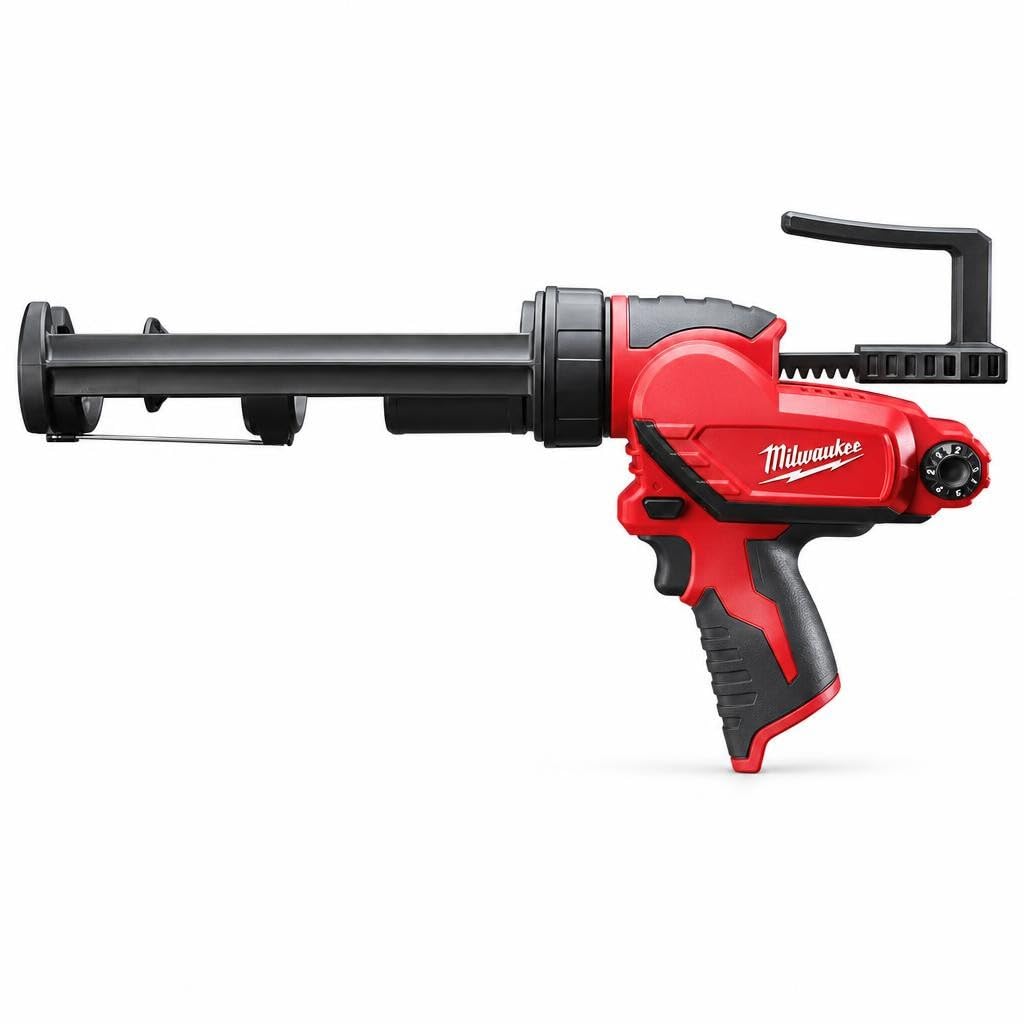
Milwaukee M12 Caulk Gun

92 /100
Kirk Score Outstanding
Weight
4.1 lb
Flow Control
Adjustable speed dial
Power Source
M12 12V cordless, tool only
Cartridge Size
10 oz
Check Details on Amazon

Pros

  • Motor feeds the bead, so no hand fatigue
  • Speed dial sets a steady flow rate
  • Auto-rewind stops flow at the trigger release
  • Five-year tool warranty

Cons

  • Tool only

There is no battery in the box and no charger either, so the first thing to know about this Milwaukee is that what it really costs depends on what is already in your garage. On an M12 pack it weighs 4.1 pounds and drives a 10-ounce tube with a motor: a dial on the side sets the flow rate, and the trigger only tells it to go.

For anyone sealing a whole house's worth of baseboard or running polyurethane around a garage door, that is the entire argument. We noticed it most overhead — with a manual gun you are squeezing and steering at once, and by the third tube the bead is wandering. Here you set the speed, keep the nozzle where you want it, and the gun feeds at a steady rate. The bead quality at the end of a long run is the reason to spend the money.

The auto-rewind is the other half of it. Let go of the trigger and the rod backs off, dropping the pressure in the tube and stopping the flow without you hunting for a release tab. It backs off far enough that restarting a short bead takes a beat while the rod catches up, which is the one place this gun feels slower than a manual one. Long continuous runs are its strength; a dozen two-inch dabs under a sill are not.

Milwaukee's five-year tool warranty is the longest here by a wide margin, and it tells you who this is built for. If you are sealing one tub, the manual guns do that job for less and never need charging. The math changes when you are buying sealant by the case rather than the tube — and on the slowest dial setting, the Milwaukee walks a bead of trim caulk at whatever pace you can follow.

Bottom line: We recommend it to anyone already on the M12 platform with a long run to seal — the motor feeds the bead so your hand does not have to.

Check Latest Price
#05

Best Lightweight

Dripless ETS2000 Caulk Gun

92 /100
Kirk Score Outstanding
Weight
1 lb
Material
Composite
Thrust Ratio
12:1
Cartridge Size
10 oz
Check Details on Amazon

Pros

  • One-pound composite body eases overhead work
  • 12:1 ratio handles sealant without wearing you out
  • Revolving barrel and padded grip
  • Rugged enough for frequent, high-volume use

Cons

  • Composite frame will not take a fall like steel

One pound, and most of that is the tube you put in it. The Dripless body is composite rather than steel, which is the whole reason to look at it: hold a two-pound gun above your head for an hour and you understand why the weight matters more than the finish does.

The 12:1 ratio is middle of the road on purpose — enough leverage for silicone and exterior sealant, not so much that thin caulk crawls out of the nozzle. The barrel revolves for corners, the grip is padded, and there is a hook for hanging the gun on a ladder while you climb down for another tube.

Where it earns its place is reach. Bathroom ceilings, soffits, the top of a window frame you can only get to from a step stool — this is the gun we take up there, because a pound of composite in one hand leaves the other free for the ladder and the bead stays steady when your arm is tired.

The retracting rod does most of what the name promises: let go and the rod pulls back, taking pressure off the tube so the flow stops. With thin sealant it can still creep for a second or two, so wipe the tip and set the gun down nose-up. That is a rag's worth of mess, not a ruined joint.

Bottom line: We take this one up ladders: at a pound, it is the easiest gun here to hold overhead, and 12:1 still has enough bite for silicone.

Check Latest Price
#06

Best for Thick Adhesives

Red Devil 3989 Caulk Gun

92 /100
Kirk Score Outstanding
Force
950 lb
Barrel
Revolving
Included
Seal punch and ladder hook
Thrust Ratio
26:1
Check Details on Amazon

Pros

  • 26:1 ratio and 950 pounds of force
  • Rubber trigger that prevents hand cramps
  • Revolving barrel with seal punch and ladder hook
  • Solid construction for heavy-duty jobs

Cons

  • Flow keeps moving after the trigger releases

The first thing you notice is the trigger: a rubber-faced lever with a rounded push release sitting where your thumb already rests. That sounds like trim, but a caulk gun is a hand tool before it is anything else, and the shape of the release decides whether stopping the flow is a reflex or a fumble.

Underneath that is real force. The 26:1 ratio and a rated 950 pounds of push move two-part epoxy and cold urethane that stall a mid-range gun, and the barrel revolves so you can keep the bead angle in a corner. There is a seal punch on the frame, a ladder hook, and an extra-long poker for reaching the bottom of a tube.

Sturdiness is the thing to check on your own unit. The frame and the trigger linkage are what fail when one of these goes, and it happens early rather than late — in the first tube or two rather than after a season — so put a tube through the gun while a return is still simple.

What settles it is the combination: pro-level leverage in a gun that costs slightly more than our top pick, with a trigger you can hold for a case of adhesive. Buy it for exterior work in cold weather, subfloor adhesive, and anything two-part. For a tube of tub caulk it is more tool than the job needs, and the lighter guns here will feel friendlier in your hand.

Bottom line: For stiff tubes — cold urethane, construction adhesive, two-part epoxy — this is the manual gun we hand people, and the trigger makes the force usable.

Check Latest Price
#07

Best with a Built-In Cutter

Newborn 250 Caulk Gun

92 /100
Kirk Score Outstanding
Frame
Revolving steel
Capacity
1/10 gallon
Thrust Ratio
18:1
Included Tools
Spout cutter and seal puncture
Check Details on Amazon

Pros

  • Spout cutter and seal poker built in
  • Smooth pressure rod needs little force
  • Revolving steel frame for corners
  • Zinc alloy handle with rubber grip

Cons

  • Flow continues until you press the thumb release

A spout cutter sits on the frame and a seal poker lives in the handle, so you can open a tube, break the inner seal, and start a bead without walking back to the toolbox for a knife. It is a small thing that stops being small around the fourth window, when the utility knife has already gone missing once.

The 18:1 ratio and the smooth pressure rod make the rest of it pleasant. There is no ratchet clicking under your hand, the rod advances in one continuous push, and the revolving steel frame keeps the nozzle where you want it as you round a corner. The zinc handle and rubber grip feel more expensive than the tool costs, and the rod release falls under your thumb rather than on the far side of the frame.

For a room's worth of trim, a couple of windows, and a bead of adhesive under a threshold, this is the best-balanced manual gun here — enough ratio for the stiff material, a light enough body for a long afternoon. If all you are running is a tube of thin latex, a budget gun does the same job for less; the Newborn earns its price on silicone, adhesive, and volume.

Bottom line: Our pick for a room's worth of trim: 18:1 leverage, a frame that spins, and a cutter and poker built into the tool.

Check Latest Price
#08

Daily pro use

Albion B26 Caulk Gun

92 /100
Kirk Score Outstanding
Force
900 lbf, 300 psi
Weight
2 lb
Capacity
1/10 gallon (10 oz) or 300 ml
Thrust Ratio
26:1
Check Details on Amazon

Pros

  • Double-gripping plate with wear compensation
  • 900 pounds of force for thick material
  • Handles 10 oz and 300 ml cartridges
  • Puncture wire tucked into the handle

Cons

  • No drip-free rod release
  • Two pounds of steel to hold up

The plate that grips the base of the cartridge is the part nobody thinks about until it wears smooth and the rod starts slipping under load. Albion's answer is a double-gripping plate with an adjustable wear compensator, and it is why this gun is still feeding when a cheaper frame has started to skate. For anyone using a gun every week, that is the whole purchase decision.

The rest is built to match. A 26:1 drive with a rated 900 pounds of force and 300 psi of pressure handles cold material, two-part adhesive, and 300 ml cartridges as well as standard 10-ounce tubes. The half-cradle revolves, the handle is full-sized rather than a token loop, and there is a ladder hook pull for hanging it while you reposition.

It weighs two pounds, which you feel on the last tube of a long day, and there is no drip-free rod release — you take the pressure off by backing the rod with your hand. Neither is a defect in a tool aimed at people who are paid for the bead; both are worth knowing before you spend pro money on a gun for weekend work.

The puncture wire is the detail that won us over: it tucks up into the handle instead of hanging off the frame, so it does not snag on a pouch or stab your palm when you set the gun down. Small, and the kind of thing you only notice after you have used a gun that got it wrong.

Bottom line: We keep this one in the category for daily use: the two-plate grip and wear compensator keep it feeding long after cheaper frames slip.

Check Latest Price

How We Tested Caulk Guns

We started by pulling together more than 40 caulk guns — manual skeleton and cradle frames, composite bodies, and one battery-powered model — then narrowed to 14. The filters were thrust ratio (an adjustable 9:1 up through a 26:1 drive), standard 10-ounce capacity, whether the gun carried its own tip cutter and seal puncture tool, and price. Then we put them to work for six months.

Testing happened where caulk guns actually live: two bathrooms got fresh silicone around the tub and sink, a kitchen backsplash got a bead, exterior window trim got sealed on a cold morning, and a subfloor patch got construction adhesive. We also handed each gun to someone who had never loaded one and watched them fumble or not.

Along the way we ran a 10-foot bead with each and looked for ripples and blobs rather than grading some abstract idea of smoothness. We released the trigger and counted to 30 to see whether caulk kept creeping out of the tip — the real measure of a dripless mechanism — and timed how long a full tube took to empty one-handed with a caulk-smeared glove on, which is where grip and trigger stiffness show up. Each gun was dropped onto concrete from waist height with a full tube loaded to see whether the frame and rod stayed true, and we noted whether the tip cutter sliced the nozzle cleanly or crushed it. At the end of each job we checked how much sealant was still sitting in the tube.

Six months in, we looked at every gun again for rust on the rod, slop in the trigger, and whether the rod still retracted without a fight.

How to Choose a Caulking Gun

Match the Thrust Ratio to the Tube

Thrust ratio is leverage: how much force the trigger puts on the cartridge for how much squeeze. Low-ratio guns in the 6:1 to 10:1 range move material fast and suit thin latex and silicone — the Newborn 930-GTD is one, and it lays a bead with almost no effort. Ratios from roughly 12:1 to 18:1 cover silicone, acrylic, and most adhesives, which is why the WORKPRO's switchable gears cover so much ground. At 26:1 you are into cold urethane, construction adhesive, and two-part material, as on the JES.

The trap is speed. More leverage means the rod advances less with each squeeze, so a high-ratio gun is slower on thin caulk and a low-ratio gun will stall on stiff material. Buy for the stiffest thing you will run, and accept a few extra strokes on the easy days.

What Drip-Free Actually Buys You

Nearly every gun here claims it, and almost none delivers it completely. The mechanism is either a rod that retracts after each pull or a release you press to take pressure off the tube. Both work better with thick material than thin: silicone keeps creeping out of a nozzle that is under any pressure at all.

Treat drip-free as a convenience rather than a promise. A thumb release you can hit without looking does more for a clean joint than any wording on the package — the Newborn 250 and the Red Devil both give you one. Wipe the tip and set the gun down nose-up and you will not miss the rest.

Smooth Rod or Ratchet, and the Parts That Fail

A ratchet rod clicks into teeth as you squeeze; a smooth rod relies on the plate and a release. Smooth is quieter and stepless, and it is what the better guns here use. More important is what holds the cartridge: a stamped plate that has worn is a gun that slips under load, which is why the Albion fits a two-plate grip and an adjustable wear compensator.

On cheaper frames, look at the spot welds at the spring tensioner and the rivet at the trigger pivot before you trust a case of adhesive to one. Those are the two places a budget gun gives up.

Weight, Grip, and Overhead Work

These guns run from about a pound of composite to two pounds of steel, and the difference only shows up when your arm is above your head. If most of your sealing is tub surrounds, ceiling trim, or soffits, a light composite body buys you more than a metal one does. For baseboards, windows, and doors at chest height, weight is close to irrelevant and you can buy for feel.

Hold one before you commit if a store near you has them on a peg. The trigger shape matters more than the number on the box, and a wide soft face is easier on two fingers than a narrow one.

When a Cordless Gun Pays for Itself

A battery gun like the Milwaukee does not squeeze. It feeds the tube at a rate you dial in, which removes hand fatigue and evens out the bead over a long run. The catch is the platform: these are sold as bare tools, so the real cost includes a battery and charger if you are not already invested in one.

That math works when you are sealing by the case, running production trim, or working overhead for hours. For a tube of tub caulk, a manual gun is faster to pick up and never needs charging.

Frequently Asked Questions

Final Verdict

The JES M26S is what we point most people to: a metal 26:1 gun that handles silicone, construction adhesive, and cold-weather sealant without asking much of your hand, at about the same money as the composite guns here. The one trade is that thin painter's caulk takes more strokes, so if your work is nearly all latex, the WORKPRO's switchable gears are the better fit for the same kind of money.

If you already own M12 batteries and have a case of material to run rather than a tube, the Milwaukee takes your hand out of the equation entirely. And if the tubes are thin and the budget is genuinely tight, the Newborn 930-GTD seals a window as well as anything here.