// data-verified

Best Paint Rollers for Cabinets

Painting cabinets is mostly a fight against the roller in your hand. A nine-inch roller is too wide for a cabinet door — it bridges the recessed panel and leaves a lap line along every stile — so most of us grab a four-inch mini roller and hope. We've spent the past three months painting with 16 mini roller kits on doors, drawer fronts, two furniture flips, and trim. The right one turns a weekend refresh into a finish that looks deliberate; the wrong one leaves lint in your first coat.

Cover material matters more than the frame, which surprises people. Foam lays the smoothest coat on a flat slab door but holds almost no paint, so you reload every couple of feet; microfiber carries more and forgives rough prep, at the cost of a faint texture. The failures are predictable, too: frames that release the cover mid-stroke, trays that crack at the corner, covers that shed lint into the first coat and shred after one rinse.

We sorted the winners by what you're actually painting — slab versus shaker, a touch-up versus a whole kitchen — with finish deciding every spot.

#01

Best Overall

Mister Rui 4-Inch Foam Kit

93 /100
Kirk Score Outstanding
Tray
Deep-load tray with liner
Foam Covers
5
Roller Width
4 inches
Paint Compatibility
Water- and oil-based
Check Details on Amazon

Pros

  • Smooth foam finish on flat doors
  • Five covers plus a tray liner
  • Deep tray holds paint for vertical work
  • Works with water- and oil-based paint

Cons

  • Foam covers can tear if twisted hard

A cabinet door shows every bit of stipple, which is why the foam cover in the Mister Rui kit is the first thing we reach for on flat fronts. The 4-inch high-density foam lays paint down tight and even, and it holds enough material that you're not reloading at every stile. The kit pairs five covers with a 4-inch frame, a deep tray, and a tray liner, so the whole setup is aimed at small, controlled passes rather than covering a wall in a hurry.

Five covers and a liner are the practical part. We like that you can load a cover, work a door and a drawer front, then peel the liner and rinse the frame without scraping dried paint out of a tray. The liner is also the difference between a kit you keep using and one that sits in the garage because cleanup is a chore. The frame feels secure in the hand, and the foam releases paint evenly enough that we didn't feel the need to go back over fresh paint to smooth it out.

The kit gives you one frame, so if you're switching between a water-based cabinet paint and an oil-based enamel, clean the frame and cover in between or dedicate a cover to each product. For the door faces and drawer fronts in a typical cabinet project, the 4-inch width is the sweet spot: wide enough to cover a rail in one pass, narrow enough to keep paint off the adjacent frame. The liner and extra covers are what make it feel like a cabinet kit rather than a scaled-down wall roller.

Bottom line: For smooth cabinet doors and drawer fronts, this is the 4-inch foam kit we recommend: five covers, a deep tray, and a liner make clean, controlled work easier.

Check Latest Price
#02

Best for Finish Options

ValueMax 14-Piece 4-Inch Kit

90 /100
Kirk Score Outstanding
Tray
Paint tray included
Pieces
14
Cover Mix
6 foam, 6 microfiber
Roller Width
4 inches
Check Details on Amazon

Pros

  • Six foam and six microfiber covers
  • 14-piece kit with frame and tray
  • Easy to disassemble for cleaning
  • Plenty of covers for multiple coats

Cons

  • One frame means cleaning between cover types
  • No tray liner included

The ValueMax kit answers a common cabinet question: foam or microfiber? It gives you six of each, plus a 4-inch frame and a tray, so you can choose the cover after you see how the paint is behaving rather than buying two separate kits.

We think that flexibility is worth the extra cover management. Foam is the one we start with on door fronts because it leaves the flattest finish; the microfiber covers have more bite and hold more paint, which helps on a primer coat or a slightly textured surface. The frame disassembles for cleaning, and the tray is a standard plastic well. With 12 covers, you can rotate through coats without stopping to wash the same cover.

The trade-off is that you get one frame and no tray liner. If you're switching from foam to microfiber mid-project, you have to clean or swap the cover, and cleanup means rinsing the tray rather than peeling a liner. The microfiber covers also leave a slightly more visible texture than foam, so keep them for areas where that won't show or for a paint that needs a little more working time. The tray is the only part that feels ordinary; the covers are the reason to choose it.

Bottom line: Buy this if you want both foam and microfiber covers in one cabinet kit; the 14-piece set gives you finish options and plenty of spare covers.

Check Latest Price
#03

Best Budget

Edward Tools 7-Piece 4-Inch Kit

90 /100
Kirk Score Outstanding
Tray
Reusable plastic tray
Handle
Ergo-grip rubber
Cover Mix
3 acrylic/polyester, 2 foam
Roller Width
4 inches
Check Details on Amazon

Pros

  • Two cover types in one kit
  • Lifetime warranty
  • Ergonomic rubber handle
  • Reusable plastic tray

Cons

  • Some covers shed or break apart

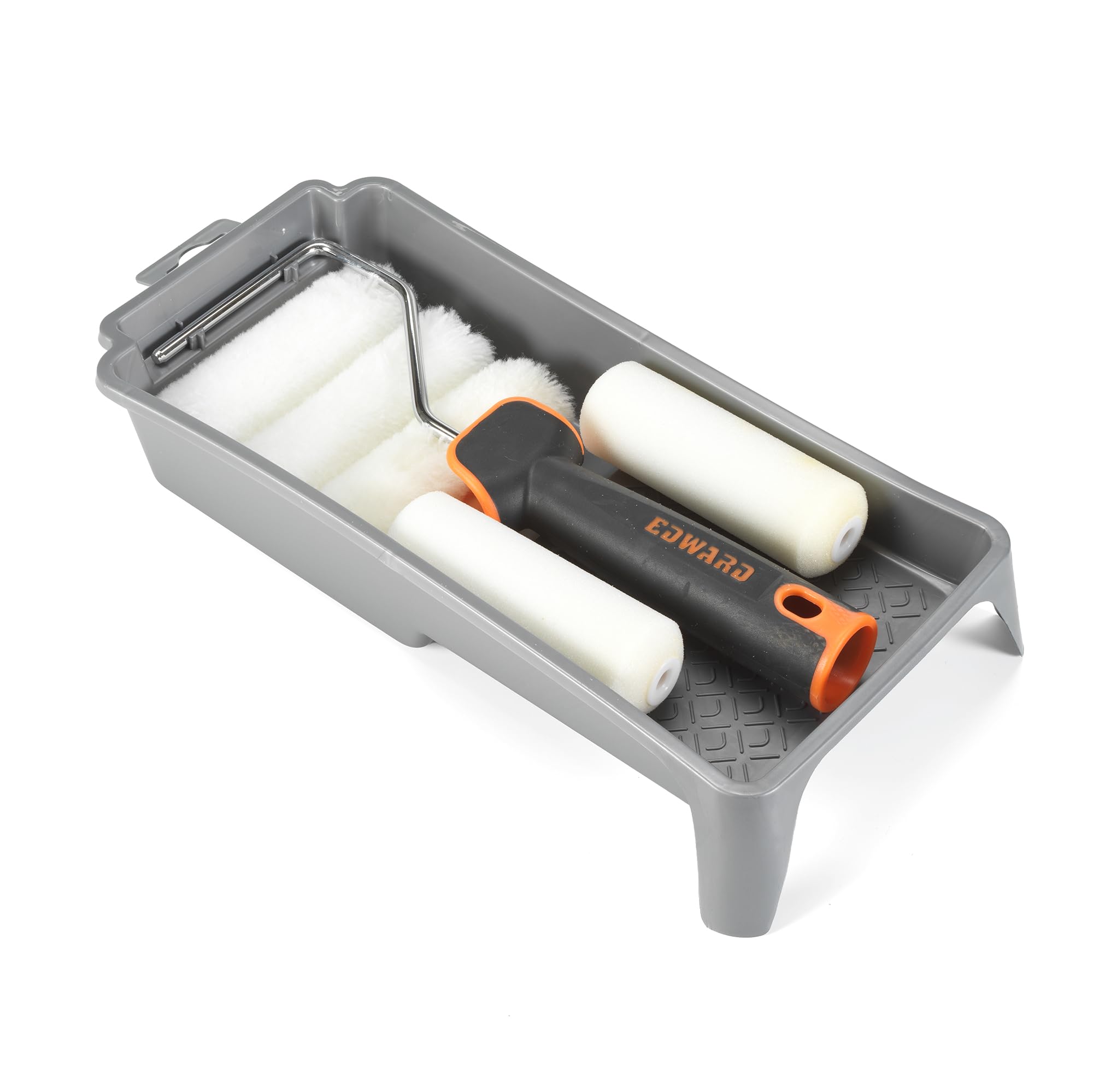
A lifetime warranty on a kit this inexpensive is the first thing that caught our eye. Edward Tools backs its 4-inch frame with three acrylic/polyester covers, two foam covers, and a reusable plastic tray, and the rubber handle is shaped for a comfortable grip. That combination makes it the kit we suggest when you're painting a few doors or a piece of furniture and don't want to spend much.

The two cover types are the useful part. Foam is the one for smooth cabinet faces; the acrylic/polyester covers have a bit more texture and work better for primer or a finish where you want a little more bite. The handle is sturdy enough to lean into, and the tray is thicker than the disposable pans that come with some budget sets. We also like that the frame is small enough to store in a cabinet rather than a whole shelf in the garage.

The covers are the weak point. Some can slide off the frame after a few passes, so seat them firmly before each run, and the tray is on the small side for a wider brush or a big pour. For a single piece of furniture or a few cabinet doors, the low cost and the warranty make it an easy kit to keep on hand.

Bottom line: A sensible budget pick for a few cabinet doors or a piece of furniture, with two cover types, a comfortable handle, and a lifetime warranty.

Check Latest Price
#04

Complete refresh kit

Rhibak 4-Inch Foam Kit

90 /100
Kirk Score Outstanding
Tray
Tray with 2 liners
Brush Width
2.5 inches
Foam Covers
5
Roller Width
4 inches
Check Details on Amazon

Pros

  • 2.5-inch brush for recessed panels
  • Two tray liners speed cleanup
  • Five 4-inch foam covers
  • Tray and frame included

Cons

  • Foam covers wear out quickly

The Rhibak kit is the only one here that hands you a brush and two tray liners along with the 4-inch roller. That matters on cabinets, where the roller covers the door face but the brush gets into the recessed panel, the inside corner, and the edge you don't want to flood with paint. You get five foam covers, a frame, a tray, and a 2.5-inch brush, so it's closer to a complete refresh kit than a roller refill pack.

The liners are the quiet win. Cabinet painting usually means primer, then paint, then a second coat, and peeling a liner is faster than rinsing a tray between each. The foam covers are soft and load evenly, and the brush is small enough for the detailed edges without feeling like a toy. We also appreciate that the kit doesn't force you to buy a separate tray or brush for a small vanity or a set of kitchen doors.

What holds it back is the cover-to-frame fit. The foam covers can work loose from the frame, and a loose cover is the quickest way to leave a lap mark on a door. We kept an eye on the seating and pushed the cover back on when it started to walk, but that's a step you don't want to forget mid-panel. The brush and liners still make it a useful kit for a focused project.

For a small kitchen or a single vanity, the brush and liners justify the shelf space. The 4-inch roller still does the broad faces, and the brush saves you from buying a separate detail tool for the edges. The extra attention to cover fit is the trade-off for getting the brush and liners in the same box.

Bottom line: Choose this when you want the brush and tray liners included for a small cabinet refresh, and you don't mind keeping an eye on the cover fit.

Check Latest Price

How We Tested Cabinet Paint Rollers

We started by gathering every four-inch roller setup we could find that included a frame, a tray, and at least one cover, then cut anything that was covers-only or sized for walls. That left 16 kits, which we put to work over three months on a full set of shaker kitchen doors in a garage, a bathroom vanity, two furniture flips, and the trim and casings around them. Each kit stayed with one painter for the duration, so a frame that loosened or a cover that stopped gripping got noticed.

Every cover got the same first test: load it, then count how many strokes it gave before running dry, since constant reloading is what makes a small project feel endless. We rolled each coat out in the same direction and checked the finish under a raking work light for lap lines, stipple, and stray lint, and we pressed a thumbnail into the cover edge to see whether it slid off the frame mid-pass. Between coats we washed the covers in warm water and reused them at the next session; the ones that swelled, curled, or started shedding were done.

We also noted the unglamorous things: whether the tray held a four-inch cover without it swimming around, whether the frame fit inside a drawer box and along a stile, whether the handle still felt fine after an hour, and how the covers stood up to water-based paint and primer. Kits were judged on what you got for the money — a decent tray and a spare cover beat a nicer handle every time.

How to Choose a Paint Roller for Cabinets

Start With Width and Access

A 4-inch roller is the practical default for cabinet doors and drawer fronts: it covers a stile or rail in one pass without the bulk of a 9-inch wall roller. The 2-inch size is a specialty tool for tight inset panels and edges, not the main roller for a whole door. If your cabinets have deep recessed panels, keep a small brush or a 2-inch roller alongside the 4-inch kit. The Mister Rui frame is a good example of the size to look for: narrow enough to control, wide enough to avoid endless passes.

Match the Cover to the Finish

Foam is the cover we start with on flat cabinet fronts because it lays paint down tight and leaves less texture. Microfiber and polyester covers have more bite and hold more paint, which can help on primer or a surface that needs a little more working time, but they can leave a slightly more visible finish. If you're unsure, a kit with both types is useful: the ValueMax set gives you six foam and six microfiber covers, so you can test a door before committing to the whole kitchen.

Look at What Comes in the Kit

A frame, a tray, and enough covers matter as much as the roller itself. Five covers let you rotate through primer, paint, and a second coat without washing the same cover every time; a tray liner turns cleanup into a peel-and-toss job. A kit with a brush and liners, like the Rhibak set, can be worth it for a small refresh where you'd otherwise buy those pieces separately. The trap is a kit with one cover and no liner: it looks complete until you start painting.

Check Cover Retention and Durability

The most common letdown is a cover that slides off the frame or sheds fibers into the paint. Seat the cover firmly before loading it, and check it again after a few passes. If a cover starts to walk, stop and reseat it rather than pressing harder. Foam covers also tear if you twist them hard during cleaning, so squeeze them against the palm. A kit with a strong frame and covers that stay put is worth more than a few extra pieces you never use.

Plan for Cleanup and Paint Compatibility

Foam rollers are easy to rinse, but they need prompt cleanup and a gentle hand. Check the paint label and the roller's stated compatibility before using an oil-based enamel; some foam covers are not suited to solvent-based paints, while others are listed for both water- and oil-based finishes. If you're testing a new paint, run a cover over a scrap door first. The goal is a finish you don't have to sand back, and a cover that survives the cleanup.

Frequently Asked Questions

Final Verdict

For most cabinet projects, the Mister Rui 4-inch foam kit is the one we recommend. The foam lays a tight, even finish on door fronts, the liner makes cleanup easier, and five covers let you keep moving through primer and paint without stopping to wash the same cover.

If you want both foam and microfiber in one box, choose the ValueMax set; it gives you more cover options and a full 14-piece kit. For a few doors or a single piece of furniture on a tight budget, the Edward Tools kit earns its place with two cover types and a lifetime warranty. The Rhibak kit is the one to consider when the included brush and liners save you a separate purchase.