// data-verified

Best Plasma Cutters of 2026

Plasma cutters make every other way of cutting metal feel obsolete, right up until one eats a consumable in an afternoon or trips the breaker on your own garage circuit. That's the question that actually matters when you're shopping: will it run on the power you have, does it need bone-dry air, and is that advertised capacity a clean slice or a ragged gouge you'll grind back? I've cut rusty fenders, exhaust brackets, and more quarter-inch plate than I care to admit, and the differences show up in the first ten inches of a cut.

My team and I spent six months running eight of these machines through real shop work, and two things became clear fast: in a home garage, dual voltage matters more than headline amperage, and a non-touch pilot arc earns its price the first time you cut rusty, painted steel. Consumable cost is the other thing nobody warns you about, which is why the picks below are sorted by the work you actually do, not by the biggest number on the box.

#01

Best Overall

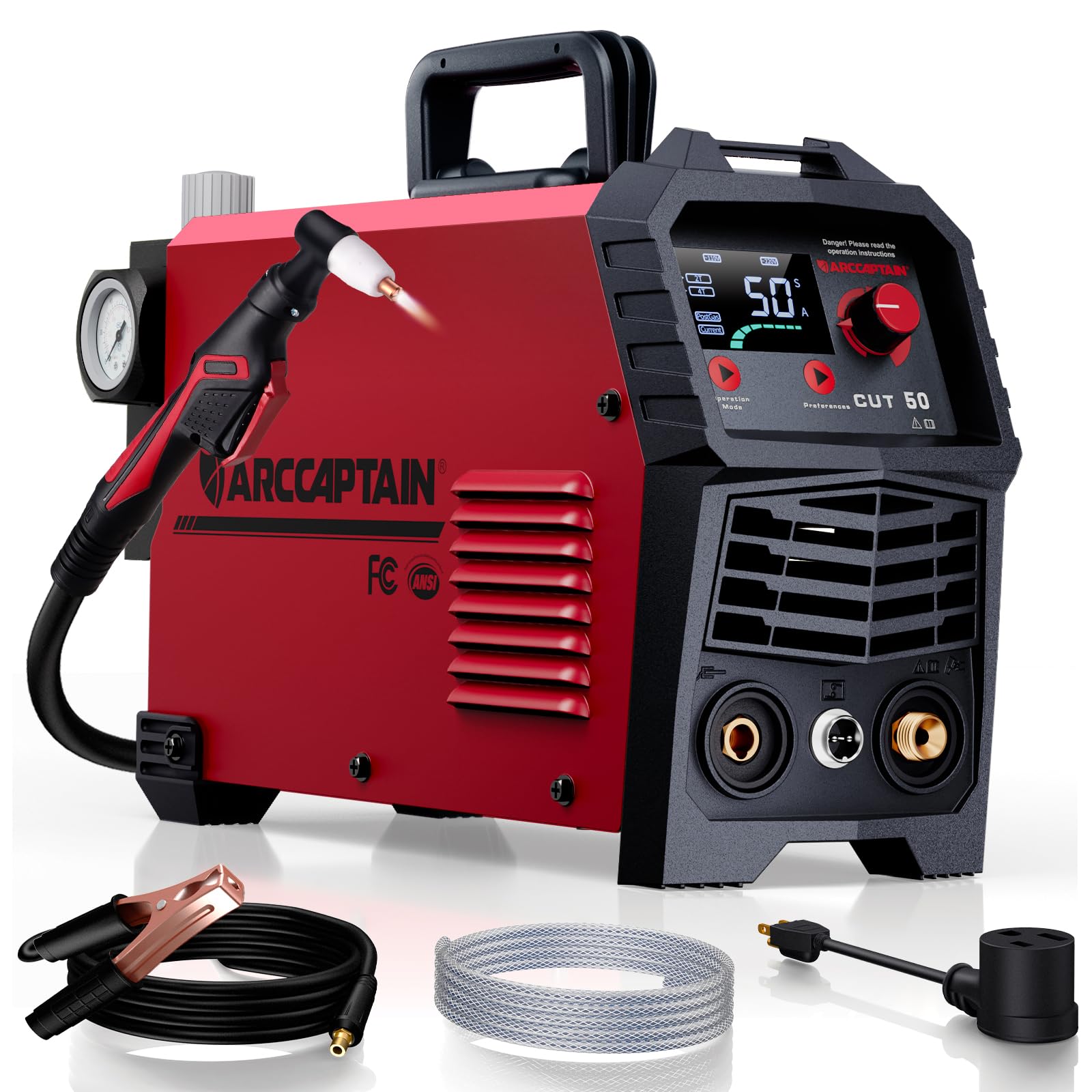
ARCCAPTAIN CUT50 50A Plasma Cutter

89 /100
Kirk Score Excellent
Weight
13 lb
Amperage
50 A
Clean Cut
1/2 in
Input Voltage
110/220 V
Check Details on Amazon

Pros

  • Half-inch clean cut on 220V
  • 13 pounds with a shoulder strap
  • Regulator and filter pre-installed
  • Two-year warranty at a budget price

Cons

  • 110V work tops out near quarter-inch steel

A 13-pound box that cuts half an inch of steel is the short version of why this one leads our list. Switch the ARCCAPTAIN to 220V and it walks through half-inch plate at a steady hand; the dual-voltage adapter means you can start cutting on the garage outlet you already have and move up when a 220V circuit gets wired in. For a home shop, that flexibility is worth more than any single extra feature in this group.

What kept us coming back to it is how little stands between unboxing and a first cut. The air filter and regulator arrive already fitted with a 1/4-inch NPT quick connect, so you're plugging in a hose rather than plumbing a machine. The LED screen shows voltage and current without a menu, the 2T/4T switch covers short tack cuts and long ones, and the adjustable post-flow — five to fifteen seconds of cooling after the arc stops — is the setting that quietly decides how long a tip lasts. It's the machine we hand to someone buying a first plasma cutter, and the one we keep coming back to on the bench.

The 2-year warranty is longer than some costlier machines here offer, and it's there for a reason: the regulator and filter assembly is the part to watch. Check the fittings when the box arrives, take the air line off by the fitting rather than by the hose, and treat the plastic case as a case rather than a bumper. The shoulder strap, meanwhile, earns its keep the first time you carry it out to a fence line instead of dragging it across the yard.

Bottom line: Buy it if you want a light, dual-voltage machine that handles sheet and a genuine half inch of plate without a premium price.

Check Latest Price
#02

Best for Thick Plate and CNC

PRIMEWELD CUT60 Pilot Arc Plasma Cutter

93 /100
Kirk Score Outstanding
Amperage
60 A
Warranty
3 years
Start Type
Continuous pilot arc
Input Voltage
110/220 V
Check Details on Amazon

Pros

  • Continuous pilot arc handles rust and mesh
  • 60 A at a 60% duty cycle
  • Wires into a CNC table
  • Three-year warranty

Cons

  • Manual is hard to follow

This is the most expensive machine in the group, and it's the one that takes three-quarter-inch plate seriously. Sixty amps at a 60% duty cycle means you can hold the trigger through a long cut instead of stopping to let the box cool, which is the difference between a tool you work around and one you work with. For a fabricator cutting plate every week, it's the pick that stops being a compromise.

The continuous pilot arc is what changes how you work. It holds a live arc in the air before the torch reaches metal, so rusted plate, painted sheet and expanded mesh start without a scratch-and-hope, and restarting mid-cut is a trigger pull rather than a reset. The PT60 torch uses a Euro central connection, and the machine wires into a CNC controller without drama — one of these running a plasma table cut quarter-inch aluminum all day, according to the shop notes we collected.

Where it asks something back is size. At 20 by 11 by 19 inches it's a bench machine that lives on a cart or a shelf, not something you sling over a shoulder, and that's fine for a shop with a fixed cutting station. The blowback start keeps the arc clean and quiet, and three years of warranty is the longest cover in this group alongside the CUT55 Pro.

Bottom line: The CUT60 is the machine we recommend when the work is thick plate, rusty salvage or a CNC table, and the budget can stretch to it.

Check Latest Price
#03

Best Value Step-Up

PRIMEWELD CUT50D 50A Plasma Cutter

92 /100
Kirk Score Outstanding
Amperage
50 A
Clean Cut
1/2 in
Input Voltage
110/220 V
Check Details on Amazon

Pros

  • Clean half-inch cuts at 50 amps
  • Simple controls with nothing to misconfigure
  • Runs on 110V or 220V

Cons

  • Manual is thin and badly organized

No pilot arc, no color screen, no app. The CUT50D is the least clever machine on this list, and that's precisely the reason it earns a place: a 50-amp arc that does what the dial says, with a torch trigger that feels like a trigger. If you've owned a welder, you already know how to run it.

In the cut it behaves like a machine with more behind it than the rating suggests. Half-inch steel goes without complaint, 5/16 is comfortable work, and quarter-inch plate takes a steady walk rather than a fight — the kind of arc that makes a cutting torch feel like hard labor. Set up on 110V it will do everything a home shop needs; give it 220V and it's noticeably happier, which is true of every dual-voltage machine here.

This is the one we point at people who want a workhorse and don't want to pay for a screen. For brackets, gates, trailer repairs and the steady quarter-inch work that fills most weekends, it's the machine we choose when we don't want to think about settings. Against the top pick you give up the readout and the shoulder strap; what you get in return is a box that feels built to be used rather than carried.

Bottom line: For steady quarter-inch fabrication, the CUT50D is the simplest, most predictable machine here — no screens, no extras, nothing to fiddle with.

Check Latest Price
#04

Best for Rusty and Painted Metal

YESWELDER CUT-55DS PRO 55A Plasma Cutter

85 /100
Kirk Score Excellent
Weight
19.4 lb
Amperage
55 A
Clean Cut
5/16 in at 110 V; 25/64 in at 220 V
Start Type
Blowback pilot arc
Check Details on Amazon

Pros

  • Blowback start avoids high-frequency interference
  • Air pressure shown on the display
  • Filter and regulator mounted on the machine
  • Two-year warranty

Cons

  • Clean cut drops to 5/16 inch on 110V

The letters to look for here are non-HF. This YESWELDER lights its arc with a blowback piston instead of a high-frequency burst, which means a smoother start and none of the electrical noise that can upset a nearby controller or a radio on the same bench. The IPT40 torch adds a non-touch pilot arc on top of that, so rusted, painted and coated surfaces start cutting without a bare patch to ground against.

What we didn't expect to care about is the readout. The display carries air pressure alongside voltage and current, so the number that quietly decides cut quality sits in front of you while you're working instead of on a gauge at the compressor. With the regulator and filter mounted on the back of the machine, setup is a hose, a plug and about a minute. This is the one we reach for when the metal is too rough for a contact start.

At 19.41 pounds it's a middleweight in this group — light enough to carry out to a job, heavy enough that you set it down deliberately rather than slinging it. The 2-year warranty matches the top pick's, and the overload and overheat protection means a long session ends with a shutdown and a wait rather than a dead board.

Bottom line: We recommend the CUT-55DS PRO to anyone cutting rusty, painted or mesh metal, as long as there's a 220V circuit to feed it.

Check Latest Price
#05

App-controlled cutting

ARCCAPTAIN iControl CUT55 Pro Plasma Cutter

86 /100
Kirk Score Excellent
Amperage
55 A
Warranty
3 years
Clean Cut
1/2 in
Input Voltage
120/240 V
Check Details on Amazon

Pros

  • Non-touch pilot arc on dirty steel
  • Three-year warranty, the longest here
  • Quick setup with pre-installed regulator
  • 10-foot torch, air hose and ground clamp

Cons

  • 19.41 lb is heavy for a portable

The CUT55 Pro costs more than the CUT50 at the top of this list, and it buys a non-touch pilot arc, five more amps, app control and a third year of warranty. That's a genuine step up in capability rather than a cosmetic one, and it's why this machine stays in the roundup even though the lighter one is the machine we'd rather carry. Not that we'd say no to it in the shop.

The pilot arc does the work. It starts on dirty steel without hunting for a clean spot, and it keeps going through a cut that wanders onto mill scale or paint. Setup is genuinely quick — the regulator and filter come pre-installed, and the listed parts count out at a 10-foot torch, a 10-foot air hose and a 10-foot earth clamp, which is enough reach to work away from the machine rather than beside it.

The app is the part we mention last for a reason. Changing current from across the shop is a neat trick that stops being interesting after a week, and the panel on the machine is easier to reach than your phone anyway. What does earn its keep is the three-year warranty, the longest here, because early failures do turn up on machines in this price band and a third year is the difference between a paperweight and a repair.

Bottom line: The CUT55 Pro is the pick if you want a pilot arc and a three-year warranty in a machine you can still carry out to the truck.

Check Latest Price
#06

Tightest budget

SILATU STC550P 55A Plasma Cutter

85 /100
Kirk Score Excellent
Weight
12.6 lb
Amperage
55 A
Clean Cut
1/2 in
Input Voltage
110/220 V
Check Details on Amazon

Pros

  • Lightest machine here at 12.57 lb
  • 55 A and a pilot arc at the lowest price here
  • Live air pressure on the display
  • Adjustable post-flow from 3 to 15 seconds

Cons

  • One-year warranty is the shortest here
  • 3.3-foot air hose limits compressor placement

This is the cheapest machine here, and at 12.57 pounds it's also the lightest — lighter than the machine at the top of our list, which is saying something for a box rated at 55 amps. Behind the orange front panel there's a non-touch pilot arc, a digital screen and a 1/2-inch clean-cut rating, and on paper that's a lot for the money.

The details are sensible ones. Air pressure reads live on the screen so you can dial the manual regulator in without a second gauge, post-flow adjusts from three to fifteen seconds to cool the torch between cuts, and the 2T/4T switch is there for long sessions. Setup is one air hose and one plug, with a 110/220 adapter in the box so the same machine follows you between a garage outlet and a shop circuit.

One thing to know before ordering: it starts its arc with a high-frequency burst rather than the blowback system YESWELDER uses. That's fine at a bench and less fine if a CNC controller or a radio shares the shop. For a hobbyist cutting sheet and quarter-inch on weekends, though, it's a great deal of machine for the money — and the 12.57-pound case goes back on the shelf with one hand.

Bottom line: If the budget is fixed and the work is sheet and quarter-inch, the SILATU delivers 55 amps and a pilot arc for the least money in this group.

Check Latest Price
#07

120V garages

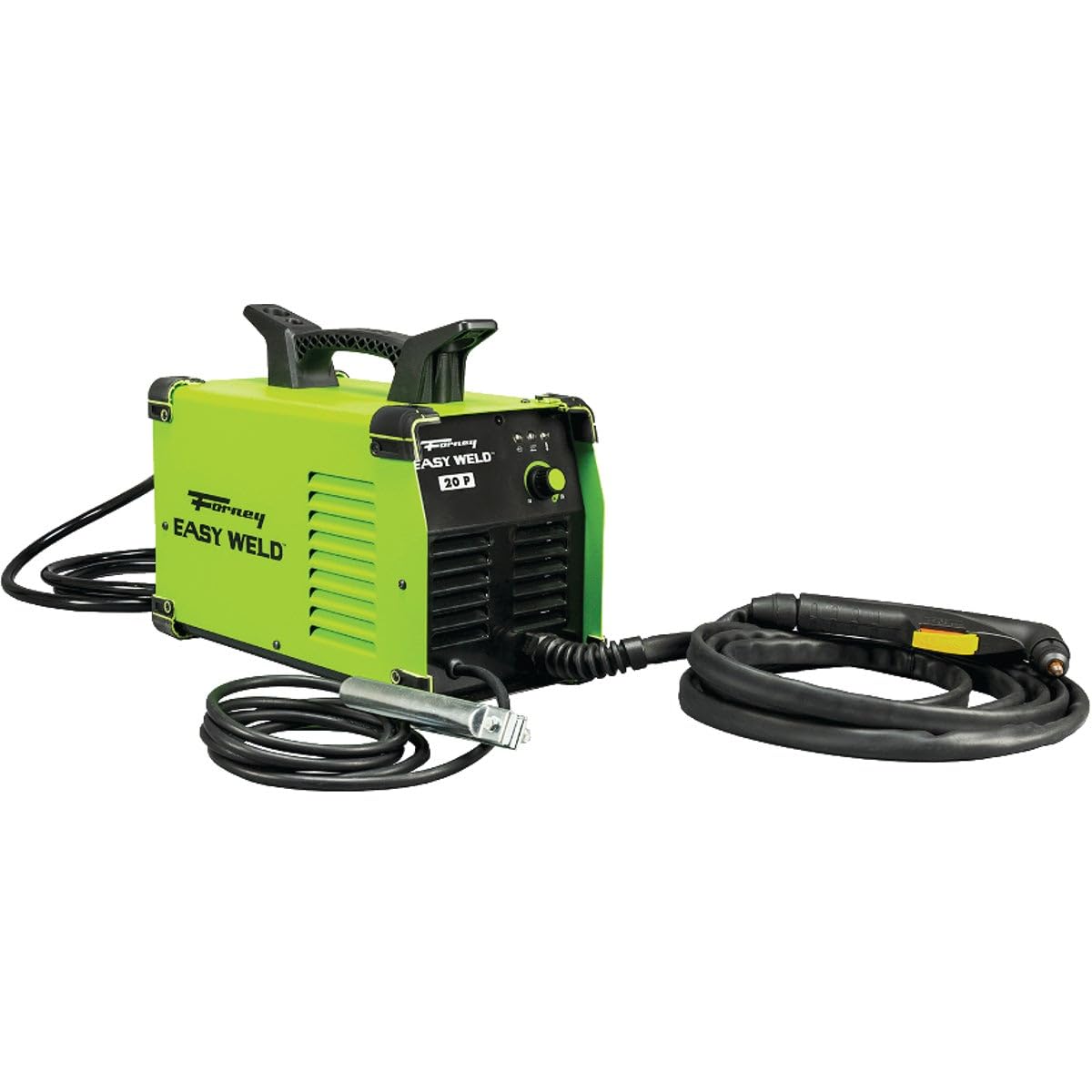
Forney 251 Easy Weld 20P Plasma Cutter

87 /100
Kirk Score Excellent
Weight
21.1 lb
Amperage
20 A
Clean Cut
1/4 in
Input Voltage
120 V
Check Details on Amazon

Pros

  • Runs on a standard 120V outlet
  • Built-in regulator and air dryer
  • Drag torch keeps standoff consistent
  • Ships with a spare electrode and nozzle

Cons

  • Only a 12-month warranty

Every other machine here will take a 220V circuit; the Forney 251 won't. It runs on 120 volts and 1.5 CFM of air and that's the end of the story, which sounds like a limitation until you remember that most garages, basements and rented shops have exactly one kind of outlet and no intention of adding a second.

Twenty amps gets you a clean quarter-inch cut in mild steel and 3/16 in aluminum, which covers sheet, brackets, exhaust tubing and most of what a weekend project actually involves. The drag torch is the smart part: the tip rides directly on the metal, so standoff takes care of itself and a first cut comes out looking like a cut rather than a ragged slot.

It ships with a 13-foot torch, an 8-foot ground clamp, a 20-to-15-amp adapter and a spare electrode and nozzle, so you can be cutting the day it lands. Air is the thing to plan: 1.5 CFM is a modest appetite, but a six-gallon pancake will have you waiting between cuts, so a bigger tank is worth having before you start on anything long.

At 21.1 pounds it's the heaviest machine here, and it costs more than several dual-voltage cutters with twice the capacity — you're paying for the single-voltage simplicity, not for power. That's a trade worth making only when the outlet is the constraint and the metal is thin. Where it wins is patience: it can sit on a shelf for months, come out for one bracket, and go back without an adapter to find or a circuit to think about.

Bottom line: For a garage with a single 120V outlet and a steady diet of sheet metal, the Forney 251 is the simplest machine here to live with.

Check Latest Price
#08

Gouging and marking

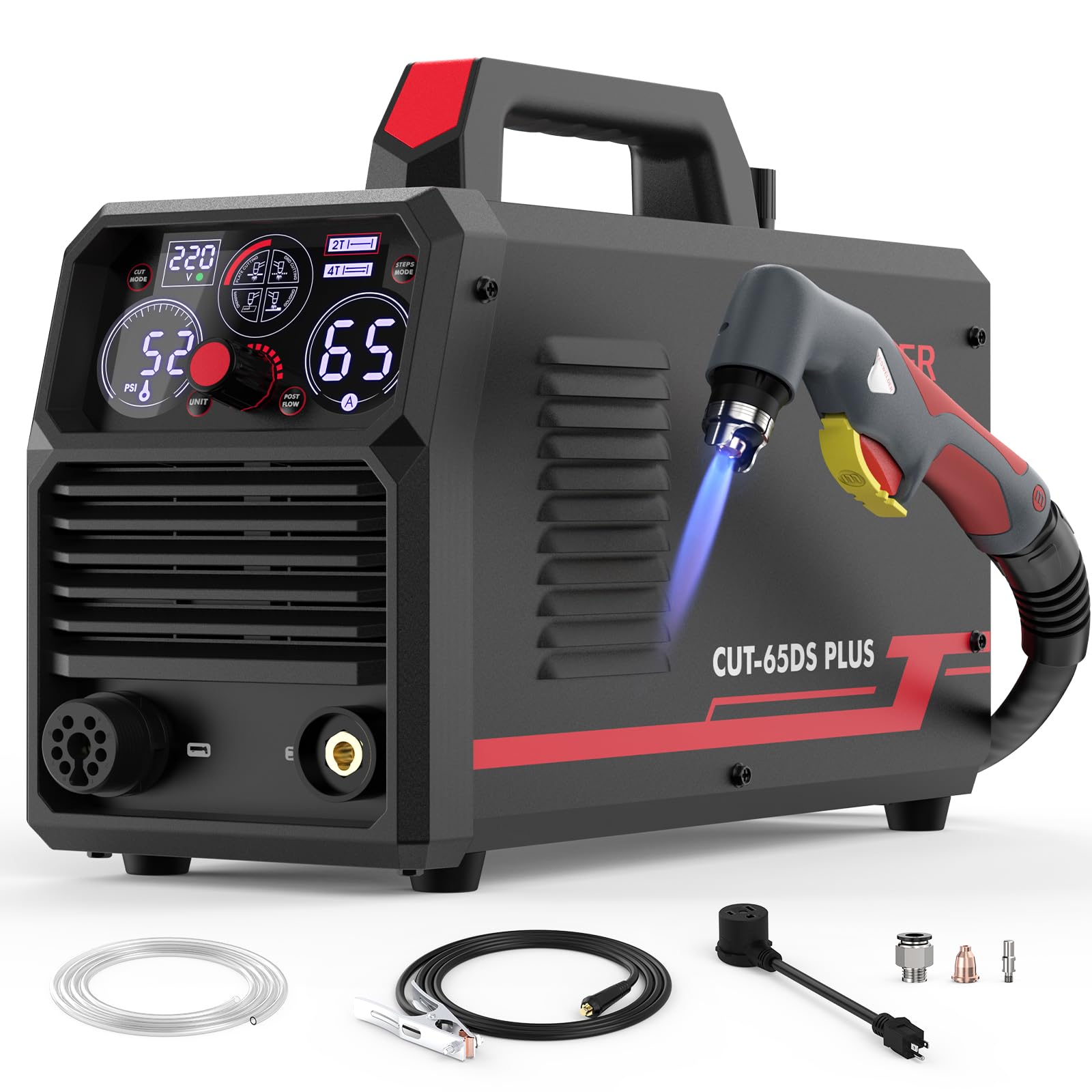
YESWELDER CUT-65DS PLUS 65A Plasma Cutter

82 /100
Kirk Score Excellent
Amperage
65 A
Clean Cut
5/16 in at 110 V; 9/16 in at 220 V
Functions
Plate cutting, grid cutting, gouging, marking
Input Voltage
110/220 V
Check Details on Amazon

Pros

  • Gouging, marking, grid and plate cutting
  • 65 A, the highest output here
  • 14 lb for a 65-amp machine
  • Blowback start with ETL certification

Cons

  • Newest design here, with the least history

Gouging and marking are two jobs no other machine on this list can do. The CUT-65DS PLUS adds them to ordinary plate cutting, along with grid cutting for mesh and grating, which makes it the closest thing here to a plasma machine that covers everything a repair bench runs into.

Sixty-five amps is the highest output in this group, and YESWELDER rates it at a 5/16-inch clean cut on 110V and 9/16 on 220V. It weighs 14 pounds, which is remarkable for the amperage, and the blowback start keeps the arc clean and interference-free. ETL certification and an IP21 rating are the sort of details you notice on a machine pulling this much current in a dusty shop.

Gouging is the interesting one: a gouging consumable set is in the box, and the technique — running the arc along a weld to blow it out — saves an angle grinder and a lot of time on repair work. Marking is the quieter trick, scoring layout lines into steel without soapstone or a punch. Neither is a feature you buy by accident; you buy this machine because those jobs keep showing up.

Two years of warranty is the same cover the CUT-55DS PRO gets, and the price sits just above it for a good deal more capability. If your work includes repair welds to gouge out or layout lines to mark rather than scribe, nothing else in this group touches it. The gouging consumables ship in the box, so the first repair weld doesn't wait on an order.

Bottom line: Choose the CUT-65DS PLUS if gouging or marking is part of your work, because nothing else here does either job.

Check Latest Price

How We Tested Plasma Cutters

We started with about thirty machines and narrowed the field by reading spec sheets and manuals before cutting anything: dual voltage or not, pilot arc versus high-frequency start, standard versus proprietary consumables, and what actually came in the box. That got us to eight, from beginner-priced units to a 65-amp machine.

Each one lived in my garage and a friend's driveway for six months. We cut 22-gauge body panels, 1/8- and 1/4-inch plate, expanded steel, and a rusted exhaust bracket that fought back, working in a dim corner of the shop and out in the wind. For every machine we looked hard at the first ten inches of cut: kerf width, dross on the underside, bevel on the edge, and how much grinding the piece needed before it was usable.

Then we pushed them: back-to-back cuts until thermal overload tripped, timing how long each ran and how long it needed to cool. We counted pierces and inches on one set of consumables to see how fast each machine ate electrodes, and we set every machine up using only the manual in the box. Unclear wiring diagrams, vague air-pressure guidance, and missing torque specs all cost points.

Durability got the unglamorous treatment: rolled across gravel, hauled by the torch lead, checked for strain relief at the connector, and set down hard enough to see whether the case flexed. Every dual-voltage machine also ran on a standard 20-amp garage circuit to see which ones tripped it.

How to Choose a Plasma Cutter

Match the Machine to the Circuit You Have

Every dual-voltage machine here will run on 110V, and none of them is at its best there. On a 15- or 20-amp household circuit a 50-amp cutter will handle sheet and quarter-inch all afternoon, then trip the breaker the moment you lean on it. A long, light-gauge extension cord makes that worse, so keep the cord short and heavy.

If a 220V circuit is within reach, wire it before you shop for a bigger machine. On most of these models it's the difference between a quarter-inch machine and a half-inch one, and it costs far less than moving up a class in amperage.

Read Clean Cut and Max Cut as Two Different Numbers

Clean cut is the thickness the machine will slice at a walking pace with an edge you can live with. Max cut is severance: the arc gets through, and leaves a ragged kerf you'll spend time grinding. The bigger number sells machines; the smaller one is what you actually own.

Buy for the clean number, and subtract a little for aluminum and stainless, which take more heat than mild steel of the same thickness. A machine that honestly rates a half-inch clean cut will do everything a home shop asks; one advertising a two-thirds-inch maximum may give you a usable edge well below that.

Decide Whether You Need a Pilot Arc

A pilot arc keeps a live arc in the air before the torch touches metal, which is what lets a machine start on rust, paint, expanded mesh or a panel you can't get a clean ground on. On flat, clean, grounded plate you won't miss it; on salvage and repair work it decides whether the machine comes out of the box or stays on the shelf.

Starting method matters too. Blowback, or non-HF, starting lights the arc without a high-frequency burst, so it doesn't upset a CNC controller or a radio sharing the bench. High-frequency start is fine in a garage and less fine next to electronics.

Plan the Air Before the Machine Arrives

Plasma cutting runs on compressed air, and wet air destroys consumables faster than anything else you can do wrong. Most of these machines want roughly 5 CFM at 60 to 75 PSI, so check the figure for the one you're buying — a pancake compressor will not keep up with a long cut.

A filter and water trap between the compressor and the machine is the cheapest upgrade in this hobby. Several picks here build the regulator and filter into the box, which saves a hardware run and one more connection to leak.

Weigh Weight, Duty Cycle and Warranty Together

The machines here run from about 12.5 to 21 pounds, and that gap matters more than it sounds. Thirteen pounds goes out to the job in one hand; twenty-one pounds gets a cart. Duty cycle is the other half of the same question: 60% at 60 amps is a machine you can work with, while a hobby-grade box will want a rest after a few feet of plate.

Warranty runs from one year to three across this group, and the spread is worth more attention than the spec sheet usually gets. On a tool that lives in a garage and comes out twice a month, an extra year of cover is often worth more than one more amp.

Frequently Asked Questions

Final Verdict

If we were buying one machine for a home shop tomorrow, it would be the ARCCAPTAIN CUT50. It's light enough to carry, runs on the outlet you already have, cuts a clean half inch once you feed it 220V, and costs less than most of the alternatives here.

Step up to the PRIMEWELD CUT60 only if you cut plate weekly or need a pilot arc that keeps up on rust and mesh. And if your garage has one 120V circuit and the metal is thin, the Forney 251 is the simplest machine here to live with.