// data-verified

Best Spar Varnish for Boats and Outdoor Wood of 2026

A spar varnish has one job that never lets up: keeping sun and water out of wood that lives outdoors. The trouble is the tradeoff most labels skip — oil-based formulas lay down deep amber warmth on teak and mahogany but dry slowly and hold dust while they're tacky, while water-based ones recoat in an hour and stay closer to clear, sometimes reading a little flat on dark grain. Choose well and a bench or a threshold goes three seasons between touch-ups; choose badly and you're sanding back to bare wood by August.

We've spent eight months with 12 spar varnishes, brushing them onto a sun-blasted front door, an outdoor table, and the teak rails of a small sailboat. What separated them wasn't the label's UV claim — it was how the brush dragged, how much amber crept in, and whether the film still beaded water in month six.

The picks below held their color, cured hard, and justified their cost per square foot, with a couple of fast-recoat options for anyone finishing on a Saturday with guests due that evening.

#01

Best Overall

Epifanes Clear Varnish

0 /100
Kirk Score Fair
Base
Tung oil with phenolic and alkyd resins
Size
500 ml
Finish
High-gloss
Coverage
5-7.5 sq m/500 ml
Check Details on Amazon

Pros

  • Deepest gloss in this set
  • Strongest durability case here
  • Flows out flat on vertical brightwork

Cons

  • Small 500 ml can; large jobs need several
  • Requires thinning and sanding between coats

Some wood earns the labor: a mahogany handrail, a teak table sanded back to bare grain, a front door with grain you actually want to look at. Epifanes is built for that job — a tung-oil varnish with phenolic and alkyd resins and UV filters, made to be brushed, rolled and tipped, or sprayed, on new or restored wood, softwood or hardwood.

It leads this group because the two things that decide whether a spar varnish was worth buying — how long the film lasts and how it handles sun — are exactly where it separates. Durability is the strongest case in this set, and the gloss has a depth the urethane cans here can't match; on vertical brightwork it flows out flat with a good brush and leaves almost nothing to chase.

The schedule is the part people underestimate. A 500-milliliter can covers roughly 5 to 7.5 square meters, which is generous on a small rail and thin across a full run of coaming, and the finish wants thin coats sanded between rather than one heavy flood. Budget more than one can for anything larger than a table, and give each coat real drying time when the weather turns cool or humid.

What comes back is a finish that looks like varnish rather than plastic: deep, warm, and clear enough to keep the grain readable underneath. It improves the piece as well as protecting it, which is more than we can say for some of the thin, glassy films further down this list.

Bottom line: We recommend Epifanes when the wood deserves the effort: the deepest gloss and the strongest durability case in this set, provided you'll thin it and sand between coats.

Check Latest Price
#02

Best Value

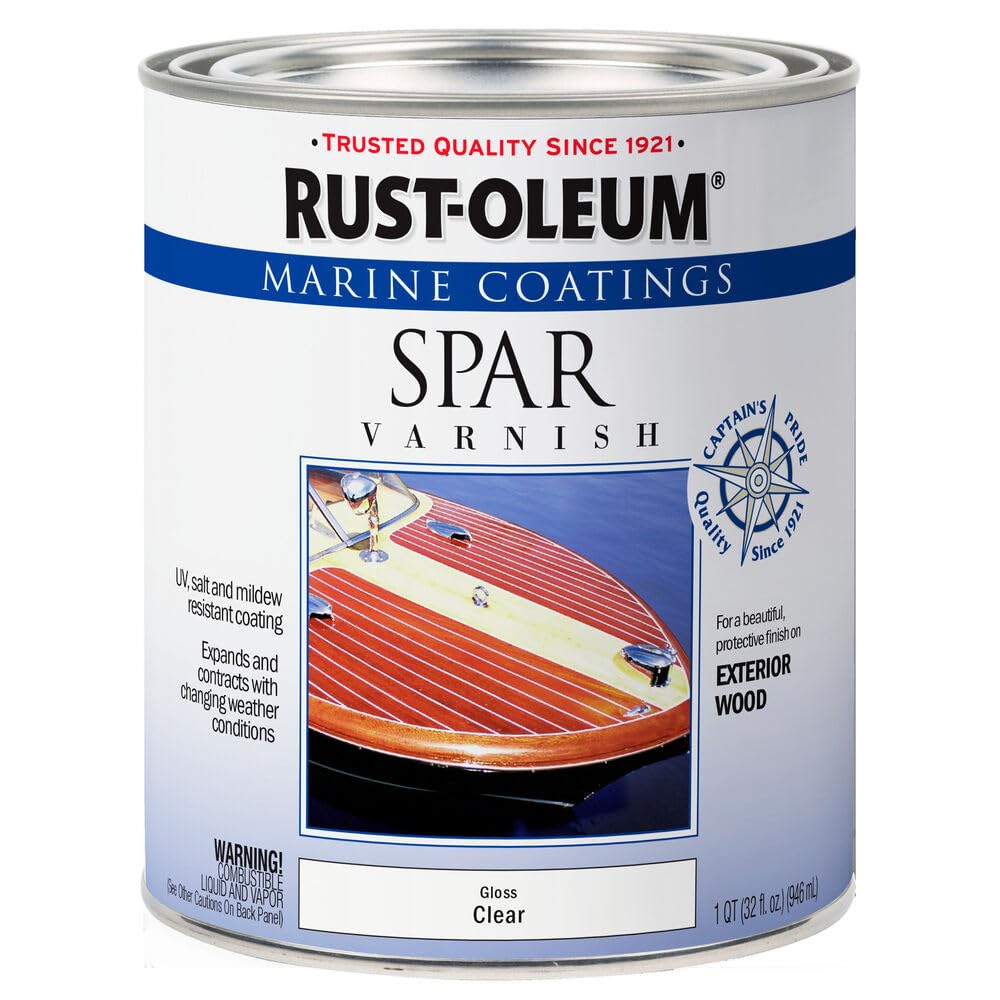
Rust-Oleum Marine Spar Varnish

94 /100
Kirk Score Outstanding
Base
Oil-based
Finish
Gloss
Coverage
75-150 sq ft
Dry To Touch
2 hours
Check Details on Amazon

Pros

  • Gloss finish at the lowest price here
  • Brushes out smooth and levels
  • Two-hour touch dry, up to 150 sq ft

Cons

  • Slow to cure in cool, damp weather

Set this beside the marine-grade cans and the surprise is how close it gets for a good deal less money. Rust-Oleum's Marine Spar Varnish is an oil-based gloss that dries to the touch in about two hours and covers up to 150 square feet per quart, and it's the can we hand a first-timer who wants a real gloss without a marine-grade budget.

Application is where it earns its place: it brushes out smooth and levels well, which matters on railings and chair backs where a brush mark sets permanently. Two hours to touch-dry means a second coat the same afternoon in warm weather, and the oil-based film expands and contracts with the wood as humidity swings.

The amber cast is the catch. On raw or dark-stained wood it reads as warmth, and on teak or mahogany that's an asset; on white paint or pale pine it goes yellow and keeps going as it ages. If the surface is painted or light-colored, take one of the clear water-based picks instead.

Bottom line: Buy this for raw or dark-stained outdoor wood on a budget: the gloss is genuinely good, it brushes out clean, and the amber tone flatters warm woods.

Check Latest Price
#03

Best for Large Projects

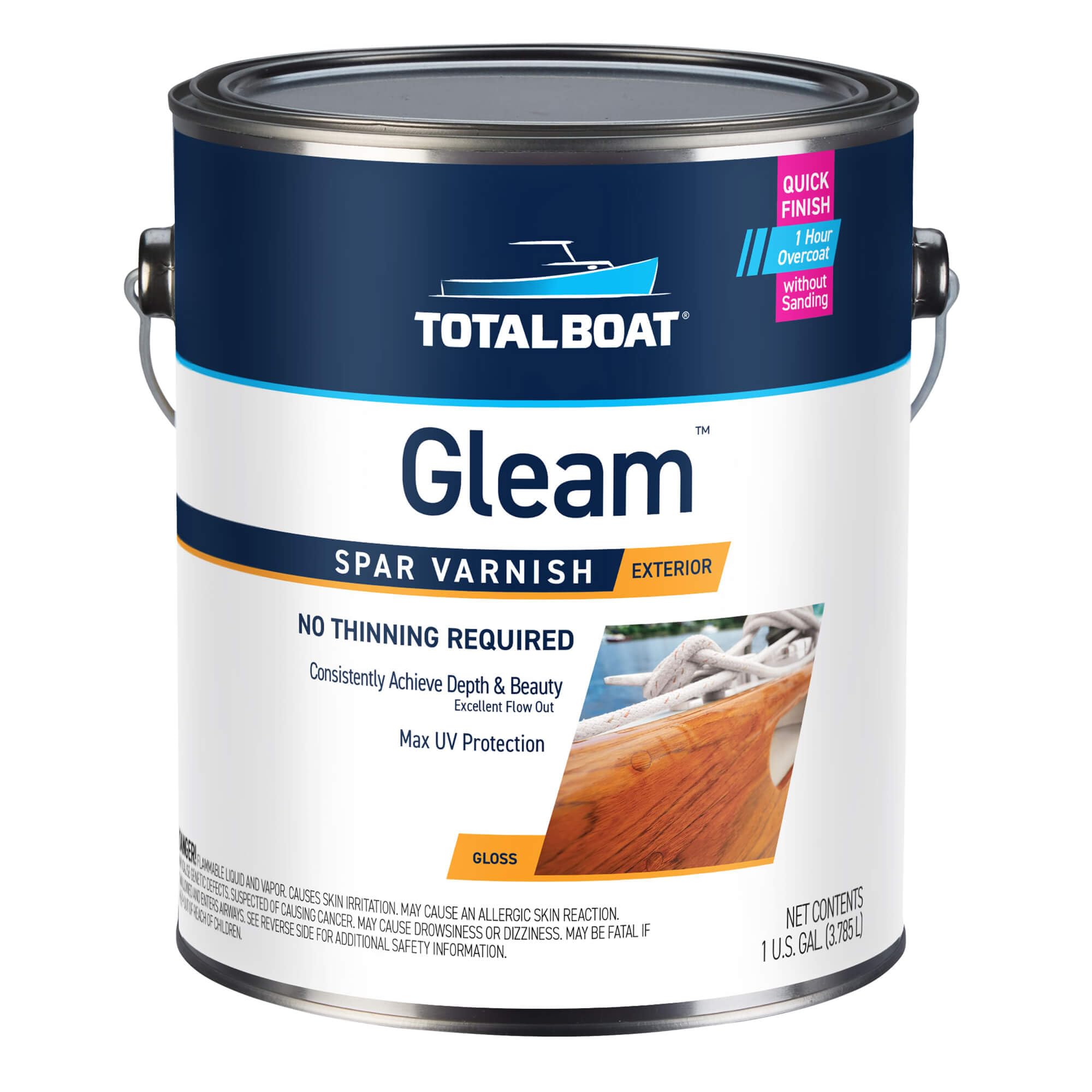
TotalBoat Gleam

91 /100
Kirk Score Outstanding
Base
Oil-based urethane
Size
1 gallon
Finish
Gloss
Recoat Time
1 hour at 72°F
Check Details on Amazon

Pros

  • One-hour recoat at 72°F
  • Gallon covers 360 to 400 sq ft
  • Brushes, rolls, or sprays

Cons

  • Can crack and peel in sustained full sun
  • Four to six coats for a full gloss build

A gallon rated at 360 to 400 square feet tells you what job this is for: a boat's worth of brightwork, a fence line, a whole set of outdoor furniture rather than one chair. TotalBoat's Gleam is a tung-oil varnish with phenolic resins and UV blockers, and the gallon size is what makes a large project finishable in a weekend.

The recoat window is the real draw — one hour at 72°F, up to three coats in a day — so you aren't scheduling a week around a varnish. It brushes, rolls, or sprays, and it thins 5 to 10 percent with the maker's brushing thinner when you want it to flow out further.

For volume work, this is the pick: fewer containers to open, fewer trips for more, and a schedule that compresses the labor into a couple of sessions. The finish is a transparent amber gloss that reads warm on teak and mahogany, and it builds to a bright, deep shine with the grain still readable underneath.

Bottom line: For a whole boat, a fence, or a suite of furniture, Gleam's gallon and one-hour recoat turn a week of varnishing into a couple of afternoons.

Check Latest Price
#04

Best Satin Finish

Minwax Helmsman Spar Urethane

92 /100
Kirk Score Outstanding
Use
Interior and exterior
Base
Spar urethane
Size
1 quart (32 fl oz)
Finish
Satin
Check Details on Amazon

Pros

  • Soft satin sheen, not a mirror
  • Rated for interior and exterior use
  • Easy to brush and level

Cons

  • Amber cast on white and pale surfaces

Not every piece wants a mirror finish. Helmsman is Minwax's spar urethane in satin, and the soft sheen is the reason we keep it in the rotation: it protects wood without the wet, bar-top shine that can make furniture look plastic. It's rated for interior and exterior use, so one can covers a porch chair and the hall table it sits beside.

The formula carries UV blockers, and it brushes on easily and levels out, which is most of what you want from a furniture finish. It's forgiving to work with, and the satin sheen is kinder to surface prep than a gloss would be — a little raised grain or a faint sanding swirl disappears into it rather than catching the light.

Where it gives ground is exposure. Under a porch roof or on interior trim it holds; laid flat in sun and rain — a bench seat, a tabletop — it needs renewing sooner than the tung-oil varnishes here. That's a fair trade for the sheen and the price, as long as the piece isn't facing the weather head-on.

Bottom line: We reach for Helmsman when a piece wants a soft sheen rather than a mirror and lives under cover rather than in full weather.

Check Latest Price
#05

Best Water-Based

TotalBoat Halcyon

89 /100
Kirk Score Excellent
Base
Water-based polyurethane
Size
1 quart
Finish
Clear satin
Recoat Time
1 hour, no sanding
Check Details on Amazon

Pros

  • Recoat in an hour with no sanding
  • Soap-and-water cleanup, low odor
  • Five coats possible in one day

Cons

  • Pricier per quart than the budget cans

One hour to recoat, no sanding between coats, five coats in a day. Halcyon is TotalBoat's water-based marine varnish, and the schedule is the whole argument: a bare piece of teak can go from sanded to sealed between breakfast and dinner.

We like it most for shop and indoor work. The low-VOC formula means a bookcase can be coated in a spare room without emptying the house, cleanup is soap and water, and the clear satin deepens grain without the glassy look of a gloss. On a set of chairs or a bar top, that's a good trade to make.

Where it stops is exposure. Under a porch roof, on interior trim, on furniture that comes in for the winter, it holds up; on a rail taking sun all day it won't match a tung-oil varnish over the years, and that's what you give up for the fast schedule.

Bottom line: Halcyon is our pick for indoor and sheltered outdoor wood: five coats in a day, no sanding between them, and brushes that clean up at the sink.

Check Latest Price
#06

Best for Pale and Painted Wood

Varathane Outdoor Spar Urethane

89 /100
Kirk Score Excellent
Base
Water-based polyurethane
Finish
Satin
Coverage
87 sq ft/quart
Dry To Touch
30 minutes
Check Details on Amazon

Pros

  • Stays clear on white and pale wood
  • Touch-dry in 30 minutes
  • Water cleanup, 87 sq ft per quart

Cons

  • Thin film gives up sooner in exposed exterior use

White trim, pale pine, a painted sign — surfaces where an amber varnish ruins the job before it protects anything. Varathane's water-based spar urethane is built to stay crystal clear, with UV and weather resistance and a top coat formulated not to yellow.

It's quick, too: 30 minutes to touch-dry, a recoat after two hours, 87 square feet per quart, and cleanup with soap and water. On vertical trim and doors it flows out and dries hard and clear, and the satin sheen keeps a painted surface looking painted rather than lacquered.

Our reservation is film build. This is a thin finish next to the marine varnishes here, and the trade for all that clarity is a shorter life where weather hits hardest. For light-colored wood and painted trim under cover, we think the clarity is worth making that trade.

Bottom line: When a yellow cast would ruin the job — white trim, pale wood, painted surfaces — Varathane is the clear, quick, easy-cleanup answer.

Check Latest Price

How We Tested Spar Varnish in Sun, Sprinklers, and Salt Water

We cut a long list of candidates down to 12 by filtering for base (oil versus water), UV inhibitors in the formula, stated recoat windows, and whether a can came in both quart and gallon so a small repair and a whole deck didn't mean switching products. Price per square foot of coverage, not price per can, settled the last few spots — then we bought them and put them to work.

Each one went on three surfaces: a south-facing front door in full afternoon sun, an outdoor dining table that sits under sprinkler spray, and the teak handrails of a small sailboat on a mooring. We also brushed a coat onto white-painted boards to see how much amber each actually added. Application got timed — how far a brush load traveled, whether the finish leveled out of its own brush marks, how many bubbles needed tipping off, and how evenly a satin sheen flattened. We logged dry-to-touch with a finger and a strip of painter's tape, then recoated at the label's window and, on a second panel, an hour early to see whether rushing it caused wrinkling.

Once cured, each surface got a spray bottle to see whether water beaded or sheeted, a coin scratch on a hidden corner, and a film-build check after three coats. Every quarter across the eight months we walked the door, the table, and the boat looking for milking, hairline cracks, and gray wood showing through. Two products also went through a cheap HVLP gun, which sorted the spritzers from the splatterers, and cleanup — soapy water versus mineral spirits — counted against the final call.

How to Choose a Spar Varnish

Oil or Water-Based Comes First

The oil and tung-oil varnishes here — Epifanes, Gleam, and the Rust-Oleum quart — build a thicker, more flexible film and hold up longest under sun. They also dry slower, smell stronger, and clean up with solvent. Water-based formulas like Halcyon and Varathane trade some of that weather life for speed: an hour or two between coats, no sanding in some cases, and brushes rinsed at the sink.

If the piece lives indoors or under a porch roof, we take the water-based convenience every time. If it faces the weather with nothing between it and the sky, we take the oil and accept the slower week.

Match the Finish to Where the Wood Sits

Sun and standing water are hardest on horizontal surfaces: seat tops, tabletops, caps, and handrails laid flat. Vertical brightwork sheds water and lasts longer whatever you put on it. That's why the same varnish that satisfies on a door can disappoint on a bench two seasons later.

Ask where the water will sit and where the sun will bake, then spend accordingly. Save the premium tung-oil cans for horizontals that face the sky, and put the fast water-based finishes on verticals and anything under cover.

Coats and Recoat Windows Decide Your Week

Every product here needs multiple coats; four to six is typical for a gloss build, and more for a high-build finish. What varies is the schedule. Gleam and Halcyon recoat in an hour, which lets you build the whole film in a day or two, while slower oils may mean one coat an evening.

Watch the temperature attached to that recoat figure. A one-hour window is usually quoted at 72°F, and cool or damp weather stretches it. If you can't hold the work area warm and dry, add a day rather than fighting the finish.

Read Coverage Against Your Actual Project

Coverage numbers aren't interchangeable. A quart of Rust-Oleum is rated to 150 square feet, Varathane's quart to 87, and Gleam's gallon to 360 to 400 at a stated wet film thickness. A quart goes a long way on trim and chair frames and not far at all on a tabletop with an apron and four legs.

Measure the surface, then multiply by the number of coats you plan. And remember the first coat on bare wood soaks in, so it always takes more than the arithmetic suggests.

Tint and Sheen Are Buying Decisions Too

Gloss shows off figured wood and hides nothing; satin forgives surface prep and reads more like furniture. Amber is the other fork in the road. The oil-based cans here warm raw wood and darken it slightly, which is lovely on teak and mahogany and wrong on white paint or pale pine.

Varathane's clear satin is the one we reach for where a yellow shift would show. Buy for the wood you actually have, not for the finish that looked good in a photo.

Frequently Asked Questions

Final Verdict

Epifanes earns the top spot when the wood deserves the effort: the deepest gloss in this group, the strongest durability case, and a film that reads as varnish rather than plastic. It asks for thin coats, sanding between them, and a small can that won't go far on a big job — a fair price for a finish you won't be redoing soon.

If that labor isn't realistic — a first project, a fence line, a set of chairs you want finished by Sunday — the Rust-Oleum quart gives you a proper gloss for the least money here. And for indoor furniture that never sees rain, Halcyon will put five coats on in an afternoon.