// data-verified

Best Exterior Wood Stains of 2026

A good exterior stain is really a bet on how much grain you're willing to give up. Clear finishes let every knot and board seam show, but the pigments that shrug off UV are the same ones that hide wood, so the more color you add, the longer the finish holds before it fades. Semi-transparent sits in the middle, which is why most decks and fences land there. Pick wrong and you're sanding the whole thing back to bare wood come spring.

I've stripped and re-stained my own deck twice, so I know the gap between a stain that goes on easily and one that still looks good two summers later. Over eight months, we tested 12 exterior stains on a deck, a privacy fence, and a pair of raw Adirondack chairs, watching color, coverage, drying time, and how each held up under sun and foot traffic.

One thing I'd tell a first-timer: a stain-and-sealer combo saves you an afternoon, but the opacity you choose matters more than the label. The picks below run from near-clear penetrating oils to richer semi-transparents with real pigment behind them.

#01

Best Overall

Olympic WaterGuard Stain & Sealer

90 /100
Kirk Score Outstanding
Base
Water-based
Finish
Semi-transparent
Coverage
Up to 400 sq. ft. per gal
Dry Time
About 24 hours
Check Details on Amazon

Pros

  • States three years on decks, four on fences
  • Up to 400 sq. ft. per gallon
  • Soap-and-water cleanup
  • UV and scuff-resistant coating

Cons

  • About 24 hours before foot traffic

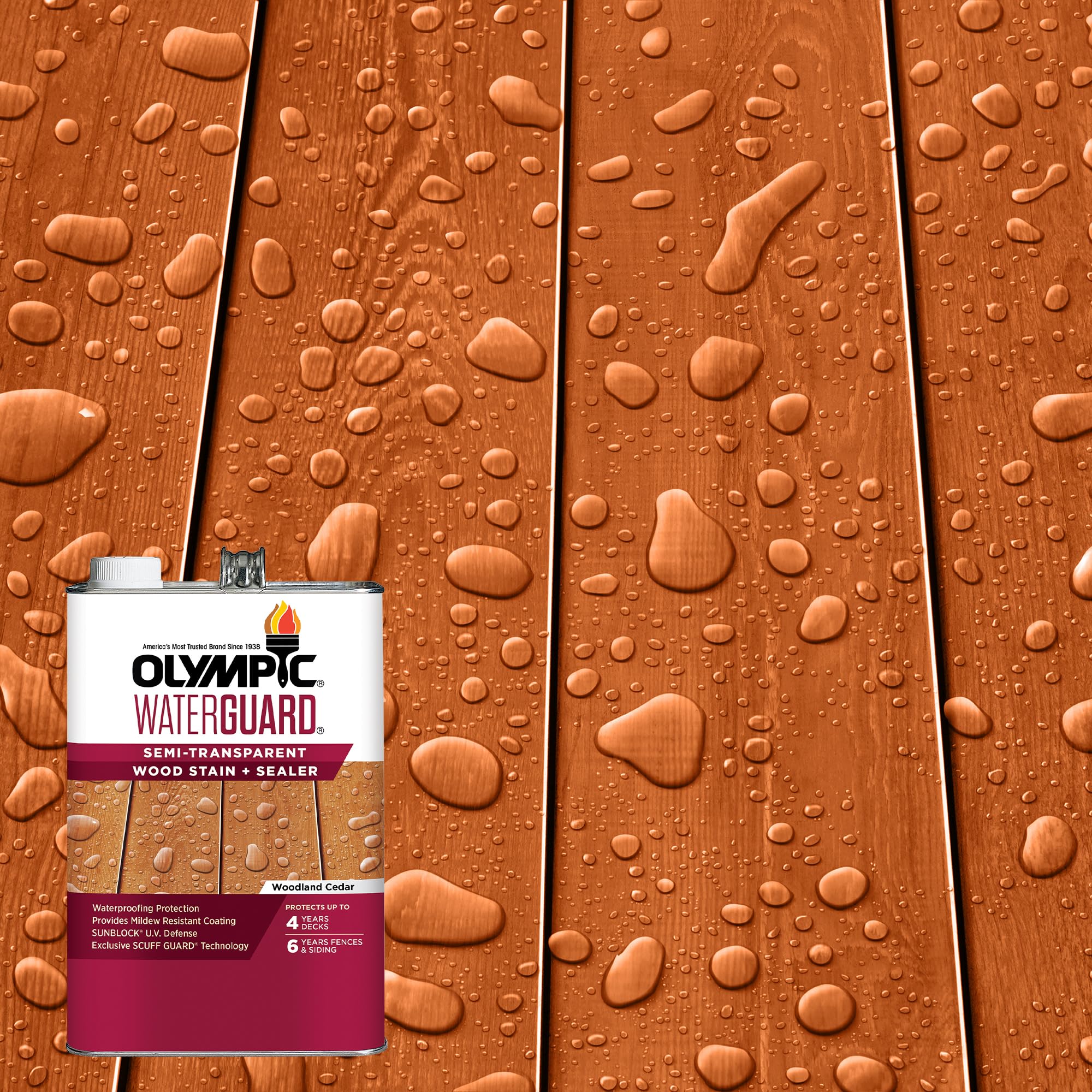
Three years on decking and four on fences and siding is what this can commits to in writing, and that stated horizon is what put it at the top of our list. It's a number you can put in a calendar before the first board is masked. Woodland cedar goes on as color rather than film, so the grain texture stays visible under it while the tone deepens to something warmer than bare wood.

Coverage is where it earns its keep on a real project. Up to 400 square feet per gallon is roughly double what the two-coat products here ask for, so a deck that would drink three gallons of Defy takes closer to one and a half of this. Water-based means soap and water cleanup and a brush that rinses at the tap, and the scuff guard resins are aimed squarely at the traffic lane between the door and the grill.

Two things we noticed on the first coat. Color builds quickly, so a heavy pass in one spot cures as a darker patch — keep a wet edge and work in board-length runs rather than stopping halfway. And a semi-transparent finish does nothing to hide a mismatched replacement board; on an old deck with a few new pickets, the new wood reads lighter whatever you put on it.

Bottom line: Our default for a deck or fence that needs color and protection in one coat: it spreads further than most here and states a protection window you can plan around.

Check Latest Price
#02

Best Splurge

Defy Extreme Wood Stain

88 /100
Kirk Score Excellent
Base
Water-based
Finish
Semi-transparent
Coverage
100–150 sq. ft. per gal (two coats)
UV Blockers
Zinc nano-particles
Check Details on Amazon

Pros

  • Revives gray, sun-bleached decking in one coat
  • Even color with little streaking
  • Zinc UV blockers against graying
  • Soap-and-water cleanup

Cons

  • Color can read more transparent than semi-transparent
  • Coverage runs 100–150 sq. ft. per gallon for two coats

On some decks this holds its color for years. On others it starts lifting within a single season. That spread is wider on this can than on anything else in the guide, and it tells you something useful: on a penetrating water-based stain, the prep and the condition of the wood matter as much as the formula in the can.

What it does better than most here is revive tired wood. A single coat brings back the shine on gray, sun-bleached decking, and the color lays down evenly without the streaking that plagues thinner tints. The zinc nano-particles are aimed at UV, and the water-based formula rinses out of a sprayer in the yard at the end of the day.

So the calculation is color against cycles. Where this one wins is the result on a deck that's been let go — an even, deep tone that makes old boards look replaced. Where it loses is the calendar, because you are signing up to redo it sooner than you would with a stain that states a three-year window, and in our experience the labor, not the stain, is what makes a recoat painful.

Bottom line: We keep this one for badly faded decking: it brings color back in one coat and goes on evenly, provided you buy enough cans for its low coverage.

Check Latest Price
#03

Best Budget

Thompson's WaterSeal Semi-Transparent Stain

89 /100
Kirk Score Excellent
Base
Water-based
Finish
Semi-transparent
Coverage
150–400 sq. ft. per gal
Waterproofing Standard
ASTM D-4446
Check Details on Amazon

Pros

  • Meets ASTM D-4446 waterproofing standard
  • Covers up to 400 sq. ft. per gallon
  • Can go on wood that is still damp
  • One coat often covers older boards

Cons

  • Stays tacky for a long time in humid weather

Chestnut brown is an optimistic name for what comes out of this can. On real boards the color lands dark and red, closer to mahogany than to a warm mid-brown, and the gap between the swatch and the finished deck is where this one divides people. Test a spare board and let it cure before you commit — that's our one real reservation about an otherwise sensible budget can.

The rest of it is what you want from a cheap tinted stain-and-sealer. It meets ASTM D-4446 for waterproofing, covers 150 to 400 square feet a gallon, and can go on wood that's still holding a little moisture after a wash, which occasionally means the difference between finishing this weekend and waiting out the next dry stretch. A brush or roller and a couple of hours gets a small deck done, and one coat often does it on older, thirsty boards.

Stir it, then stir it again. This formula separates and a grayish liquid rises to the top if you pour straight from the can, which is exactly how a patchy panel gets made. Our other note is patience with the weather: in humid air it stays tacky well past the point where you want to move the porch furniture back onto it.

Bottom line: An inexpensive route into a tinted stain-and-sealer that handles damp wood and meets a real waterproofing standard — just test the color on a spare board first.

Check Latest Price
#04

Best for Fences

Wood Defender Transparent Fence Stain

93 /100
Kirk Score Outstanding
Base
Oil-based
Finish
Transparent
Coverage
100–150 sq. ft. per gal
Container
5 gallons
Check Details on Amazon

Pros

  • One coat with no back-brushing
  • Sprays cleanly through a pump sprayer
  • Deepens cedar grain and color
  • Five-gallon pail for long fence runs

Cons

  • Transparent film shows every board that doesn't match

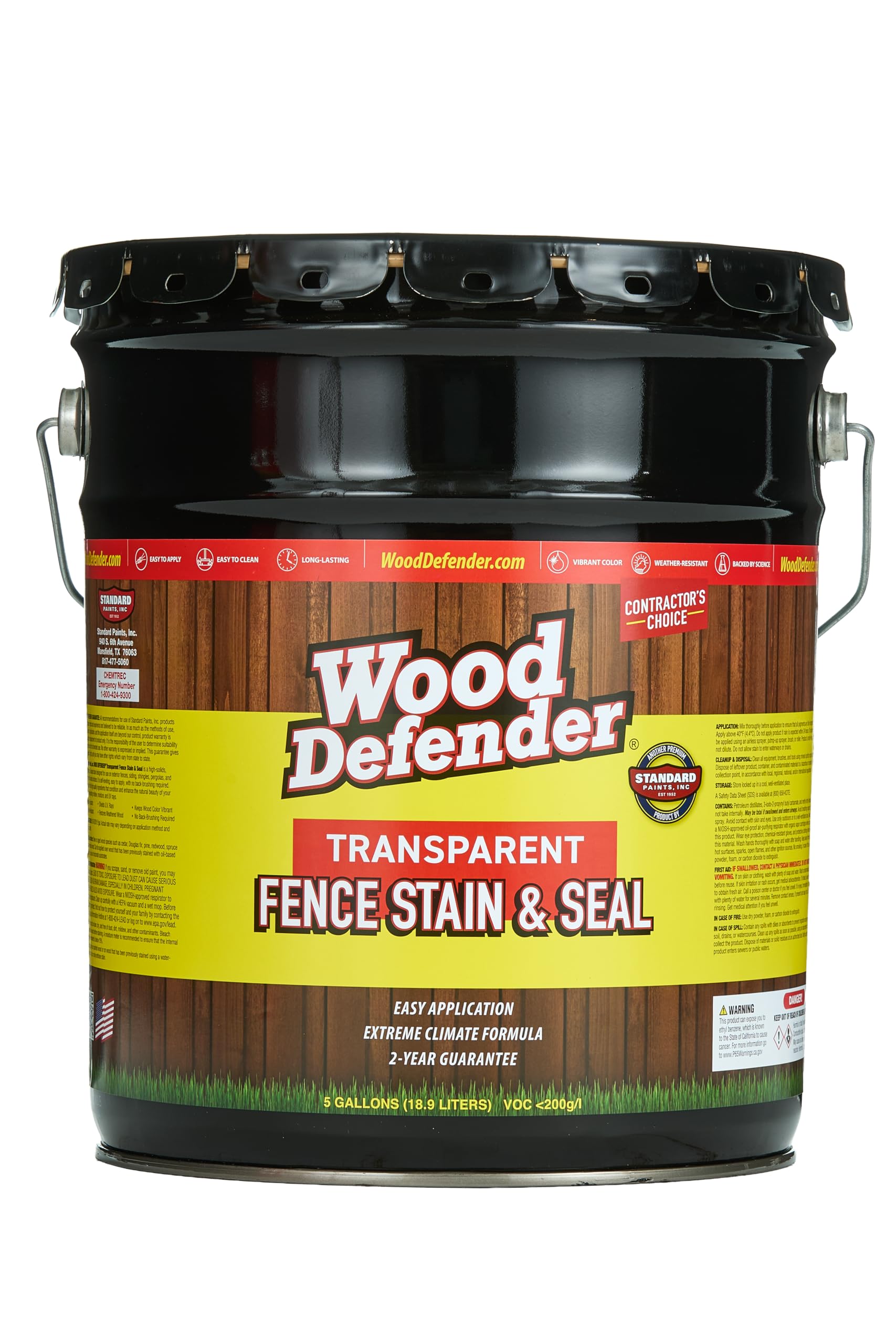
Five gallons in a single pail is the whole argument. This is a fence product: long runs of new cedar pickets, a property line that has to be finished before the weather turns, and a job where the spraying is the easy part and the carrying is not. It's transparent, oil-based, and built to go on in one coat with no back-brushing.

The transparency is what we like on cedar. It deepens the color and lets the knots and grain do the talking, so a new fence reads as a fence somebody spent money on rather than a painted line. It sprays cleanly through a pump sprayer — a two-day brush job becomes an afternoon — and 100 to 150 square feet a gallon is normal for a one-coat oil.

Where it stops is old wood. This is designed for new builds and clean, sound fences; a gray, checked fence that's been up a decade needs cleaning, and possibly stripping, or the oil sits on dead fiber and does very little. Solvent cleanup is part of the oil arrangement, so keep mineral spirits and a metal bucket on hand from the start rather than hunting for them at dusk.

Bottom line: The fence answer in this group: one oil-based coat, sprayed, that deepens cedar grain across a long run without back-brushing.

Check Latest Price
#05

Best for Siding and Log Homes

TWP 101 Pro-Series Cedartone

90 /100
Kirk Score Outstanding
Base
Oil-based
Finish
Semi-solid
Coverage
Up to 300 sq. ft. per gal
Mildew Resistance
Yes
Check Details on Amazon

Pros

  • Mildew-resistant surface for shaded walls
  • Penetrating oil for rough-sawn cedar and logs
  • Brush, roller, or sprayer application
  • Up to 300 sq. ft. per gallon

Cons

  • VOC rules restrict sale in some states

Shade is what kills a finish. Siding that never sees sun stays damp, and damp wood grows the green haze that makes a house look neglected no matter how recently it was stained. We rank a mildew-resistant oil above a prettier film on a north wall, and this is the can in the group built for exactly that.

The rest of the label is a genuine fit for rough wood. It's an oil-based, semi-solid stain for rough-sawn cedar, shakes, log walls, and fascia — the textured surfaces a water-based film sits on top of rather than sinking into. Up to 300 square feet per gallon, applied by brush, roller, or sprayer, and it soaks in rather than coating, which is what you want on a wall that moves with the seasons.

The catch is regulatory and practical. The formula runs 550 grams per liter of VOCs, and the listing notes that VOC rules limit where it can be sold, so check your state before ordering a case for a whole house. Rough-sawn boards also drink it: plan on more than the coverage figure suggests, particularly on a first coat over new cedar.

Bottom line: Our pick for shaded siding, rough-sawn cedar, and log walls, where a mildew-resistant oil makes more sense than a water-based film.

Check Latest Price
#06

Best for Damp Wood

#1 Deck Premium Semi-Transparent Stain

88 /100
Kirk Score Excellent
Base
Water-based
Finish
Semi-transparent
Coverage
100 sq. ft. per gal
Damp Wood
Yes
Check Details on Amazon

Pros

  • Can go on damp wood after washing
  • Rich dark walnut that keeps grain visible
  • Covers quickly with a roller

Cons

  • A gallon is listed at only 100 sq. ft.

The bottleneck on a deck job is usually the wait. You wash, you rinse, and then you watch the forecast for two dry days before anything can go down. This one is formulated to go on wood that still holds moisture once the surface is visibly dry, which can pull a whole day out of the schedule when the weather is closing in.

We like it for that window, and for the color. Dark walnut goes on rich and even and keeps the grain visible, which is a harder trick than it sounds for a water-based semi-transparent, and it covers ground quickly with a roller or a pad. On a job with a deadline, that combination is the reason it's here.

One detail to plan around: on boards that still hold moisture, footprints show in the cured finish. Walk the deck in socks, work back toward the door, and save the last boards for last. The formula is also thin enough that a loaded roller throws droplets, so keep the sleeve light over rails and steps rather than slopping it on.

Bottom line: Worth choosing when the deck has to be stained the same weekend it's washed, and the rich walnut tone is a bonus.

Check Latest Price
#07

Best for Exotic Hardwood

Penofin IPE Oil Finish

89 /100
Kirk Score Excellent
Base
Oil-based
Finish
Transparent
Coverage
350 sq. ft. per gal
Formulated For
Exotic hardwoods
Check Details on Amazon

Pros

  • Formulated for dense exotic hardwoods
  • Transparent tone keeps the grain visible
  • Built-in mildew protection
  • About 350 sq. ft. per gallon

Cons

  • Dries slowly, especially in cool weather

Dense tropical hardwood doesn't absorb like cedar or pine. Ipe, cumaru, and their relatives are tight enough that a film-forming stain sits on the surface and then fails there, which is why the usual finish for these decks is a penetrating oil rather than a coating.

That's what this is: an oil treatment with UV and mildew protection built in, thin enough to sink into the fiber instead of resting on it. It's transparent, so the point is the wood's own color — a coat on gray, weathered ipe brings back the depth and figure — and 350 square feet a gallon covers a small deck or a set of steps with room to spare.

Application is where it goes wrong: it has to come off. We found the excess needs wiping while it's still wet, because anything left standing cures dark and hides exactly the grain you paid for. A second gallon for a second thin coat on dry, thirsty boards is normal, and worth planning for before you start rather than halfway through.

For a deck of dense hardwood, that's a fair trade. This is the one can here formulated for the wood you actually have, and the fussing over excess is the reason the result looks like wood instead of a coating sitting on top of it.

Bottom line: The specialist for ipe and other dense hardwoods: a penetrating oil that restores color where a surface film would simply fail.

Check Latest Price
#08

Furniture and trim

Mollor Water-Based Stain & Sealer

88 /100
Kirk Score Excellent
Base
Water-based
Size
16 fl. oz.
Finish
Smooth teak
Dry To Handle
About 4 hours
Check Details on Amazon

Pros

  • Brush and sandpaper included
  • Low-odor water-based formula
  • Handling dry in about four hours

Cons

  • Pint size only suits small projects

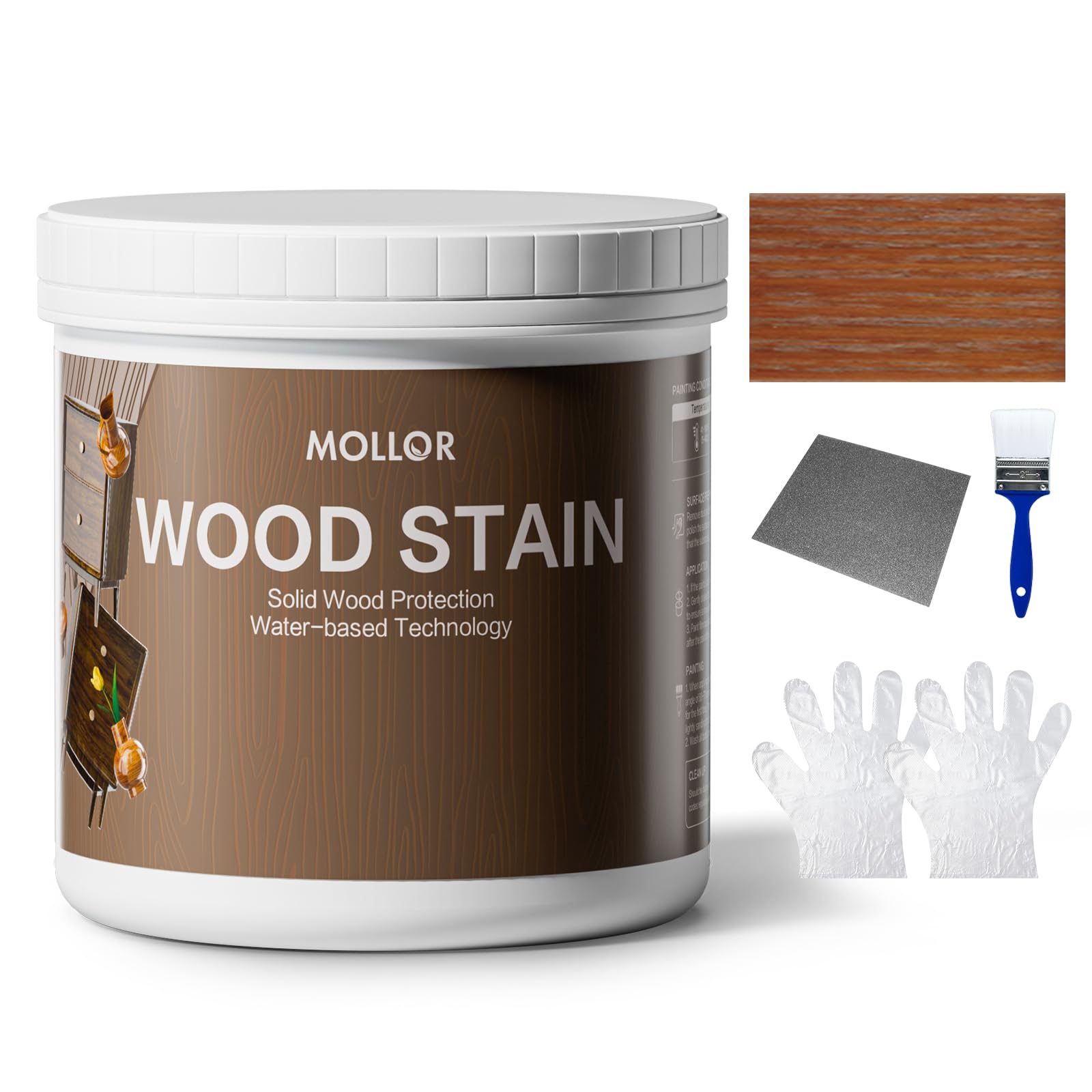
A pint can with a brush and a sheet of sandpaper in the box is a different animal from a five-gallon pail, and that's the point: this is for the door, the porch chairs, the rail cap, the window boxes — the small exterior wood that never justifies opening a gallon.

Water-based and close to odorless — we noticed the absence of smell before anything else — and it cleans up in the sink, which matters on a covered porch with the family inside. The teak tone reads as a warm amber-brown rather than the orange that teak sometimes means, and on a faded chair one coat brings the color back without a second pass.

The catch is working time rather than drying time. It skins over fast, so the same quick set that lets you handle a chair the same afternoon leaves lap marks wherever you overlap or go back to fix a run. Work in small sections, keep the wet edge moving, and don't try to stretch one coat across a whole tabletop in a single pass.

Bottom line: The right size and the right formula for a door, a chair, or a rail — small exterior jobs that don't justify a gallon.

Check Latest Price

How We Tested the Best Exterior Wood Stains

We started with a list of roughly 40 exterior stains and cut it to 12 based on how much pigment each one carries, whether it's oil- or water-based, how many square feet a gallon claims to cover, and whether a sealer is built in. Every product then went onto wood that actually lives outside: cedar deck boards in full afternoon sun, a pressure-treated privacy fence, and unfinished Adirondack chairs.

I brushed each stain onto a marked 12-inch section of deck board and used a pad on a second section, noting how far a quart stretched, whether the wood drank it in or the finish sat on top, whether the color went on evenly or streaked, and how much grain still showed once it cured. I also timed how long each took to dry to the touch and to accept a second coat.

For durability, the boards stayed out through rain, a hose-down every couple of weeks, and a chair dragged across them on purpose. We checked whether water beaded or soaked in, watched for fading and gray patches, and noted which finishes scuffed under foot traffic. Value came down to coverage per gallon against how the finish looked at the end of those eight months.

How to Choose an Exterior Wood Stain

Start With the Base: Water or Oil

The base decides how the whole job runs. Water-based stains clean up with soap and water, dry faster, and are the friendlier choice on a vertical fence you want to finish in a day. Oil-based formulas sink deeper into rough or dense wood and are the usual answer for mildew-prone shade, at the cost of solvent cleanup, longer dry times, and VOC rules that restrict sale in some states.

If the wood is shaded and stays damp, lean oil. If you are racing the forecast or working around plants and children, lean water-based.

Opacity Sets How Much Grain You Keep

Transparent keeps the wood's own color and figure and hides nothing. Semi-transparent adds pigment while leaving texture visible. Semi-solid covers more and reads closer to paint. The trap is the swatch: a screen rendition and a stained board are rarely the same color, and the gap shows up under real light rather than in the store.

Buy a small can or test a spare board, let it cure completely, and look at it in daylight before you commit a deck or a fence line to a color.

Coverage Math, and How Much to Buy

Listed coverage across these products runs from about 100 to 400 square feet per gallon, and that spread is real: a two-coat product near the bottom of the range needs several times the liquid of a one-coat product near the top. Rough-sawn and weathered boards take more than smooth new ones, and a first coat on thirsty cedar takes more than a second.

Measure the square footage, multiply by the number of coats, then round up. Running out mid-deck is how you end up with a visible seam where the second batch starts.

Prep and Moisture Decide How Long It Lasts

Most failures trace back to what happened before the can was opened. Dirt, mill glaze, and old failing finish all keep a stain from bonding, and no formula here compensates for them. Clean the wood, let it dry, and check whether the product you have chosen tolerates boards that still hold moisture — a couple of these can go on while the wood is damp, which buys you a day.

New pressure-treated lumber and dense tropical hardwood are separate questions. Read the product's own surface recommendations rather than assuming a deck stain formulated for cedar will behave the same way.

When to Recoat, and How to Tell

Don't wait for gray. Flick a cup of water across a few boards and watch what happens: beading means the finish is still working, soaking in means it is time. On a deck, the traffic lane between the door and the grill always goes first, so test there rather than at the rail where nobody walks.

A stated protection window, such as three years on decking and four on fences, is a planning horizon rather than a guarantee, and it assumes the wood was prepped properly the first time.

Frequently Asked Questions

Final Verdict

Olympic WaterGuard is the can we point most people to, and the reason is arithmetic as much as chemistry: up to 400 square feet per gallon, color and UV protection in one pass, and a stated three years on decking and four on fences. Nothing else in this group pairs that coverage with a written window.

If your project is a fence rather than a deck, the Wood Defender pail is the better tool — one oil-based coat, sprayed across a long run of pickets, no back-brushing. On shaded siding or log walls, TWP's mildew-resistant oil is worth the extra fuss.