// data-verified

Best Exterior Primers of 2026

Nothing makes a house look sadder than paint peeling in sheets two summers after the job. Exterior paint fails from the substrate up, and primer is the quiet layer that seals porous siding, grips glossy trim, and locks in knots and rust stains so the topcoat isn’t fighting a losing battle. I learned that on a south-facing garage door that needed three coats because I skipped the right primer underneath.

Primer isn’t one product. Water-based bonding primers grab chalky surfaces and dry fast; oil-based stain-blockers seal cedar knots and rust bleed but smell strong and need more drying time; aerosol cans suit railings and hardware but cover less than a brush-on gallon. White isn’t neutral, though — under a deep topcoat it can lighten the final color.

Over seven months, my team and I put 12 exterior primers to work on siding, trim, a metal railing, and two old doors. Value depended on coverage: some covered in one pass, others needed two. A few grabbed tight; one or two lifted at edges. These are the ones I’d trust on my house.

#01

Best Overall

Zinsser Bulls Eye 1-2-3 Primer

93 /100
Kirk Score Outstanding
Size
5-gallon pail
Formula
Water-based acrylic
Coverage
Up to 2,250 sq ft
Dry To Touch
1 hour
Check Details on Amazon

Pros

  • One pail covers a whole exterior
  • Breathable acrylic resists blistering and peeling
  • Sticks without sanding and blocks tannin
  • Low odor with soap-and-water cleanup

Cons

  • Five-gallon pail is more than small jobs need

Five gallons is the honest signal of what this primer is for. At a claimed 2,250 square feet of coverage, one pail handles the siding and trim of a small house with enough left for a garage door, and it dries to the touch in about an hour, so a second coat later the same day is realistic.

The acrylic film is what we care about outside. It's breathable and flexible, which is how a coating survives siding that moves and moisture that wants out — blistering and peeling are what an exterior job looks like when the film can do neither. It also sticks without sanding and seals tannin and graffiti, so a dark board or a knot doesn't ghost through a light topcoat.

Two boundaries are worth knowing before the pail is open. On glossy, non-porous surfaces — vinyl shutters, aluminum trim, glazed block — a bonding primer is the right tool, and that's where we point people instead. And because the formula is water-based, bare exterior wood will raise a little grain on the first coat; a light sand before the topcoat settles it.

What we come back to is the range. Siding, fascia, porch ceilings, patched masonry, a primed steel door: the same pail does all of it without a special purchase for each, the odor is mild enough to work beside an open window, and cleanup is soap and water. For a whole exterior, that combination is worth more than any single standout specification.

Bottom line: If you're painting a whole exterior, start here: this acrylic grips siding and trim without sanding, breathes with the wood, and blocks tannin bleed.

Check Latest Price
#02

Best for Glossy, Hard-to-Stick Surfaces

KILZ Adhesion Primer

92 /100
Kirk Score Outstanding
Size
1 gallon
Formula
Water-based styrenated acrylic
Coverage
300–400 sq ft per gallon
Dry To Touch
30 minutes
Check Details on Amazon

Pros

  • Bonds to vinyl, aluminum, tile, and glass
  • Skips sanding on sound semi-gloss
  • Water-based with a 30-minute dry

Cons

  • Premium price for a single gallon

Where our top pick needs something porous to grab, this primer is formulated for surfaces with nothing to grip: vinyl shutters, aluminum trim, a fiberglass door, glazed block, tile, even glass. It's a bonding primer rather than a sealing one, and the distinction matters — the job here is anchoring a topcoat, not hiding a stain.

Water-based, dry to the touch in about 30 minutes, and 300 to 400 square feet per gallon, so it works at the same pace as the acrylic picks. What we appreciate is the sanding it removes from the job: on sound semi-gloss paint, a wash and a scuff does what a conventional primer needs the gloss taken off for.

The place to be careful is prep, not the product. A film that chips or scratches usually traces back to a surface that was greasy, dusty or still slick underneath, so degrease exterior trim and scuff it before the can is open. It won't block a knot or seal a tannin stain either — for that, use a stain-blocking primer and keep this one for adhesion.

Bottom line: We keep this one for slick exterior surfaces — vinyl, aluminum, tile, old semi-gloss — because it bonds where ordinary primer slides off.

Check Latest Price
#03

Best for Cold-Weather Application

INSL-X Stix Bonding Primer

92 /100
Kirk Score Outstanding
Size
1 gallon
Formula
Acrylic-urethane
Coverage
300–400 sq ft per gallon
Cure Temperature
Down to 35 °F
Check Details on Amazon

Pros

  • Cures fully at 35 °F
  • Bonds to PVC, tile, glass, and metal
  • Takes almost any topcoat

Cons

  • Coverage falls short on porous masonry and rough block

Thirty-five degrees is the number that earns Stix its place. Most exterior primers want the air and the surface warmer than that, which is why a late-autumn siding job tends to wait for spring; this acrylic-urethane bonding primer is formulated to cure fully at 35 °F. Coverage runs 300 to 400 square feet per gallon, and it bonds to the usual problem surfaces: glossy tile, PVC, vinyl, glass, glazed block, and metal.

We reach for it when the calendar is against us and the surface is difficult — PVC trim, aluminum, a glazed brick porch. It also topcoats with almost any product, so an oil or latex finish coat stays your choice rather than the primer's. The film is a bonding layer before it is a hiding layer: over a dark surface, expect the second coat to be the one that gives you an even white.

Coverage on porous masonry is where the label's 300-to-400 figure turns optimistic. Rough block and weathered stucco drink primer, and a wall measured against smooth trim will take more gallons than the arithmetic suggests. On the flat, sealed surfaces this product is built for, the number holds.

Bottom line: Buy it when temperature is the obstacle: it's the only primer here with a stated 35 °F cure, and it bonds to PVC, tile, and metal as well.

Check Latest Price
#04

Best for Rusted Metal

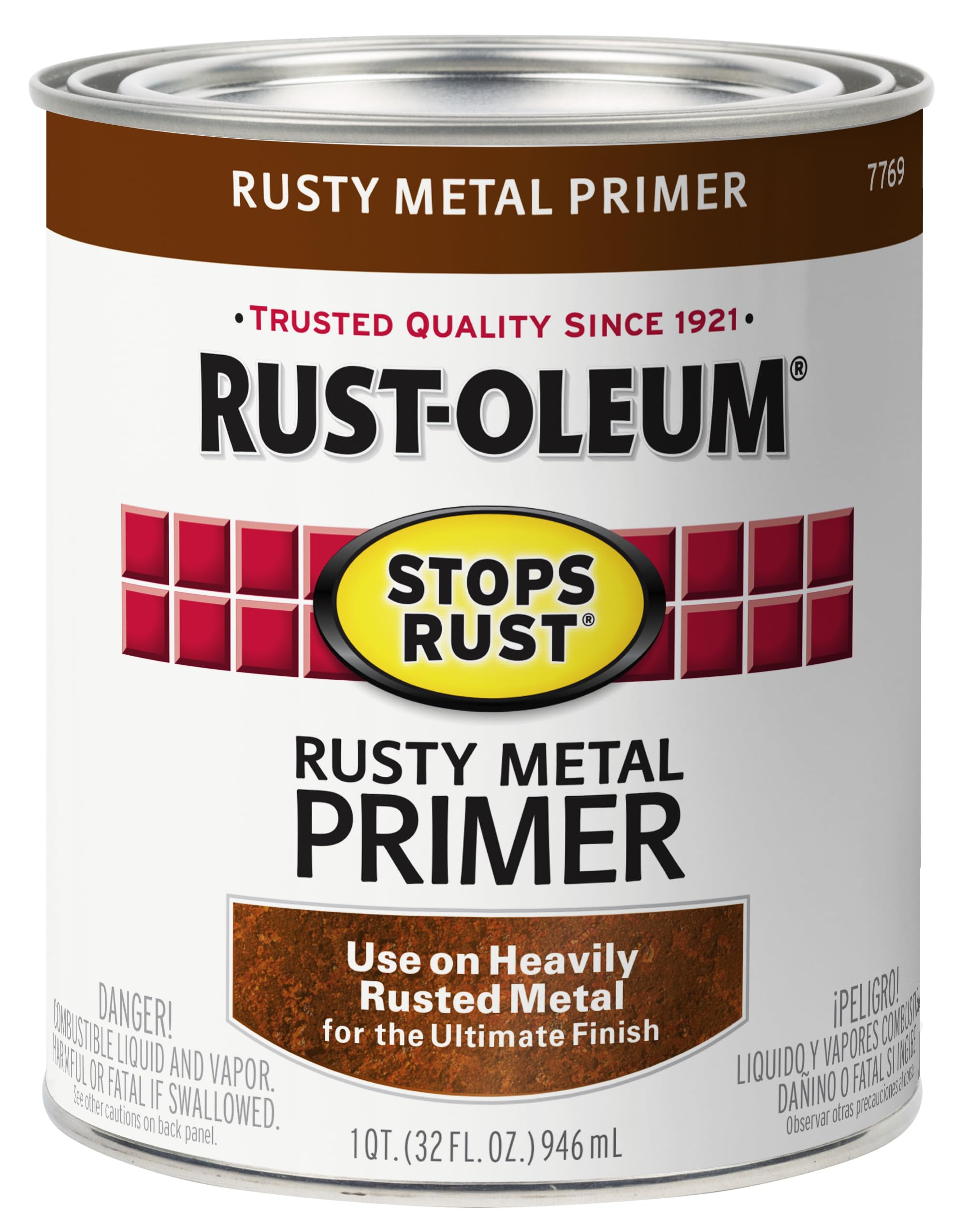
Rust-Oleum Rusty Metal Primer

92 /100
Kirk Score Outstanding
Size
1 quart
Formula
Oil-based enamel
Surface
Heavily rusted metal only
Dry To Touch
2–4 hours
Check Details on Amazon

Pros

  • Grips heavily rusted steel
  • Thick, creamy coat covers in one pass
  • Brush-on means no overspray
  • Dries in two to four hours

Cons

  • Only for rusted metal, not clean or galvanized steel

A rusted steel railing, the bottom edge of a steel door, a gate that has been repainted until the paint gave up — this quart exists for those surfaces, and the label is blunt about it: heavily rusted metal only. The oil-based enamel brushes on thick and creamy, dries in two to four hours, and carries rust-preventive pigment that gives a topcoat something sound to sit on.

Application matters more here than with a water-based primer. Wire-brush the loose scale off first, because the film bonds to steel, not to flakes sitting on steel, and work it into the pits instead of floating it over them. The flat finish makes that easy to judge — you can see the moment a pore fills. One detail worth knowing: it goes on a deep reddish brown, so a white topcoat over it needs an honest extra coat.

Brushing is slower than spraying, and on a breezy day the slower method wins, because there's no overspray drifting onto a neighbor's car. We keep a quart for railings, hinges and steel that has already started to go. For clean galvanized metal or new steel, use a bonding primer instead — this product has nothing to bite on, and the label says as much.

Bottom line: This is the only product here built for a rusted railing, and the label says so: brush it on bare, rusted steel and topcoat over it.

Check Latest Price
#05

Best Spray for Railings and Galvanized Steel

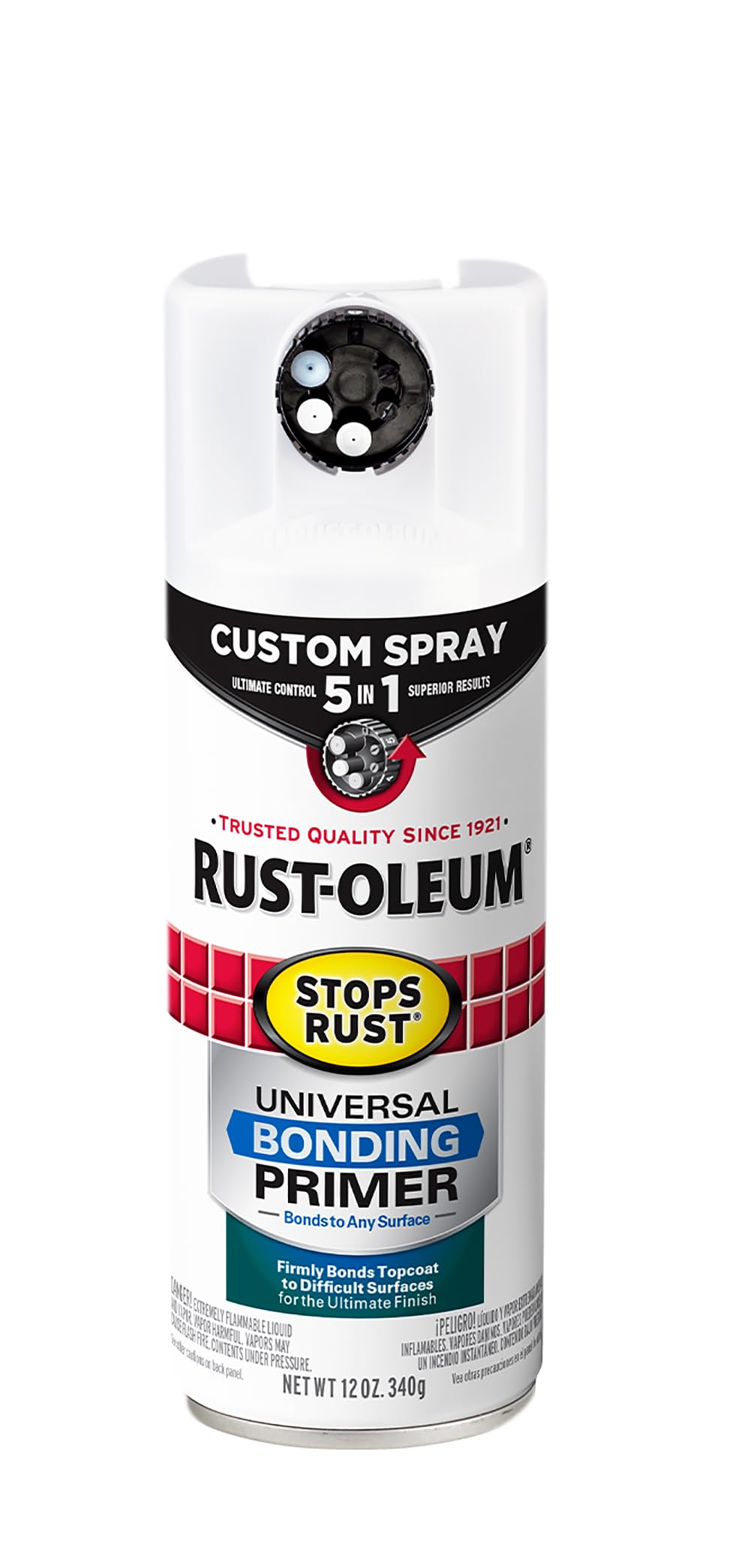
Rust-Oleum Universal Bonding Primer

90 /100
Kirk Score Outstanding
Size
12 oz
Formula
Water-based, low VOC
Coverage
10–12 sq ft per can
Dry To Touch
30 minutes
Check Details on Amazon

Pros

  • Bonds to galvanized steel and wrought iron
  • Water-based, low VOC, low odor
  • Reaches scrollwork a brush misses

Cons

  • A 12-ounce can covers only about 12 square feet

A spray can is the wrong tool for siding and exactly right for a gate. This water-based bonding primer is aimed at awkward exterior pieces — galvanized railings, wrought iron, PVC trim, laminate, glazed brick, porcelain — where a brush is slow, drippy, and bad at reaching into scrollwork. Low VOC, low odor, and dry to the touch in about 30 minutes.

Galvanized steel is the case we think about, because the zinc skin is what makes ordinary paint let go; a bonding layer gives the topcoat something to hold. Two light passes over a railing leave a flat white film, and the water-based formula means you aren't gassing a porch with solvent while you work.

The finish is flat and slightly chalky, which is what a primer should be — a surface, not a look. We keep a can on the shelf for the small exterior repairs that never justify a gallon, and treat the nozzle as a consumable: clear it after each use or the next project starts with a clog.

Bottom line: For gates, railings, and galvanized steel, this is the can we hand people: a water-based bonding layer that reaches where a brush can't.

Check Latest Price
#06

Best for Stained and Knotty Trim

Zinsser Cover-Stain Primer Spray

90 /100
Kirk Score Outstanding
Size
13 oz
Formula
Oil-based
Coverage
12 sq ft per can
Stain Blocking
Tannin, sap, and stains
Check Details on Amazon

Pros

  • Seals tannin, sap, and water stains
  • Sands easily once dry
  • No sanding needed to bond

Cons

  • Only about 12 square feet of coverage per can

A knot in a cedar board will bleed through a white topcoat until something blocks it, and that's the job this aerosol was formulated for. The oil-based formula seals tannin, sap, water stains and nicotine, sticks without sanding, and sands easily once dry — that last part matters, because a primer that gums up sandpaper costs you an afternoon.

For trim, fascia and a handful of boards, the spray is faster than a brush and gets a uniform coat into profiles that are tedious by hand. The oil base carries a real solvent smell on a still day, so plan around it if the trim sits beside an open window. Where it earns its keep is a repaint where one knot keeps showing through: a spot coat over the knot before the full prime is the difference.

Bottom line: Keep this can for the exterior knot that keeps bleeding through a white topcoat; it seals tannin and sands easily.

Check Latest Price
#07

Small touch-ups

Rustins Quick Drying Primer

92 /100
Kirk Score Outstanding
Size
250 ml (8.5 fl oz)
Finish
Matte white
Coverage
10–12 sq ft per coat
Surfaces
Wood and plaster
Check Details on Amazon

Pros

  • Small tin for small repairs
  • White matte finish under a topcoat
  • Interior and exterior wood and plaster

Cons

  • 250 ml is touch-up quantity only

The smallest can here is also the least complicated: white matte primer and undercoat for interior and exterior wood and plaster, in a 250-milliliter tin. That's a metric quantity sitting beside gallons and aerosols, and it signals the role plainly — a little white primer for a repaired sill, a few window mullions, or a chipped door edge.

What we like is that it doesn't demand a project. Keep a tin next to the filler and the sandpaper and touch in bare spots as you find them, instead of waiting until there's enough work to justify opening a big can. It's white, it's matte, it takes a topcoat, and it dries quickly enough that a repair doesn't become a second weekend.

Bottom line: It's the smallest can here and the easiest to justify: a white primer to keep on the shelf for touch-ups rather than a whole project.

Check Latest Price

How We Tested Exterior Primers

We started with a shortlist of roughly 30 exterior primers sold in gallons, quarts, and aerosol cans, then narrowed it by reading spec sheets and customer reviews for substrate compatibility, recoat windows, and container size. The final 12 represented the choices a shopper actually faces: water-based bonding primers, oil-based stain-blockers, a rusty-metal primer, and two spray formats. We wanted brush-on versus spray, water versus oil, spot-priming versus a full exterior coat.

Over seven months, we applied them to cedar siding offcuts, a chalky painted door, a garage door panel, a rusty steel railing, and exterior trim. I brushed, rolled, or sprayed each one as the label directed, timed how long it stayed tacky, and noted when it was dry enough to topcoat. To check adhesion, we pressed tape onto cured patches and pulled; to check stain blocking, we painted over knots, rust streaks, and water marks and watched whether they ghosted through the topcoat. We compared coverage by marking off square-foot sections, judged odor while working in a closed garage with the door cracked, and left the panels outside through rain and sun to see which ones chalked, cracked, or let the substrate show.

Value came down to how far each container went and how many coats it took to get an even white. Color mattered more than I expected: a bright white primer under a deep topcoat can shift the final shade, while a flatter primer hides better under dark paint. Sprays were judged on trigger feel, clogging, and whether they laid down an even film on railing spindles without runs. We also noted how each primer felt in the can — whether it stayed mixed, sanded cleanly, and left a hard or chalky film — because that tells you more about quality than a label claim.

How to Choose an Exterior Primer

Match the Primer to the Surface

Bare cedar, previously painted siding, chalky masonry, galvanized steel and PVC each fail in their own way, and no single primer is best at all of them. For siding, trim and masonry at scale, a breathable acrylic sealer such as the Zinsser 1-2-3 is the sensible default because it moves with the substrate and seals light stains.

The moment a surface is glossy or non-porous — vinyl shutters, aluminum, glazed block, tile — switch to a bonding primer built for it, which is why KILZ Adhesion and INSL-X Stix are on this list. Rusted steel wants an oil-based rust primer; clean galvanized metal wants a bonding primer, not the rust product.

Weather, Temperature, and the Recoat Window

Exterior priming is a weather booking as much as a purchase. Every label carries a minimum application temperature, and the surface has to be above it too: warm air over cold siding is how a film fails to form. Choosing a primer that cures at 35 °F, as Stix does, can buy you the back end of the season.

Dry-to-touch is not the same as ready for a topcoat. An hour on the can is a handling figure, and an oil-based primer keeps hardening long after it stops feeling tacky. Read the recoat time rather than the dry time, and plan the second coat around it instead of around your own patience.

Buy the Right Quantity and Format

Stated coverage is a maximum measured on a smooth, sealed surface, and rough-sawn cedar, stucco and weathered masonry take materially more. Measure the area first, then expect to run short of the label figure on anything with texture, and buy the extra can before you start rather than mid-wall.

Format matters as much as volume. A quart of brush-on rust primer suits a railing, a 12-ounce aerosol covers about 12 square feet and is a detail tool, and a five-gallon pail only makes sense when the house is the job. Aerosols earn their place on scrollwork and awkward profiles, but clear the nozzle after every use.

Stain and Tannin Blocking Is Its Own Decision

If the topcoat is light and the wood is cedar, redwood or knotty pine, the primer has to block tannin or the finish will go brown under it. General acrylics claim some stain blocking; an oil-based stain blocker such as Cover-Stain is the surer route on knots and sap, at the cost of solvent smell and slower dry.

On masonry the equivalent problem is water staining and efflorescence, which calls for a sealing primer rather than a bonding one. Buy for the stain you actually have, not for the wall in general.

Frequently Asked Questions

Final Verdict

Start with the Zinsser Bulls Eye 1-2-3 pail when the job is bigger than a door. It is the most forgiving exterior primer here on siding, trim and cleaned masonry, and the breathable acrylic film is what keeps a paint job from blistering once the weather turns.

Change the pick when the surface changes: KILZ Adhesion for vinyl, aluminum or old gloss, INSL-X Stix when the temperature is against you, and the brush-on Rust-Oleum quart for steel that has already rusted. Two of these, occasionally three, will carry a whole exterior.