// data-verified

Best Deck Stains of 2026

Deck stain makes a promise on the label, then spends the next two years being graded by weather. A semi-transparent lets the grain show but carries less pigment to fight the sun; a heavier finish hides the wood and most of the fading with it. That trade-off is the real decision — the color chip is the easy part. What a good stain buys you is time: slower graying, water that beads instead of soaking in, another few seasons before the deck has to be stripped.

Over the past ten months we've put 12 stains to work on fresh cedar and weathered pressure-treated pine, brushing some on in full sun and some in shade, then letting the weather judge. Dry time, opacity, and how the color held up by midsummer mattered more than anything printed on the can. Most stains don't fail because they're bad — they fail on damp boards, or on a lap mark left by going back over a half-dry section, and that mark outlives the color. The picks below are the ones that forgave us anyway.

#01

Best Overall

Olympic WaterGuard Semi-Transparent

90 /100
Kirk Score Outstanding
Base
Water-based
Finish
Semi-transparent, no sheen
Coverage
Up to 400 sq ft per gallon
Stated Protection
Up to 3 years on decks, 4 on fences
Check Details on Amazon

Pros

  • Water-based with soap-and-water cleanup
  • Dries in about 24 hours
  • Semi-transparent tint keeps grain readable
  • Up to three years of stated deck protection

Cons

  • Only one color in this listing

Staining a whole deck for the first time is mostly a test of patience, and Olympic WaterGuard is built for people who don't have much to spare. It's ready to pour straight from the gallon, it's water-based, and it cleans up with soap and water — no solvent, no separate cleanup, no rags to babysit. That last part is why it became our default for a first deck: you can be a little sloppy at the edges and still finish the job.

The finish is a flat, no-sheen semi-transparent maple brown, which is about the right amount of color for a deck you still want to look like wood. Olympic puts the dry time at roughly 24 hours and coverage at up to 400 square feet per gallon, so a modest deck is a one-gallon afternoon with a second pass on the rails the next morning.

Because it forms a coating rather than soaking all the way in, prep is what decides how it holds. It needs a clean, absorbent surface to grab, and a deck with old failing sealer on it is the wrong starting point. Olympic rates the protection at up to three years on decks and four on fences and siding, which is a realistic window for a water-based finish rather than a lifetime promise.

The one real limit is choice: this listing is a single maple-brown gallon, so if you're matching a specific tone, that's your color. What we kept coming back to is how little the job demanded — soap and water at the end, a dry deck by morning, and no sheen underfoot when the sun hits it.

Bottom line: For most decks, this is the can we point to: a water-based stain and sealer that wipes clean with soap and water, dries overnight, and leaves a readable grain instead of a painted shell.

Check Latest Price
#02

Best for Large Decks

Ready Seal Exterior Stain & Sealer

89 /100
Kirk Score Excellent
Base
Oil-based
Size
5 gallons
Color
Dark Walnut
Opacity
Semi-transparent, matte
Check Details on Amazon

Pros

  • No laps, runs, or back-brushing
  • Rain-ready within minutes of application
  • Can be applied in direct sunlight
  • No sanding or stripping to recoat

Cons

  • Sold here only as a five-gallon pail

Five gallons is the whole decision here. Ready Seal sells this as one large pail of Dark Walnut, so it suits a full deck with rails and steps — or a deck plus a fence line — rather than a single gate or a porch floor. If your project is smaller than that, the size is working against you before you open the lid.

What you get for the commitment is the most forgiving application in this group. The formula is built around no laps, no runs, and no back-brushing; it can go on in direct sunlight, and it can take rain within minutes of application. We appreciated that freedom more than we expected to, because most deck-staining disasters come from a product that dries faster than you can work, and this one refuses to set that trap.

The color is a dark walnut that goes on very dark and lightens as it cures, so judge the first pass knowing that rather than reaching straight for a second coat. Recoating needs no sanding or stripping, only a clean surface, and it brushes, rolls, or sprays with equal patience. The rain window is what changes your day: you can finish a coat and stop watching the forecast.

Bottom line: Buy the pail if you're doing a whole deck: an oil-based stain that won't lap, streak, or need back-brushing, and that shrugs off rain minutes after you finish.

Check Latest Price
#03

Best Low-VOC

TWP 1501 Cedartone

89 /100
Kirk Score Excellent
Base
Low-VOC water-based
Color
Cedartone
Coverage
350 sq ft per gallon
Preservative
EPA registered (51578-1)
Check Details on Amazon

Pros

  • Low-VOC formula for regulated areas
  • EPA-registered wood preservative
  • 350 square feet of coverage per gallon
  • Cedar tone builds over two coats

Cons

  • Cedar tone can dry darker than expected

The useful part of TWP 1501 is printed on the back of the jug rather than the front: a low-VOC formula and an EPA registration, 51578-1, that lists it as a wood preservative rather than just a color coat. That matters if you live somewhere the solvent-heavy stains can't be sold, and it matters if you're treating cedar siding or a log home rather than a plain pine deck.

It's a one-gallon, cedartone product with a stated coverage of 350 square feet, and it goes on with a brush, roller, or sprayer like anything else here. The cedar tone is a stain, not a paint — it colors the wood and leaves the texture alone, so the boards still feel like boards underfoot.

Where it earns its place is how little goes wrong. It brushes out evenly rather than streaking, and the color builds properly instead of jumping straight to orange. Plan on two coats to get the cedar tone, and treat one coat as a wash rather than a finish. We rate it the first thing to look at for a regulated address, and a sensible choice for cedar anywhere.

Bottom line: In a county that restricts solvent-based finishes, this low-VOC, EPA-registered wood preservative is the one to buy: a cedar-toned stain that brushes out evenly and keeps water beading.

Check Latest Price
#04

Best for Hardwood Decks

DeckWise Ipe Oil

92 /100
Kirk Score Outstanding
Base
Oil-based
Finish
Semi-transparent, natural
Coverage
250 sq ft per gallon
Hardwoods
Ipe, tigerwood, cumaru
Check Details on Amazon

Pros

  • Penetrates dense exotic hardwoods
  • Matte natural finish with no shine
  • UV barrier for tropical sun
  • Goes on evenly by pad, brush, or sprayer

Cons

  • Not sold in some California air districts
  • Tint can darken wood more than expected

Dense tropical hardwoods are a different problem from pine. Ipe and cumaru are so tight-grained that a film-forming stain sits on the surface and wears away in the traffic lanes, while oil soaks in and moves with the wood. DeckWise builds this one for exactly that job: a semi-transparent penetrating finish with a UV barrier, aimed at ipe, tigerwood, and cumaru.

The look is what sold us. It dries to a natural matte finish that brings the wood's color back without lacquering it, and it goes on evenly with a pad, a brush, or a sprayer. At 250 square feet per gallon the coverage is on the low side for a full deck, but it soaks in rather than sitting on top, which is the entire point with boards this dense.

Two things to know before you order. The tint runs darker and redder than a bare natural tone on some boards, so test a spare piece or an inconspicuous corner first. And it can't be sold in Southern California's South Coast air district — Los Angeles, Orange, Riverside, and San Bernardino counties are called out — so plan around that if you're buying from there.

Bottom line: For an ipe, cumaru, or tigerwood deck, this is the oil to use: it actually soaks into dense hardwood and brings the color back without a shiny film.

Check Latest Price
#05

Best Clear Sealer

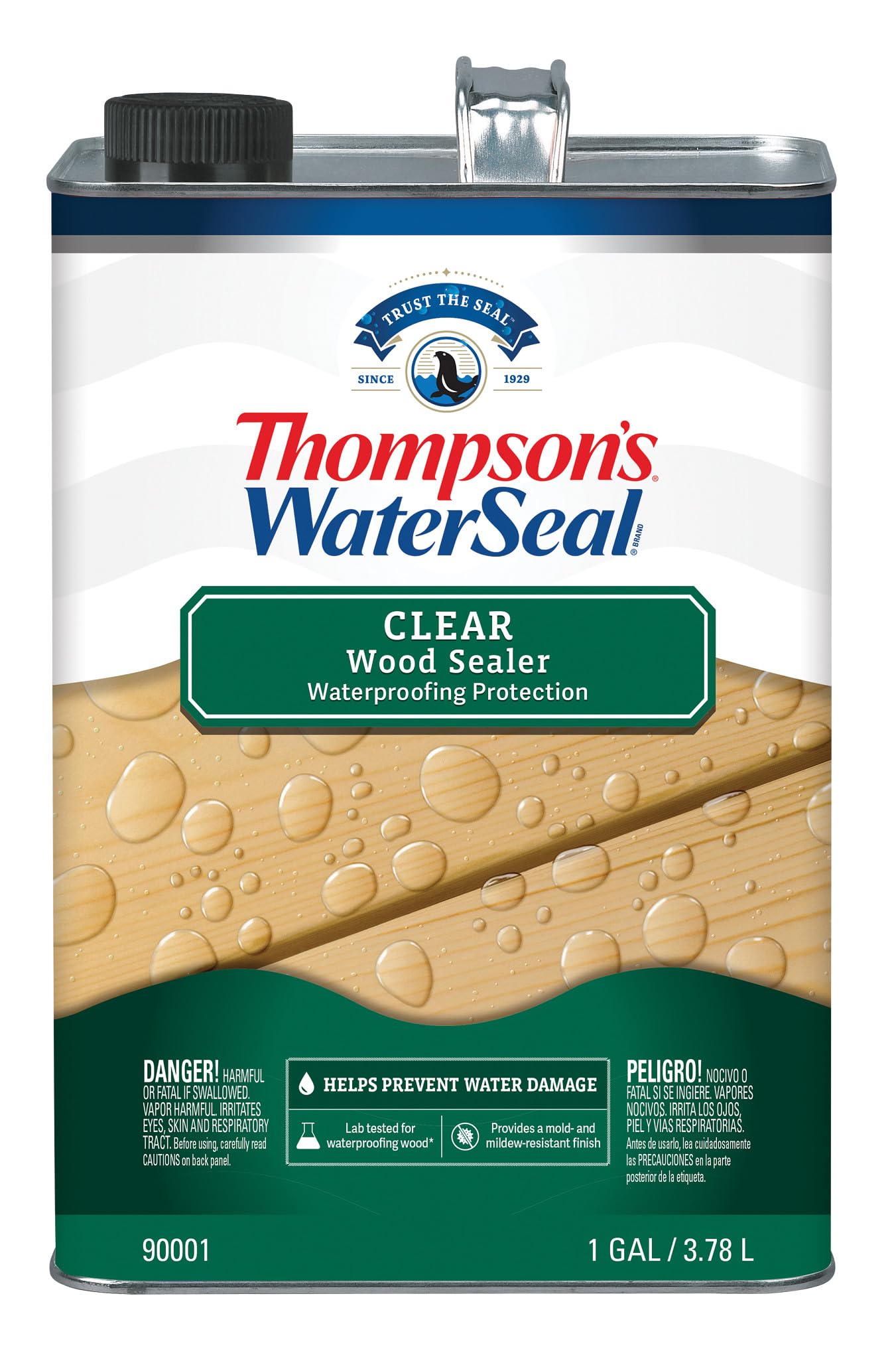
Thompson's WaterSeal Clear Wood Sealer

92 /100
Kirk Score Outstanding
Size
1 gallon
Color
Clear
Coverage
Up to 350 sq ft per gallon
Surfaces
Wood, brick, concrete, masonry
Check Details on Amazon

Pros

  • Clear finish keeps natural wood color
  • Soaks in, so there is no film to peel
  • Up to 350 square feet per gallon
  • Works on wood, brick, concrete, and masonry

Cons

  • Needs refreshing every year or two

This one adds no color at all, and that's exactly why we keep recommending it. Thompson's clear sealer is a penetrating oil finish — it soaks into the wood rather than laying a film over it, so there's nothing to peel, flake, or scuff off a traffic lane. If your deck is sound and you want it to stay the color it already is, this is the shortest route there.

It covers up to 350 square feet per gallon and isn't fussy about what it goes on: wood first, but brick, concrete, and masonry are on the label too, which makes it useful for steps, planters, and the hardscape beside the deck. On new boards it adds a slight darkening, roughly the difference between raw lumber and finished lumber.

Two things we noticed in use. Drying stretched out in cool, humid weather, so give it a dry stretch of days rather than an afternoon. And because it's clear, it maintains the color that's there rather than restoring it — a gray, weathered deck stays gray under this one, which is the price of keeping the wood looking like wood.

Bottom line: Pick this if you like the wood you already have: a clear sealer that adds no color, soaks in instead of coating, and won't peel off in sheets.

Check Latest Price
#06

Best Budget

Thompson's Semi-Transparent Stain

89 /100
Kirk Score Excellent
Size
1 gallon
Color
Chestnut brown
Opacity
Semi-transparent
Coverage
150–400 sq ft per gallon
Check Details on Amazon

Pros

  • One gallon covers 150 to 400 square feet
  • Fade-resistant UV polymers
  • Label allows application to damp wood
  • Hides patchy, sun-bleached boards

Cons

  • Chestnut reads redder and heavier than expected
  • Drying time varies with humidity

Chestnut brown is the part of this stain that decides it. The color runs redder and heavier than the name suggests, and the label itself says the finish will hide the grain while keeping the texture — which is why it can read closer to paint than to a semi-transparent tint. If you want a brown that reads brown, sample it on a scrap board before you commit a whole deck.

Set the shade aside and the rest is sensible: one gallon, a coverage range of 150 to 400 square feet depending on how thirsty the wood is, fade-resistant polymers, and a formula the label allows on damp wood, which shortens the wait after a wash. It rolls, brushes, or sprays on smoothly, and drying varies with the weather the way any water-based product's does.

Where it fits is the job that doesn't have to be perfect. On a sun-bleached fence, a rental deck, or boards that have gone patchy and gray, the heavier pigment stops being a flaw and starts being the point — one even tone over wood that had three. That's the trade: less wood grain visible, more coverage of what you wanted hidden.

Bottom line: A single gallon that puts real color on a fence or a patchy deck; just expect the chestnut to land redder and heavier than the name suggests.

Check Latest Price
#07

Flat natural finish

DEFY Extreme Stain & Sealer

88 /100
Kirk Score Excellent
Base
Water-based
Color
Butternut
Coverage
100–150 sq ft per gallon
UV Protection
Zinc nano-particles
Check Details on Amazon

Pros

  • Dead-flat, natural-looking finish
  • Water-based with soap-and-water cleanup
  • Zinc nano-particle UV blockers
  • Easy to spray, roll, or brush

Cons

  • Lowest coverage here at 100 to 150 sq ft
  • Can peel at traffic areas

The first surprise with DEFY Extreme is the consistency. It pours like water, spreads fast, and slings off a roller onto whatever is behind you, so mask the siding and keep the drop cloth wide. Thin isn't a fault in a water-based stain — that's how it soaks in — but it does reward a slower hand around railings and posts.

What it is underneath the watery texture: a butternut semi-transparent with a matte finish, zinc nano-particle UV blockers, and soap-and-water cleanup. The flat look is the point. It reads like weathered wood with color in it rather than a coating sitting on top, and it sprays, rolls, or brushes without much coaxing.

Coverage is where it costs you. At 100 to 150 square feet per gallon it's the thirstiest product in this group, so a full deck takes more cans than you'd guess from the deck's square footage. The opacity is genuinely semi-transparent, which means it evens tone without hiding grain or covering stains, and going back over a half-dry section can leave marks that don't blend.

We keep it for the look. That flat, natural finish is the closest thing here to bare wood with color in it, and prep is straightforward as long as the wood is clean and dry. The caveat is wear: peeling at traffic areas is a real risk with this one, so prep it properly and expect to recoat within a few seasons.

Bottom line: Worth a look if you want a dead-flat natural finish and soap-and-water cleanup; buy extra, because it covers less ground per gallon than anything else here.

Check Latest Price
#08

Weathered gray look

ECO Wood Treatment

89 /100
Kirk Score Excellent
Form
Mineral powder, mix with water
Size
5 gallons
Color
Silvery patina
Coverage
Up to 750 sq ft per pail
Check Details on Amazon

Pros

  • One application, no film to peel
  • Up to 750 square feet per pail
  • No solvents, low odor, water-mixed
  • Ages new wood to silver-gray quickly

Cons

  • Color result varies by wood species
  • Not a water-beading sealer

This is a pail of mineral powder, not a can of stain. You mix it with water, apply it to bare wood, and it reacts with the fibers to turn them a weathered silver-gray. There's no film, no solvent smell, and nothing that builds up and peels later — which is the whole reason to consider it over a coating.

One pail mixes up to cover 750 square feet, the broadest coverage in this set by a wide margin, and it goes on decks, fences, siding, planters, and furniture with a brush, roller, or sprayer. There's no sanding or priming, and because it penetrates rather than coats, there's no film to remove before a second application.

Two things to know. The color keeps working after you finish — it continues to lighten over the following weeks and months, so the deck you have on day one isn't the one you have in season two. And the result depends on the wood: cedar shingles are the surface where it can turn dark brown instead of silver, the opposite of the effect you're buying.

For a new cedar build you want to gray down quickly, or a fence you'd rather see weathered than painted, nothing else here does the job. Just don't mistake it for a sealer: it changes color and lets wood weather on purpose, so if water beading is what you're after, buy it for the look and get your protection elsewhere.

Bottom line: The one to choose if you want a deck to go silver-gray rather than brown: a mineral powder you mix with water, with no film and no solvent smell.

Check Latest Price

How We Tested Deck Stains — and What We Looked For

We started with roughly 40 formulas sold by the gallon and the five-gallon pail and narrowed that down by finish type, VOC labeling, stated coverage, and price per square foot, deliberately keeping a spread of water-based and oil-based options rather than picking winners on paper. Twelve made the cut, and we tested them over ten months — long enough to get through a full summer of UV, a wet fall, and the freeze-thaw stretch that does the real damage.

Each stain went onto its own labeled panel of new cedar and weathered pressure-treated pine, and we also coated the surface and railings of two working decks, one under shade trees and one in full afternoon sun. During application we brushed some, rolled others, and sprayed a couple, watching for runs, lap marks where a section got worked in direct sun, and how many coats it took before the color read even. We measured how much of a gallon actually covered 100 square feet — most cans are optimistic — and noted when each panel was tack-free, when it would take a second coat, and whether it was walkable by evening.

Water resistance got a direct test: a measured cup poured onto each panel, with notes on whether it beaded and how long it took to darken the wood. Then we let winter finish the job and read every panel again in spring for graying, mildew along the shaded deck's railings, fading, and peeling at cut ends where water sneaks in. Color was checked against a photo record from day one, one month in, and at the end, since a semi-transparent that drifts two shades lighter by August isn't the color anyone chose.

How to Choose a Deck Stain

Water-Based or Oil-Based

Water-based stains clean up with soap and water, dry fast, and barely smell. They also form a thin film, which is fine on sound, absorbent wood and a liability on a deck that's already sealed, dirty, or flaking. Oil-based stains soak into the fibers instead, so there's no film to peel, but they dry slowly, need solvent cleanup, and the rags have to be handled with care.

Go water-based, like Olympic or DEFY, if the deck is bare and you want to finish over a weekend. Go oil-based, like Ready Seal or DeckWise, if the wood is dense, previously oiled, or you'd rather not own a coating that can lift in the traffic lanes.

How Much Wood You Want to See

A clear finish shows every knot, every patched board, and every gray streak. A semi-transparent tint evens out the tone while still letting grain read through. The trade-off is maintenance and UV: a clear sealer protects the wood but has to be refreshed most often, while pigment blocks more sun damage and holds its color longer.

If the deck is uneven, or you're covering years of weathering, pick a semi-transparent. If the wood is sound and you like its color, Thompson's clear sealer adds nothing but protection.

Coverage: Do the Math Before You Order

Coverage per gallon in this group runs from 100 to 150 square feet for DEFY Extreme up to 350 to 400 for Olympic and Thompson's, with DeckWise at 250 and the ECO powder stretching to 750. That's a threefold difference in how many cans a deck takes, so it decides the job as much as the color does.

Those numbers assume smooth, absorbent wood. A sun-beaten deck drinks more, and rails, spindles, steps, and the visible joist faces all add area you didn't measure. Measure the floor, add the railing runs, and round up — one spare gallon is cheaper than a deck that stops three boards short.

Laps, Sun, and the Wet Edge

Most disappointing stain jobs aren't a chemistry problem; they're a wet edge that dried before you got back to it. Water-based formulas skin over quickly in sun and wind, and that's where lap marks and dark overlaps come from. Oil-based ones stay open longer and let you work at a walking pace.

Pick a formula that matches your pace if this is your first deck. Ready Seal is rated for direct sun with no wet-line work at all; the water-based options do best in shade, applied in sections, board edge to board edge, without stopping halfway through a run.

Hardwood Decks and Local Rules

Ipe, cumaru, and tigerwood are dense enough that ordinary stains sit on top and wear through in the traffic lanes; they want a thin penetrating oil like DeckWise's. Check what your address allows before you order, too: DeckWise can't be sold in Southern California's South Coast air district, and TWP's low-VOC 1501 exists specifically for regulated areas.

Frequently Asked Questions

Final Verdict

Olympic WaterGuard is the one we hand to someone staining a deck for the first time. It's water-based and ready to pour, it cleans up with soap and water, it dries overnight, and the semi-transparent maple brown leaves the grain readable — a combination that forgives a beginner's pace. Nothing else here asks less of you.

If your deck is big enough to justify a five-gallon pail, Ready Seal's goof-proof oil is the more forgiving finish in sun and heat, and it won't lap on you. For a VOC-restricted county, or a deck of ipe or cumaru, look at TWP 1501 and DeckWise instead.