// data-verified

Best Oil-Based Deck Stains of 2026

Oil-based deck stain smells like a garage for a day, takes noticeably longer to dry than the water-based alternatives, and cleaning a roller afterward is its own small chore. I still reach for it on most decks. It soaks into the boards rather than sitting on top of them, so it fades as it wears instead of blistering and peeling off in sheets — and when it does wear, you scuff and recoat instead of stripping the whole thing back to bare wood.

What surprises most first-timers is how much the boards decide for you. A deck that was pressure-washed last weekend, or one sealed years ago with a film-forming product, will take a penetrating oil unevenly no matter how good the can is, so wood condition and moisture matter as much as the formula. Over the past eight months, my team put 12 oil-based stains on working decks — new pine, weathered cedar, a patch of hardwood — and watched how each handled the same sun and rain.

Some of the picks below forgive a sloppy second coat; some are built for dense hardwoods that drink differently; a few are formulated to hold their color on a deck that gets blasted all afternoon. Which one is right for you depends mostly on what's under your feet.

#01

Best Overall

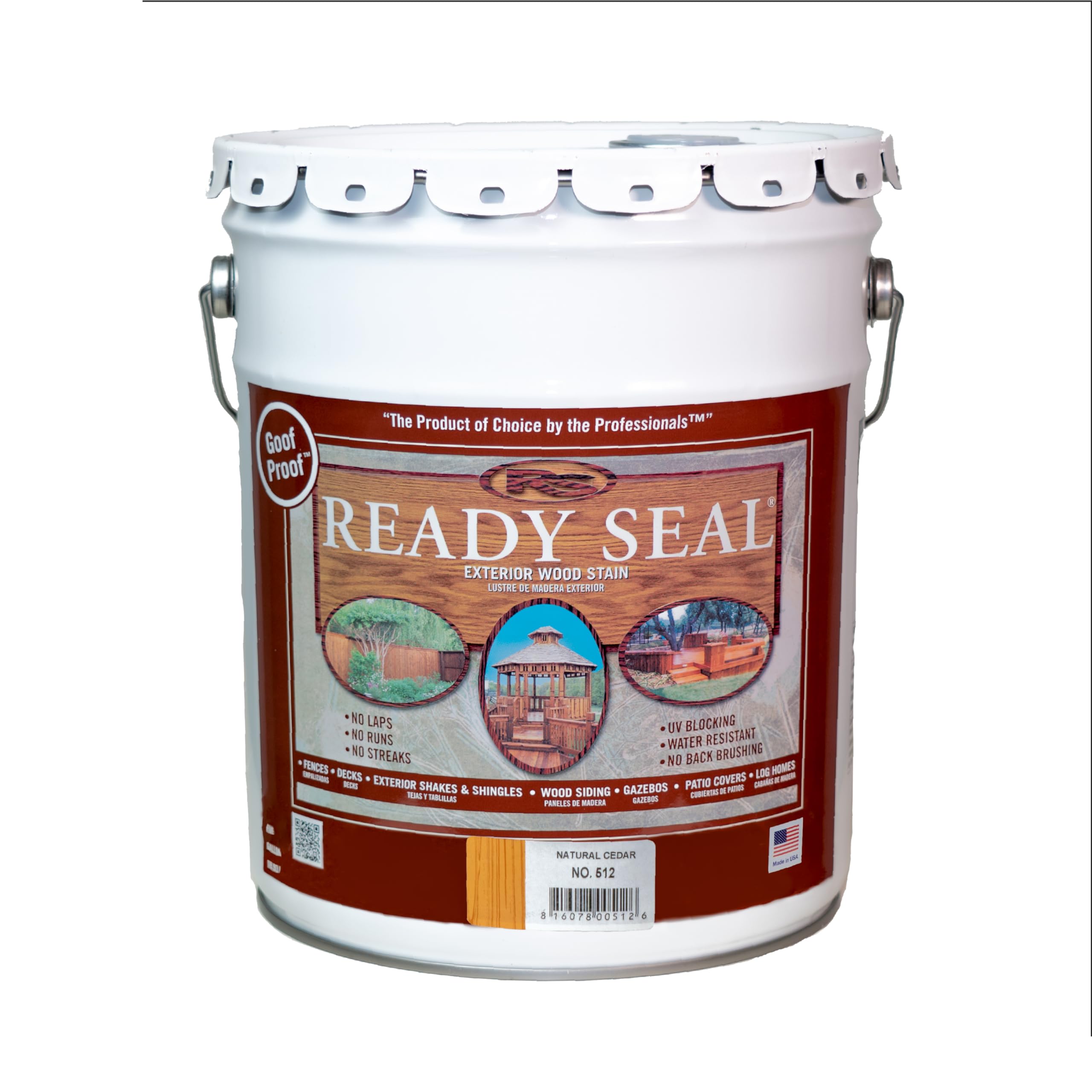
Ready Seal 512 Natural Cedar

92 /100
Kirk Score Outstanding
Color
Natural Cedar
Opacity
Semi-transparent
Coverage
625 sq. ft. per 5-gallon pail
Application
Sprayer, roller, or brush; no back brushing
Check Details on Amazon

Pros

  • Blends without back brushing or wet edges
  • Rain-ready within minutes of application
  • Works with sprayer, roller, or brush
  • Semi-transparent finish shows the grain

Cons

  • Large pail is a big upfront commitment

The phrase 'no back brushing' is the reason this pail sits at the top of our list. On a full deck, the hard part is not opening the can; it is keeping a wet edge and blending each pass before the stain sets. Ready Seal is built to avoid laps, runs, and streaks without that race, and we found that forgiving behavior is what makes it the easiest oil-based stain here to recommend to someone staining a deck for the first time.

The formula is built for a flexible weather window: it can go on in direct sunlight, and the label allows rain within minutes of application. We paid attention to that because weather is the variable that ruins more deck-staining weekends than anything else. Spray, roll, or brush it on and let it blend; the flat, semi-transparent Natural Cedar finish shows grain rather than hiding it.

Coverage is listed at 625 square feet per pail, which is the number to measure against your deck; dry boards can pull it short. Natural Cedar is a warm, semi-transparent tone, and it can lean orange on some wood, so brush out a test board before the first full pass. If that color works, the forgiving application and fast rain readiness are the combination we want on a general-purpose deck.

Bottom line: Ready Seal 512 is the oil-based stain we recommend first for most wood decks: it blends without back brushing, takes rain quickly, and warms the wood in Natural Cedar.

Check Latest Price
#02

Best for Hardwood Decks

DeckWise Ipe Oil

92 /100
Kirk Score Outstanding
Opacity
Semi-transparent
Coverage
250 sq ft
Container
1-gallon can
Wood Compatibility
Ipe, Tigerwood, Cumaru
Check Details on Amazon

Pros

  • Penetrates dense exotic hardwoods
  • UV barrier for hardwood decks
  • Natural finish keeps grain visible

Cons

  • Not available in parts of California

Dense hardwood decks are their own category. Ipe, tigerwood, and cumaru are hard, resin-rich, and often too tight-grained for a general deck stain to do much more than sit on the surface. DeckWise Ipe Oil is an oil-based, semi-transparent finish built for that kind of wood, with a UV barrier and a thin consistency meant to penetrate rather than build a film. If your deck is softwood, this is more specialized than you need; if it is ipe, the specificity is the point.

We reach for this one when the wood is the expensive part of the project. The 250-square-foot coverage per gallon gives you a sane way to budget, and the natural finish leaves grain and depth visible instead of laying down a film. The tint is the part to sample: on pale hardwood it can shift the color more than you expect, so brush a test board and let it dry.

A large deck takes more than one gallon, so buy your cans together and keep a wet edge across full boards. The oil is easy to apply and soaks in rather than sitting on top, which is what you want from a hardwood finish; a surface film is the thing that eventually peels. For ipe and cumaru, this is the one we choose when the wood itself is the feature.

Bottom line: DeckWise Ipe Oil is the specialist for ipe, tigerwood, and cumaru: a penetrating oil that enriches dense hardwood without leaving a film.

Check Latest Price
#03

Best for Mildew-Prone Decks

TWP 101 Pro-Series Cedartone

90 /100
Kirk Score Outstanding
Color
Cedartone
Opacity
Semi-solid
Coverage
Up to 300 sq. ft. per gallon
Protection
Mildew resistant and water repellent
Check Details on Amazon

Pros

  • Mildew-resistant surface for shaded decks
  • Oil-based water repellency
  • Brush, roller, or sprayer application

Cons

  • Semi-solid finish hides more grain
  • Coverage can fall short on dry wood

A deck that stays shaded is a deck that grows mildew, and that is the problem TWP 101 is built to handle. The oil-based formula is designed to produce a mildew-resistant surface and repel water, so it does more than add color. We recommend it for north-facing decks, tree-covered yards, and any boards that stay damp longer than the rest of the yard.

The listed coverage is up to 300 square feet per gallon, and Cedartone lays down a deep, warm brown. The semi-solid opacity is the biggest difference from our semi-transparent picks: it gives the deck a more uniform color and covers more of the wood's natural variation. Brush, roll, or spray it on; the oil soaks into the fibers rather than forming a film.

We paid attention to the wet edge, because a semi-solid stain can go on unevenly if a pass starts to set before you blend it. Keep a brush or sprayer moving, and plan for a second coat on the driest sections. That is normal for an oil-based stain, and the mildew-resistant surface is the payoff on a shaded deck.

Bottom line: For a shaded or damp-prone deck, TWP 101's mildew-resistant, oil-based protection is the reason we recommend it ahead of prettier but less defensive finishes.

Check Latest Price
#04

Best Budget Pick

Cabot Australian Timber Oil

89 /100
Kirk Score Excellent
Color
Honey Teak
Finish
Translucent oil
Coverage
400-600 square feet
Wood Type
Dense, resin-rich woods
Check Details on Amazon

Pros

  • Wide 400-600 sq ft coverage
  • Penetrating oil keeps grain visible
  • Easy brush, roller, or sprayer application

Cons

  • Cans can arrive dented or leaking

The 400-to-600-square-foot coverage on a gallon of Cabot Australian Timber Oil is the number that makes this a budget pick rather than just a cheap one. It is a penetrating oil blend for dense, resin-rich wood, and it goes on translucent, so the grain stays visible. For a big deck on a tight budget, that combination is more useful than a thicker stain that needs more product.

We found the oil easy to work with: it goes on with a brush, roller, or sprayer, and it does not build a film that can peel later. Honey Teak is a warm brown that looks especially good on mahogany and cedar, and the translucent finish is forgiving of uneven board color. A single coat can refresh a faded deck; a second coat deepens the color on dry wood.

The catch is longevity. This is a penetrating oil, not a long-lived semi-solid stain, and exposed boards can lighten within a season; plan on a yearly touch-up in the sun. For a rental, a quick sale, or a deck you are happy to refresh, that maintenance is a fair trade for the low entry cost and wide coverage.

Bottom line: Cabot Australian Timber Oil is our budget choice for a deck that needs a fast, grain-showing refresh, provided you accept a yearly touch-up in exposed spots.

Check Latest Price

How We Tested Oil-Based Deck Stains

We built the shortlist from spec sheets and a long read through customer reviews, filtering for penetrating semi-transparent oils that claim water repellency and no primer, then narrowed to 12 that spanned the price and formulation range. Each one got a labeled test patch on real decks — a new pressure-treated pine deck, a weathered cedar one, and a hardwood section — so we could compare them side by side under the same weather.

Application came first. I laid each stain down with a pad and with a sprayer, timed a single coat across a 100-square-foot section, and deliberately over-applied one board to see whether the product pooled, streaked, or left lap marks — the goof-proofing claim holds up on some and is pure marketing on others. I tracked how long each stayed workable before going tacky, and how easily tools, drips, and overspray cleaned up afterward, both with soap and water and with a solvent.

Color and appearance we judged in flat daylight, noting whether the grain still read through the pigment and whether the tone shifted in the first two weeks. Then the weather did the rest: eight months of sun, a handful of storms that flooded the low corner of the cedar deck, and a timed hose test on every patch to see whether water beaded or soaked straight in. We checked the north-facing boards for mildew, and logged how the same stain behaved on thirsty, weathered wood versus new boards, since wood condition changes the outcome more than most shoppers expect.

How to Choose an Oil-Based Deck Stain

Start with the wood, not the color chip

We start with the wood species, not the color chip. A general stain-sealer such as Ready Seal is built for forgiving coverage on common decking; a dense hardwood like ipe or cumaru needs a thinner oil that can penetrate, which is why DeckWise Ipe Oil is formulated for those species. Old, dry boards pull any stain deeper and cover less, so test a spare board or a hidden section before you buy the full amount. Oil-based products also fall under local VOC rules, so confirm the formula ships to your area.

Choose the opacity you can live with

Opacity is the choice you see every day. A semi-transparent stain keeps grain and board-to-board variation visible; a semi-solid like TWP 101 lays down more uniform color and hides more of the wood's natural streaks. Neither is more protective by itself, but a heavier pigment can be more forgiving of an uneven old deck. If you want the wood to look like wood, stay semi-transparent. If you want to even out a patchy surface, go semi-solid. Do not use opacity to solve a preparation problem; it will not hide failing wood.

Do the coverage math before you choose a container

Coverage figures are a starting point, not a guarantee. A five-gallon pail and a one-gallon can are not directly comparable, so compare cost per square foot for your deck. The listed numbers vary widely: DeckWise says 250 square feet per gallon, Cabot 400-600 square feet per gallon, and Ready Seal 625 square feet per five-gallon pail. Dry, porous boards can pull any of them short. Measure the deck, subtract railings and steps, and buy enough for a second pass on the thirstiest boards.

Pick your weather window

Oil-based stains need dry wood, but they differ in how much weather they tolerate during application. We treat Ready Seal as the flexible-weather option: its label allows application in direct sunlight and lists rain within minutes as acceptable. For TWP 101 and Cabot, plan on a conventional dry window and keep an eye on the forecast. Humidity and shade slow drying; direct sun can make a dark stain tacky too fast. The label's temperature and recoat instructions beat a general rule of thumb.

Decide how much maintenance you will actually do

Penetrating oils are easy to recoat, but they can fade in strong sun; Cabot Australian Timber Oil is the one here where a yearly touch-up on exposed boards is the realistic expectation. Semi-solid stains such as TWP 101 are built for longer intervals, and a mildew-resistant surface helps in shade. We put more weight on the recoat cycle than on a single-season color result. The honest question is whether you will clean and recoat when the color starts to thin. If the answer is no, choose the more protective finish up front.

Frequently Asked Questions

Final Verdict

Ready Seal 512 is the oil-based deck stain we recommend for most wood decks. The no-back-brushing application removes the most common way a DIY stain job goes wrong, and the fast rain readiness gives you more room to work around the weather. Natural Cedar is warm rather than neutral, so test a board first; if the color fits, this is the one to buy.

For dense ipe, tigerwood, or cumaru, DeckWise Ipe Oil is the better specialist because it is built to penetrate hard, resin-rich wood rather than sit on top. On a shaded deck that fights moisture, TWP 101's mildew-resistant finish is the more protective choice.