Best Overall
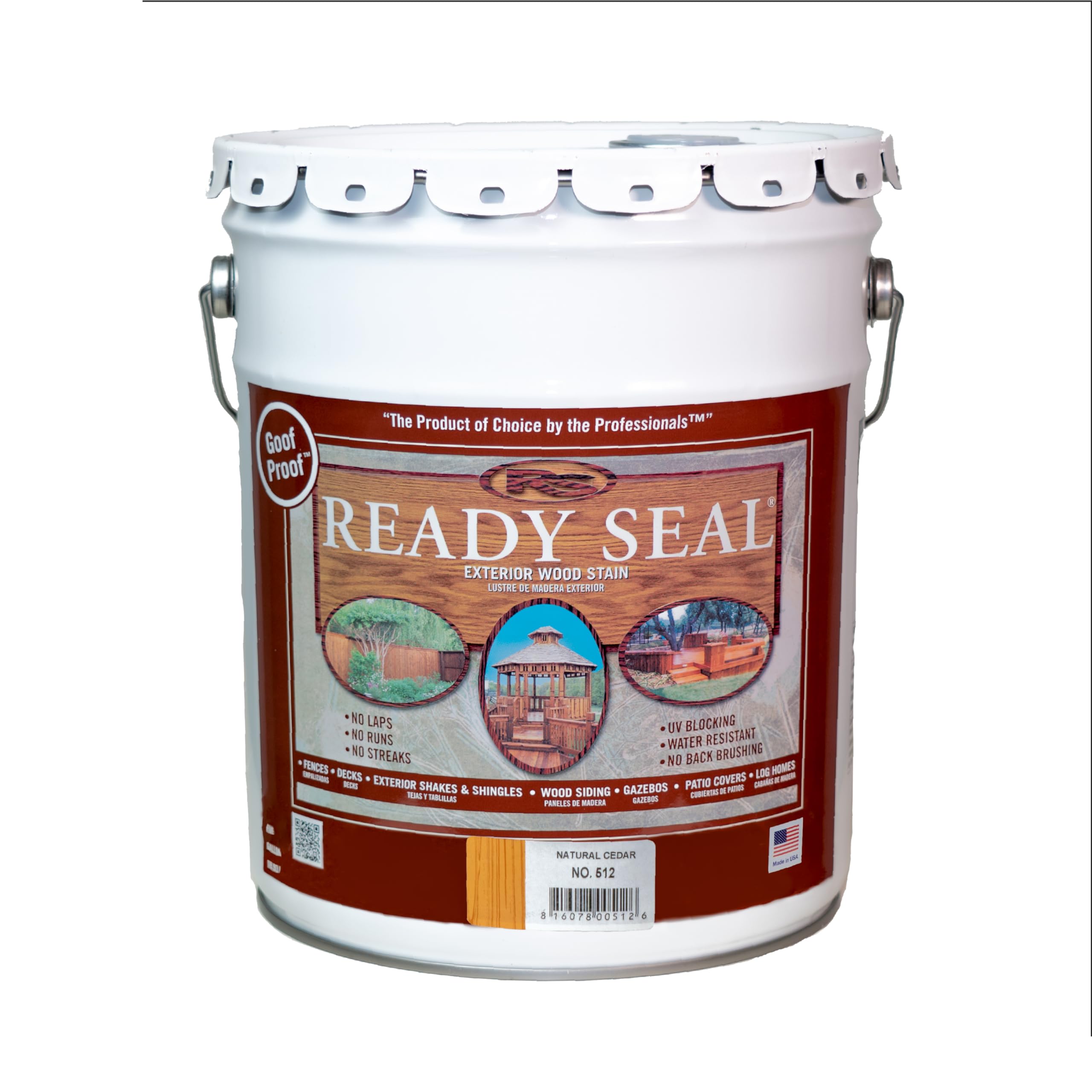
Ready Seal 512 Wood Stain & Sealer
- Base
- Oil-based
- Size
- 5 gallons
- Coverage
- 625 sq. ft. per 5-gallon pail
- Recoat Prep
- No sanding or stripping required
Pros
- No wet edge to chase or back brushing
- Takes rain within minutes of application
- Recoat needs no sanding or stripping
- One five-gallon pail keeps a single batch
Cons
- Natural Cedar can dry more orange than the swatch
- Rated 625 sq. ft. per pail, so bigger decks need two
Lap marks are how a semi-transparent deck job goes wrong. You stain a run of boards, stop to move a hose, and the next run meets a dried edge — the overlap shows as a dark stripe that nothing short of sanding takes out. Ready Seal is built around removing that risk: no wet line to maintain, no back brushing, and a coat that blends into itself as it goes down. That single property is what separates a deck that looks sprayed-on from one that looks home-done, and it's why this is the pail we recommend first.
The rest is oil-based behavior. It goes on in direct sun and across a wide temperature range, and it takes rain within minutes of application — more slack than a water-based coating gives you on a changeable afternoon. What you trade for that is cleanup: brushes, trays, and drips want mineral spirits rather than a garden hose, and the tools need attention before the job is over instead of the next morning.
Color needs planning. Natural Cedar is a warm reddish brown with amber in it, and on pale new cedar or pressure-treated pine it pulls more orange than the name suggests, so a spare board or the back of a step is the place to find out which way it goes on your wood. The upside of the oil is how it ages: it fades rather than peels, which makes a refresh a wash and a coat, and the recoat itself needs no sanding or stripping — the line in the description that decides this for a lot of people.
What clinches it is the pail. Five gallons is one batch, and a deck stained out of a single container has no seam where the tint changes; buy the pail instead of five singles and that problem doesn't exist. A flat finish keeps the grain readable, the container size matches the size of the job, and the coat is genuinely hard to ruin. For a weathered deck and a first attempt, that's the combination we want in someone's hands.
Bottom line: For a first-time or one-person deck job, this is the stain we recommend: the coat blends its own edges, so the finish looks sprayed-on even when it isn't.
Check Latest Price