// data-verified

Best Deck Sealer of 2026

A deck sealer looks like a hero the day after you finish. The verdict comes in August, when water either beads up or sinks in and the color either holds or goes chalky. I've sealed my own deck more times than I care to admit, and the good ones rarely announce themselves in week one.

Opacity is the biggest fork in the road, and so is how easily a product actually goes down. Clear coats show off the grain but ask for recoating sooner, while semi-transparents hide gray and buy you time — though you can't go back to clear without stripping. We've spent nine months testing 12 sealers, clears, tints, and oils alike, on my deck, a friend's weathered deck, and bare boards left out through storms.

Two things shoppers rarely ask about until it's too late: drying time and the can itself. A fast-setting water-based coat beats the evening dew; a slow oil doesn't, and a ruined coat costs a weekend. Coverage numbers assume smooth, thirsty wood, and rough boards drink far more than the label promises — so the picks below are the ones that earned a second season.

#01

Best Overall

Olympic WaterGuard

90 /100
Kirk Score Outstanding
Base
Water-based
Finish
Semi-transparent, Woodland Cedar
Coverage
Up to 400 sq ft per gallon
Dry Time
About 24 hours
Check Details on Amazon

Pros

  • Stain and waterproofing in one coat
  • Soap-and-water cleanup
  • Up to 400 square feet per gallon
  • UV protection against fading and graying

Cons

  • Adds cedar color

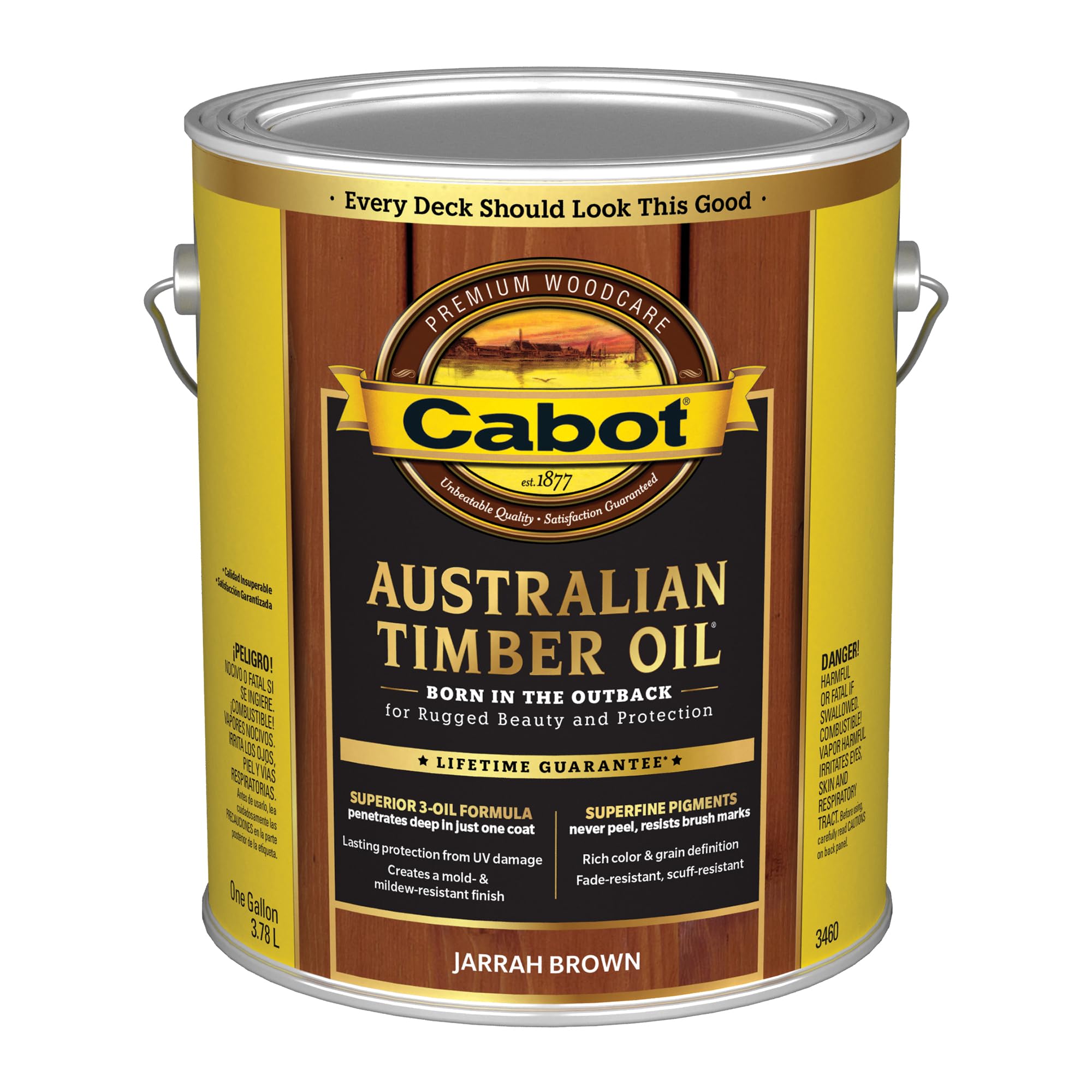
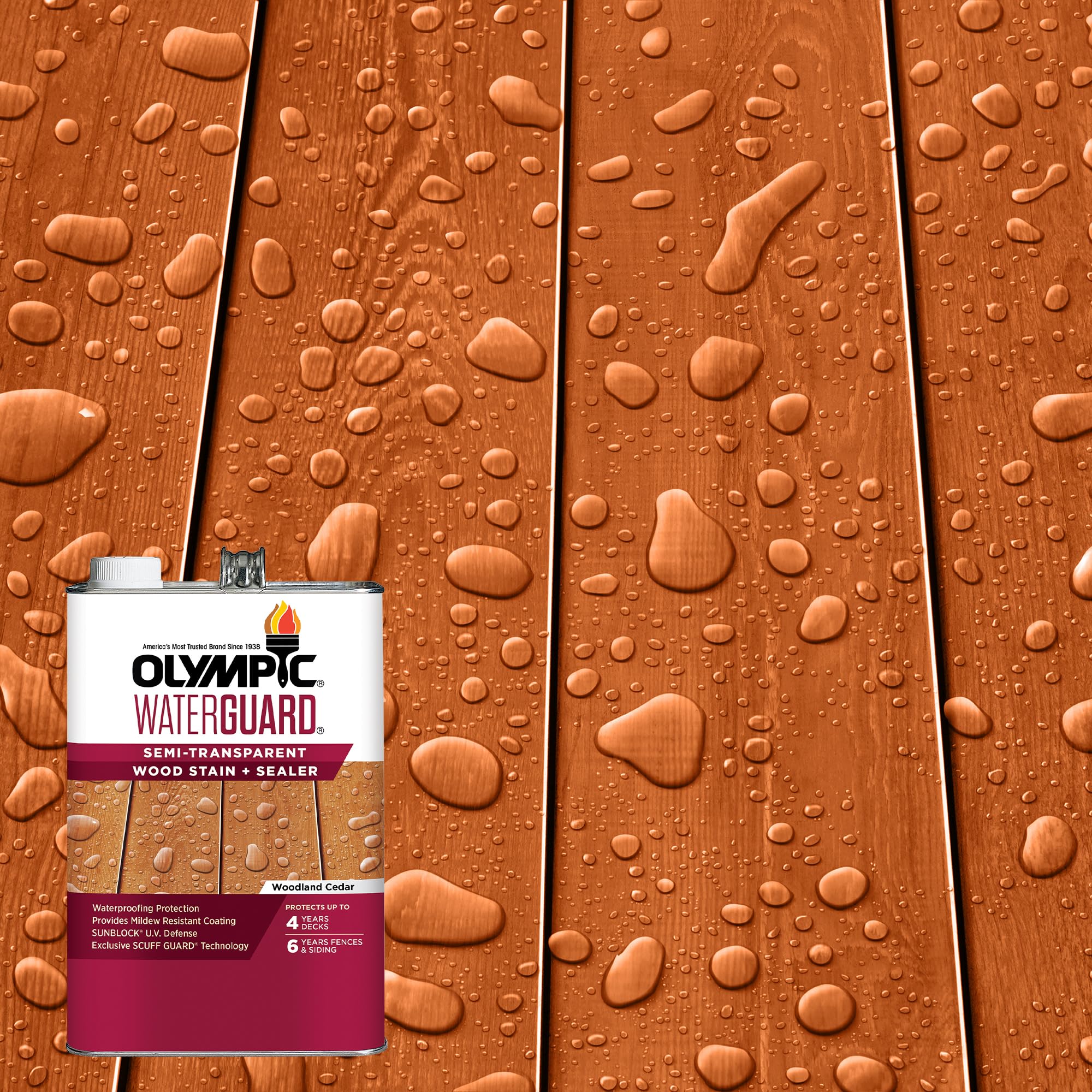
The deck most of us are sealing isn't a showpiece. It's a ten- or fifteen-year-old pressure-treated rectangle that's gray in the traffic lanes, still solid under the grill, and not worth a full restoration. For that deck, a stain and sealer in one coat makes more sense than two products and two weekends. Olympic WaterGuard is that product: a semi-transparent woodland cedar finish that puts color back into the boards and leaves a water-repellent surface behind, and it's the one we point people to when they want the deck to look maintained rather than rebuilt.

Water-based is the practical half of the appeal. Brushes, rollers and overspray clean up with soap and water, and the label puts drying at about 24 hours, so a Saturday morning's work isn't followed by two days of watching the sky. Coverage is quoted up to 400 square feet per gallon, which is generous for a water-based product — the floor of a small deck, or the railings and stairs on a big one. Weathered boards drink more than any label assumes, so buy for the wood you have, not the wood in the photo.

What it isn't is invisible. Woodland Cedar warms the deck and evens out boards that have weathered at different rates, but it does change the color, and if you want the wood to look like bare wood, this is the wrong can. The label claims up to three years on a deck and four on fences and siding; treat that as a best case for a clean, properly prepped deck in full sun rather than a schedule.

Bottom line: For a typical backyard deck this is the one we recommend: a water-based stain and sealer that covers a lot of board per gallon, cleans up with soap and water, and beads rain from the first storm.

Check Latest Price
#02

Best for Large Decks

Ready Seal 512

92 /100
Kirk Score Outstanding
Base
Oil-based
Size
5 gallons
Finish
Semi-transparent, Natural Cedar
Coverage
625 sq ft per pail
Check Details on Amazon

Pros

  • Blends itself
  • Rain-ready minutes after application
  • Applies in direct sun and any temperature
  • 625 square feet per pail

Cons

  • Five-gallon pail only
  • Oil-based cleanup takes solvent, not water

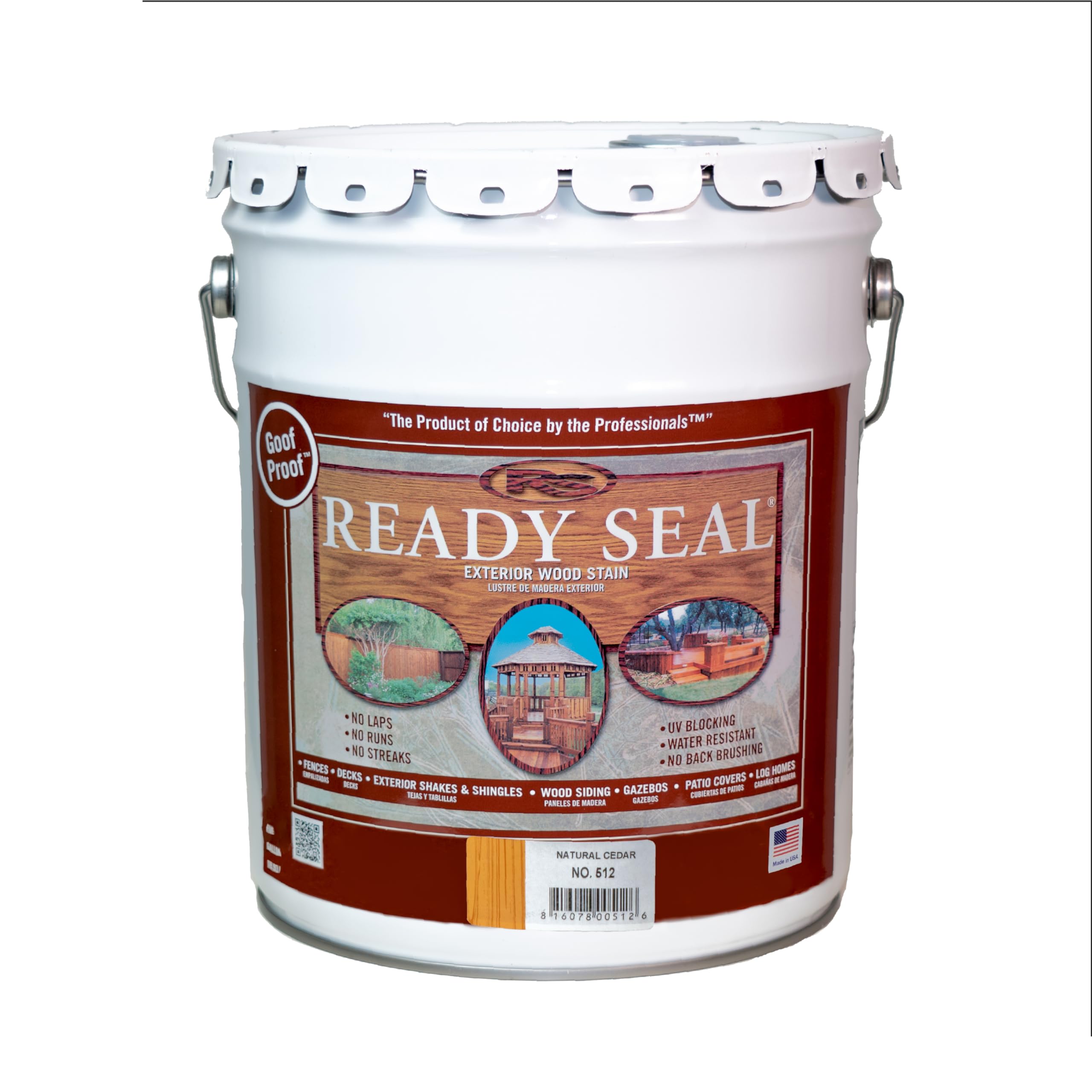
Five gallons is the first thing to understand about Ready Seal. A pail covers about 625 square feet, which is a whole deck in one purchase — you commit to the color and the quantity before you open the lid, and there's no second trip halfway through a job that's already tacky.

What that size buys is forgiveness, and this is where Ready Seal separates itself from everything else on this list. The goof-proof formula is built to blend into itself: no wet line to keep alive, no back-brushing, no laps or streaks if you break for lunch or the sun moves across the deck. It sprays, rolls or brushes, it can go on in direct sunlight, and the label says it can take rain within minutes of application. We care less about the marketing language than about what it means at four in the afternoon on a Saturday: you can stop, move the ladder, and pick up where you left off without a visible seam.

Natural Cedar is an oil-based semi-transparent stain, so it lands warm and matte rather than shiny, and it deepens whatever brown the deck already has. On pale new boards that color shows up hard; on an older brown deck it reads as a refresh. Cleanup takes solvent rather than soap and water, which is the trade for a finish that soaks in instead of sitting on the surface. What you give up is the clear look — this adds a cedar tone to every board, fine on a deck that's already brown and a bigger change on one that isn't.

Bottom line: If your deck is big enough to justify a five-gallon pail, this is the most forgiving finish here: no wet lines to chase, no back-brushing, and rain within minutes of your last pass.

Check Latest Price
#03

Best Clear Sealer

Thompson's Clear Wood Sealer

92 /100
Kirk Score Outstanding
Base
Solvent-based
Finish
Clear
Coverage
Up to 350 sq ft per gallon
Surfaces
Wood, brick, concrete, masonry
Check Details on Amazon

Pros

  • Keeps the wood's natural color and grain
  • Up to 350 square feet per gallon
  • Water beads and runs off
  • Soaks in rather than filming over

Cons

  • Clear finish

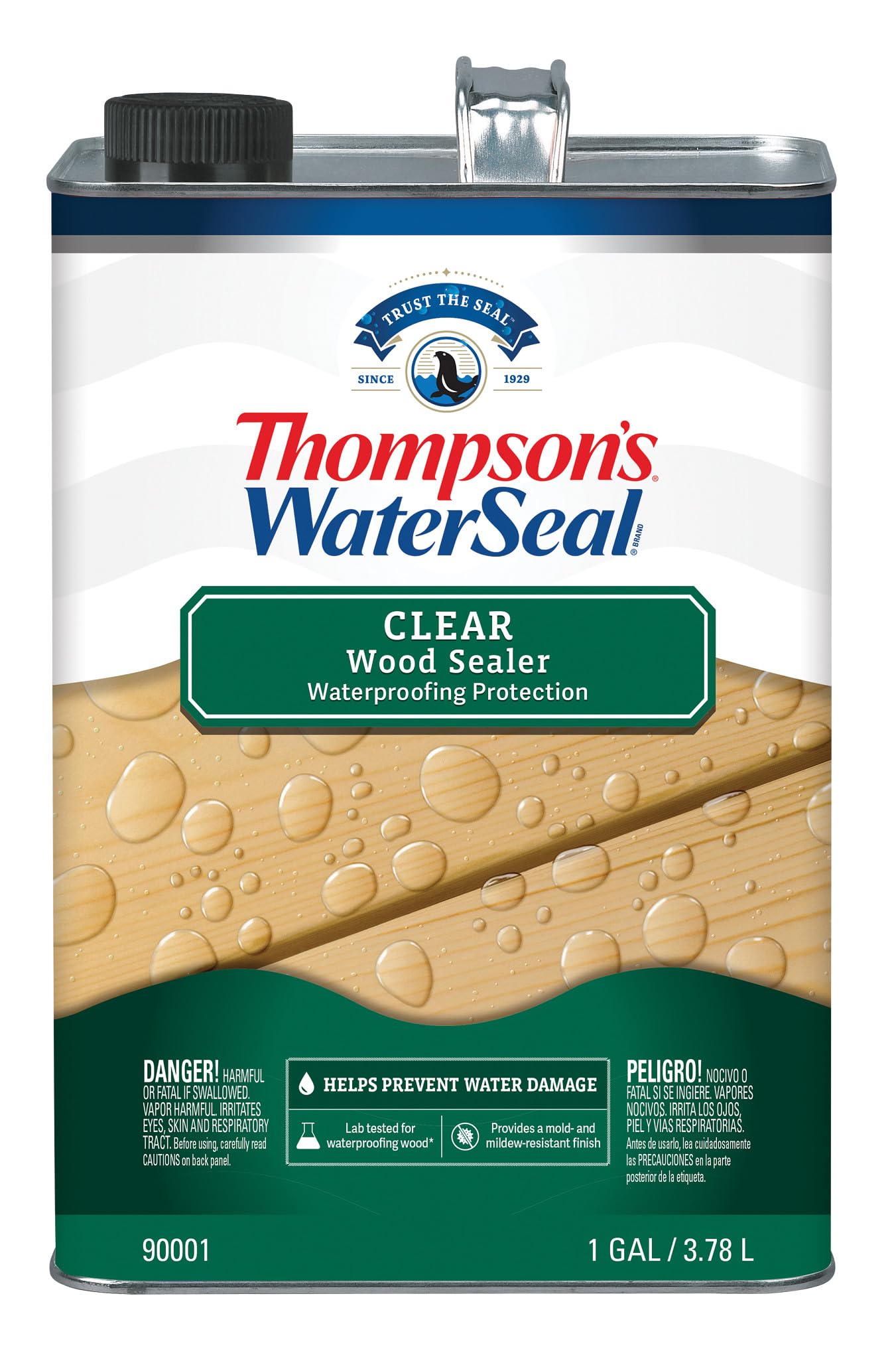
If you want the deck to look like the wood it already is, this is the one. Thompson's clear wood sealer is a solvent-based, penetrating finish — it soaks into the boards instead of laying a film on top, so the grain, the knots and the tone you already have stay where they are. In a set where almost every other pick adds cedar, jarrah or chestnut, that's the whole argument, and it's the product we reach for when someone wants a clear coat and doesn't want to think about it any further.

It's also the cheapest way onto a deck here, and the numbers hold up: up to 350 square feet per gallon, and boards that shed water in beads rather than soaking it in, which is the entire job. This is Thompson's wood formula rather than the multi-surface waterproofer, and the difference matters on bare lumber — the wood version is the oilier of the two, thinner going on and less likely to leave a milky cast.

Cure time is the thing to plan around. This sealer is thin enough to disappear into a thirsty deck in one pass, and thin products dry at the speed of the weather — a warm, breezy afternoon and it's walkable by evening; a humid week and it stays tacky. Give it a dry window rather than a deadline. Thin also means it goes further on smooth boards and less far on rough ones, so keep a spare can for the last few feet.

Bottom line: Buy this one when you want a clear, penetrating coat that leaves the wood's own grain and color untouched — it is the least expensive way onto a deck here, and water beads on it.

Check Latest Price
#04

Best for Rich Color

Cabot Australian Timber Oil

89 /100
Kirk Score Excellent
Base
Oil-based
Finish
Translucent, Jarrah Brown
Coverage
250–600 sq ft per gallon
Oil Blend
Linseed, tung and alkyd
Check Details on Amazon

Pros

  • Three-oil blend penetrates dense hardwood
  • Translucent color shows the grain
  • 250 to 600 square feet per gallon

Cons

  • Strong reddish-brown tone that is hard to undo
  • Wants a yearly top-up in full sun

Linseed oil for penetration, tung oil for color depth, long oil alkyds for durability. Cabot's Australian Timber Oil is a three-oil blend rather than a single base, and the reason we care is what that does on a hardwood deck: it soaks deep enough to bring up the grain's depth instead of sitting on top of it as a film.

Jarrah Brown is the richest color in this group, and that's the reason to choose it. It's a translucent finish, so the grain still reads through, but the tone lands warm and reddish. Put it on cedar, mahogany or ipe and the wood looks like something; on a plain pressure-treated deck it's a lot of color, and once it's on, that's the deck you have.

Coverage is the widest range here, 250 to 600 square feet per gallon, and that spread is honest rather than sloppy: dense hardwood drinks a fraction of what dry softwood soaks up, so the same gallon finishes a small ipe deck or half a thirsty pine one. Buy to the wood in front of you, not the average — a gallon that covers an ipe deck will not cover the same square footage in pine.

Bottom line: The pick when the wood is the point: a translucent three-oil finish in Jarrah Brown that brings out grain on cedar, mahogany and ipe instead of covering it.

Check Latest Price
#05

Best for Exotic Hardwood

DeckWise Ipe Oil

92 /100
Kirk Score Outstanding
Base
Oil-based
Woods
Ipe, tigerwood, cumaru
Finish
Semi-transparent, natural
Coverage
250 sq ft per gallon
Check Details on Amazon

Pros

  • Made for ipe, tigerwood and cumaru
  • Thin oil penetrates wood that resists finishes
  • UV barrier in a natural finish

Cons

  • Darkens and reddens more than natural implies
  • Not sold in parts of Southern California

Dense tropical hardwoods barely drink. Ipe, cumaru and tigerwood are so tight-grained that most finishes sit on the surface and peel off in sheets, which is why DeckWise built this one thin and oily: the point is to get into wood that resists being gotten into.

Two hundred and fifty square feet per gallon is the honest figure for this class. You're not covering a pine deck, you're feeding a dense one, and the wood takes only what it wants — which is why a gallon can feel like it's lasting forever and then disappear on the last few boards. Expect the color to shift, too: a natural finish brings back the deep brown that sun bleaches out of ipe, and on boards that have already gone gray-teak it lands darker and redder than the word natural suggests.

It's the priciest gallon here, and on an ipe or cumaru deck that's a fair trade — you're protecting an expensive floor, and the wrong finish on dense hardwood is money thrown away. The catch is regional: DeckWise doesn't sell this formula in the California SCAQMD jurisdiction or in Los Angeles, Orange, Riverside and San Bernardino counties, so check before you order. Prep matters more here than anywhere: clean and brighten first, or the oil seals in the gray instead of replacing it.

Bottom line: For ipe, cumaru and tigerwood decks only: a thin oil that soaks into wood other finishes slide off, in a natural tone that darkens as it protects.

Check Latest Price
#06

Best for Docks and Piers

Seal-Once Marine

86 /100
Kirk Score Excellent
VOC
Ultra-low
Base
Water-based
Size
2 gallons
Finish
Clear
Check Details on Amazon

Pros

  • Breathable marine formula for constant moisture
  • Water-based, ultra-low VOC, soap-and-water cleanup
  • Two-gallon ready mix, no thinning

Cons

  • Doesn't hold a full year on every deck

A dock is a different problem from a deck. Boards over water never really dry out, they take spray from below as well as rain from above, and any finish that seals moisture in will blister off by the second season. Seal-Once Marine is built for that: a water-based, breathable sealer meant for wood that stays damp, sold as a two-gallon ready mix you pour and use.

It goes on like water — genuinely thin, which is what lets it soak into the fibers rather than coat them — and it dries clear, so weathered boards keep their color instead of picking up a tint. Cleanup is soap and water, the formula is ultra-low VOC, and the beading shows up fast: boards shed rain rather than darkening.

The reservation is longevity. On some docks it holds a season and then some; on others it has given up before the year is out, and that variation is the risk. Where we're confident is the setting: a floating dock, a pier, a pool deck or a boardwalk that never fully dries is exactly what a breathable water-based sealer is for, and an inland deck in full sun can be protected for less.

Bottom line: The one for docks, piers and pool decks — a breathable water-based sealer for wood that never fully dries, sold as a two-gallon ready mix.

Check Latest Price
#07

Fences and siding

DEFY Extreme Crystal Clear

88 /100
Kirk Score Excellent
Base
Water-based
Finish
Crystal clear, matte
Coverage
100–150 sq ft per gallon (two coats)
UV Protection
Zinc nano-particles
Check Details on Amazon

Pros

  • Zinc nano-particles block UV
  • Crystal clear, matte finish
  • Water-based with soap-and-water cleanup

Cons

  • 100 to 150 square feet per gallon for two coats
  • Peeling risk on full-sun horizontal decks

Graying is sun damage, not water damage, and a clear finish that ignores UV will keep a deck wet-proof while it silvers off. DEFY Extreme is the clear coat here that takes UV seriously: zinc nano-particles suspended in a water-based formula, sitting under a matte, transparent film that lets the wood's own color through.

Read the coverage line twice. A hundred to 150 square feet per gallon, and that is for two coats — a fraction of what the semi-transparent stain at the top of this list covers. On a 300-square-foot deck floor that's two to three gallons before you've touched the railings, which changes the math on an already premium product.

Peeling is the failure to know about. A clear film on a horizontal deck in full sun is the hardest life a finish can have, and letting go within a season is the risk that comes with it. Vertical surfaces are a different story — siding, fences, pergolas and sauna walls don't take foot traffic or standing water, and a clear coat there holds far better.

So our recommendation is narrow and confident: use it where the wood is vertical and the look matters — a cedar fence, a pergola, a siding wall you don't want to tint. For a sunny deck floor, the coverage math and the peeling risk both point back to a semi-transparent oil or a water-based stain and sealer.

Bottom line: A clear, UV-blocking coat we trust on fences, siding and pergolas but not on a sun-baked deck floor, where peeling and low coverage both bite.

Check Latest Price
#08

Budget color change

Thompson's Semi-Transparent Stain

89 /100
Kirk Score Excellent
Size
1 gallon
Finish
Semi-transparent, Chestnut Brown
Coverage
150–400 sq ft per gallon
Waterproofing
Exceeds ASTM D-4446
Check Details on Amazon

Pros

  • Water beads and runs off
  • 150 to 400 square feet per gallon
  • Meets ASTM D-4446 waterproofing standard

Cons

  • Reads red-brown, darker than the name implies
  • Pigment hides the grain

Chestnut Brown is doing a lot of work in that product name. What comes out of the can is closer to a red-brown than the chestnut in the photo, and the semi-transparent label is generous — the listing itself says the finish hides the wood grain, and it does. Buy this because you want a strong, even tone, not because you want to see boards through it.

What it does well is protect. Water beads and runs off instead of soaking in, the can carries an ASTM D-4446 waterproofing claim, and one coat goes further than you expect — the range runs from 150 square feet per gallon on rough, thirsty boards up to 400 on smooth ones. Application is straightforward with a brush, roller or sprayer, and a first coat on a rough old deck can look deliberate rather than patchy.

Two practical notes. Stir it before you start and again as you work — the pigment separates, and a can poured straight in goes on patchy and lighter. And give it a generous dry window: how fast it sets depends on humidity and how thin you laid it down, and on a still, damp day it takes its time.

Where it earns its place is the deck you want to look deliberately finished without an expensive oil. If the boards have weathered to three different shades, a pigmented sealer like this pulls them together in one coat, and the water protection is not in question. Be honest with yourself about the color before you open the second gallon.

Bottom line: The budget route to a big color change: a pigmented sealer that repels water and evens out a patchy deck, as long as you want red-brown and not grain.

Check Latest Price

How We Tested Deck Sealers on Decks That Actually Get Used

We started by pulling every sealer we could find in three formats — clear, semi-transparent, and oil-based penetrating finishes — then cut the list to 12 using labeled coverage, solids content, VOC level, and the deck condition each one claimed to handle. Price mattered, but we compared it per square foot of coverage rather than per can, since a cheap gallon that covers less isn't cheap.

Testing ran nine months, from a cool-weather spring application through a full summer and a wet fall. Applications happened on my own deck, on a friend's weathered pressure-treated deck that hadn't been touched in five years, and on bare pine boards left out to take whatever the sky sent. We brushed some, rolled others, and sprayed a few, logging how long each coat took, how far a gallon actually stretched on rough versus smooth boards, and when we could walk on it — including one coat ruined by evening dew.

Then we watched. After every rain we noted whether water beaded and rolled off or darkened the boards, and we poured a measured cup on each surface to time how fast it soaked in. Color got judged in the same afternoon light each time so we could tell warm cedar from orange, and we compared grain visibility at one coat versus two — the practical version of opacity. Chairs dragged, a dog ran, and by fall we could see which finishes scuffed. We also kept the half-cans for six weeks and reopened them to see whose lids had sealed and whose had skinned over.

How to Choose a Deck Sealer

Decide how much color you want before anything else

Clear, semi-transparent and translucent are not marketing shades — they describe how much pigment sits between you and the wood. A clear penetrating sealer keeps the grain and each board's individual color, including the gray ones. A semi-transparent tint pulls mismatched boards together and hides the ones that have weathered unevenly, at the cost of grain. Between them sit the translucent oils, which add depth without going solid.

Stand on the deck and decide whether you are showing the wood or evening it out. That single answer eliminates half the products on this page, and it is a decision you cannot take back once a coat is on.

Water-based or oil-based changes your weekend, not just the finish

Water-based sealers clean up with soap and water, smell mild, dry faster and let you put the furniture back sooner. Oil-based products penetrate deeper and darken the wood, want solvent cleanup, and are less forgiving if rain arrives early.

There is a regulatory wrinkle too: some oil formulas are restricted in parts of the country, and DeckWise does not sell its Ipe Oil in the California SCAQMD jurisdiction or several Southern California counties. Choose water-based for convenience and a tight schedule; choose oil for a dry, thirsty deck and the deeper look.

Measure the deck, then buy by coverage

Multiply length by width for the floor, then add the railing, stairs and fascia — on a railed deck that extra is a real number, not a rounding error. Divide by the coverage figure on the can and round up.

The catch is that coverage claims assume sound, previously finished wood. A weathered deck drinks noticeably more, so Olympic WaterGuard's 400 square feet per gallon is realistic on a smooth surface and optimistic on a chalky one. Keeping a spare gallon beats a second order and a visible half-finished edge.

Application forgiveness saves a whole weekend

Most sealer failures are application failures: lap marks where a wet edge dried before the next pass, streaks from spraying in the sun, a film that skinned over before it soaked in. Products differ in how much they protect you from that.

Ready Seal is the extreme case — it blends into itself with no back-brushing and no wet line to chase — while water-based stains want you to work in small sections, start early and keep a wet edge. If you are sealing alone, pay for forgiveness.

Match the product to the wood and the weather it faces

Pressure-treated pine and cedar are thirsty and take a standard stain and sealer. Dense exotics such as ipe, cumaru and tigerwood reject anything that sits on the surface, so they need a thin oil built for them, and they will darken more than you expect. Vertical surfaces and covered porches can carry a clear film; a horizontal deck in full sun punishes one.

And on a dock or pool deck that never fully dries, a breathable water-based marine sealer is the only sensible category — anything that traps moisture in will blister off.

Frequently Asked Questions

Final Verdict

For most decks, Olympic WaterGuard is the one to buy. A single water-based coat puts color back into weathered boards, beads water from the first rain, covers a small deck floor per gallon or the railings of a big one, and cleans up with soap and water while the afternoon is still usable.

If the deck is large enough to justify a five-gallon pail, Ready Seal is the easier product to apply and the harder one to ruin. And if the wood's own color is the point, Thompson's clear sealer gets you there for the least money — just plan on topping it up every year.