// data-verified

Best Cleaners Before Painting of 2026

Paint gets blamed for failures it didn't cause. A wall can look spotless and still carry a film of cooking grease, dust, or old furniture polish — enough to keep primer from gripping, and enough to have you repainting the same hallway two summers from now. Prep is the unglamorous part of a paint job, and it decides how the next five years go.

A good prepaint cleaner strips that invisible layer without leaving a residue of its own, and that second half is where most of them stumble. I've deglossed enough cabinet doors to be skeptical of anything labeled no-rinse, so my team and I spent the past four months putting 14 cleaners — ready-to-use sprays, concentrates, powder, and pre-soaked wipes — to work on greasy kitchen walls, baseboards, and trim. Some cut through cooking grease in one pass; others pushed it around and left a slick film behind. The picks below are the ones a coat of primer could actually hold onto.

#01

Best Overall

Krud Kutter PC326 Prepaint Cleaner

92 /100
Kirk Score Outstanding
Type
No-rinse prepaint cleaner
Rinse
Not required
Surfaces
Painted wood, varnish, metal
Paint Window
10 minutes to 1 week
Check Details on Amazon

Pros

  • No-rinse prepaint step
  • Etches gloss for adhesion
  • Paintable in 10 minutes
  • Spray bottle needs no mixing

Cons

  • Scent is noticeable in tight rooms

A prepaint cleaner earns its place by removing the second step, not adding one. Krud Kutter PC326 is the one we reach for when we want to go from wiping down trim to opening the paint can without a rinse bucket in between. It is a water-based prepaint cleaner and TSP substitute that cleans and etches the surface, and the label lets you paint after 10 minutes—or as long as a week later.

That window matters on a cabinet job. We put it through a cabinet-front prep and a pass over painted trim, and the spray-and-wipe routine kept things moving; there is no mixing, no grit to dissolve, and no waiting for a bucket of TSP to do its work. The etch is the part we care about most on a previously painted surface, because a clean wall that still has gloss can send paint sideways. PC326 is made for that handoff, and it is safe on paints, varnish, lacquer, and polyurethane.

The cleanup is another point in its favor. A no-rinse product leaves less water on drywall and less chance of soaking the edge of a cabinet box. The 32-ounce spray bottle is easy to keep in a prep caddy, and the paint window is generous enough for a weekend project that runs long. For a whole-house prep job, that is a fair exchange for skipping a rinse.

Bottom line: Our default prepaint cleaner: Krud Kutter PC326 lifts grease and smoke without a rinse, so walls and cabinets go from grimy to paintable in one step.

Check Latest Price
#02

Best Heavy-Duty

Savogran TSP Powder

93 /100
Kirk Score Outstanding
Size
1 lb
Type
TSP powder
Formula
Non-sudsing
Surfaces
Cabinets, walls, siding
Check Details on Amazon

Pros

  • Cuts heavy grease and smoke
  • Non-sudsing formula
  • One-pound bag goes far

Cons

  • Requires a thorough rinse before painting

The box is the first surprise. Savogran TSP is a one-pound bag of powder, and it can arrive as a brick rather than a loose powder, so plan to break it up before you mix.

Once it dissolves, it is the heaviest cleaner in this group. We reach for it when kitchen grease, cigarette smoke, or years of grime have soaked into the paint, because TSP cuts through the kind of soil that a ready-to-use spray only moves around. It is non-sudsing, so it rinses cleanly, and a little goes a long way; one bag handles more prep than the size suggests. It is also useful on painted cabinets, dingy walls, and exterior siding, which makes it a good bag to keep for projects beyond a single room.

The catch is that this is old-school chemistry. It is not the product we hand to someone who wants to wipe a wall and start painting in ten minutes; it is the one we choose when the surface is genuinely dirty and we have time to do the prep properly. For a kitchen with a greasy film or a room that smelled of smoke, that strength is the reason we keep a bag on the shelf. We also like that it does not add a perfume to the room; the point is to remove the smell, not cover it.

Bottom line: Keep Savogran TSP for the dirty jobs: it cuts grease and smoke that milder sprays leave behind, and it earns its place on a serious prep job.

Check Latest Price
#03

Best Value Gallon

Zep All-Purpose Degreaser

95 /100
Kirk Score Outstanding
Form
Concentrate
Size
1 gallon
Dilution
Three strengths
Surfaces
Walls, cabinets, floors
Check Details on Amazon

Pros

  • Three dilution levels
  • Gallon covers large prep jobs
  • Cuts grease on walls and cabinets

Cons

  • Can smear heavy stove grease at weaker dilutions

Dilution is the whole point of the Zep gallon. The label gives three strengths—three ounces per 32 ounces of water for light soil, six for medium, and full strength for tough jobs—so one jug can cover a whole house without three different bottles. That is the kind of economy that matters when the prep is the least glamorous part of a repaint.

That range is what makes it useful for a paint-prep bucket. A weak mix is enough for dusty trim and painted doors, and you can step up to full strength for a greasy range hood or the top of a kitchen cabinet. It is a concentrated all-purpose degreaser, not a dedicated prepaint etch, so it cleans but does not dull a glossy finish.

For a small cabinet refresh, a ready-to-use spray is simpler; for a whole-house prep, the gallon is the smarter buy. We keep it for the broad middle of the job, where the surface is dirty but not coated in baked-on grease. The jug is also easy to store and decant into a spray bottle for detail work.

Bottom line: Zep is the value pick for a whole-house prep: a gallon of concentrate gives you three dilution levels, and it handles dusty trim and greasy cabinets without a premium price.

Check Latest Price
#04

Best for Large Projects

Simple Green Pro HD

93 /100
Kirk Score Outstanding
Form
Concentrate
Size
1 gallon
Scent
Unscented
Surfaces
Floors, walls, equipment
Check Details on Amazon

Pros

  • Unscented, low-odor formula
  • Gallon concentrate for large jobs
  • Safe on metal and painted surfaces

Cons

  • Less aggressive than TSP on baked-on grease

Simple Green Pro HD comes in a gallon and is meant to be diluted for floors, walls, equipment, and appliances. The label calls it non-corrosive and professional-grade, and the unscented formula is a change from the perfumed all-purpose cleaners that dominate the shelf. It is a concentrate, so the gallon goes further than the bottle size suggests.

We reach for it on big painted surfaces because it is strong enough for grime but not as aggressive as TSP. On a wall that is dusty and slightly greasy, it does the job without the caustic feel of a phosphate cleaner, and the lack of scent makes it easier to work in a closed hallway. It is also safe on metal, which matters if you are prepping a painted metal door or a piece of furniture with hardware.

The gallon is the other advantage. Diluted for everyday prep, it lasts through a room-by-room repaint, and you are not stopping to buy another trigger spray halfway through. We keep it for the broad middle of a prep job, where the surface is dirty but not a restoration project.

Bottom line: Simple Green Pro HD is the low-odor gallon we choose for walls, trim, and equipment, with enough strength for everyday grime and a formula that is easy to live with.

Check Latest Price
#05

Best for Glossy Cabinets

Heirloom Traditions Deglosser Wipes

92 /100
Kirk Score Outstanding
Form
Pre-moistened wipe
Type
Liquid sandpaper
Count
40 wipes
Surfaces
Painted surfaces, raw wood
Check Details on Amazon

Pros

  • No sanding setup needed
  • Wipes reach detailed profiles
  • Works one door at a time

Cons

  • 40 wipes cover only small projects
  • Gloss removal can be uneven on hard finishes

The cabinet door you do not want to sand is exactly where a wipe earns its keep. Heirloom Traditions Deglosser Surface Prep Wipes are pre-moistened with a liquid sandpaper formula, so you can work a small area without setting up a sanding station. It is also a different product from a cleaner: the wipe is for dulling the finish, not for cutting grease.

The format is the useful part. A wipe gets into the recessed panel, the edge profile, and the corners where a sanding block is awkward, and there is no bottle to tip or rag to rinse. The wipes are wet enough to leave a visible film without dripping, and the textured sheet gives a little bite on a satin finish. We used them on cabinet fronts and trim, and the surface was ready for paint after it dried.

What we appreciate most is the control. You can work one door at a time, let it dry, and see the surface change before you move on. That makes it a comfortable choice for a first cabinet project, where sanding a whole kitchen feels like a commitment. It is also a tidy way to prep a piece of furniture in a spare room, because there is no dust cloud and no electric sander.

Bottom line: Heirloom's wipes make quick work of a glossy vanity or cabinet door: no sanding setup, no bottle, just wipe, let dry, and paint.

Check Latest Price
#06

Best Ready-to-Use Spray

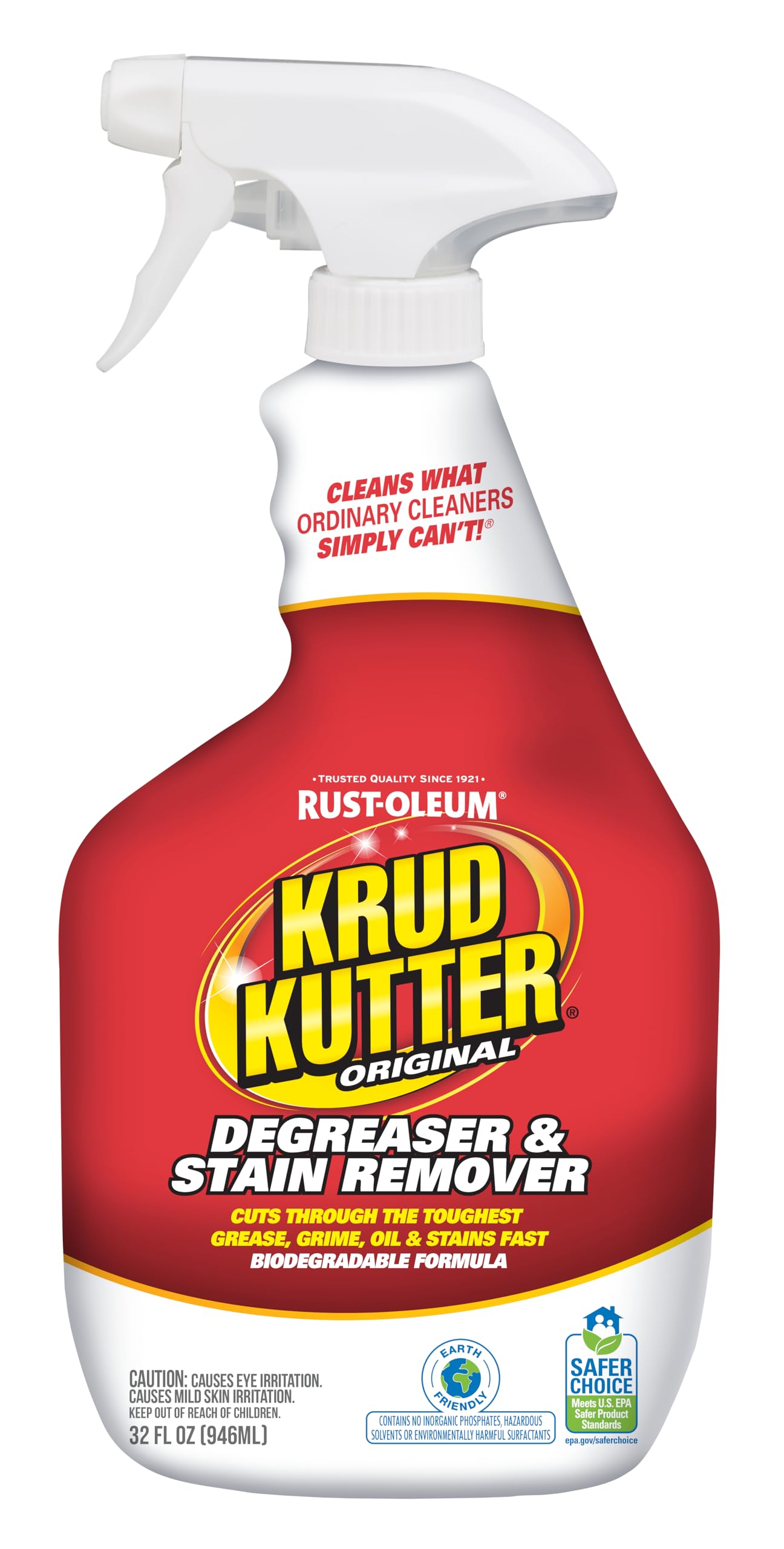
Krud Kutter Original Degreaser

89 /100
Kirk Score Excellent
Form
Ready-to-use spray
Size
32 fluid ounces
Surfaces
Multi-surface
Certification
EPA Safer Choice
Check Details on Amazon

Pros

  • Ready to use, no mixing
  • Cuts grease and wax
  • EPA Safer Choice formula

Cons

  • Not a deglosser for glossy cabinets

A trigger spray is not a glamorous purchase, but it is the one we grab for a quick cabinet wipe-down. Krud Kutter Original is ready to use, cuts grease and wax, and carries an EPA Safer Choice certification, so it is a comfortable choice for indoor prep. The formula is water-based and leaves no residue, which is the main thing you want before paint.

A quick pass on painted cabinet fronts and a greasy range hood showed why the trigger matters. Spray, give it a moment, wipe, and move on; there is no bucket and no dilution math. The spray is also easy to direct at the greasy spot above a stove or the finger marks around a handle, rather than flooding the whole door.

The value question is where we pause. For light kitchen grease and everyday grime, it is a sensible ready-to-use spray. For a whole room of smoke-stained walls, a concentrate or TSP goes further for the money. We keep the trigger bottle for small jobs and spot prep, not for the entire house.

Bottom line: Krud Kutter Original is our quick-draw spray for cabinet grease and light grime, with no mixing and a gentler formula than a heavy-duty TSP mix.

Check Latest Price
#07

Budget kitchen cleanup

La's Totally Awesome Cleaner

92 /100
Kirk Score Outstanding
Form
Spray and refill
Bundle
24 oz spray + 64 oz refill
Surfaces
Counters, walls, tile
Free From
Ammonia, bleach, phosphorus
Check Details on Amazon

Pros

  • Spray plus refill bundle
  • Cuts kitchen grease
  • No ammonia, bleach, or phosphorus

Cons

  • Scent is stronger than expected

The bundle is the pitch: a 24-ounce spray bottle plus a 64-ounce refill. La's Totally Awesome All Purpose Cleaner & Degreaser is a budget-minded way to keep a spray bottle filled for kitchen cabinets, walls, and floors. The refill keeps the spray bottle in rotation instead of sending you back to the store.

It is a true all-purpose cleaner, not a dedicated prepaint etch. The formula is free of ammonia, bleach, and phosphorus, and it cuts kitchen grease well enough for the top of a fridge or the cabinet run above a stove. We like the refill because the spray bottle stays on the job while the jug sits in the pantry, and the spray is easy to aim at the greasy spot above a stove.

On a painted wall, we treat it as a cleaner first and a prep product second. It removes the surface film, but it does not dull gloss, so a high-gloss door still needs a deglosser or a light sand. For a rental kitchen or a quick refresh, that is a fair trade.

We still think the bundle makes sense for a budget-conscious whole-room clean. It is not the product we choose for a formal cabinet repaint, where a dedicated prepaint cleaner or deglosser earns its keep. But for the messy, everyday version of prep—the rental kitchen, the mudroom, the garage shelf—it is easy to justify.

Bottom line: La's Totally Awesome is the budget bundle we keep for kitchen grease and rental-grade prep, with a refill that stretches the spray bottle through a whole clean.

Check Latest Price
#08

Light everyday cleaning

Simple Green All-Purpose Concentrate

94 /100
Kirk Score Outstanding
Form
Concentrate
Size
64 fluid ounces
Scent
Sassafras
Certification
EPA Safer Choice
Check Details on Amazon

Pros

  • EPA Safer Choice certified
  • Mild sassafras scent
  • Dilutes for light cleaning

Cons

  • Bottle is smaller than the photo suggests

The gentler end of prep is where Simple Green's 64-ounce concentrate fits. It is an EPA Safer Choice all-purpose cleaner, and the sassafras scent is mild enough that you can use it on a refrigerator or a painted door without clearing the room. It is also a concentrate, so the bottle dilutes into more cleaner than the size suggests.

We like it for light soil: dust, fingerprints, food splatter, and the general film that builds up on painted walls. Mixed at the weaker end of the label's range, it wipes clean without leaving a streak, and it is safe for fabrics, carpets, floors, and vehicles as well as painted surfaces. That breadth is useful when a prep job moves from the wall to the floor to the car.

It is not a heavy degreaser. On a greasy range hood or a smoke-stained ceiling, it does not have the bite of TSP or a dedicated kitchen degreaser, and you will work harder for the same result. We keep it for the final wipe-down after the heavy cleaning is done, or for a room that is dirty but not coated.

For light prep and everyday cleaning, the concentrate is a good fit. It is the bottle we reach for when the walls are dusty and the cabinets only need a wipe, not when the kitchen has years of grease. That distinction matters more than the dilution ratio on the label.

Bottom line: Simple Green's concentrate is the mild, EPA Safer Choice option for dusty walls and light kitchen film, not for heavy grease or smoke.

Check Latest Price

How We Tested the Best Prepaint Cleaners

We read through customer reviews and spec sheets for more than 40 prepaint cleaners, then narrowed to 14 covering every format sold — ready-to-use sprays, concentrates, powdered TSP, and pre-soaked wipes — across a range of strengths and bottle sizes. The question was less which one is strongest than which is strong enough for the job without damaging the surface underneath. Testing ran four months, mostly on weekends, when the actual painting happened.

The cleaning happened where it always happens: the wall behind the stove, cabinet doors that hadn't been deglossed since the nineties, baseboards, a scuffed mudroom door, and a dusty garage wall. We followed each label's dilution and dwell time, then wiped with a white cloth so we could see exactly how much grime came off and whether it took the finish with it. Greasiness got checked by hand as well as eye — a surface that felt slick or tacky after drying was flagged, no matter what the bottle promised.

Residue was the deciding test. Every cleaned surface got a pass with a damp white rag to see whether a film lifted, and the walls we planned to paint got a patch of primer, checked 24 hours later for beading, crawling, or easy scratching. Scent mattered more than I expected: we worked in a small closed room to judge how fast fumes built up. For value, we diluted concentrates exactly as directed and tracked square footage per bottle, so a gallon jug and a 24-ounce spray could be compared honestly.

A few products were too aggressive for painted trim and a few were too gentle for kitchen grease, which is why the list has range rather than a single winner. The ones that made it are the ones we'd reach for again before cracking open a can of primer.

How to Choose a Cleaner for Painting Prep

Match the cleaner to the soil

Start by deciding what you are removing. Dust and fingerprints come off with a mild all-purpose cleaner, but cooking grease, smoke, and hand oils need a degreaser or a TSP-style cleaner. We treat a no-rinse prepaint product as the efficient middle ground for painted walls, trim, and cabinet fronts because it cleans and leaves the surface ready for adhesion.

Test a hidden spot with a white cloth. If the cloth comes up gray or brown, clean the whole surface; if it comes up clean, a lighter wipe-down is enough. The dirtiest areas are usually above a stove, around light switches, and along the top edge of a cabinet door.

Decide whether you can rinse

TSP is still the benchmark for heavy soil, but it needs a thorough rinse and a fully dry surface before paint. No-rinse prepaint cleaners skip that step, which matters on drywall and cabinet boxes where a lot of water is unwelcome. The trade-off is that no-rinse does not mean no wiping: you still need to lift the dirty residue onto a cloth, not just wet the wall.

We choose the stronger cleaner for a kitchen with a greasy film and budget the rinse time. For a bedroom or hallway with light dust, a no-rinse spray is the more practical choice.

Clean before you degloss

A deglosser dulls a shiny finish so paint can grip, but it is not a substitute for cleaning. Grease and wax can sit on top of the gloss and keep the deglosser from working evenly. We clean first, let the surface dry, then degloss if the finish is still slick.

Use a deglosser on sound, glossy cabinets and furniture, not on peeling or chipped paint. A wipe-on product is handy for detailed doors and trim; a liquid deglosser covers larger flat areas faster. Test a hidden door first because gloss removal can be uneven.

Choose the form for the job

Concentrates are the best value for a whole room or a whole house, but you need a bucket or a spray bottle and a place to mix. Ready-to-use sprays are simpler for a cabinet run or a quick spot clean. Pre-moistened wipes are for small, detailed projects where setup takes longer than the work.

We also pay attention to scent and ventilation. A mild formula is easier to live with in a closed bedroom, while a stronger degreaser is worth the fumes in a kitchen that needs a reset. Wear gloves for TSP, keep a window open, and never mix cleaners.

Frequently Asked Questions

Final Verdict

For most painted walls, trim, and cabinet fronts, we recommend Krud Kutter PC326. The no-rinse formula cleans and etches in one step, and the 10-minute paint window keeps a weekend project moving. When the surface is genuinely greasy or smoke-stained, switch to Savogran TSP and plan on a thorough rinse; it is the stronger tool for the dirty work.

Buy the PC326 for the room you want to paint this weekend, and keep the TSP for the kitchen that needs a reset.