// data-verified

Best Door Locks of 2026

A door lock has two jobs, and most only handle one. Keeping the wrong people out is the easy half; letting you in without a fight — in the dark, with an armful of groceries — is where they fall down. The key starts catching, the deadbolt needs a shoulder, and suddenly you're jiggling a handle on your own porch.

I've lived with keyed deadbolts, push-button keypads, and app-connected locks, and the pattern holds: people buy on looks, then live with the electronics. My team and I installed 12 locks on real doors over six months, and one question separated the good from the rest — can you still get in when the battery dies or the Wi-Fi drops?

Two things I'd tell a first-time buyer. Finish isn't a detail — matte black shows every fingerprint, satin nickel hides them, and a mismatched handle-and-deadbolt set is the first thing you notice from the curb. And the best lock in the box still depends on the install. The picks below are the ones that held up.

#01

Best Overall

Kwikset Tustin Lever and Deadbolt Set

95 /100
Kirk Score Outstanding
Finish
Satin nickel
Rekeying
SmartKey
Warranty
Lifetime mechanical and finish
Lock Type
Keyed lever and single-cylinder deadbolt
Check Details on Amazon

Pros

  • Lever and deadbolt arrive as one matched set
  • SmartKey rekeying takes seconds, no locksmith
  • Lever is easier for kids and weaker grips
  • Lifetime mechanical and finish warranty

Cons

  • Keyed entry only; no keypad or app access

A front-door lock project usually means two purchases — a handle and a deadbolt — and then a locksmith visit if you want them on the same key. Kwikset sells the Tustin as one box: a keyed entry lever and a single-cylinder deadbolt in matching satin nickel, designed to work together. The lever is reversible for right- and left-hand doors, and the set carries a lifetime mechanical and finish warranty.

What sells it for us is SmartKey. You rekey the lock yourself in seconds using a key you already own, no locksmith and no appointment, which matters when you move in, when a tenant leaves, or when you want the front door, back door, and garage all on one key. The lever is the other quiet win: a bar handle is easier to work with an armful of groceries or a weaker grip than a round knob, and it is a simpler thing for a child to manage.

Two things to know before you buy. This is mechanical hardware, so everyone who needs in carries a key or borrows one — there is no code, no app, and no temporary entry for a dog walker, and that is the trade you make for a lock with nothing to charge. Kwikset also does not list a BHMA grade for this set, so if a certified security rating is a hard requirement rather than a nice-to-have, the Schlage B60N below is the safer buy.

Nothing here is exciting, and that is the point: no fingerprint reader, no notifications, no firmware. Where it earns its place is the third winter, when a keypad lock's batteries are a chore and this one still turns with the same weight it did on day one. If you want keyless entry, the TEEHO does it for less and suits a back door; if you want the strongest bolt only, the Schlage B60N. For the door everyone actually walks through, this is the set we keep coming back to.

Bottom line: Our pick for most front doors: a matched lever and deadbolt on one key, with no battery, app, or code to manage.

Check Latest Price
#02

Best Keyed Deadbolt

Schlage B60N Single Cylinder Deadbolt

93 /100
Kirk Score Outstanding
Finish
Satin nickel
Warranty
Limited lifetime mechanical and finish
Lock Type
Single-cylinder deadbolt
Security Rating
Grade 1/AAA BHMA
Check Details on Amazon

Pros

  • Grade 1/AAA, the top residential rating here
  • Installs in an existing deadbolt hole with hand tools
  • Can be rekeyed to your existing house key

Cons

  • Finish scratches if tools slip during installation

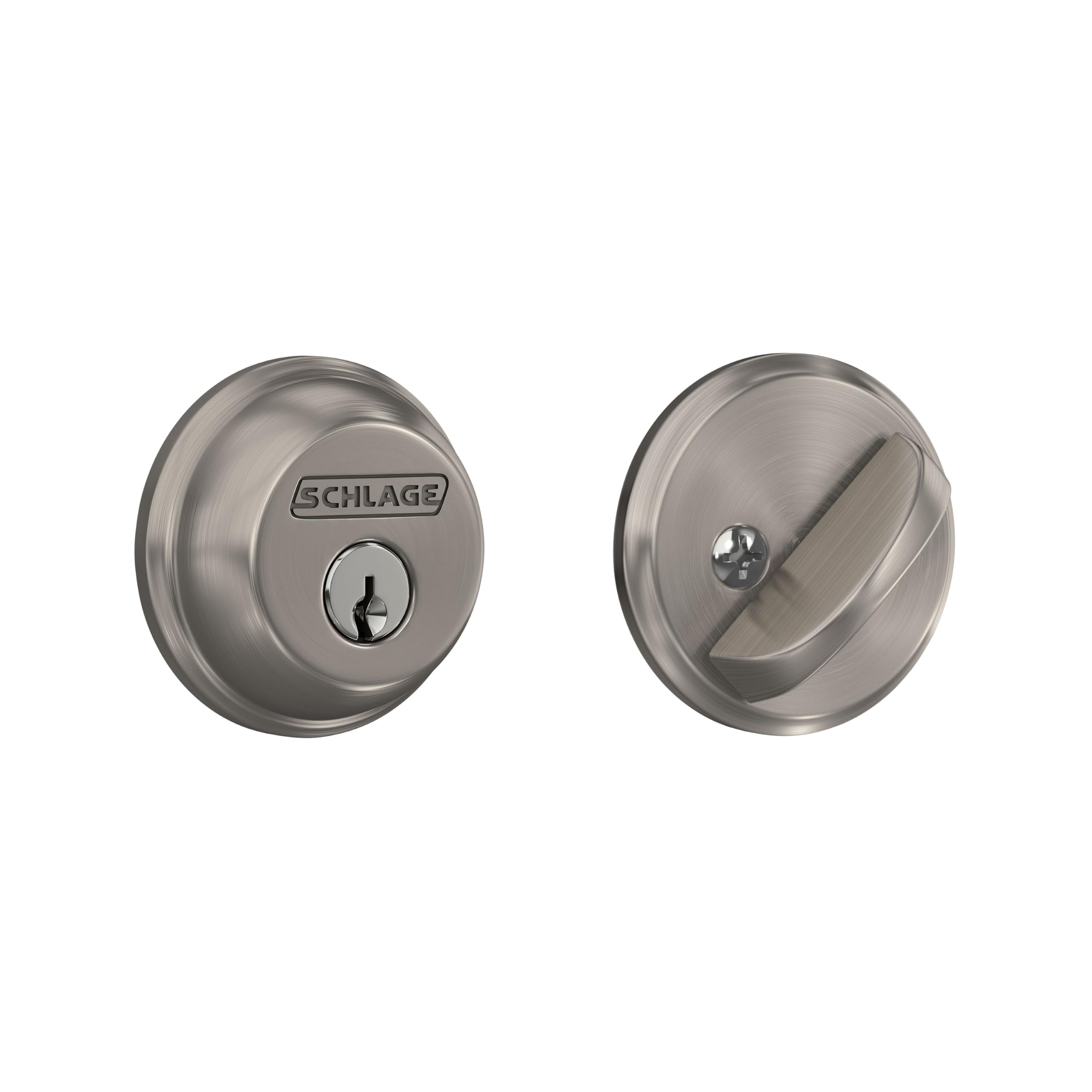
Grade 1 is the top of the BHMA residential scale, covering security, durability, and finish, and the B60N is the only lock in this guide with a published Grade 1 rating. That single line is why we recommend it to anyone whose door already has a handle they like: replacing just the deadbolt is the least expensive way to put the strongest residential bolt on a front door, and the bolt is the part that resists a kick.

Installation is a screwdriver job and the bolt drops into an existing deadbolt hole, which is why we suggest this one for a first attempt at lock hardware. It can be rekeyed to your house key rather than making the whole household learn a new one, and the interior thumbturn is big enough to find in the dark. It is also the plainest thing here: no keypad, no handle, just a bolt and a finish that suits most interior hardware. If the rating is the reason you are buying, check the finish carefully as you fit it — tool slips during installation are what dull these.

Bottom line: If your handle is fine and you want the strongest bolt on the door, this Grade 1 deadbolt is the simplest upgrade you can make.

Check Latest Price
#03

Best Keypad Without an App

Schlage FE595 Keypad Lever

93 /100
Kirk Score Outstanding
Power
9V battery, up to 2 years
Access
Keypad, up to 19 codes
Auto-lock
Flex Lock interior switch
Security Rating
Grade 2/AAA
Check Details on Amazon

Pros

  • Up to 19 codes programmed at the keypad
  • Grade 2/AAA rated for residential use
  • One 9V battery rated for up to two years
  • Backlit buttons for entry after dark

Cons

  • Costs more than the keypad deadbolts here
  • No app, remote access, or entry history

No app, no Wi-Fi, no account: the FE595 is the keypad lock for people who want codes without turning the front door into a smart-home project. You program up to 19 codes from the keypad, and an interior switch called Flex Lock decides whether the lock relatches on its own or waits for you to turn the thumbturn. Power comes from one 9V battery that Schlage rates at up to two years, and the silicone-coated buttons light when pressed, which is the difference between getting in and fumbling on a dark porch.

Grade 2/AAA puts it a step below the Schlage deadbolt and a step above the budget keypads, and the lever is the part we appreciate most — a real handle with some weight, worked with a push rather than a twist. We also like that it takes one 9V instead of four AAs; fewer batteries to round up is a small thing that stays pleasant. One caution: test the auto-relock on day one. A switch left in the wrong position is how people end up outside without a code, and flipping Flex Lock to manual takes a second.

Bottom line: The keypad lock to buy when you want codes for the family but no app, no Wi-Fi, and no smart-home account.

Check Latest Price
#04

Best Budget Keypad

TEEHO TE001 Keypad Deadbolt

91 /100
Kirk Score Outstanding
Power
4 AA batteries, up to 365 days
Access
Keypad, 20 codes plus backup keys
Weather Rating
IP54
Security Rating
ANSI Grade 3
Check Details on Amazon

Pros

  • Least expensive keypad lock in this guide
  • One-time guest codes that delete themselves
  • IP54 weather resistance and backlit keypad
  • Auto-lock adjustable from 10 to 99 seconds

Cons

  • Auto-lock can be inconsistent
  • Batteries are not included

This is the least expensive way into keyless entry here, and it does not read as a compromise: a matte black keypad deadbolt with a metal body and a backlit keypad. You get 20 user codes plus a one-time code for a cleaner or a dog walker that deletes itself after one use, an anti-peep option that lets you type random digits around your real code, IP54 weather resistance, and a mute setting for anyone who does not want a beep at the door. Four AA batteries are rated for up to a year, and a red light warns you once they drop below 15 percent.

Setup is the part that surprises people about inexpensive keypads. Codes program from the keypad itself, the auto-lock delay adjusts between 10 and 99 seconds, and holding any key for two seconds locks the door behind you — genuinely useful when you are leaving with your hands full. Auto-lock ships off, which is the right default: turn it on once you know the door swings freely and the bolt is not catching on the strike.

Where it sits in this group is clear. ANSI Grade 3 is the entry rating on the scale, a step below the Schlage keypad and two below the B60N deadbolt, so we treat it as a lock for a back door, a side entrance, or a rental where the deadbolt is one of two locks on the door rather than the only thing between a stranger and your hallway. For that job it is hard to beat, and the one-time code is the feature we reach for most: a contractor gets in once, and then the code is gone.

Bottom line: A lot of keyless entry for the money, and the right first keypad lock for a back door, side entrance, or rental.

Check Latest Price
#05

Best Premium Handleset

Kwikset San Clemente Handleset

92 /100
Kirk Score Outstanding
Backset
2-3/8 or 2-3/4 in
Rekeying
SmartKey
Lock Type
Handleset with keyed deadbolt
Door Thickness
1-3/4 in
Check Details on Amazon

Pros

  • Grip handle and deadbolt in one matched design
  • SmartKey rekeying without a locksmith
  • Adjustable latch fits either standard backset
  • Lifetime mechanical and finish warranty

Cons

  • Requires a door already drilled for two bore holes
  • Matte finish scratches easily

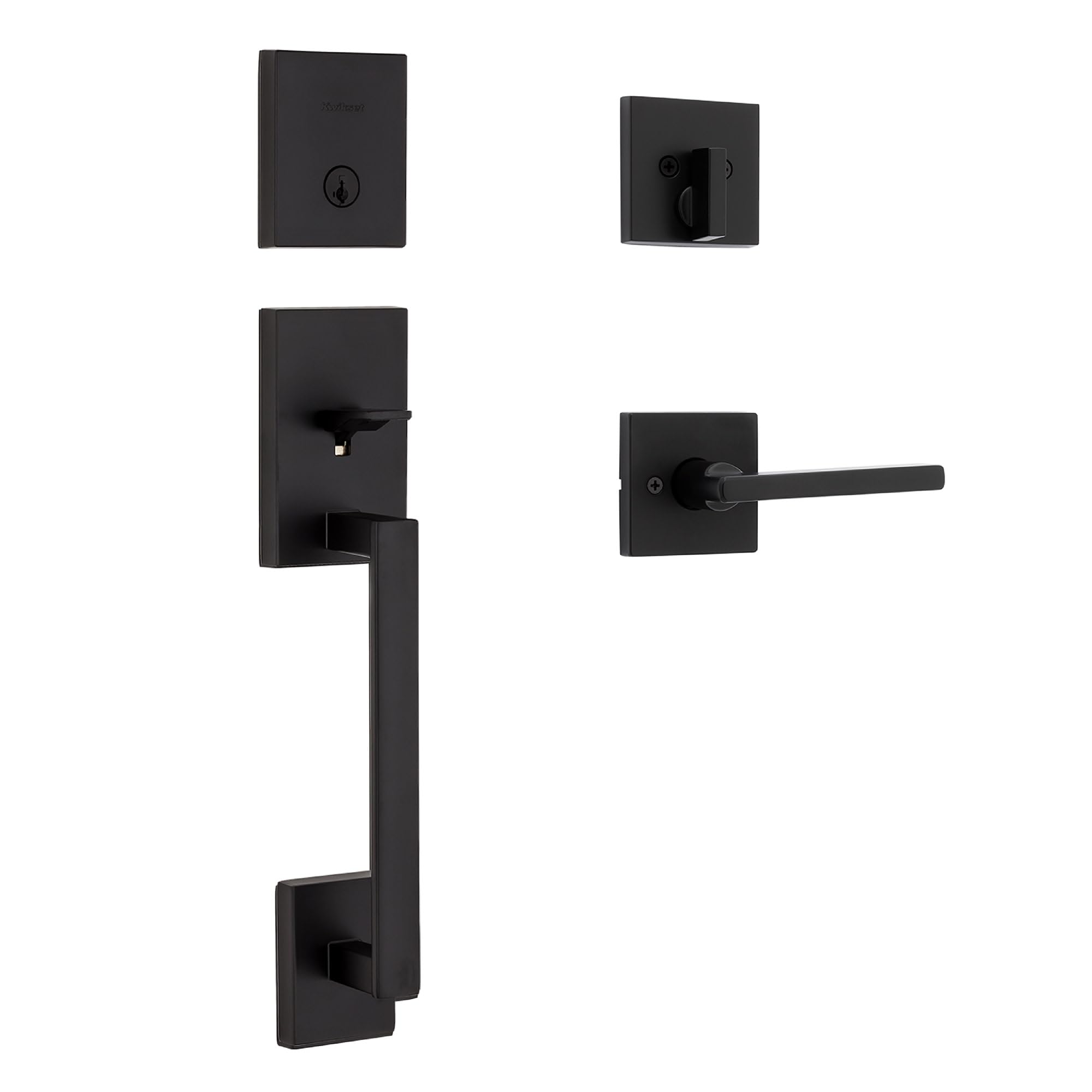
Most of the locks here are hardware; the San Clemente is architecture. It is a full handleset — a grip outside, a lever inside, and a keyed single-cylinder deadbolt above the grip — in a matte black powder coat, and it does more for a front door's appearance than anything else in this guide. That is the honest reason to spend this much: you are buying the look as much as the bolt, and the look holds up. It fits doors up to 1-3/4 inches thick, the latch adjusts to a 2-3/8- or 2-3/4-inch backset, and at six pounds it is the most substantial piece of hardware here when you lift it out of the box.

The security side is conventional and sound: a keyed cylinder outside, an interior turn piece, and Kwikset's SmartKey system, so you can rekey it to the rest of your Kwikset hardware yourself rather than calling anyone. Installation is a screwdriver job if your door is already drilled for a handleset, which is the one thing to settle before you order — this pick needs two bore holes, and a door with a knob hole and a deadbolt hole is not automatically a handleset door. Measure, then buy.

Bottom line: Buy it for the look and the grip: a substantial matte black handleset that makes a plain front door look expensive.

Check Latest Price
#06

Best Value Handleset

Veise KS01B Keypad Lock and Lever Set

92 /100
Kirk Score Outstanding
Access
Keypad, 20 codes plus backup keys
Warranty
1 year, 2 with registration
Auto-lock
10 to 99 seconds
Weather Rating
IP54
Check Details on Amazon

Pros

  • Keypad deadbolt and lever handles in one set
  • 20 user codes plus one-time guest codes
  • IP54 rated with a backlit keypad
  • Wrong-entry lockout after ten failed attempts

Cons

  • One-year warranty unless you register
  • No app, Wi-Fi, or fingerprint entry

Open the box and you get more than a keypad: a keypad deadbolt plus a matching lever handle set in satin nickel, so a door with mismatched hardware comes out of one purchase looking planned. The keyless side is a full lock — a master code, 20 user codes, one-time codes that expire after use, backup keys, IP54 weather resistance, a backlit keypad, and an auto-lock you can set anywhere from 10 to 99 seconds. Holding a key for two seconds locks it on your way out.

This is the set we point people to when they want keyless entry and new handles without premium-brand money. You get the lever handles and the keypad deadbolt in one finish, the handles are metal rather than plated plastic, and everything programs from the keypad. There is also a wrong-entry limit that shuts the keypad down after ten failed attempts, which is a small thing that matters if someone is guessing at codes on your porch at night.

The trade-offs are about support and extras rather than the lock. The warranty runs one year and doubles to two if you register the product, which is the kind of step people skip. There is also no app, no Wi-Fi, and no fingerprint reader — for most doors that is a feature, not a gap, but it does mean no remote unlocking and no log of who came in. If those matter to you, the ULTRALOQ is the one to look at.

Bottom line: The most complete door hardware for the money here: keypad entry and matching lever handles in one box, with no smart-home strings.

Check Latest Price
#07

Smart home entry

ULTRALOQ Bolt SE Smart Deadbolt

88 /100
Kirk Score Excellent
Access
Fingerprint, code, app, key
Capacity
50 fingerprints, 50 passcodes
Warranty
Lifetime mechanical, 18-month electronics
Connectivity
Wi-Fi, Bluetooth, Matter
Check Details on Amazon

Pros

  • Seven entry methods including fingerprint
  • Built-in Wi-Fi plus Matter over Thread
  • Stores 50 fingerprints and 50 passcodes
  • BHMA-certified zinc alloy body

Cons

  • Connectivity can drop or fail to pair
  • Fingerprint reads can be inconsistent

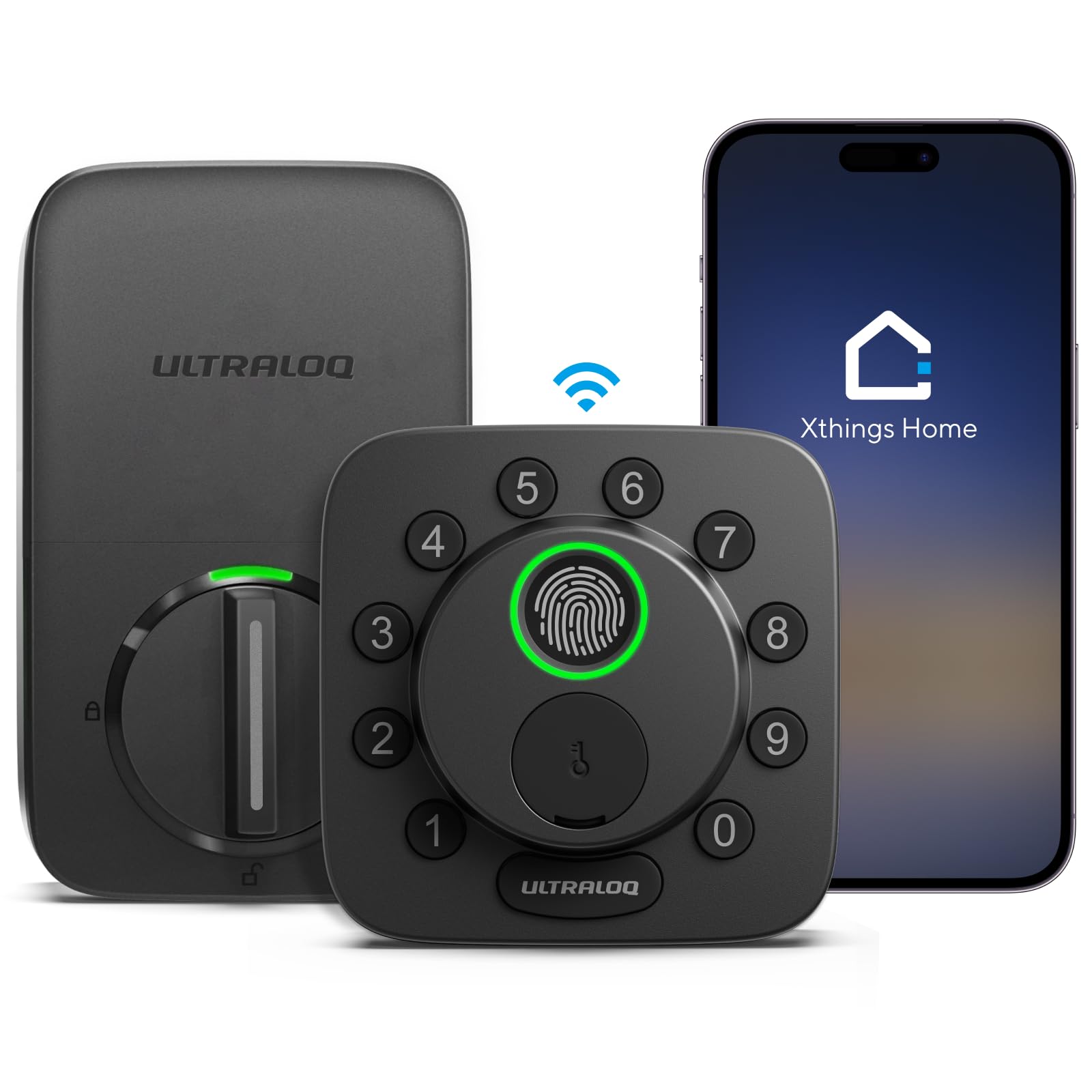
Seven ways in is the pitch, and it is close to literal: fingerprint, passcode, the app, a web portal, eKeys sent to a guest's phone, a temporary code, and a mechanical key, with voice control through Apple Home, Alexa, or Google on top. The Bolt SE has Wi-Fi built in, Matter over Thread as a second path, storage for 50 fingerprints and 50 passcodes, and a BHMA-certified zinc alloy body. Nothing else here comes close on access options.

The fingerprint reader is the reason to choose it and the reason to think twice. When it recognizes you, it is the fastest entry on this list — no code, no phone, no key — and it is the feature that makes a lock feel like it belongs to the house rather than to your pocket. Consistency is the thing to watch: when the reader balks, you are standing on the porch typing a code instead, and the sensor surface is the part that wears first.

Connectivity is the other soft spot. Built-in Wi-Fi and Matter support look excellent on paper, and once everything is paired the app answers quickly, but pairing is where patience runs out; the bridge, remote access, and third-party integrations are the parts most likely to need a second attempt. If you want a lock that tells you who came in and lets a guest in from another state, this is the one here that does it. If you just want to walk up and open your door, you are paying for a lot of hardware you will not use.

That is the decision, really. The Bolt SE is a small home-automation project that happens to be a lock, and it rewards a household that will use the app, the schedules, and the guest codes every week. Everyone else should look at the TEEHO for the everyday job of keyless entry, or the Kwikset Tustin for a door that never needs a battery at all.

Bottom line: The most capable lock here, and the right one if you will actually use the app: fingerprint, remote access, and guest codes in a single deadbolt.

Check Latest Price
#08

Secondary doors

Amazon Basics Keyed Entry Knob

91 /100
Kirk Score Outstanding
Keys
Two brass keys included
Backset
2-3/8 or 2-3/4 in
Lock Type
Keyed entry knob
Door Thickness
1-3/8 to 1-3/4 in
Check Details on Amazon

Pros

  • Fits standard 2-1/8-inch bore preparation
  • Adjustable latch covers both standard backsets
  • Matte black finish matches other hardware here
  • Two keys included, KW1 keyway

Cons

  • Locking mechanism can feel loose or fail to latch
  • Matte black finish wears over time

A knob is a latch with a lock in it, not the thing that keeps a determined stranger out; that is the deadbolt's job. So treat this one as a match for a door that already has a bolt above it, or for a back door, shed, or garage entry where you want a keyed knob that looks like the rest of the house. The hardware is better than the price suggests: a brass body with steel internals, an adjustable latch that fits either 2-3/8- or 2-3/4-inch backsets, and a matte black finish that lines up with the keypad deadbolts here.

It drops into standard preparation — doors 1-3/8 to 1-3/4 inches thick, a 2-1/8-inch bore — with a screwdriver and a second pair of hands, and the round knob is ambidextrous, so it does not care which way the door swings. Two KW1 keys come in the box, and the matte black is close enough to the TEEHO deadbolt and the San Clemente handleset to read as the same family, which makes it an easy way to finish a back door to match the front.

Where it earns a place in this guide is the second door: a knob that installs in minutes, matches the front-door hardware, and costs about as little as door hardware gets. Put it where a deadbolt already does the security work and it is a sensible buy; put it alone on a front door and you have added a lock that a shoulder can beat. That distinction is the whole purchase.

Bottom line: The good-looking way to finish a back or side door that already has a deadbolt — not a front-door lock on its own.

Check Latest Price

How We Tested the Door Locks

We started with about 40 locks — keyed deadbolts, keypad deadbolts, handle-and-deadbolt sets, and a few Wi-Fi smart locks — and cut it down on the specs that matter: security grade, a mechanical key backup, finish options, and price. Anything that needed a hub or a subscription to do the basic job didn't make it. That left 12, which we bought and installed ourselves.

Every install was done solo with a screwdriver and a tape measure. We timed each one, noted whether it dropped into the existing bore holes, and checked whether the bolt threw cleanly without a shoulder. Our test doors were a front door with a storm door, an older back door that swells in humid weather, and a garage entry door — a lock that lines up in July and jams in October isn't a lock that works.

Keypad and connected models got the harder workout. We programmed codes, issued a temporary one for a dog walker and revoked it, and typed extra digits ahead of the real code to see whether the anti-peep feature held. We ran batteries down to catch the low-battery warning, then flatlined one to see what a dead lock does. Fingerprint readers were enrolled with three fingers and tried with damp hands; auto-unlock was judged by walking up with arms full of groceries. We also locked and unlocked remotely from the car.

Security and durability we checked by hand: strike plate screws, bolt throw, and whether the finish scratched when a key missed the slot. After six months of humidity swings and a cold snap, we retested everything and counted how many needed their strike plates nudged. We also compared how each finish wore — matte black and satin nickel look very different after a month of hands.

How to Choose an Entry Door Lock

Start With the Hole You Already Have

Every exterior lock is built around three numbers: door thickness (1-3/8 to 1-3/4 inches on most homes), a 2-1/8-inch bore hole, and a backset of 2-3/8 or 2-3/4 inches from the door edge. A deadbolt-only lock drops into an existing deadbolt hole, a knob or handleset replaces the lower hole, and a keypad deadbolt with handles, like the Veise set, replaces both.

The trap is the phrase fits standard doors. A handleset needs two bore holes, and a door drilled for a knob plus a separate deadbolt is not automatically ready for a one-piece grip handle. Confirm the preparation before ordering and the install is a screwdriver job.

Understand What the Grade Actually Means

ANSI/BHMA grades run 1, 2, and 3, and they cover security, durability, and finish — not just how hard the bolt is to defeat. Grade 1 is the top of the residential scale and the Schlage B60N is the only lock here with a published Grade 1 rating; the Schlage keypad lever is Grade 2, and the TEEHO keypad is Grade 3.

Our rule: spend for Grade 1 on the door that faces the street, and accept Grade 3 on a back door behind a gate or on a door with a second lock. Remember that a grade on the bolt says nothing about the electronics inside a keypad — those earn their own judgement.

Keyed, Keypad, or Connected

Match the entry method to the household, not to the feature list. A keyed lock has nothing to charge and nothing to program, which is why the Kwikset Tustin is our default. A keypad adds codes for kids, cleaners, and guests, and asks only that you heed the battery reminder. A connected lock adds remote access, entry history, and scheduled codes, and it needs an app, a network, and a willingness to troubleshoot pairing.

If nobody in the house will open the app after the first week, buy the keypad and keep the difference. Our experience with this category is that the simple lock is the one that gets used correctly.

Set Auto-Lock Before You Trust It

Auto-lock decides whether a keypad lock feels like a convenience or a nuisance. Most keypad models here let you set a delay between 10 and 99 seconds or switch it off entirely, and the TEEHO ships with it off, which is the right place to start.

Live with it for a week before you rely on it. A bolt that extends while the door is ajar will jam, and a lock that relatches at the wrong moment is how people end up outside. Then put a mechanical key somewhere other than inside the house.

Finishes, Wear, and Matching the House

Matte black is the finish of the moment and the one that shows scuffs first; satin nickel hides fine scratches better and matches more interior hardware. Powder-coated matte finishes on a heavy handleset can chip where hands and keys land, while plated finishes tend to wear more evenly.

Pick the finish for the front door and repeat it around the house — the Amazon Basics knob and the TEEHO deadbolt are close enough in matte black to read as a set. If you are replacing every exterior lock, buy one brand with a self-rekeying cylinder so a single key works everywhere.

Frequently Asked Questions

Final Verdict

For most front doors, the lock we recommend is the Kwikset Tustin set: a matched lever and deadbolt on one key, backed by a lifetime warranty, with no battery to think about and no app to open. It is the least dramatic purchase in this guide and the one most households will still be happy with in five years.

If keyless entry is the point, the TEEHO is the least expensive keypad lock here and handles a back door or rental well. If the door only needs the strongest bolt, buy the Schlage B60N. Decide the entry method first; everything else follows from it.