// data-verified

Best Spray Lubricants of 2026

The garage door shudders up its track with a shriek that announces your departure to the whole block. A spray lubricant is the cheapest fix in the house — one squirt, thirty seconds, silence — but the wrong can turns a clean track into a dust magnet, smells like a refinery for two days, or quits on you by the next weekend.

We've spent the past four months working through 14 cans of silicone, PTFE, and plant-based sprays on everything around the house that sticks, squeaks, or grinds. The mistake first-timers make is grabbing the wettest, tackiest formula on the shelf. Wet film feels like it's working, but on a garage track it grabs grit and turns into paste; a dry film stays slick and sheds dust, though heavy parts need it more often. Smell matters more than you'd expect, too, when the hinge in question is inside the house rather than out in the garage.

Below are the cans that earned a permanent spot on the shelf in my garage — quiet, clean, and still doing their job weeks later.

#01

Best Overall

WD-40 Specialist Silicone Lubricant

96 /100
Kirk Score Outstanding
Surfaces
Metal, rubber, vinyl, plastic
Heat Rating
500 °F
Cans Included
6
Volume Per Can
11 fl oz
Check Details on Amazon

Pros

  • Dries to a clear film that won't collect dust
  • Safe on metal, rubber, vinyl, and plastic
  • Two-way straw reaches hinge pins and lock cylinders
  • Rated to 500 °F and 50-state VOC compliant

Cons

  • Sold as a six-can case

The can most households already own is a moisture displacer, and we don't reach for it when the job is lasting lubrication. WD-40's Specialist Silicone is the spray that earns the shelf space instead: it goes on wet, cures to a clear film, and stays on hinges, window channels, sliding-door rollers, and lock cylinders without the greasy sheen that collects dust. It takes the widest range of surfaces in this group too — metal, rubber, vinyl, and plastic all come out of it unstained — which is why it's the one we recommend first.

Delivery is where we noticed the difference. The SMART STRAW flips down and stays attached, so a hinge pin gets a direct shot and the track under it gets a fan spray from the same can; the loose straws taped to other cans disappear into a drawer by the second weekend. The film also dries instead of sitting wet, which is why a track in a dusty garage stays usable rather than turning into a grit magnet.

Two figures on the label earn their place. The 500 °F rating covers hardware near a heat source — a stove hood hinge, a furnace-room latch — and 50-state VOC compliance means you can buy it in states where aerosol rules are strict. We also value that it's safe on rubber and vinyl, since weatherstripping is the part most sprays quietly ruin.

The catch is the packaging. It arrives as six 11-ounce cans, so this is a stock-up rather than a single repair; if you have a houseful of hinges and a car with stiff door checks, that works out fine. Where it stops is load: a dry silicone film is a surface lubricant, and a bearing, a slide-out, or a garage door drive wants the pressure additives in the CRC Power-Lube below.

Bottom line: The spray lubricant we recommend for most households: a clear, dry film that's safe on metal, rubber, and plastic, sold as a case that will outlast your to-do list.

Check Latest Price
#02

Best for Garage Doors

3-IN-ONE Garage Door Lubricant

95 /100
Kirk Score Outstanding
Can Size
11 oz
Surfaces
Metal door hardware
Spray Tip
Two-way SMART STRAW
Heat Rating
150 °C
Check Details on Amazon

Pros

  • Quiets hinges, rollers, and pulleys in one pass
  • Two-way straw reaches pins and tight pivots
  • Dries non-sticky so hardware doesn't collect grit

Cons

  • Nozzle failures on some cans

A garage door that shudders halfway down makes a noise you hear from inside the house, and the remedy is usually a five-minute pass with a can rather than a service call. 3-IN-ONE built this one for exactly that hardware — hinges, tracks, chains, pulleys, rollers, and latches — on a quick-drying formula that finishes non-sticky, so the door doesn't end up wearing a coat of grit.

Of the picks here, this is the one we hand someone whose complaint is a specific door. The two-way tip does the work: a stream into each hinge pin and roller stem, a light fan along the track, and the shriek at the halfway point stops. We were struck by how little it takes, with plenty left in the can after a two-car door for the stiff hinges on the car and the aluminum window slides that bind every spring.

What it isn't is a universal spray. The formula is aimed at metal door hardware, so rubber weatherstripping and plastic rollers want a silicone instead, and a plastic-bodied roller should get the WD-40 Specialist or the CRC. Keep it for the door and the metal around it, and it earns its place the first time you skip a technician's call-out.

Bottom line: For a door that shudders or shrieks, this is the can we buy first — a few minutes on the hinges, rollers, and track quiets the whole cycle.

Check Latest Price
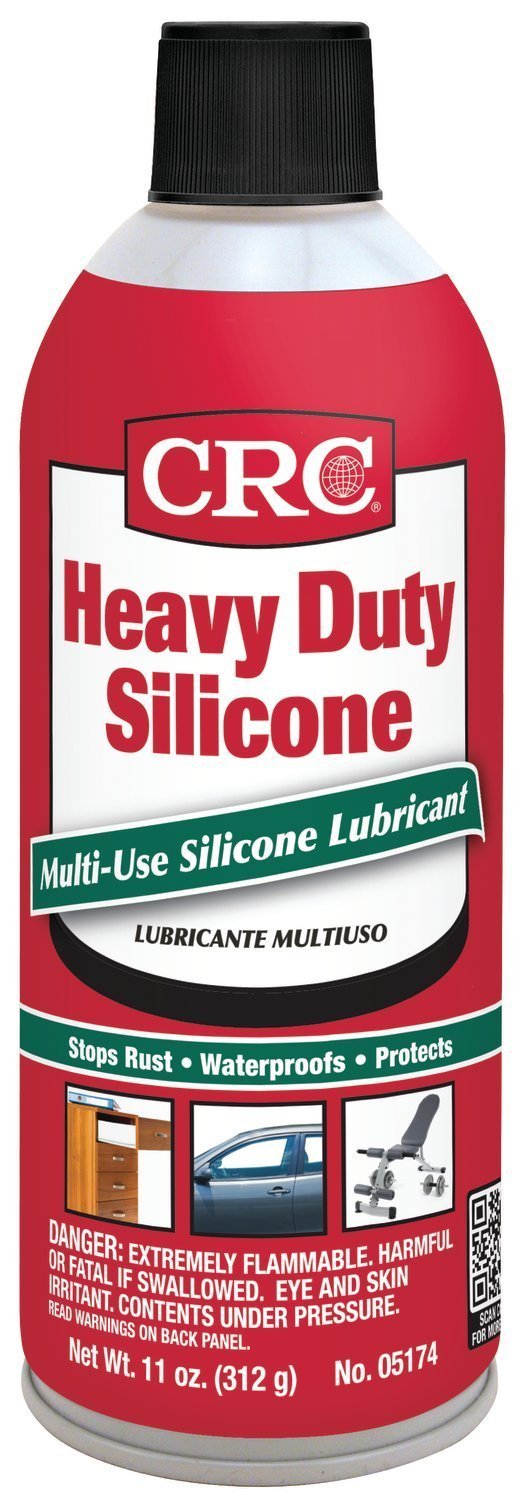
#03

Best Dry-Film for Gritty Spaces

CRC Heavy Duty Silicone Lubricant

93 /100
Kirk Score Outstanding
Film
Dry film
Can Size
11 fl oz
Surfaces
Rubber, nylon, metal, non-metal
Heat Rating
400 °F
Check Details on Amazon

Pros

  • Leaves a dry film that won't hold grit
  • Works on rubber, nylon, metal, and non-metals
  • Water resistant and rated to 400 °F

Cons

  • Film wears thin on constantly moving pivots

Spray this on a hinge, come back in a minute, and what's left isn't oil. The carrier flashes off and a thin, slick film stays behind — dry enough to run a finger over without picking up a smear, and effectively invisible on dark plastic. That's the whole point of a dry-film silicone, and CRC gets it right: the coating is there, but you can't see it.

The surfaces it suits are the ones a general-purpose spray tends to spoil: rubber weatherstripping, nylon rollers, plastic slides, and the vinyl and painted metal around them. We like it for anything that runs in dirt — a garage door roller, a window regulator, a snowblower chute — because a dry film gives grit nothing to stick to. It shrugs off water as well, which is why it holds up on a screen door track that gets rained on.

The choice between this and a wet film comes down to where the part lives rather than what it's made of. Indoors, a wet lubricant is fine and often more forgiving. Anywhere grit arrives — a garage, a workshop, a track beside a road — the dry film's refusal to hold dust matters more than anything else on the label, and that's why this is the can we keep by the garage door.

Bottom line: Our pick for gritty garages and anything nylon, rubber, or plastic: a dry film that lubricates without leaving a surface dust can cling to.

Check Latest Price
#04

Best for Windows and Vinyl

DuPont Silicone Lubricant with Teflon

91 /100
Kirk Score Outstanding
Additive
Teflon fluoropolymer
Can Size
10 fl oz
Surfaces
Rubber, plastic, vinyl, leather, metal, wood
Check Details on Amazon

Pros

  • Safe on rubber, plastic, vinyl, leather, wood, and metal
  • Teflon additive keeps frames and tracks slick
  • Leaves no oily residue to attract dirt

Cons

  • Light-duty film, not for loaded metal

Open the cap and you'll know. This is the strongest-smelling spray in the group, a sharp solvent hit that hangs in a closed room, and it's worth saying before anything else. Everything else about DuPont's silicone-with-Teflon formula is aimed at delicate surfaces where a petroleum spray would do damage: vinyl window frames, rubber seals, plastic slides, leather, and painted wood.

We reach for it on windows and shower doors, where the Teflon additive keeps a sash gliding without the tacky track an oil leaves behind. The light-duty formulation is the point — it waterproofs and preserves as much as it lubricates, so an older vinyl frame gets some of its slide back without a cleanup afterward. Use it on exterior glazing or with the room ventilated, and let the room air out before you close it up.

A can goes a long way: two short passes per track is all a sliding door needs, and the film doesn't build into a sticky ridge the way an oil does over repeated coats. If you keep one spray for windows, seals, and anything plastic or painted, this is the one we point people to.

Bottom line: The silicone we keep for vinyl windows, shower doors, and painted frames, where a petroleum spray would do damage — just open a window while it dries.

Check Latest Price
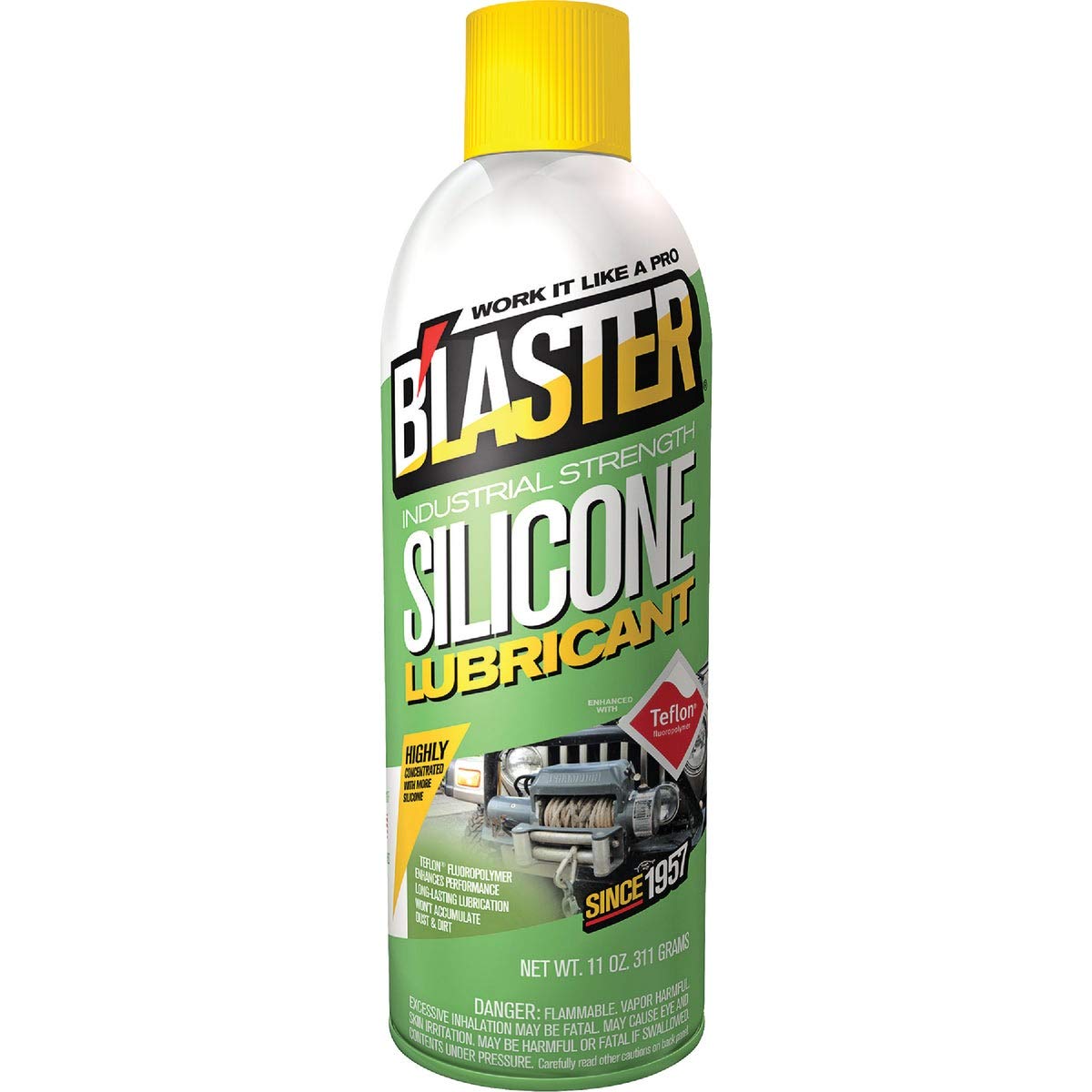
#05

Best Budget Silicone

B'laster Silicone Lubricant

95 /100
Kirk Score Outstanding
Film
Clear, non-staining
Can Size
11 fl oz
Surfaces
Elastomers, metal, plastic, wood, rubber, vinyl, leather
Heat Rating
71 °C
Check Details on Amazon

Pros

  • Clear, non-staining film for rubber, vinyl, and paint
  • Widest material list of the picks here
  • Lowest price per ounce of the silicones here

Cons

  • Cans can lose pressure before they're empty

This is the least expensive silicone in the guide, and it doesn't feel like a compromise. B'laster's label claims a higher silicone concentration than the usual hardware-store brands, and what that buys is a clear, non-staining film that goes on wet and settles without a tack. The material list is the widest in this group: elastomers, metal, plastic, wood, rubber, vinyl, and leather.

It earns its keep on jobs where a stain would be the bigger problem — white weatherstripping, car window channels, the hinges on a painted jamb, a squeaking bed frame. We noticed it doesn't leave the oily halo that petroleum sprays do on light trim, and on a vertical surface the film stays where you put it instead of running down the door.

The film is lighter than the PTFE picks, so a hinge that works hard wants a second pass a few weeks on — a small thing when a can costs so little. That's the trade: buy it in multiples, keep one in the car and one in the toolbox, and use it on everything that squeaks without carrying a load.

Bottom line: The silicone we buy in multiples: a clean, non-staining film at the lowest price here, with can reliability as the trade.

Check Latest Price
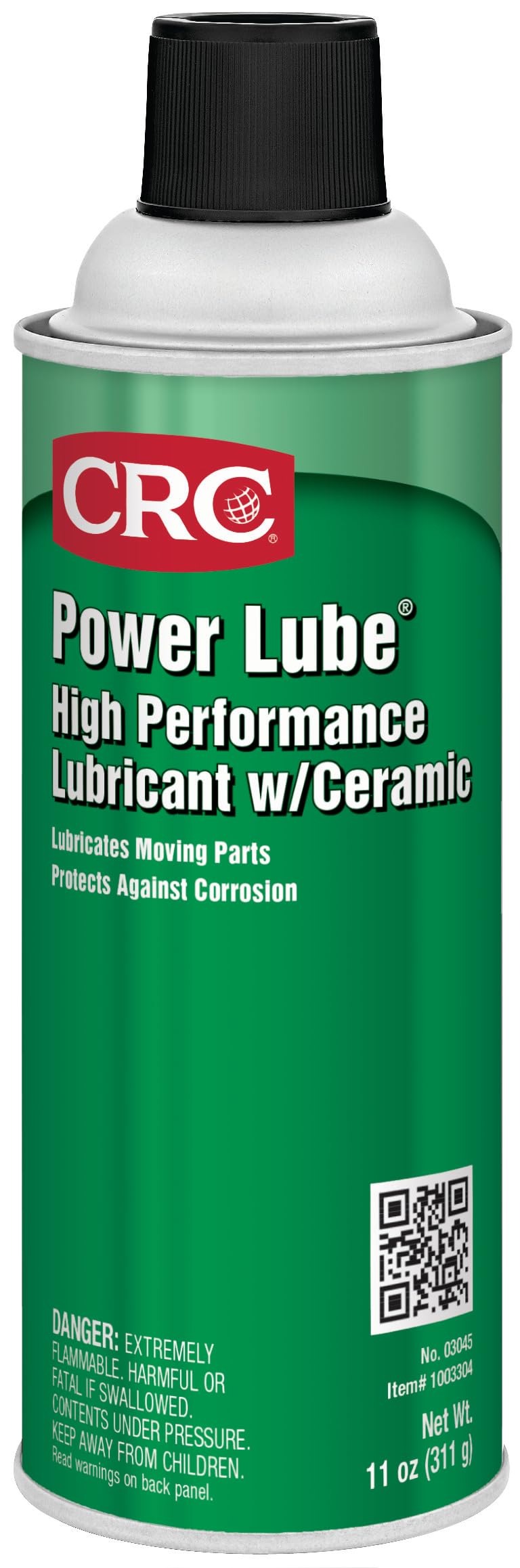
#06

Best for Heavy Loads

CRC Power-Lube with PTFE

94 /100
Kirk Score Outstanding
Additive
PTFE with ceramic
Can Size
11 wt oz
Surfaces
Metal, plastic, rubber, electrical components
Heat Rating
300 °F
Check Details on Amazon

Pros

  • PTFE and ceramic additives for loaded parts
  • Settles into a non-tacky film, not a wet smear
  • Displaces moisture and resists corrosion
  • Handles slide-outs, bearings, chains, and cables

Cons

  • Costliest can per ounce in this guide

Most household squeaks don't need a lubricant with a load rating. This one has one anyway: PTFE with extreme-pressure additives and ceramic, a formula built to stay between metal surfaces pressing against each other rather than merely sliding past.

That's why it turns up in trailer and RV work — slide-outs, landing gear, retractable steps, trailer sliders — and on garage door springs and drive mechanisms. The first thing we noticed is how little mess it leaves for a heavy lubricant: it settles into a non-tacky film rather than a wet smear, and it doesn't carry the chemical smell of some sprays in this group.

For a kitchen cabinet hinge, all of that is overkill, and this is the costliest can per ounce here. For anything expensive and loaded — a slide-out that groans, a bearing, a chain under tension, the drive on a garage door — the extra buys real protection, and it's the one can in this guide we trust on parts that cost more than the lubricant.

Bottom line: The can we trust on loaded, expensive mechanisms — slide-outs, bearings, garage door drives — where a light silicone film won't hold up.

Check Latest Price
#07

Best for Window and Door Tracks

3-IN-ONE RVcare Window and Track Dry Lube

92 /100
Kirk Score Outstanding
Film
Dry film
Can Size
10 oz
Surfaces
Most vinyl and plastic
Spray Tip
Two-way SMART STRAW
Check Details on Amazon

Pros

  • Dry film keeps grit out of window and door tracks
  • Two-way straw gets into the channel
  • Safe on most vinyl and plastic

Cons

  • Needs recoating sooner in humid weather

Ignore the RV in the name for a moment. What this is, is a dry-film lubricant formulated for window and door tracks — the channels where a wet spray does the most damage, because everything airborne sticks to it and the rollers end up grinding through a paste of dust.

On a patio door or a screen door that has started to drag, the dry film lets the rollers and the pane move without leaving anything behind for next season's grit to grab. The two-way tip gets into the channel itself, so the track gets coated rather than the frame around it, and the film dries fast enough that you aren't waiting around to close the door.

One warning off the label is worth repeating: keep it off clear polycarbonate and polystyrene, which don't tolerate the carrier. Test on an inconspicuous corner of any unfamiliar plastic first. On vinyl, aluminum, and painted frames it's fine, and that covers most of what a house or an RV is built from.

This is a track lubricant rather than a general-purpose spray, and it's happiest on windows, sliding doors, compartments, and slide-outs. In humid weather it wants a second coat mid-season, because the film dries fast and doesn't linger. If your complaint is a window that won't slide, we haven't found a can that targets the problem more directly.

Bottom line: For window and door tracks, this is the dry film we reach for — it keeps rollers gliding without turning the channel into a dust magnet.

Check Latest Price
#08

Indoor hinge work

Gear Hugger Multipurpose Lubricant

84 /100
Kirk Score Excellent
Formula
Plant-based, 96% USDA bio-based
Can Size
11 oz each
Spray Tip
Two-way straw nozzle
Cans Included
2
Check Details on Amazon

Pros

  • Effectively odorless indoors
  • Plant-based, 96% USDA certified bio-based
  • Two-way straw keeps spray on target

Cons

  • Residue stays tacky and picks up grit
  • Nozzle leaks make it messy to store

Most spray lubricants announce themselves. You can smell a hinge being oiled from the next room, which is awkward when the hinge is on a kitchen cabinet and the room is full of people. Gear Hugger's formula is plant-based, USDA Certified 96% bio-based, non-toxic, and odorless, so indoor hardware can be lubricated without clearing the house.

It behaves like a light oil rather than a dry film. The squeak goes out of a hinge, the two-way straw gives you enough control to keep the spray where you aimed it, and it works on door hardware and garage door rollers as readily as on cabinet hinges. The film does stay slightly tacky, so we wipe the excess off with a rag after working the part.

The bigger caution is staining. This is the spray in the group we're most careful with near concrete, stone, or unfinished wood — a drip on a garage floor leaves a mark that takes scrubbing to lift. Mask or wipe around porous surfaces before you start, and keep the can away from anything you can't clean.

It's a light-duty specialist, then, and the two-can pack suits how it gets used: a short burst on a cabinet hinge or a latch, then back on the shelf for a month. It isn't the can for a rusted gate bolt, a loaded bearing, or a slide-out. For quiet indoor work done cleanly, though, it's the one we reach for.

Bottom line: The odorless, plant-based spray we hand people lubricating indoor hinges, with a tacky film and porous-surface staining to work around.

Check Latest Price

How We Tested Spray Lubricants

I started by reading the hardware-store shelves and the review data behind them, then narrowed to three families of formula: silicone, PTFE-enhanced, and plant-based. Penetrating oils and greases were set aside, since they solve a different problem than a general spray lubricant. That left eight formulas, and I picked up a second can of the ones that ran out fastest so every test surface started with a fresh supply — 14 cans in all.

Testing ran four months, from late spring into fall, and most of it happened in a garage and an old house full of windows that hadn't slid since the previous summer. I sprayed garage door tracks, rollers, hinges, and the spring area; a sliding patio door track; window slides; a bike chain; car door latches; drawer slides; and a rusted mailbox flag. Every job got the same treatment: a wipe-down first, then the shortest burst that covered the surface.

Sprayability was the first thing I judged — whether the straw reached a hinge pin at an awkward angle, whether the wide fan pattern oversprayed onto the car or the concrete instead of the track, and whether the can sputtered as it emptied. I checked drying time with a fingertip, then came back a week later to see whether dust had settled into the film or the surface still felt tacky. Odor got sniffed right after spraying and again the next morning. Every surface also got a wipe with a white paper towel so I could see exactly what lifted off.

Durability and quiet went together. I left the garage track and patio door alone for six weeks and noted what came back first — a squeak, a drag, or nothing — and the quiet test was as simple as standing at the door and listening. Value came down to how many weeks passed before a surface needed another pass, not how large the can was.

How to Choose a Spray Lubricant

Silicone or PTFE: Match the Lubricant to the Load

Silicone is the household default for good reasons. It's safe on rubber, vinyl, and most plastics, it dries clear, and it lubricates anything that slides rather than bears weight: hinges, tracks, window channels, latches, weatherstripping. The moment a part is loaded, a light silicone film gets squeezed out. Bearings, garage door springs and drives, slide-outs, and chains want PTFE or extreme-pressure additives, which is the real difference between the CRC Power-Lube and the rest of this group.

Our advice is one silicone can for the house and one PTFE can for the heavy mechanisms, rather than trying to make a single spray do both.

Dry Film Versus Wet Film

A dry film leaves a thin, non-tacky coating that sheds dust. A wet film stays slightly slick, hangs on longer in weather, and collects whatever is airborne. In a garage, on a window track, or anywhere near a road, dry wins — the CRC Heavy Duty Silicone and the 3-IN-ONE track lube are built around that. On an exterior hinge that faces rain, a wetter film lasts longer between coats.

A simple test decides it: run a finger along the part. If grit comes off on your skin, choose dry.

Check What the Surface Can Take

Labels are broad; plastics are not. Petroleum-based sprays can swell rubber, stain vinyl, or lift paint, and clear polycarbonate and polystyrene are the usual casualties — 3-IN-ONE prints that exclusion right on the RV track lube. Silicone is the safer bet across mixed materials, and a hidden corner is the place to test anything unfamiliar.

Spray a short burst, wait a minute, and wipe: if the surface hazes, softens, or dulls, stop and use something else.

Straws, Nozzles, and the Aerosol Gamble

A two-way tip is not a gimmick. A straw gets into a hinge pin, a lock cylinder, or a track channel; a fan covers a hinge plate or a roller without flooding it. The weak point in this category is the can itself: aerosols lose pressure, nozzles clog, and a can that quits at half full is a risk worth planning for rather than a surprise.

Test-spray into a rag the day the can arrives, store cans upright, keep a spare, and buy from a seller that takes returns.

How Many Cans You Actually Need

A single can covers a surprising amount of hardware, but these are sold in very different quantities. The WD-40 Specialist arrives as a six-can case, which suits a whole house and is more than one squeaky door needs; the 10- and 11-ounce specialty cans cover one job each and get used up slowly.

Count the mechanisms you actually maintain — door hardware, window tracks, car hinges, the mower, the bike — before committing to a case.

Frequently Asked Questions

Final Verdict

If one can has to cover the hinges, tracks, locks, and weatherstripping in a whole house, the WD-40 Specialist Silicone is the one we recommend: it dries clear, it's safe on rubber and plastic as well as metal, and it leaves nothing for dust to grab. Budget for the case rather than a single can and it becomes the cheapest silicone per ounce here.

For a noisy garage door, the 3-IN-ONE garage door lube does that one job better and costs very little to keep on the shelf. When the part is loaded — a slide-out, a bearing, a chain, a garage door drive — go to the CRC Power-Lube, the only pick here built with the pressure additives for it.