// data-verified

Best Stainable Wood Filler of 2026

Stainable wood filler makes one promise, and it usually breaks it at the worst possible moment. The patch looks flawless on raw wood, then stain goes on and a pale ghost of the repair rises through the grain. Filling a nail hole is easy; making the repair disappear under a finish is what separates these products.

I've patched trim and furniture for years, and over the past four months my team and I worked through 14 stainable fillers, from squeeze tubes to pint tubs, on gouged table aprons, dented baseboards, and nail holes in door casings. What separated them was everything after the fill: how they spread, how long they stayed workable, whether they shrank, and how they sanded. A filler that balls up under sandpaper has already cost you more time than it saved.

One thing I've learned: a patch that takes stain evenly usually went in as two thin passes, not one thick one — thick fills skim over and stay soft underneath. The picks below are the ones that held up through all of it.

#01

Best Overall

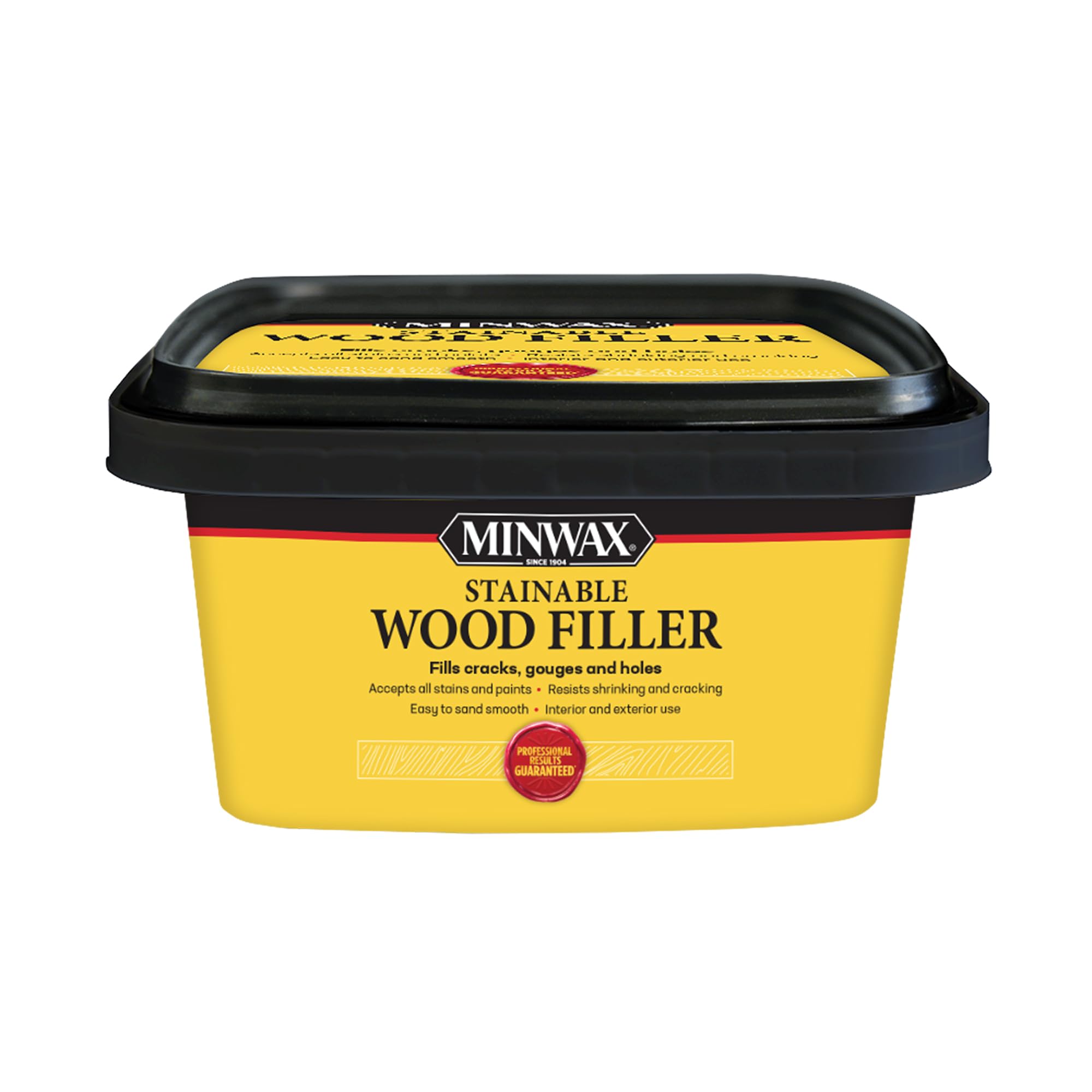
Minwax Stainable Wood Filler

89 /100
Kirk Score Excellent
Use
Indoor and outdoor
Dry Time
About 2 hours for shallow fills
Stain Type
Oil or water based
Container Size
32 oz
Check Details on Amazon

Pros

  • Takes both oil- and water-based stain
  • Full-size tub you can load a knife from
  • Rated for indoor and outdoor wood
  • Shallow fills dry in about two hours

Cons

  • Deep fills need longer than the two-hour figure

Stain is the whole question with this one, and it is why we made it the top pick of the group. Minwax formulates this latex filler to accept both oil- and water-based stains and rates it for indoor and outdoor wood, so a single tub can follow you from a cabinet door in the shop to the trim by the back door. For a repair that will be clear-finished rather than painted, that is the most direct answer to what a stainable filler has to do.

The format helps as much as the formula. Thirty-two ounces in a tub means you can load a putty knife properly instead of squeezing a ribbon out of a tube, and the paste is thick enough to press firmly into a crack and leave slightly proud of the surface for sanding. Minwax puts common shallow repairs at about two hours to dry, so a morning of filling can be sanded and finished the same day.

What no filler can fix is grain. A patch takes stain, but it will not take it identically to the wood around it, and on light stock a tan fill often reads a shade flat. Spread a test patch on a scrap of the same board, stain it alongside the piece, and compare before you commit. Do that and this is the least fussy route to a repair that disappears under finish.

Bottom line: If your repair is headed for stain rather than paint, this is our default: it takes oil- and water-based stain and comes in a tub that covers a whole project.

Check Latest Price
#02

Best for Fast Interior Repairs

FamoWood Latex Wood Filler

92 /100
Kirk Score Outstanding
Pack
Two tubs
Cleanup
Water
Formula
Solvent-free latex
Dry Time
15 minutes
Check Details on Amazon

Pros

  • Dries hard enough to sand without tearing
  • Smooth texture stays workable while applying
  • Solvent-free, low odor, water cleanup
  • Can be sanded, drilled or planed

Cons

  • Dried patch often stains a shade off
  • Sold only as a two-pack

Fifteen minutes is the figure on the tub, and it is the reason this one stays within arm's reach for interior work. FamoWood's filler is a solvent-free latex that cleans up with water and stays low-odor while you are using it, and it comes as a two-pack — enough to get through a run of trim without stopping to buy more.

What we appreciate most is how it behaves at the sanding block. It goes on smooth and stays workable in the tub while you are using it, then dries hard enough to sand without tearing, which is the difference between a patch that vanishes and one that leaves a ring around itself. It can be drilled and planed too, so filling a spot in a board you are still shaping is not a dead end.

Stain is where it gets less certain. The dried patch accepts a stain, but it often lands a shade lighter or darker than the surrounding wood, so a two-minute test on scrap is worth more than any claim on the label. Deep voids are better built up in layers — a single thick fill is where cracking starts.

Bottom line: We buy this one when the sanding has to go quickly — it dries hard in about 15 minutes and feathers out cleanly under the block.

Check Latest Price
#03

Best for Nail Holes and Trim

Elmer's Carpenter's Wood Filler

93 /100
Kirk Score Outstanding
Use
Interior
Finish
Paint or stain
Cleanup
Soap and water
Container Size
3.25 oz tube
Check Details on Amazon

Pros

  • Narrow tip aims straight at a nail hole
  • Sands smooth and resists shrinking
  • Soap-and-water cleanup
  • Accepts paint or stain

Cons

  • Interior use only
  • Small tube runs out on bigger jobs

A squeeze tube with a narrow tip is the entire argument for this one. You point it at a nail hole and fill it, which is quicker than loading a knife for eight or ten small spots, and 3.25 ounces is honest about the job: touch-up work, not a cabinet refacing.

We got the most out of it on frame molding corners and trim returns, where the fill is small and the sanding has to be gentle. It is water-based, so cleanup is soap and water, it sands to a smooth finish quickly, and it resists shrinking — which matters on a miter joint that will be looked at closely. It accepts paint and stain, and on painted trim the color question disappears entirely.

A tube rewards a little discipline: cap it tightly between uses and it will still be workable the next weekend rather than hardened at the nozzle. Interior work only, and small repairs only — that is the trade for the format.

Bottom line: Keep this tube in a drawer for nail holes and trim: we find the narrow tip faster than loading a knife for a dozen small fills.

Check Latest Price
#04

Best for Beginners

DAP Plastic Wood-X

90 /100
Kirk Score Outstanding
Use
Interior and exterior
Workability
Plane, cut, drill, screw
Dry Indicator
Pink turns natural
Container Size
5.5 oz tub
Check Details on Amazon

Pros

  • Color-change indicator shows when it is dry
  • Thick enough to mold corners and verticals
  • Planeable, drillable and sandable once cured
  • Rated for interior and exterior wood

Cons

  • Small 5.5 oz tub
  • Deep fills can take about 36 hours

Pink to natural is a small trick that fixes a real problem. The DryDex indicator turns from pink to the natural filler color as it cures, so you know when to sand instead of guessing — and guessing is what ruins more repairs than anything else in this category. That is what earns it a place for anyone doing this for the first time.

The rest of the formula is built for shaping. It is thick and knife-grade, so it holds a molded edge on a corner instead of slumping, and once cured it can be planed, cut, drilled, screwed, nailed, sanded, stained and painted. Low odor, rated for interior and exterior wood, and it stays put on vertical surfaces where a runnier filler sags.

The trade is time and size. The tub holds 5.5 ounces, which is a couple of small repairs rather than a project, and the dry schedule runs three to six hours for fills up to an eighth of an inch and about 36 hours for quarter-inch fills. Plan a day around a deep repair rather than an afternoon.

Bottom line: If you have ever sanded a fill too soon and torn it out, we think this is the pick — it goes on pink and turns natural when it is ready.

Check Latest Price
#05

Painted exterior trim

Bondo Wood Filler

92 /100
Kirk Score Outstanding
Use
Interior and exterior
Formula
Two-part with cream hardener
Sandable
In 15 minutes
Container Size
30 oz
Check Details on Amazon

Pros

  • Cures hard and bonds to the wood
  • Sandable in about 15 minutes
  • Holds up on exterior trim and sills
  • Takes paint well

Cons

  • Short working time once mixed

Where our top pick is built around a stain, this one is built around a repair that has to hold. Bondo's two-part formula mixes with a cream hardener and cures chemically, bonding to the wood rather than sitting in it, and it is sandable in about 15 minutes. That speed is the point: fill, sand and prime in one session.

We trust it with the jobs that get abused — a window sill with a soft spot, a deck railing, shed trim, a chunk of missing veneer that has to take paint. It sets hard and non-shrinking, holds up under an orbital sander without tearing out, and paint grabs it well.

Stain is the sticking point. The dried patch can take color unevenly, and a greenish cast shows up under some stains even when everything else about the repair is sound. So we keep it for painted and structural work, exterior especially, and choose a latex filler when the finish will be clear. Mix small batches, too — the working time after the hardener goes in is short.

Bottom line: Our choice for rotted sills and exterior trim headed for paint; we do not count on it for a clear stained finish.

Check Latest Price
#06

High-volume patching

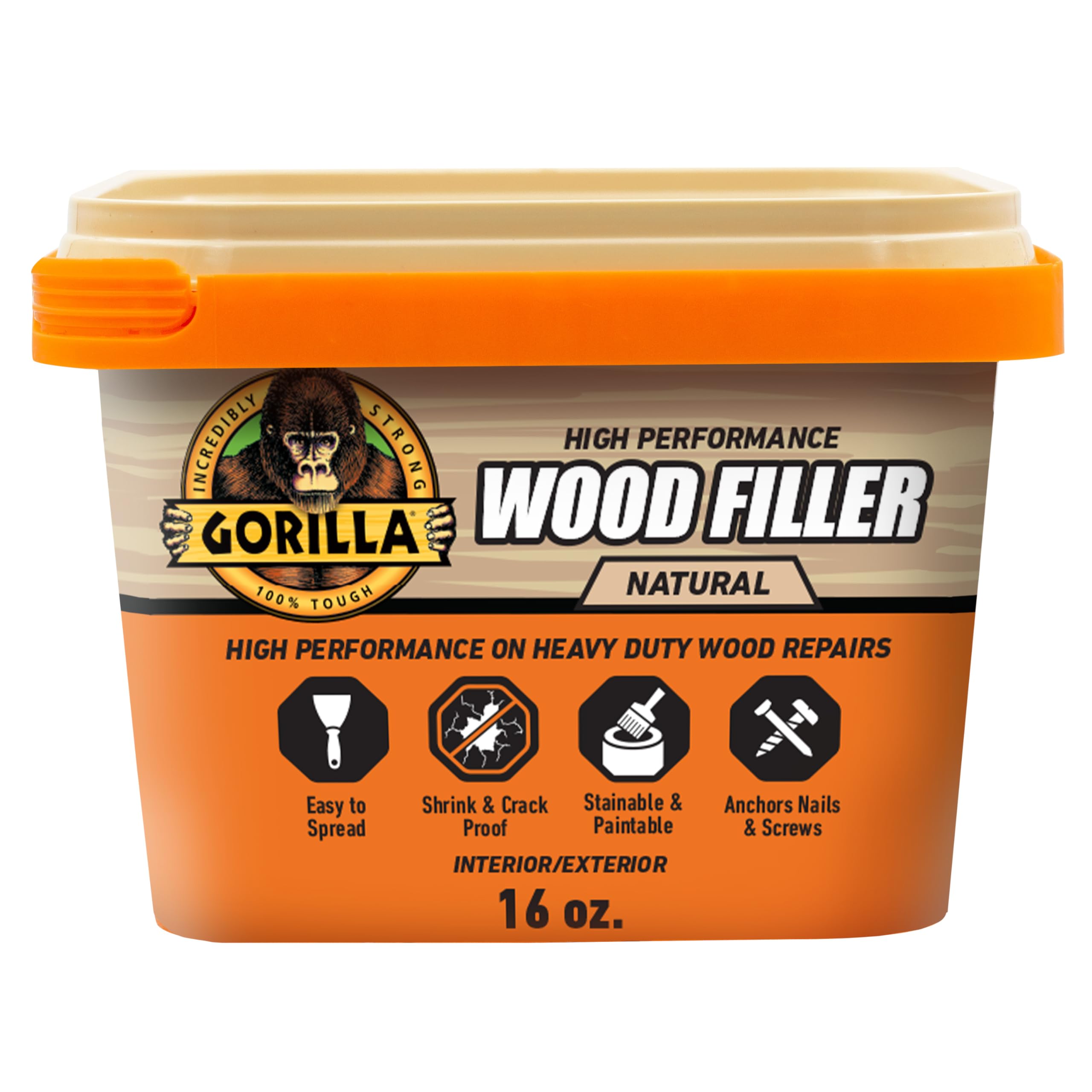
Gorilla All Purpose Wood Filler

89 /100
Kirk Score Excellent
Use
Indoor and outdoor
Fasteners
Anchors nails and screws
Container Size
16 oz tub
Water Resistance
Water resistant
Check Details on Amazon

Pros

  • Water resistant, indoors and out
  • Anchors nails and screws in stripped holes
  • Sands smooth and takes paint
  • Large tub for volume work

Cons

  • Gritty texture can telegraph under clear finish
  • Can crumble where a filled board flexes

Sixteen ounces is a lot of filler, and that shapes who this tub is for. Filling a run of nail holes on a fence, patching a sill, or sealing a knot before paint makes the size sensible; four holes in a cabinet door does not, and most of the tub will harden before you get back to it.

The formula is acrylic and water resistant, rated for indoor and outdoor use, and it does something most fillers here do not: it anchors nails and screws, so a stripped hole in softwood can be packed and re-driven. It sands smooth and takes paint readily, which is what you want on a repair that will be covered.

Consistency is the thing to watch. The paste can arrive stiff and gritty, closer to damp sand than to smooth putty, and it spreads less evenly when it does. A splash of water worked through the tub brings it back, and thin layers sand out far better than one heavy fill.

None of that bothers us on a painted exterior repair, where toughness and water resistance do the real work. It bothers us on a clear finish, where a gritty fill can telegraph through the stain, and on a board that flexes, where the fill can crumble at the edge. Buy it for coverage and weather, not for furniture-grade work.

Bottom line: A big water-resistant tub we keep for painted indoor and outdoor work, where volume and hold matter more than a clear-finish match.

Check Latest Price
#07

Dark wood repairs

Goodfilla Walnut Wood Filler

87 /100
Kirk Score Excellent
Color
Walnut
Reuse
Reconstitutes with water
Finish
Sandable and stainable
Container Size
8 oz
Check Details on Amazon

Pros

  • Walnut tone blends with dark woods
  • Soft, spreadable consistency
  • Reconstitutes with water after drying out
  • Takes stain or tint on top

Cons

  • One color per tub, so light woods need another pick
  • Thick fills can take days to harden

Walnut is the specification that matters here. This is a pre-colored filler rather than a tan one waiting for stain, and on walnut, mahogany, or a dark-stained oak a colored patch gets you closer to the surrounding wood than any light filler will.

It handles well, too. The consistency is soft and spreadable rather than stiff, so it presses into a knothole or a chewed molding edge and smooths out under a finger or a knife. It is water-based, so cleanup is water, and it will take a stain or a tint on top if the color needs nudging.

The detail we like most is shelf life. This filler reconstitutes with water, so a tub that dried out between projects is not wasted — add water, stir, and it is usable again. For someone repairing one piece of furniture a year rather than running a shop, that changes what a small tub is worth.

Patience is required on deep fills; a thick patch can take days to harden all the way through, so build it up. And it is a one-color product — excellent on dark woods, wrong on pine. For a walnut table or a dark antique, it is the one here we reach for.

Bottom line: For walnut, mahogany and dark-stained oak, this is the filler we reach for: it matches in color instead of relying on stain, and it revives with water.

Check Latest Price
#08

Weather-exposed trim

Everbuild Multi-Purpose Wood Filler

91 /100
Kirk Score Outstanding
Use
Interior and exterior
Cure Time
Touch-dry in 15 minutes
Container Size
250 ml
Water Resistance
Waterproof when dry
Check Details on Amazon

Pros

  • Waterproof once dry, for exterior work
  • Sandable in about 30 minutes
  • Ready-mixed with nothing to add
  • Low odor, water-based formula

Cons

  • Small can at a premium price

Waterproof when dry is what separates this one from the water-resistant tubs around it. Everbuild's ready-mixed filler is rated for interior and exterior use, and it is the one here we trust with a fence, a gate, or a piece of trim that takes weather head-on.

It is solvent-free, water-based and low-odor, and it moves quickly: touch-dry in about 15 minutes, sandable in 30, and over-paintable in roughly two hours. The light color is stainable, so it will take a stain or a paint without fighting you. Fast plus waterproof is a combination worth noticing on a surface that gets rained on.

The catch is the can. At 250 milliliters it is a small tub at a premium, so we treat it as a targeted buy: one weathered window frame, a garage door edge, a repair you want closed before the weather turns. For a whole house of trim, a bigger tub of something water-resistant goes further.

Bottom line: Our pick when the repair faces weather: ready-mixed, waterproof once dry, and sandable in about half an hour.

Check Latest Price

How We Chose and Tested the Wood Fillers

We started with a long list of fillers sold as stainable, plus a handful of paintable-only formulas that shoppers review as though they were stainable, and cut it down by reading each listing for what the product actually is: water-based or solvent, tube or tub, interior or exterior rated. Anything that couldn't take a stain at all came off. That left 14 products, and we worked out cost per ounce on every one before opening a single container.

The testing happened where the damage was. We filled nail holes in door casings, gouges in a table apron, a chewed chair leg, dents in painted baseboard, and a soft spot beside a porch rail. Each product went on twice, once pushed in flat with a putty knife and once left slightly proud, and we noted whether it came out smooth or grainy, whether it dragged or spread like soft butter, and how much it sank as it cured. We checked the fills at one hour, overnight, and again after a week, because several looked perfect at first and then dipped at the edges.

Sanding was the deciding round. We block-sanded by hand and took an orbital sander to a few patches, watching for powder versus smearing and timing how long each took to come flush without chewing into the surrounding wood. Then the stain went on — a light walnut over most patches, a clear finish over a few — and we recorded whether the repair drank color at the same rate as the wood or stayed flat and pale. At four months we compared what was left in each container against what we paid, and noted which ones had skinned over in the tub and which stayed creamy to the end.

How to Choose a Stainable Wood Filler

What Stainable Really Means

Wood filler is a paste of resin and wood dust, and dust has no grain. It takes up stain differently than the board around it — usually darker and flatter, sometimes with a cast — so stainable means the patch will accept color, not that it will vanish. The gap is widest on dark wood, where a tan patch under a dark stain often turns muddy.

That leads to a simple rule. Painting the repair? Any filler here will do. Staining it light? A natural latex filler plus a test patch on scrap of the same stock. Staining it dark? Start with a filler already colored to the wood, like Goodfilla's walnut, rather than hoping a tan fill drinks enough color.

Sandability Decides the Repair

A repair is won at the sanding block. A latex filler that powders easily feathers into the surrounding surface; a hard two-part filler resists the paper and can dish the wood around the patch if you lean on it. Two-part products earn their keep where the repair is painted and has to be tough, not where it has to be invisible — which is exactly how we place Bondo in this list.

Sand with a block rather than a pad, keep the pressure light, and pencil a few marks across the patch so you can see when it is level. Expect a second pass a day later, once a deep fill has finished shrinking.

Depth, Working Time, and the Wait

Thickness governs everything. A shallow fill dries in a couple of hours in most latex fillers, but a quarter-inch fill can take a day or more — DAP puts its deepest fills around 36 hours. Two-part fillers flip the problem: they cure in about 15 minutes, but the working time after mixing is short, so mix small batches and move.

Build deep repairs in layers, letting each one harden before the next goes on, and do not sand or stain until the fill has gone hard through and lost its surface tack. If you would rather not judge that by touch, a color-change indicator takes the guessing out of it.

Tubes, Tubs, and Shelf Life

Format matters more than it looks. A tube aims into a nail hole without a knife but stiffens at the nozzle between uses. A tub lets you load a knife and press filler into a crack properly, but a big tub outlives a small job — most of it hardens in the container before the next repair comes along.

Our rule is to match the size to the work, not to the price per ounce. Occasional repairs suit a small tub or a filler that revives with water; a run of trim or a fence wants the large container.

Interior, Exterior, and What Goes Over It

Water resistant and waterproof when dry are different promises, and neither does as much for exterior work as paint does. A painted exterior repair is forgiving because the paint film handles the weather. A clear exterior finish is not: filler and wood move differently, and the patch tends to show within a season or two.

For exterior work that will be painted, a waterproof or water-resistant filler is the right buy. For exterior work under a clear finish, expect to see the repair and plan the piece around it.

Frequently Asked Questions

Final Verdict

Minwax Stainable Wood Filler is our pick for repairs that will be stained rather than painted: it accepts both oil- and water-based stain, works inside and out, and comes in a tub sized for a whole project rather than a single nail hole.

When the sanding has to go fast, FamoWood's latex is the alternative — hard in about 15 minutes and clean to feather, with the honest caveat that the patch will still stain slightly off the wood. And if you have never done this before, DAP's pink-to-natural indicator is worth the longer wait on deep fills.