Best Overall
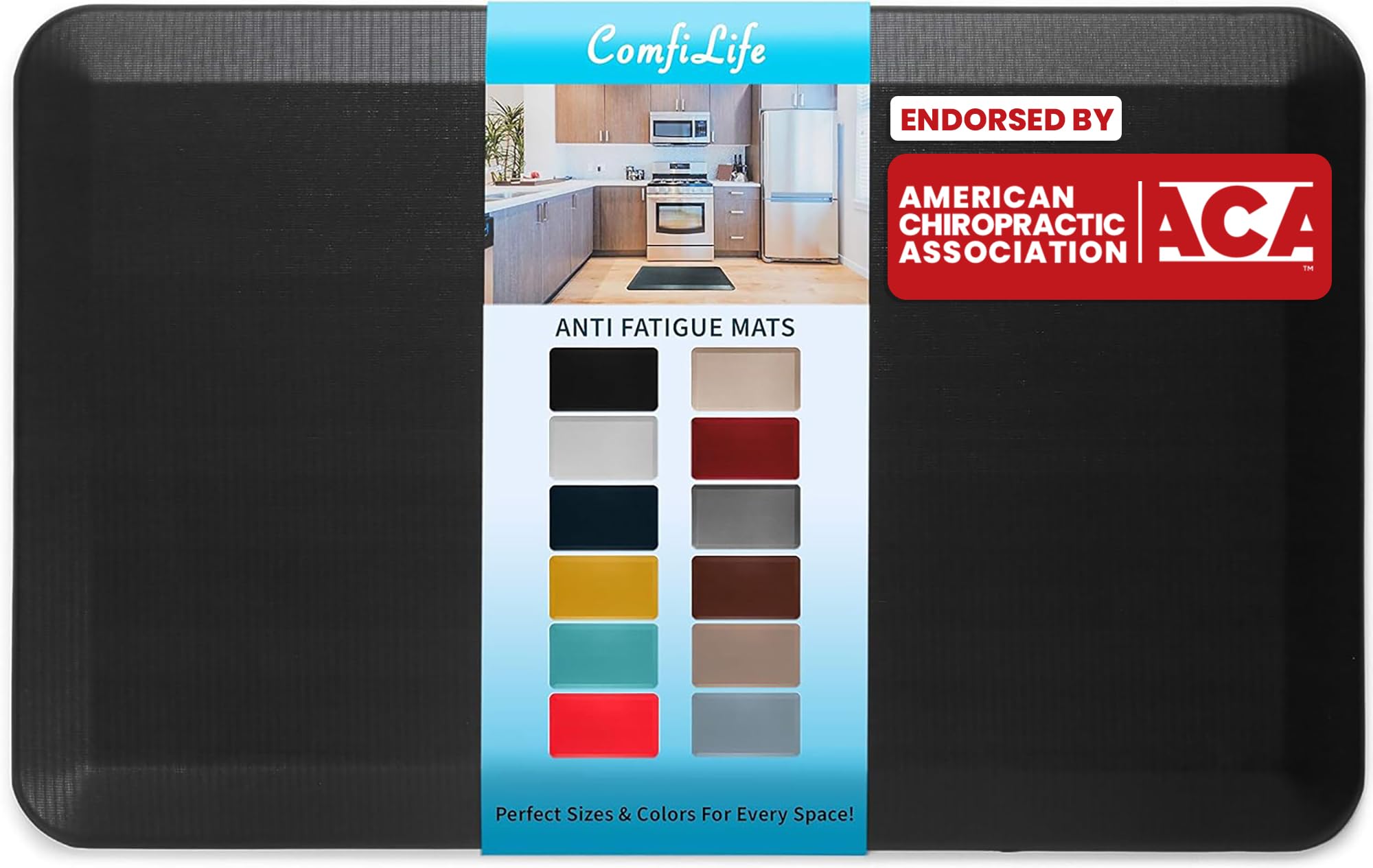
ComfiLife Anti-Fatigue Mat
- Care
- Wipe with damp cloth
- Size
- 32" x 20"
- Material
- Memory foam with rubber backing
- Thickness
- 0.75 in
Pros
- Foam rebounds instead of packing into a dent
- Rubber backing holds on dry tile and laminate
- Stain-resistant top wipes with a damp cloth
- Shallow bevel, so no step under bare feet
Cons
- One standing spot; the sink-to-stove run stays bare
Three-quarters of an inch of memory foam is where this mat starts, and it's also where a lot of mats stop being useful. The thing we watched for is what happens under a heel — whether the foam compresses and comes back, or packs down into a dent that stays. This one comes back, and it's still coming back at the end of a session at the sink rather than flattening out halfway through.
That's why it's the one we recommend first. The 20-by-32 footprint fits in front of a sink without reaching into the walkway, the bevel is shallow enough that bare feet don't register a step, and the base is rubber rather than a foam skin, which is the part that decides whether a mat stays where you put it on tile. It's also the one we kept coming back to once the others had been tried.
Cleanup is a damp cloth and no drama: the top is stain resistant, and there's no fabric face or stitched border for a spill to soak into. It comes in a spread of colors rather than one, which matters more than it sounds in a kitchen — black disappears against dark cabinets, and the brown reads as part of a wood floor instead of a piece of equipment.
What it isn't is firm. The memory foam sits on the soft side of this group, closer to a shoe insole than to a rubber work mat, so if you want a surface that pushes back hard, the FEATOL is the better call. Everyone else gets a mat that's comfortable barefoot, which is where most people start.
Bottom line: The mat we point most people to: the 3/4-inch foam holds its shape through a long session and the rubber-backed bottom stays put on dry tile.
Check Latest Price