// data-verified

Best Mechanic Gloves of 2026

Every mechanic glove makes the same trade-off: enough material to keep grease and busted knuckles off your hands, but not so much that you can't feel a 10mm bolt. Get it wrong and you're either fishing a socket out of a drain pan bare-handed or fighting a nut your fingertips can't find. A good pair disappears — you forget you're wearing them until you peel them off and your hands are still clean.

My team and I spent the past six months putting 12 pairs through oil changes, brake jobs, engine swaps, and the kind of driveway maintenance that happens on a Saturday in July. Fit came first, since a glove that bunches at the palm turns every turn of a ratchet into a fight, then comfort over a full afternoon, protection where hands actually take hits, and how well a pair carried over to yard work and house projects.

Two things surprise first-time buyers: touchscreen fingertips stop being a gimmick the moment you're holding a phone flashlight over an engine bay, and a coated palm does far more for grip than a padded back ever will. The picks below run the full range, from paper-thin to armored.

#01

Best Overall

Mechanix Wear Original Covert

95 /100
Kirk Score Outstanding
Cuff
Hook-and-loop
Palm
0.8 mm synthetic leather
Touchscreen
Yes
Abrasion Rating
ANSI/ISEA level 3
Check Details on Amazon

Pros

  • Thin 0.8 mm palm keeps feedback on fasteners
  • Machine washable, so grease doesn't end the pair
  • Touchscreen palm works through the glove
  • Cuff cinches flat without bunching at the wrist

Cons

  • Not water resistant or insulated

A 0.8-millimeter synthetic leather palm is thin enough that a 10 mm bolt head is still a shape you can identify by touch. That's the argument for the Original, and it's why this pair sits at the top of our list. Thicker mechanic's gloves turn a socket into a guessing game; these let you start a thread by feel and still have padding at the heel of the palm to soften a long pull on a breaker bar.

The hook-and-loop cuff is the detail we came to rely on. It cinches flat instead of bunching at the wrist, so reaching past a fan shroud doesn't drag the glove up your forearm, and the welded panel at the base of the thumb takes the wear that comes from gripping a wrench all afternoon. Touchscreen support sounds like a marketing line until the torque sequence is on your phone and you're already under the car; we used it far more than we expected to.

Fingertips are where these give ground. The index finger and the thumb saddle go first, and if your work is dragging your hands across sharp sheet metal rather than turning fasteners, you'll be shopping again sooner than you want. Weekend brake jobs and a couple of oil changes a season are a different story entirely, and a second pair in the toolbox covers the gap.

Bottom line: Our pick for most people: one washable pair that handles brake rotors, trim clips, and a phone screen without making you give up your feel for the fastener.

Check Latest Price
#02

Best for Oily, Precision Work

MaxiFlex Seamless Knit Gloves

96 /100
Kirk Score Outstanding
Liner
Seamless knit nylon
Coating
Nitrile micro-foam, palm and fingers
Cut Resistance
Yes
Check Details on Amazon

Pros

  • Foam coating grips oily, wet tools
  • Most dexterity of any glove here
  • Survives repeated washing better than the leather picks
  • Coated palm adds cut resistance

Cons

  • No knuckle or palm padding
  • Thin knit offers little warmth in a cold garage

Halfway through a brake job, a leather-palmed glove starts to feel like a cover slipped over a greasy ratchet handle. The MaxiFlex doesn't do that. The nitrile micro-foam on the palm and fingers is textured rather than smooth, and it keeps hold of a wrench that is already wet with brake fluid — which is the whole reason these made the list.

Feel is where these run ahead of everything else here. The seamless knit back follows the shape of the hand, the coating is thin enough to pick a washer off a bench, and we could find the detent in a ratchet through them. They are also the pair in this group that holds up best to repeated washing, which matters more than it sounds when a glove spends its life soaked in oil.

What you trade for that is armor. There's no impact protection anywhere on the glove, and the knit cuff leaves a gap at the wrist where grit and shavings find their way in. Cut resistance is claimed on the listing but no level is given, so treat the coating as protection against scrapes and burrs rather than anything sharper.

Bottom line: If your tools are oily more often than they're sharp, these are the pair to reach for first — the foam coating keeps its bite when leather goes slick.

Check Latest Price
#03

Best Impact Protection

Mechanix Wear M-Pact Covert

95 /100
Kirk Score Outstanding
Cuff
Extended hook-and-loop
Palm
0.8 mm synthetic leather
Impact Rating
ANSI/ISEA level 3
Knuckle Guards
TPR with D3O padding
Check Details on Amazon

Pros

  • TPR knuckle guards with D3O padding
  • Silicone palm print holds a wet wrench
  • Touchscreen palm at 0.8 mm
  • Extended wrist closure keeps the fit secure

Cons

  • Stitching at the fingers can fail before the palm wears

Thermoplastic rubber guards sit across the knuckles and the back of the hand, with D3O padding underneath and an ANSI/ISEA level 3 impact rating behind it. That's the M-Pact's reason to exist, and it is built for the situation that puts most of us into mechanic's gloves in the first place: a seized bolt, a long breaker bar, and a knuckle heading for the frame rail when it lets go.

The guards are the headline; the silicone print on the palm is the part we kept noticing. It gives a wet wrench something to bite on, and the reinforced index finger sits exactly where a glove usually fails first. We came in expecting the armor to feel clumsy and found it mostly disappears once your hands are busy.

Where it costs you is reach. Sending a hand into the gap between an engine mount and a subframe, the guards and the extended wrist closure are in the way, and the thinner Original is the better tool for that job. Weight lands in between — heavier than the plain leather pair, not heavy enough to notice by the end of an afternoon. Sizing is worth checking against a measured hand rather than your usual number.

Bottom line: Buy the M-Pact if you work under a car rather than beside it — the knuckle guards earn their bulk the first time a wrench slips.

Check Latest Price
#04

Yard and house jobs

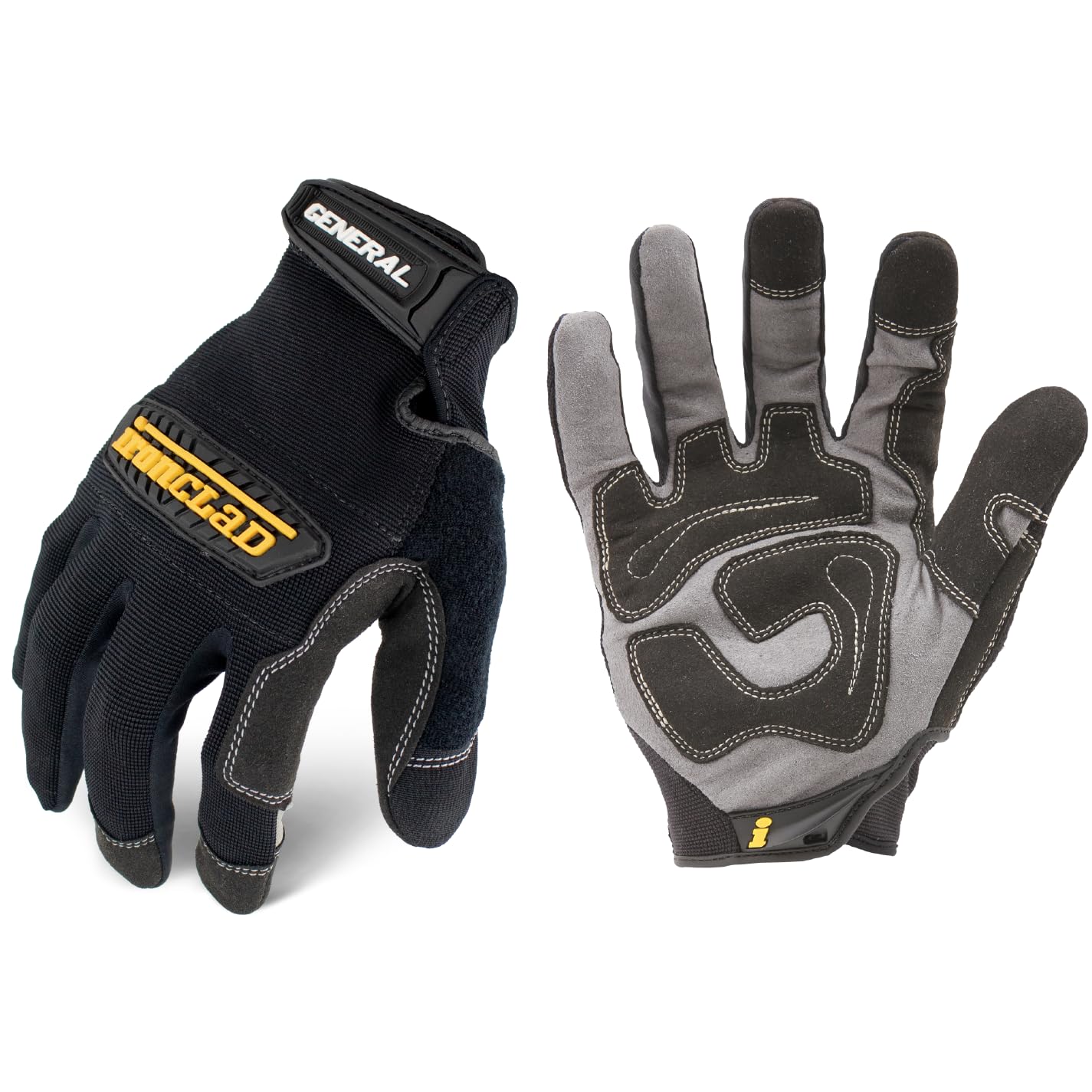
Ironclad General Utility GUG

93 /100
Kirk Score Outstanding
Care
Machine washable
Pack
1 pair
Style
General Utility (GUG)
Check Details on Amazon

Pros

  • Least expensive pair in this group
  • Machine washable single pair
  • Comfortable for long yard sessions
  • Padded palm softens tool handles

Cons

  • Seams between the fingers can come apart
  • Bulkier fingertips than the leather Mechanix pairs

This is the least expensive glove in the group, and it's worth being clear about what that buys: a padded general-purpose glove that is happy hauling brush, sweeping out a truck bed, or wiping down a greasy pan before it goes back in the cabinet. Keeping a pair like this around means your good gloves stay good for the jobs that need them.

The padding across the palm is modest in the right way — enough to soften a shovel handle or a chainsaw grip, not so much that the hand goes stiff. Machine washable and sold as a single pair, it suits a glove that will see dirty work and get thrown in the wash without ceremony.

Sizing is the catch. These are cut on the small side, so if your measurement lands between two sizes, take the larger one, and don't assume your size in another brand carries across. Beyond that, this is a glove to buy in multiples and keep where the messy jobs happen.

Bottom line: Comfortable, washable, and the best value here for house and yard work — a sound first pair if you're not yet sure what you want from a work glove.

Check Latest Price

How We Tested Mechanic Gloves, From Oil Changes to Yard Work

The shortlist started with research rather than a shopping cart. We read through customer reviews on work gloves, filtered out patterns of cracking palm coatings, seams letting go at the thumb, and sizing that ran a full size off, then narrowed to 12 pairs spanning the price range: thin dipped knits, general-utility gloves, and heavier impact-protected pairs.

We wore them for six months. The main scenes were an oil change on a cold engine, a full front-and-rear brake job, and a long weekend helping a friend pull and reseal an engine, plus the less glamorous work — loading lumber, hauling brush, and one very hot afternoon of yard cleanup.

At each step we watched behavior rather than spec sheets. Did the fingertips bunch when we closed a fist around a ratchet? Did the palm grip hold once it was slick with oil, or go greasy and useless? We noted where seams began to fray, whether the coating cracked at the knuckle crease, how the cuff held its shape after repeated washing, and how quickly sweating hands turned a glove clammy. Touchscreen fingertips got tested the honest way — answering a call with a wrench in the other hand — and sizing was checked against a tape measure across the palm and middle finger.

We also pulled gloves off mid-job to see how hard they were to get back on with damp hands, and paid attention to which pairs we reached for by default when a task wasn't obviously glove work. That habit turned out to be the best read on versatility we had.

How to Choose Mechanic Gloves

Palm Material Comes First

Leather and synthetic leather resist abrasion and take a knock, which is why so many traditional mechanic's gloves are built on them. The catch is oil: once a leather palm is soaked, it slips on a wrench handle and stays slick until it dries out. A nitrile micro-foam coating over a knit liner behaves the other way round — it keeps its bite on wet metal and lets your skin breathe, but it gives up far more to a sharp edge.

Match the palm to the mess you actually make. Fluids, filters, and small fasteners call for the coated knit; rotors, brackets, and rough castings call for leather.

Thickness Sets Your Dexterity Budget

Everything you want from a glove is paid for in millimeters. The 0.8 mm palm on our top pick is thick enough to shrug off a scrape and thin enough to identify a bolt head by feel, and that balance is close to the limit of what one glove can do. Thinner gets you nearer barehanded, with less protection; thicker protects more and tells you less.

Think about which end of the job you spend your day on. Starting threads and fishing dropped washers out of a tray argues for thin; dragging knuckles over rust and sharp brackets argues for thick.

When Knuckle Guards Pay for Themselves

Impact protection is the most situational thing you can buy. Rubber guards and padding across the knuckles earn their bulk when your hands work in the line of fire — under a car on a breaker bar, around a stuck caliper bolt — and they become dead weight when you are reaching into a tight engine bay where a couple of millimeters decides whether your hand fits at all.

Picture the gap you actually work in. If it is snug, thin wins. If it is a knuckle-buster, the guards pay you back.

Fit, Cuffs, and Sizing Between Brands

Measure around the knuckles of your dominant hand, not the length of your fingers, and treat the number as a starting point rather than an answer — sizing shifts between makers, and a size that fits in one brand can be tight in another. A glove that pinches across the knuckles will wear out faster at the seams, too.

The cuff does a second job. A hook-and-loop closure cinches down and keeps grit out; a slip-on elastic cuff is quicker on and off but leaves an opening at the wrist where shavings collect. Choose based on how often you pull the gloves off mid-job.

Washing and How Long a Pair Lasts

Machine-washable gloves outlast the ones you are afraid to wash, because grit left in the palm grinds the material apart from the inside. Cool water, then air-dry — heat is what turns a synthetic palm stiff and crackly.

Buy two pairs where you can and rotate them, so one is dry when the other is soaked. Whatever you do, expect the index finger and the thumb saddle to go first.

Frequently Asked Questions

Final Verdict

The Mechanix Wear Original is the pair we point most people toward. It is thin enough to keep your fingers useful, padded enough for a breaker bar, washable, and affordable enough that a spare set in the toolbox is not a decision. Change one requirement and the answer changes with it.

If your tools are wet with oil all day, the MaxiFlex's foam palm grips where leather slips. If your knuckles are the part that keeps getting hurt, the M-Pact's guards are worth the reach you give up.