// data-verified

Best Nitrile Gloves of 2026

A nitrile glove is a barrier, and the mil number on the box tells you how much barrier you're buying. Three mil is a second skin for a quick food-prep job; eight mil shrugs off brake cleaner and a wrench that keeps slipping in oil. The question worth asking before you add to cart isn't which glove is toughest — it's which one survives the task you actually do, without splitting at the thumb webbing halfway through a tray of raw chicken.

Over the past five months my team and I worked through 15 boxes, comparing thickness, fit across sizes, grip on wet and oily surfaces, and what a box really costs you per glove. A couple of things surprised us. Sizing is not consistent from brand to brand, so the large you've always worn may not be your large here, and the gloves that hold up best under a car are not the ones I want on for an hour of hair dye.

Gloves are a consumable, which makes value a moving target: a thin glove that tears on its second wear costs more than a heavier one that lasts a whole project. The picks below are the ones that earned a permanent spot in the pantry and on the workbench.

#01

Best Overall

TitanFlex 6 Mil Heavy Duty

95 /100
Kirk Score Outstanding
Grip
Textured
Color
Black
Material
Nitrile, latex-free, powder-free
Thickness
6 mil
Check Details on Amazon

Pros

  • 6-mil nitrile resists tears during real work
  • Textured palm holds wet or soapy items
  • Covers food prep and garage jobs from one box
  • Costs little more than the thin boxes here

Cons

  • Less feel for tiny parts than a 3-mil glove

Six mils is the number that changes what a disposable glove is for. At that thickness this TitanFlex stops being a barrier you wear to keep paint off your knuckles and becomes something you can grip a wrench with. We wore a pair through an afternoon of staining trim and prying the lid off a stuck paint can, and the gloves came off intact, which is most of why they sit at the top of this guide.

Thickness only counts if the glove still fits, and this one runs snug. The sizing leans small against what most people expect from a large box, so if you are between sizes, take the larger. Once they are on, the fingers are supple enough for a trim brush or a screwdriver, and you do not get the mittened feeling that makes thick gloves useless for detail work.

The range is what keeps us coming back. These are labeled for cooking as well as shop work, and the black hides grease, paint, and marinade instead of showing every smear. One box covers wiping down a grill, degreasing a bike chain, and breaking down a chicken, which is the sort of thing that stops us from stocking three different gloves.

Wet grip is the detail that sold us. Nitrile goes slick the moment it meets soapy water, and the texture molded into the palm and fingers keeps a wet dish or a soapy sponge from rotating in your hand. That is the difference between a glove you tolerate and one you reach for without thinking.

Bottom line: Our default box for home and shop: 6 mils of nitrile that grips a wet wrench and shrugs off a torn fingernail, at little more than the thin gloves here cost.

Check Latest Price
#02

Best for Grip and Mechanic Work

GRIPXX Herkules Grip 8 Mil

93 /100
Kirk Score Outstanding
Grip
Raised 3D diamond texture
Material
Nitrile, latex-free, powder-free
Thickness
8 mil
Check Details on Amazon

Pros

  • Raised diamond texture grips through oil and water
  • 8-mil wall survives shop and yard abuse
  • Keeps dexterity despite the thickness

Cons

  • Costs more than the general-purpose boxes here

The diamonds molded into the palm and fingers are the first thing you notice, and the first time you grab a wrench with cutting oil on it, you understand what they are for. Plain nitrile goes slick as soon as it meets grease; this raised pattern keeps hold of the tool instead of letting it spin.

At 8 mils these are the thickest gloves in this guide, and that is where the durability comes from. A pair took a brake job, a round of yard cleanup, and a session with a grease gun without a puncture, which is more than we get from a thin glove across a job that size.

What surprised us was how little the extra material slows you down. The fingertips are still thin enough to thread a nut onto a bolt, and big hands get a comfortable fit with room in the range for 2XL. For mechanic work this is the pair we hand someone who is tired of gloves that split at the thumb.

Bottom line: We keep these for the jobs where grip decides the outcome: the raised diamond texture holds an oily wrench, and the 8-mil wall outlasts the thinner gloves in this guide.

Check Latest Price
#03

Best for Caregiving and Everyday Chores

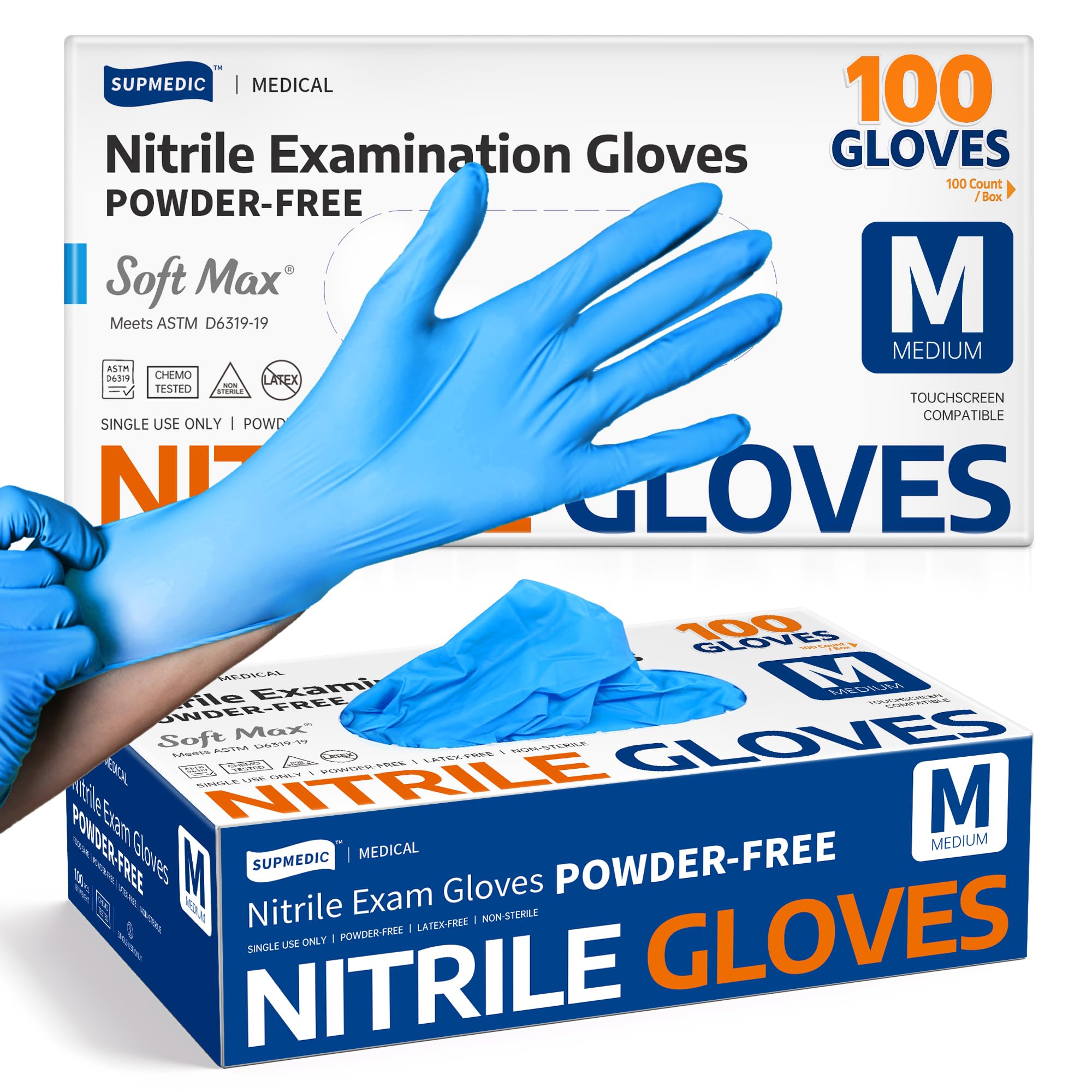
Supmedic Soft Max Nitrile Exam

95 /100
Kirk Score Outstanding
Size
S
Color
Blue
Grade
Exam
Material
Nitrile, powder-free
Check Details on Amazon

Pros

  • Comfortable through long caregiving sessions
  • Easy on and off, even with dry hands
  • Fine for food prep and household cleaning
  • Cheapest way into a good exam glove here

Cons

  • Thin walls tear under prolonged or heavy work

Peeling a pair off after two hours of helping an elderly parent with medication and lunch, our hands came out dry rather than clammy, which is the quiet advantage of a thin exam glove that breathes. That is the test we run on caregiving gloves now, and this box passed it.

Comfort is where these earn their place. The nitrile is thin enough to feel a pill between your fingers and soft enough that a long session does not leave your hands itchy, and the stretch means they go on without a fight even when your hands are already dry from washing. For caregiving and food prep, that combination matters more than any figure printed on the box.

They are also easy to take off inside out, which is the part nobody thinks about until there is something on the glove they do not want on their wrist. The fit favors average to large hands and the cuffs sit at the wrist rather than up the forearm, so pair them with a sleeve if you need more coverage. For the money, this is the box we hand to anyone starting out as a caregiver.

Bottom line: Comfortable enough to forget you are wearing them and cheap enough to change without thinking, this is the box we reach for on caregiving, cleaning, and raw chicken duty.

Check Latest Price
#04

Best Bulk Case

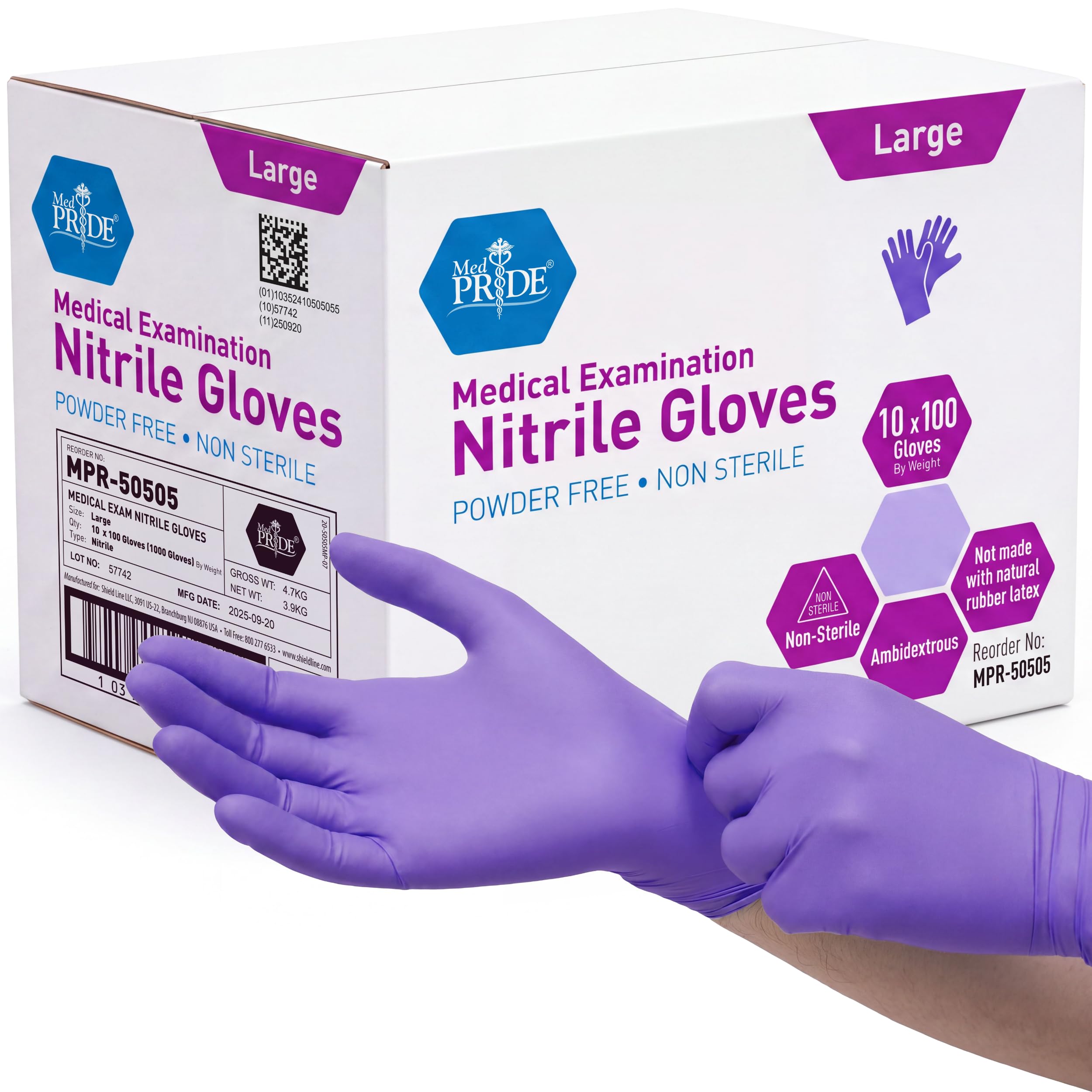
MED PRIDE Nitrile Exam Case

95 /100
Kirk Score Outstanding
Size
Large
Color
Blue
Material
Nitrile, latex-free, powder-free
Case Count
1,000 gloves
Check Details on Amazon

Pros

  • A thousand gloves cuts restocking to a yearly errand
  • True fit for small and average hands
  • Easy on and off with a clean inside-out removal

Cons

  • Thin walls that tear under heavy or sharp work

The case lands at about ten pounds and holds a thousand gloves, which tells you most of what matters. This is a purchase for someone who changes gloves several times a day, not for a single messy afternoon.

Fit and ease are why we keep it in the rotation. The gloves run true for small and average hands, they slide on without a wrestling match, and one comes off inside out in a single pull, all of which matters when your hands are covered in something unpleasant.

Day to day they cover cleaning, cooking, and caregiving without complaint, and the blue is light enough that a soiled glove is obvious at a glance. They are plain, dependable exam gloves, nothing more.

What you are committing to is volume. A thousand gloves takes up a shelf, and a household that uses a pair a week will still be working through the case a long time from now. Buy it if you are changing gloves several times a day, whether that is caregiving, a clinic, or a workshop, and stay with a hundred-count box otherwise.

Bottom line: A thousand exam gloves in one order, true to size and easy to pull on: buy the case if you change gloves several times a day and the job stays light.

Check Latest Price
#05

Best Thicker Exam Glove

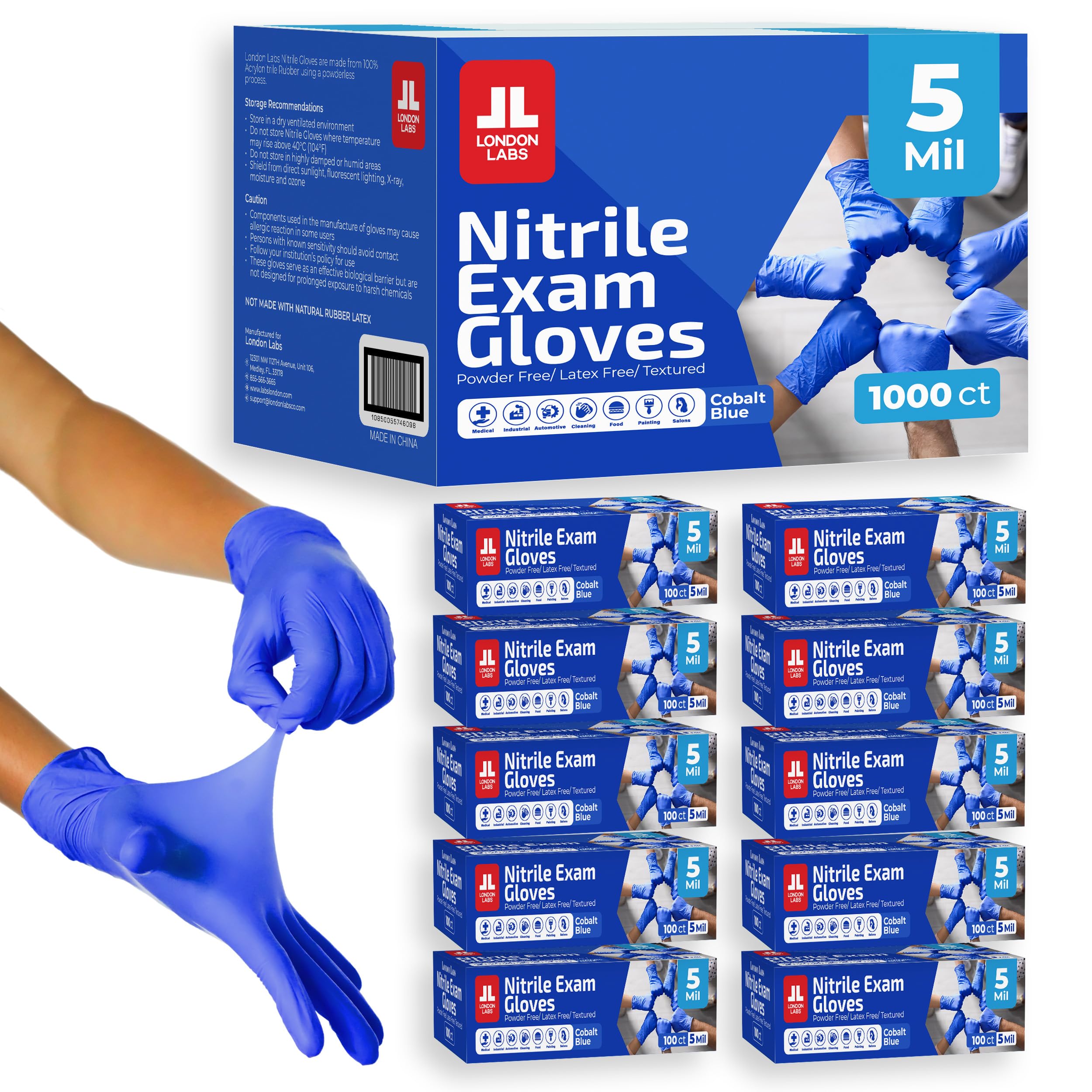
London Labs 5 Mil Nitrile Exam

91 /100
Kirk Score Outstanding
Grade
Exam
Material
Nitrile, latex-free, powder-free
Thickness
5 mil
Check Details on Amazon

Pros

  • 5-mil wall resists tearing during repeated donning
  • Strong cuffs that hold their shape
  • Works for caregiving and restaurant food work

Cons

Most exam gloves sit at 3 or 4 mils and industrial gloves jump to 6 and 8. Five mils lands in the gap: thick enough that pulling one on does not end with a snap at the cuff, thin enough that you can still find a vein or feel a pulse.

That balance is exactly what we want for caregiving and food handling. The nitrile survives repeated donning, the cuffs hold their shape instead of rolling down, and there is no rubbery smell, which matters more than it sounds when you are wearing a pair for an hour at a time.

Sizing is the one caveat, and it will be familiar to anyone who buys gloves online: these run smaller than other brands, so if you are at the top of a range, order up. Otherwise the fit is good, including for large hands, and the pairs go on dry hands without a fight, which is the test that separates a good exam glove from a frustrating one.

Bottom line: The exam glove we hand to anyone who finds a standard 4-mil flimsy: 5 mils of nitrile that survive repeated donning and still let you feel a pulse.

Check Latest Price
#06

Best for Small Hands and Light Tasks

SwiftGrip Pink Nitrile 3 Mil

95 /100
Kirk Score Outstanding
Color
Pink
Box Count
100
Food Safe
Yes
Thickness
3 mil
Check Details on Amazon

Pros

  • Genuine small sizing for narrow hands
  • 3-mil wall keeps feel for detail work
  • Food-safe label for kitchen use
  • Color makes them easy to keep separate

Cons

  • 3-mil walls tear under heavy or sustained work

Pink gloves are usually a novelty. These are not: the color is what makes people find them, but the fit is why they stay. In a small, the hand is narrow through the palm and short in the fingers, which is exactly what a standard small gets wrong for genuinely small hands.

We keep them for fine, small-scale work, shaping nails, applying dye, rolling dough, wiping down a bathroom, where a thin wall is an advantage rather than a compromise. The 3-mil nitrile leaves enough sensation to work with a knife or a pastry brush, and the box is labeled food-safe, so the same glove moves between the kitchen and the sink.

The other practical point is the range. Sizes run from X-Small to XL in hundred-count boxes, so replacing them is a small errand rather than a commitment, and the color makes it easy to keep one box for food and another for cleaning.

Bottom line: Pink is the reason people find these, but the small-hand fit is the reason to buy: narrow through the palm, short in the finger, and thin enough for fine work.

Check Latest Price
#07

Kitchen food prep

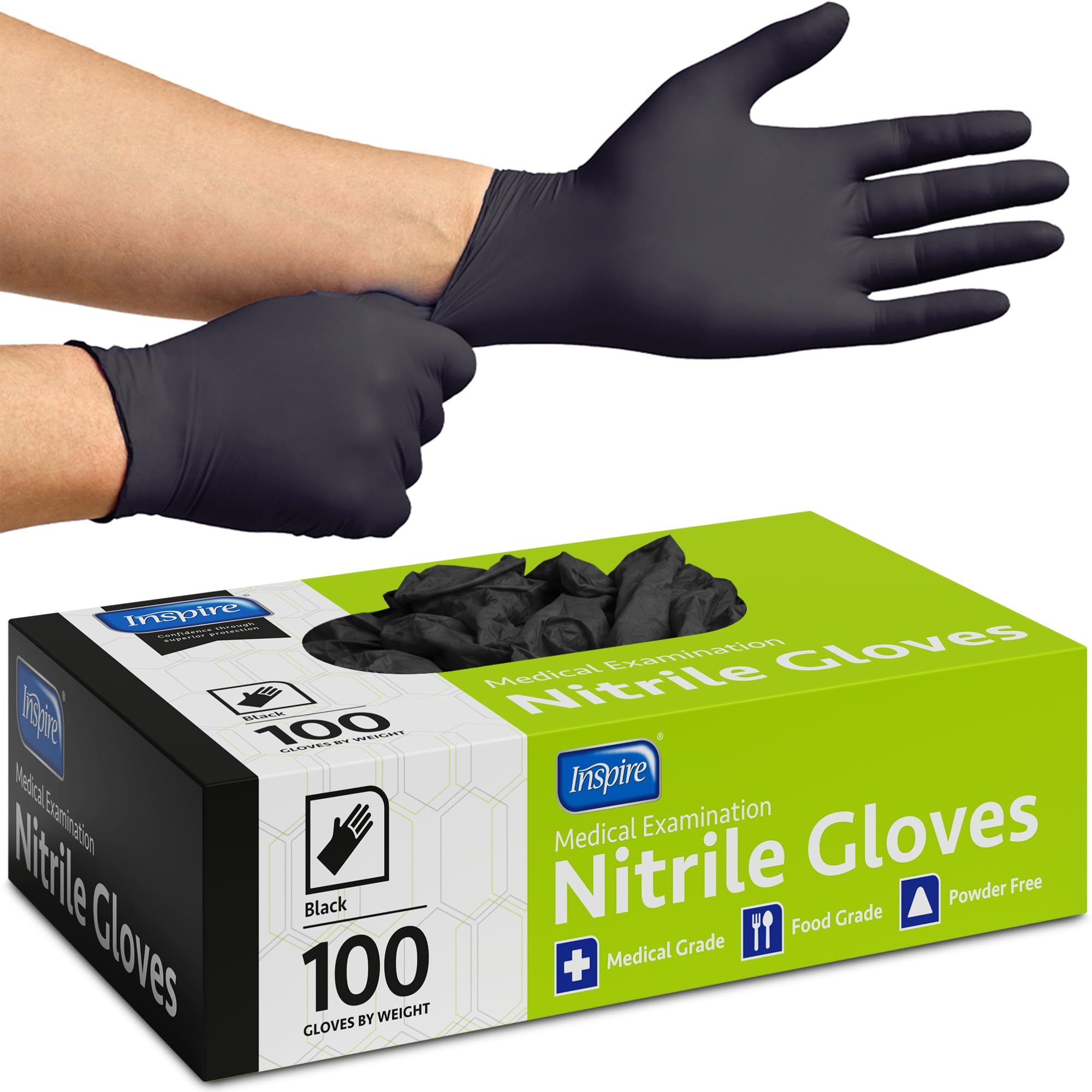
Inspire Black Nitrile 4.5 Mil

93 /100
Kirk Score Outstanding
Color
Black
Material
Nitrile
Thickness
4.5 mil
Check Details on Amazon

Pros

  • Black hides stains during messy prep
  • Comfortable, without sweaty hands
  • Light enough for quick household jobs

Cons

  • Tears when pulled or twisted hard

Black hides things, marinade, ink, grease, the smear you do not want to look at twice, and that is half the appeal of this box. The other half is a 4.5-mil wall that is thicker than a typical kitchen glove without going stiff.

Around the kitchen they are comfortable and they do not leave your hands sweaty the way cheap gloves do, which is why they turn up for food prep more than any other box here. No rubbery smell and nothing that irritated sensitive skin. The fit is the weak point: it runs small, so a medium fits closer to a small and a large is the safer bet if you are near the line.

They are light enough to wear for dusting, sorting, and other jobs where a heavier glove feels like overkill, and for the price they are the box we buy when the job is messy and short.

Bottom line: A good pick for messy kitchen work: the black hides stains, the fit is comfortable, and it is one of the cheaper boxes here, provided you size up and keep it away from sharp edges.

Check Latest Price
#08

Household cleaning

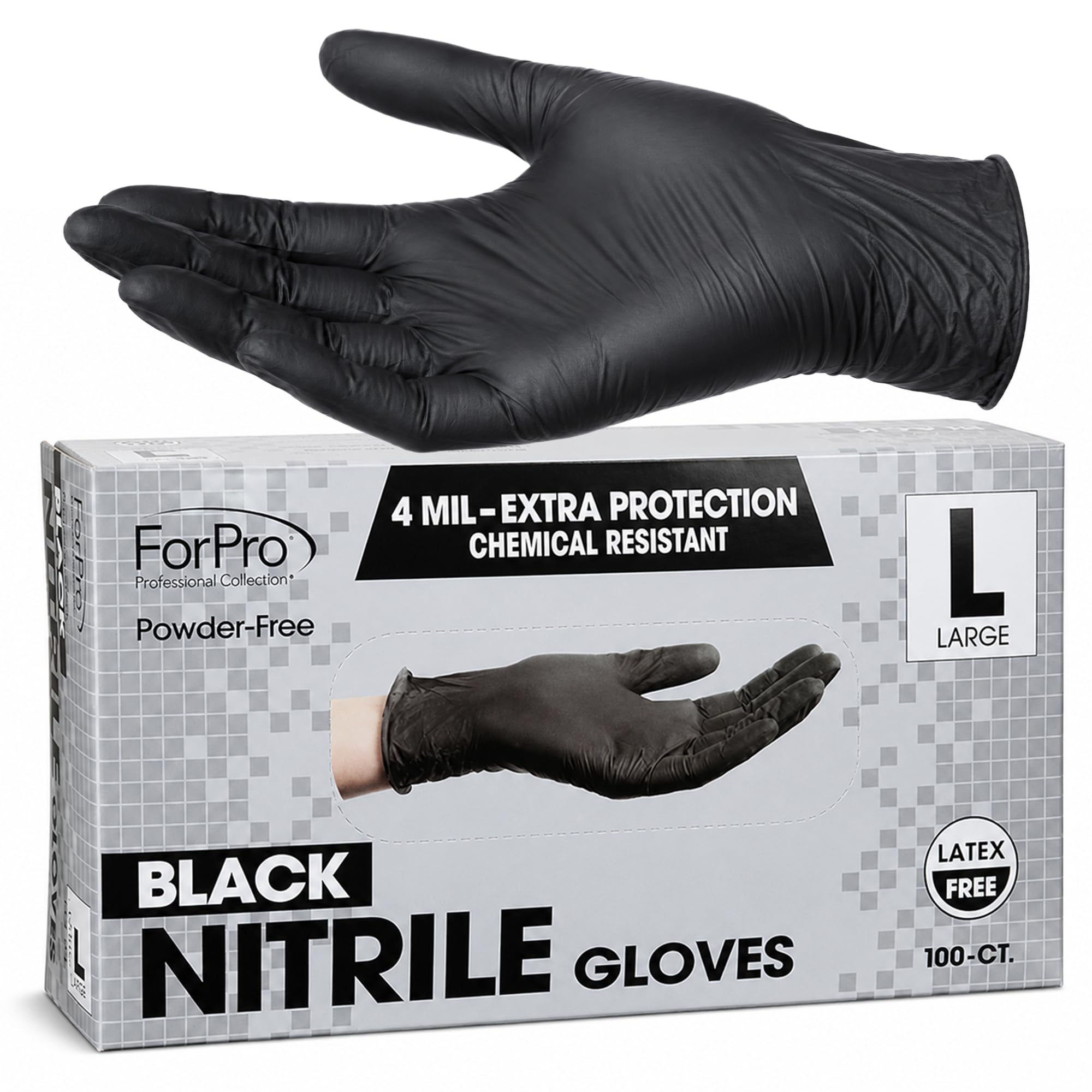
ForPro Disposable Nitrile 4 Mil

93 /100
Kirk Score Outstanding
Material
Nitrile, latex-free, powder-free
Food Safe
Yes
Thickness
4 mil
Chemical Resistant
Yes
Check Details on Amazon

Pros

  • Labeled chemical resistant and food safe
  • Good fit for narrow and small hands
  • Handles cleaners, staining, and food prep

Cons

  • Thin walls that tear on rough or sharp work

A glove labeled both chemical resistant and food safe is doing two jobs that usually take two boxes. At 4 mils this ForPro is thin enough to feel a spray bottle trigger and tough enough to survive a session with bathroom cleaner, which is the combination most household work actually needs.

We reach for these for spraying cleaner, wiping down a fridge, and staining small pieces, where the glove has to survive a chemical and then go in the bin. They hold up to water and household cleaners without going tacky, and the fit through the palm is good for narrow hands, which is rarer than it should be.

The sizing is the sticking point: these run small, and a large fits more like a medium, so order up if you are anywhere near the line. Otherwise they are a sensible, inexpensive box to keep under the sink for the jobs that do not deserve a heavy glove.

Bottom line: A cheap, chemical-resistant 4-mil box for cleaning and staining around the house; we order a size up, and we do not reach for it when the job needs muscle.

Check Latest Price
#09

Garage work

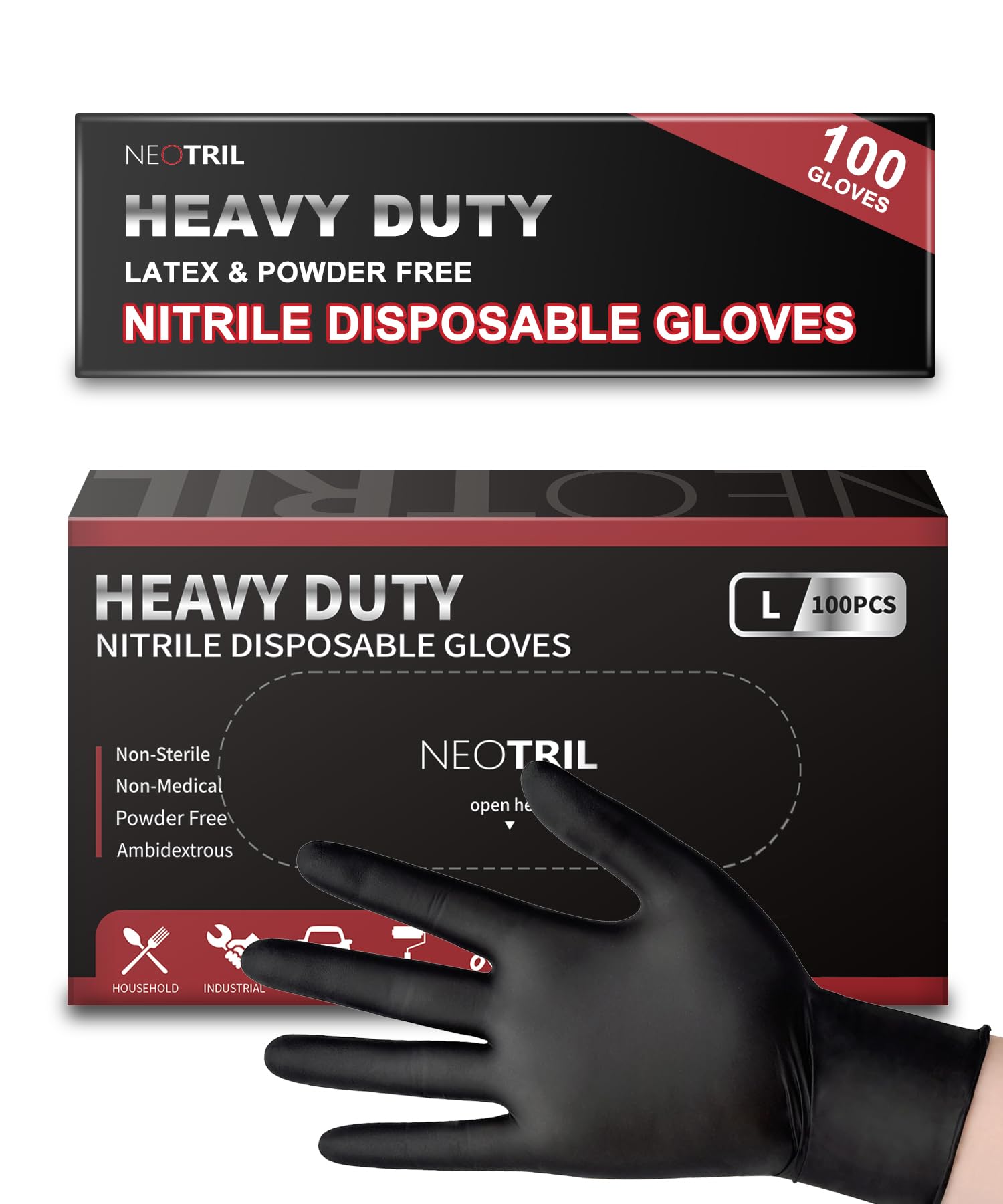
NEOTRIL 6 Mil Heavy Duty

91 /100
Kirk Score Outstanding
Grip
Textured
Color
Black
Material
Nitrile, latex-free, powder-free
Thickness
6 mil
Check Details on Amazon

Pros

  • 6-mil protection for garage and yard work
  • Textured grip that holds tools and parts
  • Costs less than our top pick

Cons

  • Sizing runs small; a large fits like a medium

These are the other 6-mil black nitrile worth knowing about. They cost a little less than our top pick and do the same basic job: thick enough for a wrench, textured for grip, and flexible enough that you are not wearing boxing gloves.

In the garage they held up the way a 6-mil glove should, with no punctures through a brake job and no tearing at the cuff when pulling them on. For the money, we are happy to keep a box in the rotation alongside the TitanFlex.

The differences are in the details. The fit is snug enough that a large feels like a medium, and the finish is matte where most nitrile is glossy, so dust and dried paint show up more. Wall thickness is the inconsistent part: a pair from one box can feel noticeably lighter than a pair from the next.

Bottom line: A snug, matte 6-mil glove that costs less than our top pick and handles garage work well, as long as you order a size up and accept a thinner pair now and then.

Check Latest Price

How We Put 15 Boxes of Nitrile Gloves to Work

We built the shortlist by pulling every nitrile glove we could find that stated its mil thickness, then cutting anything with vague specs, a powdered lining, or a price per glove that made no sense for something you throw away. That left 15 boxes spanning 3, 4, 4.5, 5, 6, and 8 mil in black, blue, and pink, in sizes small through large.

For five months those boxes lived where gloves actually get used: beside the cutting board, under the sink with the bleach spray, on the garage workbench, and on the bathroom vanity for hair dye. We wore them to break down a raw chicken and wipe the board after, to scrub a shower, to change oil and repack a bearing, and to paint a set of cabinet doors. Each time we noted whether the fingertips kept their grip on a wet cast-iron pan, whether the cuff rolled down when we reached overhead, and whether our hands stayed dry inside after twenty minutes.

Fit got its own pass, since sizing is the complaint we hear most. We tried each brand's medium and large on the same two pairs of hands, checked where the fingertips landed and whether the palm felt baggy, and noted who had to size up. Ease of use meant damp hands — could we pull a glove on straight out of the sink, and could we peel it off by the cuff without touching the outside.

Durability we tracked by counting. Every glove that split got logged along with the task it failed on, so a 3-mil that survived a full cleaning session scored better than a thicker one that tore at the webbing on its first wear. We also divided box price by usable gloves, because a hundred-count box where ten tear is a worse deal than it looks. The picks below are the ones still in rotation.

How to Choose Nitrile Gloves

Thickness Is the Decision That Matters Most

A mil is a thousandth of an inch, and the number on the box predicts almost everything about how a glove behaves. Three mil gives you feel for dough, nails, and detail cleaning but tears under load. Four to five mil is the household middle. Six to eight mil is where painting, solvents, and mechanic work live, thick enough to shrug off a sharp edge and to keep hold when your hands are wet.

We treat 6 mil as the line where a disposable glove stops being a barrier and starts being a tool. One trap worth naming: heavy duty is a marketing phrase, not a measurement. If a box never prints a mil figure, assume you are buying a standard glove and keep looking for one that does.

Assume You Need to Size Up

Nitrile sizing is not consistent between brands, and in this set the pattern leans small: several boxes here fit a size below their label, including our top pick. Measure around the widest part of your palm, compare that to the chart on the listing, and if you land between two sizes, take the larger one for painting, cleaning, and garage work.

A cuff that is too tight splits when you pull it on, and a glove that is too long in the finger turns a screwdriver into a fumble. For fine work, food prep, nails, or small hardware, a closer fit is worth having, but only once you know how that particular brand runs.

What Nitrile Stops and What It Doesn't

Nitrile handles oils, grease, and most water-based paints and stains well, which is why it replaced latex in kitchens and shops. It is not a chemical suit. Acetone, paint thinner, and aggressive solvents pass through a thin disposable glove quickly, and no disposable glove is puncture-proof against a sharp edge.

If you are working with something harsh, read the safety data sheet and wear a glove rated for it. Otherwise the practical rule is simple: swap a glove as soon as it feels tacky or swollen, because that is the material telling you it has absorbed what you are working with.

Box, Case, or Both

A 100-count box suits a household that puts gloves on a few times a week. A thousand-glove case is cheaper per glove and worth the shelf space only if you are changing pairs several times a day, whether that is caregiving, a clinic, or a workshop.

Check what the case actually contains before ordering, since a thousand gloves can arrive as ten boxes of a hundred or as one bulk pack, and the boxed version is far easier to live with. Store either away from heat and direct sun, because nitrile stiffens when it bakes in a garage all summer.

Texture, Color, and Food Labels

A textured palm or fingertip is the difference between holding a wet tool and chasing it across the floor, and it usually costs nothing extra. Color is more useful than it sounds: black hides grease and paint, a bright shade is easier to spot on a shop floor, and keeping one color for food and another for the garage stops you mixing them up.

If the gloves will touch food, look for food safe or food grade on the label rather than assuming. Nitrile itself is fine for food contact; the claim on the box is what tells you the maker has committed to it.

Frequently Asked Questions

Final Verdict

Start with the TitanFlex 6-mil box. It handles a paint tray, a greasy repair, and a raw chicken without asking you to stock three different gloves, and it costs only a little more than the thin boxes here. That range is what makes it the default recommendation for a home that does its own repairs and cooking.

Change the pick when the job changes: the GRIPXX for hands that live in oil, the Supmedic or the London Labs 5-mil for caregiving, and the MED PRIDE case if you go through gloves by the dozen.