// data-verified

Best Corded Jigsaws of 2026

A jigsaw will cut nearly anything you can draw a line on — that's the pitch, anyway. The trouble shows up six inches into a curve in 3/4-inch plywood, when the blade leans off your pencil mark and you're left sanding out the evidence. What separates a good corded jigsaw from a frustrating one isn't the motor badge; it's whether the blade stays put under load, how the speed dial behaves at the slow, careful end, and whether the base holds square when you tilt it for a bevel.

I've spent the past eight months cutting with 12 corded jigsaws, top-handle and barrel-grip alike, through plywood, countertop blanks, and the odd scrap of aluminum, and most of the difference lives in your hands rather than on the spec sheet. One thing worth knowing before you shop: a barrel grip puts your hand closer to the work for control on curves, while a top handle gives you somewhere to push for aggressive straight cuts. Either works — your bench habits decide which. The saws below are the ones that held their line.

#01

Best Overall

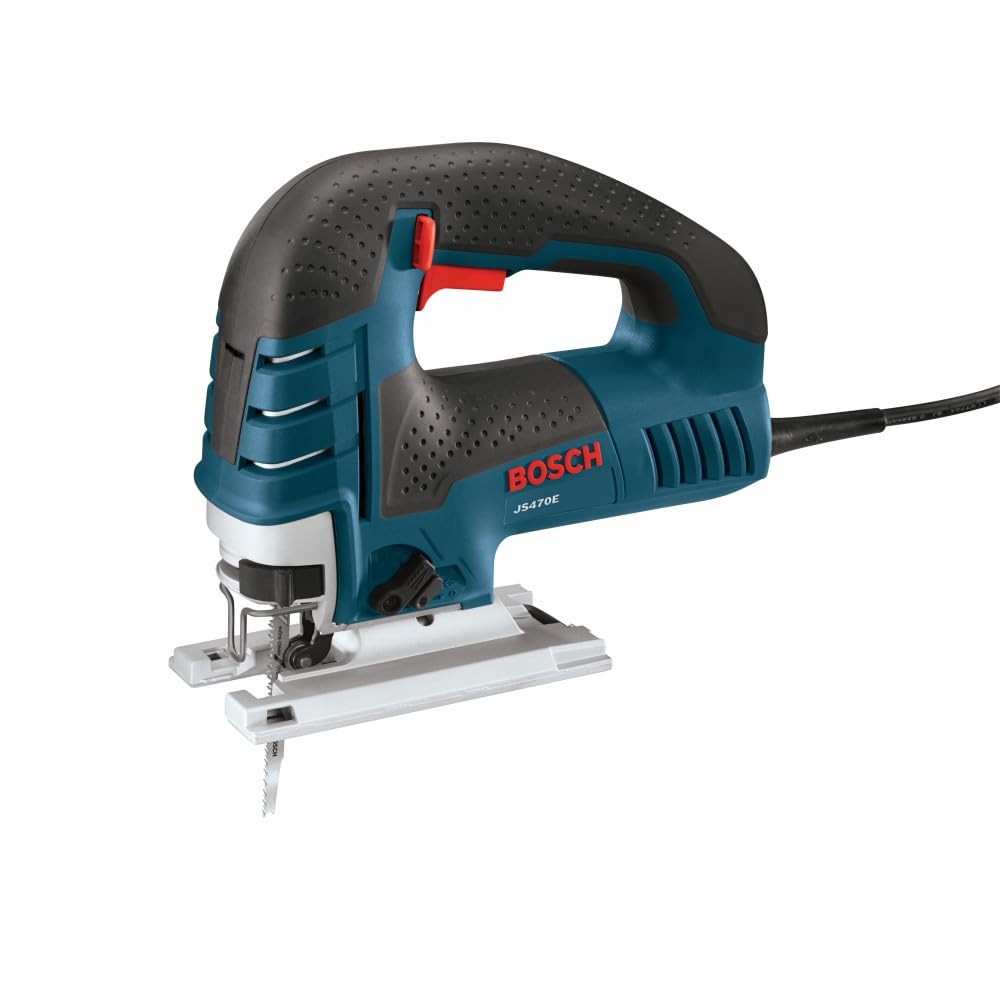
Bosch JS470E

95 /100
Kirk Score Outstanding
Amps
7 A
Bevel
45 degrees
Speed
3,100 SPM
Orbital Settings
4
Check Details on Amazon

Pros

  • Toolless blade ejection lever
  • Die-cast foot with steel insert
  • Four orbital settings, smooth to aggressive
  • Feathers speed smoothly under load

Cons

  • Highest price of the saws here

The detail that settled this pick is a small lever at the front of the shoe. Push it and the blade drops out — no wrench, no touching hot steel, no fishing around with a screwdriver. We change blades constantly as a project moves between wood, laminate and a bit of trim, and the JS470E is the saw here that turns that into a two-second pause instead of a chore.

Seven amps and 3,100 strokes per minute put it at the top of this group for power, and the four orbital settings let you spend that power the way the cut needs it: a smooth stroke for a finish edge, an aggressive one for hogging out a rough opening. The die-cast foot with its steel insert is the most solid base here, and once you set a bevel it stays set.

Control is what we kept noticing. The top handle is soft where your palm lands, the dial sets a ceiling and the trigger feathers below it, and the saw tracks a pencil line through a curve without the sideways fight you get from lighter tools. Cutting a sink opening in 3/4-inch plywood, it needed one pass and very little cleanup.

It is not a small saw, and the mass is noticeable when you work above your shoulders — the trade for a base that sits flat and stays flat. The bevel wrench lives on board, the blade lever sits where your thumb expects it, and the whole thing feels designed rather than assembled.

Bottom line: We recommend the JS470E to anyone who uses a jigsaw regularly — the clamp, the die-cast foot and the smooth seven-amp stroke are worth the extra.

Check Latest Price
#02

Best Value

SKIL JS314901

94 /100
Kirk Score Outstanding
Amps
6 A
Bevel
45 degrees
Blade Change
Tool-free
Orbital Settings
4
Check Details on Amazon

Pros

  • Halo light wraps both sides of the blade
  • Dust blower has its own on/off switch
  • Tool-free blade clamp
  • Four orbital stages at a modest price

Cons

  • Trigger does not feather below the dial setting

Six amps, four orbital stages and a no-wrench blade clamp for less than most of the saws here ask — and the halo light and switchable dust blower make it the better buy. We did not expect a wrapping LED on a saw at this position in the group, and it turns out to be the feature you miss when you go back to one without it.

The light rings the blade rather than pointing at the front of the shoe, so it lights the line from both sides and your own shadow doesn't fall across it. The blower has its own switch, which is the right call: you want air clearing the line when you're freehanding a curve, and you want it off when you're following a scribed pencil line on finished stock. Four orbital stages cover the same range as the far more expensive saws here.

Speed control is the compromise. A wheel sets a maximum, but the trigger doesn't feather below it — the saw runs at the setting you dialed and that's that. Along a line it makes no difference; for plunging into the middle of a laminate plank, set the wheel slow before you start. Planning one step ahead is a small tax on a saw this capable.

Bottom line: Our value pick: six amps, a wrapping work light, a switchable blower and no-wrench blade changes — as long as you can plan around a non-feathering trigger.

Check Latest Price
#03

Best Barrel Grip

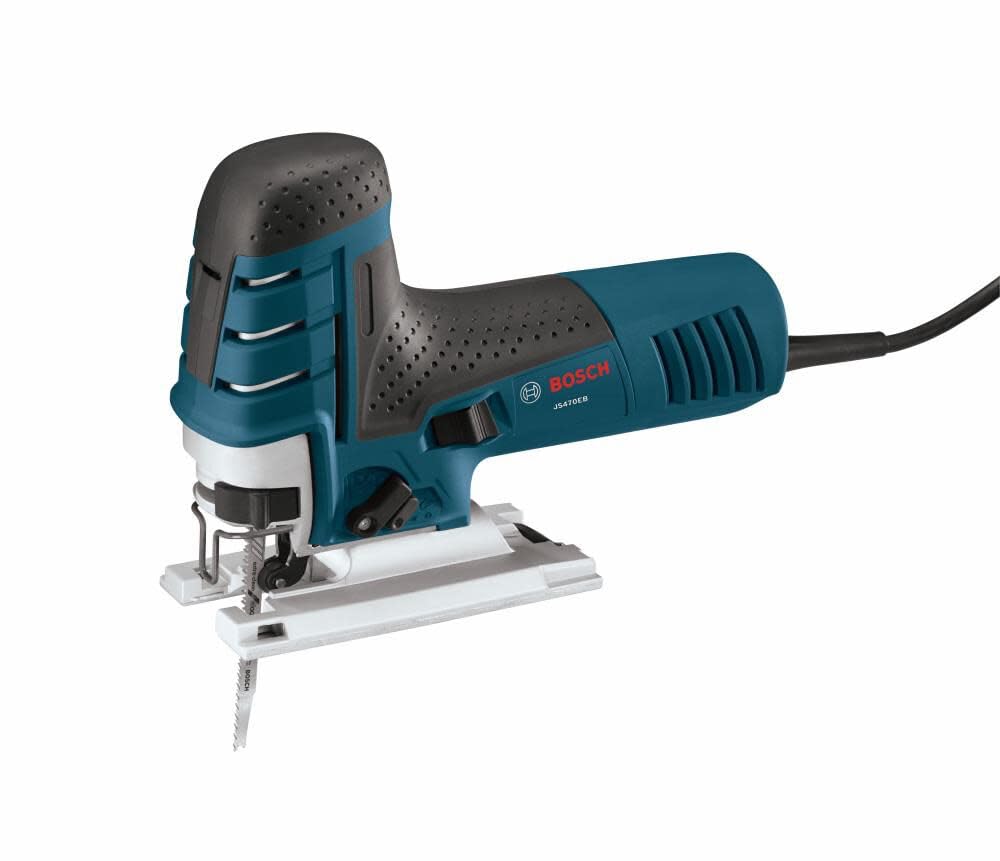
Bosch JS470EB

94 /100
Kirk Score Outstanding
Amps
7 A
Speed
3,100 SPM
Wood Capacity
5-7/8 inches
Orbital Settings
4
Check Details on Amazon

Pros

  • Barrel grip steers tight curves
  • Same seven-amp motor as the top pick
  • Toolless blade ejection lever
  • Low, stable hand position

Cons

  • Heavier in the hand than the top-handle Bosch

Take the top-handle Bosch, move the grip down around the motor housing, and you get this. Same seven amps, same 3,100 strokes, same blade lever — the difference is entirely in where your hand sits and what that does to the saw.

The barrel grip is the reason to buy it. Your hand wraps the body in line with the blade, so the saw pivots around the cut instead of above it, and a tight radius becomes a steer rather than a shove. Working a curve in one-inch stock, we could feel the shoe staying flat and the blade staying on the line without leaning on the tool.

There is a trade: no handle to bear down on. A top handle lets you put your weight into a fast, aggressive cut, and the barrel grip makes you supply that from your arm and shoulder instead. With the work clamped on a bench, that is a fair exchange for the control. Cutting overhead or one-handed in a corner, reach for the top-handle version.

Bottom line: The curved-cut specialist: a barrel grip that puts your hand in line with the blade and steers tight radii with far less fighting.

Check Latest Price
#04

Best for Low Vibration

Makita JV0600K

93 /100
Kirk Score Outstanding
Amps
6.5 A
Bevel
45 degrees
Speed
500-3,100 SPM
Orbital Settings
3 plus straight
Check Details on Amazon

Pros

  • Counterbalance system damps vibration
  • Dust port takes a vacuum hose
  • Speed dial holds a setting
  • Ships in a hard tool case

Cons

  • No work light on the shoe

Halfway through a run of flooring cuts, most saws here have you gripping harder than you need to. The Makita doesn't. Its counterbalance system takes the shake out of the stroke, and the difference shows up in your hands before it shows up on the cut line.

6.5 amps and a 500-3,100 SPM dial give you plenty of room, and pinning a speed rather than holding a trigger makes a long repeated cut more consistent. Three orbital settings plus straight cutting, and a shoe that bevels to 45 degrees without a tool, cover what woodworking asks for.

The through-the-body dust port is the feature we expected to be filler and now rate highly. It takes a vacuum hose at the back, so the line stays visible and the dust leaves the bench instead of being blown into a pile two feet to the left. The saw also ships in a hard case with a blade and a wrench, which is more than most here give you.

Where it earns its place in this group is endurance work: window trim, shelving, a whole floor. A smooth-running saw is the one you keep picking up at hour three, and the case means the blades and the wrench are still with it when you do.

Bottom line: Our pick for long sessions: a counterbalanced 6.5-amp motor that keeps the blade tracking and your hands fresh through a whole afternoon of cuts.

Check Latest Price
#05

Best Budget

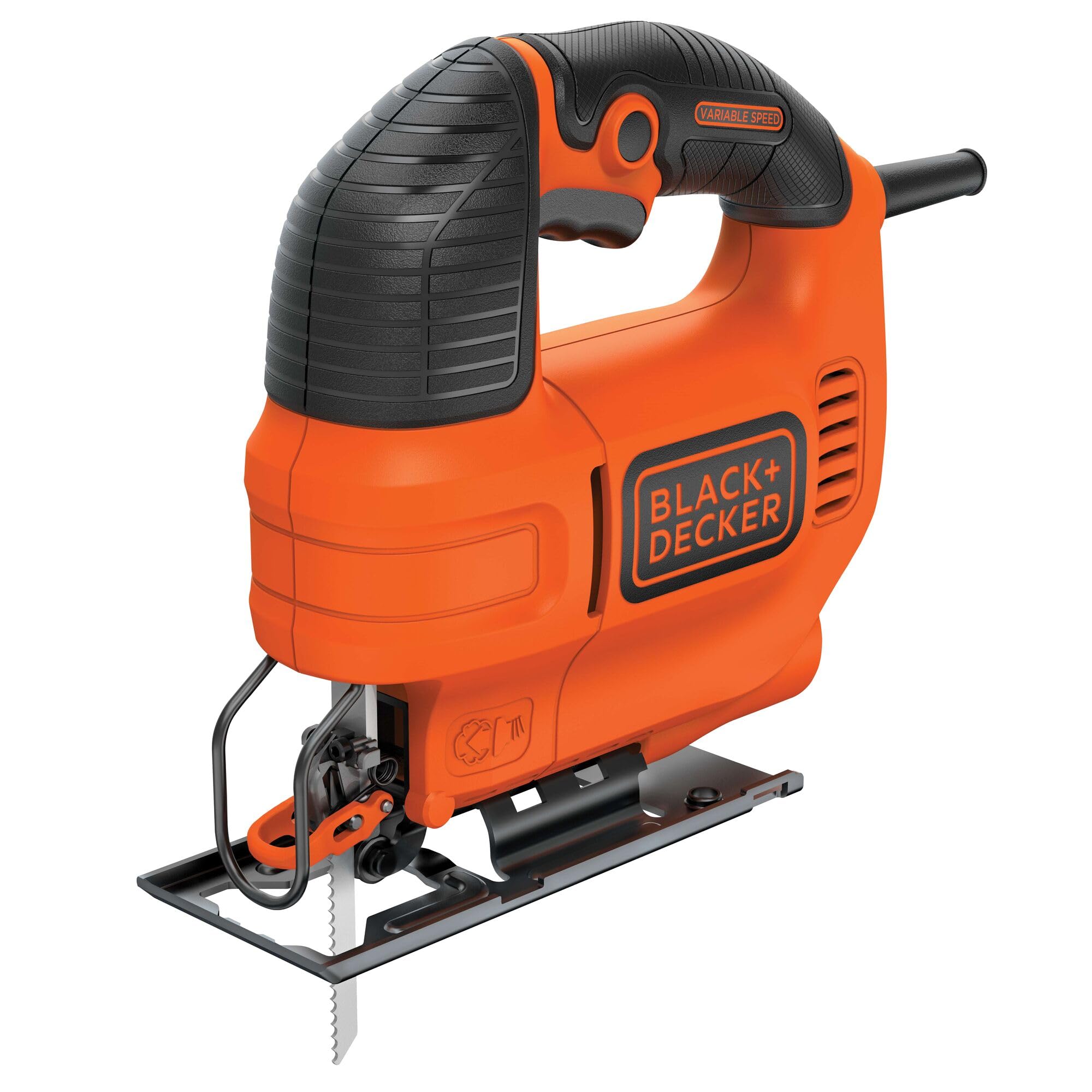
BLACK+DECKER BDEJS300C

93 /100
Kirk Score Outstanding
Amps
4.5 A
Bevel
45 degrees
Speed
3,000 SPM
Weight
4.4 lb
Check Details on Amazon

Pros

  • 4.4 pounds, easy to control one-handed
  • Tool-free blade changes
  • Bevels to 45 degrees
  • Lowest price of the picks here

Cons

  • Stamped base plate is the least sturdy part

At 4.4 pounds, this is the saw you can hold steady with one hand while the other positions a board. That matters more for a first jigsaw than the amp rating on the box, because most beginner mistakes come from losing control of the tool rather than running out of power.

4.5 amps and up to 3,000 SPM will take 3/4-inch plywood, laminate planks, and the notching and trimming household repairs ask for. Blades change without a tool, the shoe bevels to 45 degrees, and a wire guard at the front lets you see the line without leaning over the blade.

The ceiling is real: feed it wet pressure-treated 2x6 or a long run of hardwood and the motor lets you know it's working. For trellises, shelving, trim and the occasional outlet cutout, that ceiling never comes up. It is also the saw in this group we hand to someone who has never used a jigsaw before, because nothing about it is intimidating.

Bottom line: The easiest way into corded jigsaws: light, simple and modest enough in price to buy before you know how much you'll use it.

Check Latest Price
#06

Repeated cuts

PORTER-CABLE PCE345

93 /100
Kirk Score Outstanding
Amps
6 A
Speed
3,200 SPM
Warranty
3 year limited
Orbital Settings
4
Check Details on Amazon

Pros

  • Lock-on button for long cuts
  • Seven-position speed dial in the trigger
  • 3,200 SPM top speed
  • Three-year limited warranty

Cons

  • Six pounds gets heavy overhead

A lock-on button doesn't sound like much until you've held a trigger through fifty feet of shelving. The PCE345 has one, paired with a seven-position speed dial built into the trigger, and together they make it the most comfortable saw here for doing the same cut over and over.

The numbers back it up: 6 amps, a 3,200 SPM top speed that is the highest in this group, four orbital settings, and a three-year limited warranty that is the longest any saw here carries. The housing is metal rather than plastic, and it feels like a saw that expects to be used rather than admired.

Check the shoe before your first cut. It doesn't always sit square to the blade out of the box, and on joinery or a countertop cutout where 90 degrees actually matters, that is the difference between a clean fit and a gap you have to fill. Square the blade against the shoe and adjust it before you start, and the rest of the saw behaves.

Bottom line: For repeat cuts and long sessions, the lock-on trigger and seven-position dial make this the least tiring saw in the group.

Check Latest Price
#07

Mixed blade types

CRAFTSMAN CMES610

93 /100
Kirk Score Outstanding
Amps
5 A
Speed
0-3,000 SPM
Blade Shanks
T and U
Orbital Settings
4
Check Details on Amazon

Pros

  • Accepts T- and U-shank blades
  • Tool-free blade change
  • Four orbital settings
  • Comfortable contoured handle

Cons

  • Five amps leaves less headroom in hardwood

Buy a pack of U-shank blades for a T-shank-only saw and you've bought scrapers. The CMES610 takes both shank types, which is the kind of flexibility you appreciate most on the day the hardware store is out of one kind.

Five amps, 0-3,000 SPM on the trigger and four orbital settings put it mid-pack on paper. What you notice in use is the contoured over-molded handle and the tool-free blade change — no wrench to lose, no fiddling to get a blade seated square.

The 5-amp motor is the honest limit. It is enough for plywood, laminate and countertop stock at a sensible feed rate, and it tells you when you're pushing a thick hardwood cut faster than it wants to go. That isn't a fault so much as the difference between this and the seven-amp saws here.

Where it earns its spot is flexibility at a middle price: one saw that takes whatever blade is in the drawer, changes it without a tool, and has the orbital range to go from rough cut to finish cut. If your blade supply is a mixed drawer, that is worth more than a little extra amperage.

Bottom line: A flexible middle choice — it takes both blade shank types, changes blades without a tool, and covers the orbital settings most projects actually need.

Check Latest Price
#08

Short stopped cuts

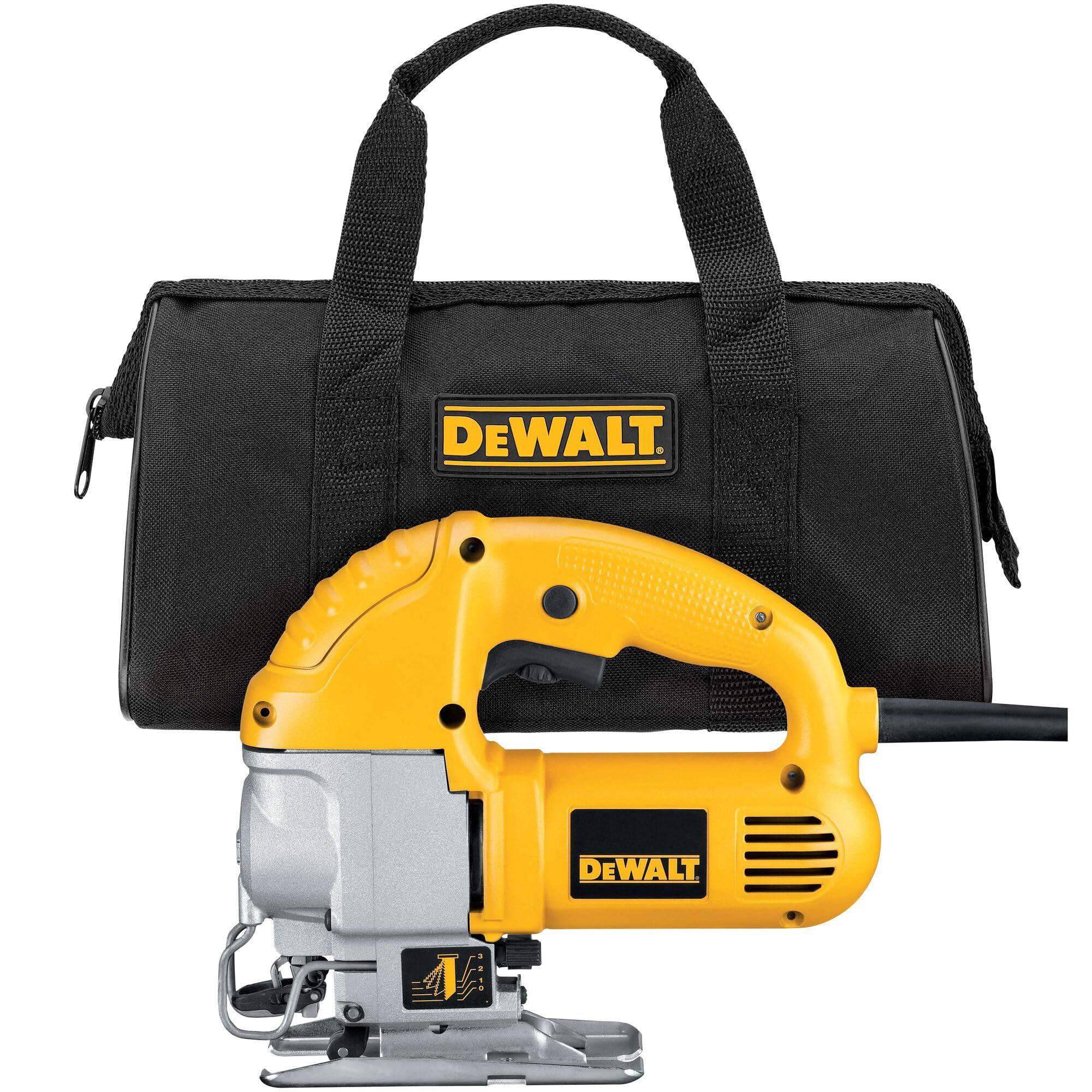
DEWALT DW317K

92 /100
Kirk Score Outstanding
Amps
5.5 A
Speed
0-3,100 SPM
Weight
7.4 lb
Orbital Settings
4
Check Details on Amazon

Pros

  • All-metal gear case
  • Keyless lever blade clamp
  • Four orbital positions and 3,100 SPM
  • Ships with a storage bag

Cons

  • 7.4 pounds to steer through a long cut

Long straight cuts are where the DW317K asks the most of you. The blade has room to drift in thick plywood, and the saw rewards a slow, deliberate feed — run it hard and the line goes where the blade wants rather than where you pointed it.

Everything around that is DEWALT workmanship: 5.5 amps, 0-3,100 SPM, four orbital positions, an all-metal gear case, and a keyless lever clamp that swaps blades without a wrench. It ships with a bag, which keeps the shoe from getting knocked about in a truck bed.

For notching studs, cutting outlet boxes into plywood and trimming shelves, it is an unglamorous tool that does exactly what a jigsaw is for, and the metal gear case suggests it will keep doing it.

What we take away is that this is a saw that asks for patience on the cuts that show. Short, curved and stopped cuts — most of what a jigsaw is bought for — suit it fine. On a long visible straight run, take your time or buy one of the saws above.

Bottom line: A workmanlike 5.5-amp saw for notches, curves and stopped cuts; feed it slowly on long straight runs and it holds its line.

Check Latest Price

How We Tested Corded Jigsaws (and What We Cut)

We built the shortlist by combing through owner reviews and shop-forum threads, then filtering for what actually divides this category: handle style, amp rating, orbital settings, bevel range, and whether the blade changes with a tool or a lever. We also noted what came in the box, since a case and a spare blade count for something. From there we bought 12 saws at retail and put them on our benches for eight months.

Most of that time went to the jobs a jigsaw actually gets handed: sink cutouts in butcher block, curved brackets in pine, notches in cabinet sides, shelving in 3/4-inch plywood, and trim cuts in laminate. We cut freehand and against a straightedge, crosscut and curved, and made every bevel adjustment the saws allowed.

Blade drift was the number we cared about most. After each freehand straight cut we laid a square against the line and measured how far the blade had wandered, then repeated it with thin and thick blades to see how much the shoe and blade clamp let the blade flex. We checked each saw with a square after a 45-degree bevel and again after switching back, and timed blade changes wearing work gloves. Speed control got tested where it matters, starting a cut in laminate at the low end of the dial. Because a saw you dread lifting is a saw you stop using, we weighed each one and ran a batch of cuts overhead and on a vertical panel. After eight months we went back through every saw looking for play in the base, a mushy switch, or a cord that had stiffened.

How to Choose a Corded Jigsaw

The Blade Clamp Comes First

The clamp is the tool. A saw that lets the blade wander or work loose will fight every line you draw, whatever the amp rating says on the box. Tool-free clamps are worth having because you change blades more often than you expect, moving between wood, laminate and the odd piece of metal. A lever that ejects the blade without touching hot steel is better again, and it is a large part of why the Bosch JS470E leads this list.

Check the shank type before you stock up on blades. Most saws here take T-shank only, and the CRAFTSMAN CMES610 is the one that accepts both T- and U-shank.

Amps, Strokes and Orbital Action

Amps are a rough proxy for how much material a saw pushes through without bogging. Around 5 amps handles plywood, laminate and trim; 6.5 to 7 amps is where thick hardwood and long rip cuts stop feeling like a negotiation.

Orbital action is the other half of the story: the blade swings forward on the upstroke, which cuts faster and rougher. Four settings let you dial from a clean finish cut to fast stock removal, and three settings plus straight cutting does nearly the same job for less money.

Top Handle or Barrel Grip

Top handles are the default and the easier shape to lean on and push. A barrel grip wraps your hand around the body in line with the blade, which is better for curves and for seeing exactly where the blade meets the work — handle both Bosch saws here and the difference is obvious in ten seconds.

If your cutting is mostly curves, cutouts and joinery, seek out the barrel grip. If you cut overhead or one-handed in awkward corners, the top handle wins.

Vibration, Weight and Seeing the Line

A jigsaw is held in the air, so fatigue counts as a specification. Counterbalance systems — the Makita's is the most effective here — cut the shake that makes your hand tighten up over a long run.

Weight cuts both ways: 4.4 pounds is easy to hold and easy to push off line, while a heavier saw sits flatter on the work. A work light or a dust blower keeps the line visible, and a vacuum port keeps the bench clear instead of pushing the pile two feet to the left.

The Shoe, the Warranty and What Lasts

The base plate takes most of the abuse. A die-cast shoe with a steel insert holds its angle and stays flat; a stamped plate flexes and can lose square after a knock off a sawhorse. Warranties across this group run from one year to three, and the longer ones are worth weighing on a cheaper saw you plan to use hard.

Whatever you buy, square the blade to the shoe before the first cut. New saws are not always true out of the box.

Frequently Asked Questions

Final Verdict

The Bosch JS470E is the saw we point most people to. Its blade clamp, die-cast foot and four-stage orbital action make it the most capable all-round corded jigsaw in this group, and it makes the least fuss over a long project.

If the budget won't stretch that far, the SKIL JS314901 gives you a work light, a switchable dust blower and tool-free blade changes for far less. And if your work is curves and joinery rather than straight runs, the barrel-grip Bosch JS470EB steers better than anything else here.