// data-verified

Best Cordless Impact Drivers of 2026

An impact driver doesn't just turn a screw — it hammers it, in hundreds of tiny rotary kicks per second, so the bit stays seated while the fastener sinks. A 3-inch lag screw that stalls a drill and rounds out the head will walk into pressure-treated lumber with one of these and barely slow down. The fix is exactly what you'd hope for: fewer stripped heads, less wrist strain, and a fence panel that gets finished before your patience does.

The catch is that the category splits before you ever compare torque. Some of these are bare tools that assume you already own a battery platform, others arrive as kits with a charger in the box, and that gap can cost more than the driver itself. My team spent six months driving screws with 12 impact drivers — flat-pack furniture, cabinet hangs, a gate rebuild — and the ones we kept reaching for won on brushless motors and battery discipline, not the torque number printed on the side. Here's what earned a permanent spot in the bag.

#01

Best Overall

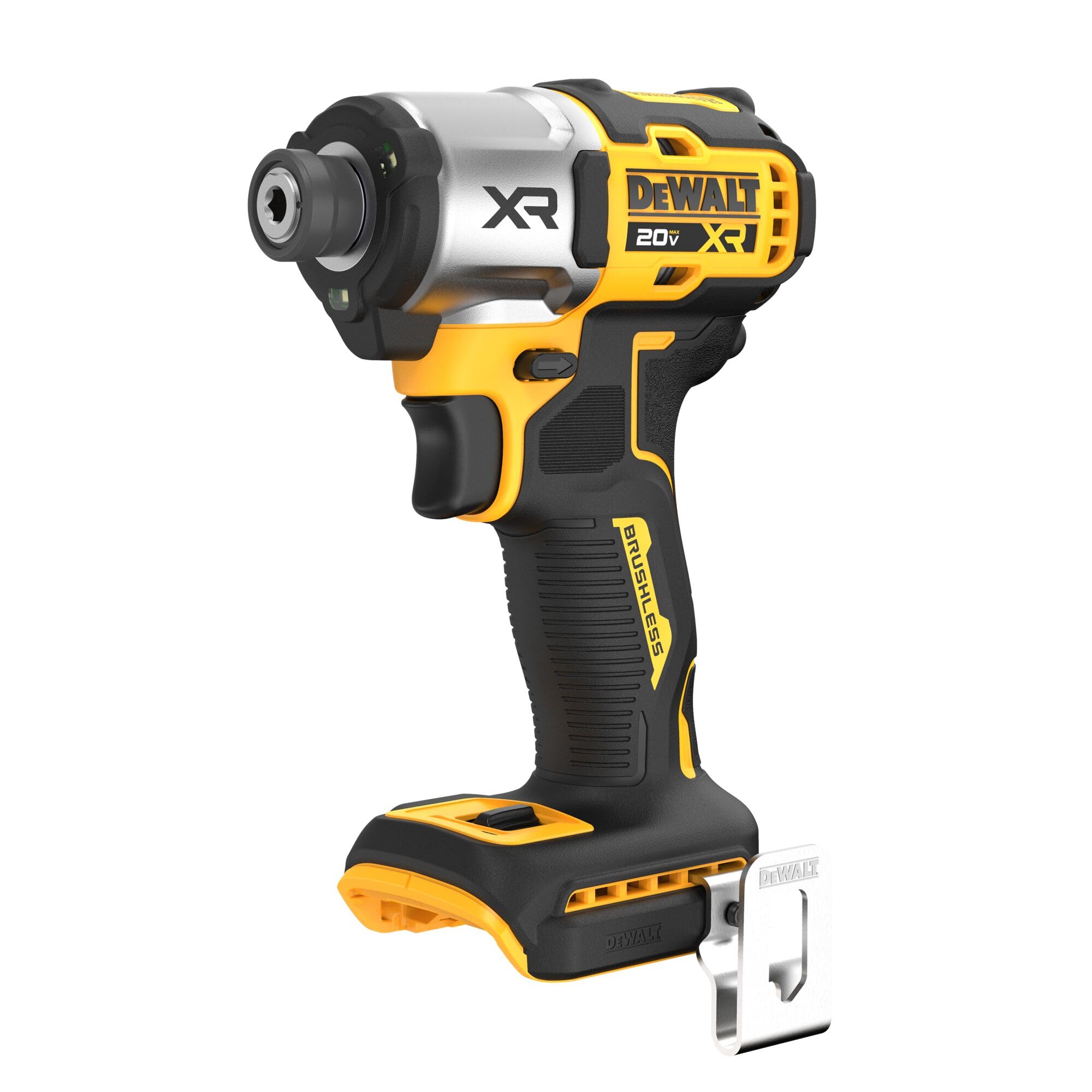
DeWalt DCF845B 20V MAX XR

94 /100
Kirk Score Outstanding
Max Torque
1,825 in-lb
Speed Modes
3
Tool Weight
2.1 lb
No-load Speed
3,400 rpm
Check Details on Amazon

Pros

  • Three speeds tame small screws
  • 1,825 in-lb for deck screws and lag bolts
  • Compact 5.1-inch body reaches tight spots
  • Three LEDs and belt hook included

Cons

  • Bare tool; battery and charger sold separately

Three speed settings on a tool this compact is the combination that won us over. The DCF845B has 1,825 in-lb of torque and a 3,400 rpm top speed, but the useful part is the selector: low mode lets you start a small screw without stripping the head, and high mode has enough authority for deck screws and lag bolts. At 5.1 inches long, it also follows the fastener into tight spots instead of forcing your wrist into a corner.

The brushless motor is the reason the tool feels smooth under load, and the three LEDs light the bit and the work surface rather than just the tip. We also appreciate the belt hook being included; it's a small thing until you're on a ladder and need both hands. The variable-speed trigger gives you a useful range between a gentle start and full power.

For anyone already on the 20V MAX platform, this is the version we point to first. The compact body and three-speed control are what keep it in our regular rotation; if you need the absolute highest torque in this group, the Milwaukee 2953-20 is the next step up.

Bottom line: We recommend the DCF845B as the best all-around pick here for DeWalt 20V MAX users: 1,825 in-lb, three speed modes, and a compact body that fits tight work.

Check Latest Price
#02

Best for Maximum Power

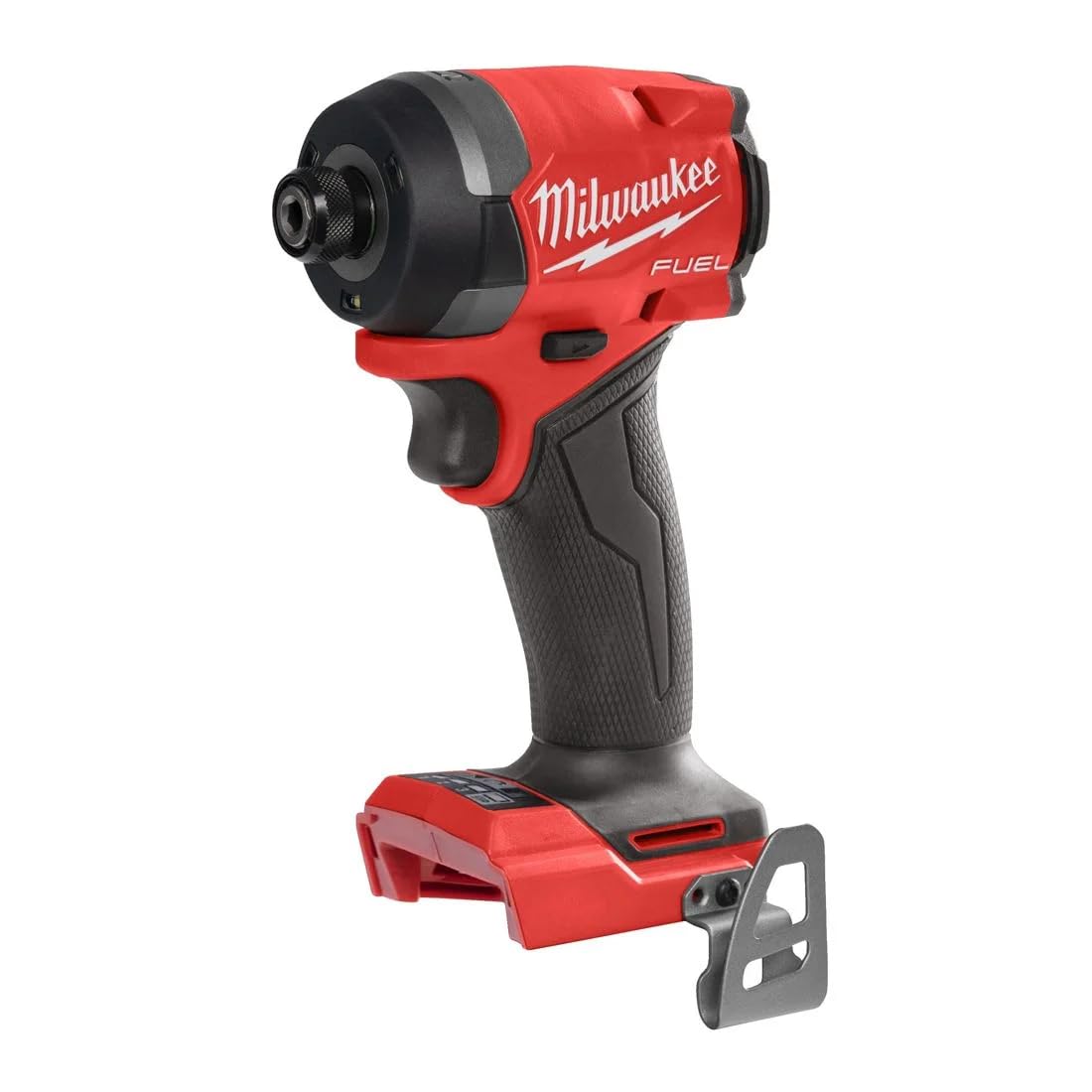
Milwaukee M18 Fuel 2953-20

94 /100
Kirk Score Outstanding
Max Torque
2,000 in-lb
Tool Weight
2.2 lb
Drive Control
4-mode
No-load Speed
3,900 rpm
Check Details on Amazon

Pros

  • 2,000 in-lb, the most torque in this set
  • Four-mode drive for trim to heavy fastening
  • Smooth trigger prevents stripped screws
  • Bright tri-LED work light

Cons

  • Bare tool; M18 battery and charger not included

Stubborn fasteners are where this tool makes its case. The M18 Fuel turns a lag bolt or a long structural screw with an authority that the compact 12V drivers here cannot match, and the 3,900 rpm top speed keeps the bit moving once the screw bites.

We reach for the 2953-20 when a job has a lot of big screws and we do not want to baby the tool. Its 2,000 in-lb rating is the highest in this group, and the four-mode drive gives you a low setting for trim screws, a mid range for general work, and a high setting for the heavy stuff. The trigger is smooth enough to feather the start, which matters when you are driving a small fastener into softwood and do not want to bury it.

The tri-LED lights are bright and spread wide enough to see the bit and the work surface, which helps when you are working under a cabinet. The tool feels balanced in hand, though the extra power comes with more mass than the M12. For a pro who drives big fasteners all day, that is a fair trade.

Bottom line: We recommend the M18 Fuel for the biggest fastening jobs in this group: 2,000 in-lb of torque and a four-mode drive that keeps a pro moving.

Check Latest Price
#03

Best Compact

Milwaukee M12 Fuel 3453-20

95 /100
Kirk Score Outstanding
Max Torque
1,500 in-lb
Tool Weight
2 lb
Drive Control
4-mode
No-load Speed
3,600 rpm
Check Details on Amazon

Pros

  • 2-pound body for overhead work
  • 1,500 in-lb from a 12V tool
  • Four modes, including self-tapping
  • Three LEDs close to the chuck

Cons

  • Bare tool; M12 battery and charger sold separately

At 2 pounds, the M12 Fuel is the driver we reach for when the work is above our shoulders or inside a cabinet. The 3453-20 still delivers 1,500 in-lb and a 3,600 rpm top speed, so it is not a toy, but the compact body is what makes it useful: you can hold it in one hand, sight the bit, and keep the other hand on the workpiece.

The four-mode drive includes a dedicated self-tapping screw mode, which is a small feature that earns its place with metal studs and sheet metal. We also like the three LEDs; they sit close to the chuck and light the fastener rather than the ceiling. The trade-off is the 12V platform: it is brilliant for assembly and overhead work, but it is not the tool we grab for a full day of large lag bolts.

It fits in a bag without crowding out a drill, which is the reason to choose it over a more powerful 18V driver for finish work. For cabinet installers and electricians who work overhead, that trade is worth it.

Bottom line: We recommend the M12 Fuel when the work is overhead, inside cabinets, or in tight assemblies; it is the lightest, most compact way to get 1,500 in-lb and four drive modes.

Check Latest Price
#04

Best Complete Kit

DeWalt DCF787D1 20V MAX Kit

95 /100
Kirk Score Outstanding
LED Delay
20 sec
No-load Speed
2,800 rpm
Charger Included
Yes
Included Battery
2.0Ah
Check Details on Amazon

Pros

  • Complete kit with battery and charger
  • Brushless motor and 2,800 rpm
  • 20-second LED delay
  • Compact, balanced body

Cons

  • 2.0Ah battery is best for projects, not all-day driving

The box is the argument here: the DCF787D1 arrives with the impact driver, a 2.0Ah 20V MAX battery, a charger, and a belt hook. For someone who does not already own DeWalt batteries, that turns a bare tool into a working kit without a separate shopping list.

The brushless motor tops out at 2,800 rpm, and the LED stays on for 20 seconds after you release the trigger. We paid attention to that delay because it is the difference between a light that helps you set the next fastener and one that switches off the moment you let go. The compact body is easy to control one-handed, and the included 2.0Ah pack is light enough to keep the tool balanced.

We recommend this kit for a first impact driver or a second tool for a home shop. It will not out-drive the 2,000 in-lb Milwaukee or the 1,825 in-lb DeWalt bare tool, but it has enough power for deck screws, cabinet work, and general repairs.

Bottom line: We recommend this kit for first-time buyers or anyone who wants one box: a brushless DeWalt impact driver, 2.0Ah battery, charger, and enough power for most home projects.

Check Latest Price
#05

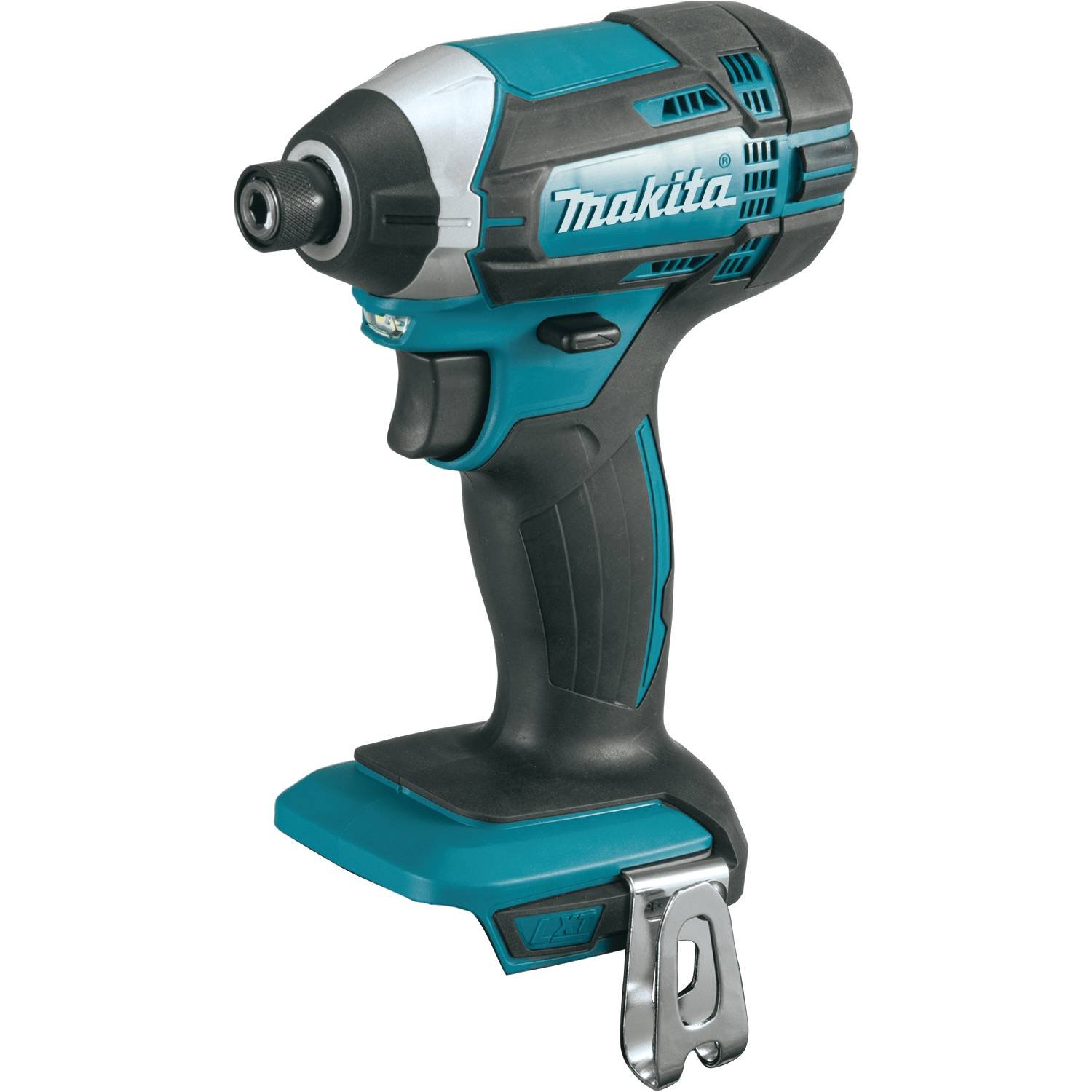
Best for Makita 18V Users

Makita XDT11Z 18V LXT

92 /100
Kirk Score Outstanding
Length
5-3/8 in.
Max Torque
1,460 in-lb
Impact Rate
3,500 ipm
No-load Speed
2,900 rpm
Check Details on Amazon

Pros

  • Low-profile 5-3/8-inch body
  • All-metal gear housing
  • 1,460 in-lb and 3,500 ipm
  • Runs on Makita 18V LXT

Cons

  • Bare tool; battery and charger not included

The low-profile head is the reason this one stays in the bag. At 5-3/8 inches long, the XDT11Z slips between studs and into cabinet corners where a full-size driver has to stop and reposition.

We like the XDT11Z for Makita 18V LXT owners who want a simple, tough driver without adding another battery platform. The 1,460 in-lb and 2,900 rpm are mid-pack here, but the 4-pole motor and all-metal gear housing make it feel like a jobsite tool rather than a homeowner special. The 3,500 ipm impact rate is quick enough for long screw runs, and the variable-speed trigger is easy to feather.

For someone with a Makita drill and saw, this is a sensible way to add an impact driver without duplicating batteries. The 2.8-pound weight with a battery is light enough for overhead work, though the tool is not as compact as the M12. The three-year limited warranty is a useful backstop for a bare tool.

Bottom line: We recommend the Makita XDT11Z for anyone already on the 18V LXT platform who wants a compact, dependable driver with a low-profile head and a metal gear housing.

Check Latest Price
#06

Best Budget Kit

Black+Decker BDCI20C 20V MAX Kit

95 /100
Kirk Score Outstanding
Max Torque
1,375 in-lb
Impact Rate
3,900 ipm
No-load Speed
3,000 rpm
Included Battery
1.5Ah
Check Details on Amazon

Pros

  • Ready-to-use kit with battery and charger
  • 1,375 in-lb for home repairs
  • Lightweight soft-touch body
  • Shares PowerConnect 20V batteries

Cons

  • 1.5Ah battery needs recharging on bigger projects

The first thing we noticed is that the Black+Decker kit arrives ready to work: the BDCI20C includes a 20V MAX battery, a charger, and a screwdriving bit. For a homeowner who wants one box for odd jobs, that is a more useful starting point than a bare tool that needs a separate battery purchase.

The 1,375 in-lb rating is the lowest in this group, but the tool still turns 3,000 rpm and delivers 3,900 ipm, which is enough for 3-inch construction screws and general repairs. The soft-touch grip is comfortable, and the compact body is easy to carry around the house.

The included battery works with other Black+Decker 20V tools, so the kit can grow into a small system. The variable-speed trigger gives you some control for starting screws, and the quick-release chuck makes bit changes simple. It is not the tool we reach for on heavy lag bolts or all-day framing.

We recommend it as a budget home kit, not as a pro daily driver. It has the power for small projects and the convenience of a battery and charger in the box; for heavy fastening, step up to one of the 18V or 20V picks.

Bottom line: We recommend the Black+Decker kit as the budget pick for occasional home projects: it includes a battery and charger, drives construction screws, and costs less than most bare tools here.

Check Latest Price
#07

Light home work

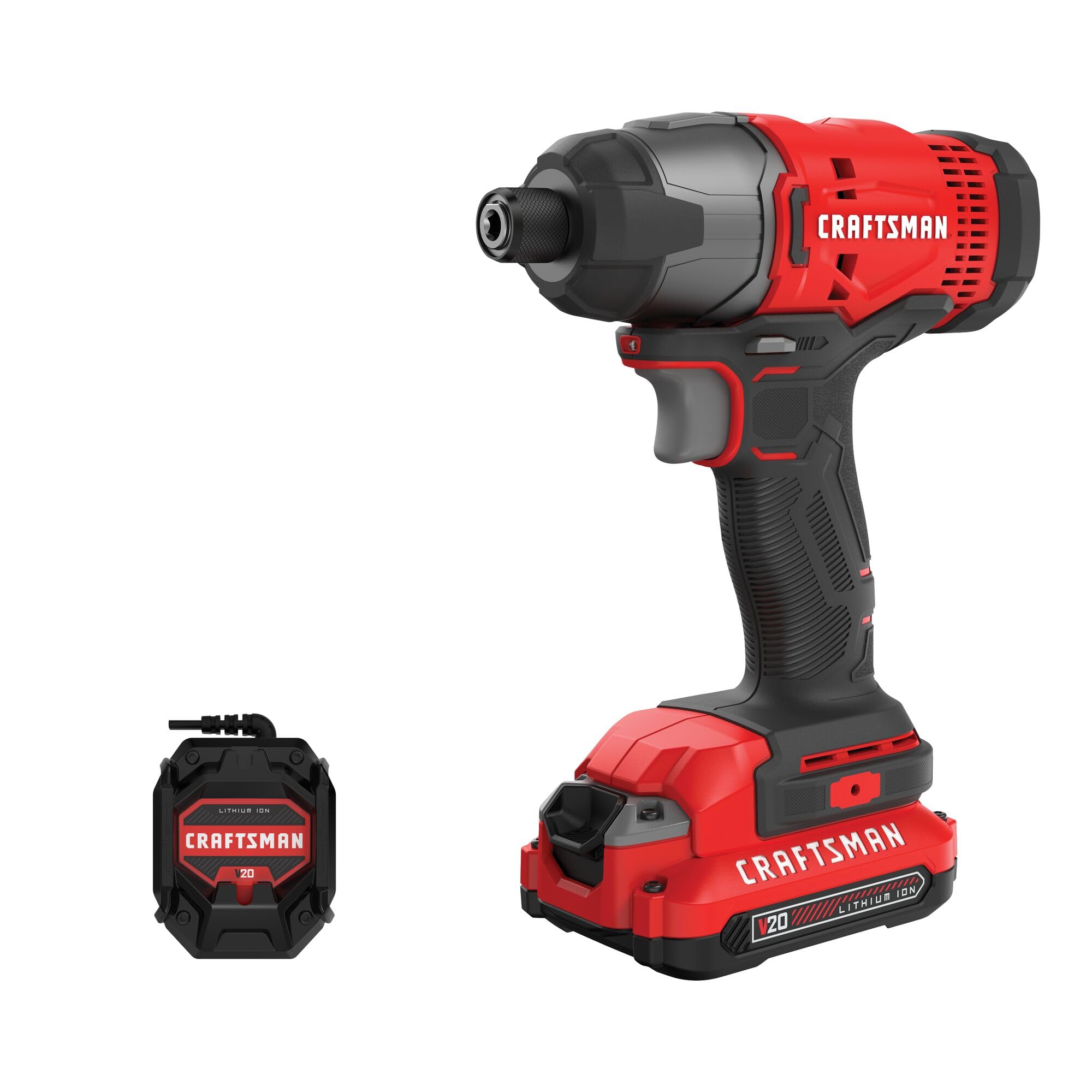
Craftsman CMCF800C1 20V MAX Kit

94 /100
Kirk Score Outstanding
Max Torque
1,460 in-lb
Impact Rate
3,100 ipm
No-load Speed
2,800 rpm
Included Battery
1.3Ah
Check Details on Amazon

Pros

  • Quick-release one-handed bit changes
  • 1,460 in-lb for light home work
  • Complete kit with battery and charger
  • Shares Craftsman 20V MAX batteries

Cons

  • 1.3Ah battery limits long driving sessions

The quick-release chuck is the detail that makes the CMCF800C1 easy to live with: you can change a bit one-handed, without fumbling with a locking collar while you are on a ladder. That sounds minor until you are holding a shelf with one hand and trying to swap from a driver bit to a pilot bit.

The kit includes a 1.3Ah 20V battery, a charger, and the impact driver, so it is a complete first tool for light home work. The 1,460 in-lb and 2,800 rpm are close to the Makita and enough for deck screws, furniture assembly, and small repairs. The LED light helps in dark corners, and the variable-speed trigger gives you some control over small fasteners. The body is compact enough to keep in a cabinet or a small tool bag.

We recommend it as a budget second tool or a first impact driver for occasional projects. The quick-release chuck and shared 20V MAX battery system are the practical wins; if you need more torque or a pro-duty tool, the DeWalt and Milwaukee picks are the better spend.

Bottom line: We recommend the Craftsman kit as a low-cost second tool or a first impact driver for light home work, with a battery, charger, and 1,460 in-lb in the box.

Check Latest Price

How We Tested the Best Cordless Impact Drivers

We built the shortlist around the specs that actually change a buying decision: a 1/4-inch hex chuck, brushless versus brushed motor, how many speed modes the tool offers, and whether it ships as a bare tool or a kit with battery and charger. From there we filtered by price and cross-read owner reviews for repeat complaints about battery cutouts and chuck wobble. Twelve drivers made the cut, from compact 12-volt models to full-size 18- and 20-volt tools, and each one stayed in rotation for six months.

Every driver went to work on the same jobs: a fence rebuild, a deck stair stringer, and a cabinet install, driving 3-inch lag screws into pressure-treated lumber and #8 screws into white oak and pine. We noted whether a screw stopped flush on the first pull of the trigger or cammed out and chewed the head, how much the tool kicked back in the hand, and whether the low-speed setting gave enough control to sink a screw without crushing the wood fibers. Flat-pack assembly with each driver told us how it handled hundreds of small fasteners, and working overhead in a dim garage showed what the built-in light actually illuminated.

For battery life, we ran continuous rundown on a fresh pack until the tool cut out and counted the fasteners it drove. Durability came from a drop off ladder height onto concrete, a ride loose in a bucket of hand tools in a truck bed, and back-to-back sessions until the housing got hot. At the six-month mark we re-checked bit retention, chuck wobble, and trigger feel to separate the tools that held tight from the ones that had loosened up, and we weighed what came in the box against the price — a charger and two packs only count as value if you weren't already committed to that battery line.

How to Choose a Cordless Impact Driver

Start With the Battery You Already Own

If you already have a drill and batteries from one brand, stay on that platform; the bare tool is usually the better value, and you avoid duplicating chargers. If you are starting fresh, a kit with a battery and charger is the simpler buy. The DCF787D1 and BDCI20C are complete kits here, while the DeWalt, Milwaukee, and Makita picks are bare tools. Check the battery interface before you fall for a torque number.

Match Torque to the Fasteners

Torque is the force behind the bit, and in this group it runs from 1,375 to 2,000 in-lb. For cabinet screws, furniture, and light repairs, 1,300 to 1,500 in-lb is plenty. Deck screws and long lag bolts benefit from 1,800 in-lb and up, but more torque also means more risk of snapping a small screw or stripping a hole. A multi-speed selector is the practical answer: start low, then step up only when the fastener needs it.

Size and Weight Are Jobsite Features

A compact impact driver is not just easier to carry; it changes where you can work. The 5-3/8-inch Makita and 5.1-inch DeWalt fit between studs and under sinks, while a 2-pound 12V driver like the Milwaukee 3453-20 is easier to hold overhead for a long run of cabinet screws. The trade-off is that smaller tools usually carry less torque or a smaller battery. Pick the longest, heaviest tool you can comfortably control for the work you do most.

Look for Control, Not Just Power

Three or four speed modes are more useful than a single trigger when you drive different fasteners. Low modes let you seat a small screw without stripping it; high modes deliver full impact for structural screws. A smooth trigger and a work light that stays on after the trigger releases are small conveniences that matter in dark cabinets and under sinks. The DeWalt DCF787D1's 20-second LED delay is a good example of a feature that earns its place.

Plan for Runtime, Bits, and Noise

Kit batteries in this group are compact 1.3Ah to 2.0Ah packs, which keep the tool light but limit long sessions. If you drive hundreds of screws in a day, budget for a larger battery or a second pack. Buy impact-rated bits; ordinary bits can shatter under impact. And use hearing protection during extended use, especially with the louder high-torque models. A quiet hydraulic driver is an option if you work in occupied spaces, but it trades peak force for smoothness.

Frequently Asked Questions

Final Verdict

We recommend the DeWalt DCF845B for most people who already own 20V MAX batteries. It has the best balance in this group of torque, three-speed control, and a compact body, and it handles everything from cabinet screws to deck fasteners without feeling like a handful.

If you are starting from scratch, the DCF787D1 kit puts a battery and charger in the box and is the easier first buy. For the biggest lag bolts, choose the Milwaukee 2953-20; for overhead work, the 2-pound M12 3453-20 is the one we reach for.