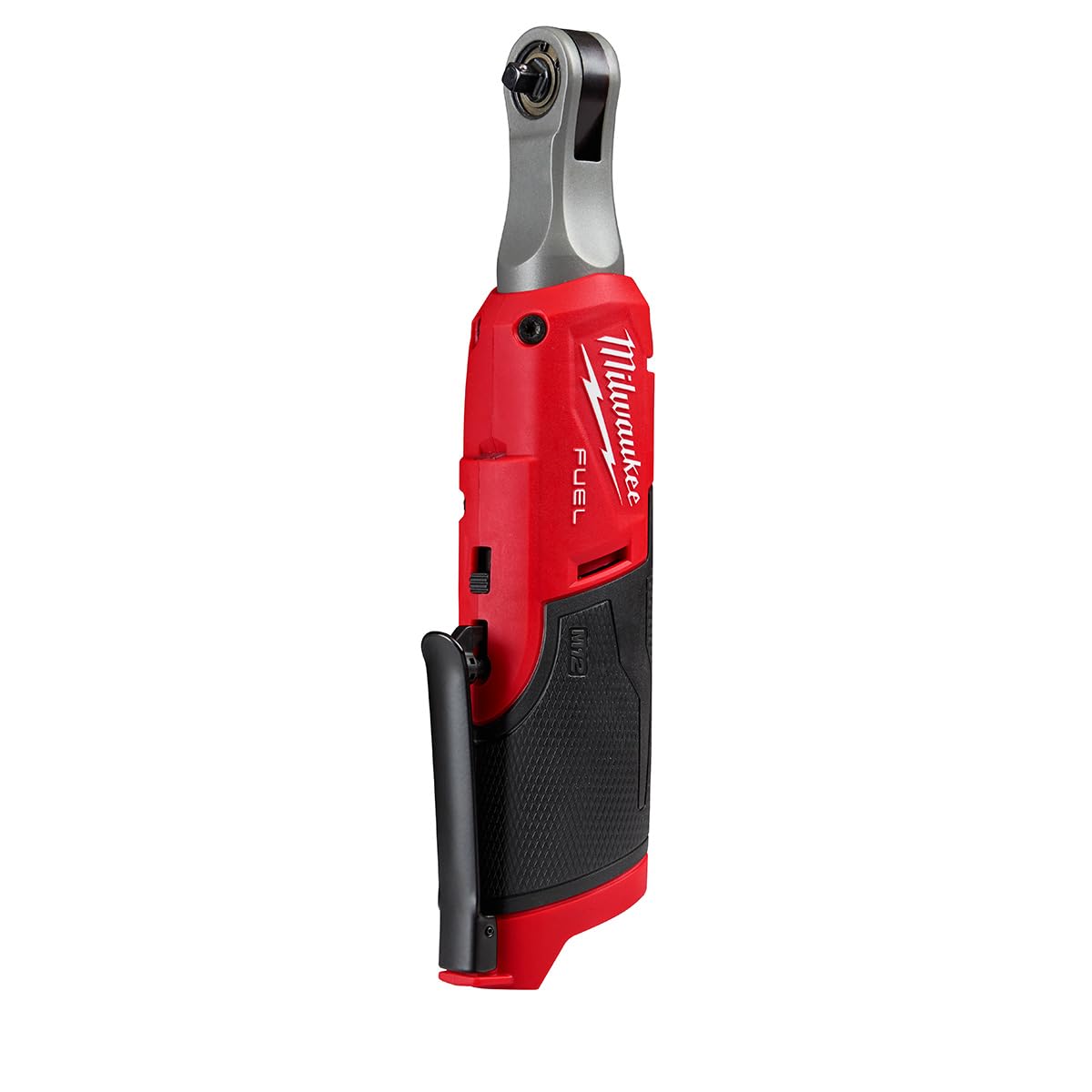
Best Overall

Milwaukee M12 2457-20
- Speed
- 250 RPM
- Torque
- 35 ft-lb
- Weight
- 16 oz
- Drive Size
- 3/8 inch
Pros
- Fits where bigger ratchets won't
- Variable-speed trigger for controlled starts
- Recessed switch and onboard fuel gauge
Cons
- Needs Milwaukee's 12V batteries, not 18V packs
Length and weight are the two numbers that decide whether an electric ratchet gets used or stays in the case. This one is 9.47 inches and 16 ounces, with a head that sits low enough to lie flat against the panel you're working behind, and that pair of figures is why it comes out first. The variable-speed trigger lets you start a nut slowly and then run it, and the LED sits on the front of the unit where it lights the fastener rather than the fender above it.
We think it's the best all-around pick here because it gets the hard part right — fitting, aiming and controlling — without charging a premium for it. Milwaukee also recessed the forward/reverse switch into the back of the head so a knuckle can't flip it mid-job, and put a fuel gauge on the side so you find out the battery is low before you're upside down under a dash.
What you give up is outright shove. Thirty-five foot-pounds is a running figure: it will spin a nut down a long thread and snug it, and it won't argue with a seized bolt, which is the honest trade for a body this small. If you already own M12 packs, the tool alone is all you need to add to the drawer.
Bottom line: For most people this is the electric ratchet to buy: small enough for real engine-bay clearance, smooth to control, and easy to live with on Milwaukee's M12 batteries.
Check Latest Price