// data-verified

Best Gas Pressure Washers of 2026

A gas pressure washer earns its keep the first Saturday you spend watching a winter's worth of driveway grime slide away instead of scrubbing at it with a brush. The right machine has enough power to strip a patio clean, but it also starts without a fight, stays planted while you work, and doesn't leave you chasing drips at every connection. Assembly, storage size, and how easily the wand and nozzles swap matter just as much as the headline PSI number.

We spent eight months testing seven gas pressure washers, running each through the same mix of weekend chores: muddy driveway edges, mildewed siding, a fence that needed refreshing, and a car that had collected road film. One thing I'd tell any first-time buyer: PSI gets the attention, but GPM and nozzle choice decide how fast the surface actually comes clean, and too much pressure can scar wood and siding if you're not careful. The picks below are the ones that held up and felt worth their footprint.

#01

Best Overall

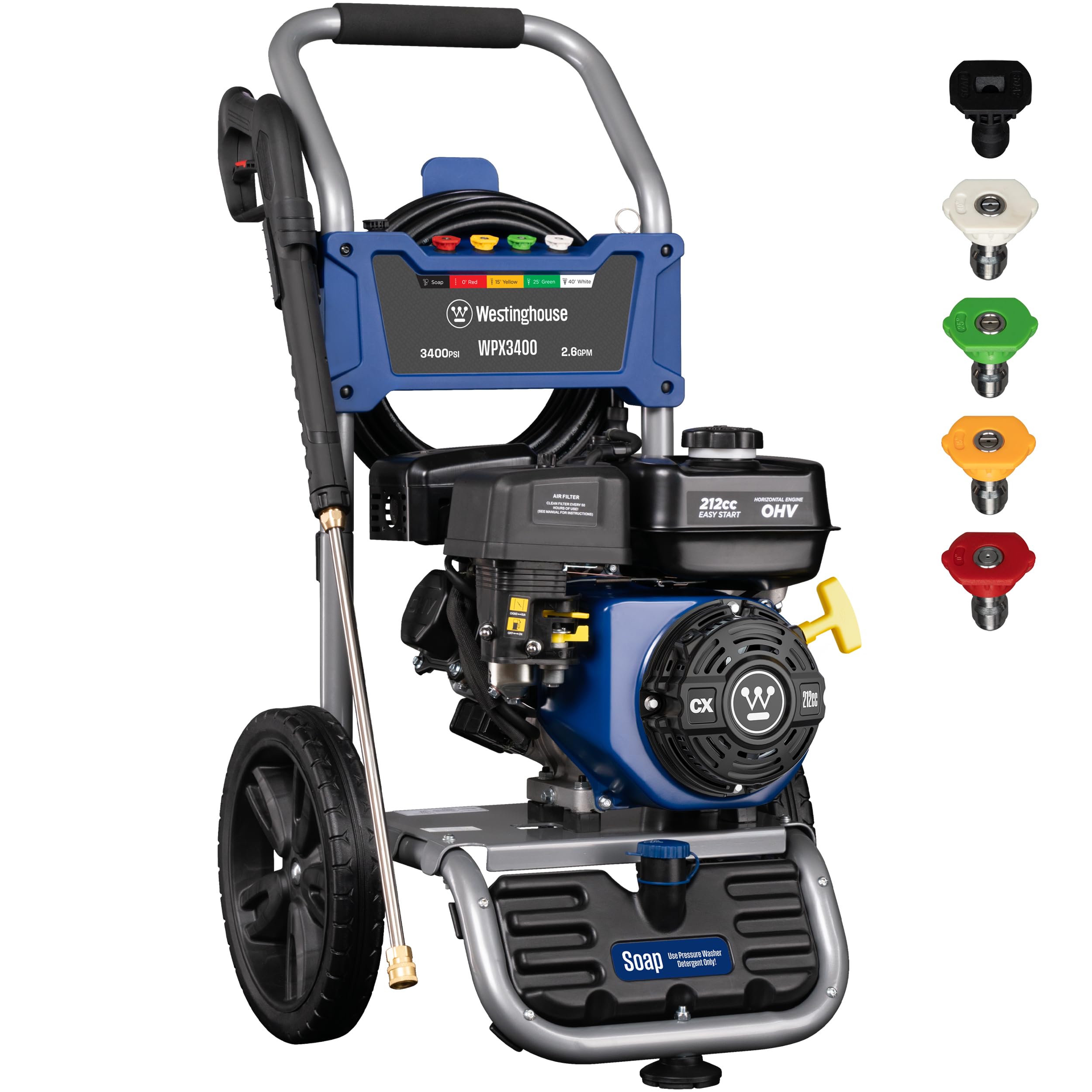
Westinghouse WPX3400

91 /100
Kirk Score Outstanding
Pump
Maintenance-free axial cam
Warranty
3 years limited
Hose And Soap
25 ft hose; 0.5 gal tank
Pressure And Flow
3,400 PSI / 2.6 GPM
Check Details on Amazon

Pros

  • 3,400 PSI and 2.6 GPM clean fast
  • Starts on the first pull, assembles in minutes
  • 12-inch never-flat wheels roll over gravel
  • Three-year limited warranty

Cons

  • 0.5-gallon soap tank empties mid-job
  • Hose and brass soap fitting are the weak point

Two numbers describe this machine, and the second is the one shoppers skim past: 3,400 PSI and 2.6 gallons per minute. Pressure breaks dirt's grip on concrete; flow is what carries the loosened grime off the slab instead of pushing a wet fan of silt around in circles. At 2.6 GPM the Westinghouse rinses as it cleans, which is why a driveway that looks like a weekend job is over well before lunch.

What earns it the top spot is how little ceremony stands between deciding to wash something and washing it. Choke out, one pull, and the 212cc engine settles into a steady idle; the five quick-connect tips click on and off; the 12-inch never-flat wheels roll over gravel and lawn edges without the flat tire that eventually ends a pneumatic set. Nothing about the machine is fussy, and we never found ourselves hunting through the box for a missing part.

The 0.5-gallon soap tank tucks into the frame without crowding the deck, and a bottle of engine oil and a funnel ship in the box, so setup is a ten-minute job rather than a trip to the parts store. At 63 pounds it is a two-hand lift into a truck bed and an easy roll anywhere flat, and the footprint is compact enough to stand upright against a shed wall.

Three years of limited coverage is longer than most of the budget machines here carry, and on a gas washer the warranty is really a pump warranty. Add 25 feet of hose and a tip set that covers everything from stripping a deck to soaping a car, and there is not much left to buy. If the list is a concrete driveway, siding, a fence, and two cars, this is where we start.

Bottom line: Our pick for most homeowners: 3,400 PSI and 2.6 GPM, a reliable first-pull start, and a three-year warranty at a midrange price.

Check Latest Price
#02

Best for Heavy-Duty Use

Simpson PowerShot PS3228

88 /100
Kirk Score Excellent
Hose
25 ft MorFlex
Pump
AAA triplex
Engine
Honda GX200, low-oil shutdown
Pressure And Flow
3,500 PSI / 2.5 GPM
Check Details on Amazon

Pros

  • Serviceable AAA triplex pump
  • Honda GX200 with low-oil shutdown
  • MorFlex hose will not scuff siding
  • Five quick-connect tips and 25-foot hose

Cons

  • Heaviest machine here at nearly 73 pounds
  • The most expensive pick on this page

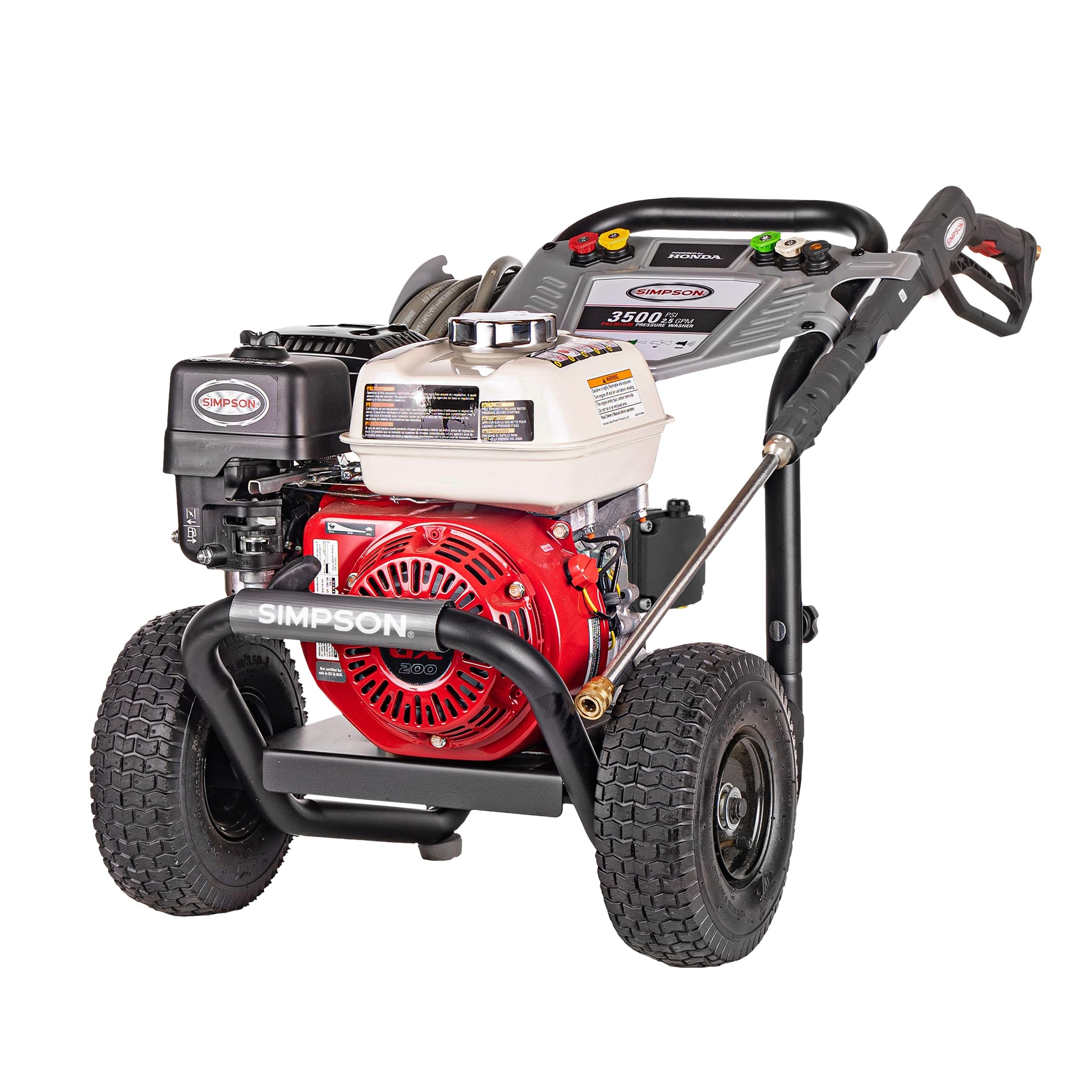
The pump is what separates this Simpson from everything else on the page. Axial cam pumps — including the one in our top pick — are sealed, oil-filled units that are cheap to build and, when they go, get replaced rather than repaired. The PowerShot carries an AAA triplex pump with three plungers and an integrated unloader, the kind of hardware a shop can service instead of scrapping.

Behind it sits a Honda GX200 with low-oil shutdown, which is the small-engine answer to whether a machine still starts in year four. The 25 feet of MorFlex hose wears a polyurethane jacket, and that is not a marketing line if you are washing siding before you paint it: a plain rubber hose drags grit and scuffs the finish you just cleaned. Ten-inch pneumatic tires, a welded steel frame, and five quick-connect tips round out the package.

Where it earns its place is the cost per hour of hard work. A painting crew, a property manager, or a homeowner with a long gravel drive and a fence line that eats a weekend every spring will put on enough hours to wear out a cheaper pump twice. It is the heaviest machine here at nearly 73 pounds and the most expensive, and neither struck us as the wrong trade once the triplex pump is holding pressure without breaking stride.

Bottom line: For weekly work and a machine you plan to keep, we think the Honda engine and serviceable triplex pump justify the extra weight and cost.

Check Latest Price
#03

Best Value

Simpson Clean Machine CM61456

83 /100
Kirk Score Excellent
Engine
174cc, low-oil shutdown
Nozzles
Turbo plus 4 quick-connect
Warranty
5-yr frame, 2-yr engine, 1-yr pump
Pressure And Flow
3,200 PSI / 2.5 GPM
Check Details on Amazon

Pros

  • Turbo nozzle included, unique in this group
  • Lightest machine here at 50 pounds
  • 12-inch never-flat wheels on a welded frame

Cons

  • Pump warranty runs only one year

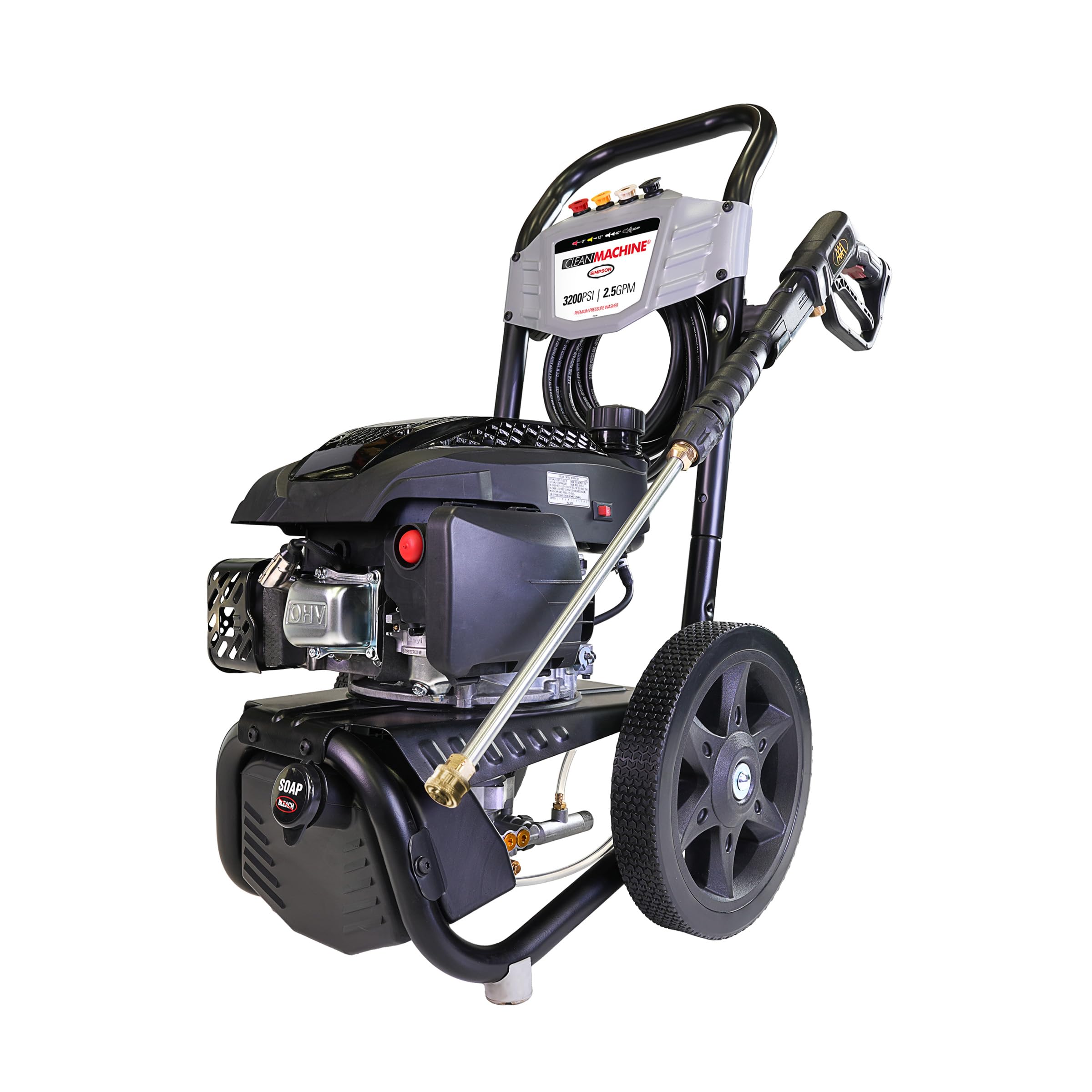
A turbo nozzle is the best-value accessory in pressure washing: a zero-degree jet spun in a tight circle so it scrubs concrete instead of striping it. Simpson puts one in the box here — the only turbo nozzle in this group — along with four standard quick-connect tips and a built-in soap tank, which makes this the machine we point at a homeowner with a concrete pad, a wooden deck, and a car.

The numbers are a small step down from the top pick, and a small step is what they are: 3,200 PSI at 2.5 GPM still moves more water than the DeWalt, and the 174cc engine with low-oil shutdown is a smaller, busier unit than the 212cc motors elsewhere. What you get in exchange is 50 pounds — the lightest machine here — and 12-inch never-flat wheels, so it goes up a step and into a shed without a second person or a flat tire.

That smaller engine has to work harder to hold pressure at the nozzle, which is why we keep this one to homeowner duty: a few big weekends a year rather than a crew schedule. What is left is the most useful accessory set here at the lowest weight, and a turbo nozzle that turns a mildewed patio from an afternoon into an errand.

Bottom line: We think the turbo nozzle, soap tank, and 50-pound frame make this the easiest machine here to live with for part-time homeowner work.

Check Latest Price
#04

Best Budget

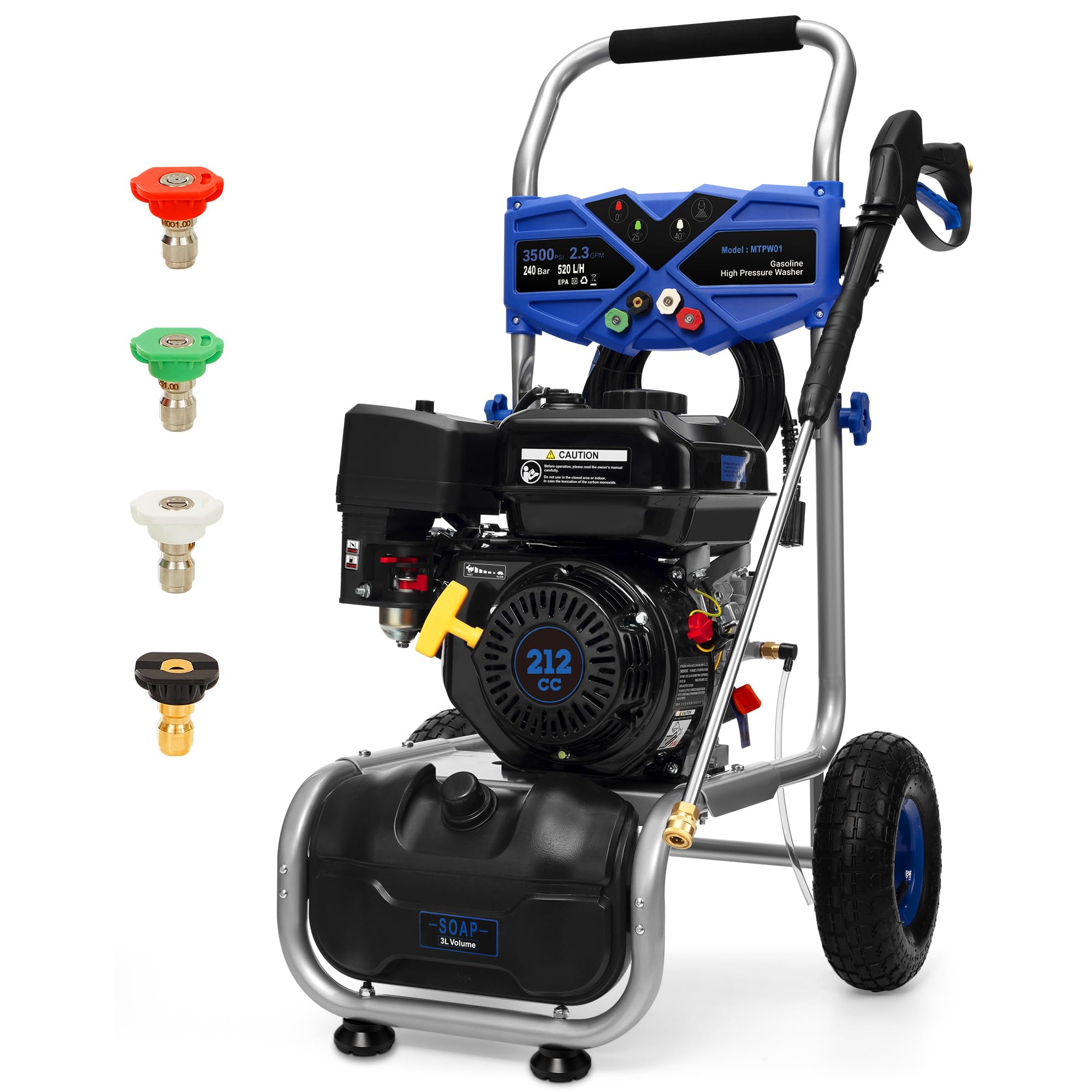
Ezasin 3500 PSI

85 /100
Kirk Score Excellent
Engine
212cc, 7 HP, recoil start
Nozzles
4 quick-connect tips
Warranty
1 year
Pressure And Flow
3,500 PSI / 2.3 GPM
Check Details on Amazon

Pros

  • Cheapest 212cc machine in this group
  • 3,500 PSI at 2.3 GPM
  • Quick assembly and easy starting

Cons

  • One-year warranty only
  • Nozzle set skips the 15-degree tip

The least expensive machine here still gets you a 212cc, 7-horsepower engine, 3,500 PSI, and 2.3 GPM, which is the same basic recipe as washers a third more expensive. What the money does not buy is patience: the warranty runs one year, the four-nozzle set skips the 15-degree tip most people reach for on siding and fence pickets, and the tires are 10-inch rather than the larger never-flat wheels above it.

For one driveway and a fence line each spring, though, that is a fair trade, and the engine has the displacement to do the work rather than just the rating. It goes together with a screwdriver in about twenty minutes, and the first tank of gas is the only learning curve. Two things at setup: pour in the half liter of SAE 10W-30 the manual calls for, and start with fresh 87-octane gas, because a small engine sitting on old fuel is the surest way to turn a working machine into a shed ornament. It will not feel as refined as the Simpsons, and the one-year coverage says the maker knows it.

Bottom line: For one driveway and a fence line a year, we rate the 212cc engine worth the short warranty and the missing 15-degree tip.

Check Latest Price
#05

Best Hose Reach

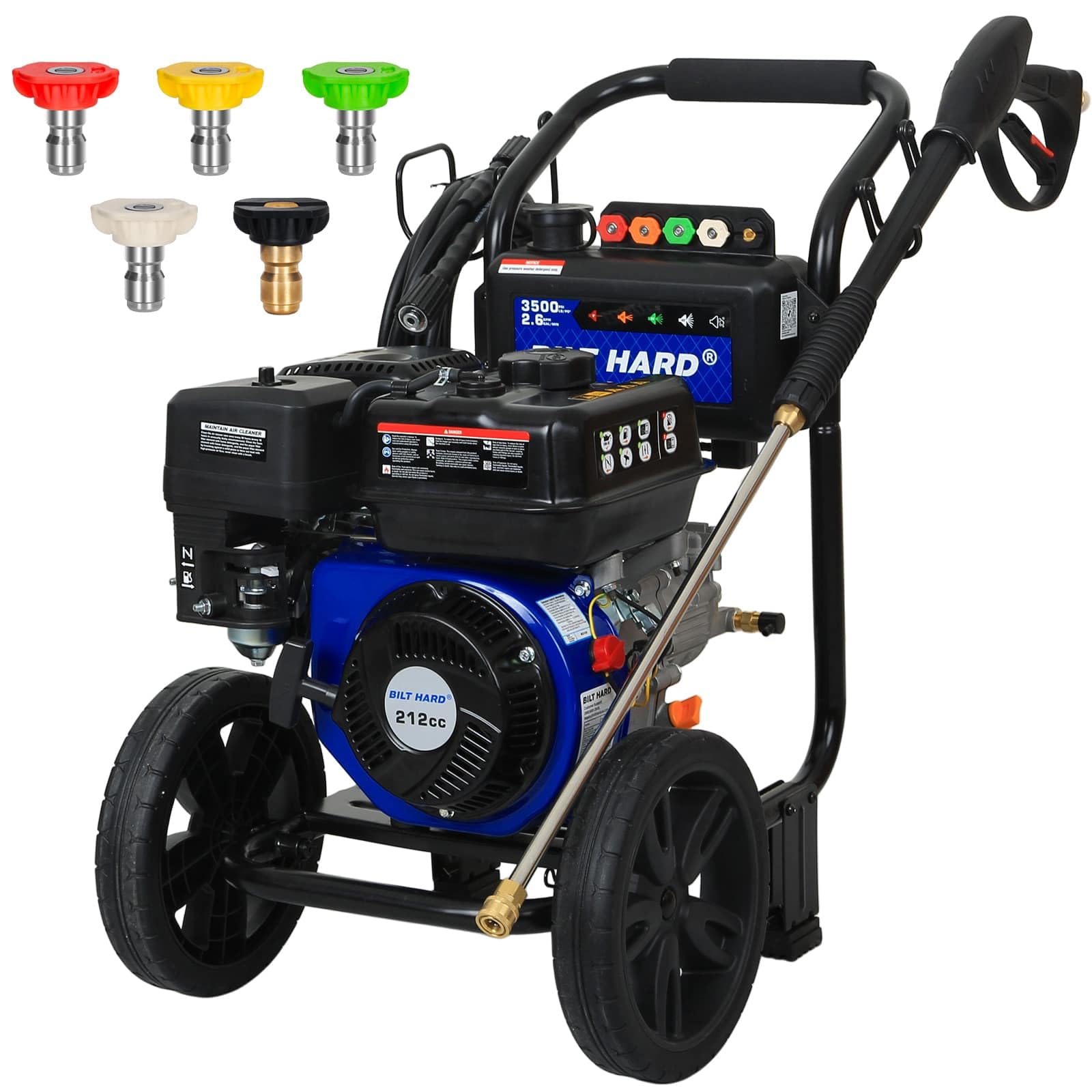
BILTHARD 3500 PSI

81 /100
Kirk Score Excellent
Hose
30 ft steel braided
Wheels
10 in. never-flat
Soap Tank
1 gallon
Pressure And Flow
3,500 PSI / 2.5 GPM
Check Details on Amazon

Pros

  • 30-foot hose reaches further than any pick here
  • One-gallon soap tank for big detergent jobs
  • 55 pounds with never-flat wheels

Cons

  • 0.63-gallon fuel tank runs dry on long jobs

Thirty feet of hose does not sound like a feature until you are dragging a 55-pound machine around a fence line. The BILTHARD's steel-braided hose is the longest here, and paired with the one-gallon soap tank it turns a long run of fence or a full driveway into two or three setups instead of ten.

Underneath, it is the familiar 212cc formula: 3,500 PSI, a maintenance-free axial cam pump, five quick-connect tips, and 10-inch never-flat wheels on a steel frame. The braided hose is the part that feels different in the hand — it resists kinking and abrasion where the plain rubber hoses on cheaper machines give up — and the gallon tank holds twice the detergent of the top pick, which matters when you pre-treat a whole driveway rather than spot-spray it.

Where it lands for us is the long-property machine: a rural fence line, a gravel drive, a row of outbuildings, anywhere hose length decides how long the job takes. At 55 pounds it is also among the lighter machines here, which counts for more than the spec sheet suggests when the hose runs out and the machine has to go over a ditch. The 30-foot hose and the gallon of soap are two things most machines here make you buy separately.

Bottom line: The pick for long fence lines and gravel drives, where we found 30 feet of hose and a gallon of soap cut a job into a few setups.

Check Latest Price
#06

Warranty-first buyers

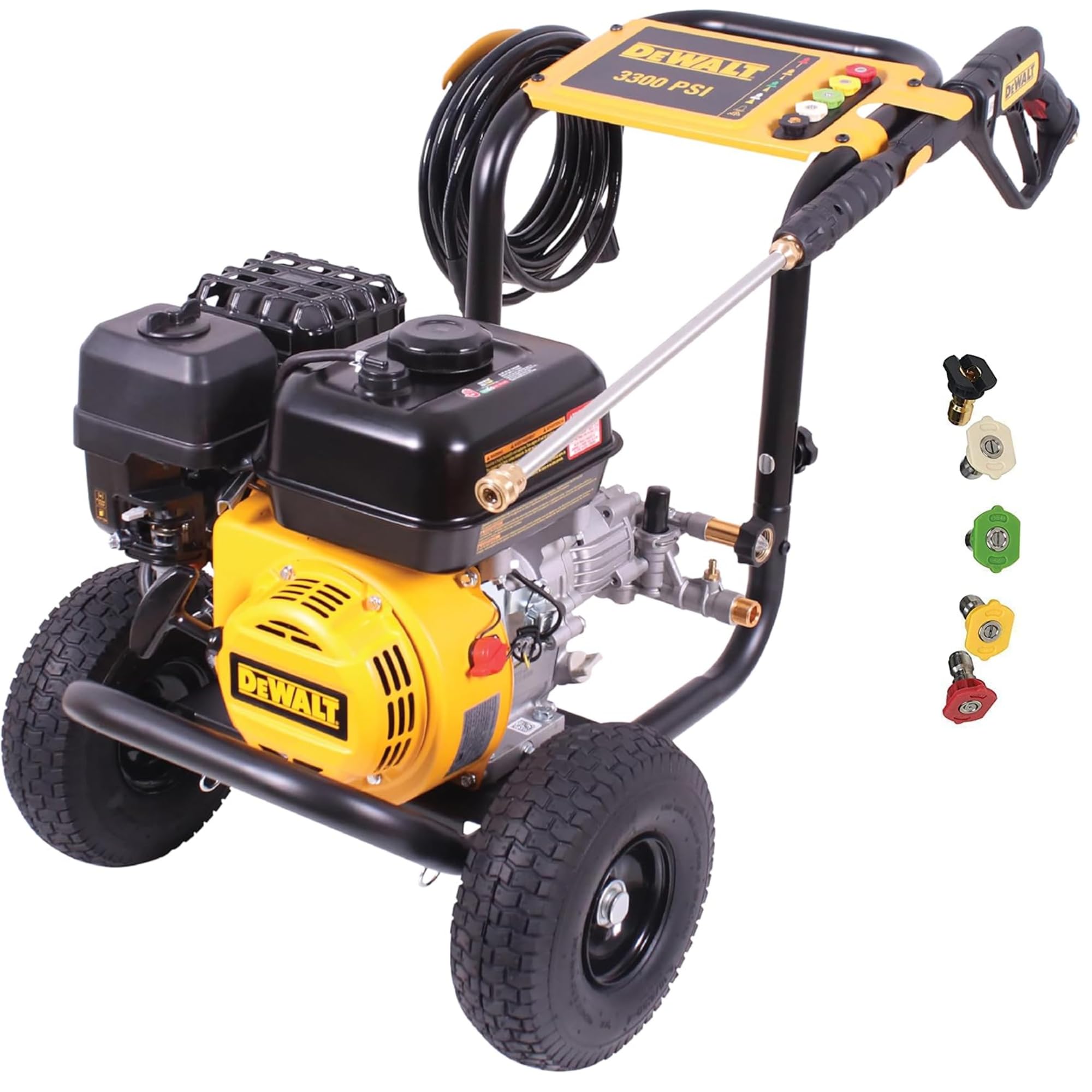
DeWalt DXPW3300-S

83 /100
Kirk Score Excellent
Pump
AAA axial cam
Engine
208cc DeWalt
Warranty
5-yr frame, 3-yr pump, 2-yr engine
Pressure And Flow
3,300 PSI / 2.4 GPM
Check Details on Amazon

Pros

  • Longest warranty here: 5-yr frame, 3-yr pump
  • 10-inch pneumatic tires on a welded frame

Cons

  • No-start faults and cracked pumps in year one
  • 49-state compliant, so not for California

Five years on the frame, three on the pump, two on the engine: that is the most generous warranty structure here, and it is the reason this DeWalt makes the list at all.

What it offers otherwise is the competent middle. 3,300 PSI at 2.4 GPM is enough for siding, a deck, and a car without stripping paint you meant to keep; the 208cc engine idles low and smooth when it is running right; and the welded, powder-coated frame with 10-inch pneumatic tires handles gravel better than the solid wheels on the budget machines. It is also 41 inches long, the biggest footprint in this group, so measure the shelf before you commit.

Then there is the coverage, which is the argument for buying it. A three-year pump warranty is worth real money on a machine that lives outdoors and gets fed hard water, and DeWalt's is the longest pump term here. For a homeowner who wants a name-brand tool and the paperwork standing behind it, that is a genuine offer. Two notes before you order: it is listed as 49-state compliant, so California buyers need a different model, and the ergonomic gun and 16-inch steel wand are shaped for long sessions rather than quick ones.

Bottom line: We recommend it for the warranty — five years on the frame, three on the pump — for a homeowner who wants brand-name backup and can live with the start-up record.

Check Latest Price
#07

Long concrete runs

VEVOR 3600 PSI

79 /100
Kirk Score Very Good
Hose
26 ft
Pump
Full copper
Nozzles
5 metal quick-connect
Pressure And Flow
3,600 PSI / 2.6 GPM
Check Details on Amazon

Pros

  • 3,600 PSI and 2.6 GPM, highest here
  • Full copper pump body
  • 31-inch wand eases overhead work

Cons

3,600 PSI and 2.6 GPM are the biggest numbers on this page, and VEVOR gets there with a full copper pump — the specification that is supposed to separate a machine that shrugs off detergent and hard water from one that corrodes quietly.

Copper is the interesting part. Aluminum pump bodies are cheaper, lighter, and quicker to pit when cleaner sits in them, while copper and brass are what you find in pumps built to be serviced rather than replaced. That is the idea, anyway; the copper is the manufacturer's claim, and it is the kind of thing only a few seasons will settle.

The rest of the package is straightforwardly good: a 26-foot hose, five metal quick-connect tips, 10-inch never-flat wheels on a steel frame, and a 0.8-gallon fuel tank. At 58 pounds it sits in the middle of the group to haul, and the wand runs about 31 inches — longer than most here — which saves your back under a soffit or a truck chassis.

Where that leaves us is the big, ugly jobs: a long concrete run, a barn wall, a rental turnaround, anywhere extra pressure and flow save hours. What no spec sheet answers is whether the copper pump outlasts the aluminum ones, and that is why we rank it below the Simpsons despite it winning on paper.

Bottom line: Spec-sheet leader with a copper pump and the highest pressure here, though we rank it behind the Simpsons until it proves itself.

Check Latest Price

How We Tested Seven Gas Pressure Washers

We built the shortlist by scanning gas models in the 3,000–3,600 PSI range, then narrowing by pump type, hose length, nozzle setup, frame design, and cost. We assembled all seven ourselves, timing each build and noting whether the manual was clear, which tools were needed, and whether the handle, wand, and hose connected without a struggle. Cold starts were timed from choke to running, and we also restarted each unit after it had heat-soaked during a cleaning session.

Each washer went through the same weekend chores: a stained concrete apron, mildewed siding, a weathered fence, and a road-film-covered car. We used matched nozzles and distance where possible, counted passes needed to clear a marked patch, and noted whether the spray pattern stayed consistent. We also watched how the machine behaved when we pulled it up a slope, whether it tipped or walked, and how easy it was to swap nozzles and fill the soap tank.

Leaks showed up at the gun, wand, and pump connections, so we checked after every 15-minute run and looked for drips on cardboard underneath. For size, we measured garage footprint and tried lifting each into a truck bed. Over eight months, we repeated starts, inspected hoses and frames for wear, and compared what each unit included against its cost; the models that made the list kept starting easily, stayed stable, and needed no repairs.

How to Choose a Gas Pressure Washer

Pressure and Flow Do Different Jobs

PSI is the force that breaks dirt's grip; GPM is the water that carries it away. A 3,000 PSI machine at 2.5 GPM cleans faster than a 3,500 PSI machine at 2.0, because flow rinses the loosened grime off the slab instead of shoving it around in circles. Multiply the two for a rough comparison: the picks here land between about 7,900 and 9,400, and anything in the 8,000s handles a driveway, siding, and a fence without strain.

Below that, expect more passes and more time on the concrete. Above it, you are buying speed you may not need.

The Pump Is the Part You're Really Buying

Axial cam pumps are sealed, oil-filled, and inexpensive; they are on every machine here but one, and when they fail you replace rather than repair. A triplex pump runs three plungers in an oil bath, can be serviced, and costs considerably more — the Simpson PowerShot is the only one in this group. Pump body material matters too: aluminum is lighter and common, copper and brass hold up better with detergent sitting in them.

A few weekends a year makes an axial cam pump a reasonable bet. Daily commercial work does not.

What Makes One Start and Another Not

Every machine here is a recoil-start small engine, and they all want the same ritual: choke on, a few pulls, choke off, then a minute at idle before you squeeze the trigger. Buy for low-oil shutdown where you can find it — both Simpsons spell it out — because it kills the engine before a low crankcase becomes a scored cylinder. A thermal relief valve, which dumps a little water instead of cooking the pump when you stop spraying with the engine running, is the other cheap insurance worth having.

Hose, Nozzles, and Detergent

Twenty-five feet is the standard hose and 30 is the longest here; the extra reach saves more repositioning than it costs. Quick-connect tips share a shape across brands but not always a fit, so buy spares from the maker of your machine. A turbo nozzle is the best money in this category for stained concrete, and only the Simpson Clean Machine includes one.

An onboard soap tank beats a downstream injector for convenience: the BILTHARD's gallon covers a whole driveway, while the Westinghouse's half gallon suits a car and a set of patio cushions.

Weight, Wheels, and Where It Sleeps

These machines run from 50 to 73 pounds, which is the difference between carrying one up a step and needing help lifting it into a truck. Pneumatic tires roll softer over gravel and eventually go flat; never-flat wheels ride harder but never strand you at the end of a driveway.

Then measure the shed. Overall dimensions are not recorded the same way from one maker to the next, so check the height with the handle in its working position against your door, and the longest dimension against your shelf.

Frequently Asked Questions

Final Verdict

Start with the Westinghouse WPX3400. It pairs 3,400 PSI and 2.6 GPM with a reliable first-pull start, three years of coverage, and a footprint that fits a shed shelf, all at a midrange price, and nothing else here balances those four things as well.

If you will run a machine hard and often, the Simpson PowerShot's Honda engine and serviceable triplex pump are worth the extra weight and money. For the twice-a-year homeowner, the Westinghouse is the safer buy.