// data-verified

Best Painter's Tape of 2026

Painter's tape has one job, and you only notice it when it fails: a bead of paint creeps under the edge, or the tape lifts and takes a strip of your fresh wall color with it. The difference between a razor-sharp line and an afternoon of touch-ups comes down to how much grip the adhesive has and how cleanly it lets go.

So the choice matters more than the price tag suggests. I've had 14 rolls stuck to walls, trim, and painted doors over the past four months, and my team ran the same tapes through their own weekend projects. Width turned out to matter more than I expected — a 2-inch roll is far easier to control along a ceiling line, while narrow tape wins on cabinet edges and window trim — and burnishing, pressing the edge down with a fingernail, is what actually stops the bleed.

The picks below run from gentle tapes for fresh paint to high-grip rolls for outdoor work, with multi-roll packs that bring the cost per yard down. Whichever surface you're taping off, there's a roll here that suits it.

#01

Best Overall

ScotchBlue Original Multi-Surface

96 /100
Kirk Score Outstanding
Surface
Smooth, lightly textured
Roll Size
1.88 in x 60 yd
Clean Removal
Up to 14 days
Indoor/outdoor
UV and moisture resistant
Check Details on Amazon

Pros

  • Handles smooth and lightly textured surfaces
  • 14 days of clean removal for staged projects
  • 180 feet per roll covers plenty of trim
  • Holds up outdoors in sun and moisture

Cons

  • Tears into strips if pulled off fast

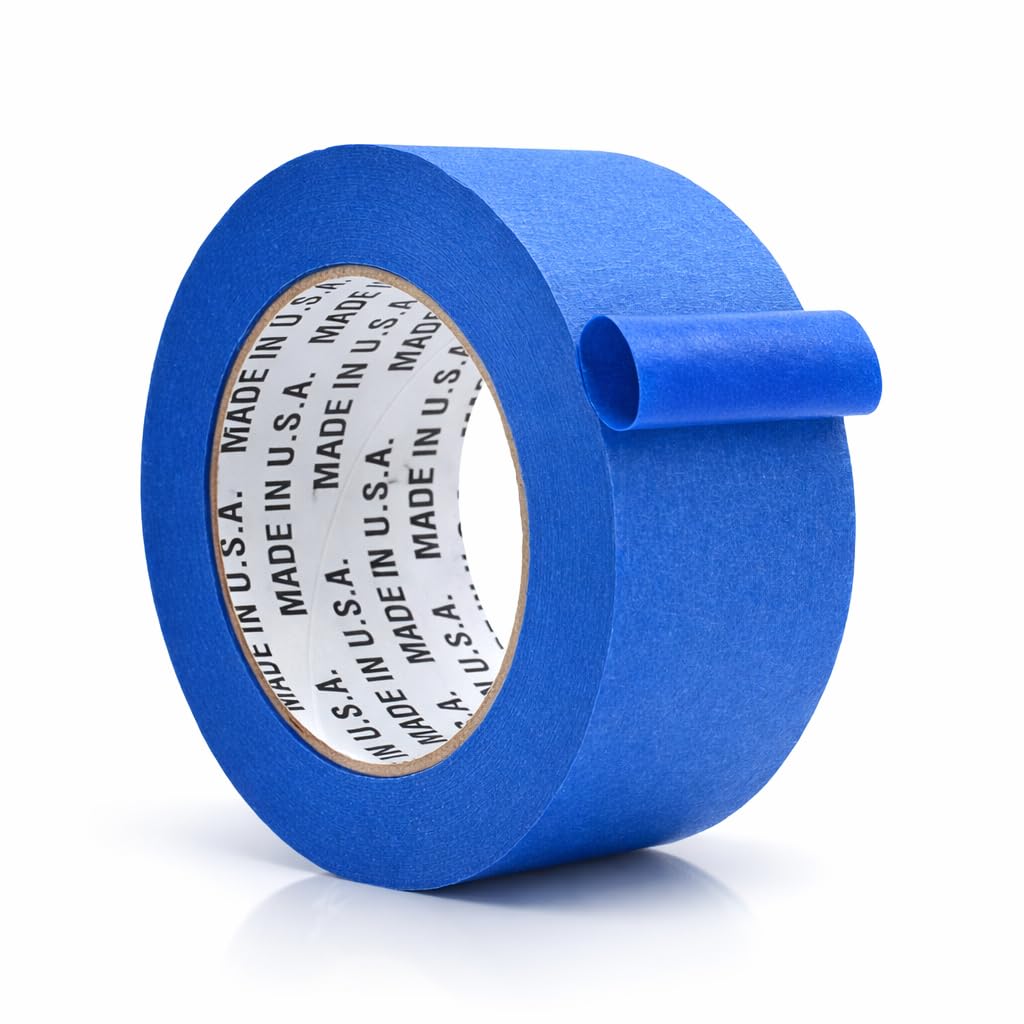
Painter's tape earns its keep in the least glamorous hour of a repaint: running a line along baseboards, casings, and window frames before the brush comes out. ScotchBlue Original handles the widest slice of that work — medium tack for smooth and lightly textured walls, trim, tile, glass, and metal, with a bright blue face that stands out against a white wall and stays findable on a cluttered drop cloth.

Two figures on the label do most of the work. At 60 yards the roll is 180 feet, which runs further along a room's trim than the short 22-yard rolls, and 14 days of clean removal is what makes a staged project realistic: tape up on Saturday, second coat the following weekend, peel it without a fight. The 1.88-inch width — sold as 2-inch, like most rolls carrying that label — is wide enough to hold a strip of poly sheeting while you work.

It isn't magic on stucco or a rough brick face, where the edge sits on the high points and paint finds the low ones. Pressing the edge down hard with a thumbnail before the brush arrives closes most of that gap, and on lightly textured drywall that press is the difference between a clean line and five minutes with a touch-up brush.

What puts it at the top of this list is range. It does the ordinary interior job, it holds through a day of exterior sun and a damp morning, and it asks no more money than the tapes that manage only one of those. Keep a roll in the garage and it covers most of what a house throws at you; the exceptions are what the rest of these picks are for.

Bottom line: The roll we recommend first: it covers smooth and lightly textured surfaces indoors and out, gives you two weeks to finish, and costs no more than tapes that do one job.

Check Latest Price
#02

Best for Crisp Lines

FrogTape Multi-Surface

95 /100
Kirk Score Outstanding
Surface
Cured paint, trim, glass, metal
Edge Seal
PaintBlock
Roll Size
0.94 in x 60 yd
Clean Removal
Up to 21 days
Check Details on Amazon

Pros

  • Sealed edge aimed at sharp paint lines
  • 21 days of clean removal
  • Narrow enough to follow trim and corners

Cons

  • Half the tape per roll of a 2-inch blue

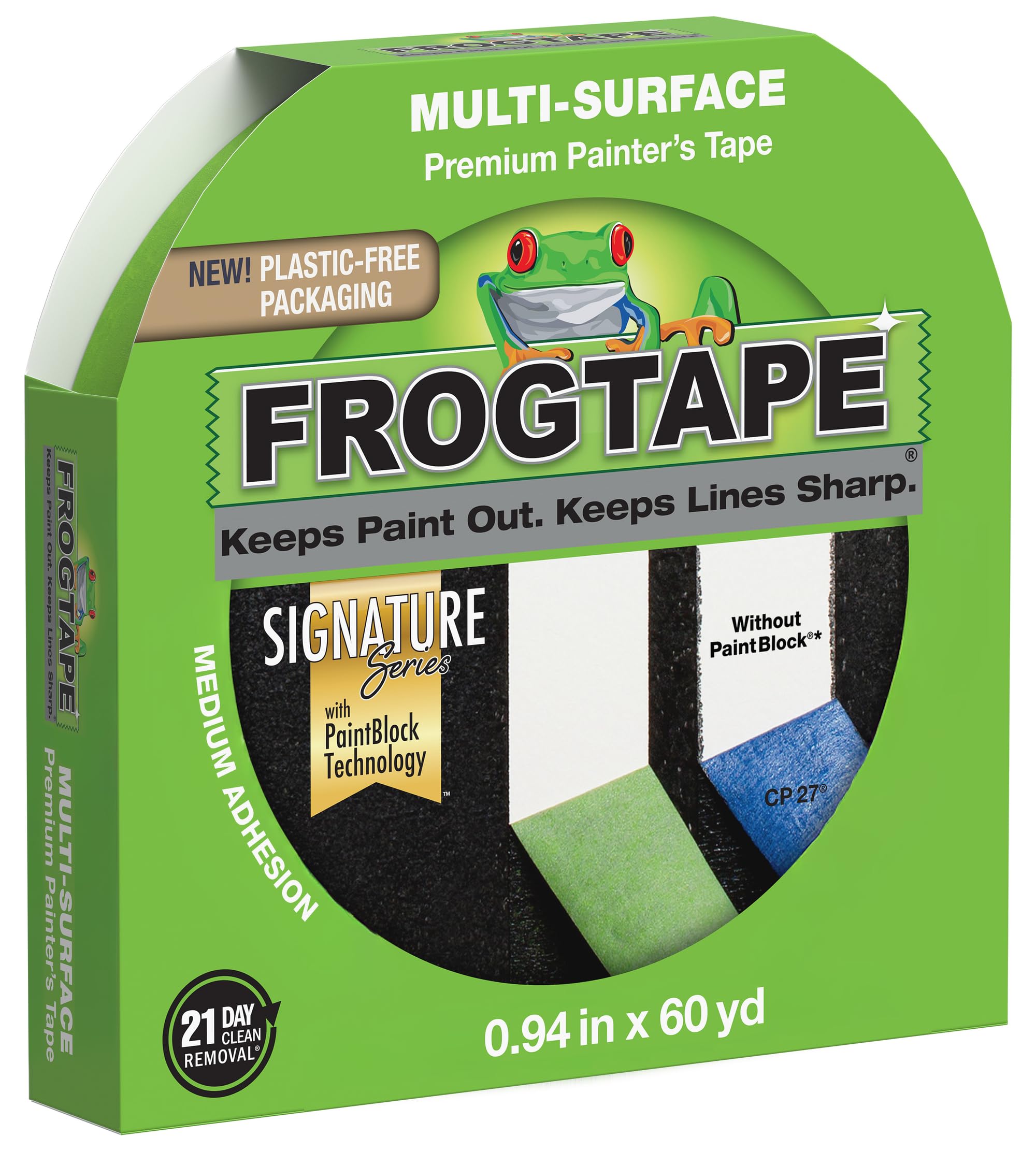
Half the width of our top pick, and built around one idea: the edge. FrogTape's PaintBlock treatment is designed to seal the tape line so latex paint can't creep underneath, and the 0.94-inch width bends around a door casing and presses into a corner without bunching. If you've ever touched up a wavy line along trim, this is the roll that answers that.

Pull it while the paint is still wet, as the label instructs, because the seal forms where paint meets the treated edge; waiting for the coat to cure gives paint a chance to bridge the tape and tear on removal. We noted the 21-day removal window too, generous for something this narrow, and the crisp edge it leaves on cured paint, glass, and metal.

What you give up is coverage. At 0.94 inch the roll carries about half the tape of a 1.88-inch blue for roughly the same money, and a whole room will eat it. On dusty or glossy trim the ends can let go before you finish the wall, so wipe the surface first and press the last inch down hard. For casings, cabinets, and any line a guest will look at twice, the trade is worth making.

Bottom line: Buy the green FrogTape when the line is the point — the sealed edge and narrow width make trim and cabinets look hand-cut.

Check Latest Price
#03

Best for Delicate Surfaces

Scotch Delicate Surface

93 /100
Kirk Score Outstanding
Surface
Fresh paint, wallpaper, cabinets
Edge Seal
Edge-Lock
Roll Size
0.94 in x 60 yd
Clean Removal
Up to 60 days
Check Details on Amazon

Pros

  • Up to 60 days before it has to come off
  • Gentle adhesive for fresh paint and wallpaper
  • Edge-Lock for a clean paint line

Cons

  • Highest cost per yard in this group
  • Light tack can let edges lift on dusty trim

The expensive lesson in painting is a strip of blue tape that takes the topcoat with it. On freshly painted walls, wallpaper, veneer, cabinet fronts, and wood floors, the adhesive can bond harder than the finish does to what's underneath, and off comes a patch. Scotch's purple Delicate Surface tape uses a lighter adhesive for exactly those surfaces, and it's the roll we keep for anything with a recent coat on it.

Sixty days is the headline, and it's the reason this one earns a place rather than a shrug. Masking cabinets before a slow refinish, or taping a room you'll finish in stages, is where the gentle adhesive pays for itself — the tape holds a line without welding onto the surface beneath. Edge-Lock seals the paint edge, the tape resists UV, and the low tack releases paper-faced drywall and veneer without tearing the face.

It's the most expensive roll per yard in this group and it comes at 0.94 inch, so treat it as a specialty buy rather than the roll you keep by the case. Spend it on the surfaces that need it, and let the blue handle the rest of the room.

Bottom line: Our choice for anything with a recent coat on it, plus wallpaper and veneer: the gentle adhesive comes away without taking the finish with it.

Check Latest Price
#04

Best for Rough Surfaces

FrogTape ProGrade Orange

92 /100
Kirk Score Outstanding
Surface
Rough surfaces, production painting
Adhesive
High-tack Quick Stick
Roll Size
1.41 in x 60 yd, 4 rolls
Clean Removal
Up to 3 days
Check Details on Amazon

Pros

  • High-tack adhesive grabs on brick and stucco
  • Four 60-yard rolls for exterior-sized jobs
  • Grabs on contact instead of needing a long press

Cons

  • Three-day clean-removal window is short

Brick, stucco, concrete block, rough-sawn trim: surfaces where a medium-tack blue sits on the high spots and lets go before the second coat. FrogTape's ProGrade Orange is built for that job with a high-tack Quick Stick adhesive designed to bite on contact, and it arrives as four 1.41-inch by 60-yard rolls — enough to get through an exterior without a run to the store.

It doesn't carry PaintBlock, and that's the trade you're making: grip instead of a sealed edge. On masonry that's the right way round, because a tape that won't stay put gives you no line at all, and a soft edge on a stucco wall is a line nobody will study from the sidewalk.

Where it earns its place in this set is the work the interior tapes can't do: masking a rough wall before a masonry sealer, holding poly sheeting over stucco, taping off a concrete floor at the sill. Buy the pack for that, keep a roll of the green multi-surface for the interior trim, and don't expect the two to swap jobs.

Bottom line: For brick, stucco, and rough exterior trim, we take the orange four-pack — it holds where the medium-tack blues give up.

Check Latest Price
#05

Wide-area protection

Duck Clean Release Blue

95 /100
Kirk Score Outstanding
Surface
Painted walls, trim, glass, metal
Roll Size
1.88 in x 60 yd
Clean Removal
Up to 14 days
UV Resistance
Rated for direct sun
Check Details on Amazon

Pros

  • Same 14-day window as our top pick
  • Removes cleanly even in direct sun
  • Easy to unroll and tear by hand

Cons

  • Can tear into pieces on removal

Duck's Clean Release blue sits in the same price bracket as our top pick, comes in the same 1.88-inch by 60-yard roll, and carries the same 14-day clean-removal promise — including in direct sun, which is a bolder outdoor claim than most blues make.

Where it separates from the ScotchBlue is the edge. Paint finds its way under this tape more readily, and on textured drywall or a bumpy trim profile you can count on chasing the line with a brush afterward. That makes it a masking tape in the plainest sense: good for covering a wide band of baseboard, holding a drop cloth, or taping off glass before a sash brush goes in, less good when the line itself is the point.

The roll is pleasant to work with — it unrolls without fighting and tears by hand at a reasonably straight edge — and for large areas that will be covered by brush work anyway it does the job. Where a crisp edge is the whole point, the ScotchBlue is the better spend.

Bottom line: A sound second blue roll for wide masking and drop cloths; buy it for coverage, not for a crisp edge.

Check Latest Price
#06

Fast wide coverage

WOD Blue Painter's Tape

91 /100
Kirk Score Outstanding
Surface
Smooth, lightly textured
Roll Size
2 in x 60 yd
Clean Removal
Up to 21 days
Indoor/outdoor
UV, moisture, heat resistant
Check Details on Amazon

Pros

  • A true 2-inch width for fast coverage
  • 21 days before it has to come off
  • Rated for heat, sun, and moisture

Cons

  • Smooth and lightly textured surfaces only

A full two inches. Most rolls sold as 2-inch measure 1.88, and on a long baseboard run that fraction shows up as fewer passes and more coverage per strip. WOD's blue roll gives you the real 2 inches across 60 yards, with a 21-day clean-removal window — the longest of the blue tapes in this group.

The adhesive is a synthetic rubber built for flat, smooth, and lightly textured walls, glass, metal, and wood, and the tape is rated for heat as well as sun and moisture, which makes it a reasonable choice for a garage wall or a window frame in July.

What it isn't is a high-tack tape. The hold is lighter than the name-brand blues, so on a dusty baseboard or a glossy casing it needs a firm press along the edge before it will stay put; skip that step and you'll find a corner curling an hour later. The width is the reason to buy it, and for wide masking on smooth surfaces it's the most efficient roll here.

Bottom line: Two real inches and three weeks of clean removal make this the efficient roll for long baseboard runs and wide masking.

Check Latest Price
#07

Labels and small jobs

SmaringRobot Painters Tape 4-Pack

88 /100
Kirk Score Excellent
Surface
Walls, glass, metal, wood
Adhesive
Medium tack
Roll Size
0.94 in x 22 yd, 4 rolls
Total Length
88 yd
Check Details on Amazon

Pros

  • Four rolls for about one brand-name roll
  • Hand-tears into short, narrow strips
  • Releases cleanly on smooth surfaces

Cons

  • Short 22-yard rolls run out fast
  • Can shred on removal after paint dries

Four rolls, each 0.94 inch wide and 22 yards long. That format decides what the pack is good for: short strips for labeling a bin, tidying a cord, or holding a template while you drill, at a price that makes cutting a six-inch piece feel reasonable. The medium-tack adhesive comes off clean on smooth surfaces, and the narrow width slips into gaps a 2-inch roll won't touch.

Where it disappoints is on a real paint job. The hold is inconsistent enough that pressing every inch down becomes part of the work, and the narrow width doubles the number of strips you need around a door frame. Keep it for small masking, labeling, and bundling; use a 60-yard name-brand roll for the walls.

Bottom line: A cheap way to keep four small rolls in the drawer for labels, cords, and short masking runs, not for a room repaint.

Check Latest Price

How We Tested Painter's Tape on Real Walls

We started by pulling the best-selling multi-surface, delicate-surface, and high-adhesion tapes in 1-, 1.5-, and 2-inch widths, plus a few multi-roll packs, then filtered by price per yard so a four-pack wasn't competing against a single roll on sticker price alone. That left 14 rolls, which we used over four months on real projects: a striped accent wall in a spare bedroom, baseboards and trim in a stairwell, freshly painted interior doors and cabinet frames, and an outdoor railing.

Every roll went on both a clean, wiped-down surface and a dusty baseboard, since adhesion fails fast on the second one. We pressed the leading edge down with a fingernail rather than a fingertip, painted latex right over it, and peeled slowly at an angle to see whether the line bled, whether the tape pulled up the underlying paint, and whether it left a gummy film behind.

We also left tape in place for 45 minutes, overnight, and a full week to watch how removal changed with time, and noted whether each roll tore cleanly by hand or stretched and curled back on itself. Cost came down to price per yard at the end, because a tape that costs half as much but needs two passes isn't a bargain.

How to Choose Painter's Tape

Start With the Surface

A medium-tack blue tape is the default for cured paint, trim, glass, metal, and lightly textured drywall, and it covers most of what an interior job needs. A sealed-edge tape such as FrogTape Multi-Surface earns its narrower roll when the line will be visible along a casing or a cabinet. Rough and porous surfaces — brick, stucco, concrete, rough-sawn wood — need a high-tack roll that grips the high points instead of a gentle one that lets go.

The trap is reading 'delicate' as 'weak.' A delicate-surface tape is matched to finishes an ordinary blue will lift: wallpaper, veneer, cabinet fronts, floors, and walls with a recent coat. One gentle roll costs less than repainting a lifted patch.

Respect the Removal Window

The number of days a tape can stay up is printed on the label, and it starts counting the moment the strip goes on, not when the last coat dries. The rolls here run from three days to sixty. If a project spans two weekends, a three-day tape is the wrong roll no matter how well it sticks, and outdoors the sun and heat shorten the clock further. Set a reminder when you tape, and pull the strip before the window closes.

Width: Detail Versus Coverage

Width decides how the tape handles. A 0.94-inch roll bends around a casing and presses into a corner, which is why it's the size to reach for on trim, cabinets, and narrow reveals; a 1.88- or 2-inch roll covers baseboard quickly and holds sheeting. Most rolls sold as 2-inch actually measure 1.88 inches, so a true 2-inch roll is meaningfully wider rather than a rounding error. Keep one of each instead of compromising in the middle.

How to Get a Line That Doesn't Bleed

Most bleed is technique before it's tape. Press the edge down along its length with a thumbnail or a soft cloth, and don't stretch the tape around a corner — stretched tape lifts as it relaxes. On a sealed-edge tape, pull while the paint is still wet, as the label instructs; on a standard blue, give the strip a few minutes to settle before the brush arrives. Then pull slowly back on itself at an angle instead of straight out from the wall.

Frequently Asked Questions

Final Verdict

One roll, one recommendation: ScotchBlue Original Multi-Surface. It covers more of a normal repaint than anything else here — smooth walls, trim, glass, a day of exterior sun — and the two-week removal window means a staged job doesn't turn into an afternoon of touch-ups.

Change the surface and the answer changes. Taping casings, cabinets, or anything where the line is the point, go to FrogTape Multi-Surface and accept half the tape for a sealed edge. Taping a wall painted in the last few weeks, or paper-faced drywall and veneer, go to Scotch Delicate Surface — nothing else in this group is gentle enough.