// data-verified

Best Painting Gloves of 2026

Painting gloves pull in two directions at once. You want paint, primer, and mineral spirits off your hands, and you also want to feel the brush, the roller, the edge of the trim. Gloves thick enough to survive an afternoon of cutting in feel like oven mitts; the thin ones that give you that bare-handed feel will split at the thumb seam twenty minutes in.

Over the past four months my team has worked through 15 boxes of nitrile gloves, from 3-mil up to 6-mil, on trim work, cabinet doors, spray-paint touch-ups, and the cleanup afterward. Which ones we kept reaching for had less to do with thickness than I expected.

Fit does more for durability than the mil count on the box. A slightly-too-big glove bunches at the fingertips, and that loose material is exactly what snags a brush handle and tears. Textured fingertips, a cuff that doesn't funnel paint down your wrist, and a box that comes in your actual size matter just as much. What you want is a glove you forget about until you peel it off and your hands are clean — the picks below are the ones that got there.

#01

Best Overall

Schneider Nitrile Gloves, 4-Mil

95 /100
Kirk Score Outstanding
Powder
Powder-free
Material
Nitrile
Thickness
4 mil
Check Details on Amazon

Pros

  • Holds up through a session without splitting
  • Powder-free nitrile leaves no haze on a finish
  • Near the bottom of the price range here
  • Latex-free for anyone with a rubber allergy

Cons

  • Runs small; order one size up

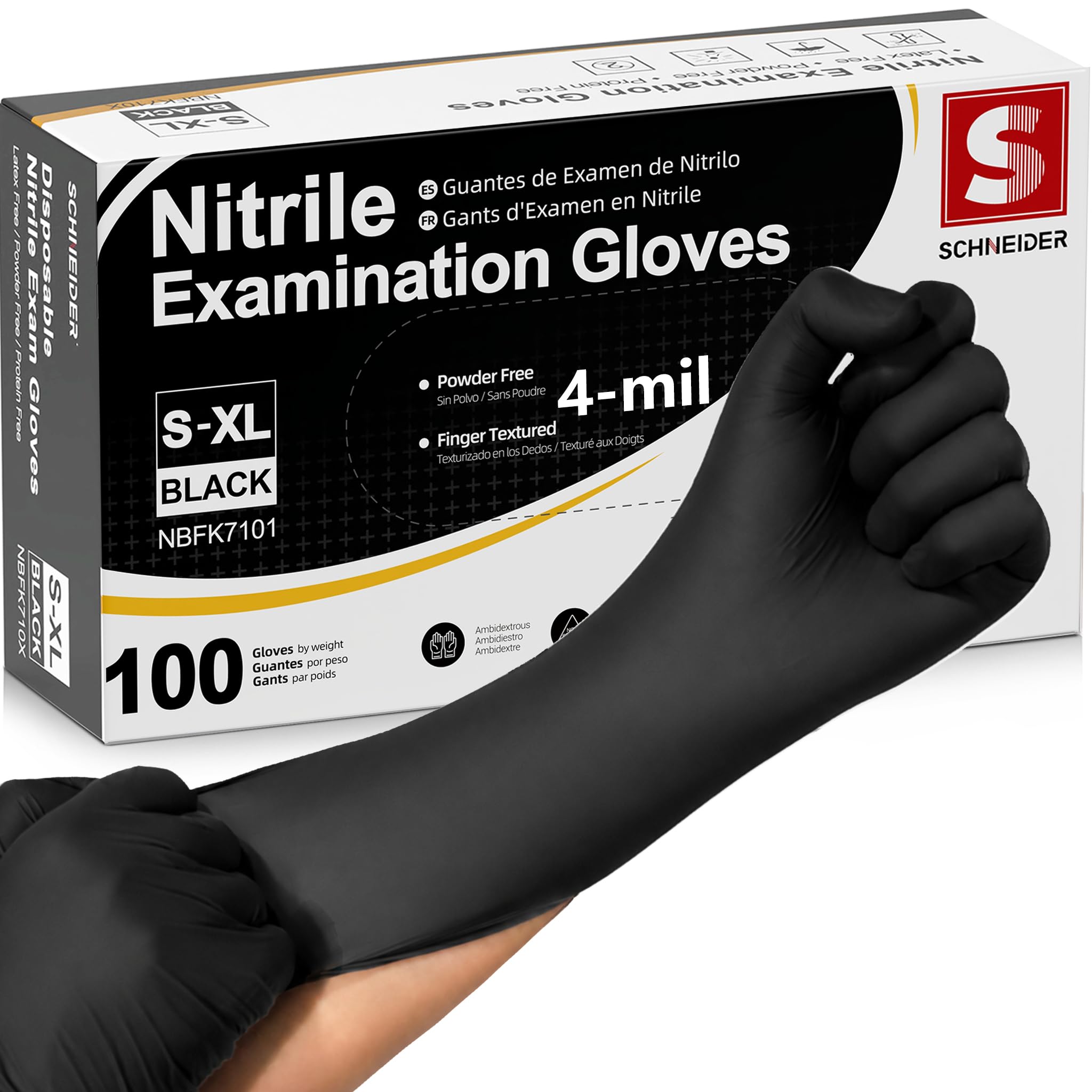
Four mils is the thickness we keep coming back to for painting. It is thick enough that a stir stick or a stiff sash brush does not find its way through, and thin enough that you can still feel the edge of the brush on a window frame. Schneider's box sits near the bottom of the price range here and does that job as well as anything in this group.

What struck us first was how they come out of the box. Cheap nitrile has a habit of shredding at the cuff on the first pull; these slide on and stay intact, and the cuff held on the second pull too. They are powder-free and latex-free, which matters more for painting than the label suggests: stray powder can leave a haze on a finish and stop painter's tape from sticking where you put it.

The limit is chemistry, not workmanship. Four mils is right for latex paint, primer, and a rag damp with mineral spirits, and it is not enough against a chemical stripper or lacquer thinner, where the 6-mil Inspire below earns its keep. Know which can you are opening and this box covers the whole afternoon.

You can pay a good deal more for a heavier glove here and get a box that is better against solvents and worse for feel. For the ordinary run of interior painting, this is the one we reach for without thinking, and the one we restock before the box runs out.

Bottom line: Our default pair for painting walls and trim: 4-mil nitrile that holds through a full room of cutting in, with no powder to spoil the finish.

Check Latest Price
#02

Best for Solvents

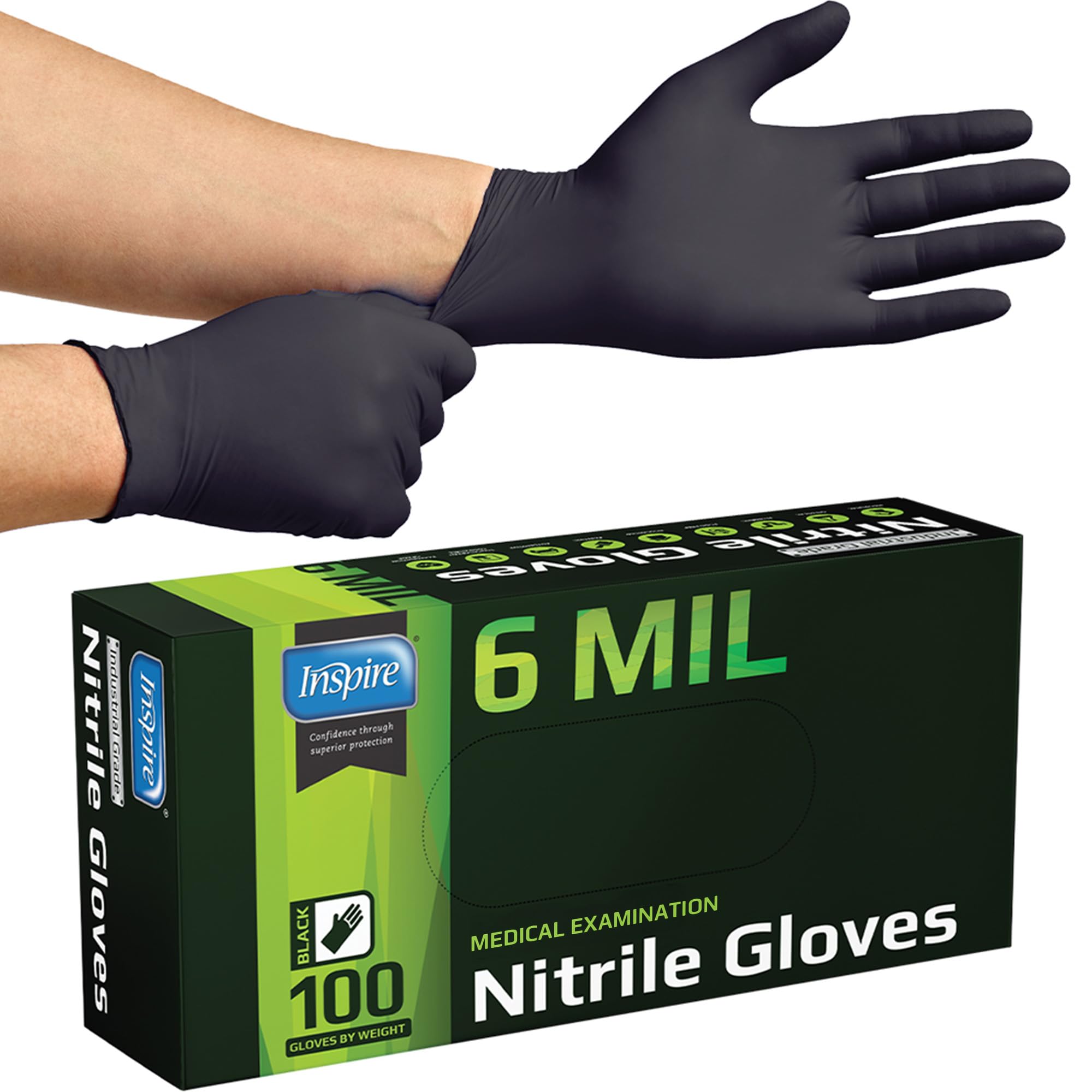
Inspire Black Nitrile 6-Mil

95 /100
Kirk Score Outstanding
Color
Black
Material
Nitrile
Thickness
6 mil
Chemical Resistance
Chemical resistant
Check Details on Amazon

Pros

  • Six mils of barrier against solvents and stripper
  • Does not rip when you pull hard on a rag
  • Decent grip even when wet

Cons

  • Runs small; order a size up
  • The premium price of this group

Oil-based stain, polyurethane, and chemical stripper are where a cheap glove stops being a bargain. Inspire sells this box as 6-mil chemical-resistant nitrile, and it is the pair we reach for when the project involves an open can that smells like a garage.

The thickness is the point, and it costs less feel than we expected. Six mils is enough that a rag soaked in mineral spirits does not creep through to your knuckles, and the film still bends enough to work a brush into the inside corner of a cabinet door. The black color is a matter of taste. We found it hides the mess, which is satisfying, though it also hides the thin spot that would tell you to change gloves.

Six mils is more glove than a gallon of wall paint needs. Where this earns its place is a refinishing project, stripping a door, wiping down a stained table, spraying a cabinet box, and where it does not is the trim you are cutting in on a Saturday morning, when the cheaper 4-mil box is simply easier to work in.

Bottom line: For stripper, oil-based stain, and spray cans, the extra two mils earn their keep. Order a size up and keep this box in the shop, not the kitchen.

Check Latest Price
#03

Best Grip

TitanFlex Nitrile 6-Mil

95 /100
Kirk Score Outstanding
Color
Black
Material
Nitrile
Thickness
6 mil
Food Safety
Food safe
Check Details on Amazon

Pros

  • Grip holds on a wet brush or handle
  • Six mils that resist punctures and tears
  • Food safe, so it crosses from shop to kitchen

Cons

  • Runs small; size up for a comfortable cuff

Two heavy-duty boxes made it into this guide, and they are not interchangeable. The Inspire is the chemical-resistant one. The TitanFlex is the one with grip.

Six mils of black nitrile that still behaves like a thin glove at the fingers, which is the trick here. The surface holds a wet roller handle without the slip we get from smoother films, and it is rated food safe, so it moves between the garage and the kitchen without a second thought. It also shrugs off the grease and oil that turn a lighter glove slick.

Where it earns its place is detail work: brushing polyurethane along an edge or wiping a stained spindle, where the glove has to hold a rag steady without bunching at the fingertips. It sits in the middle of the price range here, well under the Inspire and a step above the 4-mil boxes, and the grip is what that step buys you.

Bottom line: The heavy-duty glove for people who still need to feel the work: 6 mils with enough grip for a wet brush, at a mid-range price.

Check Latest Price
#04

Best for Water-Based Paint

MED PRIDE Nitrile Exam Gloves

95 /100
Kirk Score Outstanding
Size
Medium
Count
100 per box
Powder
Powder-free
Material
Nitrile
Check Details on Amazon

Pros

  • Textured fingertips keep a grip on a wet brush
  • Second-skin feel that does not fight you
  • Powder-free and latex-free

Cons

  • Thin film is not built for solvents or scraping

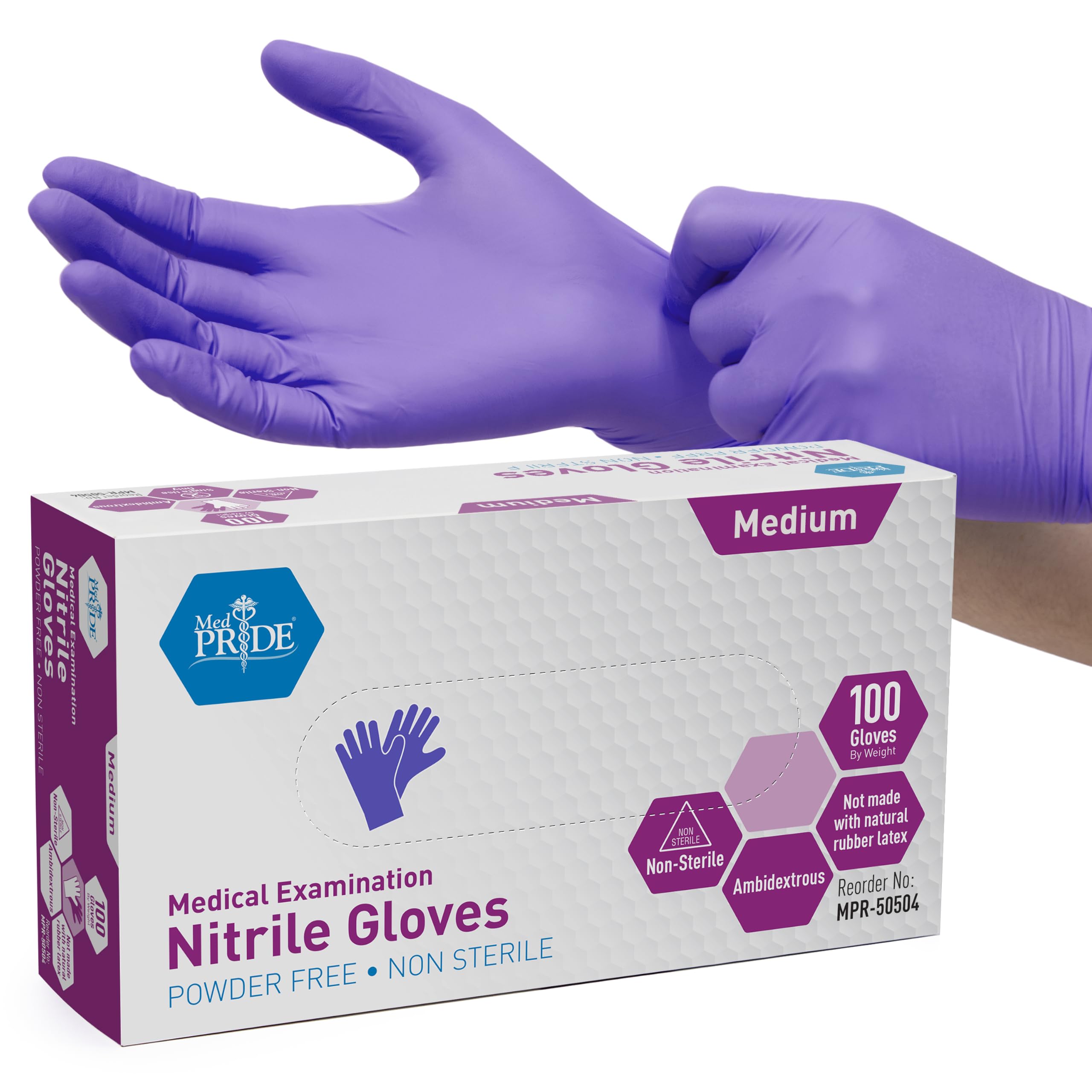
Latex wall paint is the forgiving case. It rinses off skin with water, so the glove's main job is to spare you a scrub rather than to survive a solvent. That is the job MED PRIDE's thin blue nitrile does well, and it is why the box has stayed in our paint kit between bigger projects.

The film is supple enough that you can feel a brush ferrule through it, and the textured fingertips give a little bite on a wet handle. We also appreciated how easily they peel off inside out at the end of a coat, which sounds trivial until you have fought a stuck glove with painted fingers.

Fit is the other reason this box stays in rotation. The medium suits smaller and average hands without bagging at the fingertips, and the powder-free film means nothing transfers onto a wall you have just finished. It is a plain 100-count dispenser, the kind you leave on a shelf and forget about until you need it.

Bottom line: The pick for latex paint and general cleanup: thin, sensitive, and easy to peel off, as long as the mess you are making is water-based.

Check Latest Price
#05

Best for Small Hands

FifthPulse Pink Nitrile 3-Mil

96 /100
Kirk Score Outstanding
Color
Hot pink
Material
Nitrile
Thickness
3 mil
Powder-free
Yes
Check Details on Amazon

Pros

  • Fits smaller hands closely
  • The least expensive box in this set
  • Bright color makes a pair easy to spot

Cons

  • 3-mil film fails against acetone and thinner

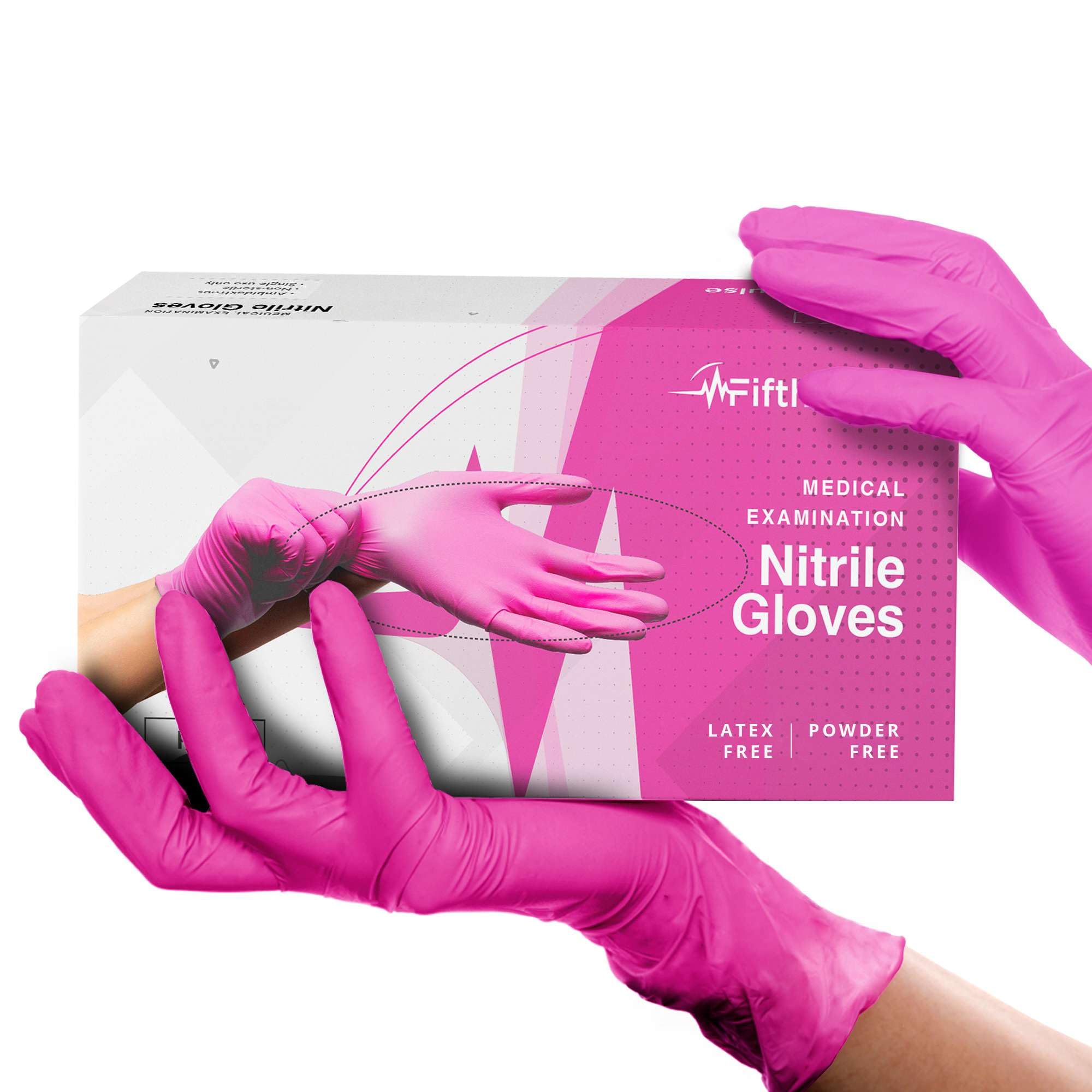
Nothing about a hot pink glove is subtle, and that is half of why people buy it. The other half is the fit, which is one of the best in this group for smaller hands: snug through the fingers without pinching across the palm, and stretchy enough that you are not fighting it on.

Three mils of nitrile, powder-free and latex-free, in a box that costs less than anything else here. For craft paint, hair dye, resin, and food prep it does the job comfortably, and the color is genuinely useful in a shared studio where every other glove on the table is blue or black.

Where it disappoints is anything solvent-based. The 3-mil film turns tacky and gives out fast against acetone, lacquer thinner, or gel polish remover, so a nail tech will burn through a box in a week. Keep it for water-based paint and craft work and there is nothing else here that beats it on value.

Bottom line: The one for small hands and craft-room messes: a comfortable 3-mil glove that keeps paint off your nails, and the least expensive box here.

Check Latest Price
#06

Everyday home projects

Soft Max Nitrile Exam Gloves

95 /100
Kirk Score Outstanding
Size
Small
Color
Blue
Count
100 pcs
Material
Nitrile
Check Details on Amazon

Pros

  • Goes on easily without a fight
  • Comfortable for a long session
  • Durability holds up at this price

Cons

  • Film is thin enough to limit it to light duty

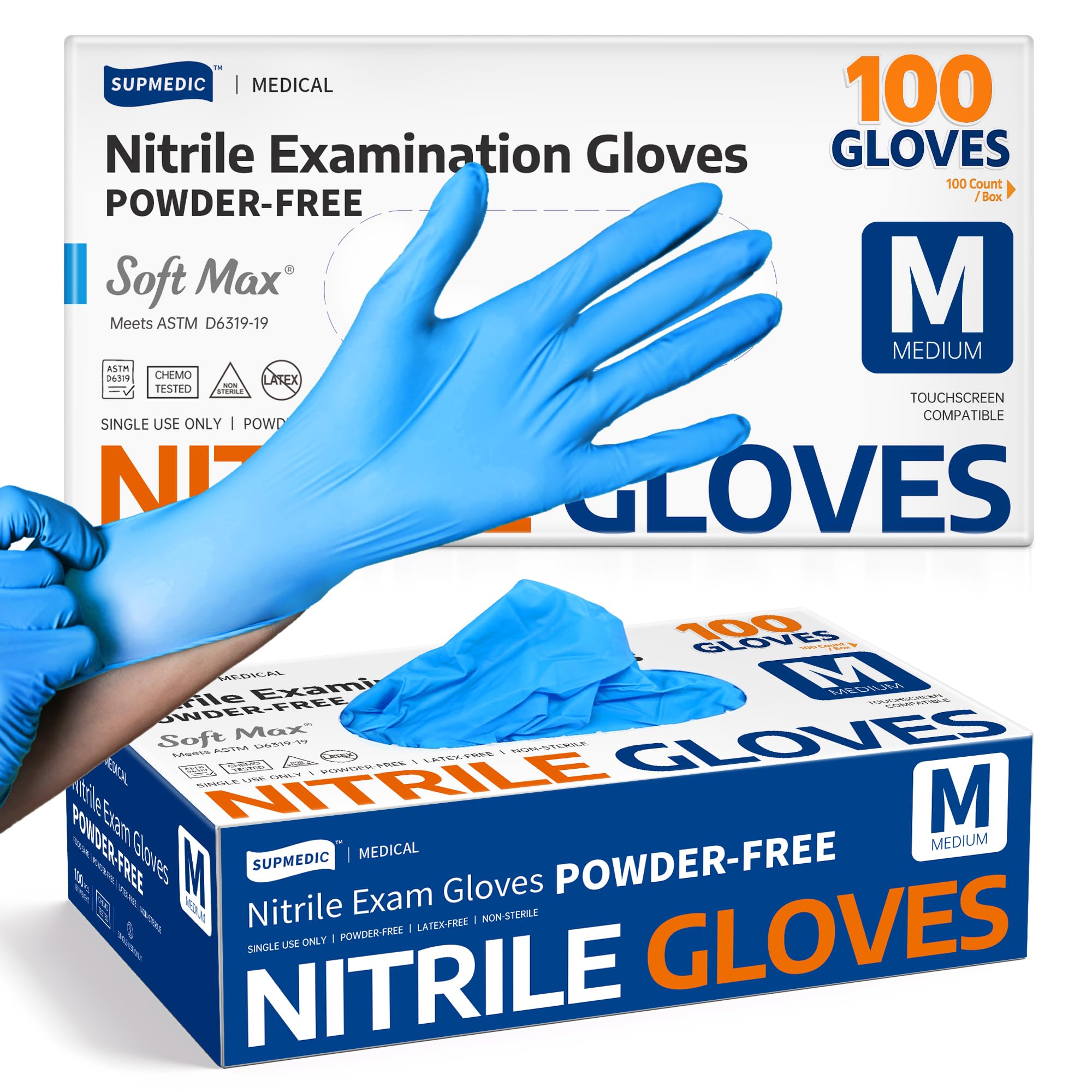
A glove you have to fight on is a glove you stop wearing by the second coat. Soft Max's nitrile slides on without the powder-and-shove routine, and once it is on, we forget about it, which is about the highest praise a disposable glove can get.

The box we looked at is the small, in blue, and it is powder-free and latex-free. Durability holds up better than most at this thickness: the film resists the cuff tears and thumb splits that end a cheap glove's life early, and it does not leave hands clammy after an hour under a roller.

It is not the box to buy for a solvent-heavy refinishing job, and the film is thin enough that hard scraping will open it. For latex paint, primer, and the cleanup afterward, at a price near the bottom of this group, it is an easy box to keep stocked.

Bottom line: The easy-on box for household painting and cleanup: comfortable, powder-free, and cheap enough to keep one in every closet.

Check Latest Price
#07

Light household work

PROMEDIX Nitrile Gloves 4-Mil

95 /100
Kirk Score Outstanding
Count
100
Material
Nitrile
Thickness
4 mil
Powder-free
Yes
Check Details on Amazon

Pros

  • Latex-free and powder-free for sensitive skin
  • Food safe, useful beyond the paint bench
  • Competitive with the other budget boxes on price

Cons

  • Sizing runs small; order up
  • Cuff sits short of the wrist

Paint does not only land on your fingers. It runs down a brush handle toward your wrist, and if the cuff stops short, it runs inside the glove and sits there. PROMEDIX's 4-mil box is the one in this group where that gap is most obvious, and it showed up the first time we tipped a loaded brush.

Otherwise it is a straightforward 4-mil nitrile: latex-free, powder-free, and cleared for food contact, so it moves from the paint bench to the kitchen without a second thought.

The film is thinner than the 4-mil figure suggests, and it is the first thing to give at the thumb when you are pulling hard on a rag, so keep this box for wiping, sealing, and light touch-up rather than a full repaint.

As a general household glove it is fine. As a painting glove it gets beaten at roughly the same money by the Schneider, mostly because of that cuff, and that shortfall is hard to work around when the job is trim and a wet brush.

Bottom line: A decent everyday 4-mil box that loses ground on cuff length. Buy it for light household work, not for a brush loaded with paint.

Check Latest Price
#08

Fine craft work

SwiftGrip Pink Nitrile 3-Mil

95 /100
Kirk Score Outstanding
Size
Small
Count
100 count
Material
Nitrile
Thickness
3 mil
Check Details on Amazon

Pros

  • True small size for narrow hands
  • Textured palm holds a grip
  • Food safe and latex-free

Cons

  • 3-mil film gives out against solvent

SwiftGrip's pink box is aimed at a narrow buyer: nail techs, estheticians, and anyone whose hands run small enough that a medium flaps at the fingertips.

Three mils, latex-free, powder-free, food safe, with a textured palm and a 100-count box that is easy to keep on a shelf. The pink is bright, and unlike a lot of colored nitrile it stays opaque enough to see a hole before it leaks.

Sizing is where they earn their keep. The small is a true small, snug through the palm and short enough at the fingers that you can pick up a brush or a mixing stick without the tip folding over, and it slides off cleanly at the end of a session.

For painting, all of that makes it a light-duty glove: a craft project, a small furniture touch-up with water-based paint, a hair-dye afternoon. For a full repaint or anything that smells of solvent, move up to the thicker boxes here.

Bottom line: A true-to-size small glove for salons and fine craft work: comfortable and food safe, but far too thin for solvent or a full repaint.

Check Latest Price

How We Tested Painting Gloves

We narrowed the field to nitrile first, since it stands up to solvents and paint far better than latex or vinyl, then filtered for powder-free boxes sold in at least three sizes — a glove that doesn't fit is the one that fails first. From there we bought 15 boxes spanning 3-mil to 6-mil and a wide spread of cost per glove, and put them all in rotation.

Testing ran four months, mostly on real projects rather than a bench: painting trim and doors in a spare bedroom, brushing stain onto cabinet fronts, spraying chair legs in the garage, and cleaning brushes and trays in mineral spirits afterward. Several boxes went home with testers for the crossover work these gloves get bought for — food prep, bathroom scrubbing, hair dye.

We kept a running count of how many gloves each job ate and noted exactly where each one failed: the thumb seam, the web between the fingers, or a nick from a brush ferrule. Each box got worn one size up and one size down from our measured size to see how the fit ran, and we checked whether paint dried on the glove and cracked when we flexed it. Thickness got a hands-on pass too — stretching cuffs, tugging fingertips, noting which gloves still let us feel a sanding block and which turned our hands into paddles. Last, we did the math on cost per glove against pairs used per session, because a cheap box that tears twice is not cheap.

How to Choose Painting Gloves

Match the glove to what is in the can

Latex and acrylic wall paint is the forgiving case. A 3- or 4-mil nitrile glove gives you enough barrier to keep paint off your skin and enough feel to work a brush into a corner, and if one does split, you are rinsing off with water. Oil-based stain, polyurethane, paint stripper, and spray enamel are the opposite: plan on a 6-mil nitrile sold as chemical resistant, because a thin film goes tacky and then goes through.

Vinyl belongs in this conversation only for dry or water-based work. It is comfortable and inexpensive, but solvents soften it quickly, and it will not survive a rag soaked in mineral spirits. Whichever material you pick, powder-free is worth seeking out: loose powder can settle into a finish and stop painter's tape from gripping where you laid it.

Thickness is a trade-off, not a ladder

Three mils buys feel, six mils buys barrier, and neither is better without knowing the job. Cutting in around window frames or stenciling a small project wants the thinnest film you can get away with; a full day of rolling, or any contact with solvent, wants the thickest film you can tolerate on your hand.

Heavy duty on a listing is marketing until you find the mil number. A glove sold as heavy duty at 4 mil is a 4-mil glove. If a listing never states a thickness, treat it as light duty and keep it away from stripper, lacquer thinner, and anything else that comes with a warning label.

Order up, not down

Gloves in this category run small far more often than they run true, and a tight cuff is where a tear starts. If you are between two sizes, take the larger one. A cuff that digs into your wrist also has you peeling the glove off halfway through a wall, which defeats the point of wearing it.

Too much length in the fingers is nearly as bad, because you lose the sensitivity that makes a thin glove worth wearing. Measure around the widest part of your palm, compare it against the size chart, and aim for snug at the base of the fingers rather than tight across the knuckles.

Grip and cuff, the two details that decide the job

A textured fingertip or palm makes a real difference once a brush handle is wet or a rag is heavy with stain; smooth films get slippery at exactly the wrong moment. Cuff length matters just as much. A glove that stops at the wrist lets a drip run down the brush and inside, which is worse than wearing no glove at all.

Look for a cuff that reaches at least to the wrist bone, and pull it up over your sleeve if you are working overhead. If you are painting a ceiling, no disposable glove covers your forearm, so tape the cuff down or accept a speckled wrist and a rag within reach.

Frequently Asked Questions

Final Verdict

Start with the Schneider 4-mil box for almost any painting job in the house. It is the best balance of feel, barrier, and price in this group, and it is the box we hand people first.

If your project involves oil-based stain, polyurethane, or a chemical stripper, go straight to the 6-mil Inspire instead. The extra thickness is the difference between a glove that survives the job and one that fails in the middle of it.