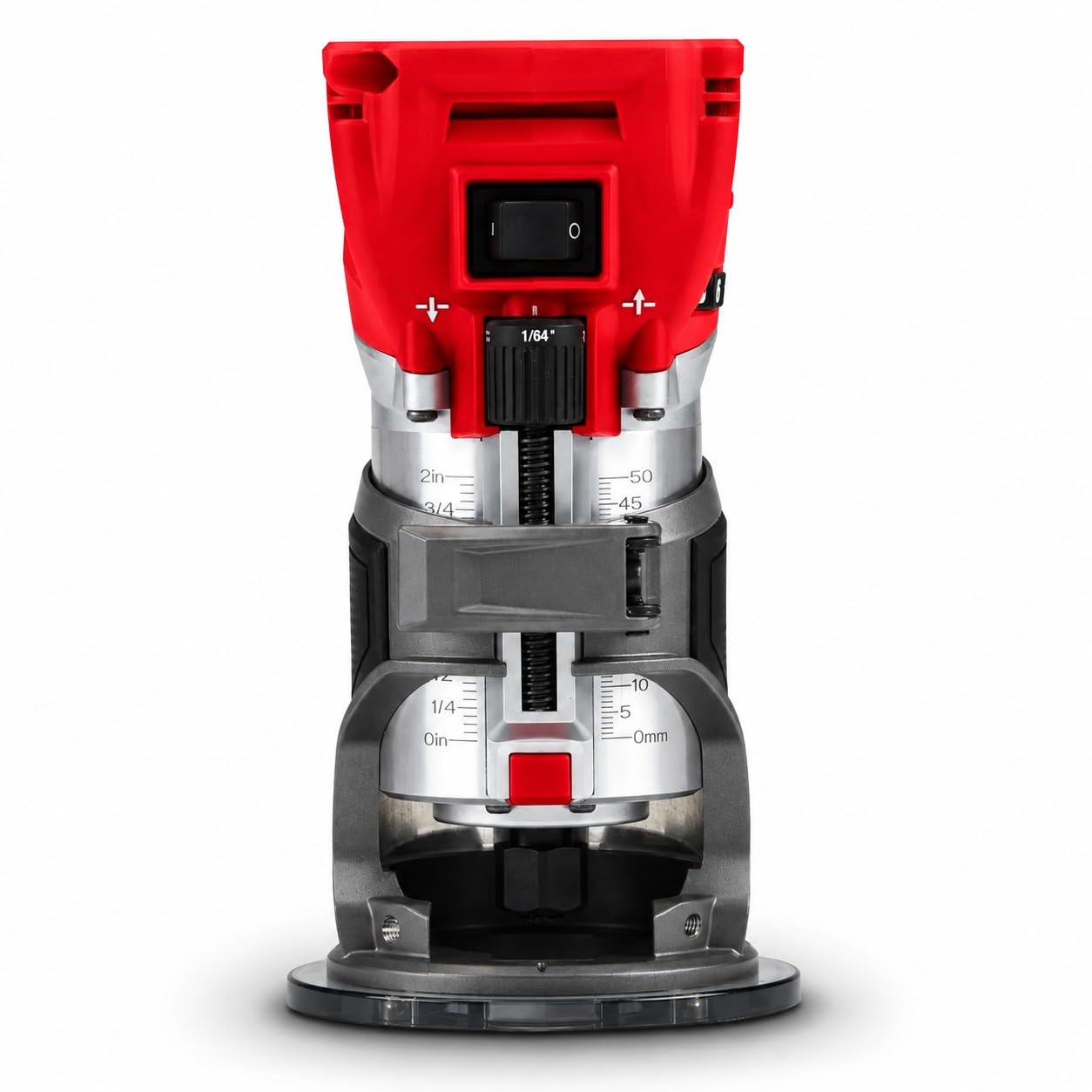
// data-verified

Best Palm Routers of 2026

A palm router is the tool that saves you from hauling out the big plunge router for a ten-minute job — a roundover on a shelf edge, a hinge mortise, a strip of laminate to trim. It's small enough to steer with one hand and stable enough to follow a template, which is why it ends up being the router most people actually reach for. The catch is that these compact machines split into two families: corded models with real amperage behind them, and cordless ones that run on whatever battery platform you already own. That single choice shapes everything else — how the tool balances in your hand, how fussy it is to set depth, and how much you get for the money.

Over the past eight months, my team and I have put nine compact routers through actual work — trimming laminate, cutting hinge mortises, running roundovers in oak and pine — and the differences come down to things you won't find on the box. What separates them is how repeatable the depth adjustment is, whether the base stays flat when you lock it down, and whether the thing feels top-heavy after twenty minutes in one hand. A couple of these cost nearly twice what others do, and the value math isn't as obvious as the price tag suggests. Below, the ones that earned a spot on the shelf.

#01

Best Overall

DeWalt DWP611

94 /100
Kirk Score Outstanding
Speed
27,000 rpm
Amperage
7 amps
Horsepower
1.25 hp
Depth Adjustment
1/64 inch
Check Details on Amazon

Pros

  • Clear sub-base and dual LEDs
  • 1.25-hp motor with variable speed
  • Depth ring adjusts in 1/64-inch steps
  • Solid fixed base for steady cuts

Cons

  • Requires a cord

The clear sub-base is the first thing we notice on the DWP611, and it is the reason this router is easy to recommend for trim work. You can watch the bit meet the layout line instead of guessing where the cut is going, and the dual LEDs help under a cabinet or at the back of a bench. On a palm router, that visibility is not a luxury; it is how you avoid a wavy edge.

The 1.25-hp, 7-amp motor gives it more reserve than the cordless picks here, and the variable-speed dial lets you slow down for a wide bit or a hard wood. We like the soft start and electronic feedback for the way they keep the cut from lurching when the bit first bites. It feels like a small router that is not asking for much forgiveness.

Depth control is where the DWP611 earns its place at the top of this set. The adjustment ring moves in 1/64-inch steps, which is fine enough to sneak up on a hinge mortise and repeatable enough to come back to after a bit change. The fixed base is simple and solid; there is no plunge action to add play.

At 5.5 pounds, it is heavier than the cordless routers here, and that weight is most noticeable when you work overhead. On a bench, though, it helps the base stay flat and makes a long edge profile feel less twitchy. We prefer that trade for cabinet work and door trimming, where steadiness matters more than saving a pound.

The DWP611 is the corded router we keep set up for everyday cuts, and it is the one we point to when a reader wants a single palm router that can handle trim, hinges, and small profiles without a battery platform. If your work is mostly away from an outlet, the DCW600B is the cordless answer; otherwise, this is the one.

Bottom line: For most shoppers, the DWP611 is the palm router to buy first: it has the power, visibility, and repeatable depth control for everyday trim and hinge work.

Check Latest Price
#02

Best Cordless Overall

DeWalt DCW600B

96 /100
Kirk Score Outstanding
Base
Fixed
Speed
25,500 rpm
Weight
2.6 lb
Voltage
20 volts
Check Details on Amazon

Pros

  • Runs on existing DeWalt 20V packs
  • Light 2.6-pound body
  • Electronic brake and soft start
  • Dual LEDs for visibility

Cons

  • Tool only; battery and charger not included

If you already own DeWalt 20V Max batteries, the DCW600B is the palm router that makes the most sense in this group. It turns those packs into a compact trim router without asking you to buy into another platform, and the tool-only format keeps the decision simple for anyone who already has a charger on the wall.

At 2.6 pounds, it is light enough to steer with one hand, and the 25,500-rpm top speed is plenty for edge profiles and hinge work. We particularly like the electronic brake: the motor stops quickly after you release the trigger, so you are not waiting with the bit still spinning. The dual LEDs and soft start make it feel more controlled than its size suggests.

The fixed base and depth ring are familiar DeWalt territory, and the tool has the power to handle 1/4-inch bits in hardwood without feeling strained. We reach for it when the cut is above a counter or away from an outlet, where a cord would be a nuisance. It is not the router for every job, but it is the cordless one we trust for trim work.

Bottom line: Buy the DCW600B if you already run DeWalt 20V batteries and want a light, braked router for cord-free trim work.

Check Latest Price
#03

Best for Precision Depth

Bosch GKF125CEN

93 /100
Kirk Score Outstanding
Speed
35,000 rpm
Weight
4.4 lb
Horsepower
1.25 hp
Bit Capacity
Up to 1-5/16 inches
Check Details on Amazon

Pros

  • 35,000-rpm top speed
  • Precise depth adjustment
  • Wide 1-5/16-inch bit capacity
  • Solid 360-degree aluminum base

Cons

  • Premium price for a fixed-base router

Thirty-five thousand rpm is more top speed than most trim cuts need, but on the GKF125CEN it gives you headroom for small-diameter bits and clean edge profiles. The 1.25-hp, 7-amp motor has the torque to back it up, and the variable-speed dial lets you bring the speed down for a wider cutter. We think this is the premium corded router in this set for fine work.

The depth-adjustment system is the real draw. It is precise enough to make small changes without overshooting, and the 360-degree aluminum base feels solid when you set it on an edge. The base opening accepts bits up to 1-5/16 inches wide, which is more capacity than several palm routers here and gives you room for raised-panel bits and larger profiles.

We also appreciate the LED lighting and the way the body sits in the hand for edge work. It is heavier than the cordless picks at 4.4 pounds, but on a bench that weight helps the base stay planted. If you want one corded router for precise depth changes and clean cuts, this is the one we point to before the budget models.

Bottom line: The GKF125CEN is for the buyer who wants corded power, high speed, and precise depth control and will pay for the premium.

Check Latest Price
#04

Best Budget Cordless

Craftsman CMCW400B

91 /100
Kirk Score Outstanding
Base
Fixed
Speed
16,000-30,000 rpm
Weight
4.1 lb
Voltage
20 volts
Check Details on Amazon

Pros

  • Dust port and edge guide included
  • Brushless motor with variable speed
  • Light enough for one-handed edge work

Cons

  • Tool only; V20 battery and charger not included

A dust port on a palm router sounds like a small thing until you are trimming the underside of a cabinet and the chips are raining back into your face. The CMCW400B includes one, along with an edge guide, and that combination makes it more useful for installed work than its price suggests. It is a practical router rather than a precious one.

The brushless motor and 16,000-to-30,000-rpm speed range cover the light cuts this router is built for, and the 4.1-pound body is easy to keep flat on an edge. We like the depth knob for quick height changes and the LED for seeing the cut in a dark cabinet. It is not the most powerful router here, but it does not feel strained on trim and small grooves.

For a Craftsman V20 owner, this is an easy add: the batteries are already on the shelf, the dust port works with a shop vac, and the edge guide gives you a straight reference without digging out a separate jig. We see it as the budget cordless pick for weekend projects, not a replacement for a full-size router in a production shop.

Bottom line: The CMCW400B is the cordless pick for Craftsman V20 owners who want dust control and an edge guide without a workshop-sized router.

Check Latest Price
#05

Best Lightweight Corded

Makita RT0701C

94 /100
Kirk Score Outstanding
Base
Fixed
Speed
10,000-30,000 rpm
Weight
3.9 lb
Horsepower
1.25 hp
Check Details on Amazon

Pros

  • Light 3.9-pound body
  • Wide 10,000-30,000-rpm range
  • Smooth rack-and-pinion depth adjustment

Cons

  • Depth lock can creep under vibration

At 3.9 pounds, the RT0701C is one of the lighter corded routers here, and that changes how long you can work one-handed. The slim body fits comfortably in a palm, and the variable-speed dial falls under your thumb. We reach for it when a trim cut needs more control than a heavier router gives you on a narrow edge.

The 1.25-hp, 6.5-amp motor and 10,000-to-30,000-rpm range give it enough range for softwood trim, small grooves, and light hardwood profiles. The rack-and-pinion depth adjustment is smooth, and the quick-release cam lock makes base changes and bit swaps straightforward. It is a simple tool in the best sense.

The RT0701C is not the router for the heaviest cuts in this group, but it is the corded one we prefer for one-handed work and lighter profiles. It has a narrow, balanced feel that makes it easy to follow a line without fighting the tool. If you want a compact corded router for trim and small projects, this is a strong value.

Bottom line: The RT0701C suits anyone who wants a light corded router for one-handed edge work and does not need the heaviest cut capacity.

Check Latest Price
#06

Best Premium Cordless

Milwaukee 2723-20

96 /100
Kirk Score Outstanding
Base
Fixed
Speed
10,000-31,000 rpm
Voltage
18 volts
Horsepower
1.25 hp
Check Details on Amazon

Pros

  • 1.25-hp cordless motor
  • 10,000-31,000-rpm range
  • 1.5-inch macro adjustment
  • REDLINK overload protection

Cons

  • Tool only; battery and charger not included

Milwaukee's 2723-20 is the cordless router we reach for when the cut needs more muscle than finesse. The 1.25-hp motor and 18-volt power source give it a reserve that the smaller cordless models here do not match, and the 10,000-to-31,000-rpm range lets you slow it down for a wide bit or a hard wood.

The macro-adjust button moves the base through 1.5 inches of range, which is handy when you are changing from a shallow trim cut to a deeper groove. REDLINK electronics add overload and heat protection, and the body is built like the rest of Milwaukee's cordless line. We appreciate that it does not feel like a toy version of a router.

We found the depth adjuster needs attention: it can creep if the lock is not tight, so we check the setting before every pass. That is the trade for the quick macro adjustment. The 1.25-hp motor is still the reason to choose this one, especially if you already have Milwaukee batteries and want cordless power for hardwood edges.

Bottom line: The Milwaukee 2723-20 is the premium cordless choice when you need more muscle for hardwood cuts and already own the batteries.

Check Latest Price
#07

Makita cordless users

Makita XTR01Z

95 /100
Kirk Score Outstanding
Base
Fixed
Speed
10,000-30,000 rpm
Voltage
18 volts
Warranty
3-year limited
Check Details on Amazon

Pros

  • Runs on Makita 18V LXT batteries
  • Brushless motor with 30,000-rpm top speed
  • Compact one-handed body
  • Separate on/off and lock buttons

Cons

  • Tool only; battery and charger not included

Cordless routers usually ask you to trade power for freedom, but the XTR01Z keeps a 10,000-to-30,000-rpm range and a body small enough to steer with one hand. It is an 18V LXT tool, so the value depends on whether you already own Makita batteries. For anyone who does, it is a natural step up from a trim router with a cord.

The brushless motor and electronic speed control keep the bit moving under load, and the separate on/off and lock buttons are a sensible safety detail on a tool this small. The fixed base is compact, and the 1/4-inch collet takes the bits most palm-router work calls for. It feels balanced in the hand, which matters more than a spec sheet number when you are following an edge.

We like the way the XTR01Z handles light profiles and hinge work; it is small enough to keep the base flat in tight spots and has enough speed for clean cuts in softwood and light hardwood. The fixed-base depth adjustment is the part that asks for patience, especially when you are trying to make a very fine change.

If you already own Makita 18V batteries, the XTR01Z is a compact cordless router that feels at home in one hand and does not ask for a new platform. It is not the premium cordless choice for heavy cuts, but it is a good fit for trim work, small grooves, and jobs where the cord is the main obstacle.

Bottom line: The XTR01Z makes sense for Makita 18V owners who want compact cordless control and can live with a fixed-base depth adjuster that needs patience.

Check Latest Price
#08

Weekend home projects

Ryobi PCL424B

90 /100
Kirk Score Outstanding
Base
Fixed
Speed
20,000-30,000 rpm
Weight
3.2 lb
Voltage
18 volts
Check Details on Amazon

Pros

  • Variable speed and LED light
  • Light 3.2-pound body
  • Dust port and micro depth dial

Cons

  • Tool only; battery and charger not included
  • 30-day limited warranty is short

The PCL424B is the least expensive way into cordless routing here, and it still gives you a variable-speed dial, LED light, and dust port. That is a useful feature set for a weekend DIY router, especially if you already have Ryobi 18V batteries on the shelf. It is not a production tool, but it does not feel stripped down.

The 20,000-to-30,000-rpm range covers trim work and small grooves, and the 3.2-pound body is light enough to use one-handed in a tight space. The micro depth dial and quick-release lever make bit changes and height adjustments straightforward. We like the dust port more than we expected; it keeps the cut line visible when you are working in a cabinet.

Ryobi built this as a compact fixed-base router, and that is how it behaves: simple, light, and easy to set up. The variable-speed control is a real advantage at this end of the range, and the LED helps in dim corners. It is best for home projects and light trim, not for day-after-day professional use.

For a DIYer already in the Ryobi system, the PCL424B is an easy way to add routing without spending for a premium cordless model. We recommend it for weekend projects, small edge profiles, and anyone who wants a second router for quick cuts. It is the budget cordless pick that makes the most sense in this group.

Bottom line: The PCL424B is a sensible budget cordless router for weekend projects, especially if you already have Ryobi 18V batteries.

Check Latest Price
#09

Laminate trimming

Porter-Cable PCE6430

92 /100
Kirk Score Outstanding
Base
Fixed
Speed
31,000 rpm
Weight
3.6 lb
Amperage
4.5 amps
Check Details on Amazon

Pros

  • Compact 3.6-pound body
  • Solid cast-aluminum base
  • Spindle lock for single-wrench bit changes

Cons

  • Single-speed motor limits bit and material choices

The PCE6430 is not trying to be an all-purpose router; it is a laminate trimmer with a compact body and a fixed base. The 4.5-amp motor spins at 31,000 rpm, and the cast-aluminum base gives it a solid feel on an edge. If your work is laminate, light sign making, or quick trim cuts, this is a focused tool that does not ask for much setup.

The extra-large locking clips make motor removal and coarse depth changes quick, and the depth ring lets you fine-tune bit height after that. A spindle lock allows single-wrench bit changes, which is a nice convenience on a router this small. It is a simple machine, and the simplicity is the point.

We see the PCE6430 as a specialty pick rather than the palm router most people should buy first. It is happiest with light cuts and a small base, and it rewards a steady hand on laminate and edge work. If that is the job, it is a solid little trimmer; if you need one router for everything, choose a variable-speed model instead.

Bottom line: The PCE6430 is a focused laminate trimmer for light edge work, not the all-purpose palm router most shoppers should buy.

Check Latest Price

How We Tested These Compact Routers

We started by gathering the compact routers that come up again and again in woodworking forums and on job sites — fixed-base machines with a 1/4-inch collet, a mix of corded and cordless, from the brands whose batteries and cords people already own. We filtered out anything that couldn't be adjusted in fine increments, then narrowed to what was genuinely available and sensibly priced for a tool this size. That left nine units, five corded and four cordless, which we used for eight months.

Depth adjustment got the most attention, because it's where cheap routers fall apart. On each unit we set a depth, made a pass in scrap, checked the result with calipers, then loosened and reset it five times to see whether it returned to the same cut or drifted. For stability we trimmed laminate on a vertical board one-handed and noted whether the base tipped or chattered at the edges. Power showed up in a deep roundover in white oak — we listened for the motor bogging, then looked at the cut for burn marks and scalloped edges. Ergonomics we judged over a full twenty-minute session: where the switch sits, how far the reach is, whether the weight sits over the bit or above your wrist.

Durability came at the end of the eight months, after all that dust. We pulled the bases apart to check for wear on the plate, looked at whether the collet still grabbed cleanly, felt motor housings after back-to-back cuts, and on the cordless models tracked how many roundovers we got before a battery swap. Value, finally, was a matter of what each router could actually do compared to what it asked of your wallet.

How to Choose a Palm Router

Corded or Cordless: Match the Router to the Work

A corded palm router gives you steady torque without battery anxiety, which is why our top pick is corded. If your cutting happens at a bench or near an outlet, that trade is easy. Cordless models make more sense when you are trimming installed cabinets, fitting a door, or moving around a job site. The catch is the platform: most cordless routers are sold tool-only, so the real cost includes batteries and a charger unless you already own them. Choose the platform you are already in, not the bare-tool price.

Depth Adjustment Is the Cut You Repeat

Look for both macro and micro adjustment and a lock that stays put. A rack-and-pinion system lets you sneak up on a hinge mortise; a loose ring can move the bit between passes. On fixed-base models, the base clamp and depth lock are the parts to check before you trust a setting. If you cut a lot of identical profiles, pay for the adjustment system you can repeat rather than the one with the most travel.

Weight and Base Size Decide Who Wins

A 2.6-pound cordless body is easy to steer one-handed; a 5.5-pound corded router feels steadier on a benchtop but more tiring overhead. Neither is better in the abstract. For edge trimming on installed work, lighter wins. For wide profiles and hardwoods, the heavier body can help you keep the base flat. Check the base opening too: a wider opening lets you use larger bits, while a small sub-base gets into tighter spots.

Visibility, Chips, and Bit Changes

LEDs and a clear sub-base are not marketing extras once you are following a pencil line in a cabinet. A dust port helps, but only if it does not block the view. Bit changes should be a one-wrench job with a spindle lock or easy collet, and the base should come off without disturbing your depth setting. We look for that combination because it is what makes a palm router pleasant to use on a run of small cuts rather than a chore.

Frequently Asked Questions

Final Verdict

For most shoppers, the DeWalt DWP611 is the palm router we recommend first: the 1.25-hp motor, clear sub-base, and 1/64-inch depth ring give you the control and repeatability that matter on real trim and hinge work. If you are already on DeWalt's 20V platform and need to work away from an outlet, the DCW600B is the cordless alternative we point you to. For fine depth work and a higher top speed, the Bosch GKF125CEN is the premium corded step up.