// data-verified

Best Reciprocating Saws of 2026

A reciprocating saw is the tool you reach for when the job has already gone wrong — the stud that won't budge, the pipe you'd rather cut than unsolder, the limb hanging over the gutter. It's the least glamorous thing in the garage and, in my experience, the one that gets grabbed most. What separates a good one from a maddening one rarely shows up on a spec sheet: it's whether the blade tracks straight when you're cutting overhead, and whether your hands are still steady after the fifth cut.

Here's what nobody tells a first-time buyer: most saws in this category are sold as bare tools, so the real cost depends on which batteries you already own. We spent eight months running 10 saws — corded and cordless, compact and full-size — through a torn-down fence line, storm limbs, and a basement full of PVC. Weight and vibration sorted the field faster than any number on the box; a saw that numbs your hands gets set down and left there. These are the ones that stayed in the bag.

#01

Best Overall

DeWalt 20V MAX XR DCS367B

96 /100
Kirk Score Outstanding
Speed
2,800 rpm
Length
14.5 in
Weight
5.4 lb
Stroke Length
1-1/8 in
Check Details on Amazon

Pros

  • Compact 14.5-inch body fits between studs
  • Full-size 1-1/8-inch stroke cuts with authority
  • Four-position keyless blade clamp
  • Brushless 20V MAX motor with LED

Cons

  • Tool only; battery and charger sold separately

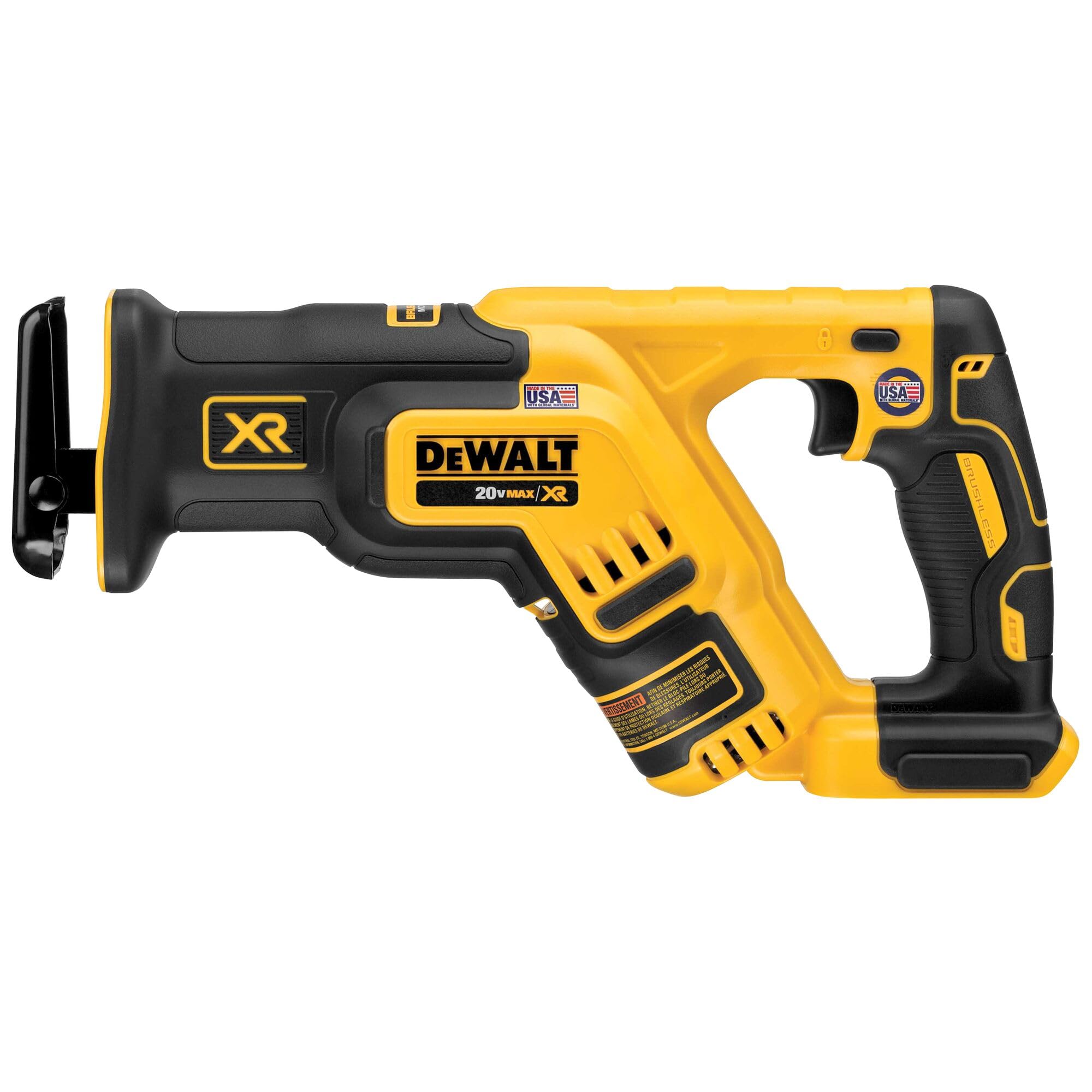
A 14.5-inch body and a 1-1/8-inch stroke are the two numbers that make the DeWalt DCS367B our top pick. The compact length lets it fit between studs and into a sink base, but the stroke is full-size, so it still cuts with authority when you lean into a demo cut. The brushless 20V MAX motor is rated at 2,800 rpm, and the saw weighs 5.4 pounds.

The four-position keyless blade clamp is the feature we kept coming back to. Turning the blade lets you flush-cut against a floor or wall, and the tool-free change is quick when you are wearing gloves. The LED is useful in cabinets and crawl spaces, and the compact body makes those spots reachable in the first place.

The reservation is vibration. This saw lets you know it is working, especially in a long cut through framing or a stubborn branch. A sharp blade, a firm two-handed grip, and a lower trigger setting at the start make it manageable; we did not find it a one-handed saw for long passes.

The DCS367B is the best all-arounder here because it covers framing, pipe, and yard cuts without the bulk of a full-size Sawzall. If you already own 20V MAX batteries, it is an easy saw to live with. If you are starting from zero, the corded DWE305 avoids the battery buy-in.

Bottom line: The compact body and full-size stroke make the DCS367B the one saw we grab for framing, pipe, and yard work, as long as you are on the 20V MAX platform.

Check Latest Price
#02

Best One-Handed

Milwaukee M18 Fuel Hackzall 2719-20

96 /100
Kirk Score Outstanding
Speed
4,500 rpm
Weight
4 lb
Stroke Length
7/8 in
Battery Platform
M18 18V
Check Details on Amazon

Pros

  • One-handed control in tight and overhead cuts
  • 7/8-inch stroke and 4,500 rpm for pipe and trim
  • Brushless M18 motor with LED and Quick-Lok clamp

Cons

  • Tool only; M18 battery and charger not included

For overhead cuts, pipe work, and cabinet interiors, the one-handed Milwaukee 2719-20 is the shape that makes sense. The 7/8-inch stroke and 4,500 rpm rating are not full-size numbers, but the narrow body lets you keep the blade on a line while your other hand holds the work.

We reach for it when control matters more than raw bite. The shorter stroke gives up some speed in thick lumber, but the one-handed grip and compact nose are what let you cut above a shoulder or beside a pipe. The brushless M18 motor has enough power for PVC, copper, and light metal, and the LED helps in dim crawl spaces.

The Quick-Lok clamp is simple, and the anti-vibration handle takes some sting out of longer cuts. It is still a one-handed saw, so do not expect it to replace a full-size Sawzall for repeated demolition. For plumbing, remodels, and pruning in tight spots, the shape is the advantage.

Bottom line: For overhead, cabinet, and pipe cuts, the M18 Fuel Hackzall gives you one-handed control that the bigger saws here cannot match.

Check Latest Price
#03

Best Corded

DeWalt 12-Amp DWE305

96 /100
Kirk Score Outstanding
Speed
0-2,900 spm
Weight
8 lb
Power Source
Corded, 12 amp
Stroke Length
1-1/8 in
Check Details on Amazon

Pros

  • 12-amp corded motor for continuous cutting
  • 1-1/8-inch stroke and 0-2,900 spm
  • Four-position keyless blade clamp
  • No battery platform or charger to buy

Cons

  • Cord limits where you can work

Battery runtime stops being a question with the DWE305. A 12-amp corded motor, a 1-1/8-inch stroke, and a 0-2,900 spm variable-speed trigger keep it cutting as long as the outlet does. There is no pack to recharge and no platform to buy into.

The trade is weight. At 8 pounds, it is a two-handed saw, and the mass that feels planted over a pile of framing is less welcome on a ladder. The four-position keyless clamp is quick, and the long stroke handles nail-embedded lumber and pipe without drama. This is a saw for a bench, a garage, or a renovation with power nearby.

For a shop or a homeowner with an outlet close to the work, the DWE305 is the least complicated way to get serious cutting power. If you need to move between a roof, a fence line, and a basement, the compact DeWalt DCS367B is the easier saw to carry.

Bottom line: Buy the DWE305 when you want sustained 12-amp power and do not want to manage batteries; it is the corded benchmark here.

Check Latest Price
#04

Best Long-Stroke Cordless

Makita 18V LXT XRJ04Z

95 /100
Kirk Score Outstanding
Speed
0-2,800 spm
Weight
8.3 lb with battery
Stroke Length
1-1/4 in
Battery Platform
18V LXT
Check Details on Amazon

Pros

  • 1-1/4-inch stroke removes more material per pass
  • 0-2,800 spm variable-speed motor
  • Tool-less blade change
  • Runs on 18V LXT batteries

Cons

  • Tool only; battery and charger not included

A 1-1/4-inch stroke is the reason to look at the Makita XRJ04Z. It removes more material per stroke than the 1-1/8-inch and 7/8-inch saws here, and the 0-2,800 spm variable-speed motor keeps that long stroke moving through lumber, branches, and studs.

The trade is size. This is a 19-1/8-inch, 8.3-pound saw with a battery, so it is a two-handed tool that wants room around the cut. We found the long stroke and weight work best on sawhorses, firewood, and framing, where the saw can settle into the cut. Overhead, it is a handful. The tool-less blade change is quick and simple.

Battery draw is another consideration. A high-capacity 18V LXT pack makes more sense than a small one, especially for repeated cuts in dry wood. If you already own Makita batteries, the XRJ04Z is a straightforward way to add a long-stroke recip saw. If you are starting fresh, the DeWalt is the more compact all-arounder.

Bottom line: For Makita LXT users who cut a lot of wood, the long-stroke XRJ04Z is a two-handed workhorse worth the extra size.

Check Latest Price
#05

Best Heavy-Duty Cordless

Milwaukee M18 Fuel Sawzall 2821-20

93 /100
Kirk Score Outstanding
Speed
3,000 spm
Weight
6.8 lb
Blade Clamp
Lever-actuated
Battery Platform
M18 18V
Check Details on Amazon

Pros

  • Full-size brushless power for heavy demolition
  • Lever blade clamp and LED
  • Metal-reinforced battery connection

Cons

  • Tool only; battery and charger sold separately

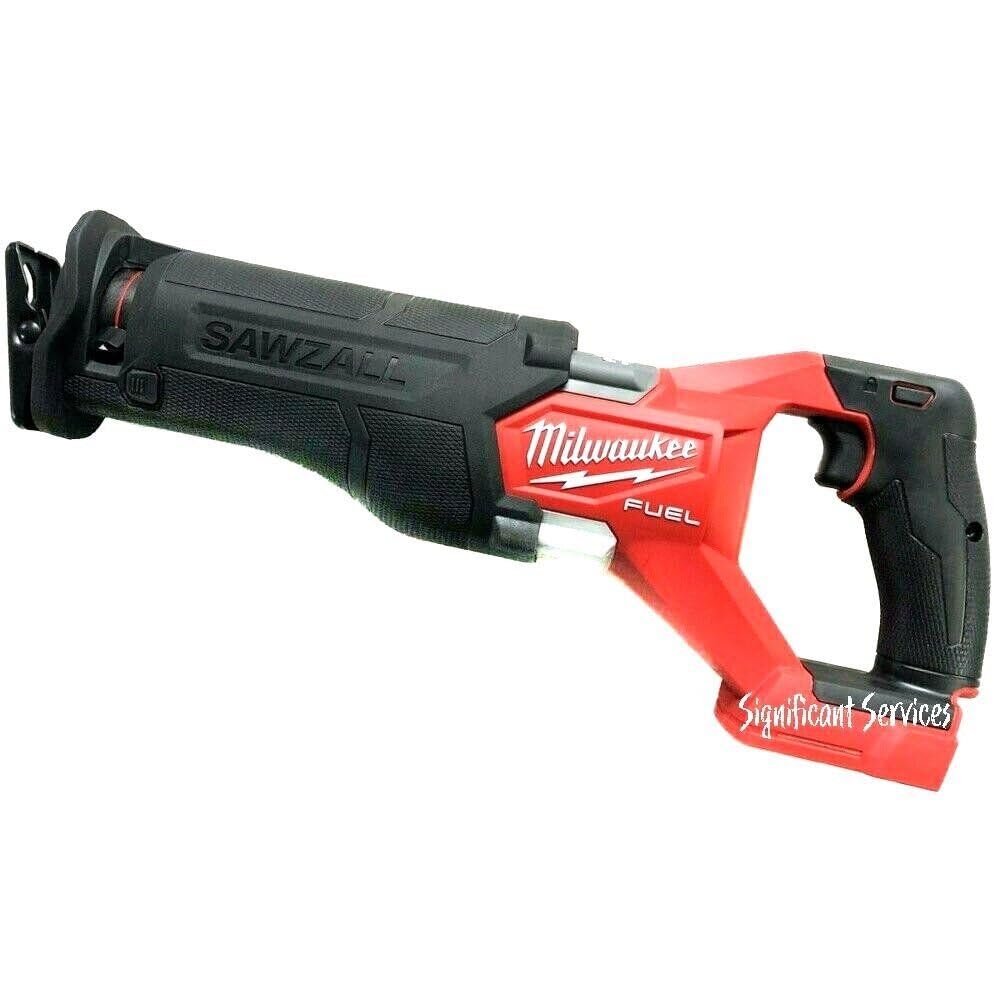
Full-size Sawzall proportions are the point of the Milwaukee 2821-20. This is a long, two-handed body built around the M18 Fuel brushless motor and a 3,000 spm rating, and it gives you something to push against in demolition and thick lumber.

The lever-actuated blade clamp is one of the details we appreciate. It is easy to work with gloves, and the metal-reinforced battery connection adds a little confidence when the saw is moving around a jobsite. The LED lights the cut line, and the variable-speed trigger lets you start slow before you load the motor.

The cost is weight. At 6.8 pounds, it is not the saw for overhead work or one-handed trimming, and it drains a small battery quickly under load. A 5.0Ah pack or larger is the sensible pairing. The payoff is a saw that feels planted in heavy material and does not need to be babied.

We put it behind the DCS367B for most buyers because the DeWalt is easier to handle and still has a full-size stroke. The 2821-20 earns its place when the job is heavy demolition and you want the full-size Sawzall layout.

Bottom line: Choose the M18 Fuel Sawzall for heavy, repeated demolition and full-size control; it is more saw than most occasional users need.

Check Latest Price
#06

Light DIY

Porter-Cable 20V PCC670B

94 /100
Kirk Score Outstanding
Speed
1,500 rpm
Length
14-1/2 in
Weight
3.8 lb
Battery Platform
20V MAX
Check Details on Amazon

Pros

  • Light 3.8-pound body
  • Tool-free blade changes and pivoting shoe
  • Compact 14-1/2-inch length

Cons

  • Lower speed rating than the other saws here
  • Tool only; battery and charger not included

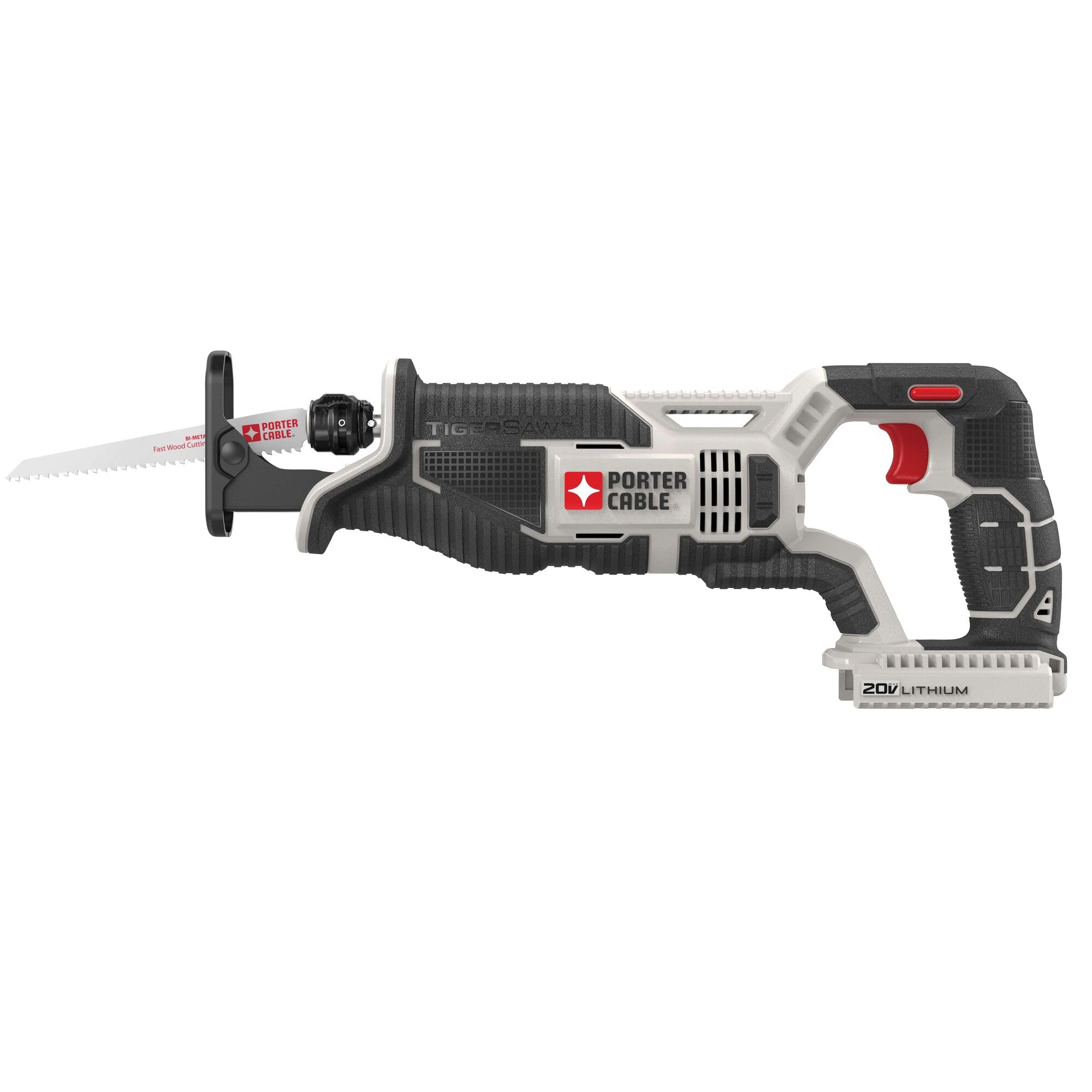
At 3.8 pounds, the Porter-Cable PCC670B is the lightest saw here. It is a 14-1/2-inch compact body with a variable-speed trigger, a pivoting shoe, and tool-free blade changes, so it is easy to grab for a quick cut and easy to store.

The compact body is easy to one-hand for pruning and PVC, and the pivoting shoe helps keep the blade in contact on uneven branches. It is happiest in light trim and small yard jobs, where the light weight and short body make the saw feel manageable.

The build is the question mark. This is not the saw to push through repeated demolition, and we do not make it the only saw for a remodel. As a second saw for quick cuts, it is handy and easy to store.

Bottom line: For light pruning, PVC, and quick yard cuts, the Porter-Cable is a handy second saw at a light weight.

Check Latest Price
#07

Small home projects

Worx 20V Axis WX550L

92 /100
Kirk Score Outstanding
Modes
Jigsaw and reciprocating
Weight
4.2 lb with battery
Battery
20V battery and charger
Blades Included
4 blades
Check Details on Amazon

Pros

  • 2-in-1 jigsaw and reciprocating modes
  • Battery, charger, and four blades included
  • 4.2 pounds with battery

Cons

  • Battery runs down in sustained cutting

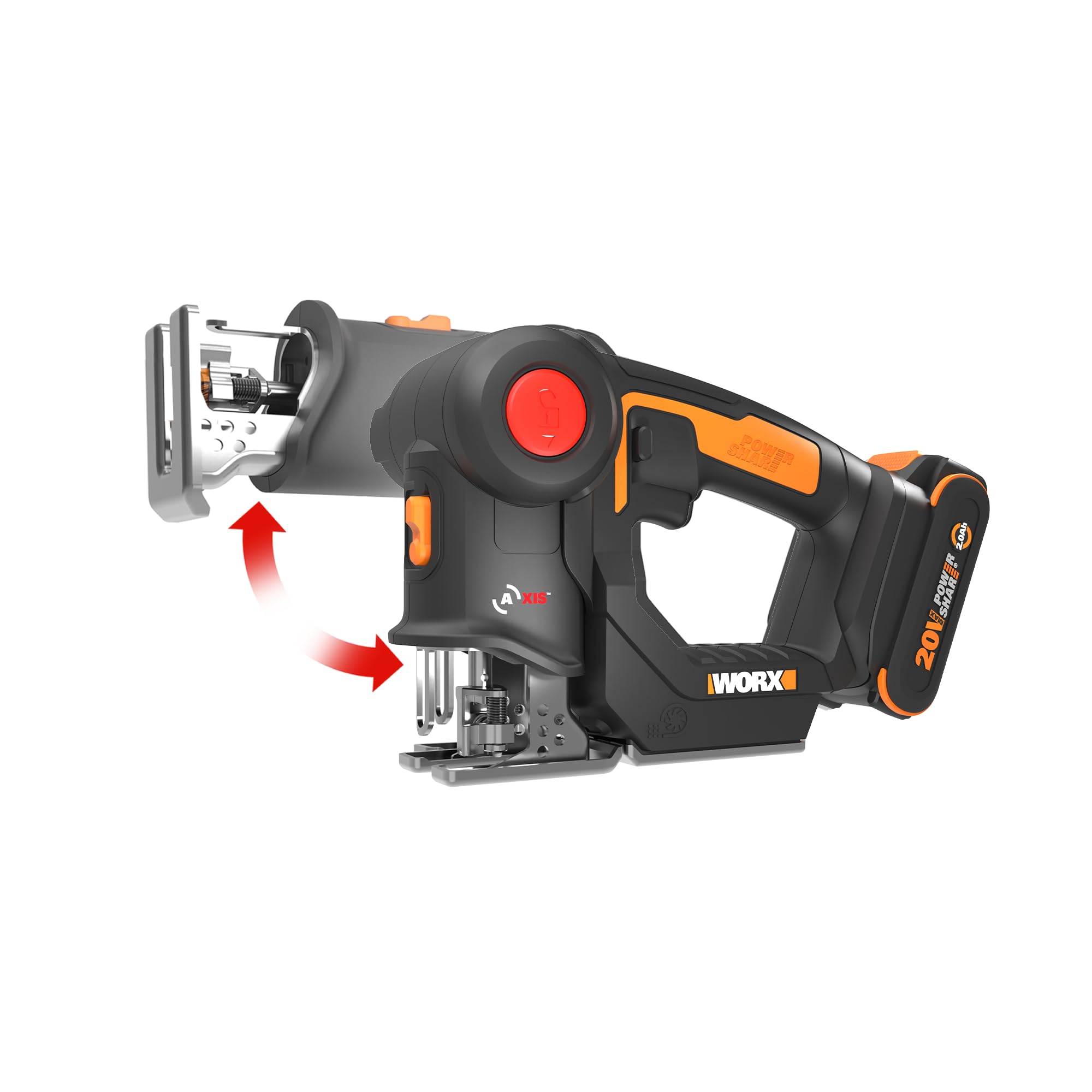
Two saws in one is the pitch of the Worx WX550L, and the pivoting head makes it more than a gimmick. It switches between jigsaw and reciprocating-saw modes, and the kit includes four blades, a 20V battery, and a charger. That makes it the easiest saw here to start using without adding a battery platform.

As a reciprocating saw, it is for light work. The 4.2-pound body is easy to carry and control, and the 2-in-1 shape is handy for laminate, trim, and small yard cuts. It is not the saw for thick lumber or repeated demolition; the power is not in the same class as the two-handed picks.

The 2-in-1 shape is the reason to consider it, not the reason to rely on it for a whole remodel. What it does well is cover two tools in one small package for apartment dwellers and light DIYers, and the included battery means you can start cutting right away.

Bottom line: For light home projects and buyers who want jigsaw and recip capability in one kit, the Worx is a clever, compact choice.

Check Latest Price

How We Tested the Best Reciprocating Saws

We built the shortlist from spec sheets and owner reviews, filtering for motor type, blade-change system, weight, and whether a saw ships bare or as a kit, then cut roughly 40 contenders down to 10 that actually represent the spread of the category: one corded 12-amp model, the rest cordless, several compact one-handed saws, and one convertible tool that also runs a jigsaw blade.

Every saw went through the same jobs over those eight months: a deck teardown, a fence line that came down in a storm, a stack of pressure-treated 4x4 posts cut to length, 2-inch PVC in a basement, and a few embedded nails none of the blades were warned about. We timed cuts through the 4x4 and noted where a saw bogged down, kicked, or wandered off the line. Blade changes were done with work gloves on, one-handed wherever the saw claimed to allow it, and we watched for clamps that loosened or shoes that started to slop after repeated drops.

Weight was recorded with each saw's battery fitted, then confirmed by holding each tool overhead in two-minute stretches to see how quickly the front end turned heavy. Vibration was judged by feel after 20 minutes of continuous cutting — some saws left our fingers tingling for an hour afterward, which is its own kind of answer. Battery life was counted in cuts per charge using the same-size pack on each platform rather than in minutes of trigger time.

Value came last and wasn't just sticker price. We priced each bare tool against the batteries and charger a first-time buyer would actually need, then weighed that against what the saw did in the hand.

How to Choose a Reciprocating Saw

Start With Power Source

Corded saws still make sense when the work stays near an outlet. The DeWalt DWE305 gives you a 12-amp motor and a 1-1/8-inch stroke without a battery platform, which is why we keep it as the corded pick. Cordless is the better fit for ladders, crawl spaces, and yard work, but the tool-only price is only the start if you do not own the batteries. Choose the platform first, then the saw.

Match Stroke and Speed to the Cut

Stroke length is how much material the blade removes per pass; speed is how often it does it. A 1-1/4-inch saw like the Makita XRJ04Z has an advantage in lumber and branches, while a shorter 7/8-inch stroke like the Milwaukee Hackzall is easier to control in pipe and tight spots. Do not assume a high speed number turns a short stroke into a demolition saw. Match the stroke to your thickest regular cut.

Choose One Hand or Two

One-handed saws are built to be controlled with one wrist, which is useful overhead or when your other hand is holding a pipe. Full-size saws want two hands and more room. The trade is not just weight: the 3.8-pound Porter-Cable is easy to carry but light-duty, while the 8.3-pound Makita is a stable two-handed wood saw. Pick the shape around the cuts you make most, not the number on the scale.

Look at the Blade Clamp and Shoe

A tool-free blade clamp matters more than it sounds when you are switching between wood, metal, and PVC. Four-position clamps, like the one on the DeWalt DCS367B, let you turn the blade for flush cuts against a floor or wall. A pivoting shoe keeps the blade seated as it wears. Check that the clamp works with gloves and that the shoe adjusts without tools; those are the details that decide whether a saw stays pleasant to use.

Price the Battery, Not Just the Tool

Bare tools are cheaper for a reason. The DeWalt and Milwaukee picks are sold without batteries or chargers, so the real cost depends on what is already in your shop. If you are starting from zero, a corded saw or a kit like the Worx WX550L is simpler. Count the batteries you need, not just the ones in the box; a second pack often matters more than an extra blade.

Frequently Asked Questions

Final Verdict

The DeWalt DCS367B is the saw we recommend first because it balances a compact 14.5-inch body with a full-size 1-1/8-inch stroke, four blade positions, and enough brushless power for framing, pipe, and yard cleanup. It is not the smoothest saw in long cuts, so plan on a steady two-handed grip. If you do not own 20V MAX batteries, the corded DWE305 is the simpler way to get sustained power; for overhead or cabinet work, the one-handed Milwaukee Hackzall is the better shape.