Best Overall

Romeda 8-Pack Sanding Sponge
- Wet Or Dry
- Washable and reusable
- Grits Included
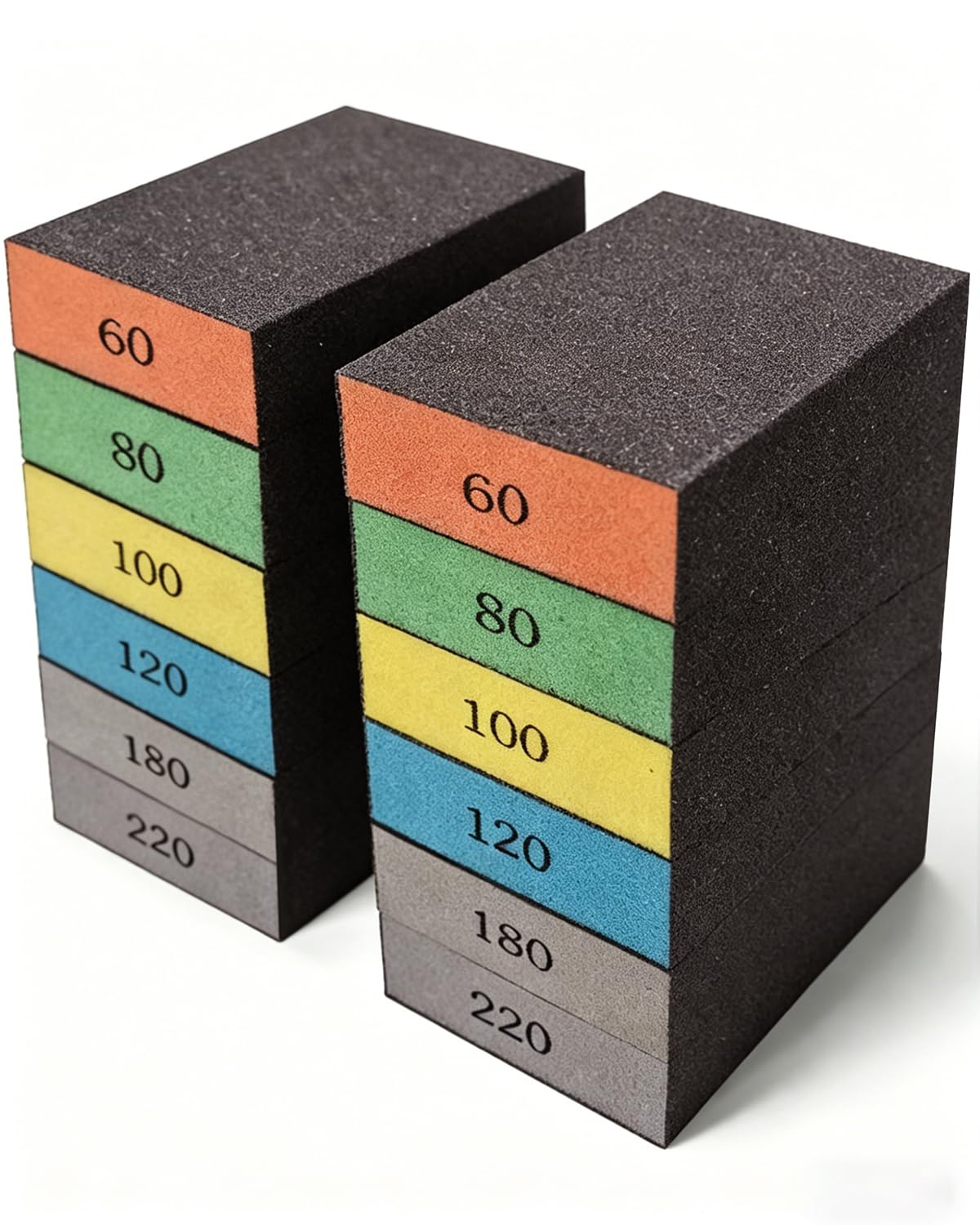
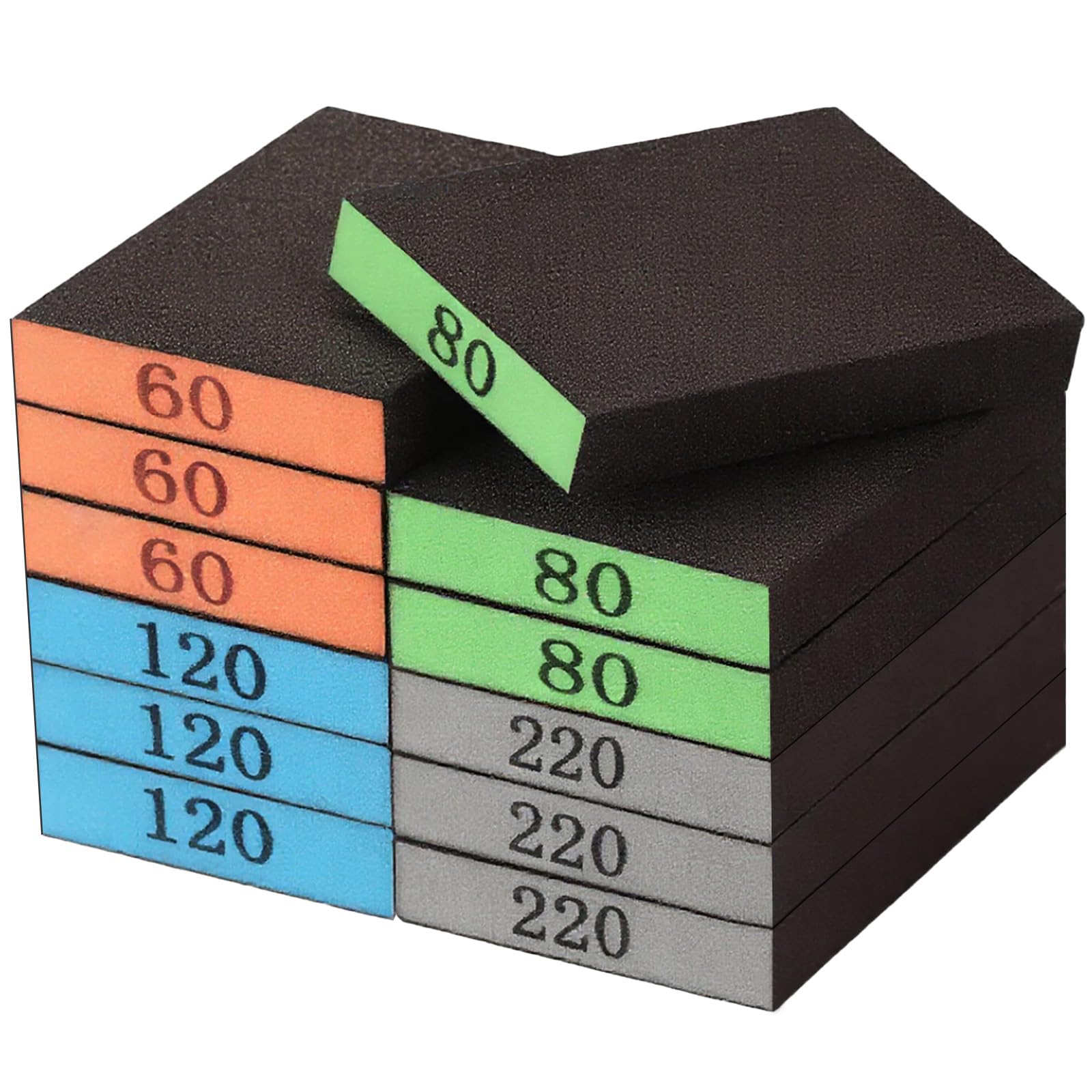
- 60, 80, 120, 220
- Blocks Per Pack
- 8 (2 per grit)
- Grit Identification
- Color-coded, marked on block
Pros
- Four grits cover stripping through pre-finish
- Firm foam holds a flat face on edges
- Two blocks per grit keeps one in rotation
- Rinses clean and keeps cutting
Cons
- No grits finer than 220
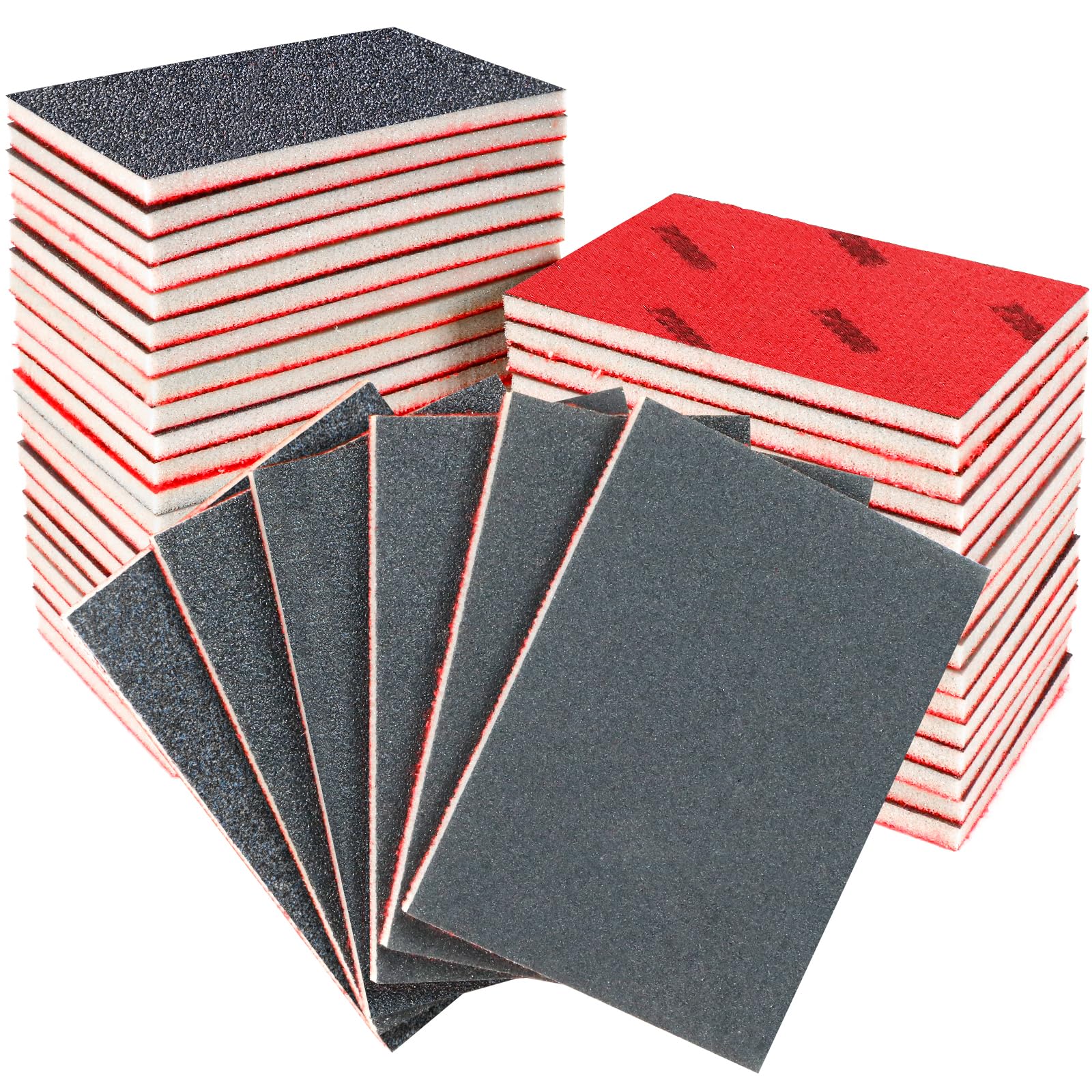
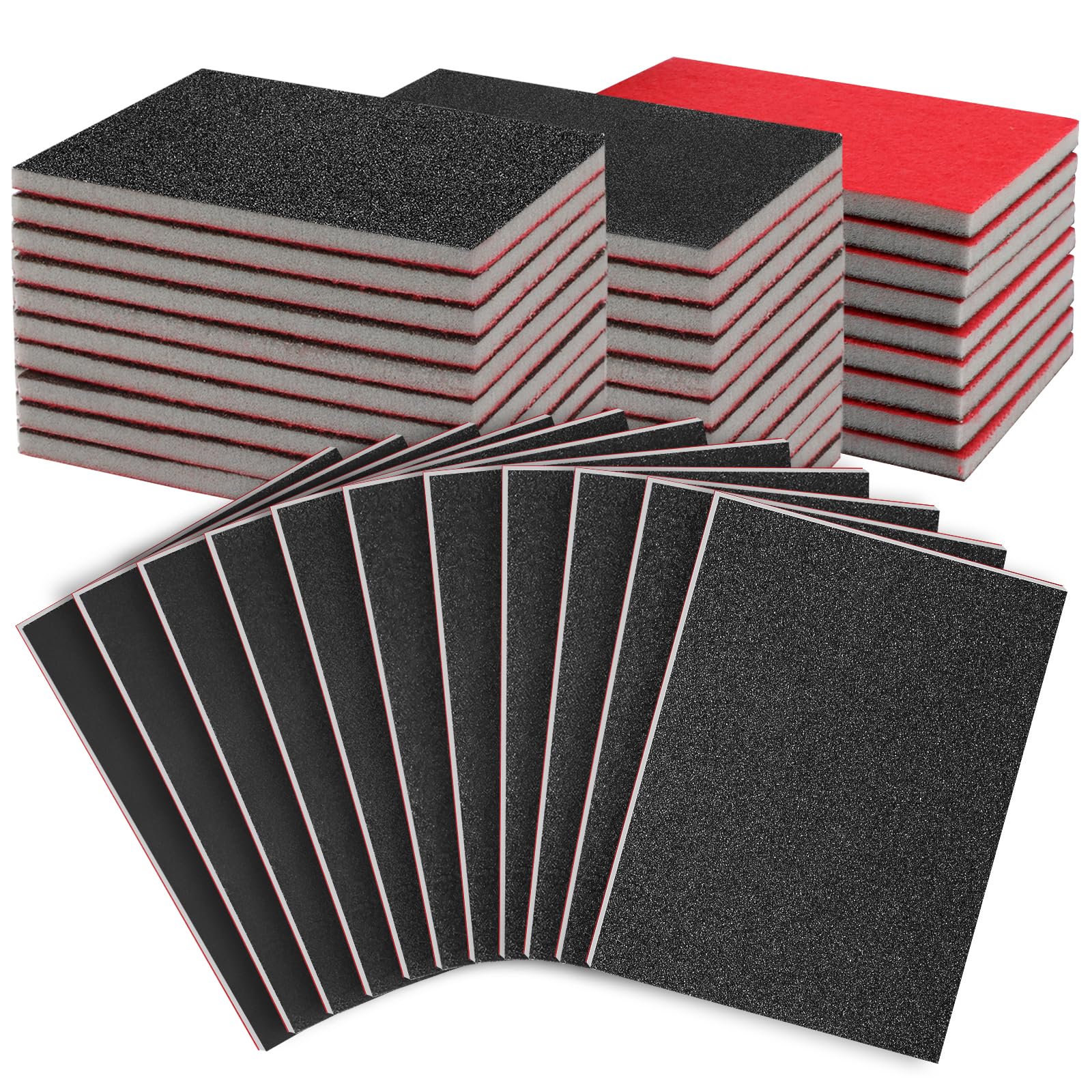
Sixty, 80, 120, 220, two blocks at each, and that's the whole set. It reads thin beside a 36-piece box, but it maps onto how a repair actually goes: coarse to take the old finish off, medium to level the patch, 220 for the last pass before primer.
The blocks are firm, which matters more than the wrapper lets on. A soft sponge rolls over the inside of a molding profile and rounds an edge you wanted crisp; these hold a flat face on a door stile and still give enough to follow a gentle curve. Each grade is its own color with the number marked on the block, so you can grab the right one with dusty hands.
Foam-backed abrasive is a consumable and these behave like every other block here: the coarse grades dull first, while the fine ones keep cutting long after you expect them to stop. A rinse under the tap clears the loading and brings the cut back for a while, which is how a 220 block ends up living by the sink during a trim repaint.
The calculation to make before ordering is per grit, not per box. Two blocks each is generous for prep and finishing and thin if your project opens with a lot of paint removal, in which case pair it with a coarse-only pack instead of rationing the 60. For everything short of a full strip-down, this is the set we reach for first, and the four-step sequence is the reason.
Bottom line: This is the set we tell people to buy first for repairs and prep: four grits from 60 to 220, two blocks each, firm enough to hold an edge flat.
Check Latest Price