// data-verified

Best Stud Finder for Plaster Walls of 2026

A stud finder is a device for noticing change — most of them look for a shift in density, capacitance, or a lump of metal behind the surface. Plaster over wood lath defeats that logic. The whole wall is dense, the lath reads like one continuous stud, and the reading shifts with however much plaster the original crew slopped on. I've watched a scanner glow solid over a span with nothing behind it but a cavity and a hundred years of dust.

What you need is a tool that says where the framing is and, just as usefully, where it isn't, so your bracket lands on wood instead of a fistful of anchors and hope. My team and I spent four months with 16 stud finders on the plaster walls of a 1920s house and a 1950s rock-lath addition, and the simplest ones often won. A magnet that finds the nails holding the lath to the studs can't be fooled by plaster itself — though the scanners still earn their keep when you want a wire warning before you drill. The picks below split along those lines.

#01

Best Overall

StudPoP Moving Magnet Stud Finder

89 /100
Kirk Score Excellent
Signal
Click and popper
Weight
1.12 oz
Detection Method
Moving magnet
Construction Types
Plaster, tile, double-layer sheetrock
Check Details on Amazon

Pros

  • Click and popper tell you when it finds a fastener
  • Works on plaster, tile, and double-layer sheetrock
  • No batteries or calibration
  • Pocket-sized at 1.12 ounces

Cons

  • No stud-width or center readout

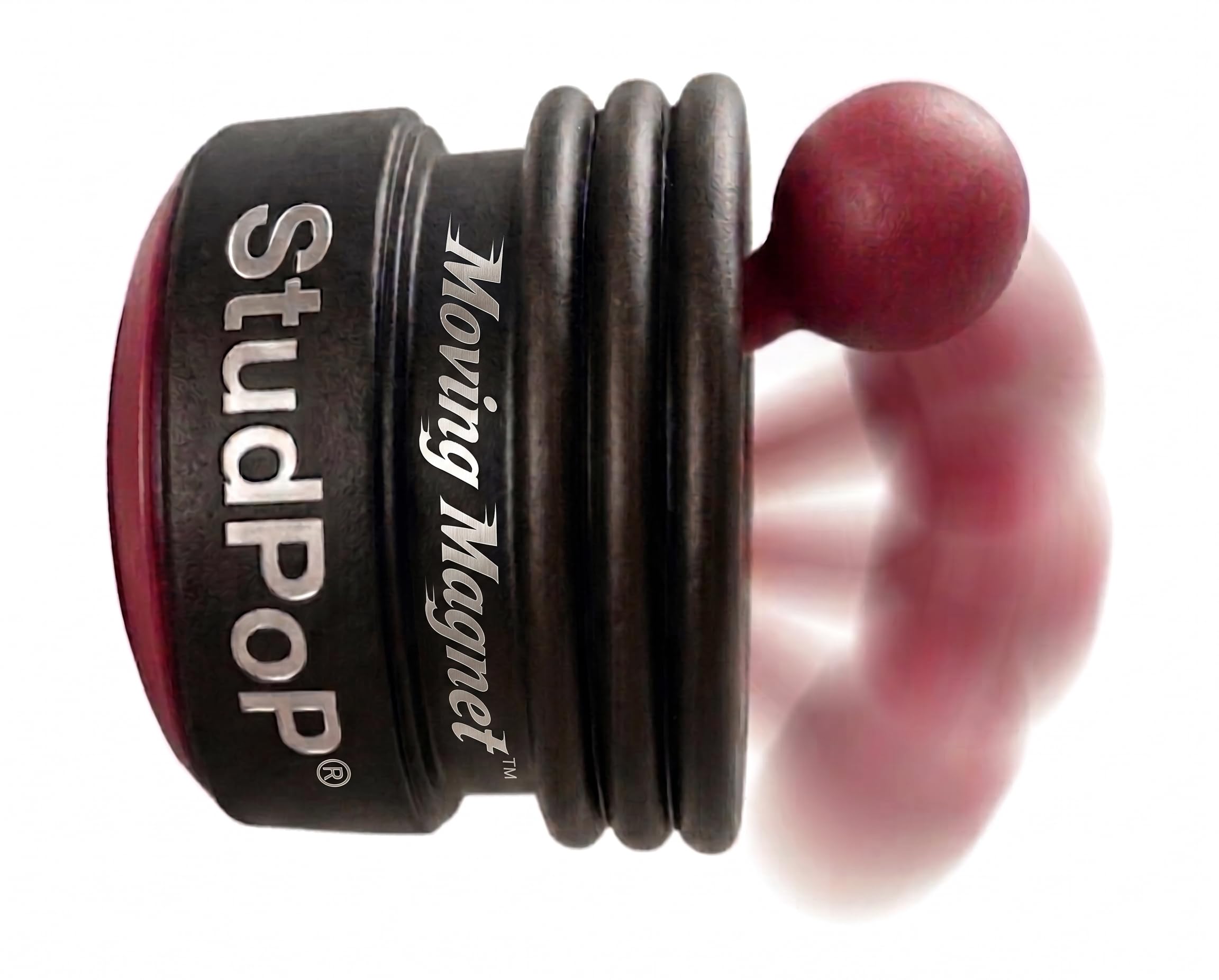
On a plaster wall, the useful signal is often a lath nail, and the StudPoP is built around telling you when its magnet has found one. The magnet sits in a small spring-loaded body; when it passes a nail or screw, the popper lifts and clicks instead of asking you to feel a faint tug. That is the detail that makes it our top pick for plaster and lath. We prefer it to a plain magnet for quick work because the tool tells you what it has found, so you can keep your eyes on the wall.

At 1.5 inches square and just over an ounce, it disappears into a pocket. The maker lists wood studs, metal studs, plaster, tile, and double-layer sheetrock, and that breadth is what plaster asks for. There are no batteries and no calibration, so it is always ready. We also like the finger-friendly size for scanning a long wall without wrist fatigue.

The catch is that it is still a magnetic finder: it needs a nail or screw to react to. The 1-inch magnet is also modest beside the 27-pound Stud Ball. For old walls where lath nails are present, though, the click and the simple design are worth more than the extra pull. That is the trade we make for a tool this easy to carry and use.

Bottom line: We recommend the StudPoP first for plaster and lath: its click tells you it has found a fastener, and there are no batteries to fail.

Check Latest Price
#02

Best Two-Pack for Lath

CH Hanson 03040 2-Pack

95 /100
Kirk Score Outstanding
Pack Count
2
Battery Type
None
Detection Depth
1 inch
Detection Method
Magnetic
Check Details on Amazon

Pros

  • Two magnets in every pack
  • Strong pull through mud and tape
  • Finds lath nails and holds position
  • No batteries, compact body

Cons

  • No stud-width display

A lath nail is a small target, but it is a solid one, and the CH Hanson pair is built to grab it. Each pocket-sized body has a strong magnet that sticks to the fastener holding the lath to a stud; once it grabs, it stays put while you mark. That is why this two-pack earns a place on plaster walls even though it has no screen, no beep, and no calibration.

The two tools matter more than they sound. You can leave one stuck on a nail as a reference and use the other to check the next point, or keep one in the toolbox and one in a drawer. The soft-grip body is comfortable, the 1-inch detection depth is enough for typical mud and tape, and there are no batteries to die. We also like the compact size for a pocket or a small tool bag.

The limit is that 1-inch depth: very thick plaster can put a fastener out of reach, and the Franklin 710+ is the better choice when you need a full-width electronic picture. For ordinary lath, the twin magnets are quicker and less fussy. That is the role we give this set: a low-cost, no-battery way to find the nail line before the drill comes out.

Bottom line: We recommend this two-pack for old plaster walls because the strong magnets grab lath nails and hold while you mark.

Check Latest Price
#03

Strongest Magnet

Rack-A-Tiers Stud Ball

95 /100
Kirk Score Outstanding
Weight
1.6 oz
Pull Force
27 lb
Detection Method
Magnetic
Construction Types
Drywall, tile, plywood
Check Details on Amazon

Pros

  • 27-pound pull is the strongest here
  • Spherical body and finger loop
  • Detects metal through tile and plywood
  • No batteries or calibration

Cons

  • Premium price for one magnet

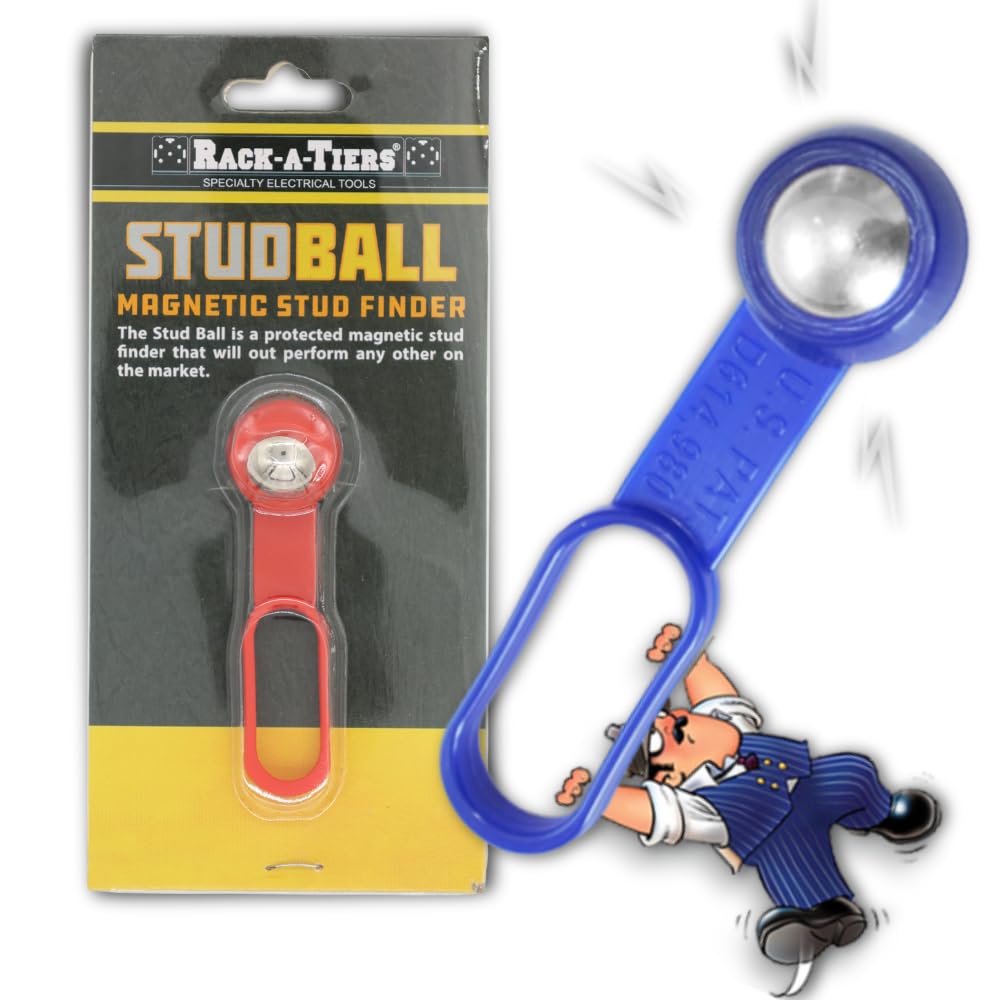
Twenty-seven pounds of pull is a lot for a stud finder, and the Rack-A-Tiers Stud Ball uses it well. The spherical shape puts a strong rare-earth magnet in a body small enough to roll across a wall, while the finger loop gives you something to hold. That combination makes it the strongest magnetic option here for thick plaster, ceramic tile, and plywood paneling.

The ball is 1.6 ounces, so it is easy to keep in a pocket or on a lanyard. It does not need batteries, and it does not need calibration. On old walls, the strong pull means it can grab a buried fastener that a weaker magnet slides past. We liked the way the round body lets you work in short arcs instead of dragging a flat block over the plaster.

It only tells you where metal is, with no stud-width readout, and it can be small enough to misplace in a deep toolbox. We think the extra pull earns its place on tile and heavy plaster, but for routine lath the cheaper StudPoP is easier to read. The Stud Ball is the specialist in this group, not the everyday default.

Bottom line: We like the Stud Ball for thick plaster and tile: its 27-pound pull is the strongest magnet here.

Check Latest Price
#04

Best Electronic for Plaster

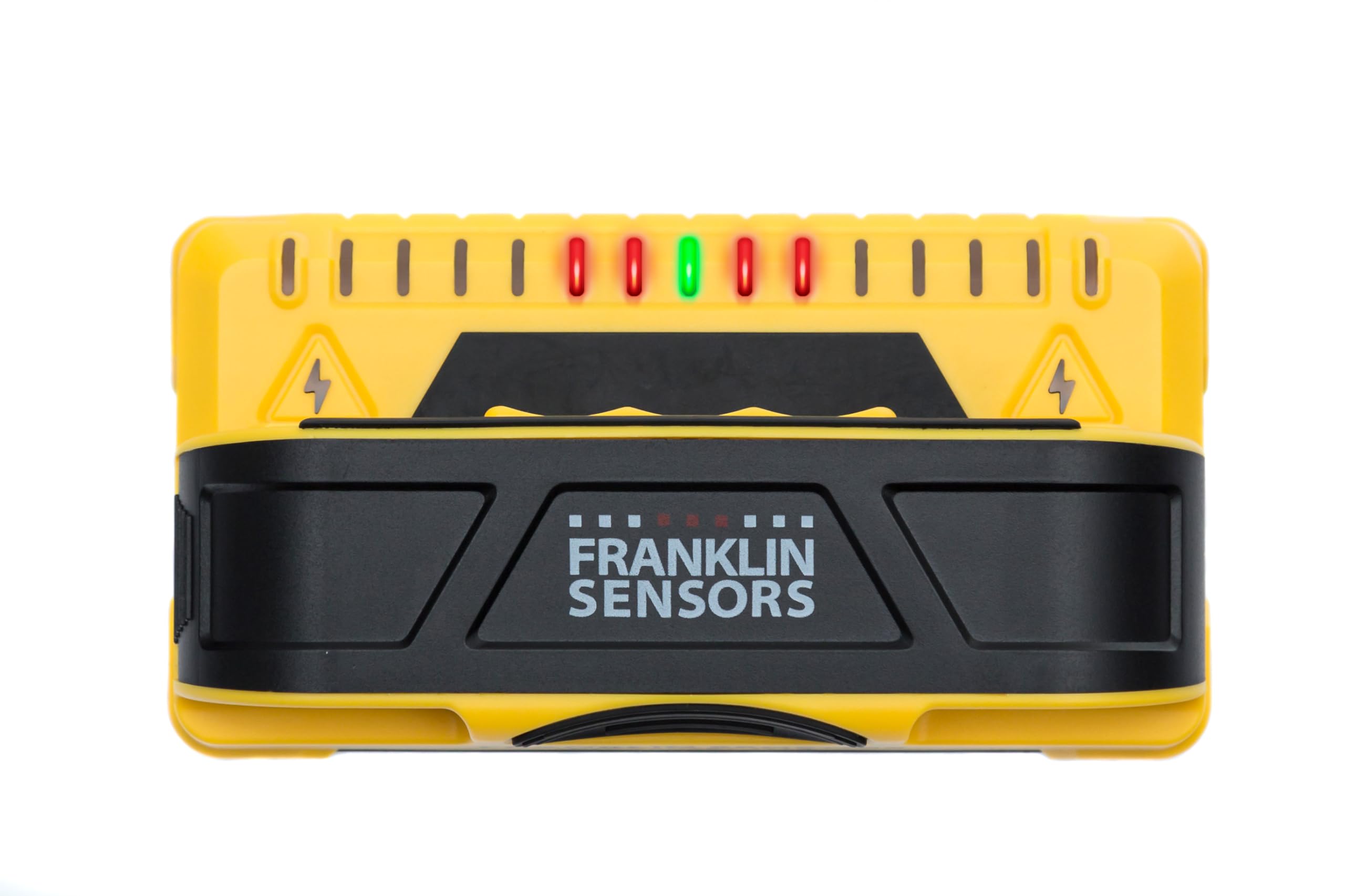
Franklin ProSensor 710+

93 /100
Kirk Score Outstanding
Scan Depth
1.6 inches
Stud Display
Full width
Detection Method
Electronic (13 sensors)
Battery Requirement
Not included; no rechargeables
Check Details on Amazon

Pros

  • Shows the full width of the stud
  • 1.6-inch deep scan
  • No calibration required
  • Built-in bubble level and ruler

Cons

  • No rechargeable batteries

A row of lights that spans the whole stud is the feature that makes the Franklin 710+ feel different from a beeping scanner. Its 13 sensors read across the wall at once, then light up the stud's width and center. There is no calibration step: press the button, slide, and watch the display. The 1.6-inch scan depth is the deepest figure in this group, which is the number that matters when plaster and lath sit between you and the framing.

We think this is the electronic scanner to choose for plaster. The full-width view takes the guesswork out of which side of the stud you are on, and the built-in bubble level and ruler are genuinely useful when you are marking a line for a shelf or cabinet. It also finds wood and metal studs in the same pass, so you do not have to switch modes.

The body is 7.25 inches long and 6.4 ounces, so it is a two-hand tool on a ladder. Durability is the other caveat: some units stop working after light use, so keep the receipt and test it on a known stud. Those are real annoyances, but the full-width view is still the reason to put up with the bulk.

Bottom line: The 710+ is our electronic pick for plaster: 13 sensors show the full stud width, and the 1.6-inch scan depth suits thick walls.

Check Latest Price
#05

Best for Live Wires

Franklin ProSensor M150

89 /100
Kirk Score Excellent
Live Wire
Yes
Scan Depth
1.5 inches
Stud Display
Full width
Detection Method
Electronic (9 sensors)
Check Details on Amazon

Pros

  • Live-wire detection with lightning indicator
  • Shows full stud width with 9 sensors
  • No calibration required
  • Compact body for overhead work

Cons

  • No rechargeable batteries

A live-wire warning is the feature that separates the M150 from the cheaper electronic scanners. Its 9 sensors show the stud's full width, and a lightning symbol lights when it senses current nearby. The 1.5-inch scan depth is a touch less than the 710+, but the body is smaller and easier to handle. We recommend it when you want a second safety check without a lot of bulk.

The display is the same idea as the bigger Franklin: a row of lights shows both edges and the center, so you can mark a stud without hunting for the beep. No calibration is required, and the tool finds wood and metal studs. At 5.51 by 2.99 by 2.01 inches, it fits in a drawer and is less awkward overhead than the 710+.

The live-wire warning is a warning, not a guarantee; shut off the breaker before you drill near wiring. The 1.5-inch depth also gives up a little reach to the 710+, which matters on very thick plaster. For the size, those are fair trade-offs. We like it as the compact electronic option for plaster, with the 710+ reserved for the deepest walls.

Bottom line: We recommend this compact Franklin when you want full-width scanning and live-wire warnings without the 710+'s bulk.

Check Latest Price
#06

Best Budget LCD

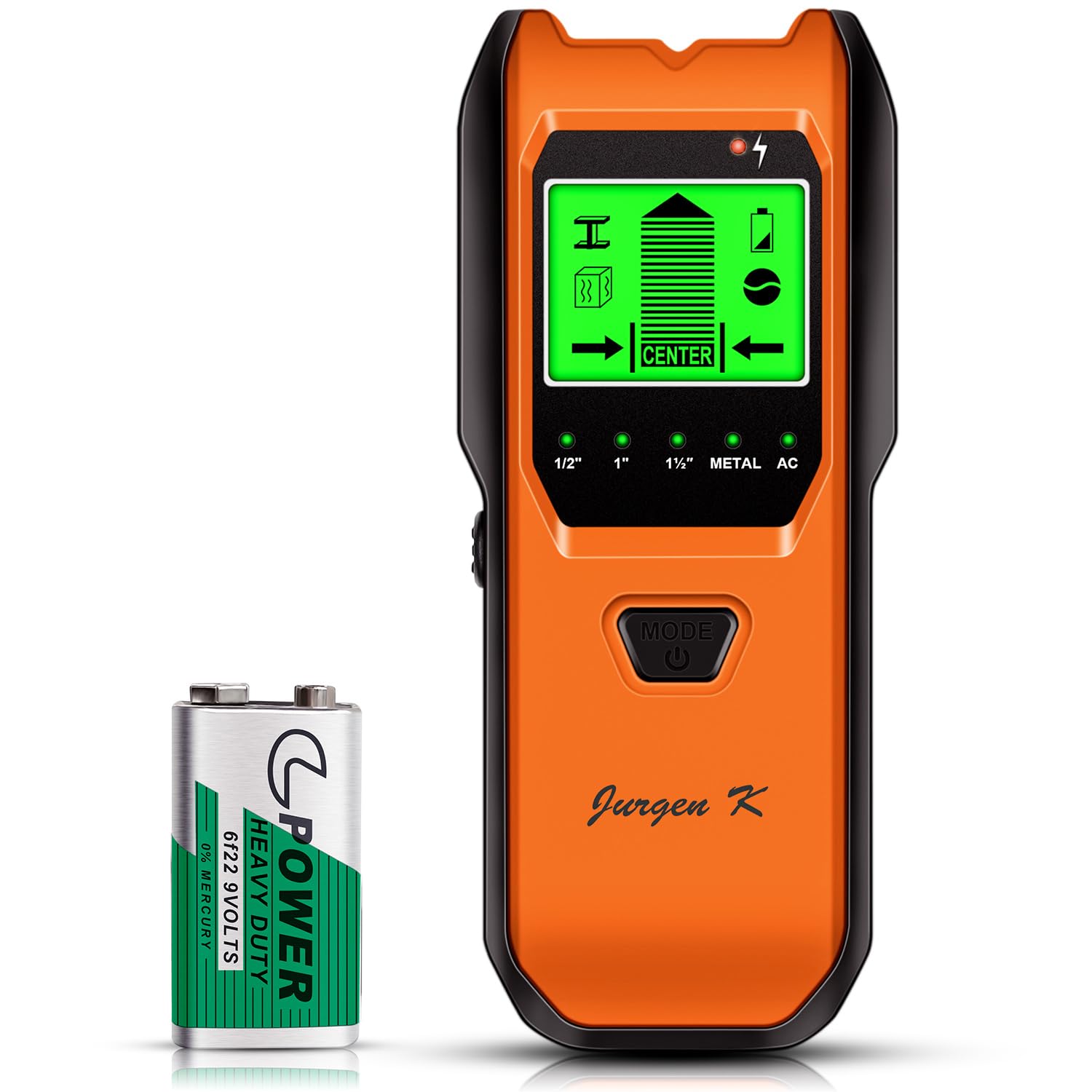
Jurgen K 5-in-1 Stud Finder

88 /100
Kirk Score Excellent
Display
LCD
Live Wire
Yes
Scan Depth
1.5 inches
Detection Method
Electronic (5 modes)
Check Details on Amazon

Pros

  • Five modes on a clear LCD
  • 1.5-inch deep scan
  • Live wire and pipe detection
  • Audio alarm and simple controls

Cons

  • Calibration before each scan

The Jurgen K puts five modes on a clear LCD, including 1/2-inch, 1-inch, and 1.5-inch stud scans plus metal and AC wire detection. That is a lot of scanner for a budget tool, and the screen shows the stud's center and edges rather than making you decode a row of blinking lights. The audio alarm is loud enough to hear over a job-site radio.

It is 9.6 ounces and 8.39 inches in the package, so it is not the pocket tool that the magnetic finders are. The non-slip grip helps, and the controls are simple enough to learn on a first project. It also detects pipes, which is useful in an old house where the plumbing may not follow the framing.

For a first electronic finder, the display and five modes do most of the work. The center-and-edge readout is easier to act on than a beep, and the 1.5-inch deep scan is enough for typical plaster. We recommend it as a low-cost way to add a screen and wire warning to a plaster-wall kit, with the Franklin M150 as the smaller step up.

Bottom line: We recommend the Jurgen K as a low-cost first electronic finder, provided you calibrate before every scan.

Check Latest Price
#07

Starter LCD

JAXWQ Stud Finder

86 /100
Kirk Score Excellent
Display
LCD
Live Wire
Yes
Scan Modes
Stud, deep, metal
Detection Method
Electronic
Check Details on Amazon

Pros

  • LCD shows center and edges
  • Deep, metal, and wire modes
  • Low-cost second scanner
  • Bright display and battery indicator

Cons

  • Can produce false positives and negatives

The JAXWQ is the lowest-priced electronic scanner here, and it still gives you an LCD, center-and-edge readings, deep and metal modes, and a live-wire warning. For a first tool or a spare, that is a useful package. The screen is bright and shows the stud position in a way that is easier to read than a row of LEDs.

At 8.1 ounces and 7.8 inches in the package, it is a two-hand tool for overhead work. The controls are simple, and the display is clear enough to use in a dim closet. It also has a battery-level indicator, which is a small thing until you are on a ladder with a dead tool.

Calibration is the part to take seriously: press the button on a clear section, wait for the screen to settle, and scan slowly. On a plaster wall, confirm every mark with a second pass or a magnet before you drill. The extra minute is worth it.

We see it as a starter or a spare rather than the tool we reach for first. The price is the reason to consider it, and the LCD is the reason it is usable. If you already own a magnetic finder, this is a low-cost way to add a screen and wire warning to the kit.

Bottom line: We see the JAXWQ as a budget starter scanner: the LCD and wire modes are useful, but confirm each reading.

Check Latest Price

How We Tested Stud Finders on Plaster Walls

We started by reading every listing and manual, then narrowed to models that could plausibly handle a thick plaster surface: magnets with real pull strength rather than fridge-magnet weak, and scanners with enough sensors to map a stud's full width instead of pinging a single point. Prices ran from pocket money to mid-range, because I wanted to know whether spending more actually bought accuracy once plaster was in the way.

Every tool got tested the same way: mark the stud, then confirm it. In the older house I hung shelves, a gallery wall, curtain rods, and a medicine cabinet; in the rock-lath addition I mounted a TV bracket. Before drilling, I checked each reading with a fine bit or from the open side of an unfinished wall where I could see the framing, and I counted every miss. I also swept each tool three times over the same stretch of wall to see whether it gave the same answer twice — the reliable ones did, and the rest wandered.

Indicator lights were read in a dim hallway and under a bright ceiling fixture, since a display you can't see is no display. Ease of use came down to whether I could hold a unit flat and press its button with the same hand. I carried each one in a tool apron for a week to judge size, dropped them from a step ladder onto tile to see what the housing did, and tested wire warning near live switches. Magnetic models were judged on whether the magnet snapped onto a nail head or slid past it.

Value shook out in a way I didn't expect: the cheap magnets and the mid-range scanners finished closer than the prices suggest, and the difference was mostly in how much information the tool handed you before you committed to a hole.

How to Choose a Stud Finder for Plaster and Lath

Magnetic or Electronic?

On plaster and lath, a magnetic finder often has the easier job: it looks for the nails or screws that hold the lath to the studs, not for the stud itself. That makes a simple magnet a sensible first tool, especially if you can see or feel the fastener pattern. An electronic scanner earns its place when you need the full width of a stud or when the wall has no reachable fastener at your working height. We start with a magnetic tool on old walls and reach for a deep scanner when the layout is unclear.

What a Magnetic Finder Can and Can't Tell You

A magnet sticks to a fastener, and a fastener gives you a point on a stud, not the whole stud. That is enough for hanging a shelf if you confirm the point with a second reading above or below. The trap is treating one grab as the center: lath nails can sit off-center, and a strong magnet can jump to a pipe or a metal corner bead. Use two points, keep the tool moving slowly, and mark the line before you drill. A two-pack, like the CH Hanson set, lets you leave one magnet on a nail while you check another point.

Depth, Width, and the Plaster Trap

Electronic scanners rate their reach in inches, and plaster is where that number matters. A 1.5- to 1.7-inch deep scan is the range we look for on old walls; a 3/4-inch depth is really a drywall tool. Full-width displays are worth the extra cost because they show both edges of the stud, not just a beep at the center. The trap is assuming a deeper rating guarantees a clean read on dense or uneven plaster; no scanner sees through everything.

Wires, Batteries, and Calibration

Live-wire detection is a useful second check, not a substitute for shutting off the breaker. On plaster, the warning can be muffled by thickness or confused by nearby metal, so treat it as a reason to pause rather than a clearance. Battery type matters too: the Franklin models here will not run on rechargeables, and a dead tool mid-project is its own hazard. We keep spare batteries in the case and test any new scanner on a known stud before trusting it.

Frequently Asked Questions

Final Verdict

We recommend the StudPoP first for plaster and lath. Its click-and-popper signal is easier to act on than a faint magnetic tug, and it works without batteries, calibration, or a screen. For full-width scanning, the Franklin ProSensor 710+ is the upgrade; its 13 sensors and 1.6-inch depth suit thick walls, and the built-in level helps when you are marking a line. If you want a simple two-pack for lath nails, the CH Hanson set is the low-cost backup worth keeping in the toolbox.