// data-verified

Best TIG Welders of 2026

Dual voltage is the headline on nearly every TIG welder in this class, and it's genuinely useful — but it's also where new buyers get fooled. On a 110-volt garage outlet, most of these machines give you nowhere near their rated amps; a 200-amp welder is a 200-amp welder only once it's plugged into 220. Read a spec sheet with that in mind and you sidestep most of the disappointment that sends people back to shopping.

I've spent years welding out of a garage with exactly one 220 outlet, so what I care about is what happens the first time I strike an arc. We ran six of these machines for eight months on thin autobody sheet, aluminum diamond plate, and rusty angle iron, and the gaps showed up quickly. Pulse control, AC balance, and a pedal you can actually feather matter far more day to day than a peak amp number you'll rarely touch. The picks below are the ones that made a clean bead easiest to repeat, whether you're patching a trailer fender or learning on scrap.

#01

Best Overall

Weldpro 200A AC/DC TIG

90 /100
Kirk Score Outstanding
Output
200A
Weight
61.8 lb
Processes
AC TIG, DC TIG, AC/DC pulse, stick
Input Voltage
110V/220V
Check Details on Amazon

Pros

  • Foot pedal, torch and gas hardware included
  • AC balance, frequency and pulse on the panel
  • Runs on 110V or 220V automatically
  • Handles aluminum as well as steel and stainless

Cons

  • 61.8 pounds

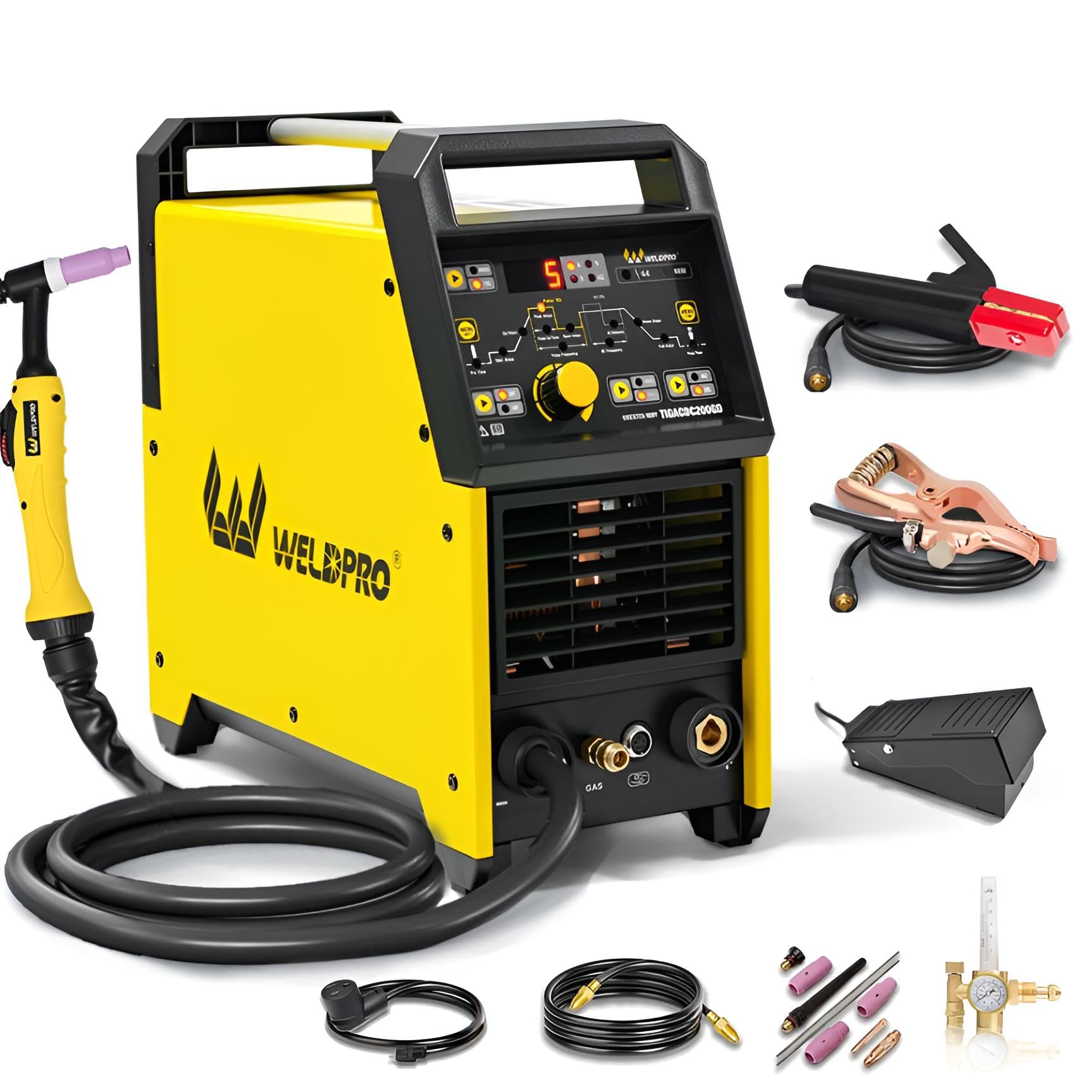
A foot pedal, a torch, a gas hose, a flow meter and a ground clamp all arrive in the crate, and that bundle is the reason this Weldpro is our top pick. On nearly every other machine here the pedal is a separate purchase, and the pedal is what makes aluminum work: you set a ceiling on the panel and taper the heat out at the end of a bead instead of watching the puddle collapse.

Behind the accessories sits a 200-amp AC/DC inverter with five modes — AC TIG, DC TIG, AC pulse, DC pulse and stick — along with adjustable AC balance, frequency and a pulse rate running from 0.5 to 200 Hz. What the AC side buys you is aluminum: the reversing current breaks up the oxide skin so a puddle forms at all, and the balance control decides how much cleaning you trade for penetration. It also picks 110V or 220V on its own, so the same box follows you from a garage outlet to a friend's shop.

What we noticed first is how much of the setup lives on the front panel rather than at the torch — balance, frequency and pulse rate are all dialed in before you strike an arc, which is fiddly for a quick tack and welcome once you're chasing a seam for an hour. The 61.8-pound case is the trade, and it's not a small one: this is a machine that lives on a cart.

Two hundred amps matters most at the top of the range, on thicker aluminum castings and bungs where the puddle either wets out or sits on top of the metal doing nothing. Budget for the cart and a bottle strap, and the machine stays set up — which is when a TIG welder starts earning the bench space it takes.

Bottom line: We make it the default because the AC/DC capability, pulse controls and foot pedal arrive together — the pedal is exactly what most aluminum beginners end up buying separately.

Check Latest Price
#02

Best AC/DC Value

AHP AlphaTIG 203Xi

90 /100
Kirk Score Outstanding
Warranty
3 years
Processes
AC/DC TIG, pulse, stick
Input Voltage
110V/220V
Aluminum Capacity
1/4 in
Check Details on Amazon

Pros

  • AC output for less than our top pick
  • Rated for 1/4-inch aluminum and 3/8-inch steel
  • Three-year warranty
  • High-visibility LCD panel

Cons

  • Accessory set unspecified; pedal may cost extra

A little less money than our top pick buys the AlphaTIG 203Xi, and it keeps the feature that costs the money: AC output. It's an IGBT inverter rated for 1/4-inch aluminum and 3/8-inch mild steel, it runs on 110V or 220V, and it adds pulse and a high-visibility LCD to the usual TIG and stick modes.

Our read is that this is the AC/DC machine for a shop with a firm budget and an unsettled material list, and the three-year warranty carries real weight on an inverter at this level. The catch is documentation: the listing names no torch, no pedal and no accessory set, so confirm what ships before ordering. A pedal bought afterward closes most of the gap against the Weldpro.

The published capacities are the most useful thing about it. A quarter inch on aluminum and three-eighths on steel tells you where this machine stops far better than any amp figure, and the same listing covers 7018 and 6013 stick electrodes, which makes it a genuine one-machine shop. For bench work, that covers almost everything a home garage does.

Bottom line: Buy this one when aluminum is on the list and the budget stops short of our top pick: it keeps AC output, adds pulse and a three-year warranty, and leaves you to confirm the box contents.

Check Latest Price
#03

Best for Thin Aluminum

ARCCAPTAIN TIG200PACDC

83 /100
Kirk Score Excellent
Weight
42.7 lb
Warranty
3 years
Processes
AC/DC TIG, pulse, spot, stick
Aluminum Capacity
0.5–5 mm (0.02–0.20 in)
Check Details on Amazon

Pros

  • Square and triangular AC waveforms plus spot TIG
  • Rated 0.5–5 mm aluminum, 10 mm steel
  • Full digital parameter control
  • Three years of service coverage

Cons

  • No foot pedal in the included components
  • The most expensive machine in this group

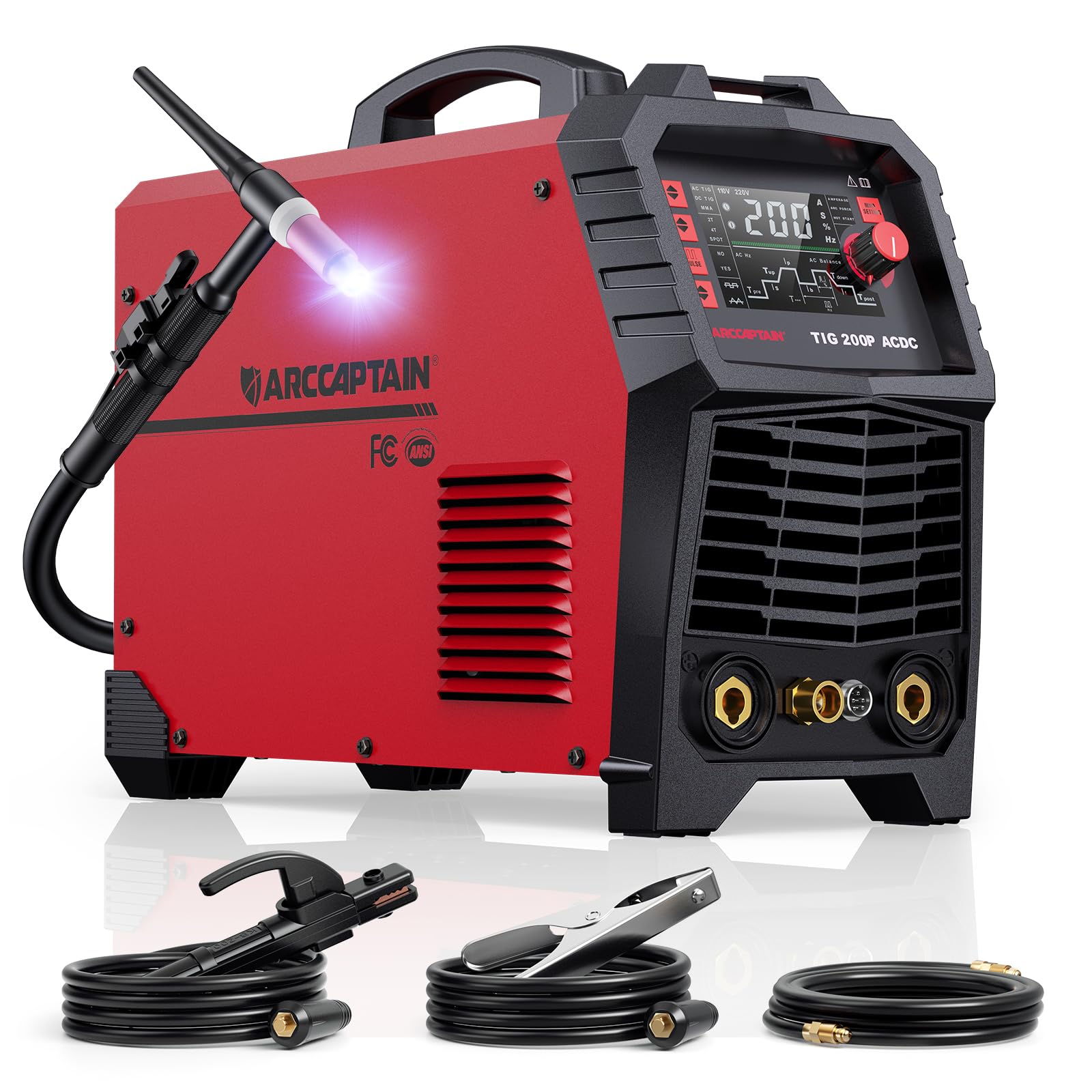
Square and triangular AC waves sit on the front panel beside the usual sine, and that's the detail separating this ARCCAPTAIN from the other aluminum-capable machines here. On thin sheet the wave shape changes the arc cone and how the cleaning half of the cycle behaves, which gives you a second lever on heat input beyond balance and frequency. There's a spot mode for tack welds, and seven processes are listed in all.

The rest of the package is digital and complete: pre-flow, initial current, up-slope, peak, base and post-flow all set on screen, 0.5 to 5 mm aluminum and up to 10 mm on steel, and three years of service coverage. At 42.7 pounds it's a bench machine with a handle rather than something you carry across a shop.

We think the waveforms earn their place if thin aluminum is the job — they're the strongest argument for this machine over the Weldpro — but the price stings when the foot pedal isn't on the included list, so price one in. The supplied torch runs two-piece collets, which work loose as the torch heats; a set of one-piece replacements fixes that cheaply.

On 3 mm plate the extra waves barely matter. On 1.5 mm sheet they're the difference between a bead you control and a hole you chase, and that's the whole case for spending here.

Bottom line: For thin aluminum and tack work, its square and triangular waves give control nothing else here offers — provided you price in a pedal and don't mind the weight.

Check Latest Price
#04

Best Compact DC

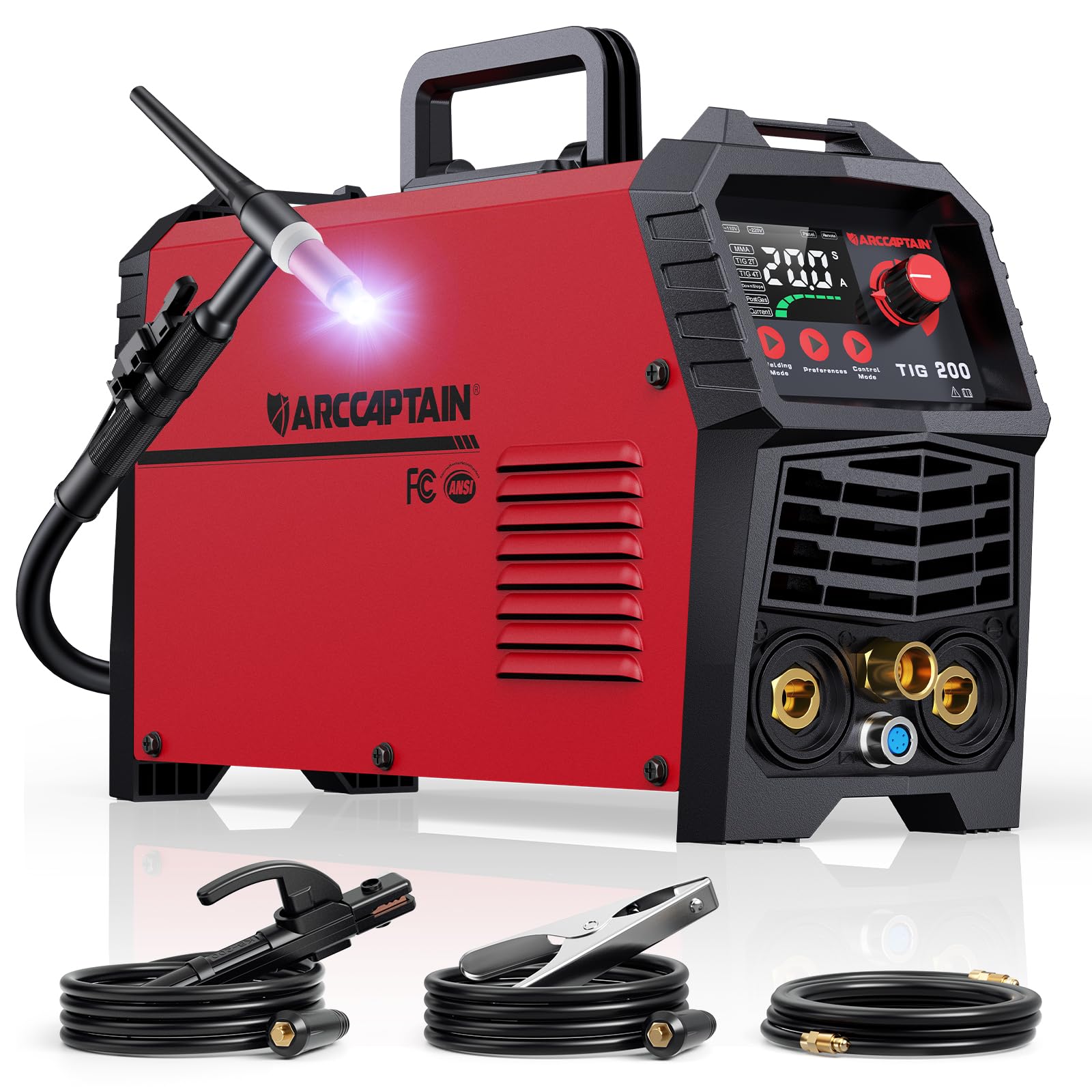
ARCCAPTAIN TIG200

87 /100
Kirk Score Excellent
Weight
20.8 lb
Warranty
2 years
Processes
DC TIG, stick
Input Voltage
110V/220V
Check Details on Amazon

Pros

  • 20.8 pounds, small enough for a shelf
  • HF start, 2T/4T latching and 1–10 s post-gas
  • Cooling fan runs only when needed
  • Two-year service coverage

Cons

  • DC only
  • Foot pedal not listed among included items

At 20.8 pounds this is the machine we carry rather than cart, and that's most of its argument: high-frequency start, DC TIG and stick, 110V or 220V, and a footprint that fits on a shelf under the bench. The panel is a large LED with 2T and 4T latching, so you can run a bead without a pedal by clicking on and off at the torch.

The controls go further than the price suggests — post-gas adjustable from 1 to 10 seconds, down-slope, hot start and arc force on the stick side — and the cooling fan runs only when it's needed, which keeps a small shop quieter than a constant-buzz inverter. On 220V you get the full 200 amps; on 110V the top of the range drops, as it does on every dual-voltage machine here.

DC is where it stops. There's no AC output, so aluminum is off the table; mild steel, stainless and chromoly are the job. That limit matters less than beginners expect — most garage work is steel, and a machine this light gets used far more often than a heavier one that needs clearing space before it can come out.

A starter tungsten is in the box, and the manual is thin on which settings suit which joint, so plan on a few videos before the first decent bead. Two-year coverage and standard consumables round out the rest of what a small DC machine needs to be.

Bottom line: It's the machine we carry rather than cart: DC-only TIG and stick in a 20.8-pound case that runs on either voltage and asks nothing of your back.

Check Latest Price
#05

Best Budget

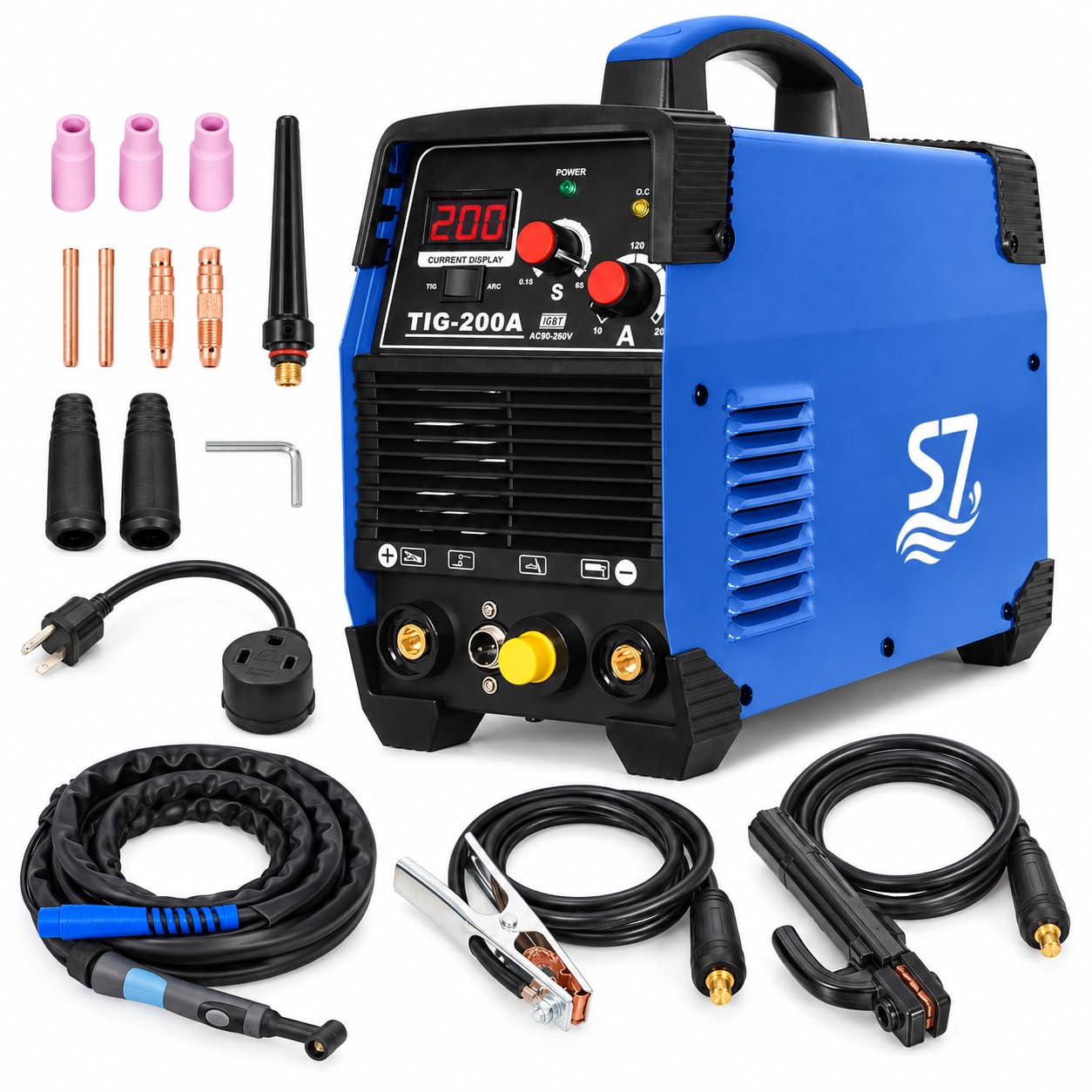
S7 200A DC TIG

88 /100
Kirk Score Excellent
Weight
18 lb
Warranty
2 years
Processes
DC TIG, stick
Input Voltage
110V, 220V
Check Details on Amazon

Pros

  • Lightest machine here at 18 pounds
  • Two-year warranty
  • Torch, ground clamp and electrode holder included
  • Works with standard TIG consumables

Cons

  • Torch gas valve can stick and drain argon
  • DC only

The cheapest machine in this group is also the lightest at 18 pounds, and what we liked is that it makes no attempt to be more than it is: 200 amps of DC TIG and stick, 110V or 220V, a digital current readout, overheat and overload protection, and a two-year warranty. It takes standard TIG consumables, so torch parts and tungstens are easy to find.

It's the right first machine for someone who wants to learn on steel without committing much money — you'll be running beads on scrap long before you notice the features that aren't there. What you will notice is the torch gas valve: it can hang open for a moment after you release the button, and a cylinder drains quietly when that happens. Test that valve the day it arrives, while the warranty is fresh.

The rest is honest. Torch, ground clamp and electrode holder come in the box, the whole kit stows in a space smaller than a toolbox, and the two-year coverage matches machines here that cost far more.

Aluminum is the one thing it can't do, and no amount of technique changes that — AC output is a different machine and a different budget.

Bottom line: A first TIG machine for steel that costs less than most torch sets — buy it to learn on, and test the gas valve the day it lands.

Check Latest Price
#06

Pulse on DC

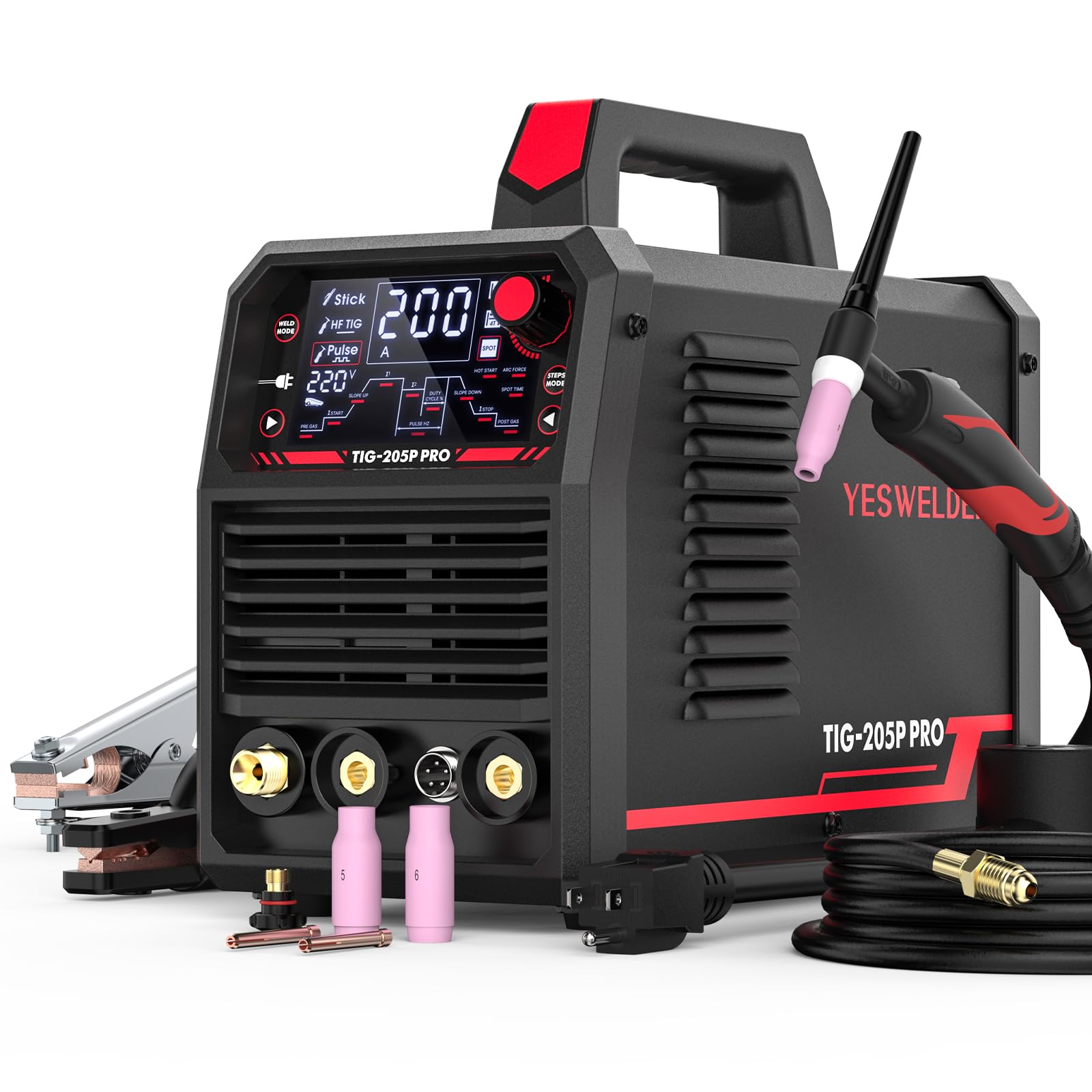
YESWELDER TIG-205P

86 /100
Kirk Score Excellent
Weight
23.7 lb
Processes
DC TIG, pulse TIG, stick
Foot Pedal
5-pin socket; pedal sold separately
Input Voltage
110V, 220V
Check Details on Amazon

Pros

  • Large, legible LED parameter display
  • Fully adjustable pulse with pre- and post-flow
  • Hot start, arc force and anti-stick in stick mode
  • Auto memory restores settings after power loss

Cons

  • Foot pedal sold separately
  • DC only

There's a five-pin socket on the front of this YESWELDER for a foot pedal, and no pedal in the box. The money went into the panel instead: a large LED display, three modes covering DC TIG, pulse TIG and stick, hot start, arc force and anti-stick on the electrode side, and auto-memory that brings your settings back after the power drops.

Pulse is fully adjustable, and so are pre-flow and post-flow — more adjustability than the DC-only machines further down this list offer. The screen is legible from a step back, which we appreciated once the machine was on a low shelf, and the menu is shallow enough that a first session doesn't turn into a crawl through sub-menus.

Whether it's worth it comes down to the panel. The ARCCAPTAIN TIG200 weighs less, ships with a torch, ground clamp and electrode holder, and does the same DC work; what this one adds is pulse, adjustable pre- and post-flow, and a screen you can read from across the shop. On thin stainless that's a real advantage. On 1/8-inch mild steel it's money sitting in a menu you never open.

Bottom line: A well-laid-out DC machine with real pulse control and a screen you can read across the shop, though the pedal is extra and aluminum stays out of reach.

Check Latest Price

How We Chose and Tested These Welders

We built the shortlist from spec sheets first, keeping only machines with dual-voltage input, an AC mode for aluminum, pulse, torch controls, and a stick function — then cut anything with vague duty-cycle claims or no published amperage at 110 volts. That left six welders, all of which arrived the same month and went straight onto the bench.

Setup came first, because it's where machines at this level tend to fall apart: I timed myself from opening the box to the first arc, grinding a tungsten, plumbing the regulator, and running the torch lead out the shop door and around a corner to see how the cable behaved. I measured lead and stinger lengths against the size of my workspace, checked whether the pedal cable reached where I actually stand, and noted whether I could read the settings panel at arm's length in a dim garage.

The real testing spanned eight months of ordinary work: lap joints on 1/8-inch mild steel, thin autobody patches where a hot start burns through, aluminum diamond plate on AC, and stick rods on rusty angle iron when TIG wasn't the right tool. I counted how many taps it took to strike an arc on each machine and whether the arc wandered afterward. On thin sheet I leaned on pulse and the pedal, watching for burn-through; on stick I graded how it handled dirty, painted steel that no one had bothered to clean.

For durability, I ran beads until the thermal cutoff tripped, then timed how quickly each machine came back, and let grinding dust and cold garage mornings do the rest. Every machine got identical treatment, and I'll keep running them as the hours add up.

How to Choose a Tig Welder

AC/DC or DC Only: Decide This First

Aluminum forms an oxide layer that melts far hotter than the metal beneath it, and DC current won't break it up. AC does, because the reversing half of the cycle cleans the surface while the other half welds — which is why every aluminum-capable machine here has an AC mode and a balance control. Steel, stainless and chromoly are DC jobs.

If aluminum is anywhere on your list — intake piping, a bike frame, a boat rail — buy AC once and be done with it. If it isn't, a DC machine does the same work on steel for a fraction of the money; the S7 and the ARCCAPTAIN TIG200 are both firmly in that camp.

What 110 Volts Really Delivers

Every dual-voltage machine here will run from a household outlet, and every one makes less power there than it does on 220V. The 200-amp figure is a 220V number; expect the ceiling to drop on 110V, which bites hardest on thick aluminum. The trap is reading a dual-voltage sticker as full output from a garage socket.

Check the input current the machine draws at 110V and confirm the circuit can carry it before you plan a project around household power. If your shop has 220V, plan on using it.

Read the Box, Not Just the Machine

A foot pedal is what makes TIG feel like TIG: you set a maximum on the panel and the pedal decides how much of it reaches the work, which is how you taper off a bead instead of cratering it. Only one machine here includes one. Torches, ground clamps and flow meters vary too, and so do torch consumables — the two-piece collets some machines ship with loosen as the torch heats, and one-piece replacements cost little.

Add up the missing pieces before you compare prices, because a pedal bought separately erases most of a price advantage.

Weight, Leads and Where It Lives

Eighteen pounds and 62 pounds are different machines in practice. The light ones go on a shelf and come out for a job; the heavy ones live on a cart with the bottle strapped to them. Lead length matters just as much — short torch and ground leads mean the machine sits next to the work, or the work comes to the machine. Measure the run from your outlet to your bench before deciding how portable this needs to be.

Warranty and Parts on an Inverter

Coverage runs from two years to three across these machines, and on an inverter that's the difference between a repair and a replacement. Torch consumables, tungstens and collets are standard sizes and easy to source whatever you buy; the circuit boards inside are not. Register the warranty when the machine arrives and keep the receipt, because service terms are the part of an inexpensive inverter you can't inspect on the bench.

Frequently Asked Questions

Final Verdict

The Weldpro is the one we point most people at, and the foot pedal matters as much as the AC output: an aluminum-capable machine without one is half a tool, and this is the only pick here that arrives complete. If the budget stops short, the AlphaTIG keeps AC and asks you to confirm what's in the crate first.

If aluminum was never on the list, buy the ARCCAPTAIN TIG200 and put the difference into gas, tungsten and a helmet you'll actually wear.