// data-verified

Best Tin Snips of 2026

Aviation snips are compound-leverage scissors for sheet metal. The extra pivot multiplies your hand force, which is why a decent pair walks through 24-gauge galvanized steel and a bad one leaves a chewed edge and a sore forearm. The catch is that cut direction is built into the blade — a left-cut pair will not turn a right-hand curve, no matter how you twist your wrist. I found that out halfway through a gutter job with a borrowed pair and a piece of flashing that ended up looking like a corkscrew.

Since then, my team and I have spent five months cutting metal with 16 pairs, in straight, left, and right cut, offset and straight handles, sets and singles. The color of the grip tells you almost nothing. What separates these tools is whether the blades still bite after a hundred cuts, whether the latch stays shut in a tool bag, and whether your hand still feels planted once there's cutting oil on the handle. The picks below cover every cut direction, and each one earns its place at a different budget.

#01

Best Overall

Wiss M3R Aviation Snips

95 /100
Kirk Score Outstanding
Cut Type
Straight and slight curves
Handedness
Ambidextrous
Overall Length
9-3/4 inches
Cutting Capacity
18-gauge cold-rolled steel
Check Details on Amazon

Pros

  • Handles straight cuts and gentle curves
  • Ambidextrous one-handed latch
  • Serrated blades grip the metal
  • Budget-friendly entry point

Cons

  • Long-term durability is the question mark

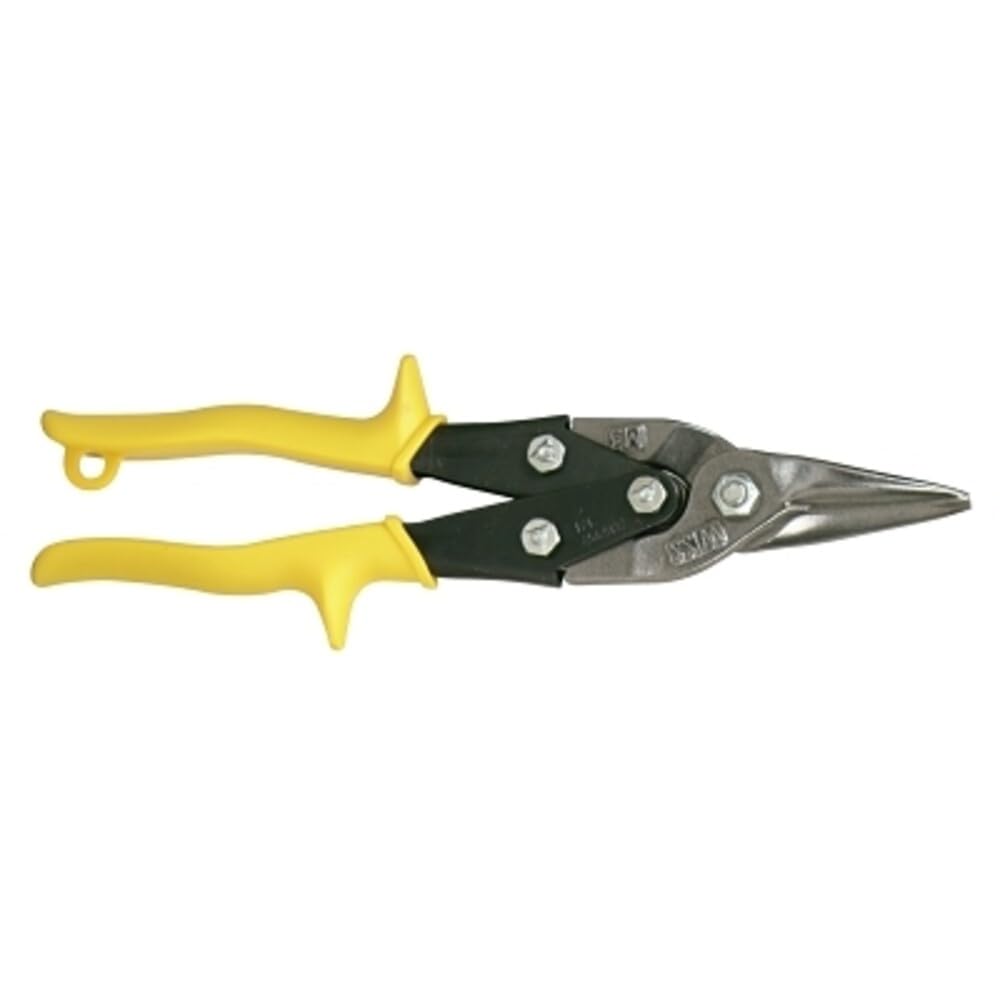
The first thing that stands out about the Wiss M3R is how little it asks of your wallet. For a snip that cuts straight runs and gentle left or right curves in 18-gauge cold-rolled steel, that combination is hard to beat. We used it as the default pair in our testing because it covers the cuts most home sheet-metal projects actually need, and the ambidextrous one-handed latch makes it easy to open and close without fumbling.

The 9-3/4-inch size and 12-ounce weight feel substantial without being tiring. The serrated molybdenum blades bite into the metal instead of skating, and the yellow handles make it easy to grab the right tool. We especially like that the compound action doesn't demand a death grip to get through a straight cut.

Tight curves are where it gives ground. The M3R is happy with slight bends, but a dedicated left or right offset snip is the better tool when you need to turn hard. The spring and grip are also the parts to watch; they can stick after a long run of cuts. For general repair work, gutter patches, and light HVAC jobs, this is still the pair we reach for first, and the modest outlay leaves room for a curve-specific snip later.

Bottom line: We recommend the Wiss M3R as the best all-around starting pair for straight cuts and gentle curves, especially at its budget price.

Check Latest Price
#02

Best Set for Tight Curves

Midwest Offset Snip Set

95 /100
Kirk Score Outstanding
Cut Type
Straight and tight curves
Set Contents
Left and right offset snips
Cutting Capacity
18-gauge cold-rolled steel
Blade Construction
Forged molybdenum alloy
Check Details on Amazon

Pros

  • Covers tight left and right curves
  • Forged blades cut to the tip
  • Comfortable offset grips
  • Made in the USA with lifetime warranty

Cons

  • Premium price for a two-piece set

Tight left and right curves are where the Midwest set earns its keep. The two offset snips split the work by direction, so you can follow a radius without twisting the tool or fighting the handles. For HVAC ductwork, gutter work, and any project with a lot of notches and corners, that's a more useful pairing than a single straight-cut snip.

We like the forged molybdenum blades and the pinch-thru-point cut, which lets the jaws keep cutting right to the tip. The Kush'N-Power grips are comfortable and stay put, and the offset shape gives your knuckles room when you're working close to the metal. The set is made in the USA and carries a limited lifetime warranty, which matters if you're buying for a trade.

If your work is mostly straight lines, a single snip is the simpler buy, because you won't need the second direction. But for anyone who cuts ducts, flashing, or trim with real corners, the set saves you from switching between tools and guessing which way the blades want to turn. The offset handles and pinch-thru-point jaws are the details we keep coming back to.

Bottom line: We recommend the Midwest offset set for anyone who regularly cuts tight left and right curves; the forged pair is the most capable curve-cutting setup here.

Check Latest Price
#03

Best for Thick Metal

Midwest Bulldog Snips

95 /100
Kirk Score Outstanding
Weight
13.6 oz
Cut Type
Straight and wide curves
Cutting Capacity
18-gauge cold-rolled steel
Blade Construction
Forged molybdenum alloy
Check Details on Amazon

Pros

  • Short jaws add leverage
  • Cuts 18-gauge cold-rolled steel
  • Comfortable Kush'N-Power grips
  • Solid, controlled feel

Cons

  • Not for tight left or right curves

The Bulldog's jaws are noticeably shorter than a standard aviation snip, and that's the point. The stubby blade gives you more mechanical advantage, so a straight cut through 18-gauge cold-rolled steel feels less like a hand workout and more like a controlled slice. We noticed the difference most on trim cuts and on thicker sheet that makes a longer snip flex.

The forged molybdenum jaws are heat-treated and cut cleanly right to the tip, which helps when you're notching or starting a cut in the middle of a sheet. The Kush'N-Power grips are chemical resistant and comfortable, and the 13.6-ounce weight feels solid without being clumsy. For HVAC cleats, framing, and heavier trim work, this is the straight-cut pair we reach for.

It is a specialist, not a do-everything snip. The short jaws are built for straight runs and wide curves, and that focus is a strength: the blade stays controlled, and the cut stays clean. If your work is mostly straight lines in heavier stock, you won't miss the extra length. The short jaws are the reason it feels so planted on heavy sheet.

Bottom line: We recommend the Midwest Bulldog for straight cuts in thicker sheet metal; its short jaws give you more leverage with less hand strain.

Check Latest Price
#04

Best Straight-Cut for Frequent Use

DeWalt Straight Aviation Snip

94 /100
Kirk Score Outstanding
Cut Type
Straight
Blade Edge
Serrated
Blade Material
High carbon steel
Overall Length
10.1 inches
Check Details on Amazon

Pros

  • Smooth, heavy-duty straight cuts
  • Comfortable grip
  • External latch opens one-handed
  • Serrated blade holds its line

Cons

  • Latch can interfere with grip

Straight cuts are the DeWalt's whole brief, and it handles them with a smoothness that stood out even next to the other straight-cut snips here. The 10.1-inch tool has a serrated high-carbon steel blade and enough leverage to move through sheet metal without the jerky bite you get from cheaper pairs. We kept reaching for it on longer straight runs because the cut stayed clean and the tool felt balanced.

The external latch is a small thing that becomes obvious in use: you can flick it open with one hand and get back to the cut. The grip is comfortable, and the tool feels solid without being tiring. We also like that the serrated edge holds its line instead of wandering when you're cutting a long panel.

The one thing it won't do is turn a tight radius; this is a straight-cut tool, and the blade is happiest on long runs and gentle sweeps. That's a fair trade for the control it gives you on the cuts it's built for. The smooth action is what keeps it in the rotation.

Bottom line: We recommend the DeWalt straight-cut snip for frequent straight cuts; it has the smoothest, most controlled action of the straight-cut tools here.

Check Latest Price
#05

Best Value Straight Cut

Craftsman Straight Aviation Snips

94 /100
Kirk Score Outstanding
Cut Type
Straight
Cutting Edge
Induction-hardened
Blade Markings
1/4-inch
Cutting Capacity
18-gauge cold-rolled steel / 22-gauge stainless
Check Details on Amazon

Pros

  • 1/4-inch blade markings aid straight cuts
  • Spring-assisted one-handed latch
  • Induction-hardened cutting edge
  • Full lifetime warranty

Cons

  • Straight-cut only; no tight curves

The 1/4-inch blade markings are the detail that makes the Craftsman easy to live with. Instead of eyeballing every cut, you can line up the marks and keep a straight run consistent. The spring-assisted latch also lets you open the tool one-handed, which is handy when the other hand is holding the sheet.

We think this is the value pick for straight cuts: the induction-hardened edge stays sharp longer than a non-hardened jaw, and the tool is rated for 18-gauge cold-rolled steel and 22-gauge stainless. The full lifetime warranty adds peace of mind.

The size is substantial enough for control without feeling unwieldy, and the metal body has a solid feel that inspires confidence. We used it on light sheet metal and found the cut predictable, especially on longer straight runs. The markings and spring latch are the small conveniences that make it feel more expensive than it is.

Bottom line: We recommend the Craftsman straight-cut snip as the best value pick for repeatable straight cuts; the blade markings and spring latch make it easy to use.

Check Latest Price
#06

Best Budget

Amazon Basics Straight Snips

93 /100
Kirk Score Outstanding
Latch
One-handed auto release
Cut Type
Straight
Blade Material
Chrome vanadium steel
Cutting Capacity
18-gauge cold-rolled steel / 22-gauge stainless
Check Details on Amazon

Pros

  • Very affordable for a starter snip
  • Cuts 18-gauge steel and 22-gauge stainless
  • One-handed auto-release latch
  • Comfortable rubberized grip

Cons

  • Durability is a question mark under heavy use

If you need a straight-cut pair for a one-off repair and don't want to spend much, the Amazon Basics snip is the obvious first stop. It's rated for 18-gauge cold-rolled steel and 22-gauge stainless, which covers gutter patches, thin ductwork, and light sheet-metal trimming.

The chrome vanadium blade has a serrated edge and a high-frequency heat treatment. We found it bites quickly and doesn't need a lot of hand strength to start a cut. The rubberized handle is comfortable, and the one-handed auto-release latch is a nice touch at this level.

What we didn't like is the spring and latch feel. They're less refined than on pricier snips and can be stiff when new, so the tool doesn't always open as smoothly as you want between cuts. That's a real annoyance on a long run, but it's manageable if you're cutting a few pieces at a time.

Compared with the Wiss and Craftsman, it gives up some smoothness and long-term confidence. For occasional straight cuts, it's the pair we keep as a spare and hand to a friend. The low price is the point, and it delivers enough cut quality to justify a place in a starter toolbox.

Bottom line: We recommend the Amazon Basics straight-cut snip as a capable first pair for occasional sheet-metal work; it covers 18-gauge steel without stretching the budget.

Check Latest Price
#07

Occasional DIY

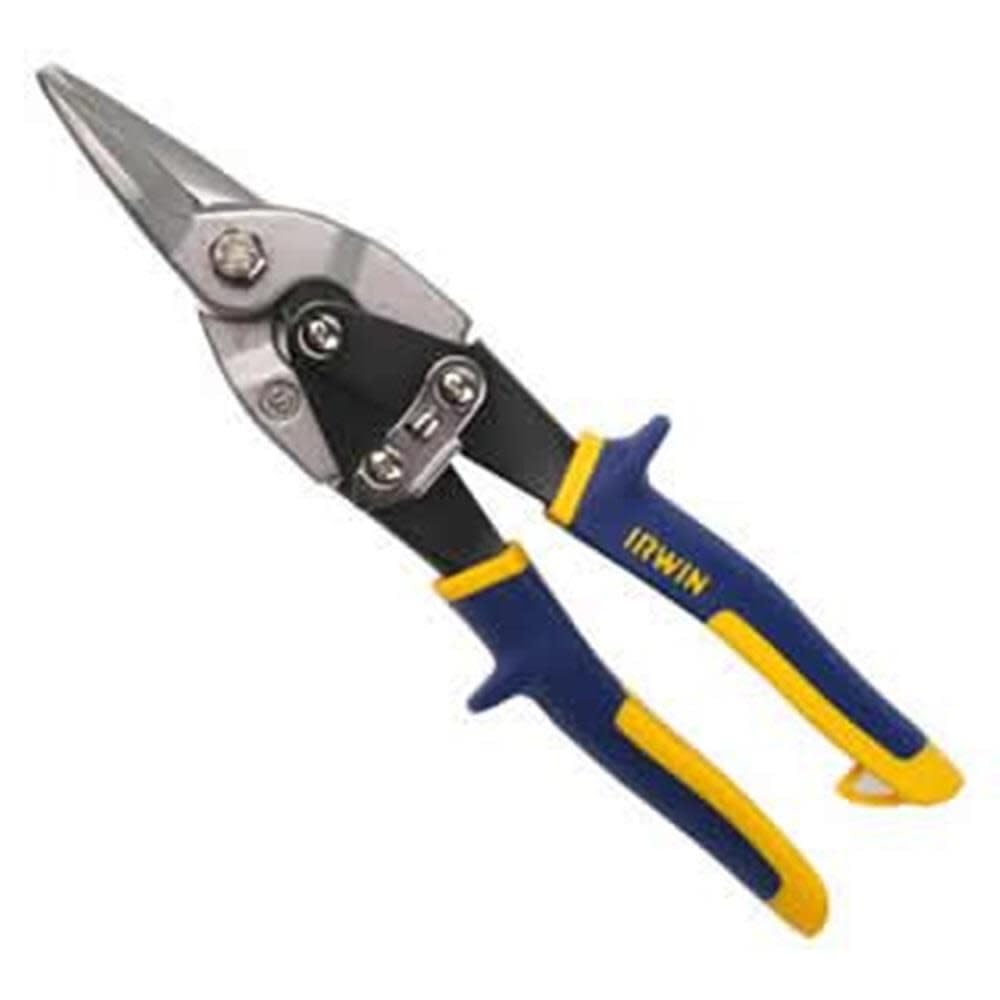
IRWIN Straight Aviation Snip

94 /100
Kirk Score Outstanding
Latch
E-Z close
Cut Type
Straight and wide curves
Blade Action
Compound leverage
Cutting Capacity
18-gauge cold-rolled steel / 23-gauge stainless
Check Details on Amazon

Pros

  • E-Z close latch
  • Compound leverage
  • Comfortable Pro-Touch grips
  • Clean straight cuts

Cons

The E-Z close latch is the first thing you'll notice on the IRWIN, and it's a good one: the tool closes securely and opens without a fight. Add the compound cutting action and textured Pro-Touch grips, and you have a straight-cut snip that's easy to control for occasional DIY work.

We used it on light sheet metal and found the cut smooth and straight, with the serrated edge holding the line. The 18-gauge cold-rolled and 23-gauge stainless ratings cover most home repair jobs. The grips resist twisting, which matters when you're cutting at an awkward angle.

It isn't the tool for tight left or right curves; this is a straight-cut design, and the blade is happiest on long runs and wide sweeps. That's a fair limitation for a DIY pair, because most home projects are straight cuts anyway. The IRWIN is the one we hand to someone who cuts sheet metal a few times a year. The E-Z latch and compound action make it feel friendlier than a bare-bones snip.

Bottom line: We recommend the IRWIN straight-cut snip for occasional DIY work; the E-Z close latch and compound leverage make it friendly to use.

Check Latest Price
#08

Complete cut set

Milwaukee 3-Pc Aviation Snips

91 /100
Kirk Score Outstanding
Latch
One-handed metal lock
Pivot
Flush pivot bolt
Set Contents
Left, right, and straight snips
Blade Construction
Forged serrated
Check Details on Amazon

Pros

  • Covers left, right, and straight cuts
  • Forged serrated blades
  • One-handed metal lock
  • Flush pivot for tight cuts

Cons

  • Premium price for a three-piece set

Three tools in one set is the appeal here: left, right, and straight snips under one model number. For anyone who cuts sheet metal often enough to need all three directions, that's a sensible way to buy.

The forged serrated blades and flush pivot bolt are the details that matter. A flush pivot keeps the cut line tight, and the one-handed metal lock is easy to operate with gloves on. We like the chrome-plated finish for keeping the blades clean, and the red-and-black handles make it easy to grab the right tool.

The set is heavier than a single snip, but that's the nature of carrying three. The bolt lock feels positive, and the blades line up cleanly when you close them. For a kit that lives in a truck or a job box, that matters more than saving an ounce.

What we paid attention to was the coordination between the three tools. The handles share the same shape, so switching from straight to left or right doesn't force you to relearn your grip. The flush pivot and forged blades give the set a consistent feel across all three cuts.

The three-piece coverage is the reason it earns a place; just be sure you'll use all three. The coordinated handles are what make it feel like a set rather than three unrelated tools.

Bottom line: We recommend the Milwaukee three-piece set for anyone who wants left, right, and straight snips in one purchase; it's the most complete kit here.

Check Latest Price
#09

Light sheet metal

Hurricane Straight Tin Snips

93 /100
Kirk Score Outstanding
Handle
Non-slip Tyregrip
Cut Type
Straight
Overall Length
10 inches
Cutting Capacity
20-gauge cold-rolled steel / 22-gauge stainless
Check Details on Amazon

Pros

  • Light and easy to maneuver
  • Cuts 20-gauge steel and 22-gauge stainless
  • Comfortable Tyregrip handle
  • Budget-friendly straight-cut option

Cons

  • Durability is mixed under repeated heavy cuts

The Hurricane straight-cut snip is light in the hand, and that's the first thing we noticed. At 10 inches and about 0.4 kilograms, it's easy to maneuver along a gutter or a duct without your wrist complaining.

It's rated for 20-gauge cold-rolled steel and 22-gauge stainless, so it's a light-sheet tool rather than a heavy-gauge workhorse. The chrome vanadium serrated blade grips the metal, and the Tyregrip handle stays put even when your hands are sweaty.

The safety latch and self-opening spring are useful, but the latch is the weak spot. It can stick or jam, and the spring doesn't always open the jaws smoothly. That's the kind of annoyance that shows up in the middle of a cut, especially when you're trying to work quickly.

For light sheet metal, gutter guards, and occasional repairs, it's a handy pair to keep around. The light weight is the reason it stays within reach for quick jobs. It isn't the pair we reach for on heavier stock, but it doesn't pretend to be.

Bottom line: We recommend the Hurricane straight-cut snip for light sheet-metal jobs and occasional repairs; it's light, comfortable, and budget-friendly.

Check Latest Price

How We Chose and Tested the Best Tin Snips

We started with a long list of aviation snips in all three cut directions — straight, left, and right — and narrowed it by reading specs and looking at how each one was actually built: forged versus stamped blades, offset versus straight handles, and what kind of latch and grip came on it. We bought singles and sets, budget and pro-grade, and ended up with 16 pairs to put through five months of real work.

Most of that testing happened where snips actually live: a garage bench, a driveway, and one long afternoon on a ladder hanging gutter. We cut 24- and 26-gauge galvanized steel, aluminum flashing, and a downspout, running each pair through long straight rips, tight left and right radius curves, and short notches where the blades have to bite and stop.

Every pair got the same routine. We counted how many cuts it made through 24-gauge before the edge started skidding instead of biting, then checked the curl and burr left on the cut edge. We worked each latch open and shut two hundred times wearing a work glove, and shook every pair in a canvas tool bag to see whether the lock popped on its own. Handles got a smear of cutting oil to find the grips that went slick, each pair was dropped on concrete from waist height, and we noted how much room the handle left for a gloved hand. Cost went into the same ledger: how many clean cuts you got per dollar.

How to Choose Tin Snips

Match the cut direction to the work

A straight-cut snip handles straight runs and gentle curves. A left-cut snip turns tight left radii, and a right-cut snip does the same to the right. If most of your work is trim and patch cutting, a single straight-cut pair like the Wiss M3R is the practical starting point. If you cut ductwork, flashing, or lots of corners, a left/right set such as the Midwest pair saves you from twisting the tool. Ignore the old shortcut that one snip can do every curve; tight radii need the dedicated direction.

Check the gauge before you buy

Cut capacity is the number that decides whether a snip can handle your material. Many aviation snips cut 18-gauge cold-rolled steel and 22-gauge stainless; lighter models stop at 20-gauge steel. Stainless is harder and work-hardens, so stay within the listed capacity and don't force a cut. If you regularly cut thicker straight stock, a short-jaw design like the Midwest Bulldog gives you more leverage. A longer snip is not automatically stronger; the blade shape and pivot do more for cutting force than overall length.

Handles, springs, and latches matter

Comfort is not a luxury on a tool you squeeze hundreds of times. Look for a grip that resists twisting and a spring that opens the jaws smoothly between cuts. The latch should work with one hand, especially if your other hand is holding the sheet. A stiff latch or weak spring turns a quick cut into a fight, which is why we pay attention to those parts on budget models. Try the latch with gloves on before you commit to a pair you'll use all day.

Single snip or a set?

Buy a single straight-cut snip if your work is mostly straight lines and wide sweeps. Buy a set if you regularly cut tight left and right curves, because switching between dedicated tools is faster and cleaner than forcing one pair to do both. A two-piece offset set covers left and right; a three-piece set adds a straight snip. The Milwaukee kit is the broadest option here, while the Midwest offset pair is the more focused curve-cutting set. Don't buy three tools for one straight cut.

Blade construction and long-term edge life

Forged blades generally hold up better than stamped or cast edges under repeated sheet-metal cuts, and serrations help the jaws grip without slipping. Induction-hardened edges are another sign the maker expects the tool to stay sharp. That said, even a good pair will dull if you cut hardened wire, stainless beyond its rating, or material that makes the blades twist. Use the full length of the jaws, keep the pivot clean, and replace a snip that tears rather than slices. The DeWalt and Midwest blades are the ones we watch for edge retention.

Frequently Asked Questions

Final Verdict

The Wiss M3R is the pair we recommend first. It handles the straight cuts and gentle curves that most home sheet-metal jobs ask for, and the ambidextrous latch makes it easy to live with. If your work is mostly tight left and right radii, step up to the Midwest offset set; if you're cutting thicker straight stock, the Bulldog's short jaws are the better tool. Start with the cut you make most, not the biggest set.