// data-verified

Best Torque Screwdrivers of 2026

The whole point of a torque screwdriver is to keep small fasteners from being over-tightened — scope rings, bike stem bolts, furniture hardware, appliance panels — so it is maddening when the tool itself causes the damage. A vague click or a drifting scale puts you back to guessing, just with more hardware in the mix. The right one gives you a repeatable torque setting and bits that fit cleanly, so the fastener tightens once and stays put.

We spent seven months testing 12 torque screwdrivers across scope mounting, bike repairs, and assembly, including preset, adjustable, and digital models. The good ones separated fast: the torque scale was easy to read, the setting stayed put, the bit holder did not wobble, and the case kept bits sorted instead of jumbled. A big bit count only helps if the bits are hard enough to survive real use; soft bits round off and turn a precision job into an extraction problem. Value was not the largest kit but the one whose bits, case, and mechanism held up; the picks below kept their settings.

#01

Best Overall

Capri Tools CP21075 Torque Screwdriver

93 /100
Kirk Score Outstanding
Adjustment
1 in-lb increments
Calibration
Certificate included
Torque Range
10-50 in-lb
Drive And Bits
1/4 in hex, 20 bits
Check Details on Amazon

Pros

  • Calibration certificate included in the case
  • 1 in-lb increments that lock in place
  • Slip release is easy to feel and hear
  • T-bar adds leverage on stubborn fasteners

Cons

  • Tops out at 50 in-lb
  • 20 bits only, no sockets

The paper in the case is the reason this one leads: a calibration certificate for a driver that adjusts in 1 in-lb steps from 10 to 50 in-lb. We have set plenty of torque drivers by eye and by mark, and a certified one removes the guesswork from the part that matters, which is whether the number set on the handle is the number arriving at the bit. The adjustment also locks after each setting, so a knock against the bench does not quietly take 22 in-lb down to 20.

In use it is reassuring rather than fussy. At the set value the driver slips instead of clicking, and the release is pronounced enough that you feel it through the handle as you stop turning. The T-bar attachment is the detail we did not expect to care about: fit it and you can bring both hands to a stubborn fastener without your grip quitting first.

Twenty bits come in the case and there are no sockets, which covers ring screws, terminal lugs, and small machine screws and stops short of a bike full of hex bolts. The handle is heavy for its size, and that weight helps more than it hinders: it sits on a screw head instead of skittering off it.

What you are buying is the least glamorous thing in the category, which is a known starting point. Every driver here signals when it thinks it has arrived; this one also arrives with written confirmation that it was right.

Bottom line: The one we reach for: certified calibration, 1 in-lb steps, and a slip release you can feel through the handle.

Check Latest Price
#02

Best for Scope Mounting

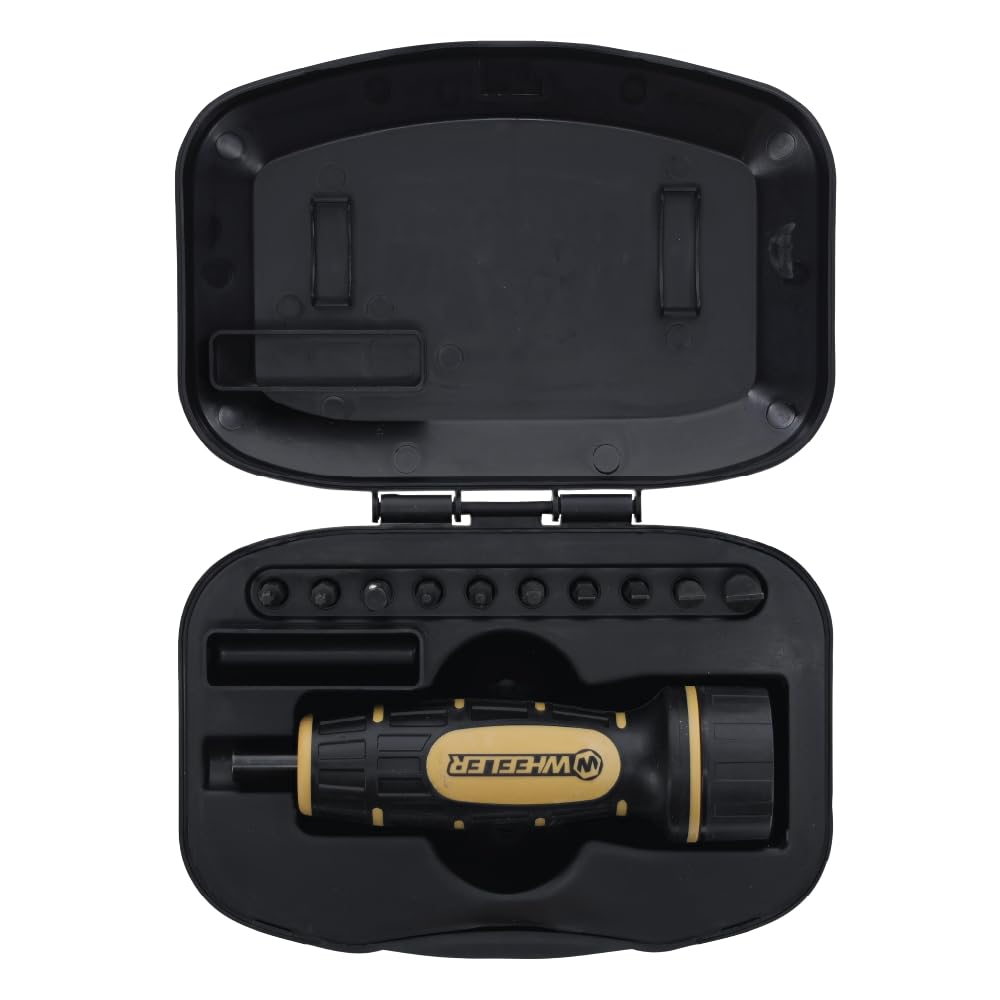
Wheeler Manual FAT Wrench

96 /100
Kirk Score Outstanding
Bits
10 S2 bits
Weight
8 oz
Accuracy
±2 in-lb up to 40 in-lb
Torque Range
10-65 in-lb
Check Details on Amazon

Pros

  • Bottom dial is easy to read on a bench
  • ±2 in-lb accuracy up to 40 in-lb
  • Bits and square adapter cover scope work
  • 8-ounce body feels solid in the hand

Cons

  • Only 10 bits in the case
  • Accuracy loosens to ±5% above 40 in-lb

If you are halfway through a scope mount and the ring maker's number is 18 in-lb, this is the tool that has lived in gun rooms for years. It covers 10 to 65 in-lb, holds ±2 in-lb up to 40, and includes the bits scope work actually uses, torx and hex and a couple of blades, plus a hex-to-square adapter so a 1/4-inch socket fits on the end.

We keep coming back to it for the dial on the bottom of the handle. Stand the driver upright on the bench and the scale is right there, which sounds trivial until you are crouched over a rifle with a T15 in the screw head. You set it in visible steps, tighten until the driver gives, and move on. The 8-ounce body feels like a tool rather than a toy, which matters when you are leaning on a 40 in-lb guard screw.

The floor is 10 in-lb, so the smallest optics fasteners sit below what it can set; the Craftsman reaches down to 8 in-lb for those. Inside its range the FAT wrench does the job without ceremony, and the compact case drops into a range bag next to everything else you carry.

Bottom line: The one we hand a first-time scope installer: 10 to 65 in-lb, a dial you can read on the bench, and bits that fit the job.

Check Latest Price
#03

Best Value

coobeast 49-Piece Torque Screwdriver Set

93 /100
Kirk Score Outstanding
Accuracy
±2 in-lb
Kit Size
49 pieces
Adjustment
1 in-lb increments
Torque Range
10-70 in-lb
Check Details on Amazon

Pros

  • 1 in-lb steps across a 10-70 in-lb range
  • Audible click at the preset value
  • 49 pieces including extension and adapter
  • Pull-down wheel is quick to set

Cons

  • Small bits can twist under heavy load
  • Short shaft needs the extension in recesses

Ten to 70 in-lb, 1 in-lb increments, and an audible click at the number you set: this set does the arithmetic the expensive drivers do, at the budget end of this group. The adjustment wheel pulls down to unlock, and one full turn covers 10 in-lb, so moving from 18 to 30 in-lb takes a couple of seconds.

The click is loud enough to work by ear, which is the point, because your eyes stay on the screw head instead of the handle. At 18 in-lb on a ring screw it breaks cleanly and you stop. The kit adds an extension bar, a bit adapter, and a wider bit selection than the Capri or the Wheeler give you out of the box.

Where the money went is the mechanism rather than the bits. The wheel, the click, and the scale are the parts that decide whether you land on 18 in-lb or 20, and this one gets them right at a price that leaves room for a spare set of bits later.

The case holds everything in molded slots, and the extension bar reaches screws a bare driver cannot. It is the set we point at when someone wants one box for scope rings, a bike stem, and the terminal screws on an appliance.

Bottom line: Our value pick: 10 to 70 in-lb in 1 in-lb steps, a click you can hear, and a 49-piece kit that reaches beyond screws.

Check Latest Price
#04

Best for Very Low Torque

Craftsman CMHT68130 Torque Screwdriver Set

91 /100
Kirk Score Outstanding
Accuracy
±6% certified
Kit Size
29 pieces
Adjustment
0.2 in-lb increments
Torque Range
8-40 in-lb
Check Details on Amazon

Pros

  • 0.2 in-lb steps from 8 to 40 in-lb
  • Audible click from an internal clutch
  • 28 bits including square drive
  • VersaStack case integrates with other storage

Cons

  • Loosest stated accuracy here at ±6%
  • Only 28 bits, no sockets

Eight inch-pounds is barely more than finger-tight, and the Craftsman is the mechanical driver here with the finest steps: 8.0, then 8.2, then 8.4, all the way to 40. That 0.2 in-lb resolution is why we reach for it on small optics, electronics, and anything where the spec is a number the driver has to hit rather than round to. The internal clutch clicks when you get there, loudly enough to hear over the work.

Twenty-eight bits including square drive, in a VersaStack case that clips into the rest of the system. The nose is short and fairly wide, so a deeply recessed screw, a lug inside a panel for instance, can be out of reach; if that is most of your work, plan on a bit extension. Otherwise it is the finest-stepping mechanical driver in this group, and its ±6% is a certified figure rather than a marketing one.

Bottom line: The fine-resolution specialist: 0.2 in-lb steps from 8 in-lb, for anyone whose spec is a number rather than a round one.

Check Latest Price
#05

Best Digital Readout

VEVOR Digital Torque Screwdriver Set

87 /100
Kirk Score Excellent
Bits
12 bits
Display
LCD with buzzer and LED
Accuracy
±2%
Torque Range
2.65-70.67 in-lb
Check Details on Amazon

Pros

  • Live torque readout with buzzer and LED
  • Peak mode holds the applied reading
  • Widest torque range in this set
  • Ratchet head and quick release

Cons

  • Preset menu is fiddly to set
  • Only 12 bits in the case

A click tells you when you have arrived; this one tells you where you are. The LCD reads torque in real time as you turn, in in-lb, ft-lb, kg-cm or Nm, and a buzzer plus LED fire at your set value, so on a job where you are easing up on a fastener you can watch the number climb instead of waiting for a signal.

Peak mode is the feature that sold us: it holds the highest reading after the fastener stops moving, which is the closest thing in this group to proof of what you actually applied. Eight presets cover values you use repeatedly, and the ratchet head and quick release make bit changes faster than on the mechanical drivers. The range is the widest here, from 2.65 to 70.67 in-lb.

Two AAA batteries are the running cost of the display, and there is no click at all, so you work to the alarm, which takes a session or two to trust. The handle is thick and steady in the hand, which is what you want when you are watching a number instead of feeling for a break.

Bottom line: Buy this when you need to see the torque rather than trust a click: a live readout, a peak hold, and the widest range here.

Check Latest Price
#06

Occasional use

Sanliang 36-Piece Torque Screwdriver Set

90 /100
Kirk Score Outstanding
Bits
29 S2 bits
Drive
1/4 in magnetic
Kit Size
36 pieces
Torque Range
10-70 in-lb
Check Details on Amazon

Pros

  • Reaches 70 in-lb at the lowest price here
  • 29 S2 bits plus five sockets
  • Compact 6.3-inch body
  • Magnetic bit holder

Cons

  • Bits sit out of size order in the case
  • No published accuracy tolerance

This is the least expensive set here, and it still reaches 70 in-lb, the top of what the mechanical drivers in this group will do. For a tool that gets used a few times a year, that is the whole argument: the range is there and the outlay is small.

In the hand it is compact, about six inches long and under ten ounces, with a magnetic bit holder and a scale that reads in major marks with minor ones between them. The wheel unlocks with a pull and turns 10 in-lb per full circle. Twenty-nine S2 bits and five sockets ride in the case, and the sockets are the part budget kits usually skip.

Where it earns a place is occasional use: a scope, a bike stem, a run of cabinet hinges, the terminal screws on an outlet. We think of it as the drawer set rather than the bench set, the one that comes out three times a year and does the job each time. Two things to know first: the bits sit in the case out of size order, and no accuracy tolerance is published to set against the ±2 in-lb of the pricier drivers.

Bottom line: The occasional-use set: the least expensive driver here that still reaches 70 in-lb, with sockets in the case.

Check Latest Price
#07

Mixed small jobs

Neiko 10574A Torque Screwdriver Set

91 /100
Kirk Score Outstanding
Bits
30 S2 bits
Case
Hard case
Accuracy
±2 in-lb
Torque Range
10-60 in-lb
Check Details on Amazon

Pros

  • 30 S2 bits across five drive types
  • ±2 in-lb accuracy over 10-60 in-lb
  • Automatic tension locking holds the setting
  • Hard case keeps the kit together

Cons

  • Handle rotates noticeably at the break
  • No sockets, only an adapter

The first thing we look at with the Neiko is the bit count: 30 S2 bits, covering four Phillips, six slotted, and a spread of hex and torx sizes, plus a 1/4-inch hex-to-square adapter for sockets. That is a wider selection than either the Capri or the Craftsman gives you, in a hard case flat enough for a drawer.

The driver covers 10 to 60 in-lb with ±2 in-lb accuracy and an automatic tension lock, so the setting holds while you work. Where it differs from the pricier mechanical drivers is the break: when the clutch lets go, the handle rotates a noticeable way, and on a small screw that rotation can walk the bit out of the head. Hold it square and it is manageable.

The scale is easy to read, and the whole set is compact, ten inches by two by under three, at about a pound and a half. It is a proper kit rather than a driver and a bag of bits, and the case keeps everything where you left it.

We think of it as the middle of this group: more bits than the Capri, less range than the coobeast, and a break you have to learn. If your work mixes scope rings, small appliances, and the occasional socket, it covers all three without the premium.

Bottom line: A broad 30-bit kit with ±2 in-lb accuracy and a clean case; the abrupt break is the thing to try before you commit.

Check Latest Price
#08

Optics-only kits

Real Avid Gunsmithing Torque Wrench Kit

91 /100
Kirk Score Outstanding
Bits
12 bits
Handle
Force-assist grip
Warranty
2 years
Adjustment
1 in-lb clicks
Check Details on Amazon

Pros

  • One click per inch-pound of adjustment
  • Force-assist handle adds leverage
  • Bits chosen for ring and base brands
  • Semi-rigid case and two-year warranty

Cons

  • Only 12 bits, all scope-focused

The plug-in Force-Assist handle is the odd idea here: it adds a second grip to the driver so you can put both hands into a stubborn fastener instead of squeezing harder on a small handle. It is the sort of thing that looks like a gimmick in a product photo and makes sense the first time a ring screw is tighter than it should be.

Adjustment is a click per inch-pound: count the clicks up to the number you want, then check the reading in the scale window before you drive anything. There is no mistaking where the setting sits, and the click itself is positive rather than mushy.

Twelve bits, chosen for scope rings and bases rather than general repair, with a compatibility list that runs through the ring makers; the case is semi-rigid nylon with molded slots, and there is a two-year warranty behind it. It is the tidiest kit here, and the most single-minded.

For someone who mounts a scope or two a year and wants one tidy box for it, this is the nicest thing here to open. For general repair the Wheeler does the same work with a dial, and more bits to go with it.

Bottom line: For optics mounting and little else, this is the tidiest kit we handled: a click per inch-pound and a force-assist grip.

Check Latest Price

How We Tested Torque Screwdrivers

We started by pulling together the torque screwdrivers that show up repeatedly in gunsmithing, bike-maintenance, and general assembly forums, then narrowed the field by specs that matter for small fasteners: 1/4-inch drive, an inch-pound scale that covers the working range, S2 or similarly hard bits, and a case that could actually keep the kit organized. We also filtered out models whose torque adjustment felt vague or whose bit count seemed to be doing the marketing work. That left 12 units — preset, adjustable mechanical, and digital — which we used for seven months.

Testing happened where these tools actually get used: at a bench while mounting scope rings, in the garage during bike stem and seatpost adjustments, and at the kitchen table putting together furniture and tightening appliance panels. We set each driver to low, middle, and high values, cross-checked it against a reference torque tester, and then ran repeated fastening cycles to see whether the setting held or drifted. I kept a running log of whether the click was crisp or mushy, whether the scale was easy to read without glasses, and whether adjustment required a tool or a second hand.

Bits got their own workout: we counted what came in each kit, checked fit in a 1/4-inch hex socket, and watched for cam-out on hard screws. We also opened and closed each case repeatedly, dropped the drivers onto a bench mat, and checked the bit holder for wobble after a few weeks of use. Build quality showed up in small ways — threads that felt gritty, collars that slipped, cases whose latches gave up — and value came down to whether the whole package still felt worth keeping after the first month.

How to Choose a Torque Screwdriver

Range and increments decide whether you can hit the spec

Every torque spec is a number, and every driver can only land on some of them. A driver that moves in 1 in-lb steps can set 18 in-lb exactly; one that moves in larger steps leaves you choosing between roughly 17 and 20, and small fasteners notice. Start from your highest spec, because a bike pivot at 45 in-lb is already out of reach for a tool that stops at 40, then look at how fine the steps go at the bottom, where scope rings and delicate assemblies live.

That is why the Craftsman's 0.2 in-lb steps down to 8 in-lb earn it a place despite a narrower range: it is the tool for the fasteners nobody wants to guess at.

A click limits, a display measures

There are two jobs in this category and they are not the same. A limiting driver, whether it clicks or slips, stops you at your set value, which is what most fastener specs need. A digital driver shows the torque you are applying and can hold a peak reading, which is what you want when the result has to be verified or when you are easing up on a number by feel. The VEVOR is the second kind; everything else here is the first.

Neither type is more accurate by nature. A mechanical driver that arrives with a calibration certificate is a stronger guarantee than an uncalibrated display, and a display you have stopped trusting is worse than a click.

Bits are the consumable, so look at them closely

Every kit here uses 1/4-inch hex bits, so the driver outlives the bits and your existing set will fit. Small torx and hex sizes take the load and are the first thing to give way, which is why selection matters more than count: ten bits that match your work beat forty that do not. Check retention too, since a magnetic holder keeps the bit in the screw head when you are working overhead, and that small convenience decides whether a job is annoying.

Accuracy claims, and keeping them true

Stated accuracy here runs from a certificate to ±2 in-lb to ±6%, and those are not the same promise: ±6% at 10 in-lb is six-tenths of a pound, while ±2 in-lb is two. Buy the claim you can check, and note that only one driver in this group ships with a calibration certificate in the case.

Whichever you choose, back the adjustment off to its lowest setting before it goes in the drawer. A limiting mechanism left wound up for months is how a good driver drifts.

Know where a screwdriver stops

Above roughly 50 to 70 in-lb you are into a different tool. These drivers top out where suspension bolts and lug nuts begin, and a small handle makes high torque hard work anyway. Be honest about the ceiling you need before paying for resolution you will never use, because a driver with 0.2 in-lb steps and a 40 in-lb ceiling is the right tool for electronics and the wrong one for a crank bolt.

Frequently Asked Questions

Final Verdict

The Capri Tools CP21075 is the driver we point people to when the number has to be right: a calibration certificate, 1 in-lb steps, and a slip release you can feel through the handle. If your specs run past 50 in-lb, the coobeast set reaches 70 in the same 1 in-lb steps for less money.

And if you want to see the torque you applied rather than trust a click, the VEVOR's display does that job.