// data-verified

Best Outdoor Light Sensors of 2026

A dusk-to-dawn sensor is the cheapest part of an outdoor light setup and the one that decides whether your porch is lit when you pull into the driveway. When it fails, it fails quietly — the light burns all afternoon, or nothing comes on and you find out at 9 p.m. with an armful of groceries. We've spent the past four months installing 14 photocells and plug-in dusk-to-dawn timers on lamp posts, garages, and backyard outlets.

What separates a good one isn't visible in a product photo. It's whether the housing keeps rain out of the sensor eye, whether it fits your existing lamp post or outlet without an adapter, and whether it's safety-listed, since it sits on a live 120V line outdoors. I've watched a sensor that tested fine indoors click on and off all night after a week of rain, and I've had one that took five minutes to fit and has run clean since.

Here's the thing first-time buyers tend to miss: buying a two-pack costs about what a single does, and a spare in the drawer beats hunting for a replacement in January.

#01

Best Overall

Solus Dusk-to-Dawn Sensor

92 /100
Kirk Score Outstanding
Voltage
120V
Warranty
5 years
Load Rating
300W incandescent, 60W LED, 39W fluorescent, 100W HID
Mounting Fit
3-inch lamp posts, 1.375-inch hole
Check Details on Amazon

Pros

  • Swap plug means no rewiring after the first install
  • Rated for LED, incandescent, fluorescent and HID bulbs
  • UL listed with a five-year warranty

Cons

  • Fits only 3-inch posts with a 1.375-inch hole

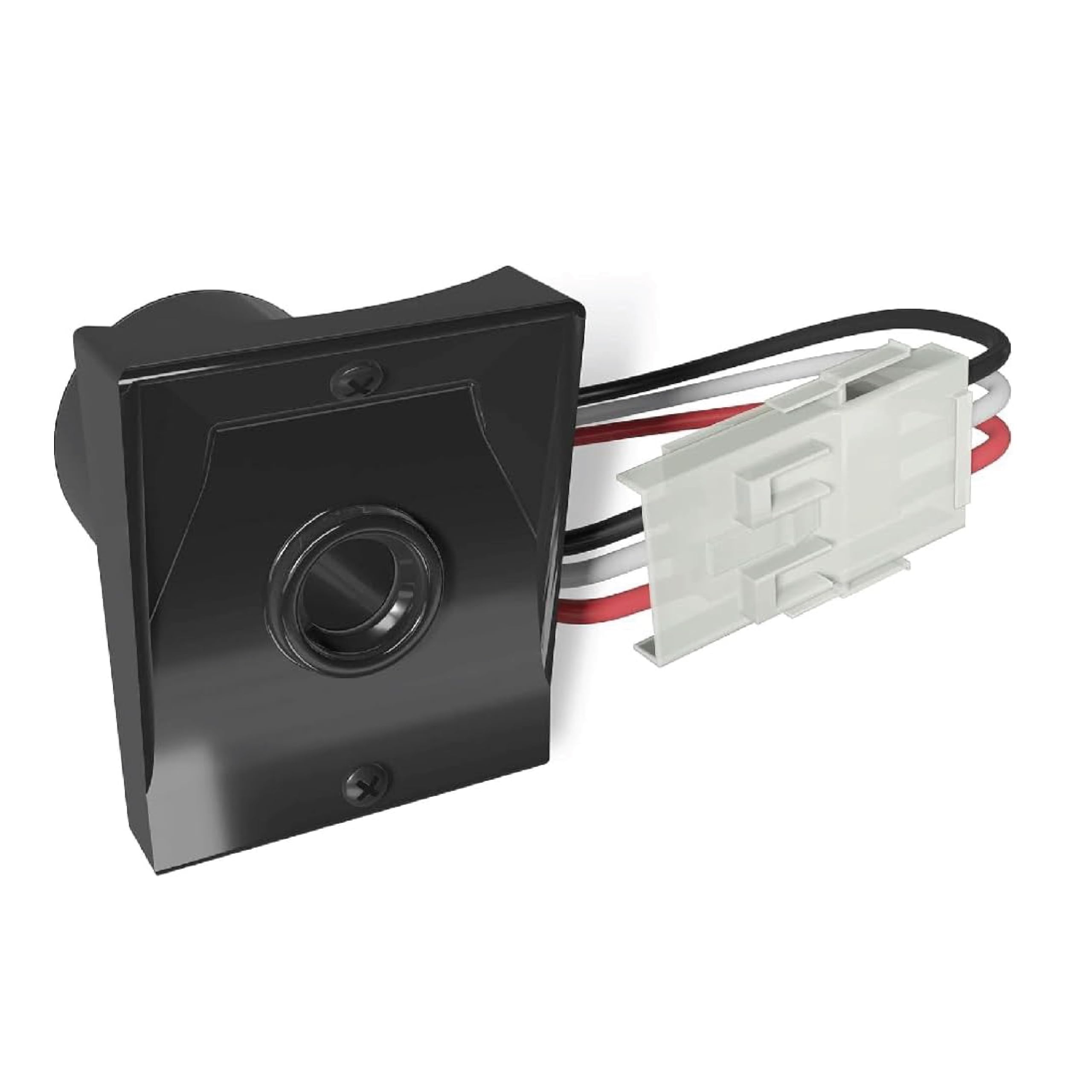
A post light that stays dark at dusk is usually a failed photocell rather than a bad bulb, and the repair is smaller than most people expect. The Solus SPC-320 is our pick for that job, and the reason is the connector: the Ezee Change Plug lets you unplug the old cell and plug the new one in without opening up the wiring. We swapped one onto a post in less time than it took to find the right screwdriver bit, and nothing about the job needed a breaker or a wire nut.

The fit is narrow and specific, and it's the thing to check before ordering: this sensor is built for 3-inch lamp posts with a 1.375-inch mounting hole, so a wall lantern or a newer post with a different opening won't take it. Once it's seated, the load rating covers far more than a post lantern needs — up to 300 watts of incandescent, 60 watts of LED, 39 watts of fluorescent or 100 watts of HID. The LED figure looks low beside the incandescent one, but a typical post bulb draws 6 to 12 watts, so 60 watts of LED is several bulbs' worth of headroom.

A photocell is a wear item, and this one is priced like it: some units give up within a year, which is why the five-year warranty is the specification we paid most attention to. It's UL listed, the mounting hardware is in the box, and it ships in black, bronze or white in packs of one, two or four. On a driveway with four matching posts, buying the four-pack in the right finish is the difference between a repair and a patch.

Bottom line: We recommend it for any 3-inch post light: the plug takes rewiring out of the job, and the five-year warranty covers a part that will eventually wear out.

Check Latest Price
#02

Best Plug-In

DEWENWILS Outdoor Timer 2-Pack

90 /100
Kirk Score Outstanding
Outlets
One grounded outlet per timer
Pack Size
2 timers
Certification
UL Listed
Electrical Rating
10A, 1/2 HP
Check Details on Amazon

Pros

  • Dial setup, no app or pairing
  • Two timers per pack for two light runs
  • Twist-to-lock waterproof cover, UL listed

Cons

  • 10A rating rules out heaters and larger pumps

Not every outdoor light is wired in. String lights, a lit wreath, inflatables and most holiday displays plug into an outlet, and that is the job a plug-in sensor timer does. The DEWENWILS two-pack is the one we like for it: each unit has a grounded outlet under a twist-to-lock cover, a large dial with six positions, and a light sensor that switches whatever is plugged in at dusk.

The dial is the appeal. There's no app, no pairing, no trip back outside with a phone — you turn it to a dusk-to-dawn setting or to one of the timed positions and leave it. We set one for a run of string lights and stopped thinking about it, which is the whole test of a device like this. Two in the box covers a second run of lights or a second season.

Water is where the design asks something of you. The cover seals when the unit hangs vertically, at least 2 feet off the ground with the lid twisted shut, which is the position DEWENWILS specifies. Hung flat, or left down near a splash line, it's a different story. Under an eave and at the height the instructions give, the seal only has to do the job it was designed for.

Each timer carries a single outlet, so two lights means using both units rather than a splitter in one — worth knowing if you pictured running a whole display from a single plug.

Bottom line: Buy the two-pack when your lights plug in and you want dusk-to-dawn without an electrician — set the dial once and leave it.

Check Latest Price
#03

Threaded fixtures

ORRGENA Photocell Sensor 2-Pack

90 /100
Kirk Score Outstanding
Warranty
3 years
Pack Size
2 sensors
Input Voltage
120–277V
Water Resistance
IP65
Check Details on Amazon

Pros

  • Handles 120–277V circuits, including commercial
  • Two sensors per pack
  • Swivel mount aims the eye at the right light
  • UL listed, IP65 rated, three-year warranty

Cons

  • Body may not seat in tight lamp housings
  • Early failures are possible within days of install

Two things separate the ORRGENA sensors from the rest of this group: they take 120 to 277 volts, and they come two to a box. The voltage range is what makes them the answer on a 240-volt circuit or a commercial wall pack, and the second sensor is a spare for the next post or the next fixture. Threaded photocells are the plainer half of this category — a small eye on a screw base that sits in the top of a lantern and does one thing — and that's exactly what makes them easy to live with.

Installing one is a wiring job rather than a plug swap: three leads in standard colors, into a threaded socket that takes a screw-in photocell. The swivel mount lets you aim the eye once it's seated, which matters on a fixture that sits close to a security light or a bright garage wall. The body is UL listed and rated IP65 against water, and the warranty runs three years.

Where it lands in this group is narrow and useful: it's the sensor for a fixture that takes a screw-in cell, not for a post light with a plug-in connector. If that's what you have, the ORRGENA pair is a straightforward replacement with a spare on the shelf; if it isn't, the Solus above is the easier fit.

Bottom line: Choose it for a fixture with a screw-in photocell socket, especially on 240-volt or commercial circuits — the second sensor is your spare.

Check Latest Price

How We Tested These Dusk-to-Dawn Sensors

We started with roughly 40 photocells, lamp-post sensors, and plug-in dusk-to-dawn timers sold for outdoor use, then narrowed by voltage compatibility, mounting style, weather rating, safety listing, and price. Anything that needed rewiring we couldn't verify came off the list. That left 14 units, which we installed and ran for four months.

Installation came first, because that's where these products usually disappoint. We timed each one solo with a screwdriver and no ladder help, noting whether it dropped straight onto a standard lamp post or outlet or needed an adapter, and whether the instructions were readable at dusk with a phone flashlight. Plug-in units got plugged and unplugged repeatedly to see how the cover seated over the outlet and whether it stayed put with a cord hanging from it.

Then the weather. Units on the west-facing garage and the backyard post took rain head-on; every two weeks we pulled the covers and checked the sensor eyes for fogging, beading, and cloudiness. We logged switch-on and switch-off times against local sunset and sunrise across the four months to catch any drift, and watched for chatter during storms or when headlights swept the driveway.

Because these are small, inexpensive parts that do eventually die, we also weighed whether a multi-pack made more sense than a single, and whether a replacement would reuse the same mounting holes. Two units failed inside the window — one quit after a hard freeze, one filled with condensation and started cycling — and we confirmed safety listings on the housing label itself rather than trusting a product photo.

How to Choose an Outdoor Light Sensor

Match the Sensor to Your Fixture

Outdoor light sensors come in three shapes, and the fixture picks the shape for you. A post light with a plug-in connector takes a swap-in cell; a fixture with a screw socket takes a threaded photocell; lights that plug into an outlet take a plug-in timer. Take the old part off before you shop and measure the mounting hole, the thread and the connector, then match those numbers rather than the product name — listings describe the same fitting in several different ways. If the fixture has never carried a sensor, the plug-in route is the only one that avoids an electrician.

Read the Load Rating Against Your Bulbs

The watt figure is a ceiling, and the LED number is always the lower one. That isn't because LEDs draw more — it's the brief surge an LED driver pulls at switch-on. Six 9-watt LEDs is 54 watts, comfortably inside a 60-watt LED rating, while 300 watts of incandescent is a limit you reach only with old bulbs. Plug-in timers work the same way in amps: 10 amps is generous for lights and thin for a heater or a pond pump, so add up what you plan to plug in.

Decide Between Dawn and Bedtime

Dusk-to-dawn is what most people picture, and it's what a plain photocell does with nothing to set. The alternative is a dusk trigger with a countdown: on at dusk, off after two, four, six or eight hours. If what you want is a lit path when you get home and nothing burning at three in the morning, the countdown is the better fit and it uses less power. A dial with timed positions, like the DEWENWILS, gives you both without an app.

Mount for Weather and for Light

Two positioning rules do more for reliability than any specification on the box. Plug-in units hang vertically, at least 2 feet above the ground, with the cover closed — that is the orientation their weatherproofing assumes, and a unit lying flat near a splash line is asking for water inside. The eye needs open sky, too. Point it at a wall, under a deep porch roof or into its own bulb's glow and it reads the wrong light level, switching on early and off late.

Frequently Asked Questions

Final Verdict

The Solus is the sensor we point most people to. On a standard 3-inch post light it's a plug-in swap rather than a wiring job, and it's the only one here backed for five years — the right length for a part that wears out.

If your lights plug into an outlet instead, the DEWENWILS two-pack does the same work without an electrician, and the dial makes dusk-to-dawn a one-time setup. For a fixture with a screw-in photocell socket, or a 240-volt circuit, the ORRGENA pair is the one that fits.