// data-verified

Best Wood Filler of 2026

A wood filler should make a repair disappear in ten minutes—until the wrong one shrinks, sands into a fuzzy divot, or refuses to take stain. I’ve learned that the difference is less about the damage and more about the formula: a water-based filler behaves nothing like a two-part epoxy putty when you’re spreading it into a chipped edge. The right one levels the repair, holds through seasonal movement, and takes paint or stain so the spot stops catching your eye.

Over four months, I’ve worked through 14 fillers on nail holes in pine trim, a gouged oak tabletop, painted interior doors, and a few exterior cedar boards. I tested water-based latex, epoxy putty and paste, and water putty; the ones that stood out were easy to spread, dried without cracking, and sanded to a feathered edge instead of clogging the paper. A first-timer’s lesson: “stainable” is not the same as invisible—many fillers take stain differently than the wood around them, so test on a scrap first. The picks below made repairs look intentional, not patched.

#01

Best Overall

FamoWood Natural Latex Wood Filler

92 /100
Kirk Score Outstanding
Finish
Paintable and stainable
Cleanup
Water
Dry Time
15 minutes
Container Weight
1.25 lb
Check Details on Amazon

Pros

  • Dries in about 15 minutes on thin fills
  • Sands smooth and feathers at the edges
  • Low odor with water clean-up
  • Resists shrinking and cracking as it cures

Cons

  • Not for structural repairs or wet, rotted wood

Fifteen minutes is the number that sells us on FamoWood. That's the listed dry time for a thin fill, and it means you can press filler into a run of nail holes and gouges, sand, and get primer on the same afternoon. The paste spreads like soft icing, holds where you push it with a knife, and rinses off tools and fingers with water before it sets. For painted interior work, nothing else in this guide is easier to live with.

Sanding is where it separates from the epoxies here. Latex filler powders off instead of loading the paper, and it feathers out at the edge of a patch rather than leaving a ledge you chase with 80-grit. It also resists shrinking and cracking as it cures, so a filled seam stays filled once the paint goes on — the dimple that reappears a week later is the failure that makes people distrust wood filler, and this one doesn't produce it. The low odor matters more than it sounds when you're working indoors with the windows shut.

Two things to know before the lid comes off. Deep voids need a second pass: fill a gouge in one shot and the skin can crack before the core sets, so build in thin lifts and let each one firm up. And while the formula is stainable, a filled patch doesn't drink stain at the same rate as the wood around it — on visible stained surfaces, seal the repair and tone it rather than expecting a match.

Where we go elsewhere is anything structural. FamoWood is cosmetic, so a rotted sill or a hinge that pulled out of a jamb needs an epoxy from further down this list. For the ordinary interior repair, this is the container we open first.

Bottom line: We reach for FamoWood first for painted interior work: thin fills dry in about 15 minutes, sand smooth, and take paint, which keeps a small repair from becoming a project.

Check Latest Price
#02

Best for White Trim and Nail Holes

Elmer's E855 Carpenter's Wood Filler

93 /100
Kirk Score Outstanding
Color
White
Finish
Paintable and sandable
Cleanup
Water
Container
3.25-ounce tube
Check Details on Amazon

Pros

  • White filler blends into painted trim
  • Resists shrinking and cracking
  • Sands easily to a smooth finish
  • Water clean-up before it sets

Cons

  • Small 3.25-ounce tube empties fast on whole-room trim

Nearly every other filler here is beige or tan, which turns a nail hole in white baseboard into a two-step job: fill, then paint. Elmer's E855 comes out white, dries white, and blends into painted casing, PVC trim, and smooth white interior doors closely enough that the hole stops being noticeable.

For finish nails and small dents, that color is the whole game. The paste is thick enough to sit in a hole without sagging, and it sands flush in a couple of passes — what we noticed most is that it resists shrinking and cracking, so the hole doesn't return as a dimple after the paint dries. A damp fingertip or the corner of a rag lets you tool the surface smooth before it sets, which is often all a nail hole needs.

The tube is the weak point. The material is stiff and tacky, and a cold tube fights back, so knead it in your hands first and squeeze from the bottom up. Keep it for white trim and painted patching; on bare wood headed for stain, a natural-color filler is the better call. Not every job wants a color that only works under paint.

Bottom line: If your trim is white, keep this tube in the nail pouch: one press fills a finish-nail hole, and the patch disappears under paint instead of waiting for a coat.

Check Latest Price
#03

Best for Small Structural Repairs

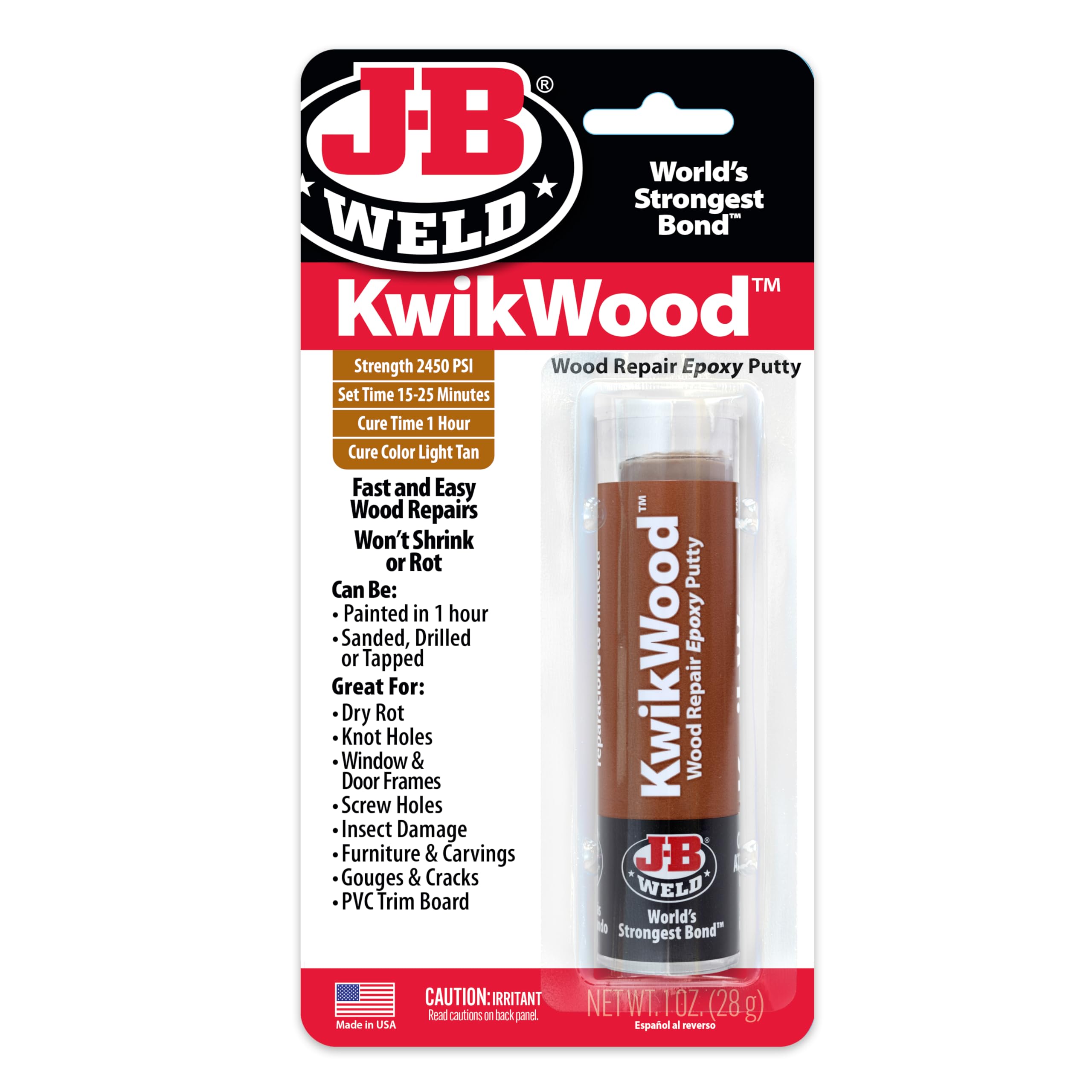
J-B Weld KwikWood Epoxy Putty

91 /100
Kirk Score Outstanding
Form
Two-part putty stick
Set Time
15 to 25 minutes
Strength
900 PSI lap shear
Full Cure
1 hour
Check Details on Amazon

Pros

  • Cures hard enough to drill and tap
  • No clamps or separate hardener container
  • Won't shrink or rot
  • Sands and takes paint

Cons

  • One-ounce stick covers a single repair
  • Cures harder than the wood around it

The first thing you notice is your fingers. KwikWood comes as a two-part putty stick: slice off a length, knead it until the color is even, and it's tacky enough to stick to your hands before it sticks to anything else. A little water helps, and the label tells you to keep gloves out of the mixing step for that reason. Once it's blended you have roughly 15 to 25 minutes before it sets, and about an hour to a full cure.

What it does that a paste filler can't is rebuild. A stripped hinge screw, a chunk missing from a door edge, a knot hole in a stair tread: this cures hard enough to be drilled, tapped, sanded, shaped, and painted, and it won't shrink or rot. That makes it our pick for repairs that have to carry a screw later rather than just look flat. We keep one in the shop drawer for exactly that.

Two habits decide whether the repair holds. Knead it thoroughly — a batch that's streaky cures soft in patches, and you won't find out until a screw spins a day later. And plan the repair before you mix, because the set time is real and there's no slowing it down. The stick is small, so it's a one-repair product; if you're filling a whole run of holes, use a paste.

Bottom line: For a stripped hinge screw or a corner knocked off a door edge, this putty stick cures hard enough to drill, tap, and hold — no clamps, no mixing bowl.

Check Latest Price
#04

Best for Exterior Rot and Large Repairs

Bondo Wood Filler with Hardener

92 /100
Kirk Score Outstanding
Form
Two-part with cream hardener
Sandable
15 minutes
Container
30 oz
Water Resistance
Water resistant
Check Details on Amazon

Pros

  • Permanent, non-shrinking repairs
  • Sandable in about 15 minutes
  • Holds up outdoors and under a sander
  • 30-ounce can covers large repairs

Cons

  • Stain can read greenish; best painted

Bondo gives you a short leash. It's a two-part product, resin plus a cream hardener, and once a batch is mixed you have minutes rather than hours before it starts to firm. Mix a golf-ball-sized amount at a time, work quickly, and don't walk away mid-repair. Do that and the payoff is a patch that sets like stone and takes sandpaper in about 15 minutes.

We keep it for the jobs a latex filler can't touch: rotted sills, split door frames, missing veneer, deck railings, anything outside. It bonds chemically to the surface, doesn't shrink, and cures hard enough to stand up to an orbital sander without tearing out. The 30-ounce can with its tube of hardener is a lot of repair in one container, and it holds paint well — a filler that stays put for years under exterior paint is doing the job people actually need.

Stain is where it lets you down. The label lists stainability, and sometimes it works, but the cured filler can take on a greenish cast and read darker than the wood beside it. Plan on paint for anything visible, or seal the patch and glaze over it. Keep the sander moving near the edge, too, since the cured repair is tougher than the wood and a lingering pass will dish the softer surface.

Bottom line: For rotted sills and repairs that face weather, this two-part filler sets hard, sands in about 15 minutes, and takes paint — but plan on painting, not staining.

Check Latest Price
#05

Best for Stained Wood

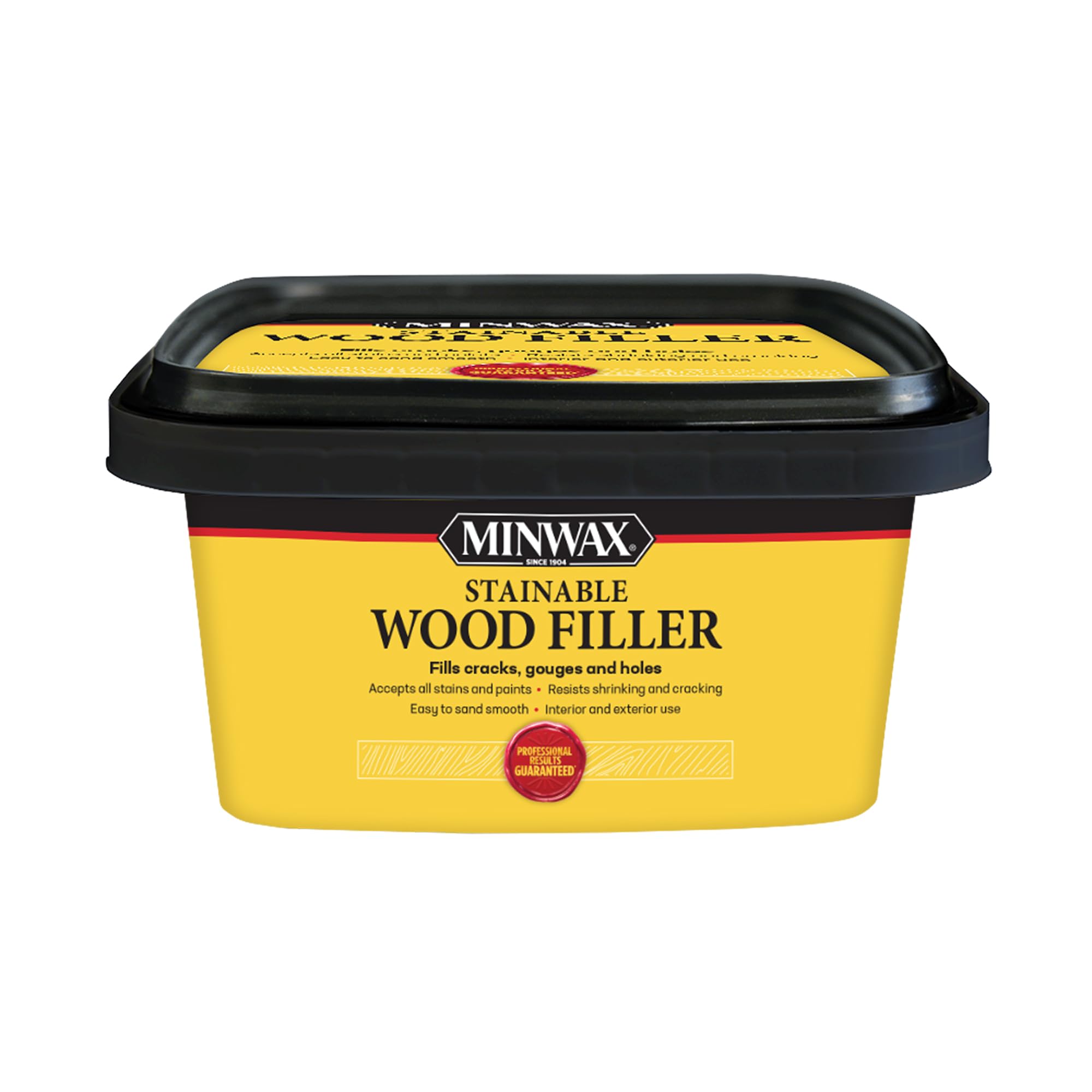
Minwax Stainable Wood Filler

89 /100
Kirk Score Excellent
Use
Interior and exterior
Dry Time
About 2 hours for shallow fills
Container
32 oz
Stain Compatibility
Oil- and water-based stains
Check Details on Amazon

Pros

  • Accepts oil- and water-based stains
  • 32-ounce tub handles a full project
  • Sands flush and can be drilled
  • Shallow fills dry in about two hours

Cons

  • Deep fills take well over two hours before sanding

If the piece you're fixing will be stained rather than painted, most fillers are the wrong tool, and the reason shows up under finish: the patch takes color differently and reads as a dull spot beneath a walnut or mahogany stain. Minwax's latex filler is formulated to accept both oil- and water-based stains, which makes it our first choice for an unfinished stair tread, a tabletop, or a stained cabinet face.

It's a knife-grade paste that presses into cracks, nail holes, and knot holes, sands flush, and can be drilled or screwed once cured. Shallow repairs dry in about two hours, and the 32-ounce tub is sized for a panel or a run of trim rather than a single hole, which matters when you're filling a whole project and don't want to run out halfway.

Stainable is not the same as invisible. Filler has no grain, so even a formula built for stain can go darker or flatter than the wood around it — seal the patch, test on an offcut of the same species, and tint your stain rather than hoping. If the repair is getting painted anyway, a plain latex filler does the same job for less.

Bottom line: When the repair will be stained instead of painted, start here: this is the formula built to accept both oil and water stains, in a tub sized for a whole project.

Check Latest Price
#06

Best for Long Working Time

PC-Woody Wood Repair Epoxy Paste

92 /100
Kirk Score Outstanding
Form
Two-part paste, equal volumes
Container
12 oz
Full Cure
24 hours
Application Temperature
35 to 115 degrees F
Check Details on Amazon

Pros

  • Extended working time for shaping
  • High tack resists drips and sags
  • Handles UV, fresh water, and salt water
  • Sands to a paintable finish

Cons

  • Full cure takes 24 hours
  • Needs an accurate equal-parts mix

PC-Woody arrives as two cans of paste that you measure out in equal volumes on a flat board and mix with a stiff knife — not with gloves, per the directions, because the paste grabs them. What that trouble buys is time. It stays workable long enough to shape a repair by hand, and it's tacky enough not to slide off a vertical sill while you're working it.

That combination is why it earns a place on rotted exterior wood. It's rated for application from 35 to 115 degrees and service from -20 to 200, and it resists UV, fresh water, and salt water. We reach for it over the faster epoxies on a windowsill, a porch column, or a threshold — repairs that get looked at from two feet away and have to look like the original profile.

Finishing is straightforward. It sands to a paintable surface, and once cured it's hard and strong enough to hold hinge screws as tight as the original wood did. Plan around a 24-hour cure, though: this is a Friday-night repair, not a Sunday-afternoon one, and you want it painted before the weather turns.

The honest trade-off is handling. Equal parts matter, and a batch that isn't mixed through can stay soft in spots, so measure rather than eyeball. On flat edges and simple geometry, Bondo gets you there faster. Where a curved profile has to match what was there before, PC-Woody's working time is worth waiting for.

Bottom line: For rotted sills and repairs you need time to sculpt, PC-Woody stays workable long enough to shape by hand and cures hard enough to hold paint outdoors.

Check Latest Price
#07

First-time repairs

DAP Plastic Wood-X with DryDex

90 /100
Kirk Score Outstanding
Finish
Paintable and stainable
Dry Time
3 to 6 hours up to 1/8 inch
Container
5.5 oz
Dry Indicator
Pink turns natural
Check Details on Amazon

Pros

  • Color indicator removes the sanding guesswork
  • Thick paste holds on corners and verticals
  • Sands, paints, and takes stain

Cons

  • Slow: 3 to 6 hours for shallow fills
  • Small 5.5-ounce tub

The trick here is color. Plastic Wood-X goes on pink and fades to natural as it dries, so you can see from across the room whether a patch is ready for paper. That sounds like a gimmick until you've sanded a fill that was still soft underneath and dragged it half out of the hole. The indicator removes that guesswork, which is why we like it for anyone doing a first trim or furniture repair.

Under the color change it's a thick, knife-grade latex paste that can be molded into a corner, sanded, painted, or stained, and it anchors nails and screws better than a plain putty. Speed is the catch: 3 to 6 hours for fills up to 1/8 inch, up to 36 hours for quarter-inch and deeper, so it's a plan-ahead product. The 5.5-ounce tub suits trim and small furniture rather than a whole set of cabinets.

Bottom line: The pink-to-natural color change tells you exactly when to sand, which makes this the tub we suggest for a first trim or furniture repair.

Check Latest Price
#08

Multi-surface repairs

Durham's Rockhard Water Putty

92 /100
Kirk Score Outstanding
Form
Powder mixed with water
Surfaces
Wood, plaster, stone, concrete
Container
1 lb
Shrinkage
Does not shrink
Check Details on Amazon

Pros

  • Mixes to any consistency with water
  • Doesn't shrink and sets rock hard
  • Keeps indefinitely as a powder
  • Works on wood, plaster, stone, and concrete

Cons

  • Sets harder than the wood, so flush sanding is slow work

A powder is a different way to buy filler. Pour some out, add water, and stir to whatever consistency the repair wants — thick for a hole, thin for a hairline crack — so nothing goes to waste and you're never scraping a skin off yesterday's tub. A one-pound can sits on a shelf for years, which makes it the container we keep in the shop for whatever comes up.

It sets hard and doesn't shrink, so a patch doesn't open back up a season later. It also works beyond wood: plaster, furniture, stone, and concrete all take it. In an older house, where the trim, the wall, and the porch post all need attention in the same weekend, one can covers all three — and you can mix a tablespoon at a time when that's all the job needs.

Work in small batches and shape the patch before it sets, because the material gives you a limited window and no second chances once it goes off. The cream color reads close to paint-ready white, so a coat or two covers it on trim. It's the least specialized filler here, and for occasional repairs that's the point.

Bottom line: Keep a can of this powder on the shelf and you'll always have filler on hand: mix it to any consistency and it sets harder than the wood it fills.

Check Latest Price
#09

Painted outdoor projects

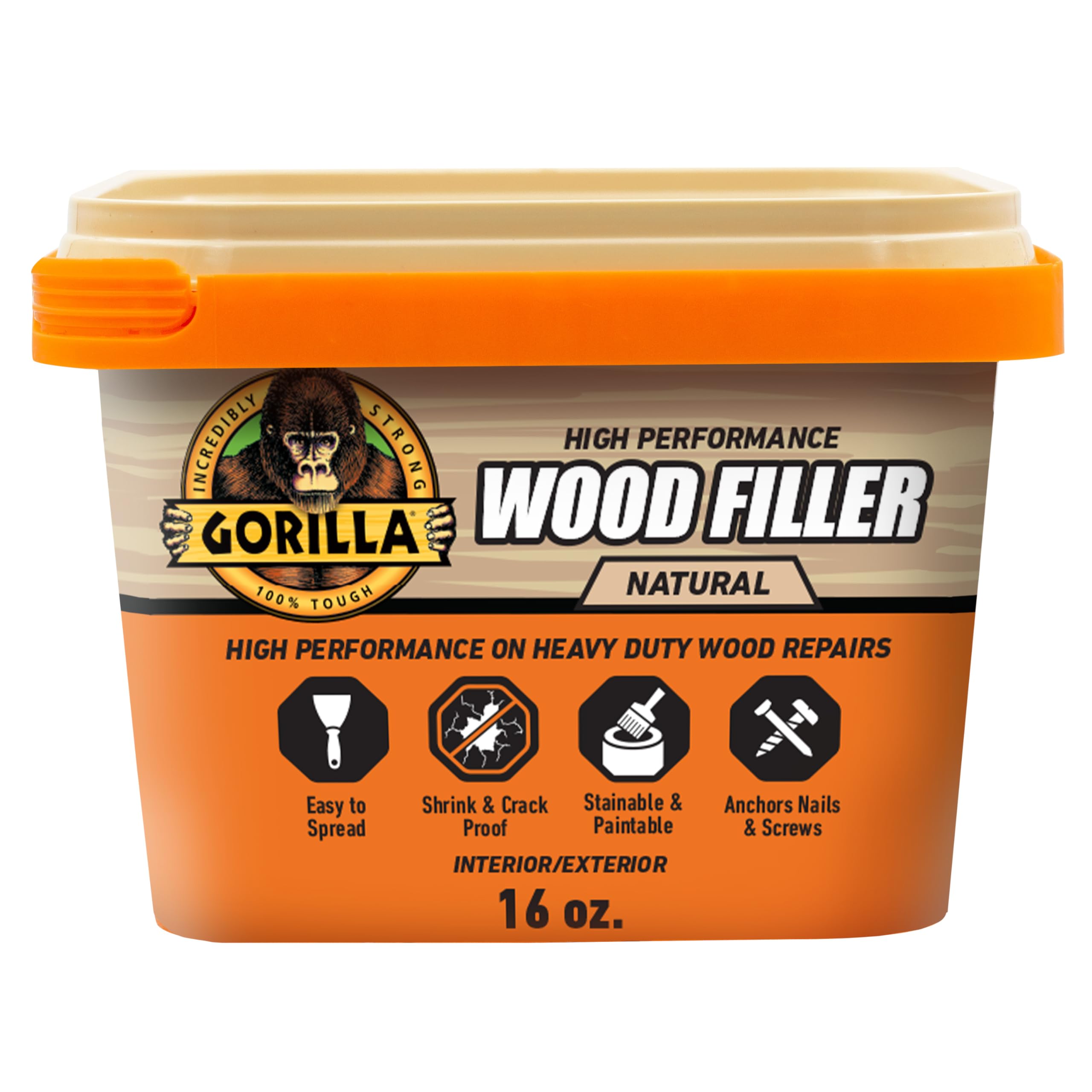
Gorilla All Purpose Wood Filler

89 /100
Kirk Score Excellent
Use
Interior and exterior
Finish
Paintable, stainable, sandable
Container
16 oz
Water Resistance
Water resistant
Check Details on Amazon

Pros

  • Sands down as smooth as wood
  • Anchors nails and screws
  • Water resistant for interior and exterior use
  • Large tub covers big painted repairs

Cons

  • Dries fast, leaving little time to smooth

Tubs of Gorilla can arrive dry and gritty, closer to damp sand than paste. It's fixable: add a splash of water, work it through with a stir stick until it comes back together, and it spreads the way it should. We open the tub and check the texture before committing a Saturday to a project, and we keep a spray bottle within reach while working.

When it's right, it's a capable all-purpose filler. It sands down as smooth as wood, takes primer and paint without flashing, and anchors nails and screws, so it's useful on carpentry repairs where the patch will be painted indoors or out. A 16-ounce tub covers a lot of trim, and the acrylic formula is water resistant enough for exterior boards that get a topcoat.

Fine work is where it struggles. It dries fast, which leaves very little time to smooth a bead before it skins over, and a batch that's too dry will telegraph grit through a thin finish. Keep it for painted projects with some margin for error — deck boards, door frames, built-ins — and reach for FamoWood or Elmer's where the surface has to be flawless.

Bottom line: A big tub that sands to a genuinely wood-like surface for painted projects — check the texture when you open it and add water if it's dry.

Check Latest Price

How We Tested Wood Fillers in Real Repairs

We started by pulling every formula that matched the way people actually repair wood: water-based latex, two-part epoxy putty and paste, stainable fillers, and rock-hard water putty. We filtered by price, availability, and whether the label promised sanding, painting, or staining, then narrowed the shortlist to 14 jugs, tubes, sticks, and cans.

Testing ran for four months. I used them on nail holes in pine baseboards, a chipped interior door, a gouged red oak tabletop, and a few exterior cedar boards. For each one, I noted how it came out of the container—runny, crumbly, stiff, or smooth—and how easily it spread with a putty knife. I timed how long it stayed workable and how long it took to feel dry enough to sand, then sanded by hand and watched whether the paper clogged or the edges feathered cleanly.

Once cured, I checked for shrinkage and cracks after a few days and again weeks later. I painted some patches and stained others, noting whether the filler grabbed color evenly or stood out. For durability, I knocked and flexed repaired scraps, drove screws near filled holes, and left exterior patches out in the weather. I also tracked how far each container went and whether mixing two-part products left a lot of waste, because value here is often about usable volume, not the sticker on the tub.

How to Choose Wood Filler

Start With the Repair, Not the Label

Latex and water-based fillers are for cosmetic damage on wood that will be painted: nail holes, dents, gouges, split seams. Two-part epoxies and putty sticks are for repairs that have to do structural work — rotted sills, stripped hinge screws, corners knocked off a door — and they're the ones worth trusting where water sits. A powder like Durham's lands in between: hard, cheap per use, and happy on plaster and stone as well as wood.

Ask one question before you buy anything: will a screw go into this patch, or will it face weather? If yes, buy an epoxy. If it's a hole in painted trim, a latex filler gets you to a paintable surface faster and sands more forgivingly.

Sandability Beats Hardness

Instinct says harder is better. In practice, hard fillers are harder to sand flush, and sanding a patch that's tougher than the wood around it dishes the softer surface into a shallow crater that shows under paint. Latex fillers powder off and feather at the edges, which is why they leave less work behind.

The epoxies, Bondo, and Durham's cure hard enough that you should shape them before they set and keep the sander moving around the perimeter of the patch. In the middle of a flat panel, hardness costs you little. On a soft pine edge or a profiled molding, it costs you a visible dip.

Paint or Stain Changes the Product

Under paint, color barely matters; any natural filler disappears under two coats. Stain is a different problem. Filler has no grain, so it takes color at a different rate than the wood around it and often reads darker or flatter, and some two-part fillers push a greenish cast. Choose a filler labeled for stain, test it on an offcut of the same species, and plan to seal and tone the patch rather than expecting an invisible repair.

White trim is the one case worth buying color for. A white filler means one step instead of two, which is why Elmer's E855 earns a place for nail holes in painted baseboard and PVC casing.

Give Yourself Enough Working Time

Two-part products hand you a window that starts at mixing, not at application — as little as ten minutes for some, an hour or more for others. Mix small batches, keep the repair in front of you, and don't start a second batch after the first begins to firm. Single-component latex fillers need no mixing, but they skin over while you're still smoothing, so work thin and don't over-trowel.

If you'd rather have confirmation than a timer, a color-change formula such as DAP Plastic Wood-X shows you when the surface is dry enough for paper.

Buy the Container the Job Deserves

A three-ounce tube suits nail holes and detail work; a 16- or 32-ounce tub suits panels, trim runs, and anything you'll sand in one session. A putty stick or a small can is right when the job is a single repair and the leftover will sit for a year. Water-based filler dries out once the container is opened, so a giant tub used once is money in the bin — and a powder sidesteps that entirely by keeping indefinitely on the shelf.

Frequently Asked Questions

Final Verdict

For most repairs inside a house — nail holes, dents, a split seam in a cabinet door — FamoWood is the tub to buy. A thin fill dries in about fifteen minutes, sands without a fight, and cleans up with water, so the repair is usually finished before a two-part product would even be mixed.

Change the job and the pick changes with it. White trim and finish nails: Elmer's E855, because the color does half the work. Rotted sills and stripped screws: Bondo for flat work, PC-Woody when you need time to shape. A repair that will be stained rather than painted: Minwax.