// data-verified

Best Flux Core Welders of 2026

Flux core welders sell for one reason: no gas bottle, no regulator, and a machine that plugs into a garage outlet. The catch is that the cheap end of this market is crowded with units that spatter like a firework, trip a breaker mid-bead, and ship with a manual that never mentions you have to reverse the polarity. I learned that on a trailer fender in my own driveway, and my forearms still remember it.

Over the past eight months, we put 12 of them through the same jobs — a gate hinge, patch panels on sheet metal, a stack of 1/8-inch plate — scoring weld performance, ease of use, and value against what actually comes in the box.

The number that matters least is the amps printed on the front panel. What separates a machine you keep from one that ends up on a shelf is whether the synergic control holds the arc steady while your hand moves, whether dual voltage is a real convenience or a line on the box, and whether anyone bothered to write documentation that explains a bad bead. The picks below were chosen on those terms, not on spec-sheet bragging rights.

#01

Best Overall

Forney Easy Weld 140 FC-i

92 /100
Kirk Score Outstanding
Output
140A
Input Voltage
120V
Welding Process
Flux-cored MIG
Max Steel Thickness
Up to 1/4 in.
Check Details on Amazon

Pros

  • Infinite voltage and wire-speed control
  • 140 amps for up to 1/4-inch steel
  • All-metal case at 19 pounds
  • Takes 2- and 10-pound wire spools

Cons

  • No gas MIG, stick, or TIG modes
  • Needs a 20-amp circuit

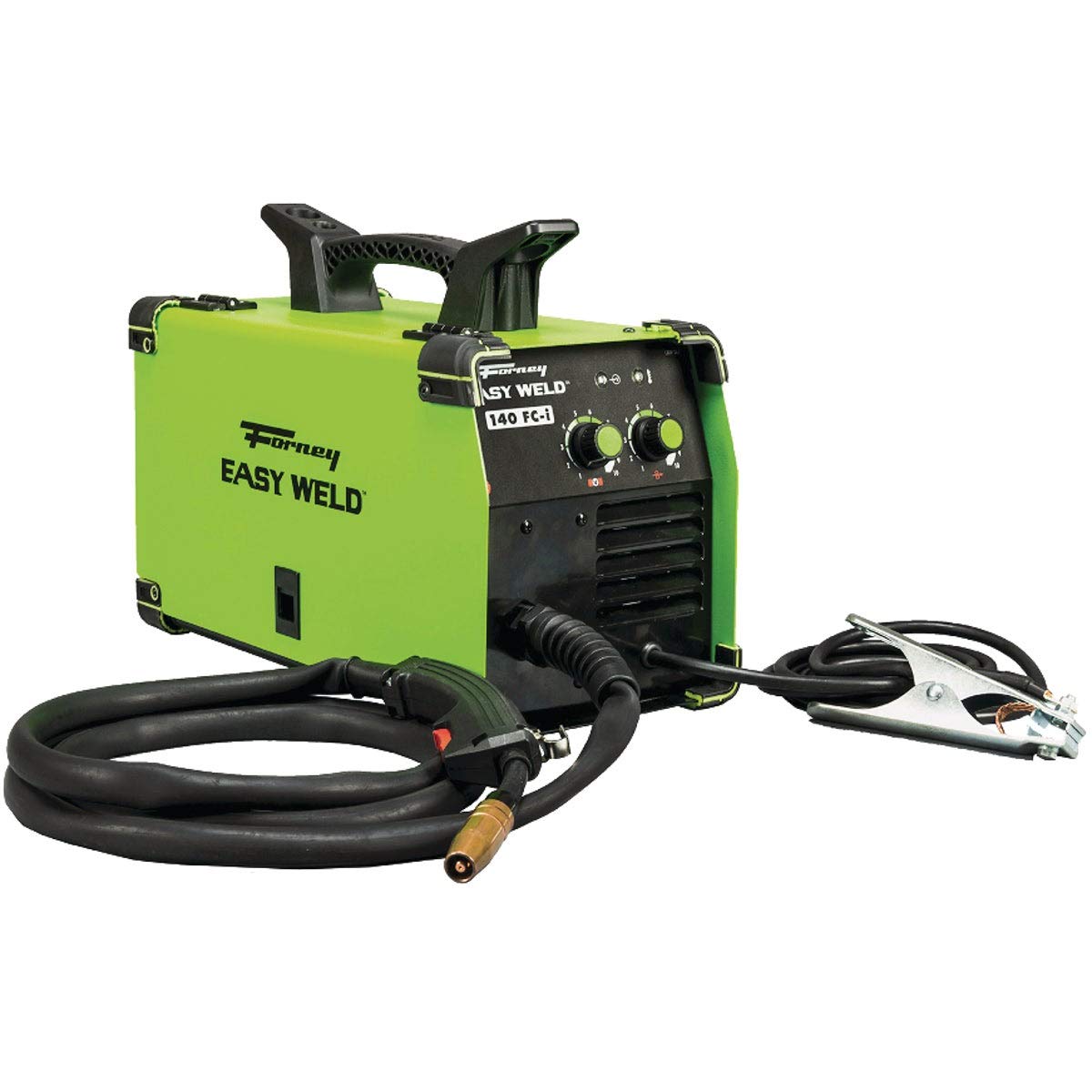
The Forney Easy Weld 140 FC-i has one process on the dial: flux-core MIG. There is no gas solenoid, no stick mode, and no TIG torch to buy. That single-purpose build is the first thing you notice, and it sets the tone for the whole machine.

That focus is why we recommend it first. The 140-amp output is rated for mild steel up to 1/4 inch, and the infinite voltage and wire-speed controls let you fine-tune the arc instead of picking between a few fixed taps. We value that range on sheet metal, where small adjustments matter more than maximum power. The all-metal case adds heft, but at 19 pounds it is still a bench machine you can move without a cart.

The 8-foot MIG gun and ground clamp give useful reach around a project, and the machine accepts both 2- and 10-pound spools, so you are not locked into tiny rolls. We also appreciate the simple two-knob layout when you are setting up in dim garage light. The Forney asks for a clean, dry space and a little practice with scrap; the controls reward that patience.

Bottom line: Our top pick for dedicated flux-core work is the Forney Easy Weld 140 FC-i: 140 amps, infinite controls, and an all-metal case.

Check Latest Price
#02

Best Premium Compact

Lincoln Electric 90i FC

92 /100
Kirk Score Outstanding
Output
90A
Weight
15 lb
Input Voltage
120V
Welding Process
Flux-cored MIG
Check Details on Amazon

Pros

  • 15-pound metal case with shoulder strap
  • Smooth inverter arc on thin metal
  • Cold-feed switch simplifies spool changes
  • Rated to weld up to 1/4 inch

Cons

  • Flux-core only, no stick or TIG

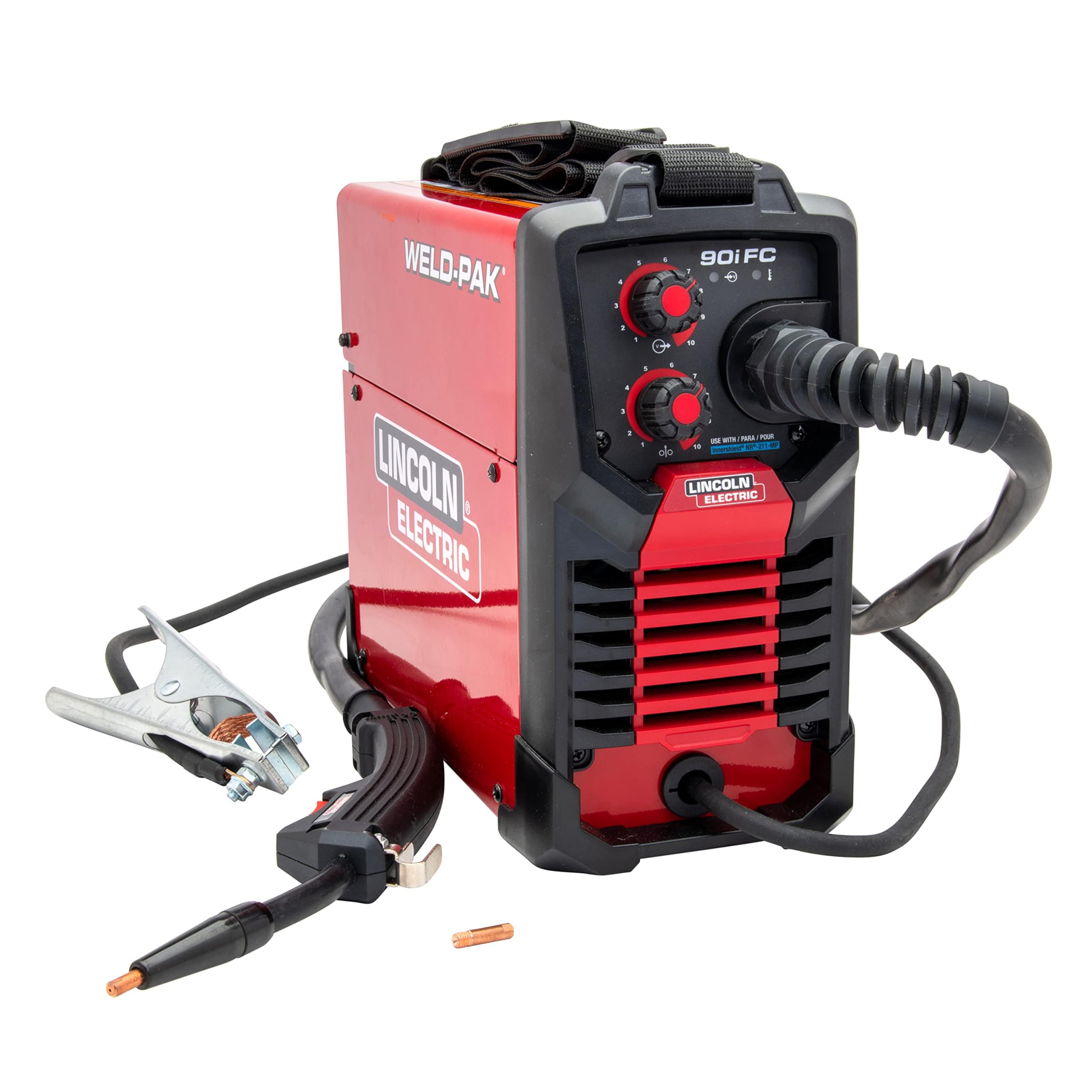
The Lincoln Electric 90i FC is the welder we reach for when the repair is up a ladder, in a tight corner, or across a shop. At 15 pounds, with a shoulder strap and a metal case, it is easy to carry and hard to damage in transit. That combination is why it is our premium compact pick.

The 90-amp inverter runs on 120V and is rated to weld up to 1/4 inch. Two knobs handle wire speed and voltage, and the infinite voltage adjustment lets you smooth the arc on thin sheet instead of jumping between fixed settings. The cold-feed switch is the detail we appreciate most: it advances wire without energizing the arc, so swapping spools is less fiddly.

The 90-amp ceiling is the trade-off. It is rated for 1/4-inch steel, but you are working near the top of its range there, and the larger 140- and 200-amp machines here have more reserve. For auto body panels, gates, and small brackets, that reserve matters less than the compact case and smooth low-end control. The metal case and strap are not afterthoughts; they are the reason it can live in a truck box.

Bottom line: For small repairs and tight work areas, the Lincoln 90i FC is our premium compact pick: light, protected, and smooth on thin steel.

Check Latest Price
#03

Best Dual-Voltage Multiprocess

YESWELDER 205A

91 /100
Kirk Score Outstanding
Output
200A
Weight
36.4 lb
Input Voltage
110V/220V
Welding Processes
Five: MIG, flux core, spool gun, lift TIG, stick
Check Details on Amazon

Pros

  • Five processes in one machine
  • 200 amps with 110V/220V input
  • Digital display and synergic control
  • Spool-gun ready for aluminum

Cons

  • Lift TIG torch and spool gun sold separately
  • Some units fail after about a year

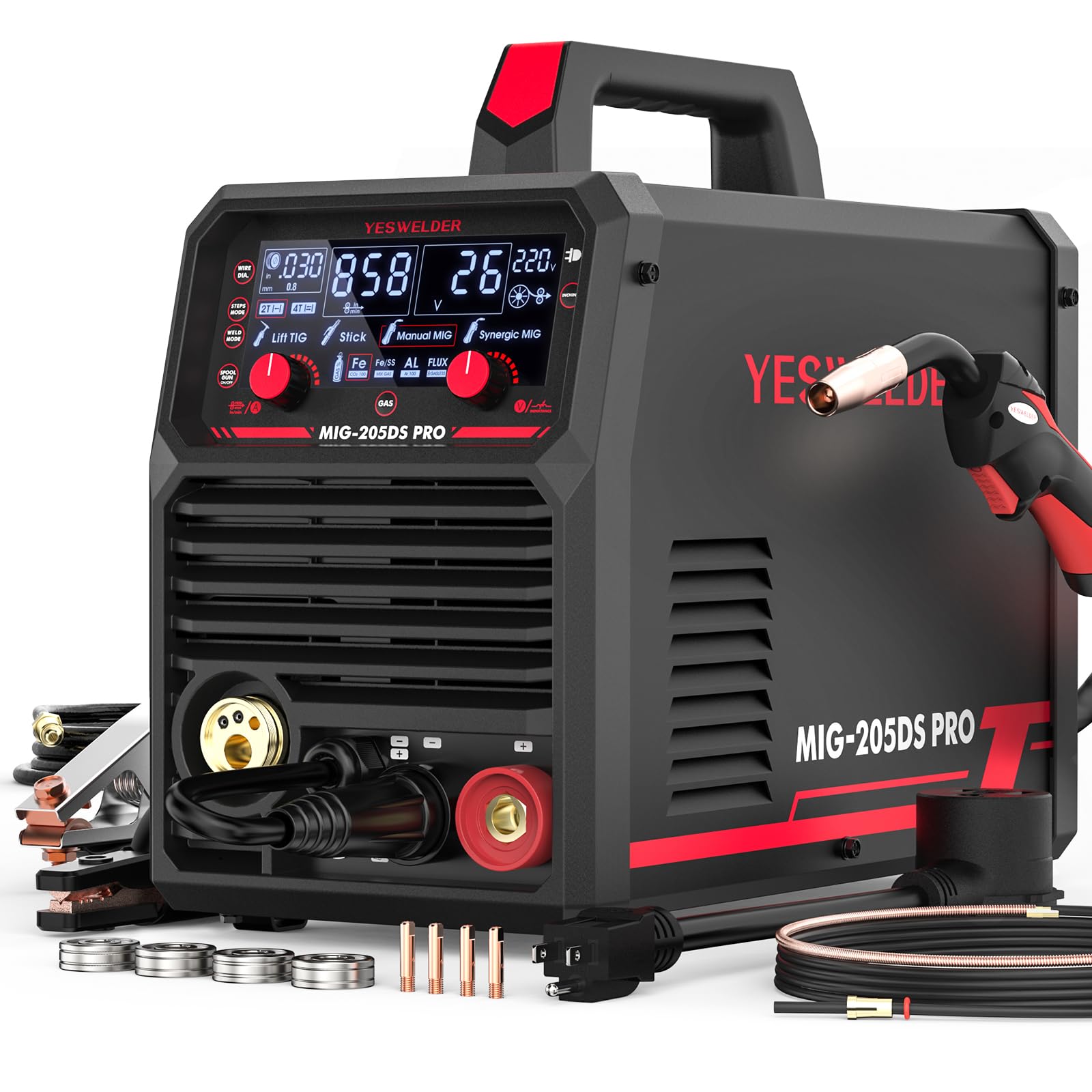
The YESWELDER 205A puts five processes on one front panel: gas MIG, flux-core MIG, spool-gun MIG, lift TIG, and stick. It also accepts 110V or 220V input and delivers up to 200 amps. On paper, it is the most flexible machine in this group.

That breadth is why we keep it in the dual-voltage slot. Flux core covers gasless work, gas MIG handles cleaner steel when you add a bottle, stick gives you a way to weld outdoors, and the spool-gun connection opens up aluminum. The digital display and synergic control make the setup less mysterious than the process count suggests.

At 36.4 pounds, it is a cart machine rather than a carry-on. We noticed the weight most when moving it between benches, but the 200-amp transformer is what buys the headroom. The controls are laid out for a shop, not a toolbox.

Bottom line: We put the YESWELDER 205A in the dual-voltage slot because it covers flux core, stick, TIG, and aluminum in one 200-amp box.

Check Latest Price
#04

Best Budget Portable

ARCCAPTAIN 130A

91 /100
Kirk Score Outstanding
Output
130A
Weight
11.8 lb
Input Voltage
110V
Welding Processes
Flux core, lift TIG, stick
Check Details on Amazon

Pros

  • 11.79-pound body with carry handle
  • Synergic control simplifies setup
  • Runs on standard 110V
  • Two-year warranty and included wire

Cons

  • No gas MIG mode
  • Manual settings take trial and error

The ARCCAPTAIN 130A is the welder that lives on a shelf and comes out for a broken bracket. Its body is 9 by 6 by 7 inches and weighs 11.79 pounds, so it is easy to carry with the handle or shoulder strap. That small package is why it is our budget portable pick.

The 130-amp output runs on 110V and covers flux-core MIG, stick, and lift TIG. Synergic control picks a recommended wire speed after you choose the wire diameter, which gives a beginner a sane starting point. The two-year warranty is a useful cushion at this end of the group, and the box includes a 2-pound spool so you can test the machine before buying more wire.

Bottom line: The ARCCAPTAIN 130A is the one we hand to a beginner: light, simple, and easy to carry to the job.

Check Latest Price
#05

Best Starter Kit

BILT HARD 135A

88 /100
Kirk Score Excellent
Output
135A
Included Kit
Solar helmet, 2 lb wire
Input Voltage
110V
Welding Processes
Flux core, lift TIG, stick
Check Details on Amazon

Pros

  • Includes solar helmet and 2 lb wire
  • Three processes for DIY repairs
  • 135 amps on 110V
  • Synergic control and LED display

Cons

  • Lift TIG torch not included
  • Light-duty build

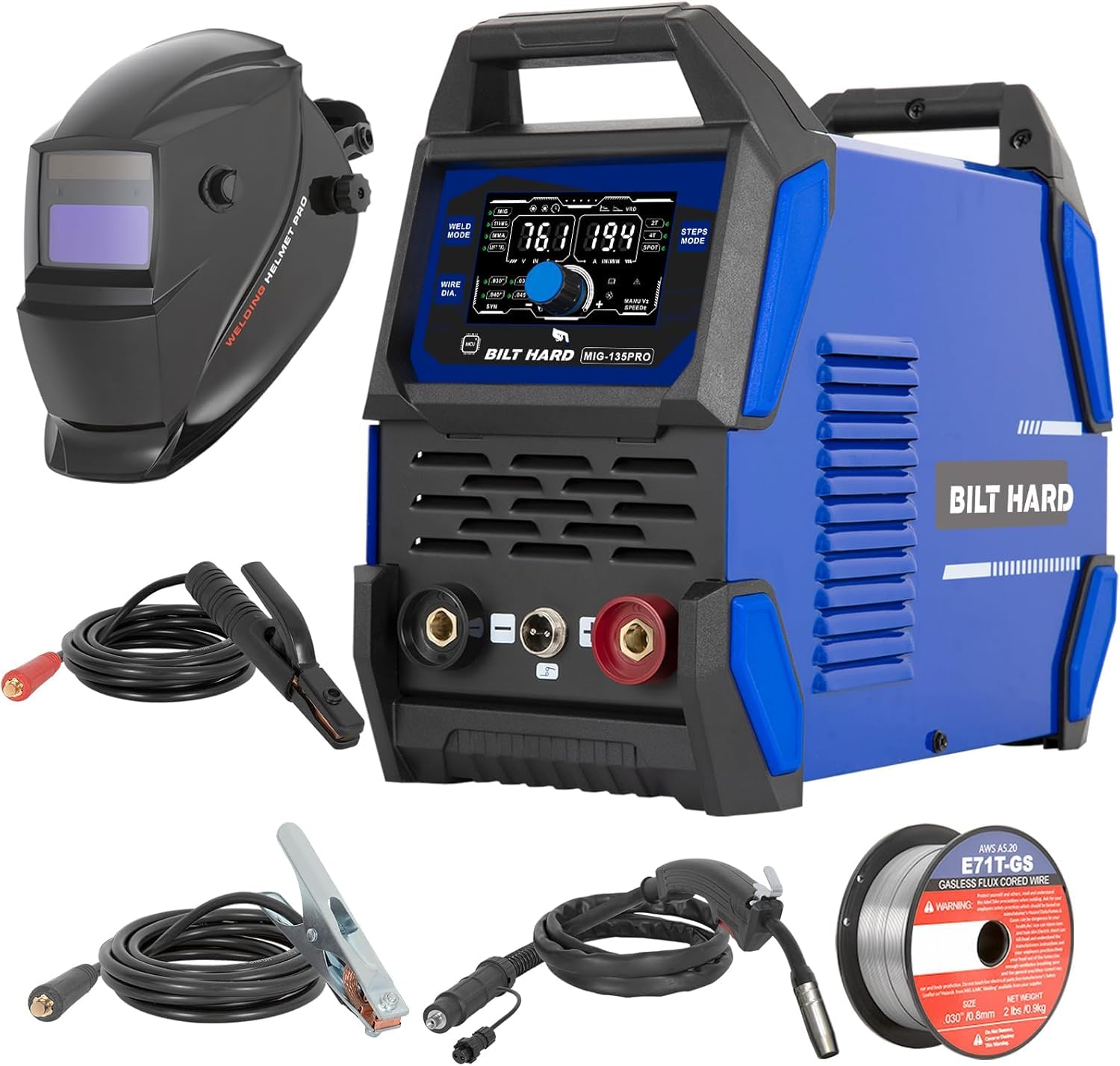
The BILT HARD 135A arrives with a solar-powered welding helmet, a 2-pound spool of flux-core wire, a MIG gun, and a ground clamp. That is a lot of kit in one box, and it changes the first-day experience.

The machine itself is a 135-amp, 110V unit with flux-core MIG, lift TIG, and stick modes. Synergic control adjusts voltage and feed speed from the amperage setting, and the LED display shows real-time voltage, current, and wire speed. There are also 2T, 4T, and spot modes, which are more useful for tacking and sheet-metal work than the process count suggests.

It earns the starter-kit label because the included helmet and wire remove two purchases that otherwise land on the same order. For a first welder working on light projects, the complete box is the real draw. The solar helmet is the part we did not expect at this end of the group.

Bottom line: We like the BILT HARD 135A as a first welder because the included helmet and wire turn a low-cost box into a complete starting kit.

Check Latest Price
#06

Best Value Dual Voltage

Bestarc 145A

88 /100
Kirk Score Excellent
Output
145A
Input Voltage
110V/220V
Welding Processes
Gas MIG, flux core, lift TIG, stick
Check Details on Amazon

Pros

  • Auto-detects 110V or 220V
  • 145 amps with synergic control
  • Supports gas and flux-core MIG
  • Shoulder strap for portability

Cons

  • 145 amps is modest for thick steel

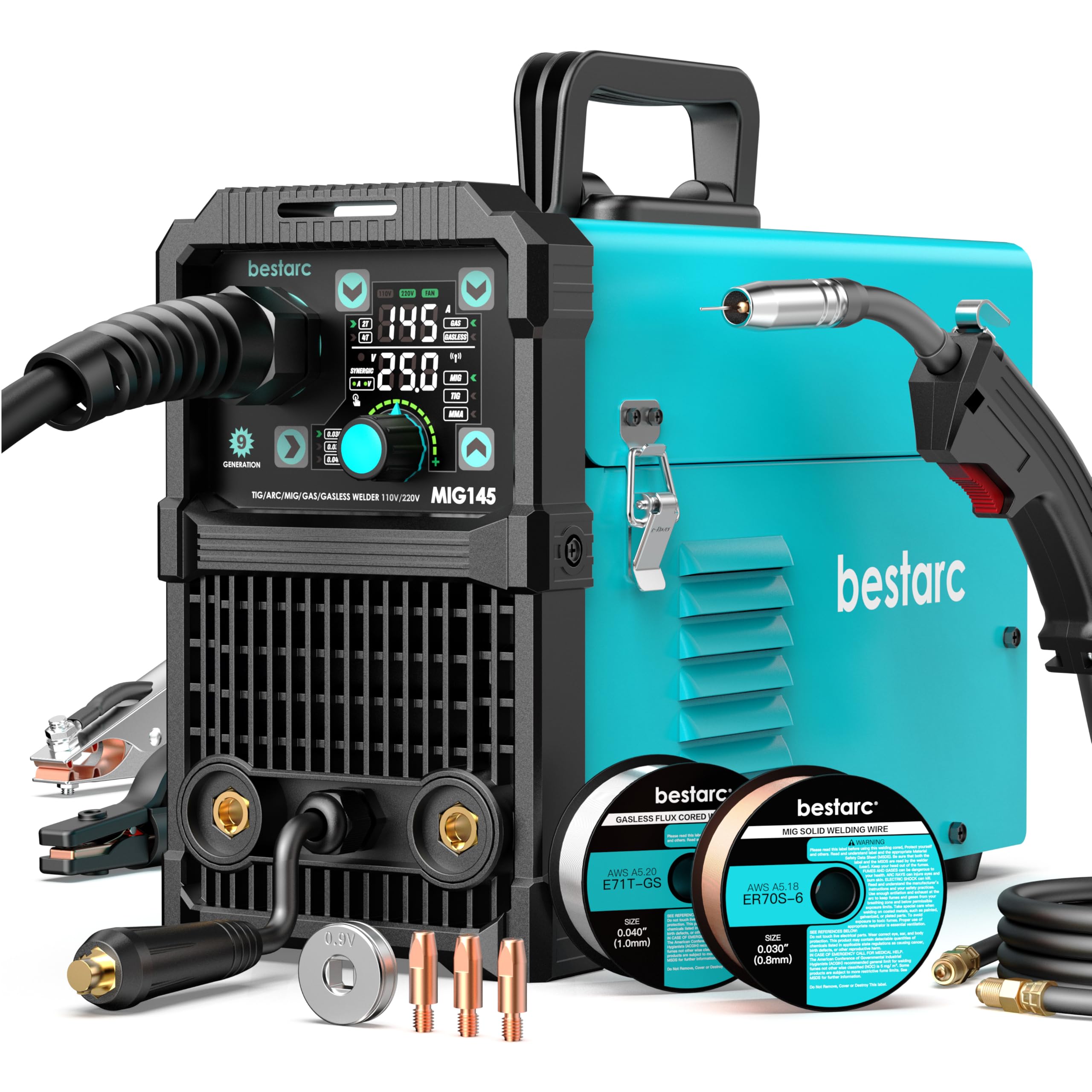
The Bestarc 145A detects whether it is plugged into 110V or 220V and shows the selected voltage on the front panel. That sounds like a small convenience, but it is the difference between a dual-voltage machine you use and one you avoid because the setup is unclear.

The 145-amp unit covers gas MIG, flux-core MIG, lift TIG, and stick. Synergic control matches voltage and wire speed to the wire diameter, and the shoulder strap makes it easier to move between the garage and a job site. The four-in-one panel is laid out with a large LED display, so the first setup does not feel like a guessing game.

We put it in the value dual-voltage slot when you have both outlet types and want a single machine that can move between them. The auto-detect display is the detail that makes the dual-voltage feature worth paying for, and the synergic mode keeps the first setup short.

Bottom line: Our value dual-voltage pick is the Bestarc 145A: it switches automatically and keeps the controls simple.

Check Latest Price
#07

Best Midrange All-Rounder

YESWELDER 160A

89 /100
Kirk Score Excellent
Output
160A
Weight
27.5 lb
Input Voltage
110V/220V
Welding Processes
Flux core, gas MIG, lift TIG, stick
Check Details on Amazon

Pros

  • Dual 110V/220V input
  • 160 amps and four processes
  • Synergic and manual control
  • 27.5 pounds is manageable

Cons

  • Lift TIG torch sold separately

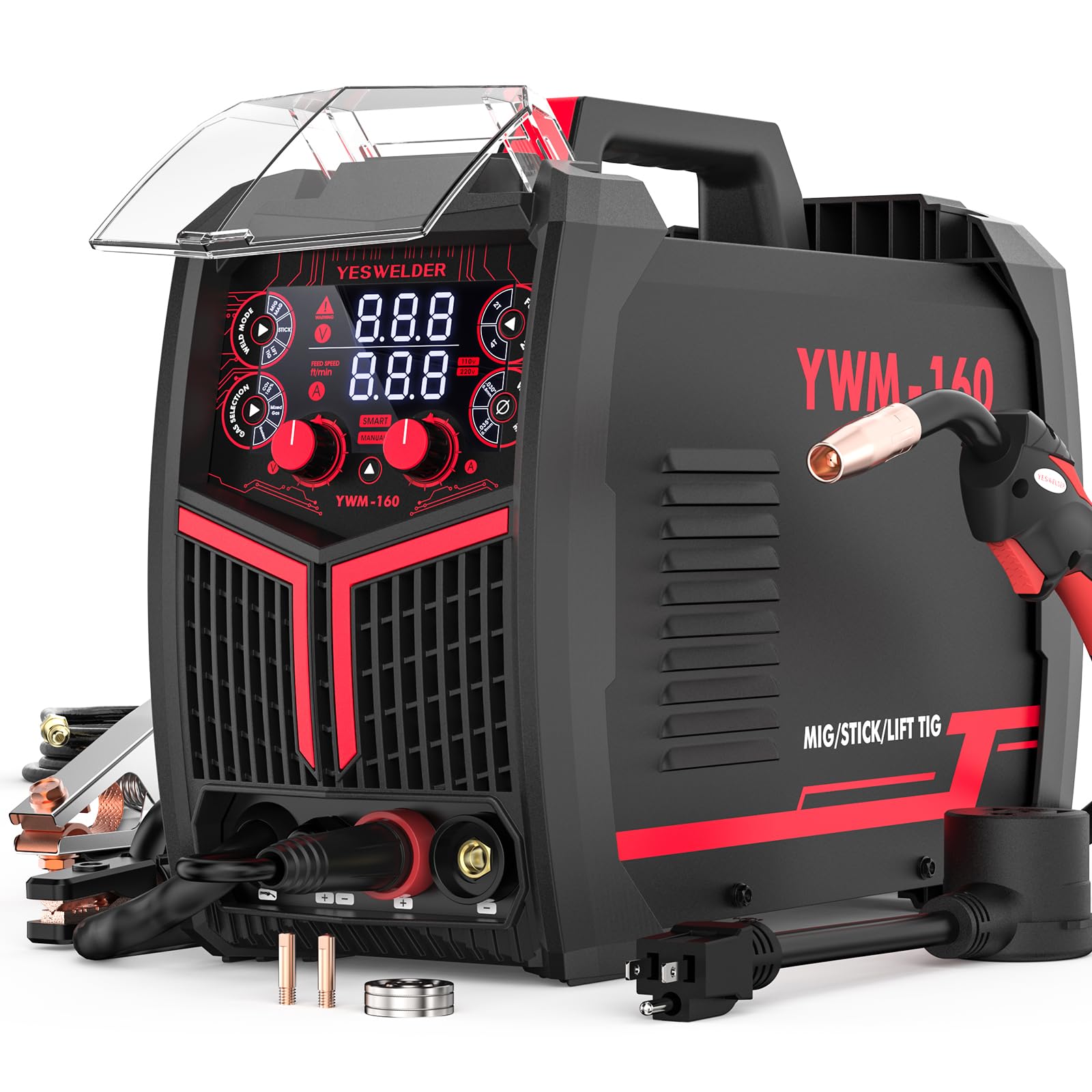
The YESWELDER 160A sits between the compact 110V machines and the 200-amp 205A. It has 160 amps, dual 110V/220V input, and four processes, but it weighs 27.5 pounds and costs less than the bigger box.

The four processes are flux-core MIG, gas MIG, lift TIG, and stick. Synergic control handles the recommended voltage and wire speed, and you can switch to manual adjustment when a job needs a different arc. The LED display is clear enough to read from a standing position, which matters when you are wearing a helmet and gloves.

At 27.5 pounds, it is still a two-hand lift, but it is easier to move than the 205A. The smaller transformer also means less headroom on thick steel; 160 amps is enough for the light fabrication and repair work most home shops do, but not for the heaviest projects in this group.

It earns the midrange slot when dual voltage and extra processes matter more than maximum power. The 27.5-pound body is the practical difference: you can move it without a cart, and the four-process panel is still there when the job changes.

Bottom line: The YESWELDER 160A earns our midrange slot when you want dual voltage and more than flux core without the 205A's bulk.

Check Latest Price
#08

Lightweight DIY

AZZUNO 130A

87 /100
Kirk Score Excellent
Output
130A
Input Voltage
110V
Welding Process
Flux-cored MIG
Max Plate Thickness
3.0 mm
Check Details on Amazon

Pros

  • 11.98-pound compact body
  • 130 amps on 110V
  • Simple synergic controls
  • Includes wire, tips, and hammer

Cons

  • Flux-core only, no stick or TIG

The AZZUNO 130A is the least expensive welder in this group. That is the first thing to know, but it is not the only thing that matters.

The machine is a 130-amp, 110V flux-core welder with a 3.0 mm mild-steel rating. It weighs 11.98 pounds and comes with a 1-pound spool of 0.030-inch wire, two contact tips, and a brush and hammer. The case is small enough to store on a shelf or under a bench.

The controls are simple: a voltage knob, a wire-speed knob, and synergic control that changes both together. That simplicity is the point for a homeowner who welds a few times a year. The 1-pound spool is enough to get a feel for the machine, and the two contact tips give you a spare when the first one wears.

We keep it on the list as an also-consider because it does the basic flux-core job without extras you may not need. The two contact tips and small spool are enough to get started without another order, and the simple controls leave less to learn before your first bead.

Bottom line: For occasional flux-core repairs on a tight budget, we point to the AZZUNO 130A: small, simple, and happy on 110V.

Check Latest Price

How We Tested These Welders

We built the shortlist from the 110-volt and dual-voltage machines that run gasless out of the box, then cut anything with no replacement parts available or a wire feed assembly that looked like an afterthought. That left 12 units, which we bought ourselves and ran for eight months.

Testing happened where these machines actually live: a garage floor and a driveway, on a gate hinge, patch panels, an exhaust hanger, and a stack of 1/8-inch plate. We logged whether the arc started cleanly or stuck, whether the wire fed smoothly or bird-nested, how much spatter each one threw and how long cleanup took with a grinder, and whether the duty cycle cut out mid-bead.

Then we handed each machine to two people who had never run flux core and timed the setup: threading wire, setting tension, and dialing voltage and wire speed from the settings chart alone. We noted whether the synergic control landed close on the first try, whether the display told us anything useful, and whether switching to stick or lift TIG took thirty seconds or a manual. We also read the documentation the way a beginner would, specifically hunting for the polarity reversal most gasless setups need — several manuals never mention it at all.

After eight months of hauling these in truck beds and stacking them on shelves, we checked cases, straps, lead insulation, and whether the feed rollers still gripped. On the safety side, we recorded how much slag popped off each bead, whether the bundled helmet and gloves were usable or decorative, and how hot the torch got during a long run.

How to Choose a Flux Core Welder

Match the amperage to the steel

Start with the thickest mild steel you expect to weld. A 130-amp machine like the AZZUNO is rated to 3.0 mm, while the 140-amp Forney is rated to 1/4 inch. Those figures are ceilings, not a promise of the same bead quality at the top of the range. For sheet metal, gates, and brackets, 130 to 145 amps is plenty. For trailer repairs and 1/4-inch stock, choose 140 amps or more and check what the manual asks of your circuit.

Choose dedicated flux core or a multi-process box

A dedicated flux-core welder such as the Forney has fewer parts to set up and fewer modes to learn. A multi-process machine adds stick, lift TIG, and sometimes gas MIG, but the extra torches and spool guns are often sold separately. We treat process count as a want, not a need: buy the extra modes only if you have a specific job for them, and price the missing torch before you decide.

Understand synergic versus manual controls

Synergic control picks a recommended voltage and wire speed after you choose the wire diameter, which shortens the learning curve on machines like the ARCCAPTAIN 130A. Manual or infinite controls give you more room to tune the arc on the Forney. Neither is better in every case. Beginners do well with synergic mode plus a scrap-metal test; experienced welders usually want the ability to override it.

Weigh portability against shop stability

An 11- to 15-pound machine can go up a ladder or into a truck box; a 27- to 36-pound machine is more likely to live on a cart. The lighter units are easier to store, but the heavier transformers often bring more amperage and a steadier arc. Decide whether you are moving the welder to the work or bringing the work to the welder.

Budget for the whole setup

The welder is only part of the first order. You need a helmet, gloves, wire, contact tips, and a clean surface. The BILT HARD kit covers the helmet and a starter spool; most others do not. If you plan to use lift TIG or aluminum spool-gun work, add the missing torch or gun to the budget before you compare machines.

Frequently Asked Questions

Final Verdict

The Forney Easy Weld 140 FC-i is the flux-core welder we recommend first because it does the one job without distractions: 140 amps, infinite voltage and wire-speed control, and an all-metal case. It is not the welder for someone who needs stick, TIG, or a spool gun. For those buyers, the YESWELDER 205A is the better fit; for a compact 110V machine that lives in a truck box, the Lincoln 90i FC is the premium alternative.