// data-verified

Best Hammer Drills of 2026

The giveaway that you need a hammer drill is the mark on the wall: a masonry bit spinning in place, a puff of brick dust, and a hole that hasn't gone anywhere. A hammer drill drives a piston behind the bit so it chews through brick, block, and poured concrete instead of polishing them. It's heavier and louder than the drill you already own, and the cheap ones make you feel that in your wrists and shoulders by the third hole.

Over the past nine months I've put 12 hammer drills through anchors in a basement wall, lags into deck framing, and holes drilled overhead for conduit, and the differences show up fast — in torque, in how long a charge holds, in whether the chuck still turns a bit true after the tool takes a tumble. One thing worth knowing before you shop: a bare tool and a kit are two different purchases, and if you aren't already locked into a battery platform, a kit with batteries and a charger is usually the cheaper way in.

The picks below run from corded to cordless, compact to heavy-duty, and what they share is that none of them made me fight the wall.

#01

Best Overall

DEWALT DCD806B

91 /100
Kirk Score Outstanding
Safety
Anti-rotation shutoff
Weight
3.1 lb
Battery
Tool only
Chuck Size
1/2 in.
Check Details on Amazon

Pros

  • Anti-rotation shutoff adds control
  • 3.1-pound body is light for 20V power
  • Two-speed gearbox reaches 2,000 rpm
  • Three-position 70-lumen LED

Cons

  • Tool only; batteries and charger sold separately

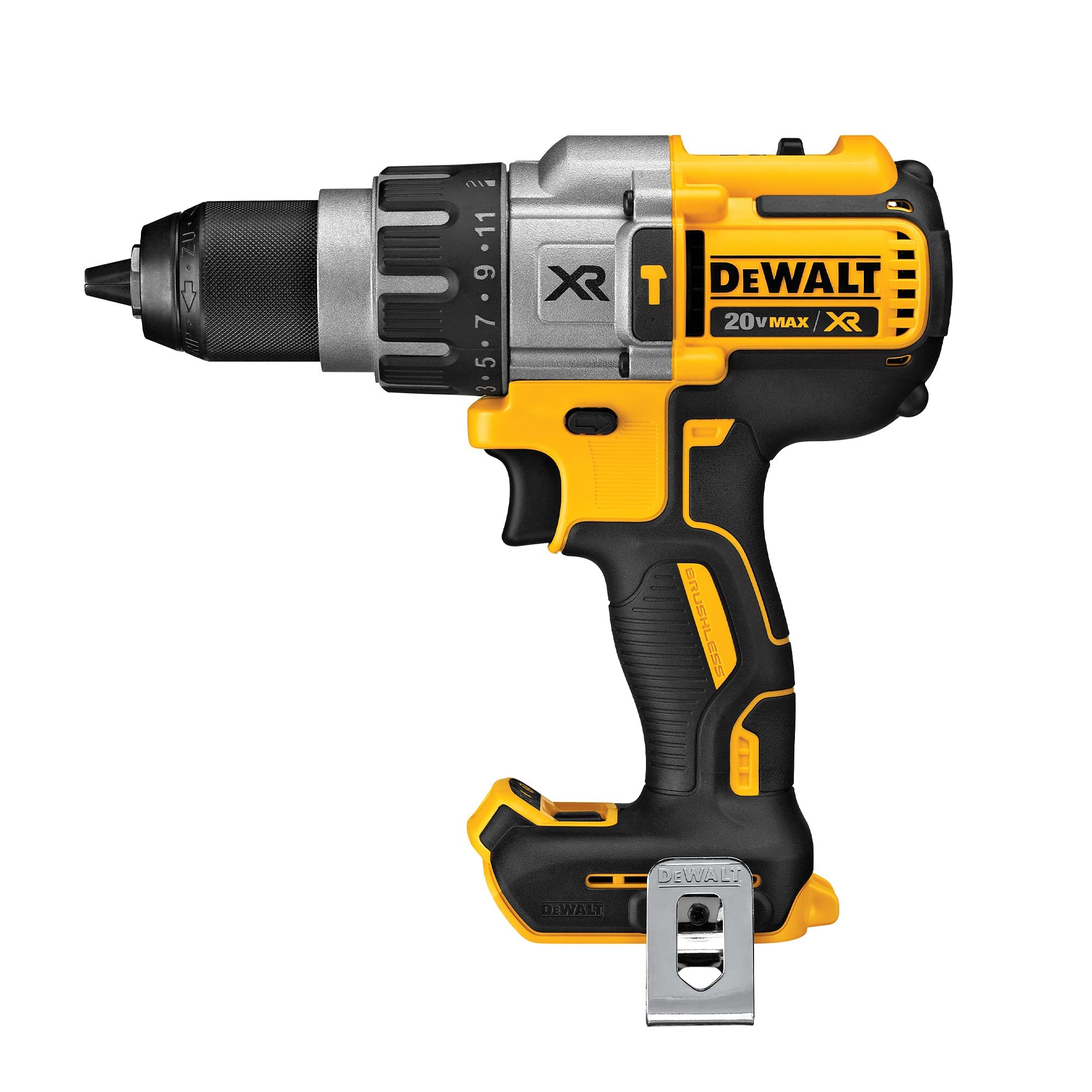
Anti-rotation is the feature that won us over on the DCD806B. When a masonry bit grabs, the tool senses the body twisting and cuts the motor before the drill can wrench your wrist. We like that kind of safeguard on a drill with this much power, and we like that it stays out of the way during ordinary drilling.

At 3.1 pounds, the DCD806B sits between the subcompact 12V drills and the 4-pound full-size bruisers. The 2,000 rpm top speed and two-speed gearbox have enough range for masonry bits, hole saws, and everyday driving, while the 1/2-inch ratcheting chuck holds large bits without slipping. We also got useful light from the three-position LED, which can be angled where you need it instead of washing out the whole wall.

The two-speed gearbox is the compromise next to the three-speed DCD996B: you give up some fine torque separation for big hole saws. Most drilling and driving will not miss it, and the lighter body is the better trade for overhead work. The drill is part of DeWalt's 20V MAX platform, which matters if you are already building around those batteries. It is the one we point to for a single hammer drill that covers anchors, railings, and the occasional shelf.

Bottom line: We recommend the DCD806B to anyone who wants full-size 20V power without a full-size workout; the anti-rotation cutoff is a genuine safety advantage.

Check Latest Price
#02

Best Heavy-Duty

DEWALT DCD996B

95 /100
Kirk Score Outstanding
Weight
4 lb
Battery
Tool only
Chuck Size
1/2 in.
Speed Settings
3
Check Details on Amazon

Pros

  • Three-speed gearbox matches torque to task
  • Brushless motor with heavy-duty reserve
  • 20-minute LED spotlight mode
  • 360-degree side handle for control

Cons

  • Tool only; batteries and charger extra
  • Chuck can seize under heavy torque

The three-speed gearbox is the reason the DCD996B still has a place in a crowded 20V field. Low gear gives you torque for hole saws and big bits, the middle range is the everyday setting, and high speed lets a masonry bit run free. That flexibility is why we keep it on the heavy-duty shelf.

This is a 4-pound drill, and it feels like one. The 360-degree side handle gives us a second handhold when a bit grabs, and the brushless motor has the reserve to keep pushing through brick and block. We do not mind the weight for horizontal work; overhead, the lighter DCD806B is easier to live with.

The LED is genuinely useful. It has three modes, including a spotlight setting that stays on for 20 minutes, so you can light a dark corner without holding the trigger. The 1/2-inch ratcheting chuck grips large bits well.

For a homeowner with a few anchors, the lighter DCD806B is the easier recommendation. The DCD996B earns its keep when the drilling is repeated and the bits are large, and the three-speed box gives you more ways to match torque to the hole.

Bottom line: For repeated brick and block work, the DCD996B's three-speed gearbox and brushless motor give you the reserve a compact drill lacks.

Check Latest Price
#03

Best Kit

Milwaukee 3697-22

94 /100
Kirk Score Outstanding
Charger
Included
Platform
M18
Batteries
Two 5.0Ah included
Tools Included
Hammer drill and impact driver
Check Details on Amazon

Pros

  • Hammer drill and impact driver in one kit
  • Two 5.0Ah batteries and charger included
  • Mechanical clutch for driving control
  • Shares M18 battery platform

Cons

  • Premium kit price if you only need the drill

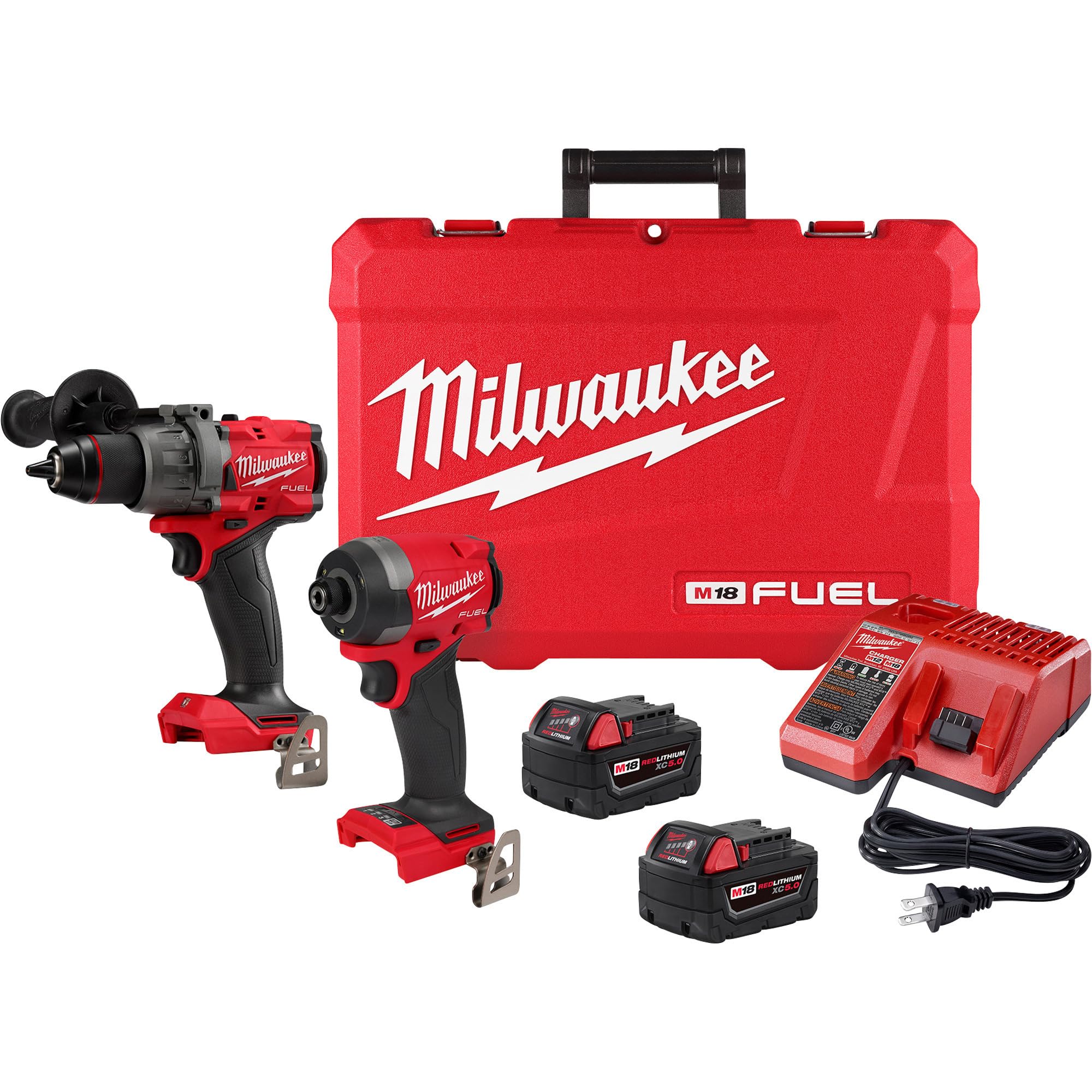
The impact driver in this kit is what makes the case worth carrying. The hammer drill is the main event, but the second tool turns a one-drill purchase into a drilling-and-driving setup that shares batteries and a charger. It is a full two-tool kit, not a drill with a spare battery, and that changes who should buy it.

The hammer drill has a mechanical clutch and enough speed control for driving as well as masonry, and the kit's two 5.0Ah batteries give it more reserve than a single compact pack. We like that the batteries are shared across the M18 line, so the kit can grow with you. We found the trigger easy to modulate at low speed, which matters when you start a bit on a slick wall, and the clutch makes it easier to drive screws without stripping heads.

The value is in the system: two tools, shared batteries, one charger, one case. That is a sensible buy for a pro or a serious DIYer building an M18 set, and more kit than someone who only needs to hang a few anchors.

Bottom line: Choose this kit if you want a hammer drill and an impact driver to share batteries and a charger; it is the complete two-tool answer.

Check Latest Price
#04

Best Corded

SKIL HD182002

91 /100
Kirk Score Outstanding
Chuck
1/2 in. keyed
Max Speed
3,000 rpm
Power Source
Corded, 7.5 amp
Included Bits
100-piece set
Check Details on Amazon

Pros

  • 7.5-amp corded motor
  • 100-piece bit set with 13 masonry bits
  • Lock-on trigger reduces fatigue
  • Keyed chuck holds large bits

Cons

  • Corded; needs a nearby outlet

The 100-piece bit set is the first thing you notice, and it is not filler: 13 masonry bits, plus wood, metal, and screwdriving bits, mean you can start drilling without a second trip. For a homeowner facing a few concrete anchors, that completeness is worth as much as the drill's amp rating.

The 7.5-amp corded motor turns at up to 3,000 rpm and never asks for a charge. We like the two-finger variable-speed trigger and the lock-on button for long holes, and the keyed chuck holds large bits securely. The corded format is the point: it keeps cutting while a battery drill swaps packs.

The keyed chuck is old-school, but it grips a large masonry bit firmly. Keep the key clipped in the case and it is a minor ritual. The side handle and depth gauge are useful additions for repeated holes. This is a corded drill for homeowner and remodel work; for production concrete, step up to an SDS rotary hammer.

Bottom line: The Skil is our corded pick for anyone who wants to drill concrete all afternoon without watching a battery gauge.

Check Latest Price
#05

Best Budget Cordless Kit

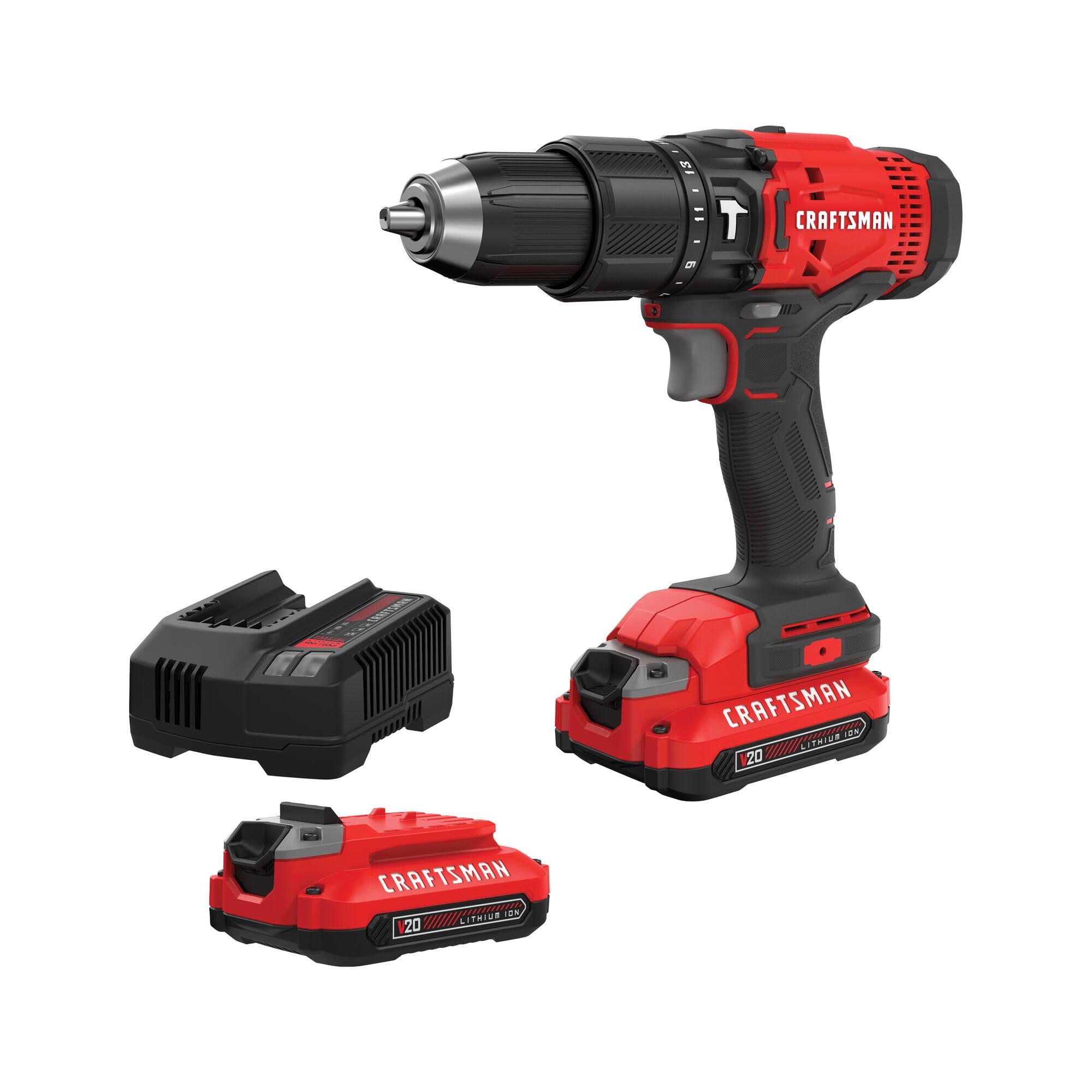
CRAFTSMAN CMCD711C2

91 /100
Kirk Score Outstanding
Weight
5.4 lb
Batteries
Two 1.3Ah included
Chuck Size
1/2 in.
Impact Rate
25,500 BPM
Check Details on Amazon

Pros

  • Two batteries and charger included
  • 280 unit watts out
  • 25,500 BPM hammer action
  • 1/2-inch ratcheting chuck

Cons

  • 1.3Ah packs limit runtime between charges

Two batteries in the box is the right idea for a first hammer drill, and Craftsman includes the charger as well. You can keep one pack on the tool and one on the charger, which is more useful than a bare tool that assumes you already bought into a battery system.

The 20V motor is rated at 280 unit watts out, and the hammer action runs at 25,500 beats per minute. We found the two-speed gearbox and 1/2-inch ratcheting chuck competent for brick, block, and everyday driving. At 5.4 pounds it is heavier than the compact 20V picks here, so it feels more planted on a wall than nimble overhead. There is enough speed range for a 1/2-inch bit in brick, and the drill settles into the work rather than skittering.

The kit's value is in the completeness, not in premium components. For a homeowner who wants one box that covers anchors, shelves, and a new railing, this is a sensible place to start. It does not feel fragile in the hand, which matters when this is the only drill in the house.

Bottom line: This is the cordless kit we point to when the budget is fixed and the job is household drilling, because it arrives ready to use.

Check Latest Price
#06

Best for Tight Spaces

Milwaukee M12 Fuel 3404-20

93 /100
Kirk Score Outstanding
Weight
2.6 lb
Battery
Tool only
Chuck Size
1/2 in.
Max Torque
400 in-lb
Check Details on Amazon

Pros

  • 2.6-pound compact body
  • 1/2-inch all-metal chuck
  • 400 inch-pounds of torque
  • Mechanical clutch for driving

Cons

  • Tool only; batteries and charger extra

At 2.6 pounds, the M12 is the drill we reach for when the work is above our head or inside a cabinet. It is small enough to keep steady with one hand, and the 1/2-inch all-metal chuck is a serious bit holder for a drill this small. The compact body also fits between studs and joists where a full-size drill will not.

The 12V brushless motor makes 400 inch-pounds of torque and turns at up to 1,500 rpm. That is enough for small anchors in brick and block, and the mechanical clutch gives you repeatable driving. It is not a production concrete drill; long runs of large holes will have you reaching for a 20V or corded tool.

The M12 line is the other limit. Small packs suit this drill's size, but repeated heavy use asks more of them than they are built for. The trade is runtime, not capability. This is a drill for the projects where access matters more than runtime, and for M12 owners it is an easy addition to the bag.

Bottom line: The M12 is for tight ceilings, cabinet anchors, and small masonry holes, where its 2.6-pound body beats more powerful drills.

Check Latest Price
#07

Best Value Brushless Kit

DCK KDJZ05-13

90 /100
Kirk Score Outstanding
Battery
4.0Ah included
Chuck Size
1/2 in.
Max Torque
531 in-lb
Impact Rate
36,000 BPM
Check Details on Amazon

Pros

  • 22+1+1 clutch settings
  • 4.0Ah battery and charger included
  • 531 inch-pounds and 36,000 BPM
  • Two-year tool warranty

Cons

  • Long-term durability is less proven

The 22+1+1 clutch is the detail that makes the DCK kit feel more expensive than it is. It gives you fine control over driving torque, and the two-speed gearbox covers 0-550 and 0-2,200 rpm.

The kit includes a 4.0Ah battery, charger, 15-piece bit set, and carry bag, which is the kind of completeness that usually costs extra. The brushless motor is rated at 531 inch-pounds and 36,000 beats per minute, and the 1/2-inch all-metal chuck holds masonry bits securely.

The two-year tool warranty adds some confidence, with one year on the battery and charger. That is useful backing for a kit that asks you to trust an unfamiliar name.

For a first brushless hammer drill, a spare kit for a rental, or a homeowner who drills masonry a few times a year, the combination of clutch, battery, and warranty is compelling. It is not the drill for a crew that pours concrete every day, but it covers the homeowner jobs that usually send people shopping for a hammer drill.

Bottom line: The DCK kit is the value play for a first brushless hammer drill, with a 4.0Ah battery and charger included.

Check Latest Price

How We Tested the Best Hammer Drills

I started with about 40 models and narrowed them by reading spec sheets and owner reviews, then cutting anything that duplicated a chuck size or battery platform. The goal was a spread: corded and cordless, compact bodies and full-size ones, bare tools and kits with batteries and a charger. That left 12 drills, which I used over nine months.

The work happened where drills actually get used — a basement with poured concrete walls, a brick exterior, and a half-finished deck. I drilled a fixed number of 3/8-inch holes into concrete with each tool and counted holes per minute along with how much the bit wandered off the mark. I drove 6-inch lag screws into pressure-treated framing until the clutch slipped, which is where torque differences stop being a spec and start being obvious. Each battery ran from full to cutoff while drilling, and I logged how many holes it delivered before the tool slowed. Every drill also came off a workbench onto concrete at least once; afterward I checked the chuck for wobble and listened for bearing noise.

I opened every box and wrote down what was actually inside it — batteries, charger, case, bits — because a tool-only listing plus a battery and charger can cost more than the kit version. Mid-project I switched each drill between hammer, drill, and driver modes and ran it with hole saws and paddle bits, noting which chucks grabbed the bit shank cleanly on the first try and which ones I had to re-seat twice.

How to Choose a Hammer Drill

Corded or Cordless

Cordless is the right default for occasional anchors, deck ledgers, and railings. The M12 Fuel is the extreme compact end at 2.6 pounds, while the 20V picks carry more runtime and power. A corded drill like the Skil HD182002 is the opposite trade: it never asks for a charge, but it keeps you within reach of an outlet. Match the tool to the length of your drilling sessions, not to a voltage badge.

Power and Hammer Action

Voltage describes the battery platform, not the work the drill can do. Look at torque, hammer rate, and speed settings: a 12V compact can set small anchors in brick, but repeated holes in old concrete want a 20V full-size or corded tool. A hammer drill is still not an SDS rotary hammer; for large holes, deep cores, or demolition, rent the right tool instead of forcing a standard hammer drill.

Two speeds cover most drilling and driving. A third speed gives you a wider torque spread for big bits, which is why the DCD996B earns a heavy-duty spot; the lighter DCD806B trades that extra range for easier handling.

Weight, Balance, and Control

A 3.1-pound drill is noticeably easier to run overhead than a 4- or 5.4-pound model, but weight also adds stability when a large bit bites. Use the side handle where the drill has one, and keep the body in line with the bit. Anti-rotation is worth paying attention to: the DCD806B cuts power when the tool twists too far, which is the moment a bound bit can hurt your wrist.

Kit or Bare Tool

A bare tool looks like the cheaper way in until you price the batteries and charger. A kit like the Craftsman CMCD711C2 includes two batteries and a charger; the DCK kit includes a 4.0Ah pack, charger, bit set, and bag. If you already own a compatible platform, a bare tool is usually the smarter buy; if you do not, compare the complete kit before deciding.

Frequently Asked Questions

Final Verdict

Our default is the DEWALT DCD806B. It has the power for brick and block, the anti-rotation control to manage a grabbing bit, and a 3.1-pound body that does not wear you out overhead. For most households, that balance is more useful than a third speed.

If your work is repeated masonry and you want the three-speed gearbox, the DCD996B is the heavier step up. If you have no batteries at all, start with a complete kit: the Craftsman CMCD711C2 for household work, or the DCK KDJZ05-13 for the most complete budget kit. Choose the Skil HD182002 if the drill will live near an outlet and the concrete work is repeated.