Best Overall
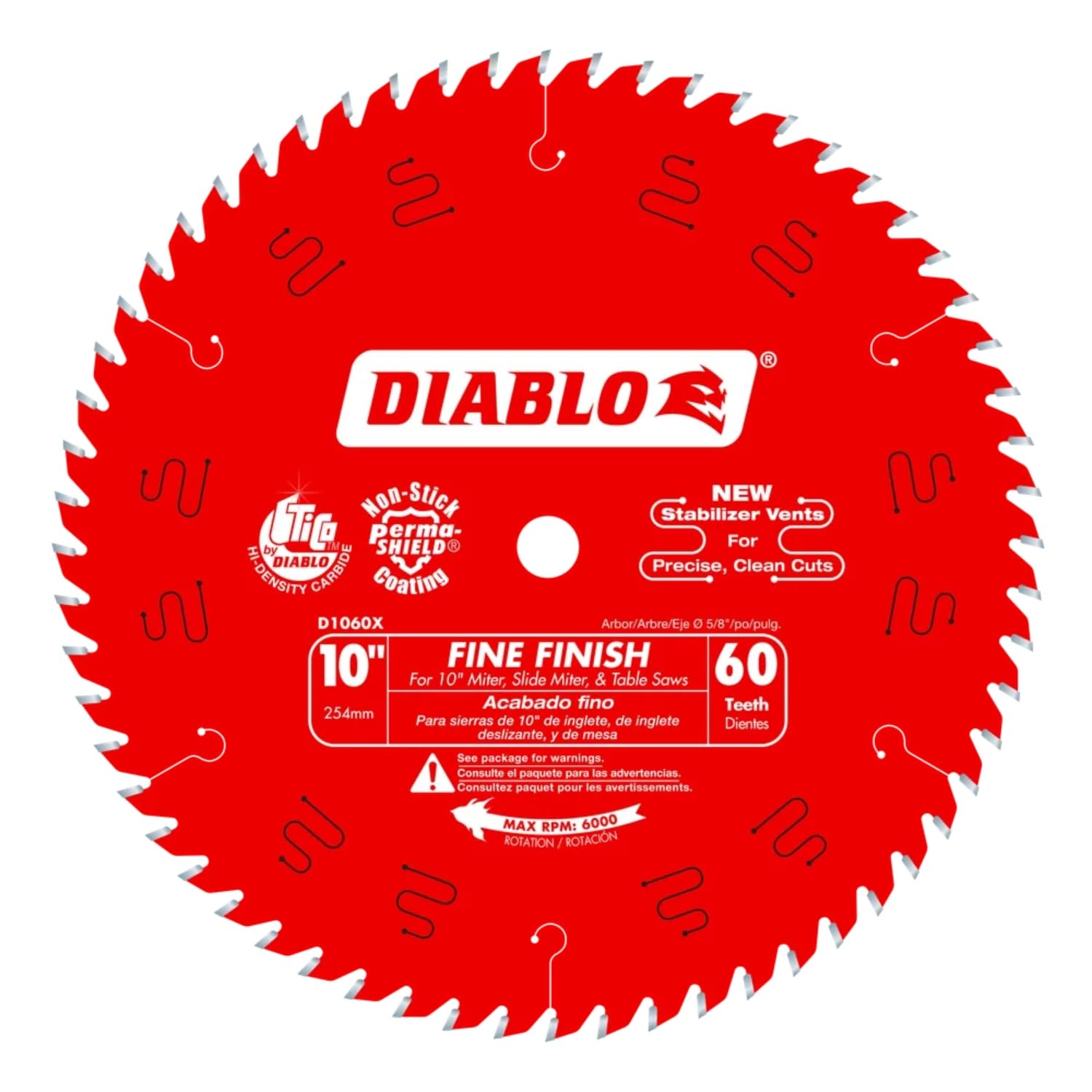
Diablo D1060X 10-Inch 60T
- Kerf
- 0.098 in.
- Arbor
- 5/8 in.
- Teeth
- 60, Hi-ATB
- Diameter
- 10 in.
Pros
- Trim cuts come off ready to paint
- Thin 0.098-inch kerf keeps a 10-inch motor cutting
- 60 teeth balance finish against feed speed
- Coating resists pitch, heat, and corrosion
Cons
- Slower through 4x and thicker stock than a 40-tooth
Sixty Hi-ATB teeth on a 0.098-inch plate is the specification doing the work here. The teeth take small bites and the thin kerf leaves less material for a 10-inch motor to push through, so casing and shoe molding come off the saw with edges clean enough to head straight for paint. In white oak the blade held its speed where a thicker plate would have started to labor.
That balance is why it earns the top spot rather than any single number. Sixty teeth is fine enough for trim and end grain and coarse enough to feed through 2x without scorching, which is not something we can say for the 80-tooth blades in this group. The 5/8-inch arbor is the size most 10-inch miter saws use, so it drops on without an adapter, and the Perma-SHIELD coating does real work: pitch doesn't build up on the teeth, so the blade keeps cutting like a fresh one instead of smearing its way through a kitchen's worth of trim.
Where it stops being the right blade is reclaimed lumber and anything with grit or a hidden fastener. Hi-ATB points are sharp by design and brittle by the same design, so one staple costs you tips rather than just edge. Run a magnet over salvage stock before it goes under this one, and keep a cheap 40-tooth around for the boards you don't trust.
Bottom line: This is the 10-inch blade we recommend first: crisp crosscuts in trim, fast enough for 2x stock, and a 5/8-inch arbor that matches most miter saws sold today.
Check Latest Price